# AI Related Articles

HTX News Center provides the latest articles and in-depth analysis on "AI", covering market trends, project updates, tech developments, and regulatory policies in the crypto industry.

World's Richest Man, 'Silicon Valley Iron Man' Musk, to Take SpaceX Public in 2026!

Elon Musk, the world's richest person and CEO of SpaceX, plans to take the company public in 2026 with a target valuation of approximately $1.5 trillion. The IPO is expected to raise "significantly more than $30 billion," potentially making it the largest in history, surpassing Saudi Aramco's 2019 offering. A key driver of this ambitious valuation is a new narrative: **space-based AI computing**. Musk introduced the concept of "space AI compute" at a recent investor conference, arguing that within five years, running AI training and inference in space could become the lowest-cost solution. The core advantages include near-uninterrupted solar power and the vacuum of space acting as an ultimate heat sink. Additionally, with its reusable Starship rockets, SpaceX aims to drastically reduce launch costs to as low as $200–300 per kilogram. This vision, however, faces significant technical hurdles. Challenges include managing extreme heat radiation in direct sunlight, protecting hardware from cosmic radiation, and the economic risks associated with potential launch failures. Competitors are also entering the arena, including Jeff Bezos’ Blue Origin, which is developing its own orbital data centers, and Sam Altman’s OpenAI, which is reportedly considering acquiring a rocket company. Despite the challenges, Wall Street has responded positively. Firms like Ark Invest are now valuing SpaceX as a high-growth AI infrastructure company rather than a traditional aerospace firm, projecting that its space-based compute business could generate $80–120 billion in high-margin revenue by 2030. The success of this new "space dream" hinges on the continued development of Starship, overcoming technical barriers, and navigating future regulatory landscapes.

marsbit12/11 07:08

World's Richest Man, 'Silicon Valley Iron Man' Musk, to Take SpaceX Public in 2026!

marsbit12/11 07:08

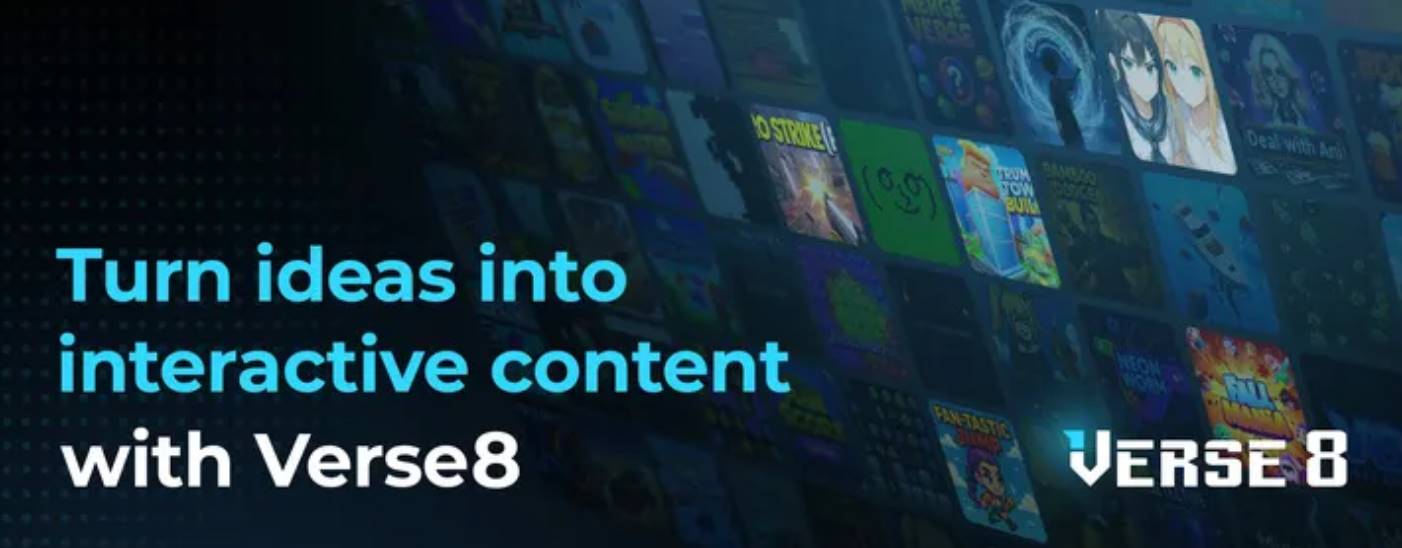
Verse8's Self-Description: How to Support Creative Expression in the AI Era

Verse8 is an AI-native creation layer that transforms ideas into interactive games and stories, where every creation can be owned, remixed, and accumulate value over time. Unlike OpenAI (chat), Runway (video), or Stability (image), Verse8 focuses on interactive content as the new expressive medium, starting with games as its first vertical. The platform was built to overcome the high barriers of traditional interactive content creation—long cycles, high costs, and complex coordination across coding, art, and design. By collapsing the entire production process into a single prompt, Verse8 eliminates creative friction, automates invisible work, and enables anyone to express ideas interactively. Its core architecture consists of two layers: - **Agent8**: A multi-agent system that acts as a full production team—handling art, code, design, and testing through a single prompt. It includes an AI-native web engine with templates (FPS, RPG, etc.), automated asset generation (2D/3D optimization, animation, audio), and built-in infrastructure (Git, servers, analytics, payments). - **Verse8 Ecosystem**: A global deployment network where creators can instantly publish, share, and remix content. Integrated with Story Protocol, it enables on-chain IP ownership and programmable rights, allowing derivative works while rewarding original authors. Verse8 aims to democratize creativity—enabling everyone to create, not just consume. It supports instant world-building, prompt-based creation, and collaborative value growth through remixing and shared ownership. Learn more: Website: https://verse8.io X: https://x.com/Verse_Eight Discord: https://discord.gg/verse8-official

深潮12/10 22:52

Verse8's Self-Description: How to Support Creative Expression in the AI Era

深潮12/10 22:52

How to Build a Polymarket Passive Income Bot from Scratch

Polymarket, a leading prediction market platform on Polygon, allows users to bet on real-world events using USDC. Its open API, transparent order book, low fees, and numerous human traders making errors create a fertile ground for automated trading bots. This article breaks down bot strategies from basic to advanced. Beginner-level bots include airdrop farming bots that generate volume by repeatedly buying and selling the same position, and volatility捕捉 bots that bet on mean reversion after sharp price swings. Intermediate strategies involve market-making bots, which profit from bid-ask spreads and liquidity rewards by placing limit orders, though they require significant capital and risk losses during sudden market moves. Advanced bots include arbitrage bots that exploit pricing inefficiencies between related outcomes (e.g., YES/NO shares summing under 100%), and AI-powered bots that integrate multiple data sources—historical prices, news, on-chain activity, social sentiment—to identify mispriced probabilities and execute trades across hundreds of markets. All bots require access to Polymarket’s API, a Polygon wallet for USDC transactions, historical data storage (e.g., PostgreSQL), and a Python-based toolchain. Bots succeed due to their speed, discipline, scalability, and data-processing capabilities. However, effective risk management is crucial, as strategies can fail due to liquidity issues, unexpected news, or intense competition. Building a profitable AI bot is particularly resource-intensive, akin to running a startup.

Odaily星球日报12/10 03:15

How to Build a Polymarket Passive Income Bot from Scratch

Odaily星球日报12/10 03:15

活动图片