World's Richest Man, 'Silicon Valley Iron Man' Musk, to Take SpaceX Public in 2026!

marsbitPublished on 2025-12-11Last updated on 2025-12-11

Abstract

Elon Musk, the world's richest person and CEO of SpaceX, plans to take the company public in 2026 with a target valuation of approximately $1.5 trillion. The IPO is expected to raise "significantly more than $30 billion," potentially making it the largest in history, surpassing Saudi Aramco's 2019 offering. A key driver of this ambitious valuation is a new narrative: **space-based AI computing**. Musk introduced the concept of "space AI compute" at a recent investor conference, arguing that within five years, running AI training and inference in space could become the lowest-cost solution. The core advantages include near-uninterrupted solar power and the vacuum of space acting as an ultimate heat sink. Additionally, with its reusable Starship rockets, SpaceX aims to drastically reduce launch costs to as low as $200–300 per kilogram. This vision, however, faces significant technical hurdles. Challenges include managing extreme heat radiation in direct sunlight, protecting hardware from cosmic radiation, and the economic risks associated with potential launch failures. Competitors are also entering the arena, including Jeff Bezos’ Blue Origin, which is developing its own orbital data centers, and Sam Altman’s OpenAI, which is reportedly considering acquiring a rocket company. Despite the challenges, Wall Street has responded positively. Firms like Ark Invest are now valuing SpaceX as a high-growth AI infrastructure company rather than a traditional aerospace firm, projectin...

World's Richest Man, 'Silicon Valley Iron Man' Musk, to Take SpaceX Public in 2026.

Overall valuation is approximately $1.5 trillion (about RMB 10.6 trillion), and the planned financing scale will "significantly exceed $30 billion". If achieved, it will surpass Saudi Aramco's 2019 IPO ($29.4 billion) to become the world's largest IPO.

The grand goal of a $1.5 trillion valuation cannot rely solely on the old dream of Starlink and Starship's "stars and seas"; Musk has opportunistically crafted a new dream: Space Computing Power.
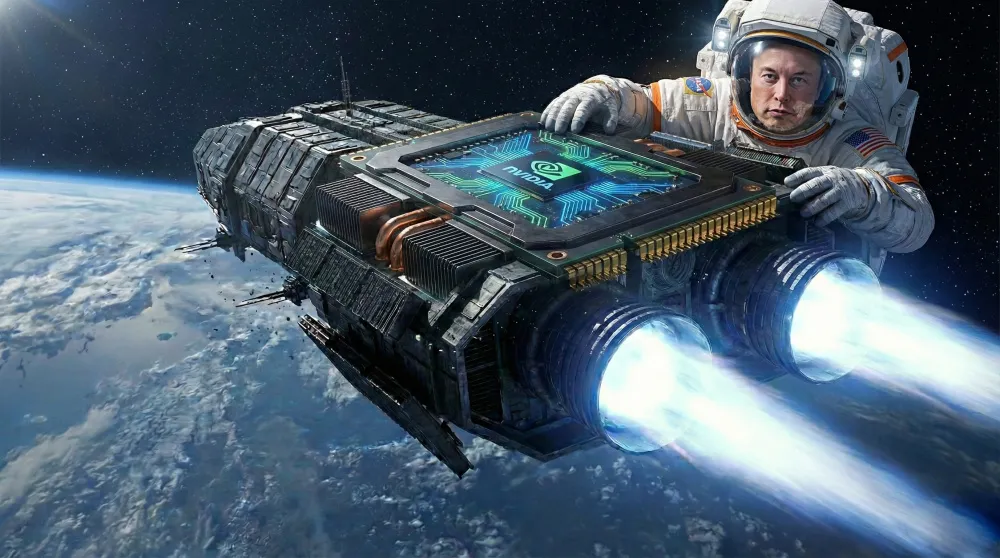
Those sharing the same dream include Bezos, Altman, and Silicon Valley giants like Google, NVIDIA, and Amazon. There's no other way—infrastructure and electricity on Earth are just too expensive.

At the Baron Capital Annual Investor Conference on November 18, Musk publicly elaborated on the concept of "Space AI Computing Power" for the first time. "Within five years, running AI training and inference in space will become the lowest-cost solution."

Musk clearly stated that Earth's orbit has the never-setting sun providing free electricity; the cosmic vacuum is the ultimate heat sink; the reusability of Starship will significantly reduce the cost of transporting materials to Earth's orbital space.

However, to utilize space's environment and energy, computing power in space requires additional technological advancements, including radiation protection, heat dissipation, etc., which in turn raises economic feasibility questions—the very problem space-based computing was meant to solve economically.

A senior aerospace researcher quipped: "Placing user data under the狂暴solar wind冲刷, what he needs isn't a computer, it's a brain supplement."

01

The Core of the New Narrative: Space Computing Power

Musk's proposed "space data center" is not science fiction but directly targets the two major bottlenecks of current Earth-based AI infrastructure: energy costs and cooling costs.

The environmental characteristics offered by space make it a leapfrog alternative, primarily including the never-setting sun and the cosmic vacuum. The former provides almost free energy, while the latter is a natural "ultimate heat sink".

As AI models expand dramatically, energy has become the biggest pressure point in the computing economy. Training a model like GPT-5 could cost hundreds of millions of dollars, with electricity costs constituting a significant portion.
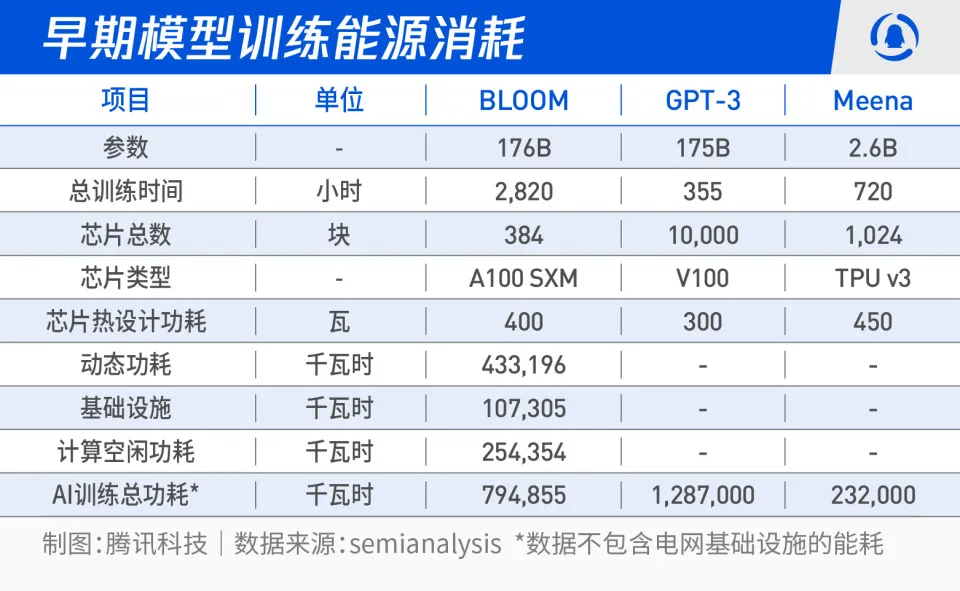
In contrast, low Earth orbit could enable space computing power to achieve a cost floor that is unattainable on Earth.

First, there is continuous solar resources—low orbit satellites circle the Earth about 16 times a day. Through orbital distribution and inter-satellite link scheduling, tasks can be switched in real-time to nodes in the sunlit zone, achieving nearly 24-hour energy supply.

Second, no land, power grid, or substation facilities are needed. Once deployed, the long-term cost of space-based solar power approaches zero.

Energy and infrastructure become cheap in space, but the heat dissipation problem must be solved. High-performance GPUs have extremely high thermal density, causing 30%–40% of a ground data center's electricity to be consumed by cooling.

In space, the vacuum environment, lacking convection and conduction, relies solely on thermal radiation for heat dissipation. For satellites on the sun-facing side, this is equivalent to "barbecue mode". Additionally, space radiation and high-energy particles could potentially disrupt high-performance computing processes, making them "fragmented".

"The computing chips you use on the ground likely won't work up there," emphasized the aforementioned researcher.

Another key element supporting SpaceX's space computing power story is Starship's launch capacity cost.

The economics of space computing power are built upon Starship's extremely low launch costs. Musk's planned Starship V3 (single payload ~100 tons) could, with high-frequency reuse, push the launch price down to $200–300 per kilogram, far lower than existing rockets.

Based on this estimate, the transportation cost to send a 200MW-class data center into orbit would be about $5–7.5 billion, still significantly lower than the total investment required to build a similar-scale AI supercomputer on Earth ($15–25 billion).

The story is always beautiful, but reality presents numerous challenges.

Beyond the aforementioned heat dissipation and cosmic rays, the first issue proponents of the "space computing power" narrative must consider is rocket explosions and accidents—the cost of such low-probability events would far exceed the value brought by increased launch capacity, especially considering 1GW of computing power on Earth is worth up to $50 billion.

From this perspective, everything returns to the original point: the "economic problem".

Regarding heat dissipation, while it might be possible to utilize the deep space's low temperatures, this raises another issue—distance is too great, requiring another more efficient energy source, such as nuclear power, to replace solar.

As for radiation, although it can be mitigated through radiation hardening, this adds extra technical challenges and costs beyond standard GPUs.

"Radiation hardening, the materials and processes themselves are expensive, and there's an upper limit to reinforcement; it's never as effective as the atmosphere's radiation protection," said the aforementioned researcher.

To address this, SpaceX is leveraging Tesla's experience with automotive-grade AI chips: Triple Modular Redundancy (TMR) architecture and real-time verification significantly improve radiation resistance.


02

Silicon Valley Capital Pushers "Get On Board"

SpaceX's new space computing power narrative is receiving a strong response from Wall Street and Silicon Valley capital.

Investment bank Morgan Stanley emphasized in a recent research report that the market's repricing of SpaceX's valuation essentially stems from the renewed expansion of its commercial boundaries. The "orbital data center" has become a new AI infrastructure narrative driving its valuation surge.
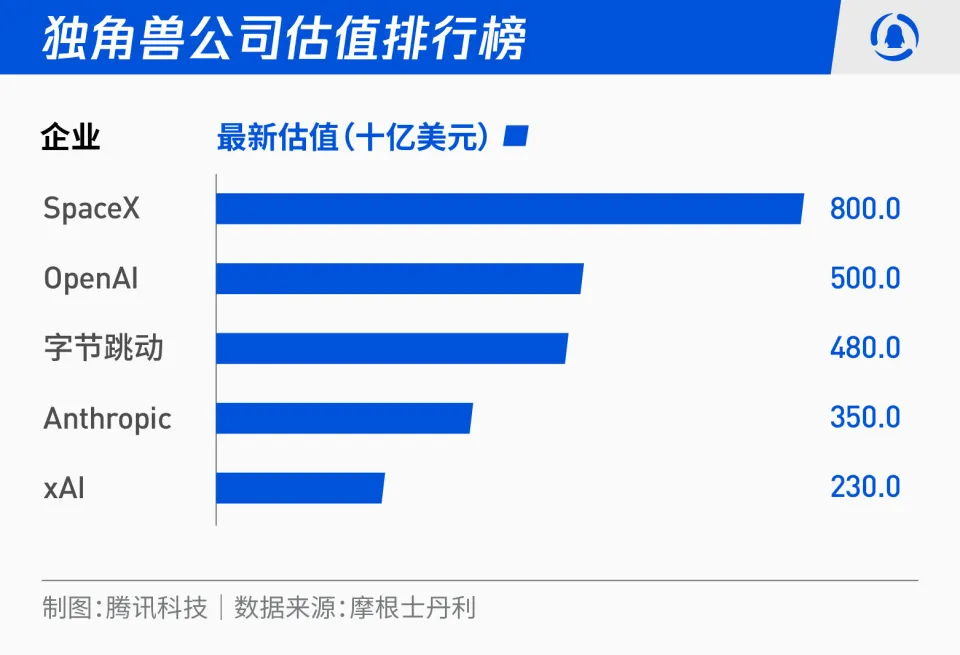
Analysts pointed out that this concept not only explains why the market is willing to price SpaceX like a high-growth software company but also why its valuation has shown a trend of doubling in half a year.

Wall Street has responded positively to Musk's new story for SpaceX. The most representative example is Cathie Wood's Ark Investment.

Ark's latest model explicitly values SpaceX entirely as a high-growth software company and AI infrastructure company, rather than a traditional aerospace or telecommunications enterprise. Almost all the新增valuation in their model comes from the "Space AI Computing Power" business line.

As long-time investors in Musk, they made aggressive scenario assumptions: By 2030, Starlink terminal users reach 120 million, contributing $300 billion in annual revenue; Orbital data centers will bring an additional $80–120 billion in revenue, with a net profit margin exceeding 70%, far higher than ground-based cloud services.

Ark Investment believes the key point is reducing Starship launch costs to below $100 per kilogram. After that, the scaled deployment of space computing power will experience exponential growth, similar to Amazon Web Services (AWS) after its launch, pushing SpaceX to become a $2.5 trillion-level company.

On the other hand, Silicon Valley mogul Peter Thiel's influence on SpaceX is more strategically significant.

As one of the earliest and most crucial external investors, Thiel provided a lifeline in 2008 when SpaceX faced three consecutive launch failures and was on the verge of bankruptcy, investing $20 million through Founders Fund as a timely rescue. He has since made multiple additional investments in SpaceX.

Thiel's support for SpaceX goes far beyond money itself; it also comes with the authoritative endorsement of the Silicon Valley ideology. Peter Thiel's involvement lends credibility to the "space computing power" narrative. More importantly, Thiel leverages his "Silicon Valley-Washington" influence to secure key policy and regulatory space for SpaceX.

The backing of these capital大佬相当于给SpaceX 1.5万亿美元的估值贴上了“可信”的标签. Therefore, Morgan Stanley noted in the aforementioned report that while Musk denied the rumored "$800 billion valuation," he was更多的是否认“融资行为”,并未否认估值本身.

Progress on Starship and Starlink, acquisition of global direct-to-cellular spectrum, the orbital data center becoming a new narrative, and SpaceX's overwhelming capability of capturing 90% of global launch mass have convinced capital markets that these variables will become the "main artery of future AI infrastructure".


03

Competition, Bubbles, and Risks

Over the past few years, Musk hasn't been the only one pushing the development of space computing power.

As early as 2021, the Barcelona Supercomputing Center (BSC) in Europe and Airbus Defence and Space jointly launched the GPU4S (GPU for Space) project, funded by the European Space Agency (ESA), to verify the feasibility of embedded GPUs in aerospace applications.

The project produced an open-source benchmark suite, GPU4S Bench, for evaluating performance in image processing, autonomous navigation, etc., and yielded the open-source benchmark test suite OBPMark adopted by ESA, laying the foundation for Europe's technological autonomy in orbital computing.

On November 2, 2025, a SpaceX Falcon 9 successfully launched the first experimental satellite, Starcloud-1, for startup Starcloud into low Earth orbit. The satellite carried an NVIDIA H100 GPU, marking the first verification of in-orbit AI data processing capability. It is reported that NVIDIA and Starcloud jointly developed a combined vacuum heat dissipation architecture, using highly thermally conductive materials on the satellite's exterior to conduct heat to the surface for dissipation via infrared radiation.

As Musk's old rival in the commercial space race, Jeff Bezos is also pushing Blue Origin to develop orbital AI data center technology, planning to use space-based solar power to fuel large-scale AI computing power.

He predicts that within the next 20 years, the cost of orbital data centers could be lower than ground facilities.

Another opponent in the AI field, OpenAI CEO Sam Altman, is also eager, considering acquiring rocket company Stoke Space to send AI computing payloads into space.

It can be said that the path for SpaceX to reach its $1.5 trillion valuation via "space computing power" is full of challengers, but the most direct opponent at this stage is Amazon's Project Kuiper.

Public information shows that Kuiper plans to deploy 3,200 satellites between 2026 and 2029 through launch agreements with Blue Origin. Its biggest advantage lies in AWS's global cloud ecosystem, which can offer enterprises a "ground + space" hybrid computing power offering.

But in Thiel's view, Kuiper still belongs to an "extension of the traditional cloud," relying on an Earth-infrastructure mindset that hasn't changed. Whereas SpaceX's space AI is a completely new paradigm: moving the computing center itself into orbit, making Earth data centers a supplementary layer. This paradigm difference determines the ceiling for both sides in the future "orbital cloud" competition.

Beyond technical and competitive challenges, regulatory issues must be considered—including orbital debris management, international spectrum coordination, and space militarization controversies—any of which could affect SpaceX's progress节奏in the next two to three years.

Returning to SpaceX: From the "Starlink IPO" in 2019, to "Starship is the core asset" in 2022, to the current "space data centers will become the cheapest AI computing power," Musk has rewritten SpaceX's narrative three times in the past six years, almost每一次都从质疑变成现实原型 (each time transforming from skepticism to a reality prototype).

Now, he is tying together Tesla's chip capabilities, xAI models, Starlink bandwidth, and Starship launch capacity into a unified strategy, targeting the most expensive resource of the AI era—low-cost computing power.

Wall Street has already started betting—the question is, can the richest man's new version of the "space dream" once again take shape?


Trending Cryptos

Related Questions

QWhat is the core of Elon Musk's new narrative for SpaceX's 2026 IPO, and what are its main advantages?

AThe core of the new narrative is 'Space Computing' or 'Orbital Data Centers'. The main advantages are access to nearly free, continuous solar power in orbit and the vacuum of space acting as the 'ultimate heat sink', which could significantly reduce the energy and cooling costs associated with large-scale AI computing on Earth.

QWhat major challenge does placing computing hardware in space present, according to the article?

AA major challenge is protecting the hardware from intense solar radiation and high-energy particles, which can disrupt high-performance computing processes. This requires developing and implementing expensive radiation-hardened technology and materials.

QWhich financial institution's analysis is cited as supporting the new 'space computing' narrative for SpaceX's valuation?

AInvestment bank Morgan Stanley is cited. Their analysis states that the 'orbital data center' concept is a new AI infrastructure story driving a re-rating of SpaceX's valuation, explaining why it's being valued like a high-growth software company.

QWho are some of the key competitors also exploring the concept of space-based computing, as mentioned in the article?

AKey competitors include Jeff Bezos' Blue Origin, which is developing orbital AI data center technology, and OpenAI CEO Sam Altman, who is considering acquiring rocket company Stoke Space for AI computing payloads. Amazon's Project Kuiper is also a direct competitor leveraging its AWS cloud ecosystem.

QWhat is the projected cost target for SpaceX's Starship V3 launch to make space computing economically viable, according to Ark Invest's model?

AArk Invest's model assumes a crucial target of reducing the Starship launch cost to under $100 per kilogram. Achieving this is seen as a key trigger for the exponential growth of space computing deployment.

Related Reads

Uniswap Founder: When Stocks and Treasuries Are Fully On-Chain, How Will AMMs Restructure the Global Market?

Uniswap founder Hayden Adams argues that as traditional assets like stocks become tokenized, Automated Market Makers (AMMs) could fundamentally restructure global markets. The core insight is that AMMs are most efficient in "correlated pairs"—such as NVDA/SPY—where assets move together. In these pairs, passive liquidity providers (LPs) who are willing to hold the underlying assets face lower inventory risk and minimal hedging costs compared to traditional, delta-neutral market makers. This cost advantage allows AMMs to undercut professional firms. Tokenization enables assets to trade directly against each other on a shared settlement layer, rather than being siloed in dollar-based systems. Adams observes this pattern already emerging in DeFi, where assets naturally pair with correlated benchmarks (e.g., ETH for Ethereum assets). He believes this will extend to tokenized stocks, with liquidity concentrating in low-volatility correlated pairs, while a few high-volume "bridge pairs" (like SPY/USD) handle dollar conversions. The article highlights that early correlated markets for tokenized stocks already exist (e.g., on Robinhood's chain), and Uniswap v4 hooks like DualPool can further boost LP returns. Adams draws a parallel to the rise of passive index funds, suggesting passive AMM liquidity could similarly democratize market-making and capture significant market share from traditional finance. A response from crypto KOL Cody adds practical analysis, noting that while the correlated pair strategy reduces impermanent loss, current on-chain fees may not yet fully compensate for it. He shares his own LP strategy using valuation models, emphasizing that AMMs offer a novel, low-cost market-making avenue for those willing to hold inventory.

marsbit9m ago

Uniswap Founder: When Stocks and Treasuries Are Fully On-Chain, How Will AMMs Restructure the Global Market?

marsbit9m ago

Goldman Sachs Buys Volatility, Turns Bitcoin into a Yield Business

Goldman Sachs acquired NEOS Investments for up to $2.25 billion, gaining a suite of ETFs that generate income by selling options against crypto assets, particularly Bitcoin. This includes the BTCI fund, which sells call options against Bitcoin ETF holdings to capture high premiums from crypto’s volatility, offering investors stable cash flow—around 27% annualized in returns—while capping upside potential and fully exposing them to downside risk. The move highlights Wall Street’s broader push to package crypto-native yield—through staking, lending, and structured products—without taking directional bets on prices. Firms like Fidelity, JPMorgan, and Morgan Stanley now offer staking services or accept crypto as collateral for loans, collecting steady fees regardless of market direction. In contrast, native crypto firms like Bitwise remain vulnerable to market downturns, as their revenue depends entirely on assets under management. This reflects a strategic pivot: large institutions no longer need to “believe” in crypto to profit from it. They monetize volatility and investor activity through fee-based structures, leaving price risk to retail investors. As regulatory shifts like the proposed 401(k) rules unfold, yield-generating crypto products may gain even broader adoption in traditional portfolios, further cementing Wall Street’s role as a neutral intermediary capturing reliable revenue streams from the ecosystem.

marsbit13m ago

Goldman Sachs Buys Volatility, Turns Bitcoin into a Yield Business

marsbit13m ago

AI Launches a Fierce Assault on Cancer, Virtually Tests 4,000 Anti-Cancer Drugs, Google Gemma Downloads Exceed 1 Billion

Google's open-source Gemma AI model family has reached a new milestone, surpassing 10 billion cumulative downloads in two and a half years since its February 2024 launch. This growth has fueled a vast ecosystem, with over 100,000 developer-derived model variants powering diverse applications, from NASA satellites to over 100 million phones. A standout application involves cancer research. In collaboration with Google Research and Yale, a team developed a 27-billion-parameter model called Cell2Sentence-Scale 27B (C2S-Scale). This model innovatively converts complex single-cell sequencing data into a "sentence" of gene names ranked by activity, allowing it to analyze cellular behavior. It was used to conduct a "dual-context virtual screen" of over 4,000 drugs, aiming to find one that specifically boosts antigen presentation—a key process for immune system recognition—only in the presence of low interferon signals (a "cold tumor" context), not in neutral conditions. The model identified silmitasertib (CX-4945), a CK2 kinase inhibitor, as a top candidate. Subsequent live-cell experiments validated this AI-generated hypothesis, showing that the drug combined with low-dose interferon increased antigen presentation by about 50%, whereas neither element alone had a significant effect. This represents a novel, AI-proposed mechanistic pathway for potential cancer therapy. Beyond biomedicine, the Gemma ecosystem is expanding into unique domains. Models have been deployed in space on high-performance GPUs and are being used in projects like DolphinGemma to decipher dolphin communication patterns. The 10-billion-download milestone underscores a key trend: the disruptive potential of AI lies not just in raw model capability but in its widespread, silent integration into diverse hardware and real-world applications, as evidenced by the thriving "Gemmaverse" community.

marsbit14m ago

AI Launches a Fierce Assault on Cancer, Virtually Tests 4,000 Anti-Cancer Drugs, Google Gemma Downloads Exceed 1 Billion

marsbit14m ago

Shocking: OpenAI Fully Open-Sources Codex Harness

OpenAI has open-sourced the core framework of Codex, called "Harness," under an Apache-2.0 license. This move allows developers to deeply integrate AI agents into their own applications and workflows, moving beyond the limitations of generic chat interfaces. The Harness is the underlying execution system that manages an AI agent's complete lifecycle: understanding tasks, maintaining memory, using tools, handling failures, and requesting human approvals. OpenAI demonstrated that optimizations to the Harness alone can dramatically boost a model's performance, tripling scores on a benchmark while using significantly fewer tokens. The release includes three key components: a CLI tool (`codex exec`) for automated tasks, official SDKs (TypeScript/Python) for programmatic control, and the `app-server` for embedding agents directly into products. This enables features like persistent state, real-time event streaming, and human-in-the-loop controls. Early adopters showcase its versatility beyond coding. Examples include a tax preparation system that cut processing time by one-third, Cisco's platform for building apps with natural language, and a demo logistics dashboard where agents analyze data and propose actions within the existing interface. This paradigm shift grants developers full control over the user interface, context, tools, and security boundaries. AI becomes an invisible assistant within specialized software, rather than a separate chatbot. By open-sourcing the engine behind its powerful agents, OpenAI aims to spark a new wave of native, deeply integrated AI applications.

marsbit19m ago

Shocking: OpenAI Fully Open-Sources Codex Harness

marsbit19m ago

Trading

Spot

Hot Articles

Discussions

Welcome to the HTX Community. Here, you can stay informed about the latest platform developments and gain access to professional market insights. Users' opinions on the price of S (S) are presented below.

活动图片