Investors Are Betting Ozak AI Could Deliver Exponential Returns While Traditional Cryptos Stall

TheNewsCryptoPublished on 2025-12-09Last updated on 2025-12-09

Abstract

Investors are expressing strong confidence in Ozak AI (OZ), believing it can deliver exponential returns even if the broader cryptocurrency market stagnates. This optimism is driven by a highly successful presale that has sold over 1 billion tokens and raised more than $4.86 million, with the token price rising 14x from $0.001 to $0.014. Early investors could see a 1,000x gain if the token reaches its $1 target. Key factors supporting this growth include the integration of AI tools, a Decentralized Physical Infrastructure Network (DePIN) for secure staking and payments, and cross-chain functionality. Recent technological developments, such as the x402 Protocol for low-cost computation and the Dune Analytics Dashboard for presale transparency, further bolster investor confidence in the project's potential.

Investors have expressed their confidence in Ozak AI, citing that it could generate exponential ROI even if the crypto market finds a stagnation point. The confidence stems from the OZ presale progress, integration of AI-powered tools into every necessary component, and recent technological developments.

Returns on OZ and Presale Progress

The OZ presale has, so far, sold over 1 billion tokens and raised more than $4.86 million in funds. The price of Ozak AI tokens has risen from $0.001 to $0.014 for a 14x ROI and are now on the way to reaching $1. This would be a significant 1,000x gain for early investors. Even for investors accumulating at $0.014, the said milestone translates to a growth of 71x.

For reference, an investment of $100 made at $0.001 would become $100,000. The same investment made at $0.014 would become $7,100 when OZ reaches $1.

Expected returns before reaching $1 are $0.5 and $0.8. This is despite the crypto market stalling or fluctuating amid rising uncertainties. The ROI comes to 35x and 57x, respectively, from the current price of $0.014.

Factors Supporting Ozak AI’s Market-Defying Growth

Some of the factors that are supporting the growth of Ozak AI are its fusion of AI tools, DePIN, and cross-chain functionality. The fusion of AI tools is reflected in the utility of AI Agents and a real-time analytics feed to assist community members in auto-optimization of yields.

DePIN, short for Decentralized Physical Infrastructure Network, helps orchestrate three functions, namely staking, payments, and work. It does that through Ozak AI Contracts on a smart contract execution layer. DePIN further works to prevent loss and tampering of financial data by leveraging blockchain and IPFS nodes.

Cross-chain functionality is ensuring long-term sustainable growth of Ozak AI by facilitating operations across multiple blockchains.

Ozak AI’s Technological Developments

Ozak AI, most recently, implemented the x402 Protocol. It streamlines acquisition of computation and lowers the cost for the same to a fraction of a cent. X402 Protocol eliminates the need for a sign up or a subscription plan. Users can, instead, choose to automatically pay for the bit of computation they need. It also sidelines API keys.

Ozak AI also launched Dune Analytics Dashboard. It boosts transparency by operating as a presale dashboard. Members can validate the presale data directly with the on-chain data. The dashboard updates every 24 hours and does the job of keeping the presale data fully open.

Investors’ Confidence in Ozak AI

Investors are confident about Ozak AI generating high ROI even if the crypto market stalls. OZ has demonstrated its potential during presale and is tirelessly working on upgrading its technological components. This includes the launch of Dune Analytics Dashboard and x402 Protocol, among others.

Some more factors favoring the projected growth of Ozak AI tokens are DePIN, cross-chain functionality, and a fusion of AI tools, to mention a few.

  • Website: https://ozak.ai/
  • Twitter/X: https://x.com/OzakAGI
  • Telegram: https://t.me/OzakAGI

Disclaimer: TheNewsCrypto does not endorse any content on this page. The content depicted in this Press Release does not represent any investment advice. TheNewsCrypto recommends our readers to make decisions based on their own research. TheNewsCrypto is not accountable for any damage or loss related to content, products, or services stated in this Press Release.

TagsBlockchainOzak AI

Related Reads

Has Microsoft Lost Its Way in the AI Race, and Can Copilot Bring It Back on Track?

Microsoft, once seen as an early AI frontrunner due to its investment in OpenAI, is navigating a strategic shift amid increased competition. Its initial reliance on OpenAI’s GPT models has been complicated by OpenAI’s growing ambitions as a direct competitor, rapid advancements from rivals like Claude and Gemini, and the disruptive rise of AI agents, which challenge its traditional SaaS business model. These factors contributed to stock declines and slower-than-expected adoption of its flagship Copilot products. In response, CEO Satya Nadella has taken a hands-on role in product development, signaling the urgency of change. Microsoft is pivoting from a model-centric strategy to a "model-agnostic" enterprise platform approach. It aims to become the foundational layer connecting various AI models—from OpenAI, Anthropic, or its own new "Superintelligence" team—with enterprise workflows, data, security, and cloud services. Recent organizational changes merged consumer and enterprise Copilot teams to accelerate innovation, exemplified by new products like Copilot Tasks and Copilot Cowork. However, this transformation comes at a high cost. Microsoft faces massive capital expenditures, potentially reaching ~$190 billion by 2026, to support AI infrastructure. While its platform strategy shows early signs of traction with growing Azure AI revenue, it must balance startup-like agility with the reliability expected by enterprise clients. The core challenge is no longer being the sole AI winner but defending its position as the essential enterprise software entry point amidst rapid technological commoditization and the shift towards always-on AI agents.

marsbit41m ago

Has Microsoft Lost Its Way in the AI Race, and Can Copilot Bring It Back on Track?

marsbit41m ago

Why Haven't Forex Stablecoins Taken Off?

Why FX Stablecoins Never Took Off: A Path Forward via Synthetic FX Despite the explosive growth of stablecoin-powered digital banking, which has seen ~$6B in VC investment and a 24x surge in crypto card spending in under a year, a major limitation persists: these banks are essentially dollar-only accounts. This leaves 95-99% of global accounts, which are denominated in non-USD currencies, underserved. Attempts to create native foreign currency (FX) stablecoins (like EURC) have largely failed, with total FX stablecoin TVL at ~$600M compared to $400B for USD stablecoins—a 700x gap. These FX tokens face critical challenges: fragile pegs due to low liquidity, limited exchange/FinTech acceptance, poor on/off-ramps, complex regional compliance, and a chicken-and-egg adoption problem. The article argues that the solution lies not in competing with entrenched USD stablecoin networks (USDT/USDC), but in adopting a synthetic FX model inspired by traditional finance. Specifically, it advocates for Mark-to-Market Non-Deliverable Forwards (NDFs)—cash-settled FX derivatives that allow users to maintain underlying USD stablecoin holdings while having their account balance and P&L denominated in a foreign currency. This approach offers key advantages: strong oracle-based pegs, retention of deep USD stablecoin liquidity and yield, superior on/off-ramps, scalability to any currency with a reliable feed, and capital efficiency. It mirrors how modern institutional FX markets operate. Primary use cases for on-chain NDFs include: 1. **Digital Banks/Wallets:** Enabling multi-currency accounts for international users without leaving the USD stablecoin ecosystem, boosting deposits and retention. 2. **FX Carry Trade Vaults:** Offering access to sovereign interest rate differentials (e.g., earning yield on BRL) in a more stable and scalable format than crypto-native products like Ethena. 3. **Global Enterprise Payments:** Allowing merchants to receive payments in local currency equivalents while settling in USD stablecoins, similar to services offered by Stripe for fiat. The conclusion is that synthetic FX, not native FX stablecoins, is the viable path to integrating foreign exchange into the growing stablecoin digital banking landscape, potentially unlocking the next phase of institutional DeFi and multi-trillion-dollar global adoption.

链捕手1h ago

Why Haven't Forex Stablecoins Taken Off?

链捕手1h ago

IOSG Founder: Web3 Is 'Losing Blood,' How Can Practitioners Survive Better?

IOSG Founder: Web3 Is "Bleeding Out" – How Can Practitioners Survive Better? In a candid reflection, the founder of IOSG Ventures voices deep concerns about the current state of Web3, describing an ecosystem experiencing severe "blood loss." Despite the recent MuShanghai event showcasing a successful pivot towards a more diverse, global community, a somber reality persists: many crypto-native attendees were there exploring exits or new labels in biotech, AI, and robotics. The core issue is identified as a breakdown in the ecosystem's positive feedback loop. Alarmingly, underestimated "low-probability bad events" are occurring simultaneously: a significant brain drain of Chinese developers to AI, a lack of breakout applications despite massive funding, and a widening credibility gap for practitioners globally, often stigmatized as scam artists. This has created a dire接班人 (successor) problem, with the next generation seeing little professional prestige or financial upside in crypto compared to fields like AI. A significant portion of the critique focuses on Ethereum and Vitalik Buterin. While not pessimistic about Ethereum's technology, the founder worries that critical development windows were missed by focusing on niche technical narratives like ZK and L2 instead of mass-market applications. A more urgent concern is that Vitalik may be isolated in an "information bubble," shielded from the grassroots community's hardships by layers of intermediaries, preventing crucial feedback from reaching him. The call is for Vitalik to return to a founder's mindset, re-engage directly with the community, and rally efforts for the next decade. The divergence between U.S. and Chinese OG (Original Gangster) ecosystems is stark. While many U.S. builders reinvest their wealth into the ecosystem, the Chinese scene suffers from a severe lack of "造血能力" (blood-making ability), with most market-driven funds struggling and many early success stories cashing out entirely. This threatens the entire Asian Web3 ecosystem's survival. For individual practitioners, survival advice is pragmatic: find your core "why," maintain life balance beyond token prices, continuously learn new skills (like AI), form small, trusted alliances for mutual support, and practice self-compassion. The industry's greatest need is not money or tech, but lighthouses—individuals at all levels who offer mentorship, grants, referrals, and honest reflection to guide others. The piece concludes with a direct appeal: OGs must pay forward the opportunities the industry gave them; founders must not struggle alone; and builders must continue their work, ensuring it remains a viable profession. The survival of Web3's "cathedral" depends not on any single leader but on the collective responsibility of everyone who remains.

marsbit2h ago

IOSG Founder: Web3 Is 'Losing Blood,' How Can Practitioners Survive Better?

marsbit2h ago

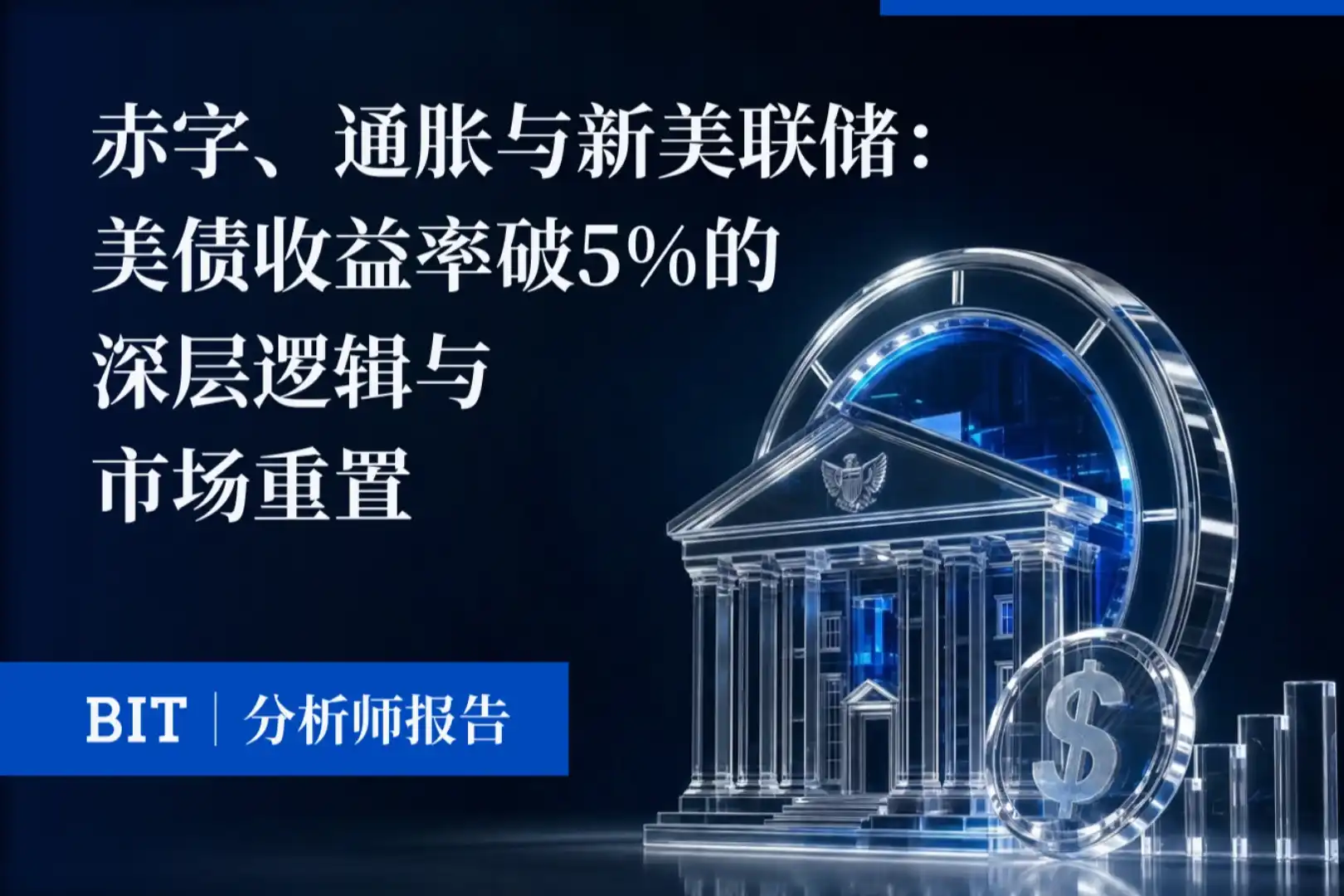
Deficits, Inflation, and the New Fed: The Deep Logic Behind US Bond Yields Breaking 5% and the Market Reset

In the week of May 15-19, 2026, U.S. long-term Treasury yields surged to multi-year highs, with the 30-year yield hitting 5.2%, a level unseen since 2007, and the 10-year yield climbing to 4.687%. Equity markets declined in response. Four primary factors are driving the rise in yields. First, stubborn inflation persists, with April wholesale prices rising 6% year-over-year, fueling expectations of potential future Fed rate hikes instead of cuts. Second, newly confirmed Fed Chair Kevin Warsh inherits a complex inflation battle, with markets closely awaiting his first FOMC meeting. Third, deteriorating U.S. fiscal health, marked by large deficits and rising debt servicing costs, is eroding the traditional "safe-haven" premium for Treasuries. Fourth, the "One Big Beautiful Bill" tax cuts are projected to add trillions to the national debt, contributing to Moody's recent credit rating downgrade. Rising yields pressure stocks through several channels: a higher discount rate reduces the present value of future earnings (especially for growth stocks); rising risk-free rates compress equity risk premiums, making bonds relatively more attractive; higher borrowing costs impact consumers and corporations; and a stronger dollar affects multinational earnings. For investors, the environment favors value and financial stocks over long-duration growth stocks. Bond investors find attractive yields in short to intermediate maturities, while income investors see the best fixed-income opportunities in over a decade. Key developments to watch include Chair Warsh's first FOMC meeting, upcoming inflation data, Treasury auction demand, and whether the 30-year yield approaches 6%, a level that could trigger a more sustained equity valuation reset. The bond market's message is clear: the era of cheap government borrowing is over, posing a central challenge for markets in late 2026.

marsbit2h ago

Deficits, Inflation, and the New Fed: The Deep Logic Behind US Bond Yields Breaking 5% and the Market Reset

marsbit2h ago

Trading

Spot
Futures

Hot Articles

Discussions

Welcome to the HTX Community. Here, you can stay informed about the latest platform developments and gain access to professional market insights. Users' opinions on the price of AI (AI) are presented below.

活动图片