When Crypto Assets Generate Yields and Stocks Become Collectibles: A Great Migration in Valuation Logic

marsbitDipublikasikan tanggal 2025-12-27Terakhir diperbarui pada 2025-12-27

Abstrak

The article explores the evolving valuation logic of markets, distinguishing between "cash flow markets" (driven by discounted future earnings) and "sentiment markets" (driven by collective belief and speculation). It observes a convergence: traditional assets like stocks are becoming more narrative-driven (e.g., meme stocks), while crypto assets, once purely speculative, are increasingly generating measurable cash flows (e.g., staking yields). This shift is facilitated by changes in the three layers of any market: the underlying asset, the ownership token, and the trading infrastructure. The author argues that liquidity acts as a double-edged sword—beneficial in cash flow markets but potentially destabilizing in sentiment-driven ones. Ultimately, markets are blending into a spectrum from pure cash flow to pure sentiment, driven by technology and new financial instruments, requiring systems that balance measurable value and narrative-driven appeal.

Author: Matt Harris

Compiled by: Tim, PANews

At a dinner party last summer, someone mistakenly thought I worked in finance and asked me a question about the art market. Although I am not an expert, I answered from the perspective of a venture capitalist. In the end, I barely managed to explain how the art market operates differently from the markets I have studied all my life.

However, these questions lingered in my mind. Why could I be so familiar with one market yet feel so alienated by another? Can assets cross between these two markets, or are they forever confined to their predetermined valuation models?

Two Types of Markets

Every market answers the same question: "What should this be worth?" But the underlying logic differs.

Cash Flow Markets are essentially a math problem. Whether it's a share of stock or a bond, the value equals the present value of discounted future cash flows. These markets are vast, highly liquid, and mostly self-correcting. Mispricing is eventually arbitraged away, though sometimes the process is slow enough to test investors' patience—or even make them stop taking your calls.

Sentiment Markets, on the other hand, are a game of chasing market sentiment. Pricing isn't based on future earnings but on what the next buyer is willing to pay, which in turn depends on their guess about the next buyer's psychological expectations. It's like being in a hall of mirrors: art, luxury watches, fine wine, NFTs, meme stocks, and (depending on your beliefs) Bitcoin all fall into this category.

These two types of markets each have their own internal logic: one measures future cash flows, the other measures collective belief. Most of the time, we assume they are distinct, but reality is blurring the lines between them.

When Cash Flow Transforms into Narrative

Traditional finance has always prided itself on being driven by rational analysis rather than emotion, but over the past two decades, this line has gradually blurred. In public equity markets, the meme stock phenomenon has turned stocks into collectibles—GameStop, for example, derives its value from something between a baseball card and a Basquiat painting.

Public equity markets are increasingly giving way to private equity markets, where pricing power often lies with a single enthusiastic buyer rather than collective pricing. A similar trend is emerging in credit, with capital shifting from public to private markets: more negotiation, less transparency, and increasingly divergent investment outcomes. This results in lower liquidity but also reduced volatility—and paradoxically, final transaction prices are often higher.

Moreover, private markets have slowly evolved into narrative fields, where each funding round is like another revision of the same story. As investors, we glorify this as "long-termism," but it actually moves toward uniqueness and subjectivity. Private market participants still base their offers on future cash flow analysis, but (with the proliferation of AI) soon everyone will have access to homogenized AI-generated models. The only difference will be the story you tell GPT before hitting enter. The beauty of private market investing lies in what happens after the investment takes effect: unlike public market investors, private equity and venture capital firms can actively participate in making the story come true through hands-on management.

When Narrative Transforms into Cash Flow

Meanwhile, some historically sentiment-driven areas (such as cryptocurrency) are evolving in a completely different direction.

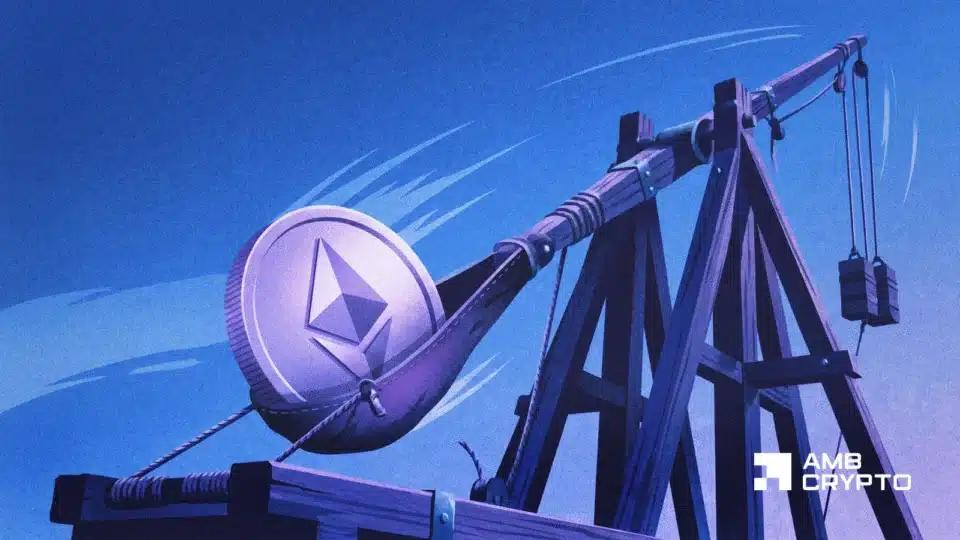
Bitcoin started as a purely sentiment-driven digital collectible, independent of future earnings expectations. But Ethereum, DeFi tokens, and real-world asset (RWA) projects are gradually moving toward the other end: they are beginning to generate cash flows, offering staking yields and collateral returns. Today, more and more crypto assets have observable cash flows.

The composability of on-chain financial instruments turns ownership, trading, and settlement into software-native functions, making cash flow markets potentially more efficient than public stock markets. They offer 24/7 liquidity, instant settlement, and fully transparent ledgers.

In other words, cryptocurrency is evolving from speculative narrative into a new form of programmable finance. At the same time, traditional assets are drifting in the opposite direction, moving away from liquidity and transparency toward scarcity and narrative-driven value.

The rise of prediction markets is bringing another highly specialized type of market into the mainstream. When insights into future trends shift from handing cash to bookies in back alleys to real-time digital markets, new possibilities emerge. "Betting" on election outcomes is a popularity contest until results are announced, but when combined with "investing" in regulation-sensitive stocks, it can become a hedging tool to optimize the risk-return ratio of portfolio trades.

Three Layers of Markets

Every market, regardless of its operating logic, is built on three layers:

1. The underlying asset (the object being owned)

2. The ownership instrument (token or financial instrument)

3. The trading medium (the infrastructure and rules for conducting transactions)

When assets transition between categories—for example, from private to public, or from physical to digital—it is often because one of these layers has changed. Taking a company private alters the trading layer; tokenizing a painting via an NFT changes the ownership instrument layer; running RWAs on-chain alters all three layers. These changes in layers often redefine who can participate in the relevant markets, which in turn significantly impacts valuation.

This layered structure helps explain why we are currently seeing such rapid experimentation with market structures. Technology enables us to deconstruct and reassemble "markets" through software—sometimes with higher liquidity, sometimes with less, but always with new combinations of narrative logic and analytical paradigms. This programmability expands the boundaries of traditional trading and redefines the possibilities of market participation, creating an evolving landscape where traditional market forms intertwine with new market mechanisms.

The Double-Edged Sword of Liquidity

Liquidity has become a cultural value in finance, even a sacred cow. But more isn't always better; like a double-edged sword, excessive liquidity also hides invisible undercurrents.

In sentiment markets, high liquidity often means high volatility: prices are constantly revalued without a stable anchor for valuation. In cash flow markets, liquidity promotes efficient capital allocation and transparent risk transfer. We must carefully distinguish the essential differences between these two.

We can establish this correlation: the more a market's value depends on modelable cash flows, the safer it is to increase its liquidity; the more it relies on narrative and scarcity, the more moderate illiquidity can act as a stabilizer. This illiquidity can prevent "pricing populism," where the least knowledgeable participants in the market determine asset prices.

Convergence, Not Conflict

The theme of the twentieth century was standardization—turning unique assets into tradable securities, making more things investable through methods like assigning CUSIP codes. The twenty-first century may pivot toward re-personalization—building deeper, broader, and more diverse markets that can be synthesized and combined to achieve more precise, targeted investment exposure with greater efficiency.

Today, we can create financial instruments with personalized economic attributes while maintaining liquidity at the execution level. Whether it's tokenized credit, online prediction markets, or programmable securities, they all point toward a more continuous, transparent, and flexible market architecture that far surpasses any previous form.

Traditional binary classifications—public vs. private, fungible vs. unique, speculative vs. productive—are dissolving. What we face is a continuous spectrum from purely sentiment-driven to purely cash flow-driven, with most assets distributed along it and trading across a liquidity spectrum from absolute liquidity to agreed-upon transactions.

Market Revelations

Ultimately, markets reflect motivations. Some markets reward productivity, while others reward collective belief.

Throughout history, we have mostly kept the two separate: finance归于理性(rationality), art归于浪漫(romance). But technology is forcing them to merge, revealing in the process a spectrum between rationality and narrative—the fundamental underpinning of all value creation.

Our task as investors, entrepreneurs, and regulators is not necessarily to defend one logic and negate the other, but to design systems that can accommodate both the measurable and the unknowable, without letting either dominate the scale.

Because in the end, every market is a contest of asset appeal. It's just that some contests eventually cash out.


Kripto yang Sedang Tren

Pertanyaan Terkait

QWhat are the two main types of markets described in the article, and how do they differ in their valuation logic?

AThe two main types are cash flow markets and sentiment markets. Cash flow markets value assets based on the present value of future cash flows (a mathematical approach), while sentiment markets value assets based on what the next buyer is willing to pay, which is a game of collective belief and narrative.

QHow is the traditional financial market, specifically public equities market, evolving according to the author's perspective?

AThe public equities market is blurring the lines with sentiment markets, as seen with meme stocks like GameStop, where stocks are treated more like collectibles. There is also a shift of pricing power from public markets to private markets, where deals are more negotiated, less transparent, and driven more by narrative.

QIn what way is the cryptocurrency market moving in the opposite direction to traditional assets?

ACryptocurrency is evolving from being purely speculative assets driven by sentiment to assets that generate observable cash flows, such as through staking yields and collateral returns. This shift is turning them into a new form of programmable finance, moving towards the cash flow end of the spectrum, while traditional assets are moving towards more narrative-driven, less liquid models.

QWhat are the three layers that every market is built upon, as outlined in the article?

AThe three layers are: 1. The underlying asset (the thing being owned), 2. The ownership token (the financial instrument or token representing ownership), and 3. The trading medium (the infrastructure and rules for transacting). Changes to any of these layers can alter who can participate in a market and significantly impact valuation.

QWhat is the 'double-edged sword' of liquidity, as discussed in the context of different market types?

AFor cash flow markets, high liquidity promotes efficient capital allocation and transparent risk transfer. However, for sentiment markets, high liquidity often leads to high volatility because prices are constantly revalued without a stable anchor. In these narrative-driven markets, some illiquidity can act as a stabilizer by preventing 'pricing populism,' where the least informed participants set prices.

Bacaan Terkait

Setelah Aave Pergi dan TVL Berguncang Hebat, Di Mana Anchor Valuasi MegaETH Berada?

Berdasarkan data DefiLlama, TVL MegaETH mengalami fluktuasi tajam pada 9-10 Juli, turun sekitar 60% dalam 24 jam menjadi sedikit di atas $30 juta, turun sekitar 70% dari puncaknya pada Mei. Protokol teratas Aave V3 menarik sekitar 80% likuiditas. Harga MEGA turun ke sekitar $0.048, dengan kapitalisasi pasar sekitar $54 juta dan FDV sekitar $480 juta. Artikel ini menganalisis tiga ketidaksesuaian dalam valuasi MegaETH: 1. **Ketidaksesuaian valuasi dengan penggunaan nyata**: FDV $4.7 miliar tidak didukung oleh aktivitas ekonomi riil. Pendapatan protokol 30 hari kurang dari $900k dengan hanya 2.619 alamat aktif harian. Sekitar 88.7% token belum beredar, berpotensi menciptakan tekanan jual di masa depan. 2. **Ketidaksesuaian narasi token dengan kualitas ekosistem**: Meski dinarasikan sebagai blockchain DeFi berkinerja tinggi, sebagian besar pendapatannya justru berasal dari game kartu Monster (sekitar 80%). Aave hanya menyumbang sekitar $90k. Volume perdagangan DEX dan kontrak berlanjut rendah, dan stablecoin native USDM terus menyusut. 3. **Ketidaksesuaian ekspektasi jangka pendek dengan realisasi jangka panjang**: TVL awal didorong oleh insentif dan strategi arbitrase siklus (seperti yang melibatkan USDe), bukan kebutuhan riil yang stabil. Integrasi protokol besar seperti Uniswap dan Aave tidak mempertahankan TVL. Penurunan serupa terlihat pada Monad (MON), menunjukkan pasar mulai meminta dukungan nilai yang lebih jelas daripada sekadar TVL dan narasi. Kesimpulannya, setelah insentif dan modal arbitrase keluar, MegaETH kekurangan pijakan nilai yang solid antara valuasi saat ini dan fundamental on-chain-nya. Pemulihan berkelanjutan bergantung pada kemampuan tim untuk mengubah likuiditas jangka pendek menjadi penggunaan nyata dan mewujudkan hasil ekosistem yang konkret. Tanpa itu, selain pemulihan jangka pendek dari sentimen pasar, sulit menemukan alasan kuat untuk valuasi yang stabil.

链捕手4j yang lalu

Setelah Aave Pergi dan TVL Berguncang Hebat, Di Mana Anchor Valuasi MegaETH Berada?

链捕手4j yang lalu

Laporan Mendalam Goldman Sachs: Siapa yang Akan Menjadi Pemenang Jangka Panjang di Industri Model AI Besar China?

Laporan mendalam Goldman Sachs menganalisis masa depan industri AI model besar China, menilai siapa yang akan menjadi pemenang jangka panjang. China saat ini berada pada titik balik historis, dengan model sumber terbuka/berbobot terbuka yang mendekati kinerja model berpemilik global terdepan. Efek roda data dari adopsi massal perusahaan domestik dan global mendorong iterasi model lebih lanjut. Model China mencapai efisiensi biaya tinggi melalui inovasi arsitektur (seperti MoE) dan efisiensi parameter, dengan model seperti DeepSeek V4 Pro (1,6T parameter) dan GLM5.2 (0,7T). Pasar membentuk struktur dua lapis: model high-end (contoh: GLM5.2) berharga ~$1/juta token, sementara model low-end untuk agen pintar berharga serendah $0,06/juta token. Goldman memproyeksikan pendapatan API/berlangganan model AI China tumbuh dari RMB35 miliar (2026) menjadi RMB879 miliar (2030). Strategi sumber terbuka mendorong adopsi global, tetapi monetisasi terbatas. Pergeseran menuju model "berat terbuka + lisensi komunitas" diharapkan dapat meningkatkan ekonomi unit melalui pembagian pendapatan dengan platform seperti AWS Bedrock. Untuk menentukan pemenang, Goldman menggunakan kerangka kerja tiga dimensi: kemampuan penetapan harga, keunggulan biaya, dan kekuatan keuangan. Dalam model teks dasar, Zhipu (GLM) dan DeepSeek dipandang paling kuat. Dalam multimodal/generasi video, ByteDance (Seedance) menjadi pemimpin, dengan Kuaishou (Kling) dan MiniMax juga diunggulkan. MiniMax mendapat peringkat Beli karena valuasi menarik dan posisi model M3-nya. Ekspansi ke pasar internasional non-AS merupakan peluang pertumbuhan kunci.

marsbit4j yang lalu

Laporan Mendalam Goldman Sachs: Siapa yang Akan Menjadi Pemenang Jangka Panjang di Industri Model AI Besar China?

marsbit4j yang lalu

Laporan Mendalam Goldman Sachs: Siapa yang Akan Menjadi Pemenang Jangka Panjang dalam Industri Model AI Besar China?

Laporan mendalam Goldman Sachs membahas pergeseran historis dalam industri model AI besar (LLM) China. Analisis menilai bagaimana model China, melalui inovasi arsitektur (seperti MoE) dan efisiensi parameter, mencapai kinerja cerdas yang mendekati model global teratas dengan biaya lebih rendah, didorong oleh momen efisiensi biaya DeepSeek (2025) dan momen kecerdasan model GLM Zhipu (2026). Pasar membentuk struktur dua lapis: model high-end (contoh: GLM5.2, Qwen3.7 Max) dengan harga ~$1/juta token, dan model low-end untuk agen AI dengan harga serendah $0.06/juta token, yang memperluas adopsi di kalangan UKM global. Goldman memproyeksikan pendapatan API/subskripsi model AI China tumbuh dari ~¥35 miliar (2026) menjadi ~¥879 miliar pada 2030. Strategi open-source/terbobot terbuka mendominasi untuk fleksibilitas dan ekosistem, tetapi monetisasinya terbatas. Tren pergeseran ke model "bobot terbuka + lisensi komunitas" (seperti MiniMax) dengan bagi hasil diharapkan meningkatkan ekonomi unit. Ekspansi ke pasar internasional (non-AS) adalah peluang kunci, seiring pergeseran paradigma perusahaan global dari "token maksimisasi" ke prioritas ROI. Menggunakan kerangka penilaian tiga dimensi (kemampuan penetapan harga, keunggulan biaya, kekuatan finansial), Goldman mengidentifikasi pemenang jangka panjang: Zhipu AI (cakupan awal: netral) dan DeepSeek (swasta) paling kuat di domain model teks dasar. Di bidang multimodal/generasi video, ByteDance (Seedance) memimpin, diikuti Kuaishou (Kling) dan MiniMax. Goldman mempertahankan rating "beli" untuk MiniMax, melihat diskon valuasi.

链捕手4j yang lalu

Laporan Mendalam Goldman Sachs: Siapa yang Akan Menjadi Pemenang Jangka Panjang dalam Industri Model AI Besar China?

链捕手4j yang lalu

Trading

Spot

Artikel Populer

Cara Membeli O

Selamat datang di HTX.com! Kami telah membuat pembelian O1 exchange (O) menjadi mudah dan nyaman. Ikuti panduan langkah demi langkah kami untuk memulai perjalanan kripto Anda.Langkah 1: Buat Akun HTX AndaGunakan alamat email atau nomor ponsel Anda untuk mendaftar akun gratis di HTX. Rasakan perjalanan pendaftaran yang mudah dan buka semua fitur.Dapatkan Akun SayaLangkah 2: Buka Beli Kripto, lalu Pilih Metode Pembayaran AndaKartu Kredit/Debit: Gunakan Visa atau Mastercard Anda untuk membeli O1 exchange (O) secara instan.Saldo: Gunakan dana dari saldo akun HTX Anda untuk melakukan trading dengan lancar.Pihak Ketiga: Kami telah menambahkan metode pembayaran populer seperti Google Pay dan Apple Pay untuk meningkatkan kenyamanan.P2P: Lakukan trading langsung dengan pengguna lain di HTX.Over-the-Counter (OTC): Kami menawarkan layanan yang dibuat khusus dan kurs yang kompetitif bagi para trader.Langkah 3: Simpan O1 exchange (O) AndaSetelah melakukan pembelian, simpan O1 exchange (O) di akun HTX Anda. Selain itu, Anda dapat mengirimkannya ke tempat lain melalui transfer blockchain atau menggunakannya untuk memperdagangkan mata uang kripto lainnya.Langkah 4: Lakukan trading O1 exchange (O)Lakukan trading O1 exchange (O) dengan mudah di pasar spot HTX. Cukup akses akun Anda, pilih pasangan perdagangan, jalankan trading, lalu pantau secara real-time. Kami menawarkan pengalaman yang ramah pengguna baik untuk pemula maupun trader berpengalaman.

162 Total TayanganDipublikasikan pada 2026.06.19Diperbarui pada 2026.06.29

Cara Membeli O

Cara Membeli PROS

Selamat datang di HTX.com! Kami telah membuat pembelian Pharos (PROS) menjadi mudah dan nyaman. Ikuti panduan langkah demi langkah kami untuk memulai perjalanan kripto Anda.Langkah 1: Buat Akun HTX AndaGunakan alamat email atau nomor ponsel Anda untuk mendaftar akun gratis di HTX. Rasakan perjalanan pendaftaran yang mudah dan buka semua fitur.Dapatkan Akun SayaLangkah 2: Buka Beli Kripto, lalu Pilih Metode Pembayaran AndaKartu Kredit/Debit: Gunakan Visa atau Mastercard Anda untuk membeli Pharos (PROS) secara instan.Saldo: Gunakan dana dari saldo akun HTX Anda untuk melakukan trading dengan lancar.Pihak Ketiga: Kami telah menambahkan metode pembayaran populer seperti Google Pay dan Apple Pay untuk meningkatkan kenyamanan.P2P: Lakukan trading langsung dengan pengguna lain di HTX.Over-the-Counter (OTC): Kami menawarkan layanan yang dibuat khusus dan kurs yang kompetitif bagi para trader.Langkah 3: Simpan Pharos (PROS) AndaSetelah melakukan pembelian, simpan Pharos (PROS) di akun HTX Anda. Selain itu, Anda dapat mengirimkannya ke tempat lain melalui transfer blockchain atau menggunakannya untuk memperdagangkan mata uang kripto lainnya.Langkah 4: Lakukan trading Pharos (PROS)Lakukan trading Pharos (PROS) dengan mudah di pasar spot HTX. Cukup akses akun Anda, pilih pasangan perdagangan, jalankan trading, lalu pantau secara real-time. Kami menawarkan pengalaman yang ramah pengguna baik untuk pemula maupun trader berpengalaman.

846 Total TayanganDipublikasikan pada 2026.06.22Diperbarui pada 2026.06.29

Cara Membeli PROS

Apa Itu VERONA

I. Pengenalan Proyek VERONA adalah blockchain yang dibangun untuk semua orang, di mana saja melalui abstraksi rantai. Memanfaatkan lapisan Abstraksi Umum, VERONA membedakan dirinya dengan mengintegrasikan fungsionalitas blockchain yang kompleks, seperti akun, tanda tangan, dan interoperabilitas, langsung di tingkat protokol. Pendekatan ini memungkinkan keterlibatan dengan aplikasi blockchain tanpa perlu memahami teknologi yang mendasarinya.1) Informasi Dasar Nama:VERONA(VERONA)III. Tautan Terkait Link situs resmi:https://xion.burnt.com/ Whitepaper:https://xion.burnt.com/whitepaper.pdf Penjelajah:https://explorer.burnt.com/ Media Sosial: https://x.com/burnt_xion Catatan: Pengenalan proyek berasal dari materi yang diterbitkan atau disediakan oleh tim proyek resmi, yang hanya untuk referensi dan tidak merupakan nasihat investasi. HTX tidak bertanggung jawab atas kerugian langsung atau tidak langsung yang diakibatkan.

97 Total TayanganDipublikasikan pada 2026.06.22Diperbarui pada 2026.06.22

Apa Itu VERONA

Diskusi

Selamat datang di Komunitas HTX. Di sini, Anda bisa terus mendapatkan informasi terbaru tentang perkembangan platform terkini dan mendapatkan akses ke wawasan pasar profesional. Pendapat pengguna mengenai harga A (A) disajikan di bawah ini.

活动图片