TON Enters the Telegram Era: The On-Chain Experiment of Super Apps is Unfolding

marsbitDipublikasikan tanggal 2026-05-08Terakhir diperbarui pada 2026-05-08

Abstrak

The TON token recently surged nearly 120% in 4 days, approaching $3. This rally is primarily driven by Telegram founder Pavel Durov's announcement that Telegram will become the core driver of the TON network, replacing the TON Foundation and serving as its largest validator. This move signals a fundamental shift: Telegram is no longer just supporting TON from a distance but is formally taking over its governance and operations. This changes TON's valuation narrative from being a crypto project with Telegram's user base to becoming the foundational blockchain infrastructure for Telegram's future commercial ecosystem—transitioning from a crypto narrative to an internet-platform-level story. TON's recent technical upgrades focus on 10x faster speeds, 6x lower fees, and near-instant confirmations. These optimizations target Telegram's internal high-frequency, micro-transaction scenarios like tipping, bot services, and Mini App purchases. The goal is to enable seamless, near-zero-cost transactions for its nearly 1 billion users, making blockchain usage almost invisible—akin to platforms like WeChat Pay. TON's path is unique: it already has a massive user base and is building the blockchain system to serve it, aiming to onboard users into Web3 without them realizing it. The vision is to integrate wallet, payment, bot, and Mini App functionalities into a closed loop within Telegram, positioning TON as the value-exchange infrastructure for a super-app. In essence, this surge refl...

Author: Climber, CryptoPulse Labs

Recently, the TON token has experienced consecutive increases, rising approximately 120% over 4 days and approaching the $3 mark. The primary reason behind this surge is the public endorsement by Pavel Durov, the founder of Telegram.

He stated that Telegram will replace the TON Foundation, becoming the core driving force behind TON, and will serve as the largest validator for the TON network. Meanwhile, the TON network has also been continuously advancing technical upgrades, such as announcing a 10x increase in network speed performance and a 6x reduction in transaction fees.

On the surface, this appears to be a round of technical upgrades and narrative revival for TON. However, what the market is truly reassessing is not TON itself, but the fact that Telegram has begun, for the first time, to fully embark on a comprehensive on-chain transformation in a real sense.

I. Telegram Takes the Helm: TON's Valuation Logic Begins to Shift

Over the past few years, TON has occupied a very unique position. It is deeply intertwined with Telegram, yet the two have always maintained a certain distance.

The reason is quite simple. Early on, Telegram launched the Gram fundraising plan, which ultimately faced regulatory intervention from the U.S. SEC, forcing the project to be terminated. The community subsequently took over the project, gradually evolving into the current TON ecosystem.

Therefore, for a long time, although Telegram continued to support TON—including gradually integrating its wallet, bots, mini-apps, and advertising system with TON—it never truly assumed the role of the official driver of TON publicly.
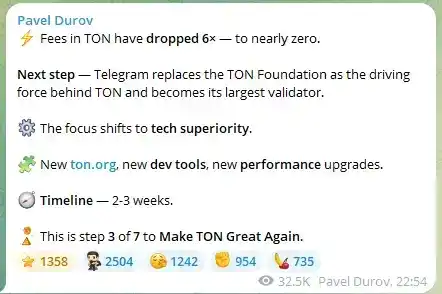
Pavel Durov's recent statements fundamentally alter market expectations. Particularly, the key points of Telegram replacing the TON Foundation and becoming the largest validator directly clarify that Telegram is now beginning to participate directly in the underlying governance and network operation of TON.

This is no longer just ecosystem support; it signifies Telegram formally reclaiming dominant control over TON's roadmap.

This shift is crucial because, in the past, the biggest question the market had about TON was not its technical capability but whether Telegram would truly go all-in on TON. Now, this question has a clear answer.

Simultaneously, this also means TON's valuation logic is changing. Previously, the market priced TON essentially as a public chain with Telegram's traffic support. But now, the market is beginning to reassess TON, as it is likely becoming the on-chain infrastructure within Telegram's future commercial ecosystem.

The difference between the two is significant. The former still belongs to the Crypto narrative, while the latter is beginning to enter the narrative of an internet-platform scale. This is also why TON's recent rise is not merely driven by sentiment but resembles a round of long-term expectation restructuring.

II. TON Reconstructs the Internet Payment Structure

Examining TON's recent rounds of upgrades closely reveals that its optimization direction is actually very clear: faster speed, lower fees, shorter confirmation times, and transaction fees approaching zero.

On the surface, these upgrades are optimizing chain performance, but what they are truly serving is not traditional DeFi but the large-scale payment application scenarios within Telegram.

Because Telegram itself has nearly 1 billion users, it inherently generates a vast amount of high-frequency, small-value transaction demand. Examples include content tipping, bot services, mini-app purchases, cross-border transfers, and digital goods consumption, among others.

These scenarios share a common need: users require extremely low costs and prioritize high speed.

If a payment takes tens of seconds to wait or incurs fees of several dollars, the entire user experience deteriorates significantly. Traditional blockchains have been particularly ill-suited for this type of scenario in the past.
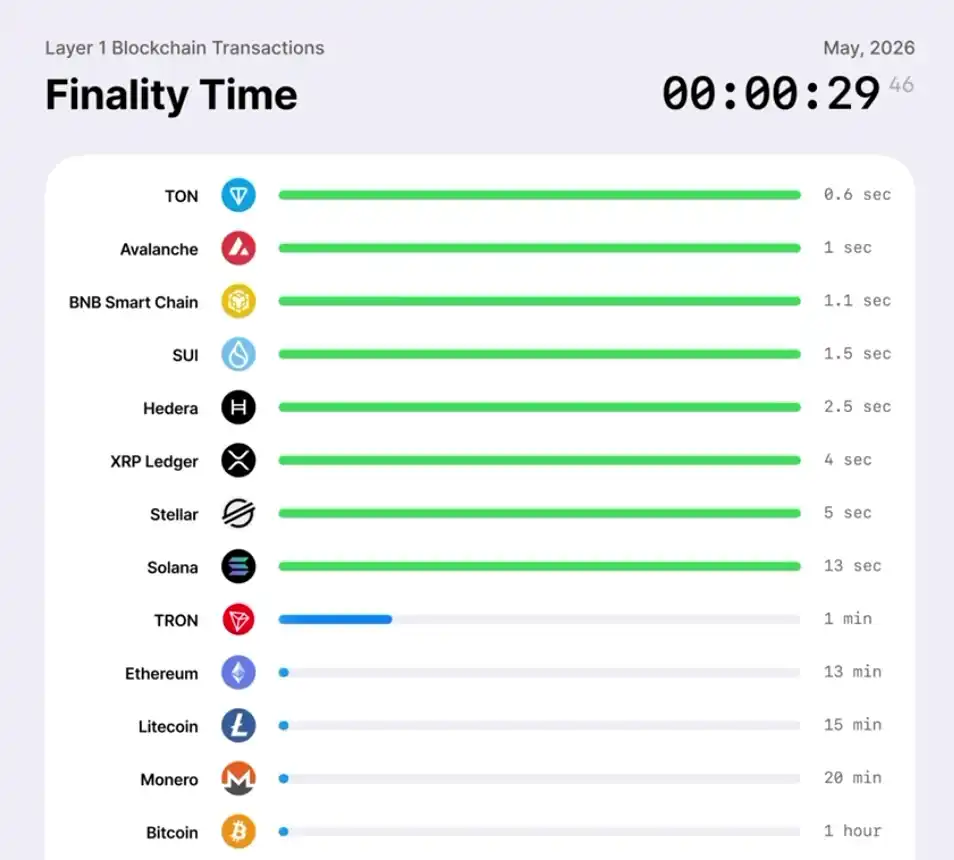
Therefore, TON's recent emphasis on fixed low fees and sub-second confirmations essentially revolves around redesigning blockchain for internet product experience. In other words, TON is attempting to solve a problem that Crypto has long failed to address: how to enable ordinary users to utilize on-chain systems almost imperceptibly.

This shift in logic is actually increasingly approaching the model of WeChat Pay.

Users don't need to understand blockchain, nor do they need to understand wallets, gas, or validation mechanisms. They only need to complete tipping, payments, purchases, transfers, and subscriptions, with all underlying settlements handled by TON.

This suggests that what TON truly aims to achieve may not be competition in the traditional L1 sense. What it is genuinely competing for is the global internet payment gateway.

Additionally, there is another crucial change. The logic of many public chains in the past has been: first build the infrastructure, then find users. But TON is the complete opposite. It first possesses a massive user base and then begins constructing the on-chain system.

Therefore, TON's challenge has never been how to get users into Web3, but rather how to enable users to complete on-chain actions without even realizing they are entering Web3. This represents a completely different development path.

III. TON's Future Blueprint: The On-Chain Transformation of Super Apps

Looking at all of TON's recent actions together, it becomes apparent that Telegram is gradually forming a complete closed loop. Functions that were originally separate—such as wallet, payments, bots, mini-apps, and on-chain settlements—are now gradually being integrated by TON.
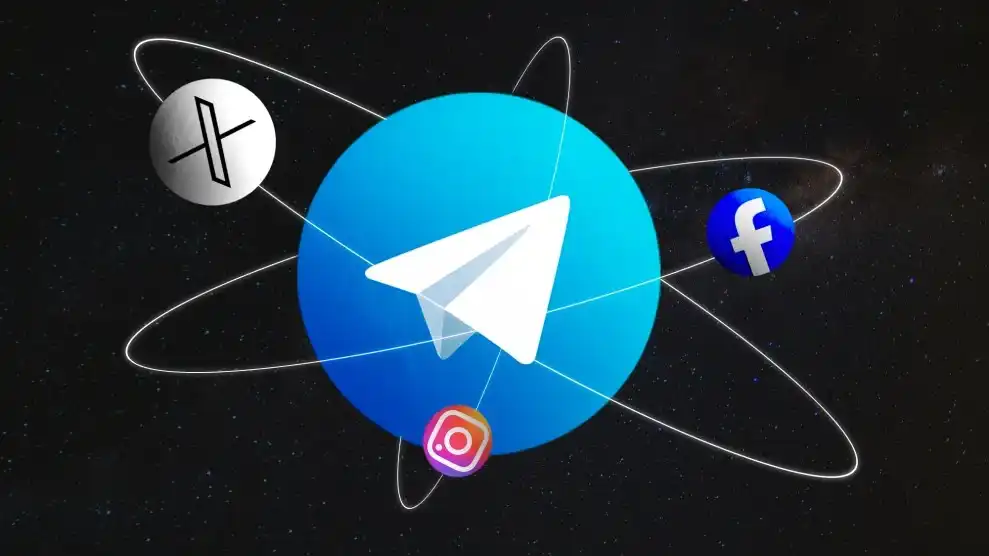
This also signifies that TON is no longer just an independent public chain; it is becoming the infrastructure for value circulation within Telegram. The true significance of this lies in the fact that, for the first time, the crypto industry is approaching the on-chain transformation of super applications.

Because over the past decade, the crypto industry has always lacked a genuine mass-market entry point. Most public chains have been striving to attract users into the crypto world, but Telegram itself already possesses global-scale traffic.

Especially in markets like the Middle East, Russia, Eastern Europe, Southeast Asia, and Latin America, Telegram often functions not merely as a messaging tool but also as a community platform, commercial platform, payment tool, and more.

Therefore, TON's true strategic focus is not DeFi but rather global digital commercial scenarios.

Areas such as low-cost cross-border payments, the creator economy, on-chain micro-payments, and similar directions are likely the true sources of large-scale growth for TON in the future.

Of course, this path is not easy. TON's ecosystem remains in its early stages, with many applications still lingering in phases like mini-games, airdrops, and short-term traffic acquisition. Additionally, after Telegram's renewed deep involvement with TON, it may once again face regulatory pressure in the future.

Nevertheless, the market has now begun to realize one thing: TON's competitors may never have been traditional L1s, but rather the global internet payment systems.

Conclusion

This round of TON's rise is not essentially the market speculating on a simple upgrade. What truly drives the repricing of capital is the growing awareness that the world's first on-chain ecosystem with a genuine super-app entry point may have already begun to take shape.

And this time, Pavel Durov is no longer just an observer. Telegram is finally preparing to take the field itself.


Kripto yang Sedang Tren

Pertanyaan Terkait

QAccording to the article, what was the main reason for the recent significant price surge of the TON token?

AThe primary reason for TON's recent price surge was Telegram founder Pavel Durov's public announcement that Telegram will become the core driver behind the TON network, replacing the TON Foundation and becoming its largest validator.

QHow has Pavel Durov's statement fundamentally changed the market's perception of TON's valuation logic?

AHis statement shifted TON's valuation logic from being a crypto-native public chain with Telegram's traffic support to potentially becoming the on-chain infrastructure for Telegram's future commercial ecosystem, moving from a crypto narrative to an internet platform-level narrative.

QWhat specific user needs is TON's recent technical optimization targeting, and what payment system is this approach compared to?

ATON's recent optimizations (faster speeds, lower fees, sub-second confirmation, near-zero costs) target the need for low-cost, high-speed, small-value transactions within Telegram (e.g., tipping, Bot services). This approach is compared to systems like WeChat Pay, aiming for users to use the on-chain system almost without awareness.

QWhat key advantage does TON possess compared to many other public blockchains regarding its development path?

AUnlike other blockchains that build infrastructure first and then seek users, TON already possesses a massive user base (Telegram's near 1 billion users) first, and is now building the on-chain system around that existing traffic.

QWhat does the article suggest is the true long-term competitor for TON, and what is its ultimate envisioned role?

AThe article suggests TON's true competitor is not traditional Layer 1 blockchains, but the global internet payment system. Its ultimate envisioned role is to become the on-chain value circulation infrastructure for the Telegram super-app, enabling global digital commercial scenarios like low-cost cross-border payments and the creator economy.

Bacaan Terkait

Saham Momentum Teknologi AS Catat Kenaikan Terbesar dalam Sejarah dalam Satu Hari, Tapi Apakah Kejatuhan Sudah Berakhir?

Saham momentum teknologi AS mengalami reli dramatis pada Selasa (21 Juli), dengan Indeks Faktor Momentum TMT Morgan Stanley melonjak lebih dari 12% - kenaikan satu hari terbesar dalam catatan. Indeks momentum beta tinggi Goldman Sachs juga naik tajam. Reli ini didorong terutama oleh sektor semikonduktor, dengan indeks Philadelphia Semiconductor naik 4.6%. Aksi ini terjadi setelah tiga hari penurunan dan kejatuhan kumulatif 33% untuk saham momentum, yang memicu aksi 'short squeeze' dimana investor yang short terpaksa menutupi posisi mereka. Namun, kualitas reli dipertanyakan. Volume perdagangan rendah dan lebih banyak saham turun daripada naik di S&P 500, menunjukkan reli sempit yang dipimpin oleh sedikit saham besar. BTIG memperingatkan bahwa reli telah mencapai level resistensi kunci dan merekomendasikan untuk mengurangi eksposur, mengingat volatilitas ekstrem dan karakteristik yang mirip dengan periode gelembung dot-com. Di sisi lain, Goldman Sachs dan UBS melihat penjualan momentum mendekati akhir, dengan posisi yang telah berkurang drastis dan tidak ada katalis fundamental baru, sehingga mungkin menjadi peluang untuk menambah eksposur secara bertahap. Faktor kunci berikutnya adalah musim laporan keuangan, dengan laporan Alphabet tentang panduan belanja modal AI-nya menjadi sorotan. Sementara itu, pasar obligasi memberi sinyal peringatan, karena imbal hasil obligasi pemerintah AS naik, didorong oleh kenaikan harga minyak di atas $90 akibat ketegangan Timur Tengah. Beberapa analis memperingatkan bahwa kenaikan lebih lanjut dalam imbal hasil obligasi dapat membebani pasar saham.

marsbit19m yang lalu

Saham Momentum Teknologi AS Catat Kenaikan Terbesar dalam Sejarah dalam Satu Hari, Tapi Apakah Kejatuhan Sudah Berakhir?

marsbit19m yang lalu

Saham 'Teknologi Momentum' AS Catat Kenaikan Terbesar Sejarah dalam Sehari, tapi Apakah Jatuhnya Sudah Berakhir?

Saham momentum teknologi AS mengalami rebound dramatis pada Selasa (21/7). Indeks momentum TMT Morgan Stanley melonjak lebih dari 12%, rekor kenaikan harian terbesar dalam sejarah. Indeks momentum beta tinggi Goldman Sachs (GSCBHMOM) naik sekitar 8.5%, kinerja harian terkuat sejak April 2025. Sektor semikonduktor, dengan Indeks Semikonduktor Philadelphia naik 4.6%, menjadi pendorong utama. Rebound ini terjadi setelah penurunan selama tiga hari berturut-turut dan kejatuhan kumulatif 33% untuk saham momentum. Analis menyebut rebound ini didorong oleh "short squeeze" atau pemaksaan likuidasi posisi jual, terutama dari pedagang di Korea Selatan dan Jepang yang terkena margin call. Namun, kualitas rebound dipertanyakan karena volume perdagangan rendah dan lebih banyak saham yang turun daripada naik di S&P 500 meski indeks naik, menunjukkan kelemahan dalam keluasan pasar. Pandangan institusi keuangan terpecah. BTIG memperingatkan rebound telah mencapai level resistensi kunci dan merekomendasikan untuk mengurangi posisi. Sebaliknya, Goldman Sachs dan UBS percaya penjualan momentum mendekati akhir dan melihatnya sebagai peluang untuk membeli secara bertahap, meski dengan struktur terbatas risikonya. Laporan keuangan musim ini, terutama dari Alphabet yang dijadwalkan minggu ini, akan menjadi katalis kunci berikutnya. Pasar akan sangat memperhatikan panduan pengeluaran modal Alphabet untuk petunjuk arah pengeluaran AI. Sementara itu, pasar obligasi memberi sinyal peringatan dengan kenaikan imbal hasil obligasi AS, didorong oleh kenaikan harga minyak di atas $90 per barel akibat ketegangan geopolitik di Timur Tengah. Beberapa analis memperingatkan bahwa kenaikan lebih lanjut dalam imbal hasil obligasi jangka panjang dapat membebani pasar saham.

链捕手21m yang lalu

Saham 'Teknologi Momentum' AS Catat Kenaikan Terbesar Sejarah dalam Sehari, tapi Apakah Jatuhnya Sudah Berakhir?

链捕手21m yang lalu

Bersatu Terus Berpisah, Berpisah Terus Bersatu: Ketika L1 Menjadi Rollup Dirinya Sendiri, Apa Akhir dari Ethereum?

"Setelah sekian lama, akhirnya terpecah; setelah terpecah, akhirnya kembali bersatu." Judul artikel ini secara tepat menggambarkan tantangan dan evolusi dalam hubungan antara Lapisan 1 (L1) dan Lapisan 2 (L2) Ethereum. Artikel ini membahas bagaimana visi awal L2 sebagai solusi penskalaan utama Ethereum, yang bertujuan menyediakan ruang blok yang murah dan efisien, kini sedang ditinjau ulang seiring dengan peningkatan kapasitas penskalaan L1 itu sendiri. Dengan penggabungan rute pekerjaan protokol "Scale", Ethereum kini melihat penskalaan L1 dan L2 sebagai kerangka kerja yang terpadu. Hal ini menggeser peran L2 dari sekadar penyedia ruang transaksi yang lebih murah menjadi penyedia fungsi yang terdiferensiasi, seperti optimasi aplikasi tertentu, fitur privasi, dan model tata kelola yang lebih fleksibel. L2 kini dilihat sebagai spektrum lingkungan eksekusi yang membangun berbagai tingkat hubungan keamanan, penyelesaian, dan likuiditas dengan Ethereum L1. Masalah fragmentasi yang ditimbulkan oleh banyaknya L2 juga menjadi fokus penting. Pengalaman pengguna yang terfragmentasi, dengan aset dan aplikasi yang tersebar di berbagai rantai, mendorong pengembangan solusi interoperabilitas seperti kerangka Open Intents dan Ethereum Interoperability Layer (EIL). Tujuannya adalah untuk membuat interaksi antar-L2 terasa seperti bertransaksi pada satu rantai tunggal. Memperpendek waktu finalitas L1 menjadi detik juga merupakan target jangka panjang yang penting untuk meningkatkan kepercayaan dan efisiensi dalam berbagi status antar lingkungan eksekusi. Gagasan yang lebih mendalam adalah bahwa dengan masuknya sistem bukti (seperti zkEVM) ke dalam protokol inti, L1 Ethereum sendiri pada akhirnya dapat mengadopsi pola verifikasi yang mirip dengan Rollup, di mana sebagian node melakukan eksekusi berkinerja tinggi dan node lainnya memverifikasi bukti kriptografisnya. Ini mengaburkan batas tradisional antara L1 dan L2, mengubah Rollup dari sekadar hierarki di atas L1 menjadi arsitektur eksekusi dan verifikasi yang lebih universal. Kesimpulannya, masa depan Ethereum bukanlah tentang L1 yang menghilangkan kebutuhan akan L2, atau sebaliknya. Masa depan terletak pada pembentukan ekosistem di mana berbagai lingkungan eksekusi (L2) dengan fungsi dan kinerja yang berbeda-beda dapat hidup berdampingan, sambil berbagi fondasi keamanan, likuiditas, dan hubungan status yang kuat dengan hub global L1. Tantangan berikutnya adalah menyatukan kembali kapasitas yang telah dipecah ini menjadi pengalaman yang kohesif dan andal, sambil tetap mempertahankan keuntungan penskalaan yang telah diraih.

链捕手34m yang lalu

Bersatu Terus Berpisah, Berpisah Terus Bersatu: Ketika L1 Menjadi Rollup Dirinya Sendiri, Apa Akhir dari Ethereum?

链捕手34m yang lalu

Trading

Spot

Artikel Populer

Cara Membeli ERA

Selamat datang di HTX.com! Kami telah membuat pembelian Caldera (ERA) menjadi mudah dan nyaman. Ikuti panduan langkah demi langkah kami untuk memulai perjalanan kripto Anda.Langkah 1: Buat Akun HTX AndaGunakan alamat email atau nomor ponsel Anda untuk mendaftar akun gratis di HTX. Rasakan perjalanan pendaftaran yang mudah dan buka semua fitur.Dapatkan Akun SayaLangkah 2: Buka Beli Kripto, lalu Pilih Metode Pembayaran AndaKartu Kredit/Debit: Gunakan Visa atau Mastercard Anda untuk membeli Caldera (ERA) secara instan.Saldo: Gunakan dana dari saldo akun HTX Anda untuk melakukan trading dengan lancar.Pihak Ketiga: Kami telah menambahkan metode pembayaran populer seperti Google Pay dan Apple Pay untuk meningkatkan kenyamanan.P2P: Lakukan trading langsung dengan pengguna lain di HTX.Over-the-Counter (OTC): Kami menawarkan layanan yang dibuat khusus dan kurs yang kompetitif bagi para trader.Langkah 3: Simpan Caldera (ERA) AndaSetelah melakukan pembelian, simpan Caldera (ERA) di akun HTX Anda. Selain itu, Anda dapat mengirimkannya ke tempat lain melalui transfer blockchain atau menggunakannya untuk memperdagangkan mata uang kripto lainnya.Langkah 4: Lakukan trading Caldera (ERA)Lakukan trading Caldera (ERA) dengan mudah di pasar spot HTX. Cukup akses akun Anda, pilih pasangan perdagangan, jalankan trading, lalu pantau secara real-time. Kami menawarkan pengalaman yang ramah pengguna baik untuk pemula maupun trader berpengalaman.

1.0k Total TayanganDipublikasikan pada 2025.07.17Diperbarui pada 2026.06.02

Cara Membeli ERA

Diskusi

Selamat datang di Komunitas HTX. Di sini, Anda bisa terus mendapatkan informasi terbaru tentang perkembangan platform terkini dan mendapatkan akses ke wawasan pasar profesional. Pendapat pengguna mengenai harga ERA (ERA) disajikan di bawah ini.

活动图片












