The US Dollar Challenges Japan's Intervention Threshold: Will the Carry Trade Collapse Again?

marsbitDipublikasikan tanggal 2026-06-23Terakhir diperbarui pada 2026-06-23

Abstrak

The U.S. dollar remains strong, with the Dollar Index holding above 101 as Federal Reserve policy expectations turn more hawkish. The 2-year Treasury yield is near highs from early 2025, boosting the dollar's appeal against currencies like the euro and pound. The USD/JPY pair is approaching a critical level near 161.96, which would mark the yen's weakest point since December 1986. This pressure stems from the widening interest rate differential between the U.S. and Japan. Japanese authorities have issued verbal warnings about potential intervention to support the yen, but uncertainty remains over if and when action will be taken. Oil prices rebounded after a recent drop, introducing renewed inflation concerns. While not the main driver, higher oil prices could further fuel expectations that the Fed will maintain a restrictive policy. Market focus centers on three key issues: whether the Fed will follow through on rate hike expectations, the possibility of Japanese FX intervention, and the trajectory of oil prices. The resolution of these factors will determine whether the current strong dollar trend persists or gives way to increased volatility.

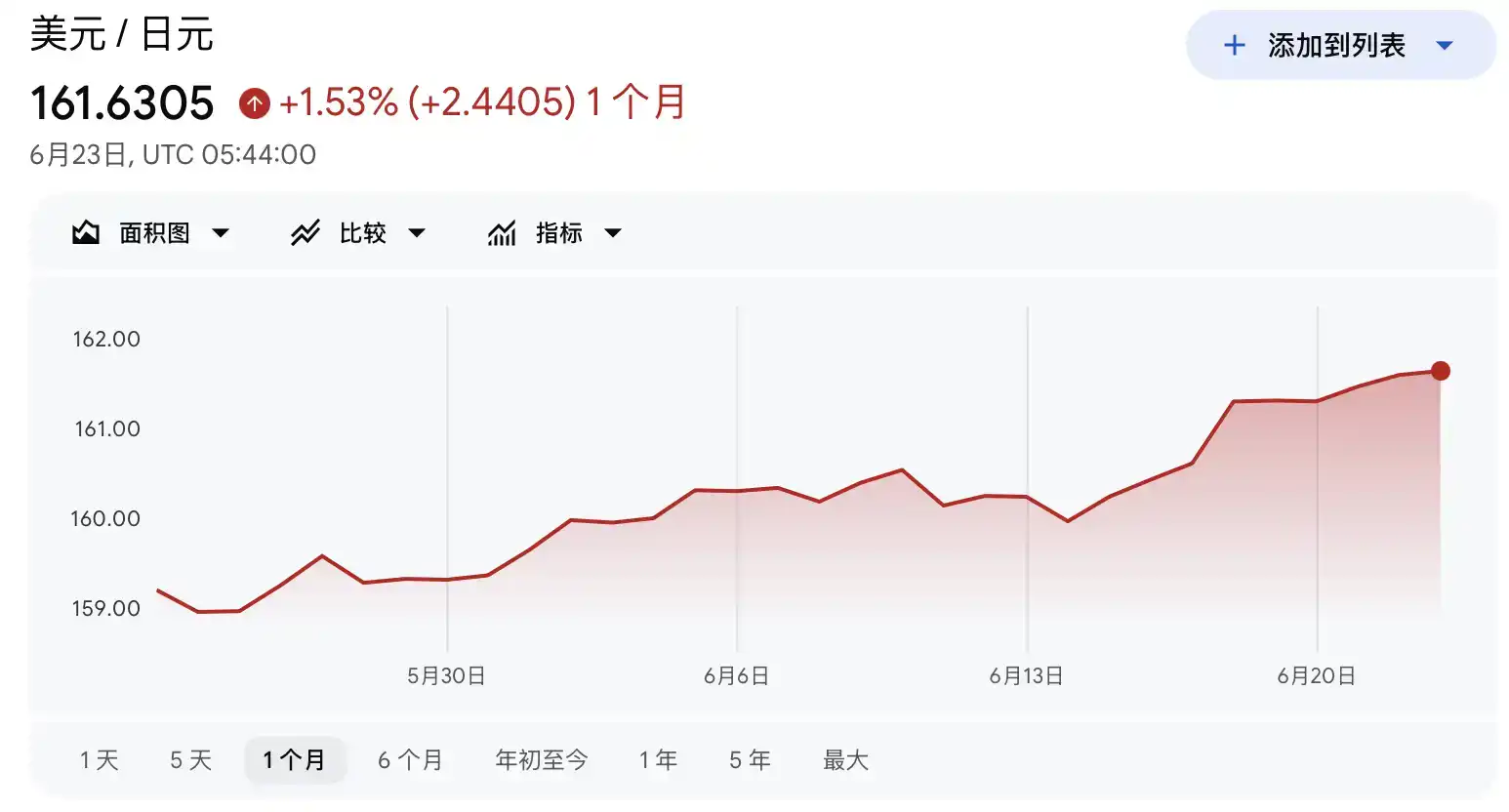
During the session on June 23rd, the US Dollar Index remained above 101, with USD/JPY approaching a key level near 161.96. This level is under scrutiny because a break above it would send the yen into its weakest territory since December 1986. The main theme in the forex market is tightening: Fed policy expectations have turned hawkish again, short-term US Treasury yields are elevated, and the yen's weakness is pushing the question of potential Japanese intervention to the forefront for traders. For investors, this isn't just about a stronger dollar; it's about global funding costs, carry trades, and pressure on Asian currencies.
Fed Expectations Turn Hawkish, Dollar Holds Above 101

As of the June 23rd session, the US Dollar Index was around 101.01, not far from the week's high of 101.13. The DXY, which measures the dollar against a basket of major currencies, regained strength, with the most direct driver being a shift in Federal Reserve policy expectations.

According to Reuters, the Fed held the federal funds rate steady at 3.50% to 3.75% on June 17th, but the latest dot plot showed that nine officials project a rate hike before the end of 2026. The statement also removed wording hinting at a rate cut this year. This change made it harder for markets to continue trading on easing expectations, and futures markets have significantly increased bets on the possibility of a hike within the year or before September.

Short-term US Treasury yields provided concurrent support. The 2-year yield hovered between 4.22% and 4.23% during the session, near its highest level since February 2025. For forex markets, rising short-end yields increase the appeal of dollar-denominated assets, especially when the policy outlooks of other major economies like Japan and Europe remain relatively dovish.

OCBC FX strategist Sim Moh Siong believes that rising yields and more hawkish Fed expectations are jointly supporting the dollar. If the dollar index further breaks above its 14-month high of 101.97, the dollar could gain fresh upward momentum. This level makes the area above 101 not just a simple integer threshold but a technical zone for short-term funds to observe whether the dollar can continue strengthening.

Other major currencies are also under pressure. During the session, the euro was around 1.1423, sterling around 1.3246, and the Australian and New Zealand dollars around 0.6991 and 0.5704, respectively. Remarks from ECB President Lagarde downplaying secondary inflation concerns and political changes in the UK affecting sterling did not alter the day's main theme. The market focused more on whether US rate expectations would continue to rise.

Yen Approaches 161.96, Japan's Verbal Warnings Intensify

The yen is one of the most sensitive assets in this round of dollar strength. As of the June 23rd session, USD/JPY was around 161.59, having touched 161.93 intraday, just a step away from the 161.96 level. According to The Japan Times and Reuters, a break above approximately 161.95 to 161.96 would mean the yen falls to its lowest level since December 1986.

The core reason for the yen's sustained pressure remains the US-Japan interest rate differential. Renewed bets on US rate hikes, coupled with the relatively slow pace of policy normalization by the Bank of Japan, have widened the yield advantage for investors holding dollar assets, increasing selling pressure on the yen. A weak yen benefits Japanese exporters' profit conversion but also raises import costs, particularly for energy and food, putting pressure on household purchasing power and inflation expectations.

Therefore, the stance of Japan's Ministry of Finance has become a market focus. Japanese Finance Minister Katayama Satoki recently issued verbal warnings about yen volatility, stating that Japan is prepared to act if necessary. This has led traders to speculate that Japanese authorities might intervene in the currency market by buying yen and selling dollars as it nears historic lows.

However, intervention remains at the expectation stage and is not a confirmed policy action. Historical experience shows that Japanese FX intervention can typically create sharp volatility in the short term, forcing short-covering. If the US-Japan yield gap continues to widen, a single intervention is unlikely to fundamentally change the USD/JPY trend. Japanese authorities are more likely to alter the pace of appreciation rather than completely reverse the trend.

This makes the area near 161.96 a dual threshold. On one side, yield differentials and dollar strength continue to push USD/JPY higher; on the other, the closer it gets to the nearly 40-year low, the higher the policy intervention risk. For short-term traders, this level is not only a technical point but also a policy risk point.

Oil Price Rebound Brings Inflation Concerns Back into Trading

Beyond forex, oil prices also re-entered the market spotlight during the same trading session. According to Reuters, oil prices fell about 4% on June 22nd on news of progress in US-Iran talks and related reports about the opening of the Strait of Hormuz passage. The subsequent rebound in oil prices shows the market is still waiting for clearer geopolitical and supply signals.

The Strait of Hormuz is one of the world's most crucial oil transport chokepoints, with about one-fifth of seaborne oil passing through it. Once expectations for resumed passage strengthen, oil supply risks decrease, typically pressuring prices. However, as long as progress in talks, shipping security, and actual supply restoration are not fully confirmed, oil prices are prone to fluctuate between news headlines.

The reason oil prices affect dollar trading is that they re-enter inflation expectations and central bank policy assessments. If the oil price rebound persists, markets will find it harder to believe inflationary pressures have subsided, and the Fed's rationale for maintaining higher rates or even hiking would strengthen. If oil prices decline again, some inflation concerns might ease.

Currently, oil prices are more of a supplementary clue alongside the dollar and US Treasury yields rather than the main theme in the forex market that day. However, in an environment where Fed expectations have already turned hawkish, any sustained energy price rebound could amplify market sensitivity to inflation.

The Strong Dollar Trade Still Hinges on Three Unresolved Questions

The market's most immediate question is whether the Fed will actually hike rates within the year or before September. Futures market bets have clearly heated up, but this is not a Fed commitment and ultimately depends on upcoming inflation, employment, and growth data. If data continues to support a hawkish stance, the dollar may find further support. If inflation falls or employment weakens, rate hike bets could cool rapidly.

The second question lies with Japan. The closer USD/JPY gets to 161.96, the stronger intervention expectations become. However, whether Japanese authorities will act, the scale of any action, and whether the US will cooperate all remain uncertain. What the market truly worries about is not the verbal warnings themselves but the potential for instant volatility that intervention could bring.

The third question comes from oil prices. There is still distance between expectations regarding US-Iran talks, the Strait of Hormuz passage opening, and actual supply restoration. If oil prices continue to rebound, they will rekindle inflation concerns, in turn supporting US Treasury yields and the dollar.

For now, this market move is still primarily driven by US rate expectations. Whether the dollar index can break above 101.97, whether USD/JPY will surpass 161.96, and whether Japanese authorities will move from verbal warnings to concrete action will determine whether the forex market continues with a strong dollar or enters a period of more intense two-way volatility.

Pertanyaan Terkait

QWhy is the 161.96 level particularly significant for USD/JPY?

AThe 161.96 level is significant because if USD/JPY breaks above it, the yen would enter its weakest trading range since December 1986. This makes it a key technical level and a potential trigger for intervention by Japanese authorities.

QWhat are the main drivers behind the recent strengthening of the US dollar?

AThe main drivers are a shift towards more hawkish Federal Reserve policy expectations, with market pricing indicating increased chances of a rate hike later in the year, and high short-term US Treasury yields (like the 2-year), which enhance the appeal of dollar-denominated assets.

QWhat is the market's primary concern regarding a potential Japanese intervention in the FX market?

AThe primary concern is not the intervention itself, but the sharp and volatile price swings it could cause in the short term, forcing traders to quickly adjust their positions. The market doubts a single intervention could sustainably reverse the USD/JPY trend if the US-Japan interest rate differential continues to widen.

QHow does the oil price factor into the current market dynamics for the dollar?

AOil price rebounds can reintroduce inflation concerns into the market. In an environment where the Fed has already turned more hawkish, rising oil prices could amplify these concerns, potentially providing further support for the case for higher US interest rates and, by extension, the US dollar.

QWhat three unresolved questions are currently key for the strong dollar trade according to the article?

A1. Whether the Federal Reserve will actually hike rates later this year. 2. Whether and how Japanese authorities will intervene as USD/JPY approaches key historical levels. 3. The direction of oil prices, as sustained increases could reinforce inflation fears and support the dollar.

Bacaan Terkait

Riset BitMart Mingguan: Ekspektasi Hawkish Fed Menguat, Pasar Kripto Terus Tekan, Sektor RWA Berhasil Menerobos

**Analisis Mingguan BitMart: Ekspektasi Hawkish Fed Meningkat, Pasar Kripto Tertekan, Sektor RWA Tembus Tren** Pasar keuangan tradisional menunjukkan sinyal perbedaan yang kuat. Data makro AS melemah, dengan aktivitas manufaktur dan perumahan melambat, meski konsumen tetap tangguh. The Fed mempertahankan suku bunga di 3,75%, namun setengah dari pejabatnya memperkirakan kenaikan suku bunga tahun ini, menambah ketidakpastian kebijakan. Pasar kripto terus tertekan. BTC turun 3.7% dan ETH turun 1.2%, dengan sentimen pasar tetap dalam zona "ketakutan ekstrem". ETF Bitcoin AS mencatat aliran keluar bersih sebesar $226.8 juta, menunjukkan institusi belum kembali membeli secara konsisten. Nilai pasar stablecoin secara keseluruhan stabil di sekitar $3153 miliar, namun terjadi diferensiasi struktural, dengan dana cenderung ke instrumen dollar yang lebih pasti. Narasi sektor menyoroti tekanan pada model pembiayaan Strategy. Token STRC telah diperdagangkan di bawah nilai nominal selama lima minggu berturut-turut, memaksa perusahaan mempertimbangkan peningkatan dividen, penjualan Bitcoin, atau penerbitan saham baru di bawah nilai nominal—semuanya menimbulkan tantangan jangka panjang. Di tengah tekanan pasar secara keseluruhan, aset terkait Real World Assets (RWA) seperti XLM menunjukkan kinerja yang relatif kuat, didorong oleh perkembangan dalam roadmap tokenisasi.

marsbit7m yang lalu

Riset BitMart Mingguan: Ekspektasi Hawkish Fed Menguat, Pasar Kripto Terus Tekan, Sektor RWA Berhasil Menerobos

marsbit7m yang lalu

Akankah Amerika Serikat Dapat Mempertahankan Kredibilitasnya? 'Tatanan Tribute' ala Ray Dalio

Pendiri Bridgewater, Ray Dalio, menyoroti penurunan kepercayaan terhadap Amerika Serikat dan peningkatan pengaruh China, yang ia gambarkan sebagai potensi tatanan "sistem upeti" modern di Asia. Ia memperingatkan bahwa janji keamanan AS kini dianggap lebih bisa dinegosiasikan, sementara pengaruh ekonomi, keuangan, dan diplomatik China meningkat. Hal ini dapat mendorong negara-negara di kawasan untuk menilai ulang pilihan mereka antara keamanan dari AS dan peluang ekonomi dari China. Fokus utama adalah pada risiko terhadap rantai pasok semikonduktor canggih, terutama chip AI, yang lebih dari 90%-nya diproduksi di wilayah Asia Timur. Ketidakpastian kebijakan AS, ketegangan geopolitik, atau kemajuan China dalam swasembada semikonduktor dapat memicu volatilitas aset terkait, bahkan sebelum terjadi peristiwa ekstrem. Dalio menekankan bahwa tekanan paling efektif dalam dinamika baru ini seringkali bersifat tidak langsung—melalui ekonomi, keuangan, dan diplomasi—bukan konflik terbuka. Investor perlu memperhatikan bahwa perubahan dalam tatanan regional ini mungkin pertama kali tercermin dalam fluktuasi pasar modal Asia, aliran modal, harga aset China (RMB), dan keputusan pengeluaran modal perusahaan teknologi, sebagai respons terhadap persepsi risiko yang berubah. Meskipun kebijakan AS dapat berubah-ubah dan swasembada chip China membutuhkan waktu, ketidakpastian dan potensi salah perhitungan di tengah pergeseran kekuatan ini sendiri sudah menjadi sumber risiko pasar yang signifikan.

marsbit7m yang lalu

Akankah Amerika Serikat Dapat Mempertahankan Kredibilitasnya? 'Tatanan Tribute' ala Ray Dalio

marsbit7m yang lalu

CTO Web3 Paling Sukses, Komunitas Pudgy Menyelamatkan Diri Sendiri

Beberapa hari lalu, saya menyebutkan akan membeli NFT Pudgy Penguin. Banyak yang bertanya mengapa, karena NFT dianggap sudah ketinggalan zaman. Kebanyakan pengguna Tiongkok mengenal Pudgy Penguin lewat airdrop $PENGU tahun 2024 yang sangat murah hati. Pemegang NFT Pudgy bisa mengklaim token senilai puluhan ribu dolar. Namun, kisah di baliknya kurang diketahui: Pudgy Penguin hampir mati di puncak era NFT. Tahun 2022, harga lantainya jatuh ke ~0.5 ETH, dan komunitas bahkan memilih untuk mengganti pendiri aslinya. Empat tahun kemudian, Pudgy hadir di 3.100 Walmart di AS, berkolaborasi dengan Manchester City dan NHL, meluncurkan kartu pembayaran yang terhubung ke jaringan Visa, dan menargetkan pendapatan $120 juta pada 2026. Kisah kebangkitannya dimulai ketika Luca Netz membeli IP dan hak operasional Pudgy seharga 750 ETH pada April 2022, dalam sebuah 'Community Takeover' (CTO) yang sukses. Saat mengambil alih, kondisi sangat sulit: hampir tidak ada uang di kas, volume perdagangan NFT turun 95%, dan 80% tim tidak digaji selama 11 bulan. Kunci kesuksesan Pudgy bukan menaikkan harga NFT, melainkan mengubah NFT menjadi IP konsumen nyata. Pada 2023, mereka meluncurkan mainan fisik di Amazon dan Walmart. Setiap mainan memiliki kode QR yang membawa konsumen biasa ke Pudgy World. Pemegang NFT yang gambarnya digunakan mendapat royalti lisensi IP. Pada 2026, roadmap mereka semakin luas: kerja sama dengan NHL dan Manchester City, meluncurkan Pengu Card (kartu Visa virtual), game web gratis Pudgy World, dan kartu koleksi Vibes TCG terjual lebih dari 4 juta. NFT memberikan pemilik awal dan penyebar, mainan membawanya ke rumah biasa, media sosial dan meme menjaga popularitasnya, sementara game, kartu, dan produk pembayaran menambah kegunaan. Pudgy selamat karena berhenti bergantung pada orang berikutnya yang membeli dengan harga lebih tinggi, dan mulai menjawab pertanyaan penting: Bisakah penguin ini menjadi merek yang benar-benar dicintai, dibeli, dan digunakan orang? Inilah alasan saya ingin membeli NFT Pudgy—bukan hanya karena harganya naik, tetapi sebagai bukti identitas untuk IP dan komunitas yang telah membangun sesuatu yang nyata.

marsbit12m yang lalu

CTO Web3 Paling Sukses, Komunitas Pudgy Menyelamatkan Diri Sendiri

marsbit12m yang lalu

Stablecoin Putih Label: Lebih dari Sekadar Mengganti Logo

Artikel ini membahas konsep "stablecoin berlabel putih" yang sedang ramai diperbincangkan, yang melibatkan penyedia seperti Circle dan Coinbase menawarkan kemampuan stablecoin yang dapat disesuaikan untuk bisnis. Penting untuk dipahami bahwa "stablecoin berlabel putih" bukanlah konsep hukum yang ketat dan dapat merujuk pada empat model berbeda: 1. **Circle xReserve**: Membantu ekosistem blockchain (L1, L2) meluncurkan stablecoin mereka sendiri yang didukung 1:1 oleh USDC yang dikunci dalam kontrak pintar Circle. 2. **Circle Partner Stablecoins**: Membantu penerbit stablecoin regional (misal, JPY, PHP) menghubungkan stablecoin mereka ke jaringan pembayaran dan likuiditas global Circle. 3. **Circle Digital Asset Accounts**: Menyediakan akun aset digital berbrand untuk bisnis (misal, platform pembayaran), di mana pengguna memegang USDC/EURC di balik antarmuka merek mitra, dengan Circle menangani penyimpanan dan kepatuhan. 4. **Coinbase Custom Stablecoins**: Model yang paling mendekati stablecoin berlabel putih, di mana bisnis dapat meluncurkan stablecoin dengan nama, ticker, dan merek mereka sendiri, sementara Coinbase menangani penerbitan, cadangan, kontrak, dan penebusan. Artikel ini menekankan bahwa keempat model ini memiliki klien target, esensi bisnis, dan pembagian tanggung jawab yang berbeda. Risiko utama tidak terletak pada modelnya, tetapi pada kejelasan peran, terutama dalam: * **Penebusan**: Bagaimana pengguna dapat menukar stablecoin kembali menjadi dolar? * **Cadangan**: Apakah cadangan dikelola secara terpisah dan diaudit? * **Pengungkapan**: Apakah pengguna memahami peran penerbit (Coinbase/Circle) vs. mitra merek? * **Regulasi lokal**: Mitra merek tetap harus mematuhi peraturan setempat terkait distribusi, pemasaran, atau layanan pembayaran, meskipun infrastruktur inti disediakan oleh pihak lain. * **Pengaturan pendapatan**: Hati-hati dalam mendesain dan mengungkapkan pembagian pendapatan agar tidak disalahartikan sebagai janji imbal hasil bagi pengguna. Kesimpulannya, meskipun nama, logo, dan pengalaman pengguna dapat disesuaikan, tanggung jawab hukum harus dialokasikan berdasarkan struktur operasional yang sebenarnya. Bisnis perlu menilai dengan jelas tujuan mereka: apakah mengakses kemampuan pembayaran, menyediakan akun berbrand, atau benar-benar menerbitkan stablecoin merek mereka sendiri.

marsbit14m yang lalu

Stablecoin Putih Label: Lebih dari Sekadar Mengganti Logo

marsbit14m yang lalu

Selamat Tinggal Spekulasi: Momen Graham bagi Industri Kripto

Artikel ini membandingkan industri cryptocurrency saat ini dengan pasar saham AS pada tahun 1920-an, yang penuh dengan spekulasi liar akibat kurangnya transparansi dan regulasi. Penulis berpendapat bahwa crypto saat ini bergerak berdasarkan narasi dan manipulasi, mirip dengan masa lalu, meskipun memiliki keunggulan transparansi data on-chain yang alamiah. Titik kritisnya adalah bahwa sebagian besar token crypto tidak memiliki hak klaim atas pendapatan yang dihasilkan protokol, karena desain seperti itu akan membuatnya dikategorikan sebagai sekuritas dan menghadapi risiko regulasi yang tinggi. Namun, momen perubahan ("Momen Graham") sedang mendekat dengan kemajuan legislasi AS seperti *GENIUS Act* dan terutama *CLARITY Act*. RUU tersebut bertujuan untuk mengklarifikasi klasifikasi aset digital dan memberi jalan bagi token untuk memiliki hak ekonomi yang sah, seperti pembagian keuntungan. Ini akan menggeser logika investasi dari spekulasi naratif ke analisis fundamental—menilai pendapatan berkelanjutan, efek jaringan, dan valuasi berdasarkan arus kas. Meski ada ketidakpastian dalam proses legislasi, kerangka hukum ini diharapkan dapat terbentuk dalam beberapa tahun ke depan. Perubahan ini akan memungkinkan analisis nilai intrinsik untuk token protokol yang menghasilkan pendapatan, sementara aset seperti Bitcoin akan tetap berfungsi sebagai penyimpan nilai. Tantangan mendalam ke depan adalah membangun sistem kepemilikan terdesentralisasi yang dapat ditegakkan secara hukum untuk sepenuhnya melindungi hak pemegang token. Investor yang akan unggul di era baru ini adalah mereka yang fokus pada penelitian fundamental yang kuat, bukan sekadar mengikuti tren pasar jangka pendek.

Foresight News38m yang lalu

Selamat Tinggal Spekulasi: Momen Graham bagi Industri Kripto

Foresight News38m yang lalu

Trading

Spot
Futures
活动图片