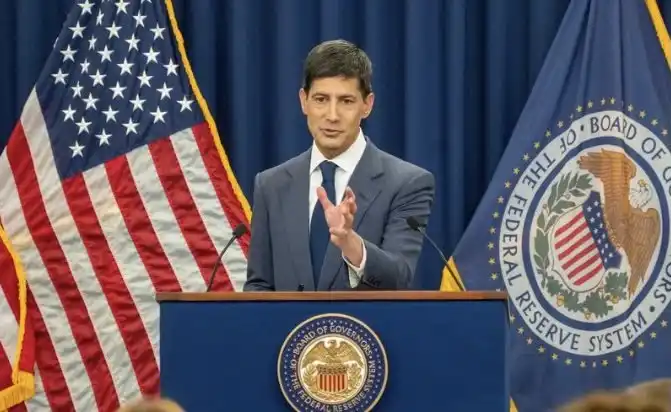
Stablecoins not a ‘systemic risk’: Coinbase pushes back on GENIUS Act critics

ambcryptoDipublikasikan tanggal 2026-02-04Terakhir diperbarui pada 2026-02-04

Abstrak

The debate over stablecoin regulation continues between the crypto industry and traditional banks. Coinbase strongly opposes claims that stablecoins pose a "systemic risk" to the U.S. financial system. Chief Policy Officer Faryar Shirzad argues that stablecoins follow a secure government-backed model, unlike the risky money market funds that contributed to past financial crises. Chief Legal Officer Paul Grewal emphasizes that stablecoin reserves are backed dollar-for-dollar by short-term instruments like U.S. Treasuries and are not relent like traditional bank deposits. However, the proposed GENIUS Act allows stablecoin reserves to include riskier assets such as uninsured deposits and money market fund shares. Critics, including Better Markets and the Bank Policy Institute, warn this could make stablecoins vulnerable to bank-like runs. Despite ongoing discussions and a planned meeting among Senate Democrats, the future of stablecoin legislation remains uncertain, with no clear timeline for the bill's advancement.

The debate over stablecoin yields shows no signs of ending soon. At the center of the issue are two opposing sides, the crypto industry and traditional banks, both pushing for a compromise but remaining firmly divided.

Meanwhile, Coinbase has taken a strong position. The exchange has consistently pushed back against claims that stablecoins pose a “systemic risk” to the broader U.S. financial system.

Stablecoins are way safer, says Coinbase

In a recent statement, Faryar Shirzad, Coinbase’s Chief Policy Officer, dismissed claims that stablecoins mirror money market funds (MMFs), which triggered past financial crises.

Shirzad said that it was a misconception to equate risky prime MMFs that triggered the 2008 financial crisis with safer government-backed MMFs. According to Shirzad, stablecoins follow the ‘secure’ government model and will be “future safe haven.”

“But it is just the opposite (of projected financial crisis)– stablecoins will be the future safe haven.”

Another Coinbase official, Paul Grewal, the firm’s chief legal officer (CLO), echoed the same in a recent CNBC interview.

“Stablecoin issuer deposits (reserves) are not re-lent out like the fractionalized reserve system used by banks. They’re backed dollar-for-dollar in short-term instruments, principally U.S. Treasuries. They are much safer than the banks.”

Crypto bill on the lifeline

But not all the issuers’ reserves are backed by short-term bonds. The stablecoin law, the GENIUS Act, allows for the reserves to include uninsured deposits, repurchase agreement loans, and shares of MMFs.

According to Better Markets, a financial reform nonprofit, this ‘risky’ reserve composition makes stablecoin vulnerable to bank-like runs seen in 2020 and 2008.

The same framing was applied by the Bank Policy Institute (BPI), a lobby group for banks, which called stablecoins a ‘less regulated cousin’ of money market funds.

In fact, these arguments by Better Markets and BPI were the ones Shirzad addressed. The ongoing discussion is part of the larger push for compromise on stablecoin yield that has stalled the market structure bill.

Meanwhile, reports indicate that Democrats have planned a meeting to discuss the bill. This follows White House meeting held on the 2nd of February, to broker a stablecoin yield deal between banks and the crypto industry by the end of the month.

It remains unclear whether the bill will progress out of the Senate Banking Committee by Q1 2026.


Final Thoughts

  • Coinbase officials have maintained that stablecoins are much safer and carry less risk than banks.
  • Senate Democrats planned a meeting on the crypto bill, but uncertainty remains on the legislation’s momentum.


Pertanyaan Terkait

QWhat is the main argument Coinbase makes against claims that stablecoins pose a systemic risk?

ACoinbase argues that stablecoins are much safer than banks and money market funds (MMFs) because their reserves are backed dollar-for-dollar in short-term instruments like U.S. Treasuries and are not re-lent out like in the fractionalized reserve banking system.

QAccording to the article, what does the GENIUS Act allow stablecoin reserves to include?

AThe GENIUS Act allows stablecoin reserves to include uninsured deposits, repurchase agreement loans, and shares of money market funds (MMFs).

QWhich two groups are mentioned as being opposed to the crypto industry's view on stablecoins?

AThe two groups opposed to the crypto industry's view are traditional banks, represented by the Bank Policy Institute (BPI), and the financial reform nonprofit Better Markets.

QWhat specific event from the past do critics cite when warning about the risks of stablecoins?

ACritics cite the bank-like runs seen in the 2008 financial crisis and in 2020 as a risk for stablecoins, comparing their reserve composition to that of risky prime money market funds (MMFs).

QWhat is the current status of the stablecoin market structure bill according to the article?

AThe bill's progress is uncertain, and it remains unclear whether it will advance out of the Senate Banking Committee by the first quarter of 2026, despite planned meetings among Democrats to discuss it.

Bacaan Terkait

The Impossible Triad Is Fundamentally a Pseudo-Problem

**Judul: Segitiga Mustahil Sebenarnya Masalah Palsu** Industri crypto telah membangun sistem kriptografi paling kuat, tetapi ironisnya gagal melindungi privasi keuangan pengguna. Setiap transaksi dan kepemilikan terpapar secara publik. Blokchain pada dasarnya adalah komputer bersama yang lambat dan mahal, yang nilainya terletak pada akses tanpa izin dan konsensus terdesentralisasi. Selama satu dekade, industri terobsesi dengan "trilema" skalabilitas, keamanan, dan desentralisasi. Namun, kendala sebenarnya yang menghalangi masuknya modal triliunan dolar justru adalah **legalitas** dan **privasi**. 1. **Legalitas:** Sifat tanpa izin menciptakan ketidakpastian hukum. Namun, perkembangan regulasi seperti Undang-Undang GENIUS di AS mulai memberikan kejelasan kerangka hukum. 2. **Privasi:** Transparansi rantai publik bukanlah fitur, melainkan **pajak**. Setiap posisi dan transaksi yang terbuka mengundang eksploitasi seperti MEV (Miner Extractable Value), yang telah menyedot miliaran dolar dari pengguna biasa. Modal institusional besar tidak akan pernah menempatkan neracanya di tempat yang bisa dibaca pesaing secara real-time. Solusinya bukan transparansi penuh atau penyembunyian total. Kriptografi modern memungkinkan **privasi yang patuh (compliant privacy)**. Kita dapat membuktikan suatu pernyataan (misalnya, kecukupan cadangan, kepatuhan KYC, transaksi bersih) tanpa membongkar data dasarnya. Audit dan kepatuhan tetap terjaga, tetapi kebocoran informasi dan "pajak transparansi" dihilangkan. Dengan menutup dua cacat ini—melalui kemajuan regulasi dan adopsi privasi yang dapat dibuktikan—blokchain akan mengalami peningkatan murni. Ia akan berubah dari "spreadsheet Google yang mahal dan terbuka" menjadi mesin bersama yang dapat dipercaya yang akhirnya dapat menjaga rahasia. Inilah jembatan yang akan membawa sistem keuangan bernilai triliunan dolar ke dalam dunia yang sebenarnya dirancang untuknya sejak awal.

marsbit4j yang lalu

The Impossible Triad Is Fundamentally a Pseudo-Problem

marsbit4j yang lalu

Chip Optik, Perluasan Kapasitas Produksi Secara Kolektif

Kebutuhan chip optik sedang melonjak, memicu gelombang ekspansi kapasitas global di seluruh rantai pasokan. Di AS, Coherent memperluas pabrik 6 inci InP di Texas dengan pendanaan pemerintah, didukung investasi strategis dari Nvidia. Nokia menambah kapasitas pengujian dan pengemasan chip fotonik. Di Jepang, JX Advanced Metals berinvestasi besar untuk meningkatkan produksi substrat InP hingga 7-10 kali lipat. Di Eropa, IQE dan Tower Semiconductor menyepakati kesepakatan pasokan wafer epitaksial InP jangka panjang, menandakan konvergensi antara platform silicon photonics dan material III-V. Di Cina, perusahaan seperti Suzhou Ray Technology (Soluxe) dan San'an Optoelectronics secara agresif memperluas produksi chip optik dan bahan baku seperti InP. Ekspansi ini didorong oleh permintaan bandwidth yang meledak dari pusat data AI, terlepas dari jalur arsitektur masa depan seperti CPO (Co-Packaged Optics). Laporan Morgan Stanley menekankan bahwa kebutuhan konten optik akan terus tumbuh, baik dengan modul pluggable tradisional, NPO, CPO, atau arsitektur hybrid. Berbagai rute sumber cahaya seperti SiPh + Laser CW, VCSEL, dan MicroLED diperkirakan akan hidup berdampingan untuk aplikasi jarak berbeda dalam pusat data. Pada dasarnya, ini adalah perlombaan kapasitas global di mana AS membangun kembali manufaktur domestik, Jepang menguasai bahan baku, Eropa mendorong integrasi heterogen, dan Cina dengan cepat mengembangkan rantai pasokan terintegrasi secara vertikal. Perlombaan senjata di era fotonik telah memasuki tahap intensif.

marsbit6j yang lalu

Chip Optik, Perluasan Kapasitas Produksi Secara Kolektif

marsbit6j yang lalu

1996 atau 1999? Ujian Pertama Wash adalah 'Bagaimana Melihat AI'

Artikel ini membahas dilema utama yang dihadapi ketua Federal Reserve terbaru, Christopher Warsh, dalam menanggapi ledakan AI. Inti persoalannya adalah apakah kemajuan AI saat ini mirip dengan situasi 1996 — di mana Alan Greenspan membiarkan ekonomi tumbuh tanpa menaikkan suku bunga karena percaya pada pertumbuhan produktivitas — atau lebih mirip 1999, ketika Greenspan akhirnya menaikkan suku bunga secara agresif untuk mencegah overheating ekonomi. Warsh cenderung pada pendekatan 1996, berargumen bahwa manfaat produktivitas AI membutuhkan waktu untuk terlihat dalam data resmi, dan menaikkan suku bunga terlalu dini justru dapat meredam pertumbuhan yang sebenarnya membantu menekan inflasi. Namun, konteks makroekonominya berbeda: tekanan tarif, defisit fiskal yang membesar, dan memudarnya manfaat globalisasi membuat risiko inflasi lebih tinggi daripada era 1990-an. Di sisi lain, kritikus seperti Austan Goolsbee dari Bank Sentral Chicago berpendapat bahwa ledakan AI yang sudah diantisipasi banyak orang justru dapat memicu kenaikan pengeluaran di muka, mendorong overheating ekonomi dan mengharuskan kenaikan suku bunga yang lebih tajam nantinya. Perdebatan ini mencerminkan perpecahan internal di Fed. Paradoks terakhir bagi Warsh adalah keinginannya untuk menghapus "forward guidance" (panduan kebijakan ke depan), suatu praktik yang justru dibuat pada 1999. Jika ekonomi memburuk, ia harus memilih antara menggunakan alat yang ingin dihapusnya atau menghadapi gejolak pasar akibat ketidakpastian. Jawaban atas semua ini bergantung pada penilaiannya: apakah kita berada di tahun 1996 atau 1999?

marsbit8j yang lalu

1996 atau 1999? Ujian Pertama Wash adalah 'Bagaimana Melihat AI'

marsbit8j yang lalu

Trading

Spot
Futures
活动图片