Recent Mass Shutdowns of DeFi Protocols: They All Have One Thing in Common

marsbitDipublikasikan tanggal 2026-03-06Terakhir diperbarui pada 2026-03-06

Abstrak

In recent months, multiple DeFi protocols have announced shutdowns, not due to exit scams but because of a lack of users, funding, or both. Projects like Angle Protocol, Polynomial, MilkyWay, and Step Finance—despite having functional products and significant past traction—were unable to sustain operations. Common challenges included an inability to attract liquidity (especially critical in derivatives), failure to achieve product-market fit, and high costs of expanding to new chains or narratives. Many teams pivoted repeatedly to chase trends like restaking or real-world assets but ran out of capital before finding sustainable demand. Others, like ZeroLend, suffered from deploying on smaller blockchains that lost liquidity during market downturns. Despite these failures, the projects shut down responsibly, allowing users to withdraw funds and avoiding reckless token launches—a sign of industry maturation compared to the reckless exits of 2022.

Author: Ignas

Compiled by: Chopper, Foresight News

Over the past two months, at least 10 crypto protocols have announced their closure. Not rug pulls, but due to no users, no money, or both.
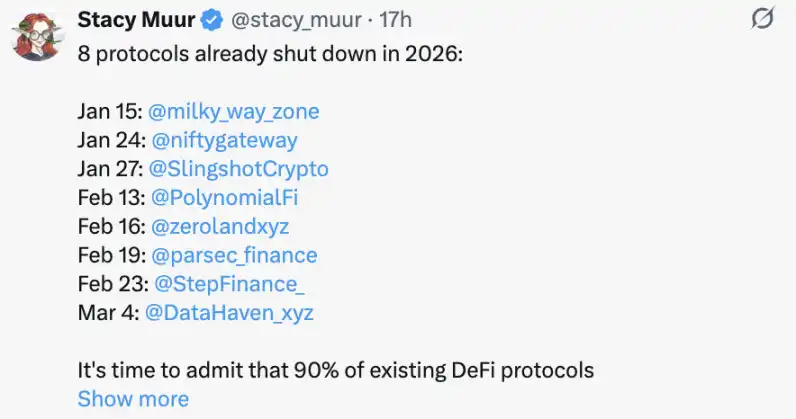
Not to mention mining companies like BlockFills and lending platforms freezing withdrawals. Just yesterday, Angle also announced (https://x.com/AngleProtocol/status/2029161525580112263) the gradual shutdown of its EURA and USDA stablecoins, despite having reached a Total Value Locked (TVL) of $250 million and having strong business partnerships.

Angle stated bluntly in the announcement, "The decentralized stablecoin landscape has completely changed. Yield-bearing stablecoins today are essentially just branded wrappers over existing vaults and lending protocols; there's no longer a need to maintain a separate, independent infrastructure."

These shuttered projects almost all had functional products:

  • Polynomial processed a cumulative trading volume of $4 billion across 70 markets
  • MilkyWay's TVL once reached $250 million
  • Step Finance had a peak of 300,000 monthly active users

I've used, or at least tried, these products. The technology wasn't the issue, but no one was willing to pay the fees needed for the projects to survive.

MilkyWay is a typical example: four pivots in less than two years. Starting with Celestia liquid staking, then moving to restaking, RWA tokenization, and crypto debit cards for rent payments... each pivot chased the hype of the moment.

Their description of the restaking pivot is poignant: "We identified the restaking opportunity early, designed the system, TVL to $250M, completed security audits, and were ready to launch. But the market moved on from restaking faster than anyone anticipated."

In the end, they had to admit the funding wouldn't last long enough to find product-market fit.

The Polynomial team was brutally honest about the reason for failure, offering a lesson for all perpetual contract projects: "In derivatives, good tech is useless. We improved execution speed, optimized UX, built innovative infrastructure, but none of it mattered. Traders go where the liquidity is. We didn't have it. Everything else is just a nice-to-have feature."

The conclusion is even harsher: "Liquidity is the only moat in derivatives. You can't beat liquidity with innovation, you can't beat it with marketing, you can't beat it with development."

ZeroLend's shutdown sounds a warning bell for dApps trying to launch on multiple blockchains. They bet on supporting projects on niche chains like Manta, Zircuit, and Xlayer, but when the market turned bearish, liquidity on these chains dried up, and oracle providers stopped their services.

Ultimately, operating at a long-term loss was unsustainable.

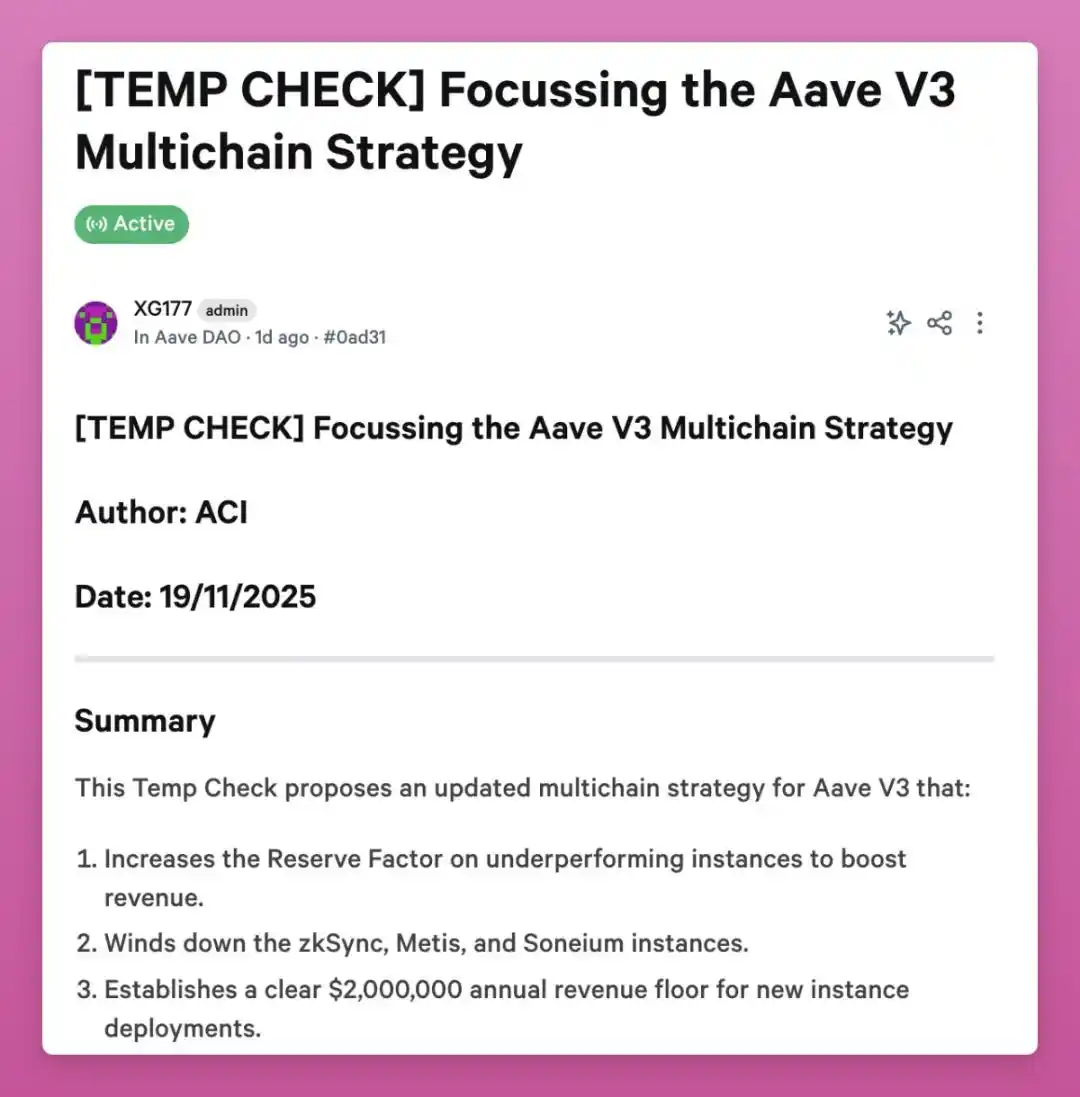
Aave recently also voted to shut down services on several chains, citing the same reason of unprofitable operation.
Then there's Parsec, once a legendary tool in the circle used to track Terra, 3AC, and the stETH depeg. But the team admitted, "After the FTX collapse, DeFi spot trading, lending, and leverage never returned to their former state. The market changed, on-chain behavior changed, and we didn't truly understand it."

Simply put, the market moved on, and we were left behind. The market is cruel.

Slingshot was acquired and completely shut down. Eden cut 80% of its unprofitable products, keeping only the core business.

As they said, "The 80/20 rule became a reality; the products that cost us 80% of our expenses brought in only 20% of the revenue."

Finally, Step Finance's case is more unique: it was hacked for $26 million on January 31st, which was a death sentence. "We tried fundraising, acquisition, nothing worked."

What's the common thread among these deceased projects? They failed to adapt to the ever-changing market and lacked sufficient capital to pivot again.

Each team bet on a particular ecosystem experiencing explosive growth, but the growth either wasn't fast enough or didn't happen at all. Celestia DeFi never truly took off, on-chain derivatives struggled to compete with Hyperliquid, and even established platforms like dYdX and GMX are having a hard time.

And expanding into new chains and narrative areas is costly.

For players like me, moving funds from one platform to another is effortless and cheap. But applications need to invest significant time and financial resources to prepare for potential new user bases.

The good news is, these were all "dignified deaths." All projects gave users time to withdraw funds; the teams didn't run away or issue tokens to cash out. Compared to the outright rug pulls of 2022, the industry has indeed learned to die responsibly.


Kripto yang Sedang Tren

Pertanyaan Terkait

QWhat is the common reason behind the recent shutdowns of multiple DeFi protocols?

AThe common reason is that these protocols failed to adapt to the rapidly changing market conditions and lacked sufficient funding to pivot or sustain operations, despite having functional products.

QAccording to Angle Protocol, why did they decide to shut down their stablecoin operations?

AAngle Protocol stated that the decentralized stablecoin landscape has fundamentally changed, and yield-bearing stablecoins are now essentially just branded wrappers over existing vaults and lending protocols, making it unnecessary to maintain independent infrastructure.

QWhat did Polynomial identify as the only moat in the derivatives space?

APolynomial identified liquidity as the only moat in the derivatives space, emphasizing that innovation, marketing, or development cannot overcome the advantage of liquidity.

QWhat lesson did ZeroLend's shutdown provide for decentralized applications?

AZeroLend's shutdown served as a warning for dApps launching on multiple blockchains, as betting on smaller chains like Manta and Xlayer led to liquidity drying up and oracle services halting when the bear market hit.

QHow did the shutdowns of these protocols demonstrate responsible behavior compared to past incidents?

AThese protocols allowed users time to withdraw funds, did not engage in exit scams, and avoided issuing worthless tokens, showing that the industry has learned to 'die responsibly' compared to the outright fraud seen in 2022.

Bacaan Terkait

Bank Italia Tidak Melihat Keunggulan Sistemik Stablecoin dalam Transfer

Studi Bank Italia menunjukkan bahwa stablecoin tidak memberikan keunggulan sistemik yang berkelanjutan dalam hal biaya dan kecepatan transfer uang. Semua keuntungan hilang akibat biaya untuk deposit dan penarikan ke/dari fiat serta proses dalam infrastruktur pembayaran lokal. Peneliti membandingkan transfer 200 USDC di 10 koridor bilateral antara Italia dengan Brasil, Argentina, Jepang, UEA, dan Afrika Selatan. Metriknya adalah biaya total dan waktu penyelesaian dibandingkan layanan uang standar. Biaya akhir transfer stablecoin bervariasi dari 0,3% hingga hampir 9%, tergantung arahnya. Di koridor dengan sistem pembayaran instan, penyelesaian membutuhkan waktu kurang dari 20 menit. Sementara di daerah tanpa infrastruktur tersebut, proses memakan waktu satu hingga dua hari kerja. Biaya dan penundaan utama dikaitkan dengan pertukaran dan konversi mata uang, serta kualitas infrastruktur lokal. Komisi blockchain bukan faktor utama. Rata-rata biaya transfer uang global adalah 6,65%. Di sebagian besar koridor yang diteliti, stablecoin lebih murah dari level ini, namun dibandingkan dengan Wise, stablecoin hanya lebih unggul di tiga dari tujuh rute yang sebanding. Penulis berpendapat efeknya akan lebih terasa jika stablecoin bisa dibelanjakan langsung untuk barang/jasa tanpa konversi ke mata uang lokal. Mereka juga mencatat bahwa rezim regulasi yang melarang tidak menghilangkan permintaan akan "koin stabil", dan aturan yang terlalu ketat justru mempersulit penggunaan oleh klien ritel.

cryptonews.ru2j yang lalu

Bank Italia Tidak Melihat Keunggulan Sistemik Stablecoin dalam Transfer

cryptonews.ru2j yang lalu

Boom Bitcoin Memanas: Pernyataan Baru Saylor Picu Spekulasi Pembelian

Ketua Eksekutif MicroStrategy Inc., Michael Saylor, kembali memicu spekulasi pembelian Bitcoin baru perusahaan setelah memposting pesan "Bitcoin Drive engaged" pada 2 Agustus. Postingan hari Minggu ini disertai dengan pelacak pembelian biasa MicroStrategy, yang sejalan dengan praktik Saylor memberi sinyal perubahan treasury sebelum laporan mingguan. Laporan Saylor menunjukkan bahwa cadangan Bitcoin MicroStrategy adalah 843.775 BTC dengan nilai pasar sekitar $53,25 miliar. Dua penjualan Bitcoin baru-baru ini, total 3.588 BTC, telah mengurangi cadangan dari 847.363 BTC. Penjualan ini, menurut pengajuan SEC, ditujukan untuk mendanai pembayaran saham preferen dan menambah cadangan dolar AS. Perusahaan juga dilaporkan tidak melakukan pembelian Bitcoin dalam minggu yang berakhir 26 Juli, sambil meningkatkan cadangan dolar AS menjadi sekitar $3,75 miliar. Ekspektasi untuk pengumuman treasury pada hari Senin diperkuat oleh pola sebelumnya, di mana sinyal serupa pada hari Minggu mendahului pengungkapan cadangan uang yang lebih besar pada 27 Juli. Pembaruan data hari Senin ini akan menunjukkan apakah MicroStrategy kembali ke akumulasi Bitcoin, karena perusahaan menyeimbangkan cadangan Bitcoinnya yang besar dengan kewajiban tunai yang meningkat dan manajemen modal yang aktif. Risiko keuangan tetap tinggi setelah MicroStrategy melaporkan kerugian operasional $8,33 miliar untuk kuartal II 2026, termasuk kerugian belum terealisasi $8,32 miliar pada aset digitalnya.

cryptonews.ru2j yang lalu

Boom Bitcoin Memanas: Pernyataan Baru Saylor Picu Spekulasi Pembelian

cryptonews.ru2j yang lalu

Saham Perusahaan yang Bergerak di Bidang Kecerdasan Buatan Diperdagangkan Seperti 'Meme Coin', Sementara Bitcoin Hampir Tak Berubah Harganya — Tinjauan Mingguan

Tinjauan minggu ini menyoroti dominasi berita pasar saham tradisional dan makroekonomi atas berita kripto. Peringatan keamanan mendesak dikeluarkan untuk pengguna Coldcard terkait potensi kompromi kunci pribadi. Sementara itu, Bitcoin relatif stabil di sekitar $64.000, perhatian pasar justru terfokus pada volatilitas ekstrem di saham AI dan pasar Asia, terutama Korea Selatan yang mengalami penurunan signifikan. Likuidasi besar oleh dana "Situational Awareness" diduga berkontribusi pada penurunan ini. Di sektor kripto, tren bearish berlanjut dengan beberapa perusahaan seperti BitMart dan Storj Labs mengumumkan penutupan atau kebangkrutan. Perusahaan yang masih beroperasi, seperti Coinbase, mengalami tekanan dengan penurunan harga saham dan gelombang PHK di industri. Di sisi lain, MicroStrategy terus menambah cadangan kasnya dan membeli kembali sahamnya. Ekosistem DeFi menghadapi tantangan potensial dari kesuksesan proyek seperti Trade.xyz dan Pump.fun, yang dapat memutuskan untuk beroperasi secara mandiri. Isu perdagangan orang dalam juga mencuat di platform Hyperliquid. Sementara itu, token AI seperti Bittensor (TAO) menarik perhatian investor venture capital, meski disertai peringatan agar investor retail berhati-hati. Artikel ditutup dengan penekanan kembali pada pentingnya kewaspadaan keamanan, khususnya dalam penyimpanan aset kripto secara mandiri, di tengah potensi meningkatnya kerentanan perangkat keras dompet digital.

cryptonews.ru2j yang lalu

Saham Perusahaan yang Bergerak di Bidang Kecerdasan Buatan Diperdagangkan Seperti 'Meme Coin', Sementara Bitcoin Hampir Tak Berubah Harganya — Tinjauan Mingguan

cryptonews.ru2j yang lalu

Trading

Spot

Artikel Populer

Cara Membeli ONE

Selamat datang di HTX.com! Kami telah membuat pembelian Harmony (ONE) menjadi mudah dan nyaman. Ikuti panduan langkah demi langkah kami untuk memulai perjalanan kripto Anda.Langkah 1: Buat Akun HTX AndaGunakan alamat email atau nomor ponsel Anda untuk mendaftar akun gratis di HTX. Rasakan perjalanan pendaftaran yang mudah dan buka semua fitur.Dapatkan Akun SayaLangkah 2: Buka Beli Kripto, lalu Pilih Metode Pembayaran AndaKartu Kredit/Debit: Gunakan Visa atau Mastercard Anda untuk membeli Harmony (ONE) secara instan.Saldo: Gunakan dana dari saldo akun HTX Anda untuk melakukan trading dengan lancar.Pihak Ketiga: Kami telah menambahkan metode pembayaran populer seperti Google Pay dan Apple Pay untuk meningkatkan kenyamanan.P2P: Lakukan trading langsung dengan pengguna lain di HTX.Over-the-Counter (OTC): Kami menawarkan layanan yang dibuat khusus dan kurs yang kompetitif bagi para trader.Langkah 3: Simpan Harmony (ONE) AndaSetelah melakukan pembelian, simpan Harmony (ONE) di akun HTX Anda. Selain itu, Anda dapat mengirimkannya ke tempat lain melalui transfer blockchain atau menggunakannya untuk memperdagangkan mata uang kripto lainnya.Langkah 4: Lakukan trading Harmony (ONE)Lakukan trading Harmony (ONE) dengan mudah di pasar spot HTX. Cukup akses akun Anda, pilih pasangan perdagangan, jalankan trading, lalu pantau secara real-time. Kami menawarkan pengalaman yang ramah pengguna baik untuk pemula maupun trader berpengalaman.

656 Total TayanganDipublikasikan pada 2024.12.12Diperbarui pada 2026.06.02

Cara Membeli ONE

Diskusi

Selamat datang di Komunitas HTX. Di sini, Anda bisa terus mendapatkan informasi terbaru tentang perkembangan platform terkini dan mendapatkan akses ke wawasan pasar profesional. Pendapat pengguna mengenai harga ONE (ONE) disajikan di bawah ini.

活动图片












