Post-Mortem of the Venus THE Attack: How to Profit in a Fleeting Window?

marsbitDipublikasikan tanggal 2026-03-16Terakhir diperbarui pada 2026-03-16

Abstrak

Approximately two hours ago, Venus Protocol's THE token was exploited using a classic Mango Markets-style price manipulation attack. The attacker targeted THE, a low-liquidity collateral asset, by depositing it, borrowing other assets, and using those to buy more THE, artificially inflating its price. Once the time-weighted average oracle updated, the inflated price allowed further leveraged borrowing. To bypass THE's borrowing cap, the attacker performed a "donation attack" by transferring THE directly to the vTHE contract, increasing the recognized collateral value. After the first manipulation phase, THE's price stabilized around $0.50. The attacker attempted to further amplify gains by continuing to buy THE, but mounting sell pressure limited price increases and pushed their health factor near 1.0, risking liquidation. The collateral, nominally valued around $30M, had extremely low liquidity, making large-scale liquidation at inflated prices impossible. Recognizing the situation, the writer opened a short position on THE with high leverage, anticipating a price collapse due to overvaluation, illiquidity, and forced selling. After liquidation, THE price plummeted to ~$0.24, below its pre-attack level, resulting in a ~$15K profit for the writer. Venus Protocol was left with ~$2M in bad debt. The attacker likely gained little or lost funds, though may have profited from off-chain positions. The event highlights that nominal collateral value in DeFi does not equal realizabl...

Two hours ago, VenuV's THE token was hit with a classic Mango Markets-style price manipulation attack.

The attacker targeted the low-liquidity collateral THE:

· First, collateralized THE

· Borrowed other assets

· Used the borrowed assets to buy more THE

· Pushed THE price higher

· Waited for the time-weighted average oracle price to update, then obtained higher collateral value and continued the cycle of borrowing.
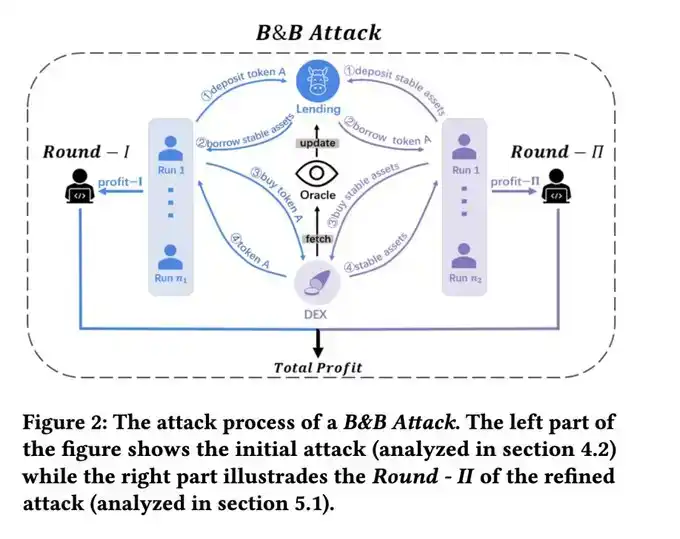
Due to THE's extremely poor on-chain liquidity, its price was driven from $0.27 to nearly $5. The oracle price subsequently updated to around $0.5 (time-weighted average), giving the attacker room to further amplify leverage.

More critically, THE itself has a supply cap.


Normally, this would limit the attacker's ability to expand their position. But they used a classic old trick to bypass it: the Compound fork donation attack. After depositing a large amount of THE, they directly transferred THE to the vTHE contract, "donating" to further inflate the collateral value recognized by the system and break through the cap.

Attack transaction: 0x4f477e941c12bbf32a58dc12db7bb0cb4d31d41ff25b2457e6af3c15d7f5663f
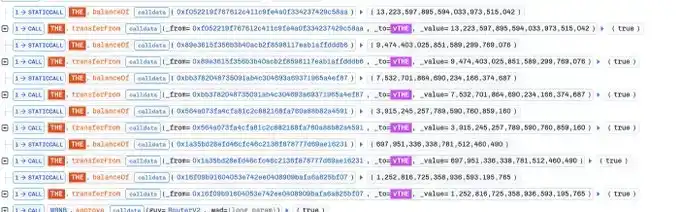
After the first wave of the attack, THE's price stabilized around $0.5.

At this point, the attacker could have walked away with the borrowed assets. But they clearly wanted to maximize profits, so they continued to use the borrowed assets to buy THE, attempting another pump.

The problem arose: Although the price was abnormally high, selling pressure from the market became extremely intense. The attacker kept buying but could barely push the price higher. Eventually, they almost exhausted their borrowing capacity, and their position's health factor dropped close to 1, nearing liquidation.
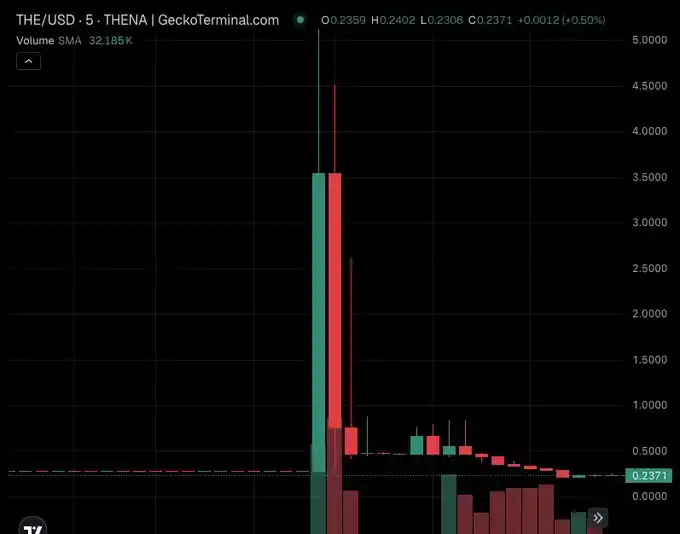
By then, the situation was very clear: The attacker's collateral, including their pre-prepared assets and THE bought during the attack, had a nominal value of about 30M. But the core issue with this collateral was—there was simply not enough liquidity to absorb it. Once liquidation began, this THE would be dumped onto the market. And no one in the market could possibly absorb such a large volume at these inflated prices.

So what did I do?

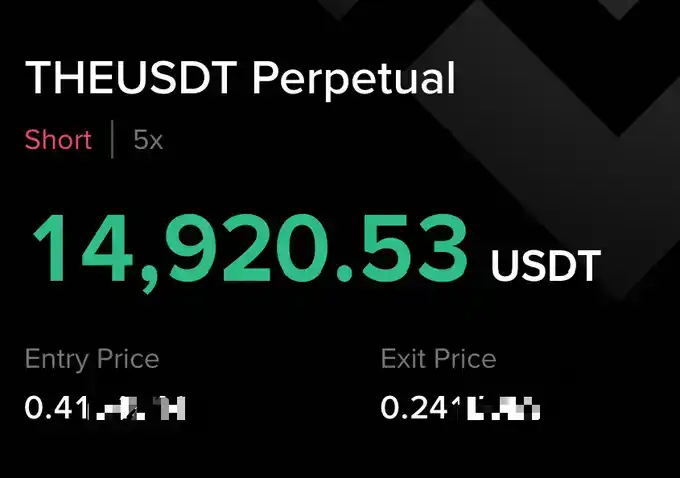
When liquidation started, I directly opened a short position on THE. And this was a position where relatively higher leverage could be applied.

The reason was simple: High valuation, low liquidity, massive passive selling pressure, no buyers.

The outcome was unsurprising: After the liquidation ended, THE's price fell all the way back to around $0.24, even lower than the pre-attack price, because original holders also sold during the process.

I closed my short position here, profiting about 15K.
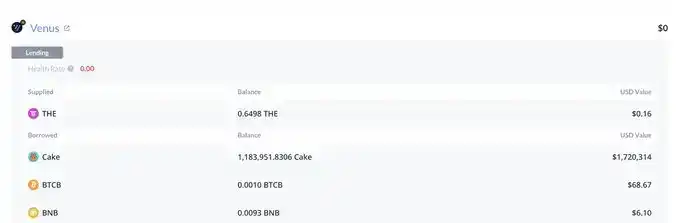
In the end, Venus was left with about 2M in bad debt.

As for how much the attacker actually profited, I haven't done a complete analysis; but judging from the operations of some addresses, they likely made little to no profit, or even blew themselves up. However, the attacker might still have profited from off-chain perp positions (just like our operation).

Venus's ~2M bad debt address: https://debank.com/profile/0x1a35bd28efd46cfc46c2136f878777d69ae16231
This incident once again demonstrates:


In DeFi, "nominal collateral value" does not equal "liquidation value". When the collateral itself lacks liquidity, the system sees 30M, but the market might only be able to realize a fraction of that.

In 2023, I published a paper titled 'Unmasking Role-Play Attack Strategies in Exploiting Decentralized Finance (DeFi) Systems' which provides a detailed mathematical model of this type of attack. Interested readers can refer to: https://dl.acm.org/doi/10.1145/3605768.3623545


Pertanyaan Terkait

QWhat was the core strategy used by the attacker in the Venus THE exploit?

AThe attacker used a price manipulation strategy similar to the Mango Markets attack. They deposited the low-liquidity collateral THE, borrowed other assets, used those assets to buy more THE to drive its price up, waited for the time-weighted average oracle price to update to reflect the inflated value, and then repeated the cycle to gain higher borrowing power.

QHow did the attacker bypass the supply cap limitation on THE?

AThe attacker used a 'donation attack' by directly transferring THE tokens to the vTHE contract after a large deposit. This 'donation' artificially increased the total supply recognized by the system, allowing them to further inflate the collateral value and bypass the supply cap.

QWhy did the author of the article decide to open a short position on THE?

AThe author opened a short position because the attacker's collateral (THE tokens) had an extremely high nominal value but very low liquidity. They anticipated that once liquidation began, the massive sell pressure from the forced selling of these tokens would cause the price to crash dramatically, as there would be no market to absorb such a large volume at the inflated price.

QWhat was the final outcome for the attacker and the Venus protocol?

AThe attacker likely made little to no profit and may have even lost money from their on-chain maneuvers, though they might have profited from off-chain perpetual positions. The Venus protocol was left with approximately $2 million in bad debt.

QWhat key DeFi concept does this event highlight according to the article?

AThe event highlights that 'nominal collateral value' is not the same as 'liquidation value.' When collateral itself lacks sufficient liquidity, the value the system calculates can be vastly higher than the amount the market can actually realize during a liquidation event.

Bacaan Terkait

Mundur Terhitung: GPT-5.6 – Tinggalkan Khayalan API Tunggal, Iterasi Daya Komputasi Secepat Apa Pun Takkan Lawan Satu Aturan Kepatuhan

Pada pertengahan Juni, tiga peristiwa industri — pembatasan akses Fable 5 karena kepatuhan regulasi, pengumuman open-source GLM-5.2, dan kebocoran tanggal rilis GPT-5.6 — menandai titik balik dalam industri AI global. Logika dasarnya telah berubah: Pertama, **"ketersediaan" kini lebih penting daripada "kemajuan teknis"**, dengan rantai pasok model besar memasuki fase "sistem ganda": model tertutup yang dikontrol dan model open-source lokal. Kedua, **penghalang kompetisi raksasa model tertutup bergeser**. Fokus teknis beralih dari "kecerdasan bahasa" ke "kecerdasan spasial (model dunia)" yang sangat bergantung pada komputasi. Ketiga, menghadapi risiko kepatuhan regulasi lintas batas yang常态, **desain arsitektur "model-agnostic" telah menjadi kebutuhan dasar bagi pengembang aplikasi untuk menjaga keberlanjutan bisnis**. Fable 5 (Anthropic) dibatasi aksesnya bagi non-warga AS hanya 72 jam setelah diluncurkan, menunjukkan bahwa kemajuan teknologi kini berbanding lurus dengan risiko regulasi. Di sisi lain, model open-source seperti GLM-5.2 menawarkan peningkatan kinerja yang stabil dan keunggulan biaya signifikan (hingga 90% lebih murah), sekaligus menjadi cadangan penting untuk manajemen risiko kepatuhan perusahaan global. Sementara itu, GPT-5.6 dikabarkan akan fokus pada "kecerdasan spasial" atau "model dunia", berusaha membangun keunggulan baru di bidang seperti simulasi industri dan robotika yang membutuhkan daya komputasi masif. Kesimpulannya, logika evaluasi infrastruktur AI telah berubah dari sekadar kinerja teknis menjadi pertimbangan gabungan antara kinerja, kepatuhan regulasi, dan stabilitas akses. Bagi pengembang, ketergantungan pada API tertutup tunggal mengandung risiko tinggi. Menerapkan arsitektur "model-agnostic" untuk memungkinkan peralihan cepat ke alternatif open-source lokal telah menjadi prinsip dasar untuk menjaga kelangsungan bisnis.

marsbit46m yang lalu

Mundur Terhitung: GPT-5.6 – Tinggalkan Khayalan API Tunggal, Iterasi Daya Komputasi Secepat Apa Pun Takkan Lawan Satu Aturan Kepatuhan

marsbit46m yang lalu

Perang Subsidi Token "Raksasa AI", Sudah Hampir Selesai?

Perang subsidi token antara raksasa AI seperti Google, OpenAI, dan Anthropic mungkin tidak akan segera berakhir, tetapi sifatnya berbeda dari perang subsidi era internet. Analisis dari SemiAnalysis menunjukkan bahwa harga token saat ini sebenarnya sudah sangat disubsidi, dengan paket berlangganan AI premium bahkan mungkin disubsidi hingga 70 kali lipat dari biaya berlangganannya. Namun, tidak seperti layanan seperti taksi online atau pengiriman makanan, token AI hampir tidak memiliki efek "penguncian" (*lock-in effect*). Pengguna dan pengembang dapat dengan mudah beralih antara model AI karena API yang semakin standar. Ini berarti begitu subsidi dihentikan dan harga dinaikkan, pengguna bisa langsung beralih. Bill Maris dari Google Ventures memprediksi dengan keyakinan 100% bahwa Google, dengan pendapatan iklannya yang besar, bisa memotong harga token hingga 80% sebagai senjata. Bagi OpenAI dan Anthropic yang bergantung pada pendanaan investor, hal ini akan menjadi tekanan bisnis yang berat, terutama setelah mereka masuk bursa dan harus menunjukkan profitabilitas. Dua skenario akhir yang mungkin adalah: 1) skenario monopolistik ala internet di mana satu pemenang muncul dan kemudian menaikkan harga, atau 2) skenario "listrik-air-bahan bakar" di mana token menjadi infrastruktur dasar yang terstandarisasi dengan margin keuntungan yang sangat tipis. Artikel berargumen bahwa skenario kedua lebih mungkin karena kurangnya efek penguncian pada token AI. Kompetisi ini mungkin bukan perang untuk dimenangkan, melainkan permainan tanpa akhir untuk tetap berada di meja permainan. Bagi pengguna, selama perang subsidi ini berlanjut, mereka akan terus menikmati akses ke kemampuan AI canggih dengan biaya yang sangat terjangkau dibandingkan dengan biaya komputasi sebenarnya.

marsbit1j yang lalu

Perang Subsidi Token "Raksasa AI", Sudah Hampir Selesai?

marsbit1j yang lalu

Di Luar Lapangan: Permainan Mengejar Keuntungan di Sekitar Piala Dunia

Di luar lapangan, Piala Dunia bukan hanya festival penggemar sepak bola, tetapi juga jendela langka bagi spekulasi global. Turnamen ini memusatkan perhatian, emosi, identitas, kesenjangan informasi, dan sumber daya langka selama lebih dari sebulan, menciptakan ekosistem spekulasi yang luas. Pasar prediksi seperti Polymarket dan Kalshi mencatat pertumbuhan pesat, dengan volume perdagangan miliaran dolar, menawarkan narasi kekayaan baru dibandingkan taruhan olahraga tradisional yang tetap menjadi tulang punggung dengan basis pengguna yang matang. Pasar saham juga bereaksi, menciptakan "saham konsep" seperti produsen ayam goreng di Korea Selatan yang harganya melonjak terkait acara nonton bareng. Pasar sekunder tiket menjadi arena arbitrase, di mana harga bisa meroket untuk pertandingan tim populer seperti Portugal, sementara tiket lain justru turun. Barang koleksi seperti stiker Panini dan jersey edisi terbatas juga menjadi komoditas spekulasi, dengan harga melambung di platform seperti eBay. Spekulasi lebih liar muncul di crypto melalui ribuan token meme bertema Piala Dunia yang sangat volatil, meski penuh risiko penipuan. Lapisan terakhir adalah bisnis informasi: alat pelacak tiket seperti SeatSidekick dan layanan berlangganan rekomendasi taruhan memanfaatkan permintaan akan data dan keunggulan informasi. Intinya, Piala Dunia telah menjadi eksperimen spekulasi raksasa di mana aliran perhatian dan emosi menciptakan jaringan perdagangan global yang menyelesaikan transaksinya sendiri jauh dari lapangan hijau.

marsbit1j yang lalu

Di Luar Lapangan: Permainan Mengejar Keuntungan di Sekitar Piala Dunia

marsbit1j yang lalu

Bagaimana Codex Menggunakan Komputer? Tiga Pintu Masuk dan Batasan Izin

Cara Codex Menggunakan Komputer: Tiga Pintu Masuk dan Batas Izin Artikel ini menjelaskan tiga cara Codex berinteraksi dengan lingkungan eksternal: Computer Use, Ekstensi Chrome, dan Browser dalam aplikasi. Ketiganya melayani skenario tugas, batas izin, dan tingkat kepercayaan yang berbeda. 1. **Computer Use (@Computer)**: Cakupan terluas, mengontrol aplikasi desktop asli (macOS/Windows), pengaturan sistem, simulator iOS, dan alur kerja lintas aplikasi melalui antarmuka grafis. Cocok untuk proses yang tidak memiliki dukungan API, plugin, atau alat terstruktur. Namun, lebih lambat dan memiliki batas izin terlebar. Harus digunakan dengan pengawasan untuk tindakan sensitif. 2. **Ekstensi Chrome (@Chrome)**: Mengakses status Chrome yang sudah login, termasuk cookies, tab, dan profil. Ideal untuk tugas di Gmail, LinkedIn, Salesforce, dasbor internal, atau penelitian yang memerlukan status login di beberapa situs. Mendukung kontrol multi-tab dan konteks identitas browser. Batas kepercayaan penting: pisahkan tindakan berisiko tinggi seperti mengirim atau membeli. 3. **Browser dalam Aplikasi (@Browser)**: Browser terisolasi di dalam thread Codex, tidak membawa status login atau ekstensi. Sangat cocok untuk pengembangan web, debugging bug visual, memeriksa tata letak responsif, dan memberikan anotasi desain pada halaman lokal atau pratinjau berbasis file. Menciptakan siklus umpan balik yang ketat antara pengeditan kode dan pratinjau. **Prinsip Inti**: Pilih antarmuka operasi yang paling sempit, aman, dan terstruktur untuk tugas tersebut. Prioritaskan plugin atau MCP jika tersedia. Gunakan Computer Use hanya sebagai "mil terakhir" ketika alat terstruktur tidak mencukupi. **Appshots** berfungsi sebagai alat untuk memberikan konteks visual (dengan menangkap jendela depan), bukan sebagai metode kontrol keempat. Dengan mendorong pemilihan alat yang tepat, pendekatan berlapis ini menunjukkan kunci produk AI Agent: membatasi izin secara proporsional berdasarkan tugas spesifik dan mempertahankan hak pengguna untuk meninjau tindakan kritis.

marsbit3j yang lalu

Bagaimana Codex Menggunakan Komputer? Tiga Pintu Masuk dan Batasan Izin

marsbit3j yang lalu

Trading

Spot
Futures
活动图片