Matrixdock FRS Standard: From Gold to Silver, How Is the On-Chain Reserve Asset System Evolving?

marsbitDipublikasikan tanggal 2026-03-19Terakhir diperbarui pada 2026-03-19

Abstrak

The article discusses the evolution of on-chain real-world assets (RWA), shifting focus from simple asset tokenization to establishing sustainable and verifiable operational frameworks for long-term on-chain existence. It introduces Matrixdock’s FRS (Fungible Reserve Standard), a mechanism that encodes the economic attributes of reserve assets—like custody and operational costs—directly into the token structure. Unlike traditional mapping approaches, FRS maintains a deterministic relationship between the reserve asset, token supply, and operational costs over time. It adjusts the quantity of underlying assets per token to reflect costs structurally, without charging external fees or extracting profits. The piece highlights the extension from gold—a stable reserve asset—to more volatile and cyclical silver, demonstrating how FRS provides a consistent operational framework regardless of asset type. Matrixdock’s XAGm, a silver-backed token, is presented as a practical implementation of FRS, using LBMA-standard silver bars held in institutional vaults. Finally, the article introduces the concept of a “Reserve Layer”—a structured system of diverse, high-quality assets operating under a unified mechanism to support on-chain finance. The broader implication is that RWA’s future depends not on tokenization alone, but on robust, verifiable, and sustainable on-chain operational frameworks.

In recent times, discussions around RWA (Real World Assets) being brought on-chain have primarily revolved around one question: which assets can be introduced to the blockchain. Whether it's gold, government bonds, or various real-world assets, the core logic centers on "mapping"—converting real assets into on-chain certificates. However, as the market gradually advances, a more specific issue has begun to emerge: can these assets exist on-chain in the long term and operate in a verifiable manner over time?

When assets are no longer short-term holding instruments but need to form long-term structures on-chain, mere "mapping" is no longer sufficient. The clarity of reserve status, how token supply changes, and how custody and operational costs are reflected have become critical factors affecting asset stability.

Against this backdrop, mechanism frameworks built around "how assets operate on-chain" are becoming an important component of RWA infrastructure. Among these, the FRS (Fungible Reserve Standard) developed by Matrixdock is a structural response to this very issue.

FRS: A Mechanism Framework for Encoding the Economic Attributes of Assets

FRS is not a single product issuance model but a mechanism framework that encodes the economic attributes of reserve assets into the token structure. Its focus is not on "how to issue tokens" but on continuously maintaining a deterministic relationship between reserve assets, token supply, and operational costs on-chain.

In the FRS framework:

  • The correspondence between tokens and the underlying reserve assets is explicitly defined at the mechanism level and is verifiable
  • The economic attributes of the assets (including custody and operational costs) are continuously reflected on-chain through systematic mechanisms
  • Costs are structurally reflected on-chain according to established rules, rather than being charged separately as external fees
  • The overall structure does not include management fees or profit extraction, only reflecting the actual costs incurred from asset custody and operations

Specifically, this mechanism adjusts "the amount of asset corresponding to each unit token" so that asset costs are continuously reflected over time, thereby reflecting holding costs without changing the quantity held by users. This design transforms on-chain assets from static "mapping results" into a structured system that operates continuously according to established rules. In this sense, FRS is closer to a standardized operating mechanism for on-chain reserve assets, rather than a single product framework.

From Gold to Silver: The Logic Behind Asset Expansion

In the traditional financial system, gold has long played a central role as a reserve asset, and its value-anchoring properties have made it one of the first precious metals to enter the on-chain structure.

In contrast, silver is influenced by both investment demand and industrial cycles, exhibiting more pronounced volatility and cyclical characteristics. This also means that, in the absence of a unified mechanism, the on-chain representation of such assets often faces higher uncertainty. The stronger the asset volatility, the greater the demand for constraints and verification mechanisms in its on-chain structure.

The role of FRS is to provide a unified structural foundation in this process: regardless of how asset characteristics change, their operational logic on-chain remains consistent. Under this framework, asset expansion is no longer merely an increase in underlying assets but:

  • Introducing reserve assets with different attributes under a unified mechanism
  • Enhancing the diversity of asset portfolios while maintaining structural consistency

Therefore, the evolution from gold to silver is not just an expansion at the asset level but also a continuation at the mechanism level.

XAGm: An Implementation of FRS for Silver Assets

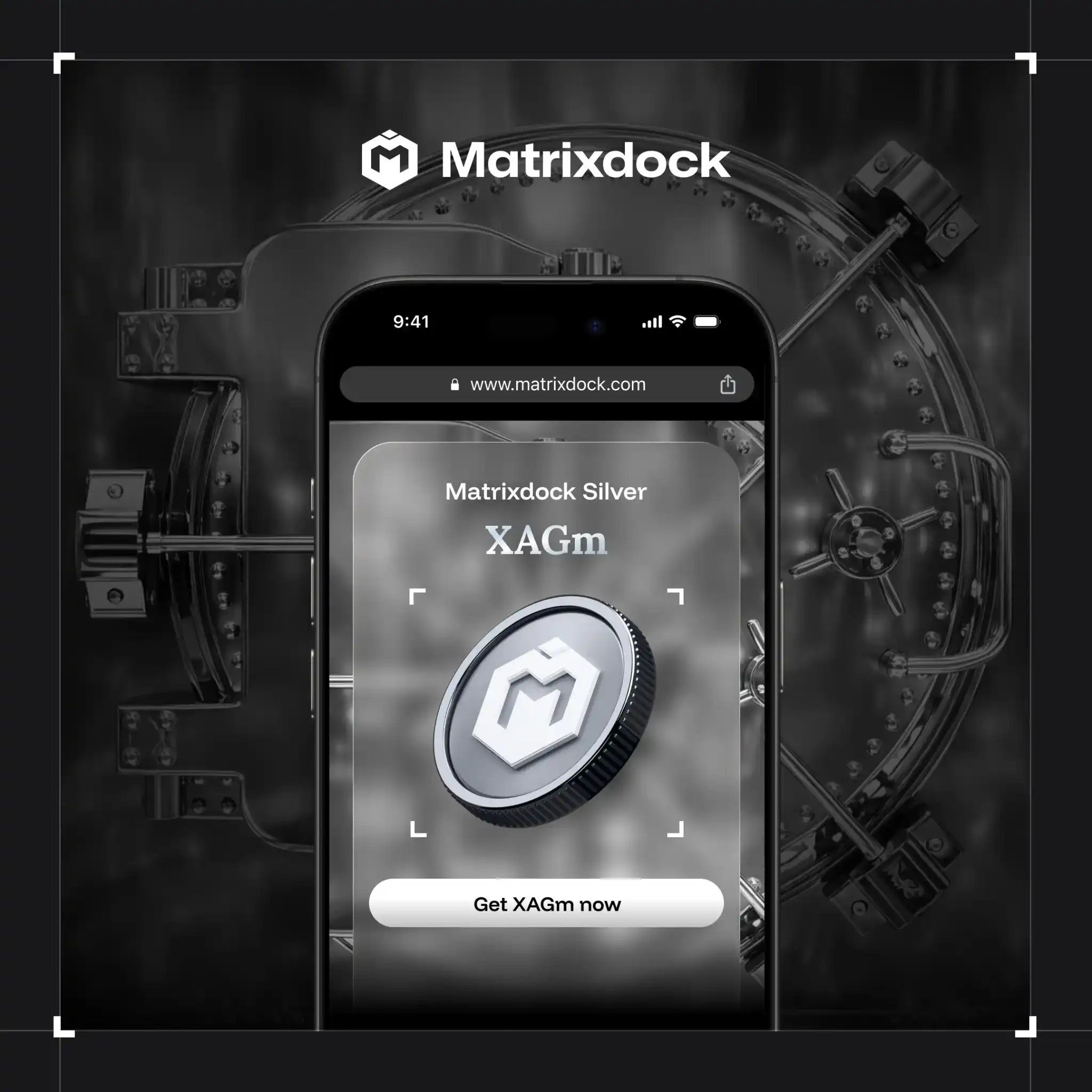
Under the FRS framework, Matrixdock has launched the silver token XAGm, representing a further application of this mechanism to precious metal assets.

From a practical perspective, XAGm operates silver assets within the FRS mechanism, rather than merely mapping physical silver on-chain. Its underlying assets are fully physically allocated silver, using LBMA Good Delivery standard silver bars, and are custodied by institutional-grade vaults. However, within the FRS framework, the key aspect of silver is not just "being put on-chain" but how its economic attributes are continuously encoded into the on-chain structure.

In this mechanism, the operation of silver assets is manifested as:

  • The configuration status of reserve assets has clear boundaries on-chain and can be independently verified through established methods
  • The amount of silver corresponding to each unit token adjusts over time according to established rules, ensuring asset costs are continuously reflected over time
  • The total token supply is adjusted mechanistically to maintain a deterministic relationship with the underlying silver reserves
  • Custody and operational costs for silver are not charged as external fees but are continuously reflected on-chain through preset rules

In this process, silver is not just represented as an on-chain asset; its economic attributes are continuously reflected within the mechanism. Therefore, the significance of XAGm is not only in bringing silver on-chain but also in providing a specific paradigm for how silver assets can be structurally organized and operated under the FRS mechanism.

Reserve Layer: From Asset Collection to Structural System

Under the FRS framework, reserve assets no longer exist as "single assets" but gradually form a structural system with internal logic.

This system (referred to by Matrixdock as the Reserve Layer) can be understood as:

  • Comprising multiple high-quality reserve assets
  • Operating under a unified mechanism
  • Collectively providing value support and a liquidity foundation for on-chain financial activities

Within this structure:

  • Gold serves a relatively stable value-anchoring function
  • Silver introduces cyclicality and trading activity
  • Different assets are organized into a portfolio with consistent operational logic through the FRS mechanism

This shift means that the significance of reserve assets lies not only in "the assets themselves" but also in their structural position and mode of operation.

RWA development is entering a new stage. The act of bringing assets on-chain is no longer the main hurdle; the real challenge lies in: how to ensure these assets can exist on-chain in the long term and operate in a verifiable manner continuously.

FRS, as a mechanism framework built by Matrixdock, provides a path to transform real-world assets into structural units on-chain. As more assets are introduced onto the chain under this framework, a reserve asset system based on "mechanisms" is gradually taking shape.


Pertanyaan Terkait

QWhat is the core focus of the FRS (Fungible Reserve Standard) framework developed by Matrixdock?

AThe core focus of the FRS framework is not on 'how to issue tokens,' but on continuously maintaining a deterministic relationship between reserve assets, token supply, and operational costs on the blockchain in a verifiable manner.

QHow does the FRS mechanism handle the costs associated with holding a reserve-backed asset like XAGm?

AThe FRS mechanism handles costs by systematically adjusting the 'amount of asset corresponding to each unit of token' over time. This reflects custody and operational costs within the token's structure itself, rather than charging them as separate, external fees.

QWhat key challenge in the RWA (Real World Asset) sector does the FRS framework aim to address?

AThe FRS framework aims to address the challenge of how to make real-world assets exist long-term on the blockchain and operate continuously in a verifiable way, moving beyond simple asset 'mapping' to a structured, rules-based system.

QWhat is the significance of expanding from gold to silver within the FRS framework, according to the article?

AThe expansion from gold to silver is significant because it demonstrates the framework's ability to incorporate assets with different attributes (like silver's higher volatility and cyclical nature) under a unified, consistent operational mechanism, thereby increasing portfolio diversity.

QHow does the article define the 'Reserve Layer' that is formed under the FRS framework?

AThe 'Reserve Layer' is defined as a structural system composed of multiple high-quality reserve assets (like gold and silver) that run under a unified mechanism (FRS) to collectively provide value support and a liquidity foundation for on-chain financial activities.

Bacaan Terkait

Saham Momentum Teknologi AS Catat Kenaikan Terbesar dalam Sejarah dalam Satu Hari, Tapi Apakah Kejatuhan Sudah Berakhir?

Saham momentum teknologi AS mengalami reli dramatis pada Selasa (21 Juli), dengan Indeks Faktor Momentum TMT Morgan Stanley melonjak lebih dari 12% - kenaikan satu hari terbesar dalam catatan. Indeks momentum beta tinggi Goldman Sachs juga naik tajam. Reli ini didorong terutama oleh sektor semikonduktor, dengan indeks Philadelphia Semiconductor naik 4.6%. Aksi ini terjadi setelah tiga hari penurunan dan kejatuhan kumulatif 33% untuk saham momentum, yang memicu aksi 'short squeeze' dimana investor yang short terpaksa menutupi posisi mereka. Namun, kualitas reli dipertanyakan. Volume perdagangan rendah dan lebih banyak saham turun daripada naik di S&P 500, menunjukkan reli sempit yang dipimpin oleh sedikit saham besar. BTIG memperingatkan bahwa reli telah mencapai level resistensi kunci dan merekomendasikan untuk mengurangi eksposur, mengingat volatilitas ekstrem dan karakteristik yang mirip dengan periode gelembung dot-com. Di sisi lain, Goldman Sachs dan UBS melihat penjualan momentum mendekati akhir, dengan posisi yang telah berkurang drastis dan tidak ada katalis fundamental baru, sehingga mungkin menjadi peluang untuk menambah eksposur secara bertahap. Faktor kunci berikutnya adalah musim laporan keuangan, dengan laporan Alphabet tentang panduan belanja modal AI-nya menjadi sorotan. Sementara itu, pasar obligasi memberi sinyal peringatan, karena imbal hasil obligasi pemerintah AS naik, didorong oleh kenaikan harga minyak di atas $90 akibat ketegangan Timur Tengah. Beberapa analis memperingatkan bahwa kenaikan lebih lanjut dalam imbal hasil obligasi dapat membebani pasar saham.

marsbit33m yang lalu

Saham Momentum Teknologi AS Catat Kenaikan Terbesar dalam Sejarah dalam Satu Hari, Tapi Apakah Kejatuhan Sudah Berakhir?

marsbit33m yang lalu

Saham 'Teknologi Momentum' AS Catat Kenaikan Terbesar Sejarah dalam Sehari, tapi Apakah Jatuhnya Sudah Berakhir?

Saham momentum teknologi AS mengalami rebound dramatis pada Selasa (21/7). Indeks momentum TMT Morgan Stanley melonjak lebih dari 12%, rekor kenaikan harian terbesar dalam sejarah. Indeks momentum beta tinggi Goldman Sachs (GSCBHMOM) naik sekitar 8.5%, kinerja harian terkuat sejak April 2025. Sektor semikonduktor, dengan Indeks Semikonduktor Philadelphia naik 4.6%, menjadi pendorong utama. Rebound ini terjadi setelah penurunan selama tiga hari berturut-turut dan kejatuhan kumulatif 33% untuk saham momentum. Analis menyebut rebound ini didorong oleh "short squeeze" atau pemaksaan likuidasi posisi jual, terutama dari pedagang di Korea Selatan dan Jepang yang terkena margin call. Namun, kualitas rebound dipertanyakan karena volume perdagangan rendah dan lebih banyak saham yang turun daripada naik di S&P 500 meski indeks naik, menunjukkan kelemahan dalam keluasan pasar. Pandangan institusi keuangan terpecah. BTIG memperingatkan rebound telah mencapai level resistensi kunci dan merekomendasikan untuk mengurangi posisi. Sebaliknya, Goldman Sachs dan UBS percaya penjualan momentum mendekati akhir dan melihatnya sebagai peluang untuk membeli secara bertahap, meski dengan struktur terbatas risikonya. Laporan keuangan musim ini, terutama dari Alphabet yang dijadwalkan minggu ini, akan menjadi katalis kunci berikutnya. Pasar akan sangat memperhatikan panduan pengeluaran modal Alphabet untuk petunjuk arah pengeluaran AI. Sementara itu, pasar obligasi memberi sinyal peringatan dengan kenaikan imbal hasil obligasi AS, didorong oleh kenaikan harga minyak di atas $90 per barel akibat ketegangan geopolitik di Timur Tengah. Beberapa analis memperingatkan bahwa kenaikan lebih lanjut dalam imbal hasil obligasi jangka panjang dapat membebani pasar saham.

链捕手36m yang lalu

Saham 'Teknologi Momentum' AS Catat Kenaikan Terbesar Sejarah dalam Sehari, tapi Apakah Jatuhnya Sudah Berakhir?

链捕手36m yang lalu

Bersatu Terus Berpisah, Berpisah Terus Bersatu: Ketika L1 Menjadi Rollup Dirinya Sendiri, Apa Akhir dari Ethereum?

"Setelah sekian lama, akhirnya terpecah; setelah terpecah, akhirnya kembali bersatu." Judul artikel ini secara tepat menggambarkan tantangan dan evolusi dalam hubungan antara Lapisan 1 (L1) dan Lapisan 2 (L2) Ethereum. Artikel ini membahas bagaimana visi awal L2 sebagai solusi penskalaan utama Ethereum, yang bertujuan menyediakan ruang blok yang murah dan efisien, kini sedang ditinjau ulang seiring dengan peningkatan kapasitas penskalaan L1 itu sendiri. Dengan penggabungan rute pekerjaan protokol "Scale", Ethereum kini melihat penskalaan L1 dan L2 sebagai kerangka kerja yang terpadu. Hal ini menggeser peran L2 dari sekadar penyedia ruang transaksi yang lebih murah menjadi penyedia fungsi yang terdiferensiasi, seperti optimasi aplikasi tertentu, fitur privasi, dan model tata kelola yang lebih fleksibel. L2 kini dilihat sebagai spektrum lingkungan eksekusi yang membangun berbagai tingkat hubungan keamanan, penyelesaian, dan likuiditas dengan Ethereum L1. Masalah fragmentasi yang ditimbulkan oleh banyaknya L2 juga menjadi fokus penting. Pengalaman pengguna yang terfragmentasi, dengan aset dan aplikasi yang tersebar di berbagai rantai, mendorong pengembangan solusi interoperabilitas seperti kerangka Open Intents dan Ethereum Interoperability Layer (EIL). Tujuannya adalah untuk membuat interaksi antar-L2 terasa seperti bertransaksi pada satu rantai tunggal. Memperpendek waktu finalitas L1 menjadi detik juga merupakan target jangka panjang yang penting untuk meningkatkan kepercayaan dan efisiensi dalam berbagi status antar lingkungan eksekusi. Gagasan yang lebih mendalam adalah bahwa dengan masuknya sistem bukti (seperti zkEVM) ke dalam protokol inti, L1 Ethereum sendiri pada akhirnya dapat mengadopsi pola verifikasi yang mirip dengan Rollup, di mana sebagian node melakukan eksekusi berkinerja tinggi dan node lainnya memverifikasi bukti kriptografisnya. Ini mengaburkan batas tradisional antara L1 dan L2, mengubah Rollup dari sekadar hierarki di atas L1 menjadi arsitektur eksekusi dan verifikasi yang lebih universal. Kesimpulannya, masa depan Ethereum bukanlah tentang L1 yang menghilangkan kebutuhan akan L2, atau sebaliknya. Masa depan terletak pada pembentukan ekosistem di mana berbagai lingkungan eksekusi (L2) dengan fungsi dan kinerja yang berbeda-beda dapat hidup berdampingan, sambil berbagi fondasi keamanan, likuiditas, dan hubungan status yang kuat dengan hub global L1. Tantangan berikutnya adalah menyatukan kembali kapasitas yang telah dipecah ini menjadi pengalaman yang kohesif dan andal, sambil tetap mempertahankan keuntungan penskalaan yang telah diraih.

链捕手48m yang lalu

Bersatu Terus Berpisah, Berpisah Terus Bersatu: Ketika L1 Menjadi Rollup Dirinya Sendiri, Apa Akhir dari Ethereum?

链捕手48m yang lalu

Trading

Spot
活动图片




