Bull Arrives: Four Catalysts Behind the Overnight Surge Across the Crypto Market

Odaily星球日报Dipublikasikan tanggal 2026-08-20Terakhir diperbarui pada 2026-08-20

Abstrak

Crypto Market Surges Overnight: Four Key Drivers Behind the Rally The cryptocurrency market experienced a sudden and broad rally. Bitcoin reclaimed the $69,000 level with a 7.4% gain, while Ethereum led major assets with a surge of nearly 19%. The surge triggered significant liquidations, with short positions bearing the brunt. Four main factors drove the move: 1. **Macro Liquidity Boost**: The U.S. Treasury unexpectedly doubled the size of its long-term bond repurchase operations, a move seen as injecting liquidity and lowering long-term yields, which boosted overall risk appetite. 2. **Regulatory Sentiment Shift**: The White House hosted a crypto summit with industry leaders, and the SEC proposed a new draft rule offering certain financing exemptions for crypto projects. These signals alleviated some regulatory uncertainty. 3. **Institutional Flow Reversal**: After a period of outflows, Bitcoin spot ETFs like BlackRock's IBIT saw renewed net inflows, indicating returning institutional interest. On-chain data also showed large holders accumulating again. 4. **Short Squeeze Amplification**: A high concentration of leveraged short positions was liquidated as prices rose, creating a classic "short squeeze." Data shows over 93% of recent liquidations were short positions, accelerating the upward price movement in a feedback loop.

Original | Odaily Planet Daily (@OdailyChina)

Author | jk

The long-silent crypto market suddenly saw "the bull arrive" today, with major cryptocurrencies collectively surging. Bitcoin reclaimed the $69,000 level, Ethereum's single-day gains approached 20%, and Hyperliquid soared over 22%. The sharp price increase was accompanied by a large-scale liquidation of short positions.

Major Cryptocurrencies Rally Across the Board

  • Bitcoin: According to Coingecko data, currently trading at $69,165, up 7.4% in 24 hours, with a 24-hour range between $64,123.86–$69,892.23. Total market cap stands at $1.393 trillion, with 24-hour volume of $41.587 billion. The price maintained narrow fluctuations in the morning before launching a rapid ascent during the European trading session.
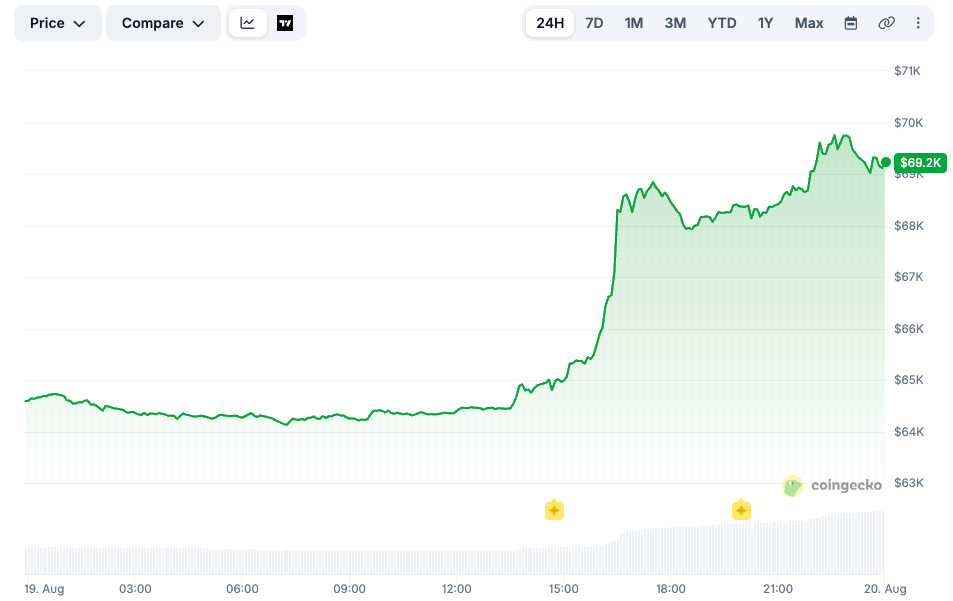
Bitcoin Price Chart, Source: Coingecko

  • Ethereum: Currently trading at $2,269.04, surging 18.6% in 24 hours, with a range between $1,905.44–$2,318.66. Market cap reached $274.047 billion. Ethereum's gains in this round significantly outperformed Bitcoin, and its exchange rate against BTC also strengthened, indicating accelerated capital inflow back into the Ethereum ecosystem.
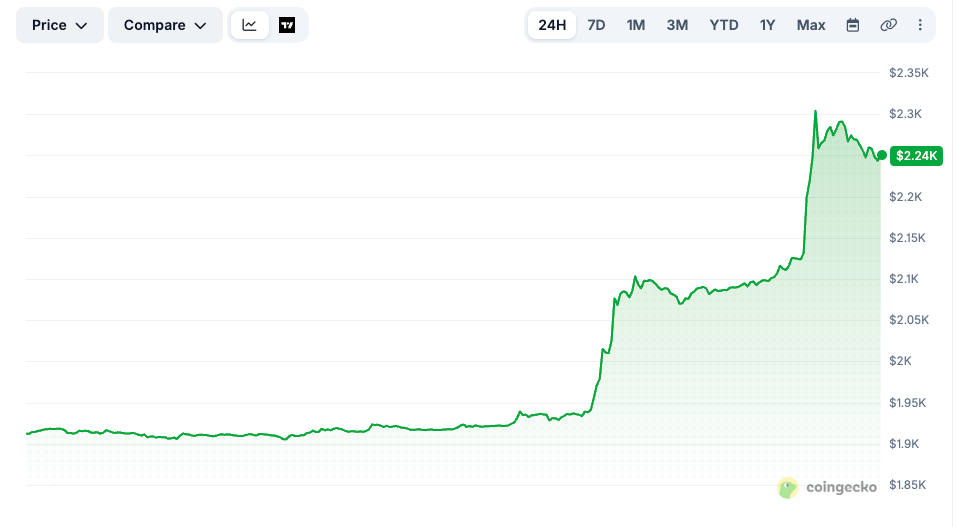
Ethereum Price Chart, Source: Coingecko

  • BNB: Currently trading at $631.92, up 4.9% in 24 hours, showing relatively modest gains among major market leaders. Range was $600.92–$635.85.
  • Solana: Currently trading at $85.65, up 11.2% in 24 hours, range $76.59–$86.96. Market cap is $49.952 billion, with charts showing the price accelerating to break previous highs.
  • Hyperliquid (HYPE): The most explosive gainer in this round, currently trading at $71.41, skyrocketing 22.2% in 24 hours, with a range of $58.04–$72.28.

Cause Analysis: Macro Catalysts Spark Rally, Leverage Structure Amplifies Gains

Considering recent market dynamics and derivatives data, this rally was not driven by a single factor but rather a combination of positive macro liquidity developments, warmer regulatory signals, and the concentrated unwinding of leveraged short positions.

Cause One: U.S. Treasury's Surprise "Liquidity Injection," Lowering Long-Term Rates and Boosting Risk Appetite. On August 19th local time, the U.S. Treasury announced it would at least double the size of its long-term Treasury buyback operations, increasing from $2 billion to over $4 billion per operation, covering the period from September 9th to November 4th, primarily targeting 10- to 30-year Treasury bonds. This move was seen as a direct response to the recent surge in the 30-year Treasury yield to its highest level since 2007 (reaching 5.34% at one point). Following the announcement, yields on 10-year and 30-year Treasuries fell, and U.S. stock futures rose simultaneously. The overall improvement in risk sentiment provided a tailwind for the crypto market. The Treasury's operation was interpreted by the market as a form of quasi-liquidity easing, and its timing closely aligned with the start of the crypto market rally.

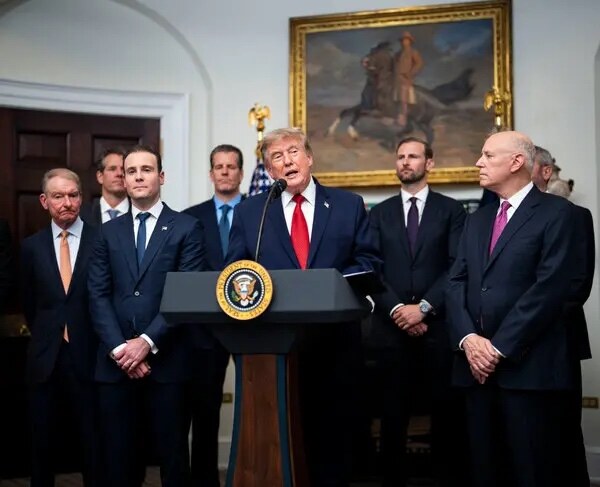
Cause Two: White House Crypto Summit Combined with SEC Regulatory Easing, Policy Sentiment Turns Positive. On the same day, Trump met with crypto industry executives from Coinbase, Ripple, Gemini, and others, along with heads of the SEC and CFTC regulatory agencies at the White House, reiterating his push for the swift passage of the CLARITY Act in the Senate to provide a clearer regulatory framework for the industry. The day before the summit, the SEC formally proposed a new rule draft titled "Regulation Crypto Assets," intending to offer crypto project teams a funding exemption channel of up to $75 million per year. The concentrated release of friendly signals from regulators and the White House within the same week has somewhat alleviated the market's previous concerns about policy uncertainty, providing a narrative basis for capital to flow back into crypto assets.
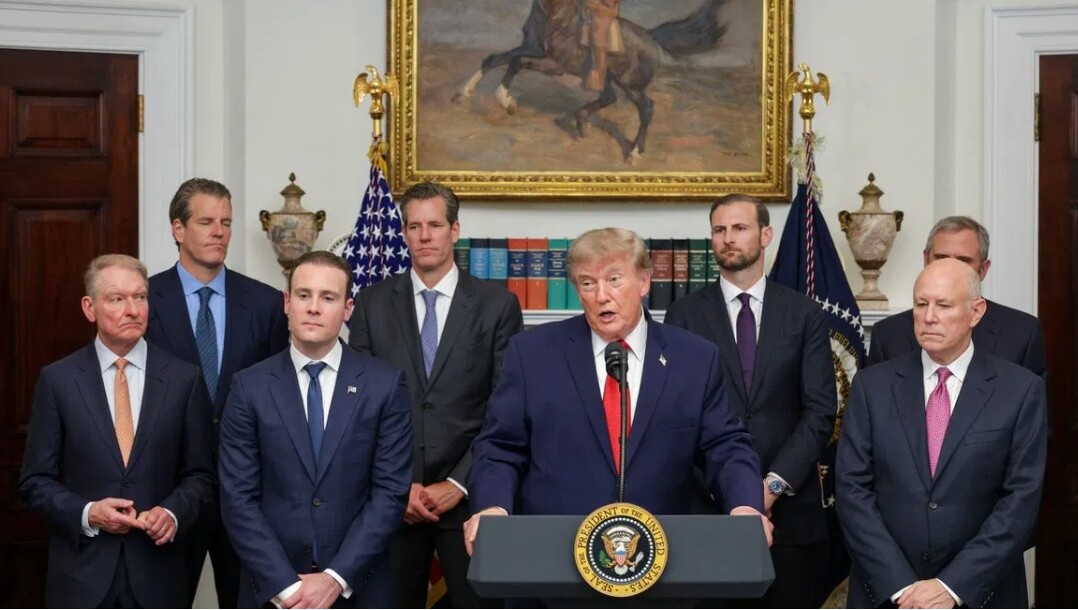
Trump Meets with Industry Leaders, Source: ABCNews

Cause Three: Bitcoin Spot ETF Outflow Trend Reverses, Whales Accumulate on Dips. Bitcoin spot ETFs had previously experienced consecutive days of net outflows, but this rebound was accompanied by signs of improved capital flows. Major products like BlackRock's IBIT and Fidelity's FBTC recorded net inflows again, indicating institutional capital is replenishing. Meanwhile, on-chain data shows that large wallet addresses, after about 60 days of continuous selling, have begun accumulating again. This provided support for price stabilization from the spot side and created conditions for the subsequent squeeze on leveraged shorts.

Cause Four: Concentrated Liquidation of Leveraged Shorts, Creating a Classic "Short Squeeze" Scenario. According to derivatives data, short liquidations far exceeded long liquidations during this rally. Based on Coinglass data, as of press time, 24-hour total liquidation volume across all exchanges has expanded to $2.98 billion, with over 170,000 traders liquidated, predominantly shorts. Within a 4-hour window, short liquidations once accounted for as high as 93.3%. The largest single liquidation order across all networks occurred on Hyperliquid's BTC-USD contract, amounting to $48.8 million. The forced liquidation of large short positions often creates an instantaneous buying vacuum on the order book, pushing prices to accelerate away from the previous range, which in turn triggers more stop-loss orders, forming a positive feedback loop of "longs squeezing shorts."

Pertanyaan Terkait

QWhat are the four main reasons mentioned in the article for the sudden, market-wide surge in the cryptocurrency market?

A1) The U.S. Treasury's surprise 'liquidity injection' by doubling its long-term bond repurchase operations, which lowered long-term interest rates and boosted risk appetite. 2) Positive policy signals including the White House crypto summit and the SEC proposing a new regulation draft offering exemptions, easing regulatory uncertainty. 3) A reversal of the outflow trend from Bitcoin spot ETFs and large 'whale' wallets beginning to accumulate again. 4) A large-scale liquidation of leveraged short positions, creating a typical 'short squeeze' scenario.

QWhich cryptocurrency experienced the highest 24-hour price increase, and what was its performance according to the article?

AHyperliquid (HYPE) experienced the highest 24-hour price increase, surging 22.2% to $71.41, with its trading range being $58.04–$72.28.

QHow did Ethereum's price performance compare to Bitcoin's during the rally, and what does this indicate according to the article?

AEthereum's price significantly outperformed Bitcoin's, with a 24-hour surge of 18.6% compared to Bitcoin's 7.4%. The article states that this indicates funds are accelerating their flow back into the Ethereum ecosystem, as shown by Ethereum's strengthening exchange rate against Bitcoin.

QWhat specific action did the U.S. Treasury take, and how did it immediately affect the markets?

AOn August 19, the U.S. Treasury announced it would at least double the size of its long-term bond repurchase operations, from $2 billion to over $4 billion per operation, targeting 10- to 30-year bonds. This news caused the yields on 10-year and 30-year U.S. Treasury bonds to drop immediately, and U.S. stock futures rose, reflecting an overall increase in risk appetite.

QWhat data point is provided to illustrate the intensity of the 'short squeeze', particularly regarding short liquidations?

AAccording to Coinglass data cited in the article, within a 4-hour window, short liquidations accounted for up to 93.3% of all liquidations. The total 24-hour liquidation amount reached $29.8 billion, with over 170,000 traders liquidated, the majority being short positions.

Bacaan Terkait

VC Sudah Mati? Sebuah 'Surat Pengunduran Diri' untuk Semua Manajer Investasi yang Akan Ketinggalan Zaman

Penulis menyampaikan surat terbuka yang sarkastik, menyoroti realitas baru dunia modal ventura: dana besar (miliaran dolar) kini turun merangsek ke tahap pendanaan seed (benih), menghimpit dana-dana kecil. Mereka menggunakan merek, skala, dan sumber daya yang jauh lebih unggul untuk mengamankan setiap kesepakatan penting, termasuk startup dua orang sekalipun. Bagi pendiri startup, memilih mitra dari dana besar yang terkenal menjadi pilihan logis ketimbang dana kecil yang masa depannya belum pasti. Intinya, hanya segelintir perusahaan yang benar-benar revolusioner (seperti OpenAI, Anthropic) yang dianggap penting, dan semuanya akan dikuasai oleh dana-dana raksasa ini. Dana kecil disarankan untuk menyerah, atau berubah haluan ke pendanaan tahap growth (pertumbuhan) di mana keputusan investasi terlihat lebih jelas berdasarkan data, meski dengan harga mahal. Penulis juga menekankan bahwa aturan baru adalah pendiri terbaik (dari latar elit) mendapatkan harga tertinggi, dan dana kecil tidak mampu bersaing dengan fasilitas mewah serta jaringan yang ditawarkan dana besar. Satu-satunya harapan adalah memusatkan seluruh portofolio pada AI, karena dianggap akan mengubah semua industri. Namun, bahkan di sana, ancaman AGI (Kecerdasan Buatan Umum) dalam beberapa tahun mendatang dianggap bisa membuat banyak investasi tradisional menjadi usang. Pada akhirnya, pesan sinisnya adalah: industri ini telah matang, didominasi oleh pemain besar dengan uang sebagai pembeda utama. Inovasi sejati dari pendatang baru hampir mustahil, dan pilihan paling masuk akal bagi banyak dana kecil mungkin adalah menyerah saja.

marsbit8m yang lalu

VC Sudah Mati? Sebuah 'Surat Pengunduran Diri' untuk Semua Manajer Investasi yang Akan Ketinggalan Zaman

marsbit8m yang lalu

Wang Xing Sangat Senang, Wang Xingxing Belum Tentu

**Ringkasan IPO Yushu Technology** Yushu Technology, produsen robot humanoid dan berkaki empat, resmi melantai di pasar saham STAR Market (SSE STAR Market) China pada 19 Agustus. Harga penutupan perdana sahamnya mencapai 845 yuan, melonjak 460% dari harga penawaran, memberikan valuasi pasar sekitar 341,8 miliar yuan (sekitar 341,8 triliun Rupiah). Meskipun IPO ini menghasilkan kisah kekayaan yang signifikan—pendiri Wang Xingxing kini memiliki aset senilai lebih dari 80 miliar yuan dari saham langsungnya, dan investor awal seperti Meituan (dipimpin Wang Xing) menuai keuntungan besar—Wang Xingxing tampak tenang, bukan sangat gembira, di acara pelantikan tersebut. Artikel ini mengeksplorasi perbedaan perspektif antara sang investor dan sang pendiri. **Untuk Wang Xing (investor Meituan)**, investasi di Yushu adalah taruhan cerdas pada masa depan kecerdasan embodied dan infrastruktur robotika. Dia sudah menyelesaikan bagian "bertaruh"-nya dan kini dapat menikmati imbalan pasar. **Untuk Wang Xingxing (pendiri Yushu)**, IPO menandai awal babak baru dengan tekanan dan ekspektasi yang jauh lebih besar. Dia tidak lagi hanya perlu membuktikan bahwa robotnya dapat dibuat, tetapi juga bahwa Yushu dapat membangun bisnis skala besar yang sesuai dengan valuasi tingginya. Dia harus beralih dari peran insinyur ke peran entrepreneur yang mengelola ekspektasi pasar publik, penjualan, komersialisasi, dan organisasi perusahaan. Valuasi 341,8 miliar yuan mencerminkan imbalan atas pencapaian masa lalu, tetapi lebih merupakan **uang muka atas masa depan**. Pasar membayar untuk potensi revolusi industri yang dibawa robot ke dunia nyata. Tantangan Yushu selanjutnya adalah mewujudkan potensi itu menjadi pendapatan, pesanan, dan laba yang berkelanjutan, baik di segmen konsumen maupun industri. Robot harus terjual, andal, hemat biaya, dan memberikan nilai nyata bagi pengguna. Sebagai **perusahaan pertama di sektor kecerdasan embodied yang melantai di pasar saham China**, Yushu kini menjadi patokan publik bagi industri. Kinerja dan valuasinya akan memengaruhi cara pasar menilai seluruh sektor robotika. IPO Yushu adalah validasi penting bagi industri, tetapi perjalanan sebenarnya baru dimulai: mengubah antusiasme pasar menjadi realitas bisnis yang solid. Wang Xingxing sekarang memikul tanggung jawab ganda: membuktikan nilai perusahaannya sendiri dan, secara tidak langsung, membantu memvalidasi jalur pertumbuhan industri robotika secara keseluruhan.

marsbit18m yang lalu

Wang Xing Sangat Senang, Wang Xingxing Belum Tentu

marsbit18m yang lalu

19 Pengusaha Muda Kelahiran 00-an Teratas di AS-China yang Harus Anda Kenali · Penerus Abad 21 Muncul

Pendiri kelahiran tahun 2000-an mulai bermunculan, duduk di posisi inti industri dengan perusahaan bernilai miliaran. Artikel ini mengamati 19 pendiri muda papan atas AS-Tiongkok yang lahir tahun 2000 ke atas, yang telah menunjukkan kemajuan konkret seperti produk, pendanaan, atau pendapatan. Ciri terpenting mereka adalah *kompresi waktu*. Jalur sekolah, lab, perusahaan, dan pendanaan berjalan bersamaan. Teknologi seperti AI besar dan komunitas sumber terbuka menurunkan biaya memulai, memampatkan tahap awal berwirausaha. Di Tiongkok, para pendiri muda ini banyak bergerak di dunia fisik: memberi 'tubuh' pada AI. Mereka membangun robot humanoid, tangan robotik, robot rumah tangga, serta bekerja di komputasi, material bio, dan kecerdasan industri. Contohnya Huang Yi (RoboParty) dan Qin Shentao (Yuan Che Tai Chu). Mereka sering berasal dari lab universitas dan kompetisi robot, berfokus membuktikan prototipe, biaya, dan kemampuan produksi. Di AS, sampel yang terlihat lebih berfokus mengatur ulang dunia digital dengan kecepatan tinggi: mengubah AI menjadi perangkat lunak, langganan, dan transaksi yang terdistribusi global. Mereka membangun alat produktivitas, platform bakat AI, hingga chip khusus. Contohnya Mercor (platform bakat AI) dan Etched (chip AI). Mereka sering memulai dari proyek kampus atau jaringan modal ventura, membuktikan pertumbuhan pengguna, pendapatan berulang, dan skalabilitas. Perbedaan tren ini dipengaruhi ekosistem yang berbeda, tetapi keduanya menunjukkan panjang tuas baru yang tersedia: AI, kode sumber terbuka, rantai pasokan global, dan modal ventura yang berani. Namun, artikel menekankan bahwa teknologi bisa mempercepat pembuatan produk, tetapi tidak menurunkan ambang batas membangun perusahaan yang baik. Manajemen, kredibilitas, dan tanggung jawab pengiriman tidak bisa 'dilompati'. Masa depan akan menyaring siapa yang bisa bertahan, beralih dari pencipta produk menjadi pemimpin perusahaan yang andal. Bagi bisnis mapan, ini adalah pengingat untuk mengevaluasi kembali kolaborasi dan kompetisi potensial dengan generasi baru yang tumbuh cepat ini. Mereka bukan 'penerus' bisnis keluarga, tetapi penerus yang menjawab peluang teknologi abad ke-21.

marsbit29m yang lalu

19 Pengusaha Muda Kelahiran 00-an Teratas di AS-China yang Harus Anda Kenali · Penerus Abad 21 Muncul

marsbit29m yang lalu

Trading

Spot
活动图片