BIS Latest Research: The Future of Stablecoins and the Global Monetary Landscape

marsbitDipublikasikan tanggal 2026-06-01Terakhir diperbarui pada 2026-06-01

Abstrak

BIS Working Paper No. 170, released in May 2026, analyzes the impact of stablecoins on the global monetary system. The market has grown exponentially since 2014, with over 300 active stablecoins exceeding $300 billion in market capitalization. It is highly concentrated, dominated by USD-linked stablecoins (98% by market cap, mainly USDT and USDC), which function as new forms of private offshore dollar claims on blockchain. Currently, stablecoin use remains largely within crypto ecosystems for trading and DeFi collateral. Real-economy adoption, such as in cross-border payments, is nascent but growing in emerging markets and developing economies (EMDEs) facing high inflation and volatile currencies, where they facilitate capital flight and "digital dollarization." The paper assesses impacts using the Cohen-Kennen framework. For private-sector functions, stablecoins most directly affect value storage (as a dollar-denominated safe haven in EMDEs) and the medium of exchange (enhancing cross-border payment efficiency, further entrenching dollar use). Impacts on the unit of account and official-sector functions are currently limited but could indirectly constrain monetary policy autonomy and capital controls. The report outlines three potential future scenarios: 1) **Niche adoption**, where stablecoins remain crypto-centric with minimal systemic impact; 2) **Digital dollarization**, a high-risk scenario where USD stablecoins become de facto standards in EMDEs, eroding monetary so...

Original AuthorBIS

Source丨China Financial Case Center Compiled by丨Xie Binbin, Qi Zhiping

The rapid global development of digital finance has seen stablecoins evolve from niche tools within the cryptocurrency sphere into novel digital assets with cross-border payment and value storage functions, profoundly impacting the international monetary landscape. In May 2026, the Bank for International Settlements (BIS) released Working Paper No. 170, systematically analyzing the development characteristics, operational mechanisms, and impact of stablecoins on the international monetary system, and proposing three future scenarios and regulatory approaches. The report concludes that stablecoins will reinforce the dominant position of the US dollar in the short term, posing risks to the monetary sovereignty of emerging markets and developing economies (EMDEs). Their long-term trajectory will depend on adoption patterns, regulatory responses, and synergy within the digital finance ecosystem.

Stablecoin Market: Rapidly Expanding, USD Dominance

Stablecoins are privately issued blockchain tokens pegged to fiat currencies or assets to maintain stable value, combining payment and store-of-value functions. Since the first stablecoin emerged in 2014, the industry has experienced exponential growth; by 2026, there were over 300 active stablecoins globally, with a total market capitalization surpassing $300 billion.

In terms of market structure, stablecoins exhibit high concentration and US dollar dominance. In quantity, USD-pegged stablecoins account for approximately 64%; in market value, USD stablecoins represent as high as 98%, with USDT and USDC dominating the market, while stablecoins pegged to other currencies remain extremely small in scale. Regarding reserve assets, major fiat-backed stablecoins primarily hold US short-term Treasury bonds, reverse repurchase agreements, and cash equivalents as core reserves. However, some issuers lack transparency and insufficient auditing, posing potential redemption risks.

Current stablecoin applications remain predominantly within the crypto ecosystem, serving as trading and settlement media for crypto assets, and as collateral in Decentralized Finance (DeFi) lending and liquidity protocols. After excluding automated wash trading and high-frequency trading, the actual transaction volume is only 1% of the nominal volume. Retail scenarios (single transactions below $250) account for less than 0.9%. Real-economy applications like cross-border remittances and retail payments are still in early pilot stages. However, in emerging markets with high inflation and volatile exchange rates, cross-border stablecoin flows continue to rise, becoming a hidden channel to avoid currency depreciation and circumvent capital controls.

Operational Mechanisms: A New Form of Offshore Dollar Carrier

Stablecoins operate on a "on-chain circulation, off-chain reserves" model: the issuer collects fiat currency at a 1:1 ratio and mints tokens, users hold them via digital wallets, enabling 24/7 global transfers via public blockchains, with reserve assets used for redemptions to maintain the peg. This model combines features of 19th century private banknotes, the Eurodollar market, and Money Market Funds (MMF). Essentially, they are private on-chain claims on offshore dollars, extending dollar liquidity through financial innovation.

Unlike the traditional Eurodollar market, stablecoins lack bank credit elasticity and central bank liquidity support. Their stability relies entirely on the quality of reserve assets and market arbitrage mechanisms. The collapse of TerraUSD in 2022 and the temporary de-pegging of USDC in 2023 demonstrated that stablecoins without sufficient high-liquidity reserves are highly prone to losing their peg under stress. A global regulatory consensus has emerged: focus on regulating fiat-collateralized stablecoins and reject algorithmic stablecoins.

In terms of risk transmission, stablecoins' reserves are heavily concentrated in US short-term Treasuries, creating a transmission chain of "global demand → stablecoin issuance → increased US Treasury holdings," directly affecting US Treasury yields and the transmission efficiency of Federal Reserve monetary policy.

Global Impact: Intensifying Monetary Hierarchy, Challenging Emerging Markets' Monetary Autonomy

Using the Cohen-Kenen international monetary function framework, the report systematically assesses the impact of stablecoins on the international monetary system across three functions (unit of account, medium of exchange, store of value) and two sectors (private and official). The conclusion indicates that stablecoins have the most direct impact on the private sector's store-of-value and medium-of-exchange functions, with limited impact on the unit of account and official sector functions, but they implicitly constrain monetary policy autonomy.

  • 1. Store of Value: The Core Channel of Digital Dollarization In high-inflation emerging markets, USD stablecoins, requiring no foreign currency accounts and allowing anonymous cross-border holding, have become residents' preferred safe-haven asset, leading to "hidden dollarization". Stablecoin inflows are highly correlated with local currency depreciation and widening exchange rate gaps, squeezing local currency deposits and weakening central bank control capabilities.

  • 2. Medium of Exchange: Enhancing Cross-Border Payment Efficiency Stablecoins offer advantages like real-time settlement, no operational hour restrictions, and low fees, leading to rapid penetration in scenarios like cross-border remittances and e-commerce. Their development further reduces friction in using the US dollar, expanding its share in retail cross-border payments and e-commerce transactions.

  • 3. Unit of Account: Limited Impact, Hard to Break Commercial Inertia Trade invoicing and contract pricing exhibit strong path dependence. Stablecoins have not yet altered the global trade pattern dominated by the US dollar and euro. They are only sporadically used in some retail scenarios in high-inflation economies, not forming a systematic substitute.

  • 4. Official Sector: Indirect Constraints, No Direct Substitution Central banks have not yet included stablecoins in foreign exchange reserves or as exchange rate intervention tools; official unit-of-account and intervention functions have not been directly impacted. However, widespread private-sector use of stablecoins can render capital controls ineffective and hinder monetary policy transmission, exacerbating the "trilemma": financial openness is passively increased, intensifying conflicts between exchange rate stability and monetary policy autonomy.

Three Future Scenarios: From Limited Penetration to Systemic Change

Based on adoption scale, regulatory environment, and cross-border impact, the report constructs three mutually exclusive yet parallel future scenarios, covering possible paths from marginal influence to reshaping the system.

  • Scenario 1: Niche Adoption (Baseline Scenario) Stablecoins remain confined within the crypto ecosystem, with limited penetration into the real economy. Localized holdings emerge in high-inflation countries, but retail payments and trade settlements remain primarily in local currencies. Regulation focuses on anti-money laundering and consumer protection. Capital flow spillover is small, monetary sovereignty and financial stability in emerging markets remain largely controllable, and central banks retain full policy autonomy. This scenario aligns most closely with current market characteristics and is the most likely short-term trajectory.

  • Scenario 2: Digital Dollarization (High-Risk Scenario) USD stablecoins become the de facto standard for cross-border retail payments and domestic pricing in emerging markets, with banks offering related services, accelerating deposit dollarization. Local currency policies become ineffective, capital controls are rendered meaningless, domestic savings flow into US Treasuries via stablecoins, and local credit markets shrink. Exchange rate transmission effects intensify, stablecoin run risks directly impact emerging market financial stability, leading to irreversible digital dollar dependency. This scenario's impact on monetary sovereignty far exceeds traditional dollarization and is an extreme risk emerging markets must prioritize preventing.

  • Scenario 3: Integration of Local Currency Stablecoins (Ideal Scenario) Emerging markets, through regulatory authorization, allow licensed institutions to issue local currency stablecoins, interoperable with domestic fast payment systems and Central Bank Digital Currencies (CBDCs). Reserve assets are restricted to local currency government bonds and central bank deposits, balancing technological efficiency with policy autonomy. Stablecoins are used for government payments, e-commerce settlements, and securities clearing, enhancing payment efficiency and financial inclusion while avoiding foreign currency substitution risks. However, this scenario requires robust regulatory capacity, financial infrastructure, and macroeconomic stability, conditions currently lacking in most low-income emerging markets.

Regulatory Challenges and Policy Implications: Global Coordination is Key

The cross-border nature of stablecoins makes single-country regulation ineffective. The report proposes four core policy directions::

  • 1. Unify Global Regulatory Standards: Implement the Financial Stability Board's (FSB) recommendations on stablecoin regulation, clarifying reserve requirements, disclosure rules, and redemption mechanisms to avoid regulatory arbitrage.

  • 2. Strengthen Cross-Border Collaboration: Establish regulatory information sharing and risk management mechanisms between issuing and using countries to address cross-border runs and capital flow shocks.

  • 3. Upgrade Domestic Defenses: Emerging markets should improve macroeconomic stability, optimize domestic payment systems, and advance CBDC development to counter the appeal of foreign currency stablecoins.

  • 4. Prevent Illicit Activities: Leverage blockchain traceability technology to combat money laundering, terrorist financing, and other abuses, balancing innovation and risk.

In summary, stablecoins are not simple financial innovations but structural forces reshaping the international monetary hierarchy. In the short term, they may reinforce dollar hegemony and exacerbate financial subordination in emerging markets; in the long term, the outcome depends on global regulatory coordination, innovation in local currency digital tools, and market adoption paths. For emerging markets, stablecoins are a double-edged sword offering both opportunities and risks: they can enhance payment efficiency and promote financial inclusion but may also trigger digital dollarization and erode monetary sovereignty.

The future global monetary system will enter a new stage of coexistence between public digital currencies (CBDCs) and private digital currencies (stablecoins), with competition between fiat currencies and digital dollars. Only through sound macroeconomic policies, robust regulatory frameworks, and international coordination can we embrace technological benefits while safeguarding financial security and monetary sovereignty, avoiding new forms of digital financial subordination.

Original Link

Pertanyaan Terkait

QAccording to the BIS report, what are the three potential future scenarios for stablecoins, and which one is considered the most likely in the short term?

AThe three potential future scenarios are: 1) Niche adoption (baseline scenario), where stablecoins remain confined to the crypto ecosystem with limited real-economy penetration. 2) Digital dollarization (high-risk scenario), where USD stablecoins become a de facto standard in emerging markets. 3) Local currency stablecoin integration (ideal scenario), where licensed entities issue local currency stablecoins linked to national payment systems. The report considers the niche adoption scenario as the most likely in the short term.

QHow does the BIS report describe the current market structure of stablecoins in terms of currency dominance and concentration?

AThe report describes the stablecoin market as highly concentrated and dominated by the US dollar. By quantity, USD-pegged stablecoins account for about 64% of all stablecoins. By market capitalization, USD stablecoins represent a staggering 98% share, with USDT and USDC dominating the market. Stablecoins pegged to other currencies remain negligible in size.

QWhat is the core mechanism of fiat-collateralized stablecoins, and how does the BIS report characterize their economic nature?

AThe core mechanism is an 'on-chain circulation, off-chain reserves' model. Issuers create tokens on a 1:1 basis with fiat currency received, which users hold in digital wallets. The reserves are used for redemption to maintain the peg. The BIS characterizes this as essentially a private, on-chain claim on offshore US dollars, combining features of 19th-century private banknotes, the Eurodollar market, and money market funds, extending dollar liquidity through financial innovation.

QWhich functions of an international currency are most directly impacted by stablecoins, according to the report's analysis based on the Cohen-Kenen framework?

AAccording to the analysis using the Cohen-Kennen international currency functions framework, stablecoins most directly impact the store of value and medium of exchange functions for the private sector. Their impact on the unit of account function and official sector functions (like foreign exchange reserves) is currently limited, but they can indirectly constrain monetary policy autonomy.

QWhat are the four core policy directions proposed by the BIS report to address the regulatory challenges posed by stablecoins?

AThe four core policy directions are: 1) Unify global regulatory standards (e.g., implement FSB recommendations on reserves, disclosure, and redemption). 2) Strengthen cross-border collaboration for information sharing and crisis management. 3) Upgrade domestic defenses in emerging markets by improving macroeconomic stability, payment systems, and CBDCs. 4) Prevent illicit activities by using blockchain analytics to combat money laundering and terrorist financing.

Bacaan Terkait

Apakah The Fed Pasti Menaikkan Suku Bunga pada September? Bagaimana Kripto dan Saham AS akan Menghadapi Tekanan?

**Ringkasan:** Harapan pasar akan kenaikan suku bunga The Fed (bank sentral AS) pada September melonjak drastis dalam seminggu terakhir, dari di bawah 50% menjadi di atas 80%. Pemicunya adalah kekhawatiran inflasi akibat kenaikan harga minyak yang didorong oleh eskalasi konflik geopolitik di sekitar Selat Hormuz. **Pemicu & Faktor Kunci:** * Hasil voting rapat Fed Juli (9-3) menunjukkan perbedaan pendapat yang kuat, dengan tiga anggota menginginkan kenaikan suku bunga segera. * Harga minyak (WTI) naik sekitar 20% pada Juli, berpotensi mendorong ulang data inflasi. * **Data CPI Juli (12 Agustus)** akan menjadi penentu utama bagi probabilitas kenaikan suku bunga September. * Sinyal Fed cenderung hawkish, meski ada perbedaan pendapat di antara para anggota. **Dampak pada Aset Kripto:** * Bitcoin (saat ini ~$64-65K) tetap sangat sensitif terhadap sinyal Fed, berperilaku sebagai aset berisiko beta tinggi. * Ekspektasi kenaikan suku bunga meningkatkan biaya peluang memegang aset tidak produktif dan menekan sentimen jangka pendek. * Namun, dampaknya mungkin tidak linear. Jika kenaikan suku bunga September ditafsirkan sebagai akhir dari siklus pengetatan, tekanan pada harga Bitcoin bisa singkat karena pasar akan segera beralih ke ekspektasi siklus penurunan suku bunga. **Dampak pada Saham AS & Saham Terkait Kripto:** * Saham terkait kripto seperti Coinbase (COIN) dan MicroStrategy (MSTR) cenderung bereaksi lebih volatil dibandingkan Bitcoin itu sendiri terhadap ekspektasi suku bunga. * Kenaikan suku bunga meningkatkan tingkat diskonto dalam model valuasi, memberi tekanan lebih besar pada saham pertumbuhan dan teknologi bernilai tinggi, yang dapat memengaruhi indeks pasar saham secara keseluruhan. * Laporan kinerja Q2 raksasa teknologi menunjukkan pergeseran fokus pasar dari "berapa banyak uang yang dihabiskan untuk AI" ke "apakah pengeluaran itu menghasilkan pendapatan dan arus kas yang nyata". * Jika suku bunga naik pada September, biaya pendanaan perusahaan akan meningkat, dan toleransi pasar terhadap narasi "membakar uang untuk pertumbuhan AI" dapat menyusut, berpotensi menyebabkan volatilitas saham yang lebih besar, terutama bagi perusahaan dengan arus kas negatif.

Odaily星球日报3m yang lalu

Apakah The Fed Pasti Menaikkan Suku Bunga pada September? Bagaimana Kripto dan Saham AS akan Menghadapi Tekanan?

Odaily星球日报3m yang lalu

Peristiwa Pasar yang "Diabaikan": Intervensi Bersama AS-Jepang-Korea, Departemen Keuangan AS Turun Tangan "Luar Biasa", Pasar Diam-diam "Diselamatkan"?

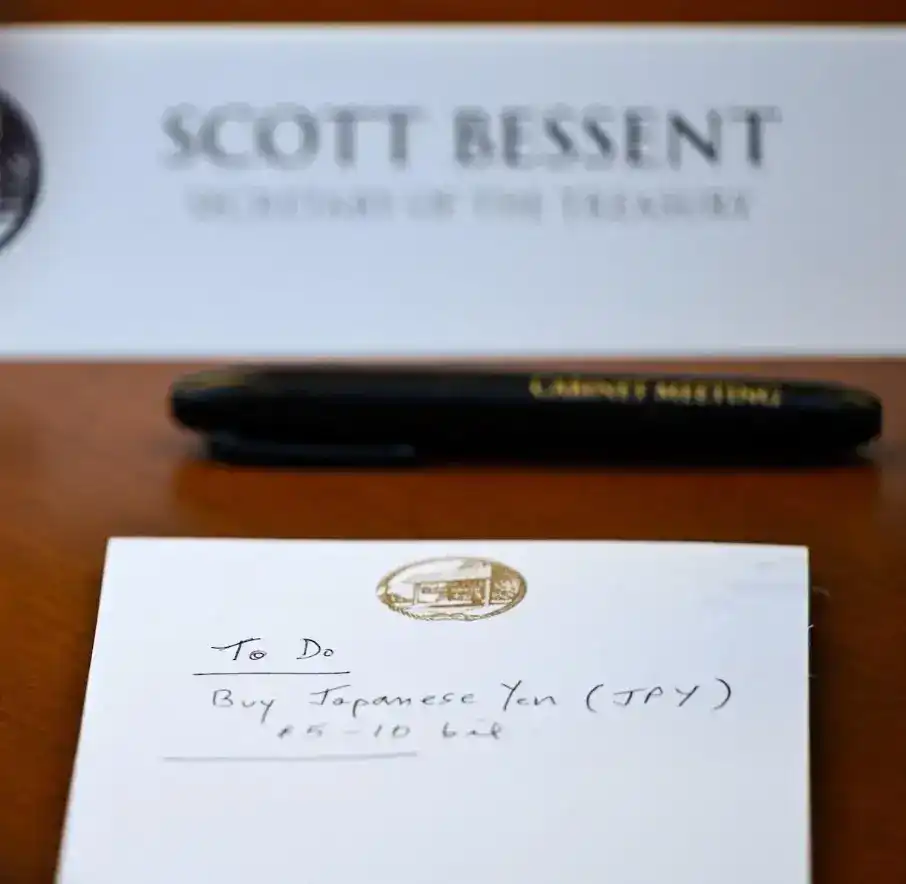
Penulis Asli: Li Jia Sumber Asli: Wallstreetcn Amerika Serikat, Jepang, dan Korea Selatan melakukan intervensi valuta asing terkoordinasi terbesar dalam hampir 30 tahun. Tindakan ini tidak hanya menargetkan tekanan pelemahan Yen dan Won, tetapi juga **dipandang sebagai langkah penting AS untuk menstabilkan pasar keuangan sekutu Jepang dan Korea, mencegah risiko meluas**. Intervensi mencakup Yen dan Won. **Otoritas Jepang dan Korea menjual dolar AS untuk mendukung mata uang mereka; AS campur tangan melalui saluran non-dolar, menjual Euro dan membeli Yen** untuk meredam tekanan pada Yen sekaligus menghindari tekanan tambahan pada dolar AS. Pasar Jepang dan Korea terus tertekan: Indeks KOSDAQ Korea mencapai titik terendah sejak Oktober 2022, sektor teknologi terkoreksi; Yen dan Won melemah terhadap dolar AS, memicu kekhawatiran gelombang volatilitas aset Asia. Berbeda dari upaya stabilisasi nilai tukar biasa, **aksi terkoordinasi ini dipandang pasar sebagai operasi "penyelamatan" untuk pasar keuangan Jepang dan Korea**. Dengan tekanan berlanjut di pasar saham dan sektor teknologi, AS berharap dapat meningkatkan kepercayaan pasar dan mencegah penyebaran risiko lebih lanjut. **Jepang dan Korea adalah pemain kunci dalam rantai pasokan semikonduktor dan AI AS. Menstabilkan pasar aset mereka membantu mengurangi kemungkinan risiko keuangan merambat ke rantai industri teknologi dan pasar AS.** Pada 31 Juli, **Departemen Keuangan AS, melalui Fed New York, menyuruh Goldman Sachs dan Morgan Stanley menjual Euro dan membeli Yen**, menandai partisipasi langsung pertama AS dalam intervensi Yen dalam 30 tahun. Jepang dilaporkan menggunakan sekitar ¥8.45 triliun ($528 miliar) untuk intervensi pada 30 Juli, sementara otoritas Korea juga secara langka menjual dolar AS, mendorong Won menguat 2% ke level tertinggi 9 bulan. Intervensi tiga pihak mendorong USD/JPY turun dari atas 162 ke kisaran 157-159. Pejabat Korea dan Jepang menegaskan adanya koordinasi erat dengan AS, dengan dukungan AS dinilai "melampaui sekadar dukungan moral". Intervensi langsung AS menjadi sorotan utama. Sebelum masuk pasar, Fed New York melakukan "pemeriksaan nilai tukar" (*rate check*) untuk USD/JPY dan kemudian EUR/JPY, **dipandang sebagai pertanda intervensi resmi**. Strategi ini adalah alat baru Departemen Keuangan AS tahun ini untuk mengirim sinyal tanpa langsung mengeluarkan dana. Analis dari Bank of America, Michael Hartnett, menyebut aksi ini mirip "Operasi Pemeliharaan Harga" (*Price Keeping Operation*) di era AI, dengan **tujuan inti menjaga stabilitas aset sekutu rantai AI seperti Jepang dan Korea**. AS ingin mengurangi tiga risiko: kenaikan tajam imbal hasil obligasi Jepang akibat Yen yang cepat melemah, penyebaran tekanan ke pasar Asia lainnya, dan dampak aliran modal tidak tertib terhadap pasar obligasi AS. Intervensi ini muncul bersamaan dengan penyesuaian pasar, menandakan kemungkinan berakhirnya perdagangan berleverage tinggi. Namun, kebijakan saat ini lebih fokus mengendalikan volatilitas daripada mengubah tren melalui kebijakan likuiditas.

marsbit3m yang lalu

Peristiwa Pasar yang "Diabaikan": Intervensi Bersama AS-Jepang-Korea, Departemen Keuangan AS Turun Tangan "Luar Biasa", Pasar Diam-diam "Diselamatkan"?

marsbit3m yang lalu

Seberapa Tinggi Kemungkinan TradeXYZ Memisahkan Diri dari Hyperliquid?

Penulis|Golem, Odaily Planet Daily Seiring pertumbuhan bisnis TradeXYZ yang terus meluas dan menguasai lebih dari 90% pangsa pasar HIP-3 Hyperliquid, diskusi komunitas mengenai kemungkinan TradeXYZ memisahkan diri dari Hyperliquid dan membangun platform perdagangan mandiri semakin meningkat. Analis Sam menyoroti tiga pertanyaan kritis bagi investor HYPE terkait hal ini. TradeXYZ kini mendominasi HIP-3 Hyperliquid, menyumbang 93% dari total volume perdagangan dan 99.7% dari total open interest (OI). Kontribusinya terhadap total volume Hyperliquid mencapai lebih dari 70%, menjadikannya pilar utama. Alasan utama potensi 'keluar' adalah untuk menangkap lebih banyak biaya perdagangan dasar, mengingat pembagian pendapatan saat ini adalah 50/50 dengan Hyperliquid. Namun, terdapat faktor-faktor yang membatasi keputusan tersebut. Pertama, kinerja Hyperliquid yang unggul sulit untuk ditiru dalam waktu singkat. Kedua, Hyperliquid berperan sebagai saluran distribusi dan akuisisi pengguna utama bagi TradeXYZ. Ketiga, terdapat hubungan kepercayaan yang kuat antara pendiri kedua proyek. Kesimpulannya, meskipun TradeXYZ memiliki pengaruh dan daya tawar yang besar, membangun infrastruktur mandiri dianggap tidak rasional karena berisiko tinggi dan dapat berakhir sebagai situasi 'kalah-kalah'. Hyperliquid kehilangan narasi pertumbuhan utama, sementara TradeXYZ menghadapi tantangan teknis, kehilangan saluran distribusi, dan risiko reputasi. Jalur terbaik bagi TradeXYZ kemungkinan adalah bernegosiasi ulang pembagian pendapatan dan secara bertahap mengalihkan fokus ke pengembangan produk dan kepemilikan pengguna, sambil mempertahankan integrasi yang menguntungkan dengan Hyperliquid.

marsbit53m yang lalu

Seberapa Tinggi Kemungkinan TradeXYZ Memisahkan Diri dari Hyperliquid?

marsbit53m yang lalu

Robot "Tinky Winky" Datang ke Rumah untuk Bersih-Bersih, Rp 300.000/Jam, Murni "Kecerdasan Buatan" Manual

Perusahaan robotika AS Tau Robotics memperkenalkan layanan pembersihan rumah menggunakan robot humanoid yang dikendalikan dari jarak jauh (remote). Robot dengan antena di kepala seperti "Wi-Fi router" ini menawarkan jasa bersih-bersih di area San Francisco dengan harga $30 (sekitar Rp 200.000) per jam, lebih murah dibandingkan jasa pembersih manusia. Artikel mengungkapkan bahwa demonstrasi video yang memperlihatkan robot mampu mencuci tangan, mengepel lantai, dan membuang sampah sebenarnya dioperasikan secara manual dari jarak jauh, bukan sepenuhnya otonom. Meski begitu, video tersebut diputar dalam kecepatan normal (1x), berbeda dengan demo robot lain yang sering dipercepat. Tau Robotics, startup yang baru didirikan tahun 2024, memiliki tiga "karyawan" robot: Chelsea untuk dapur dan kamar mandi, Elon untuk pembersihan rutin dan mengingat penataan barang, serta Tony untuk pembersihan mendalam. Pendekatan remote control ini dinilai sebagai cara cerdas untuk mengisi kesenjangan kemampuan (gap) sambil mengumpulkan data dari lingkungan rumah nyata, mirip dengan konsep "shadow mode" pada mobil otonom. Alasan menggunakan bentuk humanoid adalah agar operator dapat memetakan gerakan tubuhnya secara intuitif ke robot, sehingga memudahkan kendali jarak jauh untuk tugas-tugas rumit. Artikel juga menyebutkan tantangan besar robot humanoid masuk ke rumah tangga dan membandingkannya dengan upaya serupa di Tiongkok serta robot 1X Neo dari AS. Meski demikian, kehadiran robot berbentuk manusia di rumah dianggap dapat memberikan nilai emosional tertentu bagi pengguna. Layanan Tau saat ini tersedia secara undangan di San Francisco.

marsbit1j yang lalu

Robot "Tinky Winky" Datang ke Rumah untuk Bersih-Bersih, Rp 300.000/Jam, Murni "Kecerdasan Buatan" Manual

marsbit1j yang lalu

Trading

Spot
活动图片