After the Collapse of the Believe Flywheel Myth, the 26-Year-Old Prodigy Founder Stands as Defendant in Federal Court

marsbitDipublikasikan tanggal 2026-04-16Terakhir diperbarui pada 2026-04-16

Abstrak

In March 2026, 26-year-old Australian entrepreneur Ben Pasternak and his entities B24, Inc. and Believe Foundation were sued in a New York federal court. Investors accused Pasternak of deceptive practices and false advertising through three consecutive token offerings and a forced token migration, causing hundreds of millions in losses. The case centers on Believe (formerly Clout.me), a Solana-based social token launch platform Pasternak founded. Users could create tokens via tweets, with the platform token LAUNCHCOIN reaching a peak market cap of $370 million in May 2025. Pasternak initially claimed he had "zero ownership" of his self-named token, PASTERNAK, which crashed over 95% within a week. In October 2025, Believe forced a migration from LAUNCHCOIN to a new token, BELIEVE, increasing total supply by 33.3%. New tokens were allocated to team members, investors, and the foundation, diluting existing holders. Pasternak falsely claimed no tokens were allocated to insiders for a year, while the foundation received 40 million tokens with no lock-up. The platform generated an estimated $54 million in fees from $6 billion in trading volume. Pasternak earned creator fees throughout. After the migration, significant selling occurred from top wallets. BELIEVE’s value plummeted from its peak to around $1.2 million. Pasternak, a former teen prodigy who dropped out of school at 15, had previously founded apps like Monkey and the food-tech startup NUGGS. His personal life also dre...

On March 23, 2026, a lawsuit was filed in the Southern District of New York Federal Court, officially naming 26-year-old Australian entrepreneur Ben Pasternak and his entities B24, Inc. and Believe Foundation as defendants.

This class action lawsuit, initiated by investors Joshua Lee and Pierre Montmeas, accuses Pasternak of engaging in deceptive business practices and false advertising through three consecutive token offerings and one forced migration, resulting in hundreds of millions of dollars in losses for consumers. By this time, nearly half a year had passed since his last original social media post.

The core of this lawsuit points to a Solana ecosystem application named Believe. Believe (formerly Clout.me) was a Solana social token launch platform launched in 2025, founded by Pasternak. Users could create tokens without code simply by posting a tweet on platform X with "@launchcoin + token name". It utilized a bonding curve mechanism, automatically upgrading to a Meteora liquidity pool once the market cap reached $100,000. The platform was positioned as an "idea crowdfunding platform," and its platform token LAUNCHCOIN reached a peak market cap of $370 million in May 2025.

According to the complaint, Pasternak launched a token named after himself, PASTERNAK, in January 2025, publicly stating on the same day that he had "zero ownership" of the token. This statement successfully built a trust narrative of "no insider allocation," and the token's market cap briefly touched $80 million on its first day. However, within a week, the price plummeted over 95%, and by March 2025, its market cap was only about $190,000.

On April 28, 2025, the platform was renamed from Clout to Believe; on May 2, the on-chain metadata for PASTERNAK was changed to LAUNCHCOIN, though the token contract itself was not redeployed. The complaint points out that in mid-May, the LAUNCHCOIN market cap once exceeded $240 million, reaching an all-time high of $0.3647. The price continued to decline afterwards, while Pasternak and the official Believe account publicly promised at least twelve times during this period to initiate a "flywheel" buyback mechanism, using platform fee revenue to purchase tokens on the open market to support the price.

On October 15, 2025, the Believe team announced the forced migration of LAUNCHCOIN to a new token, BELIEVE. Holders had to complete a 1:1 exchange by October 29; tokens not migrated by the deadline would be permanently destroyed.

Simultaneously, the total supply of the new token inflated from 1 billion to approximately 1.333 billion, an increase of 33.3%. The complaint details the allocation of the new tokens: about 17% allocated to current and future contributors, subject to a four-year vesting period and a one-year lockup; about 5% allocated to early investors, locked for one year; and about 3% allocated to the foundation, with no lockup restrictions, immediately available.

Original LAUNCHCOIN holders received no additional compensation and saw their ownership directly diluted.

The complaint further states that Pasternak publicly stated on the day of the migration announcement that "no individual or entity will get tokens for at least a year," a statement clearly contradicted by the fact that the foundation's approximately 40 million tokens were immediately unlocked. Additionally, the Believe team described the supply increase as "25%," while the actual mathematical calculation was approximately 33%, a discrepancy that sparked widespread skepticism and ridicule within the crypto community.

Regarding the platform's economic model, Believe charged approximately a 2% fee on each transaction, initially split equally between the token creator and the platform, but adjusted in June 2025 to 70% for the creator and 30% for the platform. The platform also designed a "scout" mechanism, where the first user to trigger a token launch would receive 0.1% of subsequent transaction fees. The complaint estimates that Believe processed approximately $6 billion in trading volume, with total platform fee revenue around $54 million.

As the creator of PASTERNAK, LAUNCHCOIN, and BELIEVE, Pasternak himself continuously received a share of the creator fees. The complaint also notes that in the week the migration was announced, on-chain data showed significant selling activity from top wallet addresses.

Pasternak's last original tweet was posted on October 16, 2025. In this lengthy post, he admitted for the first time that he had never purchased any Solana token before launching his first one, reiterated that the team received no token allocation in the initial offering, clarified the misstatement regarding the supply increase, promised that the foundation's holdings would not be sold, and committed to initiating the buyback flywheel after the migration was complete.
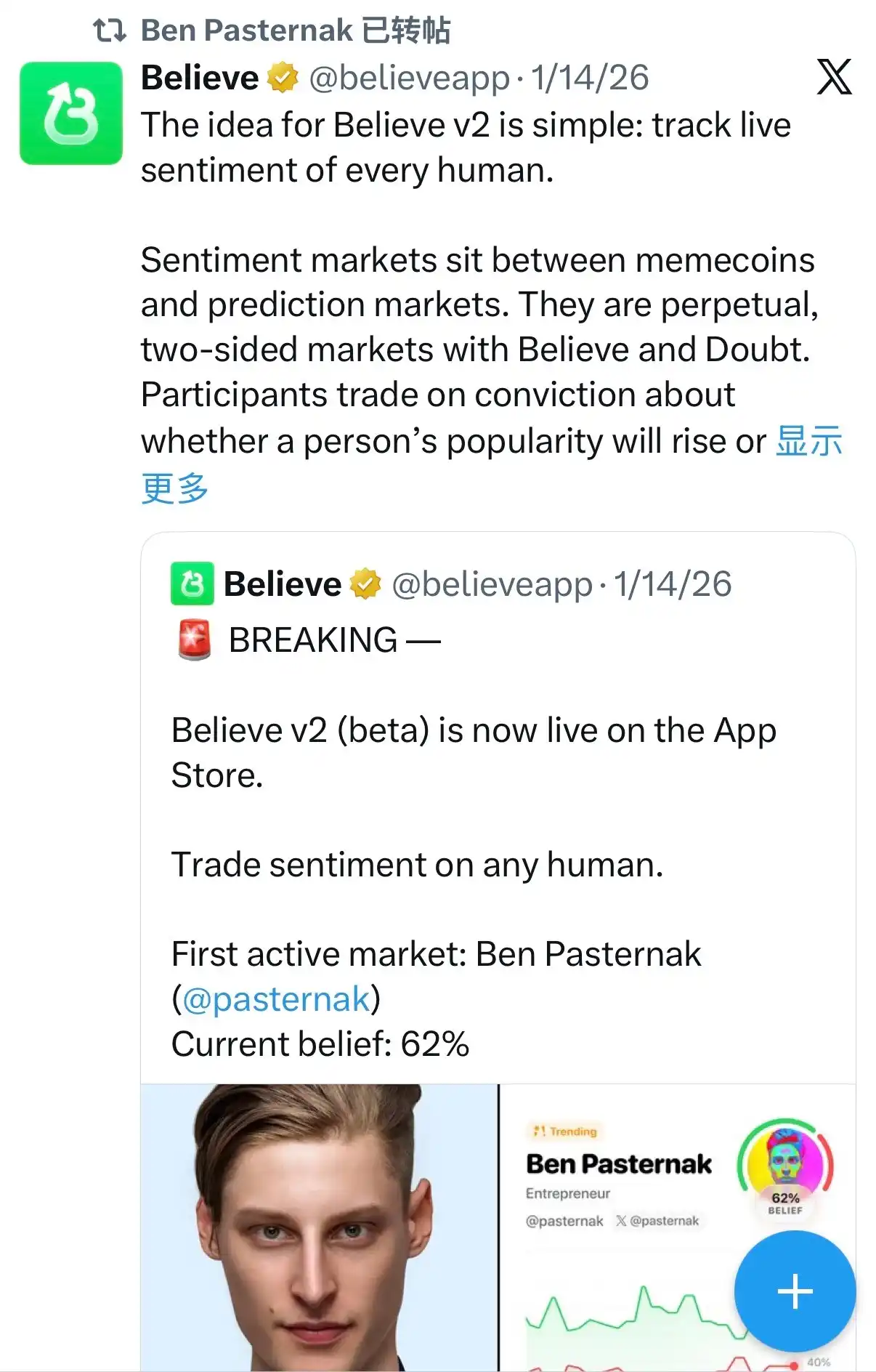
On January 14, 2026, he retweeted a post from the official Believe account, which read: "The idea behind Believe v2 is simple: track everyone's real-time sentiment."
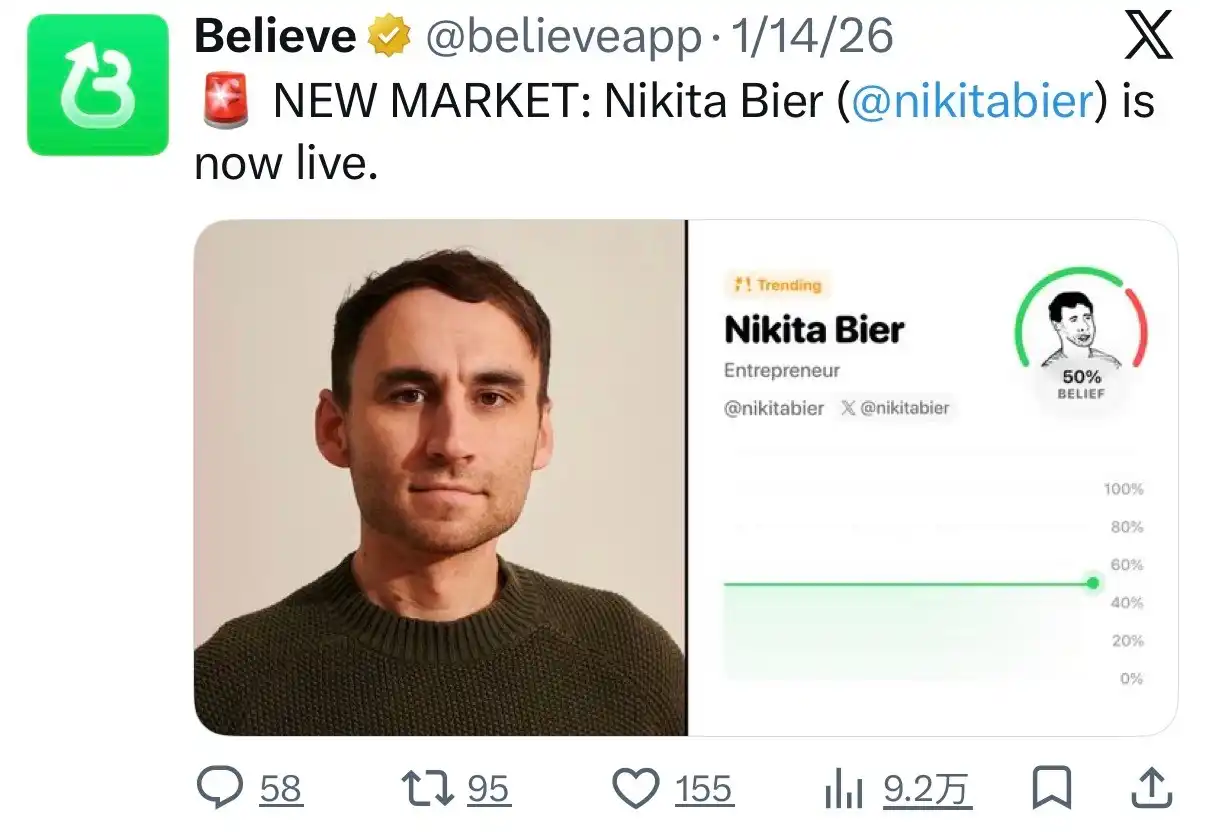
Updates from the official Believe account also stopped on that day, with its last tweet announcing: "New market listing: Nikita Bier (@nikitabier) is now open for trading." Thereafter, both Pasternak's personal and the project's official social media fell completely silent.

Believe v2, launched in January 2026, attempted to pivot to a "sentiment market," allowing users to bet on the real-time popularity of public figures through a perpetual bilateral market, but failed to regain market attention. As of the filing date, the BELIEVE token's market cap was approximately $1.2 million, having evaporated from its historical high.

This lawsuit invokes New York General Business Law Sections 349 and 350, California's Unfair Competition Law and False Advertising Law, alongside common law claims such as negligent misrepresentation and unjust enrichment. The plaintiffs request the court to order the defendants to compensate for actual losses, return platform and creator fees, and, where necessary, impose constructive trusts and injunctive relief on traceable digital assets.

Documents show Pasternak resides in Manhattan, New York, and his controlled entity B24, Inc. is also registered in New York, with platform operations and development pointing to this jurisdiction. As of the time of writing, he has not publicly responded to the lawsuit nor disclosed the specific amount of profit he gained from the Believe project.

A Legendary Teenage Era

Prior to this legal storm, Pasternak's life resume was legendary. Born on September 6, 1999, in Sydney, Australia, into a Jewish family, he grew up in the Vaucluse suburb. He taught himself programming at age 13. In 2014, at 14 years old, he collaborated with an engineer from Chicago during a school science class and completed the iOS game "Impossible Rush" in a few hours, which garnered millions of downloads and briefly reached No. 16 on the US App Store overall chart. Media quickly picked up the story, dubbing him "the next Zuckerberg."

In January 2015, the 15-year-old Pasternak rejected internship offers from Facebook and Google, dropped out of high school, and flew alone to New York to seek venture capital. In April of the same year, he founded Flogg, a social shopping app for teenagers, raising about $2 million from firms like Binary Capital and Greylock Partners.

Flogg's performance fell short of expectations and it shut down by the end of 2016. He promptly redirected resources to a new project, Monkey, a video chat app for teenagers.

Monkey accumulated over 20 million users and was acquired by the Chinese company Holla in 2018, becoming his first successfully sold startup from his teenage years.

Starting in 2018, Pasternak shifted to the food tech sector, co-founding Simulate and launching the plant-based chicken nugget NUGGS. The project attracted support from notable investors like Alexis Ohanian, Jay-Z, and McCain Foods, raising over $50 million in 2021, with the company's valuation once exceeding $250 million. That same year, he was named to the Forbes "30 Under 30" list.

From mobile apps to food tech, and then to Web3, Pasternak's every pivot landed on trending sectors, accompanied by significant controversy and risk. And as he finds himself deep in legal troubles, his personal life has also taken a dramatic turn.
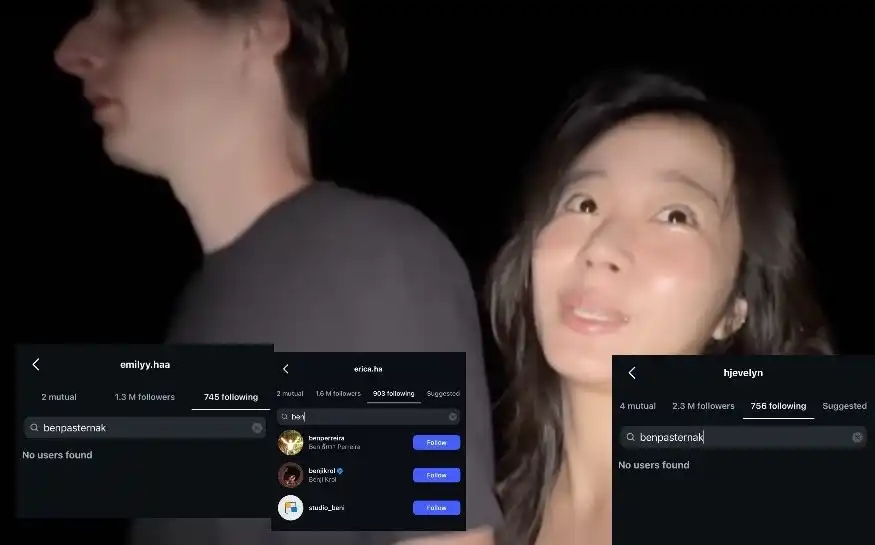
Since the second half of 2024, Pasternak was publicly dating TikTok influencer Evelyn Ha. Evelyn is from the influential Korean-American Ha family of three sisters, and Pasternak frequently shared their luxurious interactions on social platforms.

However, in early April 2026, netizens noticed that the Ha sisters had simultaneously unfollowed him on Instagram, and Evelyn was later revealed to be in a close relationship with a Twitch streamer. The outside world widely interpreted this series of actions as signals of the relationship's end, with some in the crypto community joking that "the Hermès budget can finally be reinvested into the flywheel."

From the teenager writing apps in a Sydney high school classroom to the entrepreneur standing as a defendant in a New York federal court, Ben Pasternak's 26th year has brought both legal and emotional storms. He was once the media's "next Zuckerberg," but now his name is more often associated with "fraud," "collapse," and "unfollow."


Pertanyaan Terkait

QWhat are the main allegations against Ben Pasternak and his entities in the federal lawsuit?

AThe lawsuit alleges that Ben Pasternak, B24, Inc., and Believe Foundation engaged in deceptive business practices and false advertising through three consecutive token offerings and a forced migration, causing consumers to suffer hundreds of millions of dollars in losses.

QWhat was the core mechanism and initial promise of the Believe (formerly Clout.me) platform?

ABelieve was a Solana-based social token launch platform where users could create tokens by posting a specific tweet. It used a bonding curve mechanism and promised an automatic 'flywheel' buyback mechanism, using platform fee revenue to purchase tokens on the open market to support their price.

QWhat controversial action did the Believe team take with the LAUNCHCOIN token in October 2025?

AThe Believe team announced a forced migration from the LAUNCHCOIN token to a new token called BELIEVE. The total supply was inflated by approximately 33.3%, diluting original holders, and the new tokens were allocated to team members, investors, and a foundation, contrary to Pasternak's earlier public statements.

QWhat was the significant contradiction between Pasternak's public statements and the token migration plan?

APasternak publicly stated that 'no individual or entity would receive tokens for at least a year' on the day the migration was announced. However, the foundation's allocation of approximately 40 million BELIEVE tokens was immediately unlocked and usable, directly contradicting his claim.

QWhat was Ben Pasternak's background and public persona before the Believe controversy?

ABefore the Believe controversy, Ben Pasternak was celebrated as a teenage prodigy who created popular apps, sold a company, and founded a successful food-tech startup, NUGGS. He was featured on the Forbes '30 Under 30' list and was often referred to as 'the next Zuckerberg' by the media.

Bacaan Terkait

Saham A: Ketahanan, Ekspektasi, dan Dasar yang Tertimpa Kerusakan

Artikel ini membahas ketahanan pasar saham A-shares di tengah tekanan eksternal pada Juli 2026. Meskipun saham teknologi global, termasuk Korea, melemah dan berdampak pada sektor teknologi A-shares, pasar domestik menunjukkan dasar yang kuat. Penurunan terutama dipicu oleh kontagion risiko eksternal (seperti deleverage di Korea), bukan keruntuhan fundamental. Industri teknologi China memiliki struktur yang lebih terdiversifikasi—meliputi berbagai sub-sektor dan logika naratif ganda (rantai pasokan global AI dan substitusi impor domestik)—dibandingkan ketergantungan Korea pada siklus super chip memori. Data fundamental, seperti pertumbuhan laba yang kuat di modul optik dan kabel serat optik, belum terbantahkan. Pihak berwenang ("Tim Nasional") secara aktif mendukung pasar dengan pembelian besar-besaran dan kebijakan stabilisasi, mengirimkan sinyal keyakinan. Selain sektor teknologi, tiga pilar lain—konsumsi, siklus, dan keuangan—memiliki momentum pemulihan endogen. Sektor konsumsi menunjukkan perbaikan dengan kenaikan CPI dan normalisasi inventaris, sementara siklus (seperti aluminium) didukung oleh profitabilitas tinggi, ekspektasi kenaikan harga, dan valuasi rendah. Aset keuangan menawarkan stabilitas dan dividen yang menarik. Kesimpulannya, penyesuaian ini lebih merupakan pelepasan risiko eksternal. Dengan intervensi kebijakan yang tegas dan fundamental ekonomi yang beragam serta tangguh, pasar A-shares dipandang memiliki ketahanan untuk kembali stabil.

marsbit25m yang lalu

Saham A: Ketahanan, Ekspektasi, dan Dasar yang Tertimpa Kerusakan

marsbit25m yang lalu

Medan Perang Utama Bull Run Berikutnya Ada di Mana? Jawabannya Tersembunyi dalam Dua Aset Ini

**Ringkasan Artikel: Medan Pertempuran Utama untuk Siklus Bull Berikutnya dalam Kripto** Pasar kripto menunjukkan tanda-tanda pembalikan dari kondisi bearish, dengan aliran dana ETF yang kembali positif. Artikel ini mengusulkan narasi inti untuk siklus bull berikutnya: **konvergensi antara keuangan on-chain dan keuangan tradisional**. Pergeseran ini akan didorong oleh adopsi stablecoin, tokenisasi aset, perdagangan 24/7, penyelesaian instan, dan pertumbuhan DeFi institusional yang menargetkan pasar keuangan global, bukan hanya ruang kripto. Untuk memposisikan portofolio dalam tren ini, penulis menyoroti dua kategori peluang investasi yang mewakili jalur konvergensi yang berbeda: 1. **Proyek Asli Kripto dengan Model Bisnis Nyata:** Seperti **Hyperliquid (HYPE)**, sebuah rantai Layer-1 untuk perdagangan derivatif. Separuh volume perdagangannya kini berasal dari aset tradisional (minyak, indeks S&P 500). Platform ini memiliki pendapatan riil (diproyeksikan $8 miliar tahun ini) dan model token yang kuat di mana 99% pendapatan digunakan untuk pembelian kembali dan pembakaran token. 2. **Perusahaan Tradisional yang Mengadopsi Infrastruktur Kripto Secara Serius:** Seperti **Robinhood (HOOD)**, yang baru-baru ini meluncurkan blockchain Layer-2 sendiri, **Robinhood Chain**. Blockchain ini memungkinkan perdagangan saham yang ditokenisasi dan penggunaan protokol DeFi di 120 negara, menunjukkan komitmen nyata untuk integrasi. Kesimpulannya, siklus bull berikutnya akan didorong oleh nilai aplikasi nyata yang menghubungkan dunia keuangan lama dan baru. Investor disarankan untuk fokus pada aset kripto dengan utilitas dan pendapatan nyata serta perusahaan tradisional yang tidak hanya berbicara, tetapi benar-benar membangun dan mengoperasikan solusi berbasis blockchain secara luas.

Foresight News38m yang lalu

Medan Perang Utama Bull Run Berikutnya Ada di Mana? Jawabannya Tersembunyi dalam Dua Aset Ini

Foresight News38m yang lalu

Catatan Penyerbukan UU Kripto 'Clarity': Jalan Kompromi Dua Partai AS Dipenuhi Duri

Kongres AS terus berupaya meloloskan RUU struktur pasar kripto, Clarity Act, namun jalan menuju kompromi antarpartai dipenuhi tantangan. Awal tahun ini, CEO Coinbase Brian Armstrong membatalkan kesepakatan dua partai yang telah diraih, menghentikan sementara prosesnya. Setelah empat bulan, komite akhirnya dapat menjadwalkan RUU ini berkat kompromi tentang masalah "yield" antara Senator Demokrat Angela Alsobrooks dan Senator Republik Thom Tillis. Namun, kemajuan ini terhambat oleh tuntutan klausul etika dari Demokrat, yang menjadi syarat utama mereka. Pada pemungutan suara di komite pertanian Senat, tidak ada satu pun Demokrat yang mendukung karena masalah etika yang belum terselesaikan. Isu lain seperti perlindungan pengembang juga menghadapi penolakan dari lembaga penegak hukum. Meski demikian, ada konsensus bahwa regulasi pasar kripto diperlukan. Senator Cynthia Lummis menekankan perlindungan konsumen dalam RUU, sementara Senator Mark Warner menyuarakan kekhawatiran tentang risiko. Pertemuan dengan pejabat Gedung Putih dan upaya rekonsiliasi antara versi RUU dari komite perbankan dan pertanian Senat sedang berlangsung. Tantangan terbesar adalah mencapai kesepakatan etika yang kuat yang dapat diterima oleh kedua partai. Tanpa dukungan Demokrat, lolosnya RUU ini diragukan. Tujuan jangka pendek komunitas kripto mungkin termasuk tindakan simbolis di Senat sebelum masa reses Agustus, dengan harapan akhirnya menjadi undang-undang pada tahun 2026. Proses yang panjang dan melelahkan ini mencerminkan realitas legislatif di Washington, di mana dukungan harus diraih perlahan-lahan.

marsbit47m yang lalu

Catatan Penyerbukan UU Kripto 'Clarity': Jalan Kompromi Dua Partai AS Dipenuhi Duri

marsbit47m yang lalu

Pendiri Kalshi dan Polymarket Tidak Akur? Perang Bisnis Ini Jauh Lebih Sengit dari Dugaan

Pada November 2024, pendiri Polymarket Shayne Coplan digerebek oleh FBI, yang menandai puncak persaingan sengit dengan perusahaan prediksi pasar saingannya, Kalshi, yang dipimpin Tarek Mansour. Perseteruan ini melampaui kompetisi bisnis biasa, dipenuhi saling tuduh, serangan media, dan perebutan pasar. Perbedaan utama terletak pada pendekatan regulasi: Kalshi beroperasi secara legal di AS dengan izin CFTC, sementara Polymarket lama beroperasi lewat platform lepas pantai yang dapat diakses pengguna AS, meski dilarang. Mansour menuduh Polymarket tidak etis dan ilegal, sementara Coplan menganggap Kalshi sekadar peniru. Konflik meluas ke berbagai arena, termasuk saling menghalangi investasi (seperti upaya Kalshi menggagalkan kerja sama Polymarket dengan ICE), perang penawaran sponsor (seperti kesepakatan Kalshi dengan Madison Square Garden), perebutan talenta, dan kampanye media hitam. Keduanya juga aktif melobi di Washington. Meski Polymarket sempat unggul dalam popularitas, Kalshi kini memimpin dalam valuasi ($220 miliar) dan volume perdagangan. Namun, tekanan regulasi terhadap industri, terutama terkait taruhan olahraga dan potensi perdagangan orang dalam, terus meningkat, dengan Polymarket sering menjadi sasaran utama. Intinya, persaingan ini bukan hanya perebutan pangsa pasar, tetapi juga benturan prinsip tentang batas legalitas dan etika dalam industri prediksi pasar yang berkembang pesat.

marsbit53m yang lalu

Pendiri Kalshi dan Polymarket Tidak Akur? Perang Bisnis Ini Jauh Lebih Sengit dari Dugaan

marsbit53m yang lalu

Trading

Spot
活动图片




