Claude Launches 'Invisible Watermark' Amid Criticism: New Model Fully Embedded, Tagging All Text

marsbitDipublikasikan tanggal 2026-08-11Terakhir diperbarui pada 2026-08-11

Abstrak

Amidst user backlash, Anthropic announces that its latest Claude models will embed invisible watermarks directly into generated text, a move driven by compliance with the EU's AI Act. This "invisible ink," part of the text itself, is designed to persist through copying, pasting, and even some editing. The measure applies globally to all new models from August 2, 2026, with efforts underway to retroactively apply it to existing models. The system also adds signed metadata to supported image files. The watermarking technique, while not detailed by Anthropic, is speculated to potentially use invisible Unicode characters—a method the company has allegedly used before in Claude Code to discreetly tag content. The company is developing detection tools but acknowledges limitations: a watermark only indicates Claude processed the content, not authorship, and its absence doesn't guarantee human origin. Reactions are largely negative, with users criticizing the "unremovable" nature of the watermark and expressing concerns about potential impacts on output quality. In response, ideas for third-party tools to remove watermarks are already emerging, with some suggesting alternative AI models like Kimi as immediate workarounds.

Another questionable move from Company A has sparked widespread outrage online.

Just now, Anthropic announced: The new Claude will embed invisible watermarks in generated text.

Yes, not just metadata—these "ink marks" will become part of the text itself.

They will be copied and pasted along with the text to other places, and may still remain even after some degree of editing.

It's like a stubborn sticker that just won't come off...
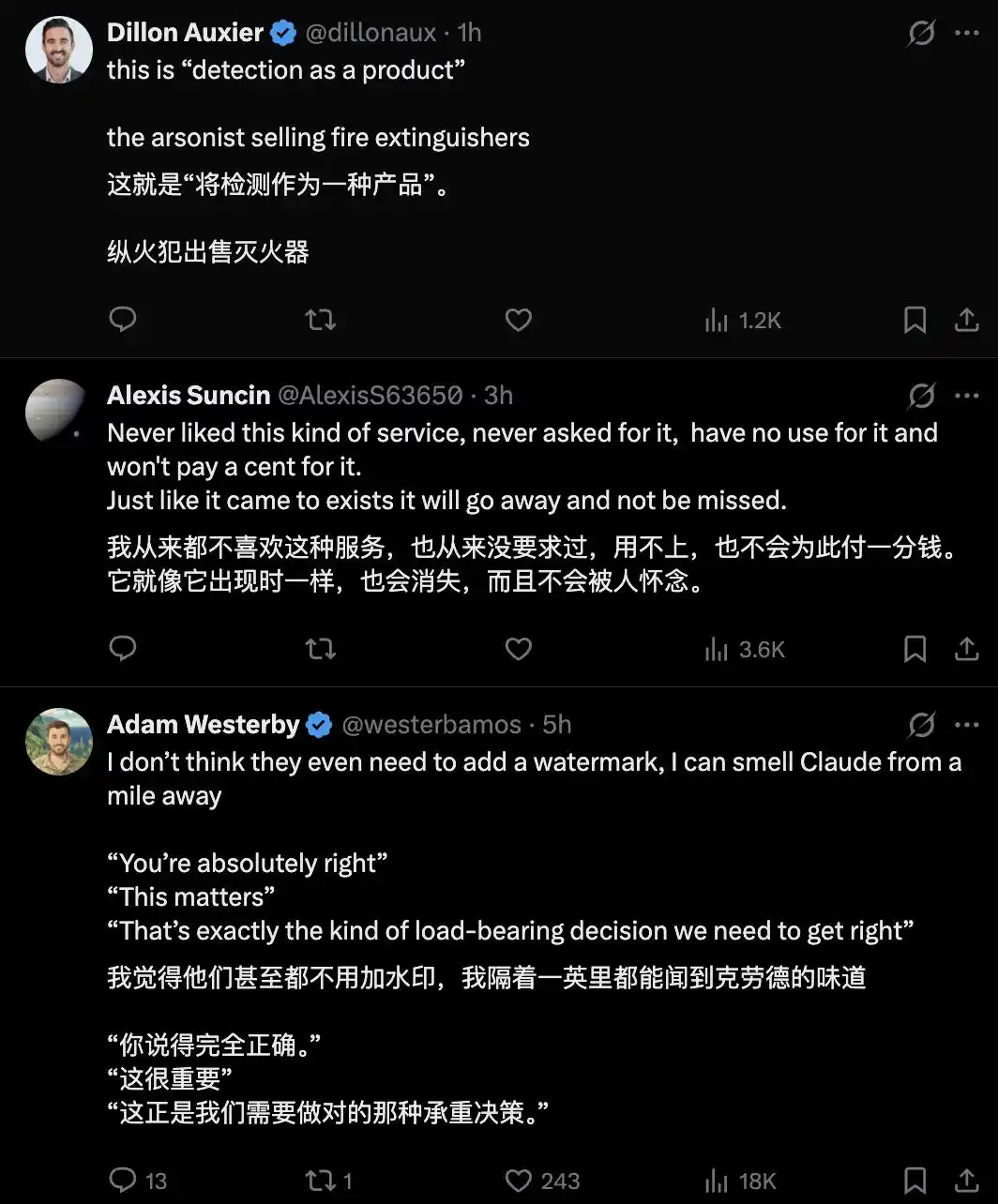
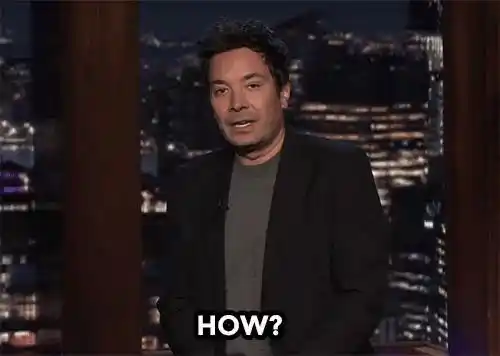
Netizens have already started voicing their anger collectively.
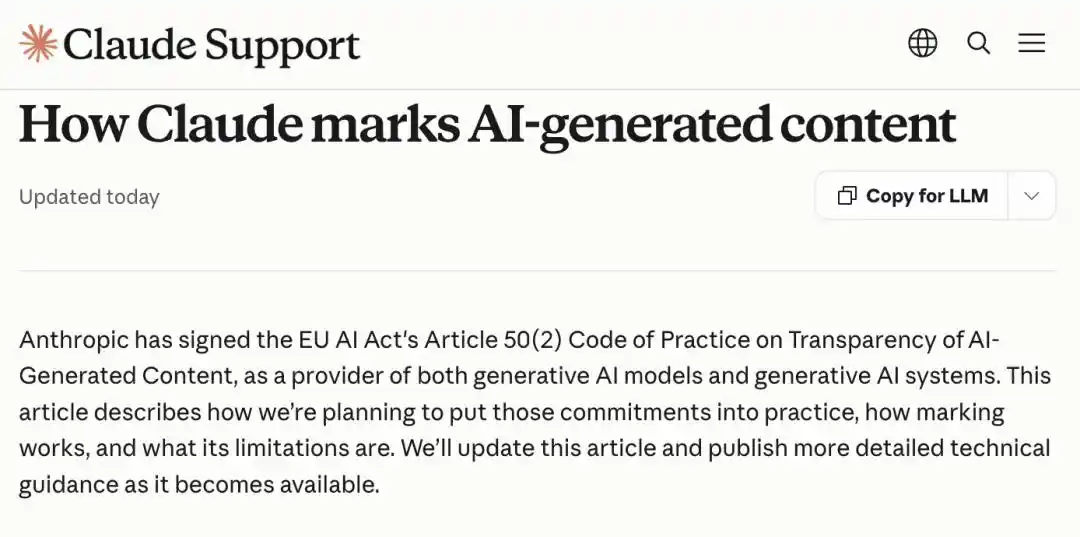
The direct driver of this move is the EU's AI Act, which Anthropic has signed. This mechanism will apply to all models released on or after August 2, 2026.

For Claude models already online, Anthropic is also researching how to add this watermarking mechanism retroactively.
Oh, and one more thing—

This measure will be implemented globally, not limited to the EU.

The great "Watermark Era" is here.

Text Gets Watermarks Too

Recently, Anthropic signed the EU AI Act's Transparency Code of Conduct for AI-Generated Content.

This code was drafted by independent experts, evaluated by the European Commission and the AI Office, and has been signed by about 190 institutions, including Google, Meta, Microsoft, OpenAI, and others.

For Claude, this translates into two specific things.

First, text watermarking.

Supported Claude models will weave a kind of invisible marker directly into the text when generating content.

Yes, completely invisible. You can't see it, and it doesn't change the meaning, quality, or readability of the response.

What's even scarier is that it's hard to get rid of.

The watermark is part of the text, copying and pasting will carry it along, and even edited versions might not be safe.

Second, signed metadata.

When Claude generates supported file types like .svg, .png, .jpg, it will attach digitally signed provenance metadata.

This metadata follows the C2PA open standard, promoted by Adobe, OpenAI, Google, and others. It can indicate the file was processed by Claude and also detect if the file has been tampered with.

The coverage is across the entire product line. API, Claude, Claude Code, Claude Cowork, Claude Tag are all included.

Cloud customers accessing Claude via AWS, Google Cloud, Microsoft Foundry will also be subject to this.

And there are no regional exceptions; it's uniformly implemented worldwide.

Meanwhile, Anthropic stated it is developing detection tools, allowing users and third parties to check whether a piece of text or a file carries the Claude marker.

Detailed technical documentation will be released by the company later.

However, Anthropic also explicitly noted the limitations of this mechanism.

Detecting a mark only indicates the content was processed by Claude, it does not confirm Claude as the original author.

After all, users often use Claude for proofreading, translation, summarization, format conversion—the core ideas and data may come from humans; marked content could also be modified, excerpted, or mixed with other materials afterward.

Conversely, not detecting a mark doesn't mean the content definitely wasn't AI-generated.

It might come from an older model, be heavily edited or rewritten, the paragraph might be too short to identify, or metadata might be stripped due to format conversion or screenshots...

Basically, everyone is under suspicion now...

As of now, Anthropic has not disclosed details of the watermarking algorithm.

In other words, no one knows what the "invisible ink" looks like, or what else Company A might be able to do with it.

Company A's Labeling Tactics

So, is there really such magic that makes watermarks in text completely invisible?

Yes.

And the tricks might be more numerous than you think.

The most famous is something called Unicode.

You can think of it as issuing ID cards to almost every character and symbol in the world: 'A' corresponds to one Unicode number, '中' (Chinese) corresponds to one Unicode number, even '🙂' corresponds to one Unicode number.

But beyond that, there exists a set of characters that are basically invisible to the human eye but distinguishable by computers.

For example, the simplest "Hello"—underneath, one might be H-e-l-l-o, and another might be H-e-invisible character-l-l-o.

They look completely identical to the human eye, but when a program reads the Unicode code points, it can find that the second string has an extra special character.

Amazing.

I wonder if everyone remembers, Company A had already "gracefully followed the trend" and used the Unicode trick before.

On June 30th, a Reddit user discovered a shocking truth after reverse-engineering Claude Code—

Claude Code's packaged files contained a set of Trojan-like code. If it detected you were a Chinese user, it would add two strokes of invisible ink to your system prompt—'Today's date is 2026-06-30'.

1. Changing the date format hyphens to slashes, marking a hit for the Chinese timezone.

2. The single quote in 'Today's' was quietly replaced with three characters that have different Unicode code points but are visually identical.

The result? In any editor, any terminal, this line looks exactly the same as the normal version. But in the program, you are already tagged.

Yes, Company A has been using Unicode to secretly tag users in Claude Code.

The company has not revealed whether the new Claude watermark uses this approach.

Looking at it this way, text watermarks might not be so bad, right? At least you won't get your account banned...

Moreover, various AI detection tools are of mixed quality, often charging dozens per detection and giving an AI-generated probability number with no logical basis. Having an official labeling channel could at least save a lot of wasted money.

The main reason for everyone's anger is Company A's history of similar actions.

But thinking carefully, AIGC content does need a reliable detection system, just like OpenAI adding C2PA metadata and SynthID watermarks to images.

However, does embedding watermarks by restricting the model's sampling distribution really not affect generation quality?

Company A's statement is—

No, it doesn't.

I remain skeptical.

After all, since version 4.6, Claude has been increasingly incomprehensible.

One More Thing

Regardless, the "Avengers Alliance" against Anthropic has already begun to act!

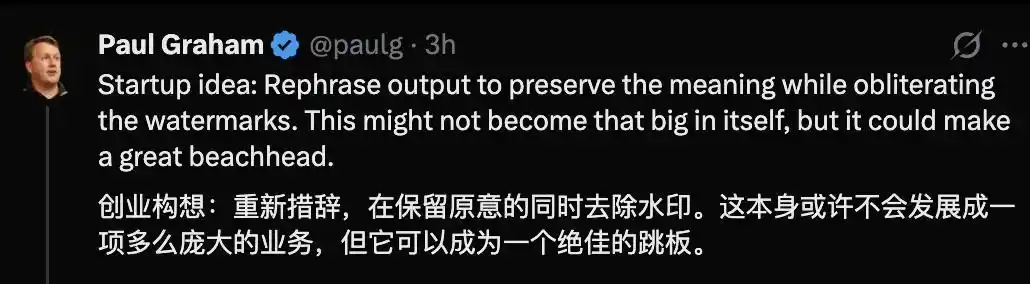
YC founder Paul Graham has already hatched a new startup idea, just waiting for aspiring individuals to join!

Create a third-party regeneration function, rephrase the text, preserving the original meaning while removing the watermark.
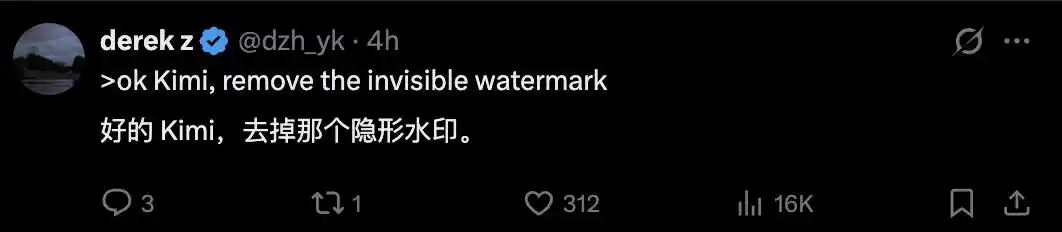
Of course, a more lightweight solution, usable by everyone right now, has also emerged—

Kimi, remove that invisible watermark.
Reference Links:

[1]https://support.claude.com/en/articles/16266773-how-claude-marks-ai-generated-content

[2]https://x.com/atharvabuilds/status/2086920300441268579?s=20

This article is from the WeChat public account "QbitAI", author: Jay

Kripto yang Sedang Tren

Pertanyaan Terkait

QWhat is the main content of the EU's AI Act that Anthropic has signed, as mentioned in the article?

AThe main content is the 'AI-Generated Content Transparency Code of Conduct,' which requires the embedding of invisible watermarks into generated text and adding signed metadata to supported file types like .svg, .png, and .jpg, in compliance with the C2PA open standard.

QAccording to the article, what are the two specific measures Claude will implement regarding content marking?

AThe two measures are: 1) Embedding invisible, non-removable watermarks directly into the generated text itself. 2) Adding digitally signed provenance metadata to supported file types such as .svg, .png, and .jpg.

QWhat is one limitation of the watermarking and metadata system as acknowledged by Anthropic?

AA key limitation is that detecting a mark only proves the content was processed by Claude, but does not confirm Claude as the original author. Conversely, the absence of a mark does not guarantee the content is human-generated, as it could come from an older model, be heavily edited, or have metadata stripped during format conversion.

QWhat technique from the article's past example did Anthropic allegedly use to covertly mark content for Chinese users?

AIt allegedly used Unicode characters—specifically, changing date format hyphens to slashes and replacing a standard apostrophe in "Today's" with three visually identical but different Unicode code points—to invisibly tag content generated for users in the China timezone.

QWhat are two potential user reactions or solutions mentioned in the article regarding the new watermarking policy?

ATwo reactions/solutions mentioned are: 1) A startup idea from YC founder Paul Graham to create a third-party service that rephrases content to remove watermarks while preserving meaning. 2) A suggested immediate workaround of using another AI (like Kimi) with the prompt 'Remove that invisible watermark.'

Bacaan Terkait

Interpretasi Laporan Riset Citigroup: Larangan AS terhadap Modul Optik China Belum Ada Kemajuan Nyata, Kendala Pasokan Hadang Implementasi Jangka Pendek

Analisis Laporan Citi: Rencana Larangan AS atas Optical Module Cina Belum Ada Kemajuan Nyata, Kendala Pasokan Batasi Eksekusi Jangka Pendek Laporan Reuters 4 Agustus menyebutkan pemerintahan Trump dan FCC sedang mempertimbangkan larangan impor optical module Cina ke AS. Dalam laporan 9 Agustus, Citi menemukan bahwa optical module tidak termasuk dalam daftar larangan FCC yang berlaku. Aturan FCC 26-50 menetapkan dua mekanisme daftar terbatas: berdasarkan produsen dan berdasarkan asal. Optical module hanya disebut satu kali dalam contoh persyaratan pengungkapan, bukan sebagai produk yang dilarang. Usulan larangan masih berupa proposal. Citi memperkirakan pemasok Cina menyuplai 60%-70% kebutuhan optical module berkecepatan tinggi untuk hyperscaler AS. Pemasok non-Cina tidak dapat mengisi kekosongan ini dalam waktu dekat, sehingga kemungkinan larangan nyata diberlakukan dalam waktu dekat dinilai rendah. Analisis memetakan tiga skenario kebijakan potensial: larangan berbasis produsen dinilai paling tidak mungkin karena akan langsung mengganggu infrastruktur AI AS. Larangan berbasis asal (semua produk luar negeri) sangat ketat tetapi dampaknya besar, mungkin memerlukan pengecualian. Larangan berbasis asal (hanya produk Cina) memberi ruang bagi kapasitas di luar Cina, tetapi definisi "asal" tetap tidak jelas. Jika larangan diberlakukan, perusahaan seperti XSENS dan Dongshan Precision akan paling terpapar karena ekspor langsung mereka ke AS. Tianfu Communication, sebagai pemasok komponen pasif, risikonya lebih rendah dan relatif terisolasi. Kesimpulan Citi jelas: Pemasok optical module Cina memegang posisi penting dalam rantai pasokan AI AS. Diskusi larangan akan berlanjut, tetapi eksekusi cepat kecil kemungkinannya. Fokus investor harus pada kecepatan pembangunan kapasitas produksi domestik AS dan arah negosasi dalam agenda diplomatik AS-Cina. Logika substitusi impor untuk optical module tetap berlaku, tetapi jendela waktunya mungkin lebih panjang dari perkiraan pasar.

marsbit31m yang lalu

Interpretasi Laporan Riset Citigroup: Larangan AS terhadap Modul Optik China Belum Ada Kemajuan Nyata, Kendala Pasokan Hadang Implementasi Jangka Pendek

marsbit31m yang lalu

Perusahaan Induk Truth Social Rugi US$238 Juta dalam Satu Kuartal: US$190 Juta Rugi dari Posisi Crypto, Perusahaan Umumkan Strategi Ketat Pengelolaan Kas

Perusahaan induk Truth Social, Trump Media & Technology Group (DJT), melaporkan kerugian bersih $238,1 juta pada kuartal II 2026. Kerugian besar ini terutama ($190,4 juta) berasal dari kerugian belum direalisasi pada aset digital dan sekuritas ekuitas, didorong oleh koreksi harga Bitcoin. Secara operasional, perusahaan hanya menggunakan $13,7 juta dalam arus kas. Menariknya, meski mengalami kerugian, perusahaan justru menambah kepemilikan Bitcoin-nya pada Juli, dengan membeli hampir 4.700 BTC tambahan menggunakan hasil penjualan sekuritas terkait Bitcoin. Total kepemilikan kini mencapai sekitar 14.139 BTC (senilai sekitar $890,5 juta per 31 Juli), menjadikannya bagian dominan dari aset perusahaan. Untuk mengelola volatilitas, perusahaan telah menggunakan strategi keuangan seperti opsi, pinjaman, dan penjaminan dengan Bitcoin. Namun, menyusul kerugian kuartalan, perusahaan mengumumkan akan menerapkan "kerangka manajemen treasury aset digital yang lebih disiplin" untuk mengurangi risiko sambil tetap mempertahankan eksposur jangka panjang. Fokus juga akan lebih dialihkan ke inti bisnis media seperti Truth Social dan produk data Truth API yang baru mulai menghasilkan pendapatan. Perusahaan berencana menyelesaikan merger dengan perusahaan energi fusi nuklir TAE Technologies pada kuartal IV 2026. Dengan pendapatan kuartalan hanya $1,7 juta, pertumbuhan bisnis media dan strategi treasury Bitcoin yang lebih hati-hati akan menjadi penentu utama nilai perusahaan ke depan.

marsbit38m yang lalu

Perusahaan Induk Truth Social Rugi US$238 Juta dalam Satu Kuartal: US$190 Juta Rugi dari Posisi Crypto, Perusahaan Umumkan Strategi Ketat Pengelolaan Kas

marsbit38m yang lalu

Analis Utama Klaim Bitcoin Sedang Berada di Tahap Kritis: 'Kita di Pasar Bear Terendah, Apa Selanjutnya...'

Analis kripto terkenal Benjamin Cowen dalam video analisis terbarunya menilai peristiwa terkini dan siklus historis pasar Bitcoin. Bitcoin saat ini diperdagangkan di kisaran $64.000-$65.000. Cowen menyatakan bahwa dinamika pasar dan minat investor menunjukkan kemiripan dengan siklus masa lalu, menunjukkan bahwa periode mendatang adalah titik balik kritis. Minat dan antusiasme publik terhadap pasar kripto telah menurun signifikan. Indikator sosial turun ke level 0.2, jauh lebih rendah dibandingkan empat tahun lalu. Volatilitas pasar juga turun drastis dengan sentimen ketidakpercayaan yang mendominasi, situasi yang sangat mirip dengan akhir pasar bearish pada 2018 dan 2022. Data historis menunjukkan pasar Bitcoin biasanya mencapai titik terendah di bulan-bulan musim panas, diikuti periode stagnasi dengan volatilitas rendah. Pergerakan utama mungkin terjadi di kuartal terakhir tahun. Namun, indikator on-chain seperti Z-Score MVRV belum turun di bawah nol yang menandakan dasar, sehingga terlalu dini untuk menyimpulkan dasar telah tercapai. Menurut Cowen, dalam beberapa minggu ke depan, suatu peristiwa berpotensi mengguncang pasar dan memicu gelombang penurunan akhir. Peristiwa ini dapat mengembalikan investor ke pasar dan membuka jalan bagi siklus bull baru. Oktober diprediksi sebagai periode paling mungkin untuk pembentukan dasar, meski September atau November juga mungkin. Pengguna kripto disarankan untuk berhati-hati dan bersiap untuk momen penentu di pasar ini.

cryptonews.ru39m yang lalu

Analis Utama Klaim Bitcoin Sedang Berada di Tahap Kritis: 'Kita di Pasar Bear Terendah, Apa Selanjutnya...'

cryptonews.ru39m yang lalu

Trading

Spot

Artikel Populer

Cara Membeli MOVE

Selamat datang di HTX.com! Kami telah membuat pembelian Movement (MOVE) menjadi mudah dan nyaman. Ikuti panduan langkah demi langkah kami untuk memulai perjalanan kripto Anda.Langkah 1: Buat Akun HTX AndaGunakan alamat email atau nomor ponsel Anda untuk mendaftar akun gratis di HTX. Rasakan perjalanan pendaftaran yang mudah dan buka semua fitur.Dapatkan Akun SayaLangkah 2: Buka Beli Kripto, lalu Pilih Metode Pembayaran AndaKartu Kredit/Debit: Gunakan Visa atau Mastercard Anda untuk membeli Movement (MOVE) secara instan.Saldo: Gunakan dana dari saldo akun HTX Anda untuk melakukan trading dengan lancar.Pihak Ketiga: Kami telah menambahkan metode pembayaran populer seperti Google Pay dan Apple Pay untuk meningkatkan kenyamanan.P2P: Lakukan trading langsung dengan pengguna lain di HTX.Over-the-Counter (OTC): Kami menawarkan layanan yang dibuat khusus dan kurs yang kompetitif bagi para trader.Langkah 3: Simpan Movement (MOVE) AndaSetelah melakukan pembelian, simpan Movement (MOVE) di akun HTX Anda. Selain itu, Anda dapat mengirimkannya ke tempat lain melalui transfer blockchain atau menggunakannya untuk memperdagangkan mata uang kripto lainnya.Langkah 4: Lakukan trading Movement (MOVE)Lakukan trading Movement (MOVE) dengan mudah di pasar spot HTX. Cukup akses akun Anda, pilih pasangan perdagangan, jalankan trading, lalu pantau secara real-time. Kami menawarkan pengalaman yang ramah pengguna baik untuk pemula maupun trader berpengalaman.

629 Total TayanganDipublikasikan pada 2024.12.13Diperbarui pada 2026.06.02

Cara Membeli MOVE

Diskusi

Selamat datang di Komunitas HTX. Di sini, Anda bisa terus mendapatkan informasi terbaru tentang perkembangan platform terkini dan mendapatkan akses ke wawasan pasar profesional. Pendapat pengguna mengenai harga MOVE (MOVE) disajikan di bawah ini.

活动图片