Contents
- What is forbitspace, and what makes it special?
- What are multi-chain and cross-chain, and why have they become mainstream?
- Introducing forbitspace: decentralized trading without barriers
- Bottom line
Evolution of Web3 and DeFi era amplified numerous major bottlenecks in terms of cross-blockchain compatibility and interoperability. Unfortunately, heterogeneous blockchains cannot interact seamlessly due to technical limitations. Cross-chain systems are designed to eliminate these barriers to make DeFi operations straightforward and profitable.
What is forbitspace, and what makes it special?
Launched in December 2021 by a team of crypto veterans, forbitspace attempts to create and maintain a single trading and DeFi endpoint for enthusiasts of top-tier blockchains such as Ethereum, Polygon, BNB Chain (formerly Binance Smart Chain) and Avalanche.
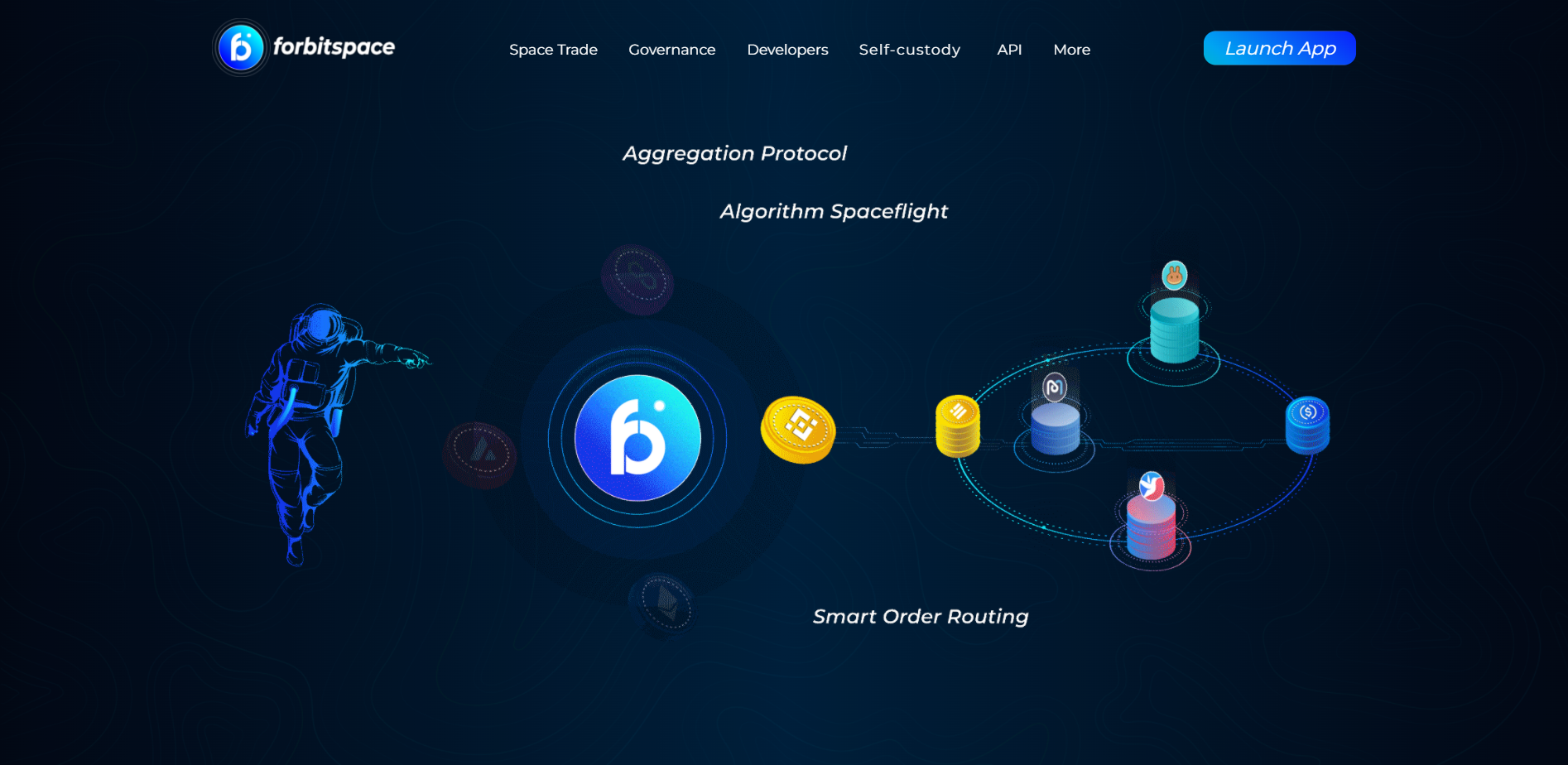
Image by forbitspace Its development is curated by lead blockchain engineer Baroda Hoang and head strategist Menardo Quiñosa, blockchain and fintech experts with decades of experience on Asian digital markets.
The protocol’s tokenomics is built on top of FBS, a core native utility and governance asset of forbitspace. Its toolkit boasts self-custody instruments for digital assets and a high-performance API integration module.
Why is forbitspace crucial for the progress of the global cross-chain ecosystem?
- Unmatched number of blockchains and DeFis integrated;
- Out-of-the-box approach: single product includes aggregation protocol, liquidity protocol, limit orders instruments and derivatives trading module;
- Decentralized governance module with native token and DAO;
- Self-custody ecosystem with decentralized wallet, asset management instruments and cross-network bridges;
- Desktop and mobile client application;
- Audited codebase is fully open-source.
What are multi-chain and cross-chain, and why have they become mainstream?
Multi-chain (or cross-network, cross-asset, cross-chain, cross-blockchain) refers to a segment of on-chain software designed for seamless (without intermediaries and third parties) interaction between at least two blockchains with different technologies. With cross-chain systems, Fantom can interact with Solana through a bridge, Ethereum can interact with Bitcoin through atomic swaps with hash-locked time contracts and so on.
The Web3 segment needs cross-chain systems to ensure cost-efficient liquidity transfer between various systems and protocols. It also allows for more flexible and, therefore, profitable asset management strategies. Different blockchains have different consensus designs and fees policies. As such, it is necessary to have an opportunity to easily move liquidity from one network to another in times of congestion.
However, modern two-side bridge systems are still vulnerable to various sorts of attacks. Ethereum inventor Vitalik Buterin criticized them as the Solana-Ethereum bridge Wormhole was drained of $320 million in early February 2022.
As such, the time has come in DeFi for new-gen systems with multiple blockchains, advanced security and 360° interoperability between heterogeneous decentralized networks.
Introducing forbitspace: decentralized trading without barriers
Forbitspace is designed to set a new standard in cross-blockchain interoperability. Not only does it seamlessly connect the red-hot blockchains of 2022, but it also provides a plethora of opportunities for trading and liquidity management.
Forbitspace promotes itself as a “Super DEX Aggregator”: it allows the movement of crypto assets between different blockchain and protocols.
23 protocols, different blockchains: Unmatched trading ecosystem of forbitspace
Forbitspace is an aggregator designed to unite decentralized applications across disparate blockchains. Traders can place orders and execute trades wherever the place is better and spreads are lower. As of Q1, 2022, Forbitspace works on Ethereum, BNB Chain, Polygon and Avalanche, i.e., the four most popular smart contracts blockchains of the DeFi segment. Solana blockchain, the hottest “Ethereum killer” of 2021, will be added to this club in the coming months, per the estimations of forbitspace’s team.
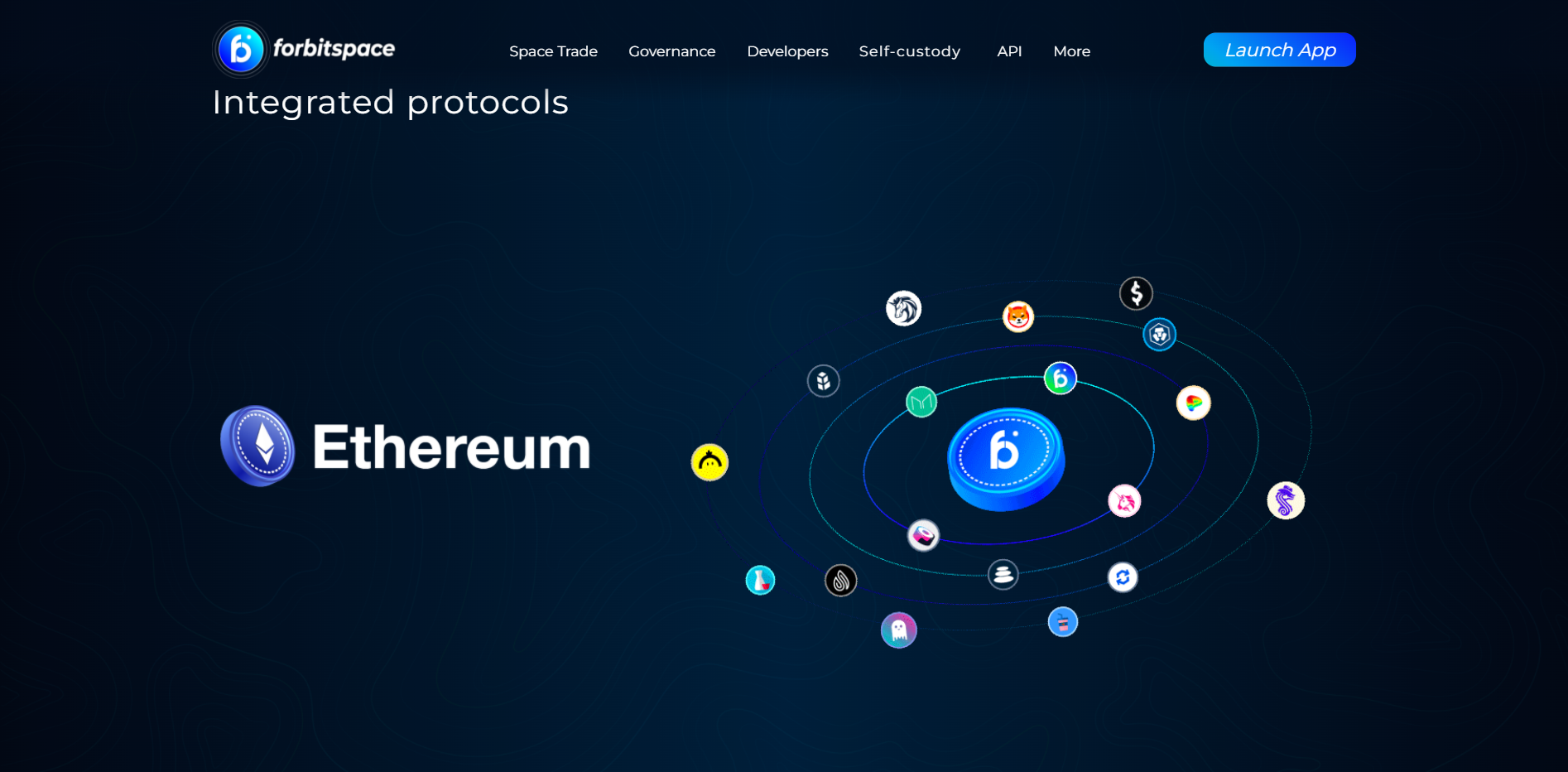
Image by forbitspace Technically, forbitspace is an endpoint to the DeFi ecosystem: through its instruments, users can move liquidity between different protocols and blockchains as well as between different versions of the same protocol (like multi-chain SushiSwap DEX).
The protocol has issued native FBS tokens. It serves as a governance asset and as a rewards asset for liquidity providers of different elements of forbitspace. Its architecture also includes Space DAO, a decentralized autonomous organization that allows FBS holders to have a say in all crucial referendums on upgrades of forbitspace and its elements, rewards strategy, product development and so on.
Besides that, FBS token is also accepted in various DeFi-centric ecosystem programs such as liquidity mining, staking and so on. Also, FBS is accepted in forbitspace’s native NFT marketplace and flyby initial decentralized exchange offering (IDO) launchpad.
Smart order routing
Forbitspace’s design includes a native liquidity pool. Powered by a resource-efficient automated market-making engine (AMM), it allows DeFi enthusiasts with various levels of expertise to lock their liquidity in order to receive periodic rewards in FBS.
The protocol is one of the first DEXes that enabled limit order functionality. As on centralized crypto exchanges Binance and Coinbase, traders can place orders and do not worry about their execution.
Also, forbitspace has opened a derivatives trading module. Its operations are fully controlled by smart contracts while the trading experience can be compared to that of CEX heavyweights.
Smart order routing is among the most impressive technical novelties introduced by forbitspace’s team. It is a novel technique that splits a single transaction into multiple orders across different decentralized exchanges (DEXes). As such, it protects liquidity providers and traders from price slippages and front-running.
Cross-chain trading for beginners
To ensure straightforward, secure and censorship-resistant crypto experience for all of its users, forbitspace implemented a self-custody module. Technically, it is designed for noncustodial storage and exchange of cryptocurrencies on mobile and desktop devices.
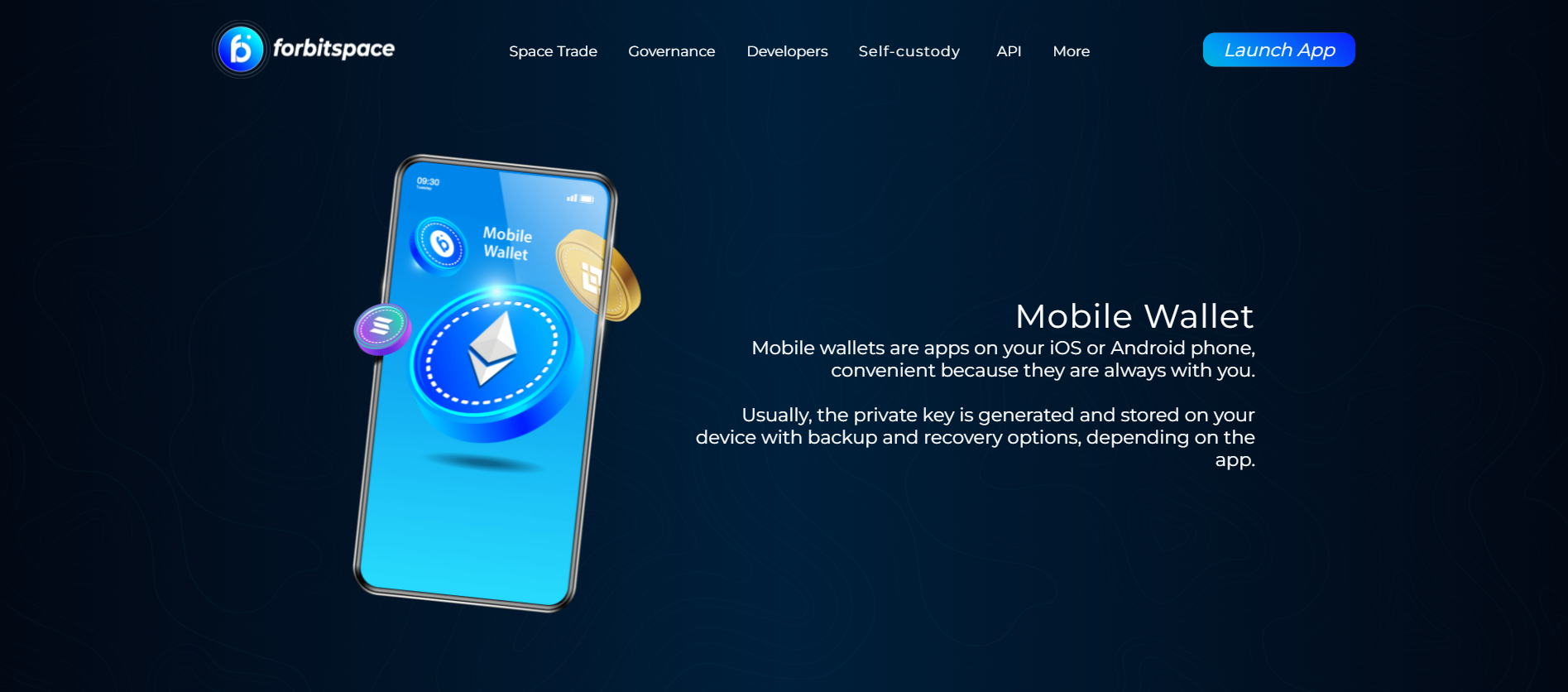
Image by forbitspace Also, retail users can access Bridge Space, an easy-to-use cross-network bridge ecosystem designed for token transfer and swaps.
With forbitspace’s Asset Management solution, traders can manage and adjust their portfolios for better and most profitable strategies. It is one of the first attempts in crypto space to move the entire cycle of asset management to smart contracts of decentralized application. Through decentralized tools, the portfolio can be rebalanced based on risk preferences, time horizons or other conditions.
This toolkit makes decentralized trading accessible even for crypto newbies: they do not need to put their riches at risk by bringing them to custody services of centralized exchanges.
To integrate forbitspace’s protocol into a global DeFi ecosystem, its team created a cutting-edge API module. Currently, forbitspace has scored 200+ partnerships for more efficient liquidity logistics. Forbitspace partnered with stablecoin issuer Tether, leading DeFis Uniswap, SushiSwap and Curve, hardware crypto wallets Ledger and Trezor, and so on.
By Q3, 2022, the protocol is also going to enter the Metaverse race. Its Metaverse offering will include two products, i.e., Entertainment Space Metaverse and Integration Game Space Metaverse.
Bottom line
To sum up, forbitspace is set to totally change the narrative in cross-blockchain DeFi ethos and practice. It allows trading in multiple DeFi protocols on different blockchains with a single order. Its smart routing module splits this order into several mechanisms to ensure maximum profitability and a smooth trading experience.
Forbitspace’s self-custody kit is a decentralized crypto wallet with built-in exchange features. Also, forbitspace rewards its liquidity providers with FBS tokens, native utility and governance assets.
In 2022, forbitspace is targeting the NFT and Metaverse segments, which reaffirms its commitment to building an all-on-one cryptocurrencies ecosystem for the Web3 epoch.