ENS Governance Restructuring Approved: Foundation Formalized, Finally Able to Pursue .ens Top-Level Domain

marsbitDipublikasikan tanggal 2026-08-13Terakhir diperbarui pada 2026-08-13

Abstrak

ENS token holders have approved the "Next Era of the ENS DAO" proposal, formally establishing the ENS Foundation as a legal entity. This enables the Foundation to represent ENS in institutional matters such as pursuing the .ens top-level domain with ICANN, engaging with standard-setting bodies like IETF and W3C, participating in regulatory discussions, defending trademarks, and hiring dedicated staff. The new structure clarifies roles: ENS Labs focuses on core protocol development (like ENSv2), the DAO retains control over protocol contracts and treasury (holding 54.6% of ENS tokens), and the Foundation handles off-chain, institutional representation. The five-member inaugural Foundation Board, appointed and overseen by token holders, includes an Executive Director and independent directors. This governance upgrade aims to strengthen ENS's role as credibly neutral, publicly governed internet infrastructure for the long term.

Author: ENS Foundation

Compiled by: Deep Tide TechFlow

Deep Tide Introduction: ENS token holders have approved a governance proposal, formally establishing the Foundation as a legal entity capable of representing ENS in regulatory matters, standards organizations, and top-level domain negotiations. This addresses a long-standing weakness of the DAO, which previously lacked the ability to handle institutional affairs, while preserving token holders' ultimate control over the protocol and the Foundation's personnel. For those focused on ENS's infrastructure status and governance boundaries, this is a crucial step.

ENS token holders have approved the "Next Era for the ENS DAO" proposal, and the relevant executable content has been completed on-chain. The ENS Foundation is now a fully operational organization with a full-time Executive Director, staff, and a five-member board of directors. This article explains the motivation behind this structure, what the Foundation can now do, and how it allows token holders to retain control over the protocol and the Foundation itself.

Why ENS Needs an Institution-Facing Foundation

Over the past decade, ENS has evolved into core infrastructure: hosting millions of domain names, integrated across wallets, applications, and L2s, with other systems relying on it for resolution. ENS has also engaged with policymakers and institutions like ICANN, which are responsible for coordinating the stable and secure operation of internet naming infrastructure. In 2021, the core team at ENS Labs launched the ENS DAO to safeguard the protocol. Specifically, the DAO placed the protocol's core contracts, pricing, and treasury under the control of token holders. These funds are used to finance public goods, service providers, and community projects within the ecosystem.

By itself, the DAO lacks the legal and operational capacity to act in many of the arenas this infrastructure now needs to represent. It cannot advocate for recognition and management rights of the .ens top-level domain at ICANN. It cannot sign agreements required to participate in standards work at IETF and W3C, cannot hire full-time employees, cannot enforce trademark rights against phishing campaigns impersonating ENS, cannot respond to legal proceedings, and cannot represent ENS in regulatory discussions concerning decentralized naming.

For years, some of this work went undone, while some informally fell to ENS Labs. ENS Labs is an engineering organization never authorized to act as the protocol's representative at the institutional level. Naming policies are being shaped within ICANN, standards bodies, and global regulatory discussions. Until now, ENS has lacked a formal entity to represent it in these settings.

The Foundation is that entity. Specifically, it can now:

  • Represent ENS where naming standards are made. The Foundation can actively participate in ICANN, IETF, W3C, and related forums; pursue recognition and management rights for the .ens top-level domain; and coordinate with the SEAL and DNS infrastructure communities.
  • Engage in policy work. As a legal entity, the Foundation can directly meet with regulators and legislators to discuss issues affecting ENS and decentralized naming.
  • Hold and defend the brand. ENS's trademarks, brand assets, and other intellectual property will be consolidated within the Foundation, enabling it to take action against scams and impersonation.
  • Hire people accountable to the mission. The Foundation can hire full-time staff to manage operations, grants, and endowment fund management, supervised by a board of directors appointed and removable by token holders.
  • Act as the protocol's institutional counterparty. Courts, registries, standards organizations, and other entities will have a clear entity to engage with on behalf of ENS.

This also clarifies the role of ENS Labs. Previously, Labs implicitly shouldered some institutional work while also focusing on core tasks like developing the protocol and applications and supporting the integration of ENS standards across the crypto ecosystem. With the Foundation operational, Labs can focus on product and engineering work, including ENSv2 and the infrastructure supporting the protocol.

Three Institutions, One Protocol

This vote creates a system where the different parts of ENS reinforce each other. ENS Labs, the ENS Foundation, and the broader community and token holders (including service providers and public goods beneficiaries) acting through the ENS DAO are all aligned around one thing: protecting and expanding the ENS protocol for decades to come.

To be clear, under the new proposal, the assets of the endowment fund, funded by .eth domain registration fee revenue, remain in place, and related transactions are now subject to a 9-day timelock, during which the ENS Security Council can cancel any transactions exceeding the Foundation's mandate. The Foundation will only spend according to a public, board-approved budget and will provide transparent reporting through annual audited financial statements and quarterly grant updates.

The ENS tokens held by the DAO (54.6% of the total ENS supply) remain untouched, continuing to be held by the DAO under the full control of token holders, with one approved exception: a one-time transfer of 1 million ENS tokens to the Foundation, exclusively for employee compensation under a public framework.

Furthermore, the ENS Foundation and ENS Labs are separate legal and operational entities, each with its own management and board. The Foundation does not own Labs. Labs has no governance rights over the Foundation, the endowment fund, the DAO-held ENS tokens, or the protocol. Its only presence in Foundation governance is the founder's seat among the five board seats, which will recuse itself from decisions involving funding support for ENS Labs.
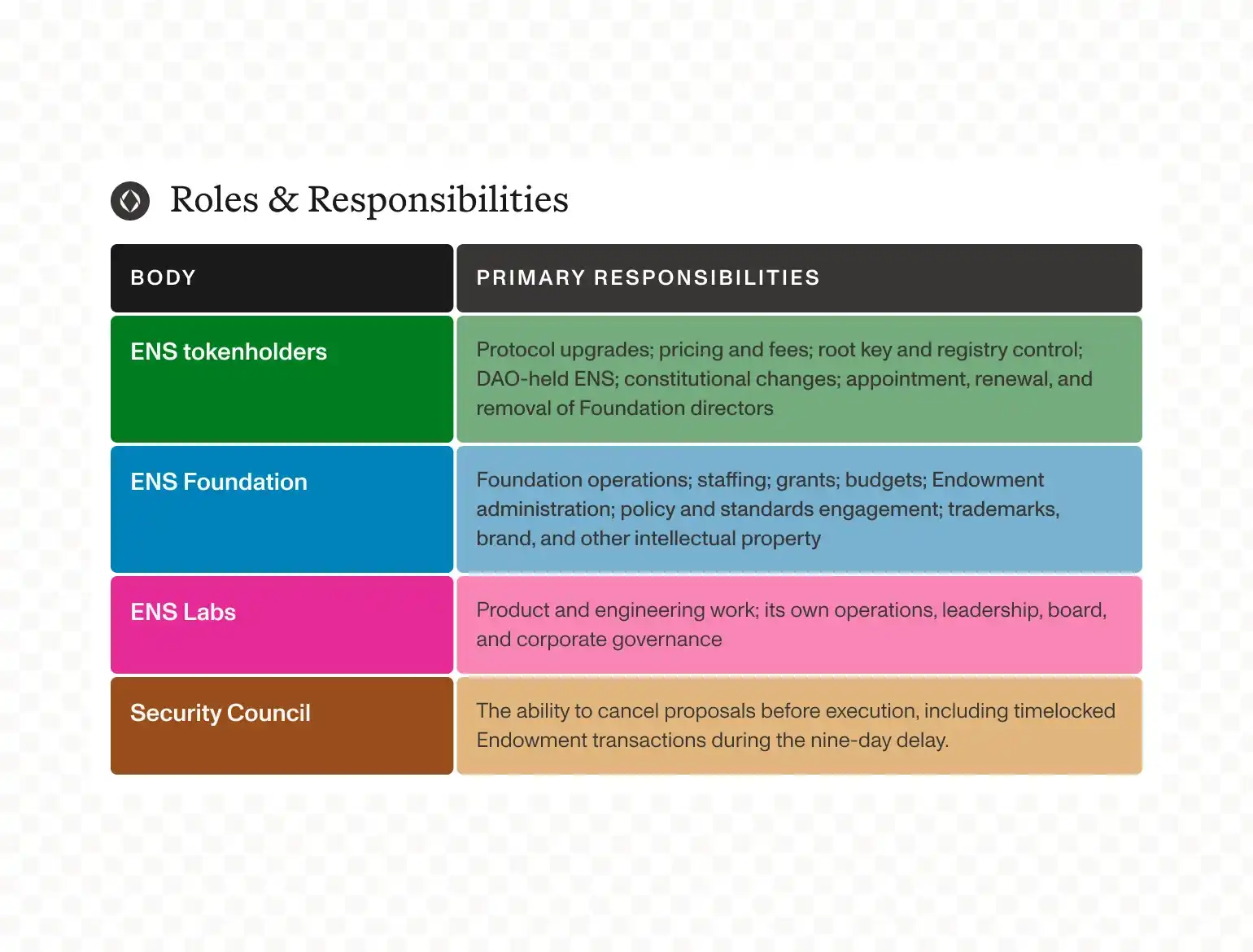
ENS Labs continues to lead core development of the ENS protocol, which is governed by token holders. Token holders also oversee the institutions representing them, including through the power to appoint or remove Foundation directors. The Foundation handles the off-chain work necessary to support the protocol, with its board responsible for overseeing operations and ensuring sustainable funding for ecosystem contributors, including ENS Labs. ENS Labs, the DAO, and the Foundation play different but complementary roles, aligned around the long-term stewardship of ENS. This symbiotic relationship makes ENS stronger while helping the on-chain protocol remain credibly neutral.

Foundation Board of Directors

The inaugural five-member board of the Foundation consists of:

  • Alexander Urbelis, Executive Director. Career spans cybersecurity law, DNS threat intelligence, and policy: former General Counsel & Chief Information Security Officer at ENS Labs, former Chief Information Security Officer at the NFL, former Chief Compliance Officer at Richemont.
  • Nick Johnson, Director. Founder of ENS, CEO of ENS Labs, previously at the Ethereum Foundation and Google.
  • Kartik Talwar, Independent Director. General Partner at A.Capital Ventures, Co-founder of ETHGlobal.
  • Brett Sun, Independent Director. Co-founder of Prelude, previously led technical work at Aragon, including early ENS integration AragonID.
  • Anthony Leutenegger, Independent Director. CEO of Aragon, a key ENS integrator, and also a delegate for Lido and Morpho.

Independent directors serve two-year terms, renewable by token holders. Each director brings distinct experience needed by ENS in this first term.

What Happens Next

Existing commitments will continue according to their agreed terms: stewards, active funding streams, grants, and current term commitments will persist. The Foundation will work with relevant parties to develop transition plans for grant programs, SPP3, and the current working group structure. Foundation positions will be publicly posted as staffing needs become clear.

With the proposal executed, the Foundation can begin fulfilling its approved operational, financial, policy, and institutional responsibilities. ENS Labs will continue to operate under its own management and governance, building ENSv2 and the products and infrastructure supporting the ENS protocol, while token holders retain control over protocol decisions and oversight of Foundation directors.

ENS aims to demonstrate that critical internet infrastructure can be credibly neutral, publicly governed, and outlast any single company. The complete governance record can be viewed in the executable proposal, on-chain votes, and execution transactions.


Kripto yang Sedang Tren

Pertanyaan Terkait

QWhat is the primary purpose of establishing the ENS Foundation as a legal entity?

ATo formally represent the ENS protocol in institutional settings, enabling it to engage in regulatory discussions, standard-setting organizations (like ICANN, IETF, W3C), and negotiate for the .ens top-level domain, which the DAO itself lacked the legal and operational capacity to do.

QHow does the new governance structure ensure that ENS token holders retain ultimate control over the protocol and the Foundation?

AToken holders control the core protocol contracts, treasury, and pricing via the DAO. They also have the power to appoint or remove the Foundation's Board of Directors. A 9-day timelock and the ENS Security Committee provide oversight for treasury transactions, and the Foundation must operate under a publicly approved budget with transparent financial reporting.

QWhat specific new capabilities does the ENS Foundation gain that the ENS DAO or ENS Labs could not previously perform?

AThe Foundation can now: 1) Actively participate in standard-setting bodies like ICANN to pursue the .ens TLD. 2) Engage directly with regulators and policymakers. 3) Hold and defend ENS trademarks and intellectual property against scams. 4) Hire full-time employees for operations and grant management. 5) Serve as a legal counterparty for courts, registries, and other institutions.

QWhat is the relationship between the ENS Foundation, ENS Labs, and the ENS DAO according to the new proposal?

AThey are three independent but complementary entities aligned around protecting and extending the ENS protocol. ENS Labs focuses on core protocol development (like ENSv2). The ENS DAO, governed by token holders, controls the protocol and treasury. The Foundation handles off-chain institutional representation and operations, overseen by a Board appointed by the DAO. The Foundation does not own or govern Labs.

QHow are the assets of the ENS DAO's endowment fund managed under the new structure, and what safeguards are in place?

AThe endowment fund, funded by .eth registration fees, remains under DAO control. Transactions now require a 9-day timelock, during which the ENS Security Committee can cancel any transaction deemed outside the Foundation's mandate. The Foundation spends only according to its publicly approved budget and undergoes annual audits and quarterly reporting.

Bacaan Terkait

Dua 'Paus' di ETH Jual Aset Senilai $63 Juta di Tengah Tekanan Penjual yang Menguat

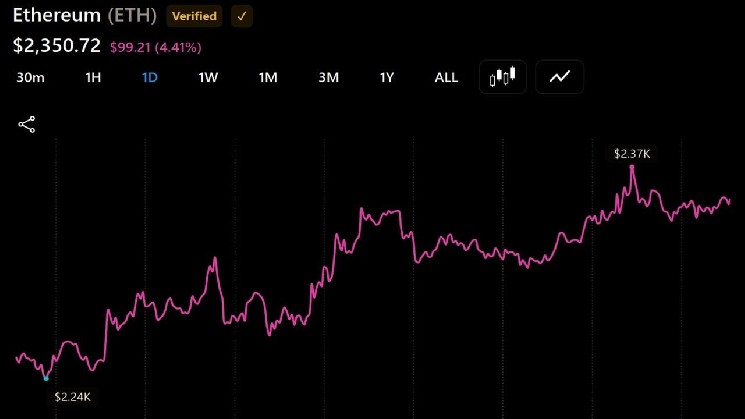
Platform analisis blockchain Lookonchain melaporkan bahwa dua "ikan paus" atau pemain besar telah menjual aset Ethereum ($ETH) senilai total sekitar $63 juta di tengah tekanan penjualan. Pemain pertama, yang dikenal sebagai "7 Siblings," menjual 14,000 $ETH senilai $32.85 juta dengan harga rata-rata $2,346. Entitas ini memiliki pola khas: membeli $ETH saat harga turun tajam dan kemudian mengambil keuntungan melalui transfer besar yang terkoordinasi. Meski masih menjadi salah satu dompet $ETH terbesar, aksi jualnya kali ini dianggap sebagai pengambilan keuntungan biasa. Beberapa jam kemudian, dompet anonim lain (0xFD10) menjual 11,252 stETH dan 1,824 $ETH, menghasilkan sekitar $30.78 juta. Berbeda dengan "7 Siblings", motif penjualan dompet ini kurang jelas. Penjualan besar-besaran ini merupakan bagian dari tren yang lebih luas, di mana pemegang jangka panjang dan trader swing memanfaatkan kenaikan harga dan stabilitas lokal untuk mengurangi posisi mereka. Meski terjadi penjualan, harga $ETH bertahan di sekitar $2,350, bahkan menunjukkan kenaikan dari level $2,286 beberapa jam sebelumnya. Aksi para "ikan paus" ini menjadi sorotan. Jika penjualan berlanjut dan harga tembus di bawah $2,300, perhatian bisa beralih ke zona $2,000. Namun, pemulihan harga yang berkelanjutan akan mengindikasikan bahwa penjualan Jumat lalu hanya pengambilan keuntungan sesaat, bukan awal dari fase distribusi yang lebih dalam.

cryptonews.ru31m yang lalu

Dua 'Paus' di ETH Jual Aset Senilai $63 Juta di Tengah Tekanan Penjual yang Menguat

cryptonews.ru31m yang lalu

MSX Pengamatan Harian Saham AS: Laporan Keuangan FY2027 Q1 Alibaba: Pertumbuhan Pendapatan AI Cloud Mencapai Rekor Tertinggi, AI Cloud Telah Mencapai Siklus Profitabilitas

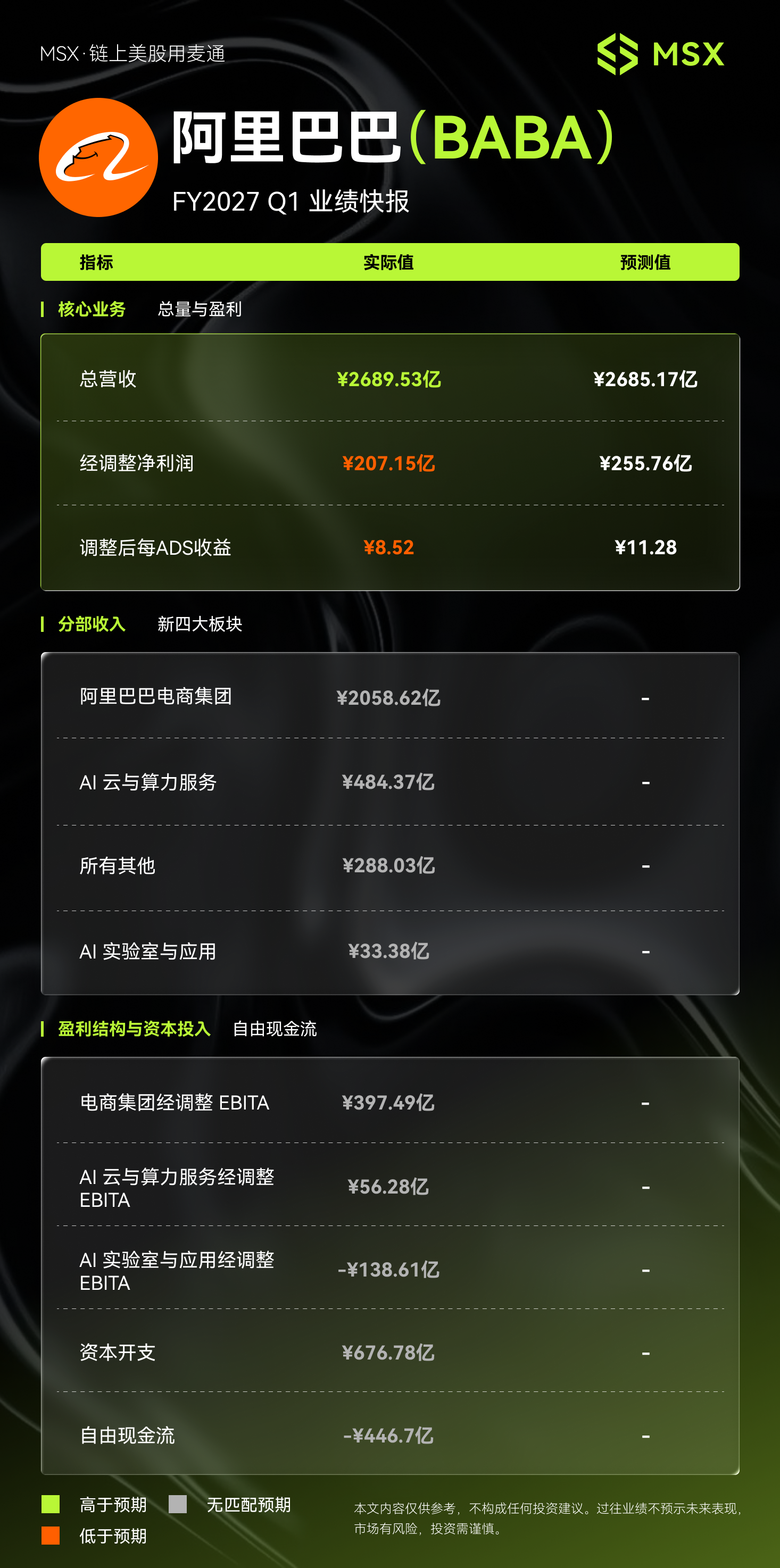
**Laporan Kuartal FY2027 Q1 Alibaba: Pendapatan AI Cloud Tumbuh Tertinggi, Untung Meningkat Pesat** Laporan keuangan Alibaba untuk kuartal pertama tahun fiskal 2027 (FY2027 Q1) menunjukkan pendapatan total Rp2.689,53 triliun, tumbuh 9% dan sedikit melampaui ekspektasi pasar. Namun, laba bersih yang disesuaikan turun 38% menjadi Rp207,15 triliun, terutama karena peningkatan investasi di bidang AI dan dua biaya satu kali: penyisihan denda EU Digital Services Act (Rp5,5 miliar euro) dan penurunan nilai goodwill (Rp44,58 triliun). Struktur bisnis menunjukkan pergeseran signifikan: * **AI Cloud & Layanan Komputasi** adalah bintang utama dengan pendapatan Rp484,37 triliun (naik 45%) dan EBITA yang disesuaikan melonjak 133% menjadi Rp56,28 triliun, dengan margin laba naik ke 12%. Ini menunjukkan bahwa bisnis AI Cloud sudah mencapai siklus profitabilitas. * **Grup E-niaga Alibaba** mengalami diferensiasi internal: **Ritel Instan** di Tiongkok tumbuh kuat sebesar 45% menjadi Rp532,95 triliun, hampir sepenuhnya mengimbangi penurunan 8% pada **E-niaga Tradisional** Tiongkok (Rp1.109,00 triliun). * **AI Lab & Aplikasi** masih dalam fase investasi, mencatat kerugian disesuaikan Rp138,61 triliun. Arus kas bebas menjadi negatif Rp446,70 triliun karena pengeluaran modal yang melonjak 75% menjadi Rp676,78 triliun, mencerminkan investasi agresif dalam infrastruktur AI dan komputasi. Meski demikian, arus kas dari operasi tetap tumbuh 11% menjadi Rp229,45 triliun, menunjukkan bahwa pembakaran uang tunai adalah pilihan strategis, bukan akibat operasi yang buruk. Intinya, meski laba turun secara keseluruhan, inti pertumbuhan dan profitabilitas baru Alibaba (AI Cloud, Ritel Instan) tampak kuat. Tantangan ke depan adalah apakah perbaikan profitabilitas AI Cloud dapat mengimbangi kecepatan depresiasi dari investasi komputasi besar-besaran ini.

Odaily星球日报36m yang lalu

MSX Pengamatan Harian Saham AS: Laporan Keuangan FY2027 Q1 Alibaba: Pertumbuhan Pendapatan AI Cloud Mencapai Rekor Tertinggi, AI Cloud Telah Mencapai Siklus Profitabilitas

Odaily星球日报36m yang lalu

MSX Observasi Harian Saham AS: Laporan Keuangan Walmart FY2027 Q2: Pendapatan dan Laba Melebihi Ekspektasi, Pertumbuhan Penjualan Toko Sejenis AS Tercatat Terendah Lebih dari Enam Tahun

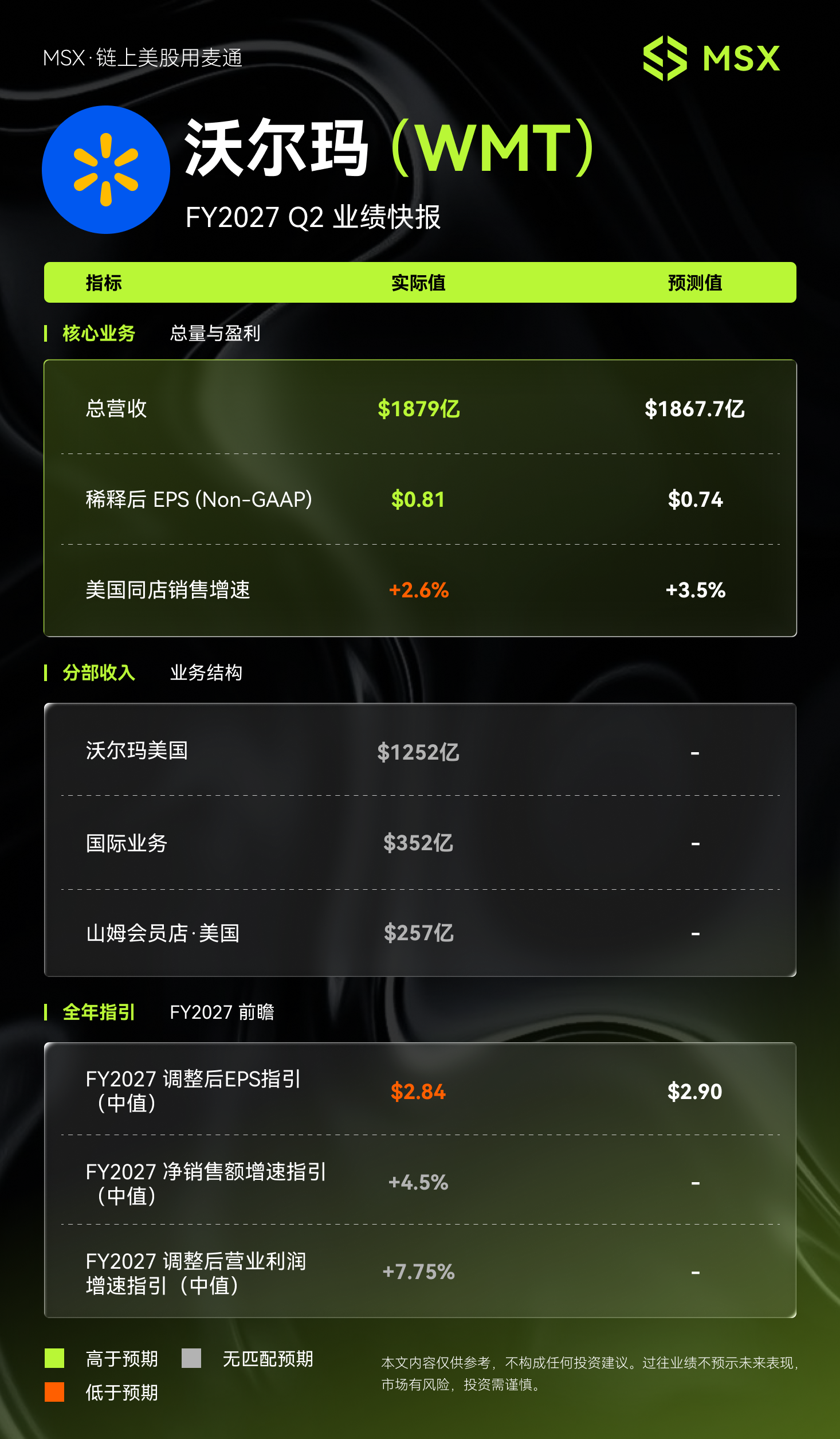
**MSX Tinjauan Harian Saham AS: Laporan Keuangan Walmart FY2027 Q2: Pendapatan dan Laba Melebihi Ekspektasi, Pertumbuhan Penjualan Toko Sama di AS Mencatat Level Terendah Lebih dari 6 Tahun** Laporan keuangan Walmart untuk kuartal kedua tahun fiskal 2027 menunjukkan hasil yang beragam. Di satu sisi, perusahaan berhasil melampaui ekspektasi pasar dengan pendapatan total $187,9 miliar (naik 5,9%) dan laba per saham disesuaikan sebesar $0,81 (naik 19%). Kinerja segmen bisnis berbiaya tinggi seperti e-commerce global (naik 23%), iklan global (naik 38%), dan platform pihak ketiga AS (naik 52%) juga tetap kuat, mendorong margin keuntungan. Namun, di sisi lain, pertumbuhan penjualan toko sama (*same-store sales*) di AS hanya sebesar 2,6%, jauh di bawah ekspektasi dan menjadi yang terendah dalam lebih dari enam tahun. Perusahaan menyebutkan deflasi harga di departemen farmasi sebagai penyebab utama, memberikan tekanan sekitar 125 basis poin. Pola ini mengindikasikan perilaku konsumen yang lebih berhati-hati, di mana jumlah transaksi stabil tetapi nilai belanja per transaksi menurun. Walmart juga meningkatkan panduan kinerja untuk seluruh tahun fiskal, termasuk perkiraan pertumbuhan penjualan bersih dan laba per saham yang disesuaikan. Meski demikian, batas atas panduan laba per saham yang baru ($2,87) masih sedikit di bawah ekspektasi konsensus pasar ($2,90). Hal ini menandakan bahwa sinyal perlambatan momentum pertumbuhan inti, terutama di ritel fisik AS, lebih kuat dibandingkan dengan keberhasilan kuartal ini. Tantangan ke depan adalah apakah ekspansi bisnis berbiaya tinggi dapat terus mengimbangi pelambatan di bisnis inti.

Odaily星球日报36m yang lalu

MSX Observasi Harian Saham AS: Laporan Keuangan Walmart FY2027 Q2: Pendapatan dan Laba Melebihi Ekspektasi, Pertumbuhan Penjualan Toko Sejenis AS Tercatat Terendah Lebih dari Enam Tahun

Odaily星球日报36m yang lalu

Trading

Spot

Artikel Populer

Cara Membeli ENS

Selamat datang di HTX.com! Kami telah membuat pembelian Ethereum Name Service (ENS) menjadi mudah dan nyaman. Ikuti panduan langkah demi langkah kami untuk memulai perjalanan kripto Anda.Langkah 1: Buat Akun HTX AndaGunakan alamat email atau nomor ponsel Anda untuk mendaftar akun gratis di HTX. Rasakan perjalanan pendaftaran yang mudah dan buka semua fitur.Dapatkan Akun SayaLangkah 2: Buka Beli Kripto, lalu Pilih Metode Pembayaran AndaKartu Kredit/Debit: Gunakan Visa atau Mastercard Anda untuk membeli Ethereum Name Service (ENS) secara instan.Saldo: Gunakan dana dari saldo akun HTX Anda untuk melakukan trading dengan lancar.Pihak Ketiga: Kami telah menambahkan metode pembayaran populer seperti Google Pay dan Apple Pay untuk meningkatkan kenyamanan.P2P: Lakukan trading langsung dengan pengguna lain di HTX.Over-the-Counter (OTC): Kami menawarkan layanan yang dibuat khusus dan kurs yang kompetitif bagi para trader.Langkah 3: Simpan Ethereum Name Service (ENS) AndaSetelah melakukan pembelian, simpan Ethereum Name Service (ENS) di akun HTX Anda. Selain itu, Anda dapat mengirimkannya ke tempat lain melalui transfer blockchain atau menggunakannya untuk memperdagangkan mata uang kripto lainnya.Langkah 4: Lakukan trading Ethereum Name Service (ENS)Lakukan trading Ethereum Name Service (ENS) dengan mudah di pasar spot HTX. Cukup akses akun Anda, pilih pasangan perdagangan, jalankan trading, lalu pantau secara real-time. Kami menawarkan pengalaman yang ramah pengguna baik untuk pemula maupun trader berpengalaman.

520 Total TayanganDipublikasikan pada 2024.12.10Diperbarui pada 2026.06.02

Cara Membeli ENS

Diskusi

Selamat datang di Komunitas HTX. Di sini, Anda bisa terus mendapatkan informasi terbaru tentang perkembangan platform terkini dan mendapatkan akses ke wawasan pasar profesional. Pendapat pengguna mengenai harga ENS (ENS) disajikan di bawah ini.

活动图片