DeepSeek is building its own chip!
Goal: Reduce reliance on NVIDIA.
According to Reuters, this Chinese AI company, which has shaken Silicon Valley with its model algorithms, is secretly developing a self-developed AI chip.

The chip is positioned for inference rather than training, and the project is estimated to have started about a year ago.
Currently, the project is still in its early stages. Sources reveal that DeepSeek has already engaged with chip design companies, wafer foundries, and memory suppliers.
From Algorithm Company to Hardware Player
DeepSeek has always been labeled as a company focused on extreme optimization of algorithms.
From the R1 inference model that ignited the world in January 2025 to the later V4 series adapted for Huawei's Ascend, this company has consistently demonstrated the ability to do more with less computing power.
But now, it is stepping onto the hardware field itself.
Informed sources reveal that DeepSeek has been recruiting chip design engineers in recent months, but the recruitment method has been extremely low-key, with no job postings on any public recruitment platforms.

It's not an isolated case for model companies to develop their own chips.
Globally, it has become a trend for AI model companies to develop their own chips. Last month, OpenAI just announced its first custom inference chip Jalapeño developed in cooperation with Broadcom, and Anthropic was also reported in April this year to be considering developing its own AI chip.

In a rare media interview in 2024, DeepSeek founder Liang Wenfeng revealed that chip shortages posed a challenge to the company.
The foundation of the R1 model was trained on NVIDIA H800s. Subsequently, DeepSeek shifted to Huawei's Ascend. The V4 model released this April has already been adapted for Ascend chips, and Huawei also confirmed that its processors participated in part of the training of V4-Flash.
But putting eggs in two baskets is still not enough for DeepSeek.

DeepSeek's self-developed chip is specifically designed for inference.
As AI applications are deployed on a large scale, the focus of industry computing power demand is rapidly shifting from training to inference. Training is a one-time investment, while inference is an ongoing consumption. Every query from every user requires inference computing power to respond.
Dedicated chips customized for inference scenarios can achieve lower power consumption and lower unit costs compared to general-purpose GPUs, which is crucial for an AI company moving towards commercialization.
DeepSeek has already laid the groundwork for hardware-software co-design at the model architecture level.
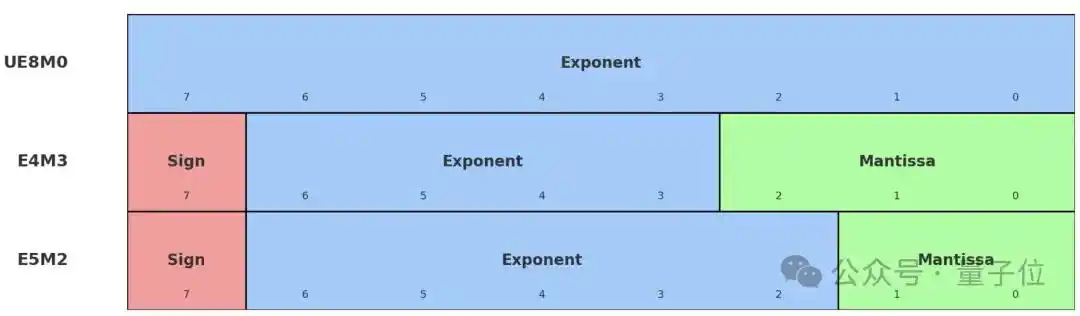
The UE8M0 FP8 data format introduced in DeepSeek-V3.1 is believed to be specifically designed for the hardware characteristics of next-generation domestic chips. The algorithm team was thinking about chips while writing the model.
However, the challenges are equally immense. Designing a competitive AI chip typically requires several years and massive capital investment, and success cannot be guaranteed at this stage.
51 Billion Yuan Funding Secured, Computing Infrastructure Simultaneously Deployed
This plan is backed by real money.
In June 2026, DeepSeek completed its first external financing round since its founding, raising approximately 51 billion yuan (about $7.4 billion), with a post-investment valuation between $52 billion and $59 billion. The company, which had refused external investment for many years, opening up to financing itself represents a major strategic shift.
The use of funds is already clear: expanding computing centers primarily based on domestic chips, developing self-developed AI chips, and expanding the team of global top talent.
Infrastructure-level actions are also advancing. DeepSeek has released job postings for IDC design and planning engineers, planning to participate in the planning and construction of data centers ranging from megawatt to gigawatt scale. The recruitment information explicitly mentions construction locations such as Ulanqab in Inner Mongolia.

DeepSeek itself maintains its characteristic low profile. Three informed sources all requested anonymity, and the company has not made any public response.
Nevertheless, this company, which has changed the pace of global AI competition, is now aiming to change the hardware foundation beneath its feet.
Reference Links:
[1]https://www.reuters.com/world/china/chinas-deepseek-developing-its-own-ai-chip-sources-say-2026-07-07/
This article is from the WeChat public account "QbitAI", author: Meng Chen