The Arrival of 'Tokenpocalypse': When Costs Outweigh Productivity Gains, Who Pays the Bill?

marsbitDipublikasikan tanggal 2026-06-10Terakhir diperbarui pada 2026-06-10

Abstrak

The article discusses the emergence of the term "Tokenpocalypse" (Token Doomsday), triggered by Microsoft's shift to a token-based pricing model for GitHub Copilot on June 1st. This change introduces significant cost multipliers between different AI models, with some premium models becoming up to 60 times more expensive per token. As leading AI companies like Anthropic and OpenAI prepare for IPOs, increasing profit pressures may lead more vendors to raise prices. This creates a dilemma for enterprises. Companies that once encouraged or mandated high AI token usage to boost productivity now face budget overruns under the new pricing. The lack of granular per-employee token limits means a single developer could exhaust a company's monthly budget. This forces a paradoxical situation where employees are criticized for both using too little and too much AI. The piece cites Uber as a case study, where AI budget depletion led to rapid implementation of usage caps. It highlights the growing disconnect between AI utility and cost, noting that even initial pricing for services like ChatGPT Plus was somewhat arbitrary. The industry now grapples with balancing AI's productivity gains against its escalating expenses. Ultimately, the article suggests the focus is shifting from fears of "AI replacing jobs" to the reality of "AI consuming budgets." The mental overhead and operational hours spent managing token costs are beginning to undermine the very productivity benefits AI promises. Th...

A new term has recently sparked widespread discussion: "Tokenpocalypse."

The trigger was Microsoft's pricing restructuring for GitHub Copilot. Starting June 1st, Copilot has fully transitioned to a token-based billing model. The token cost multipliers differ drastically between various models, with some models costing 60 times more per token than others.

And the advanced models widely regarded by users as "truly effective" are precisely the ones experiencing the most severe price hikes.

As leading AI companies like Anthropic and OpenAI prepare for IPOs, AI firms will face increasingly intense profitability pressures, which may compel more vendors to follow suit with price increases.

The cost of using AI is an inevitable issue for enterprises expanding productivity. The recent "tokenmaxxing" trend, driven by competition over employee token usage, is approaching its end as Tokenpocalypse looms.

"The entire tokenmaxxxing craze, from rise to peak to disdain, lasted just six months."

The Corporate Dilemma

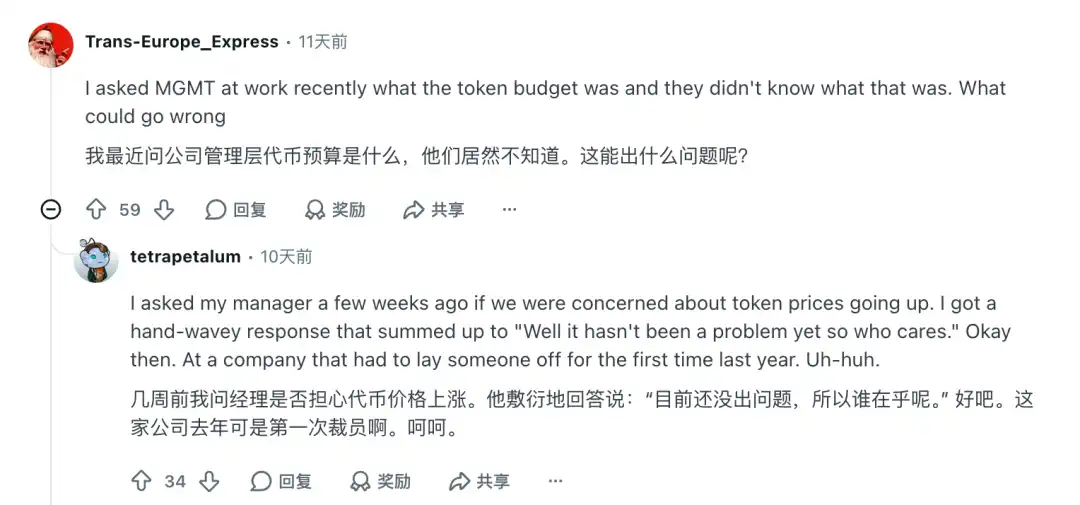
A developer from a large corporation described an absurd predicament: the company had long mandated employee use of AI tools, and using too few tokens would result in a meeting. But with the new pricing, using too many tokens now also leads to a meeting.
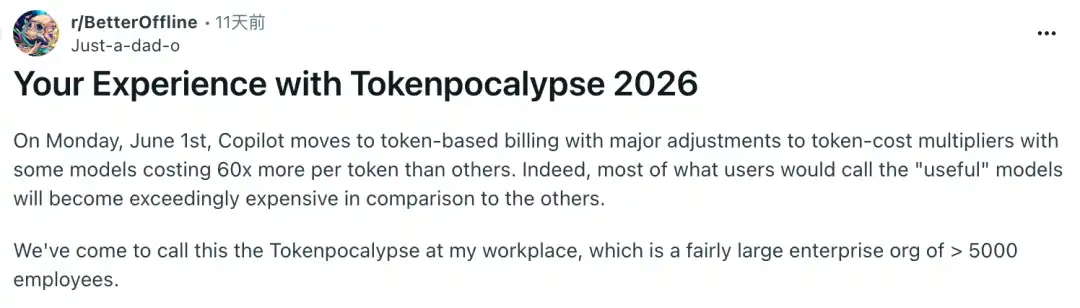
More critically, the Copilot team has yet to launch an "employee-level token quota" feature. This means that under the new billing model, a single employee could potentially exhaust the company's entire monthly token budget in one day.

"My job is no longer about using software to solve business problems," the developer wrote. "My job has become solving the token usage problem."
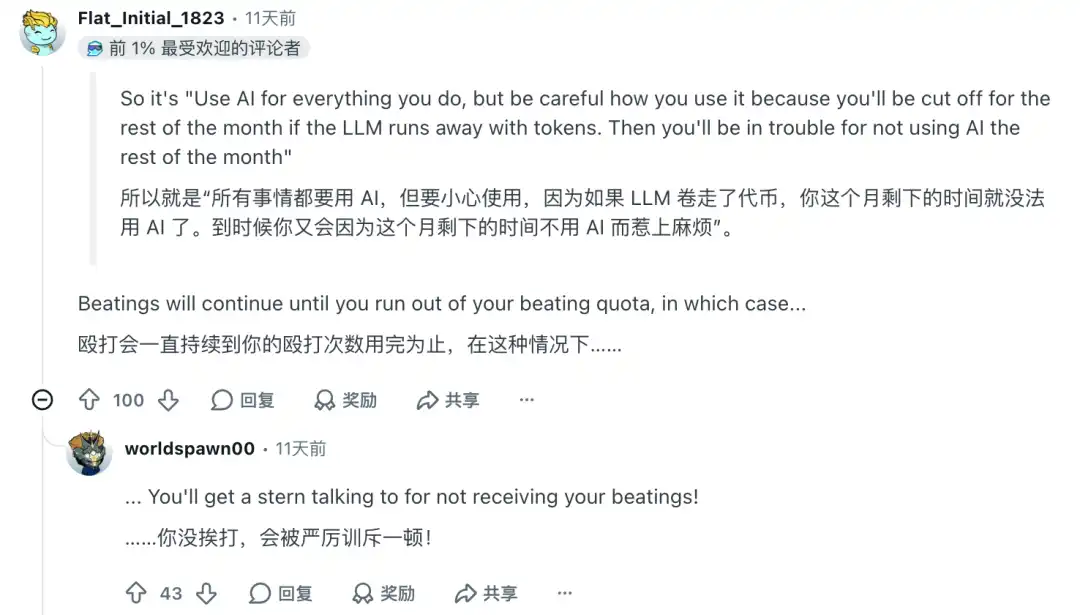
The comments section offers even more gems. One user summarized it: "Company policy became: 'Use AI for everything, but be careful not to use too much, because if the LLM consumes too many tokens you'll be deactivated, and then you'll be criticized for not using AI for the rest of the month.'"

A company's excessive focus on AI productivity can also be a double-edged sword.
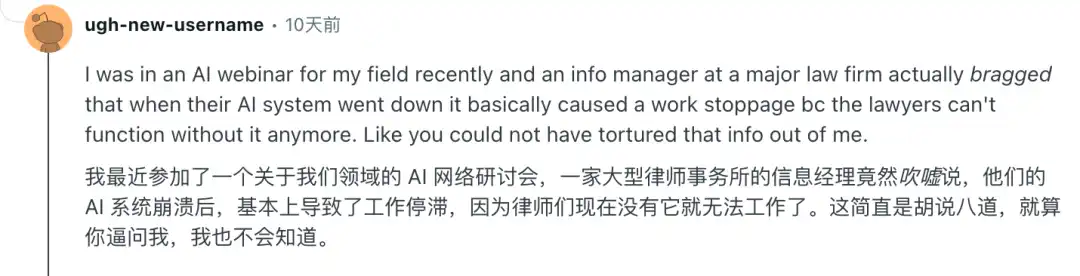
An information director from a major law firm even "boasted" at an AI seminar: after their AI system crashed, the lawyers were essentially at a standstill, as they could no longer work without AI.

"A person trained for years in a specialized field freely admits they can't work without an AI chatbox? I'd be so ashamed I'd start re-evaluating my entire career."

The Uber Overspend Incident: An Industry Microcosm

Most AI models now have usage packages, but the issue of budget control becomes more severe as tokens increasingly trend towards pay-as-you-go pricing.
Uber completed a full arc in just one and a half months: first discovering that "the AI budget was burning much faster than anticipated," then urgently implementing usage caps and employee restrictions.
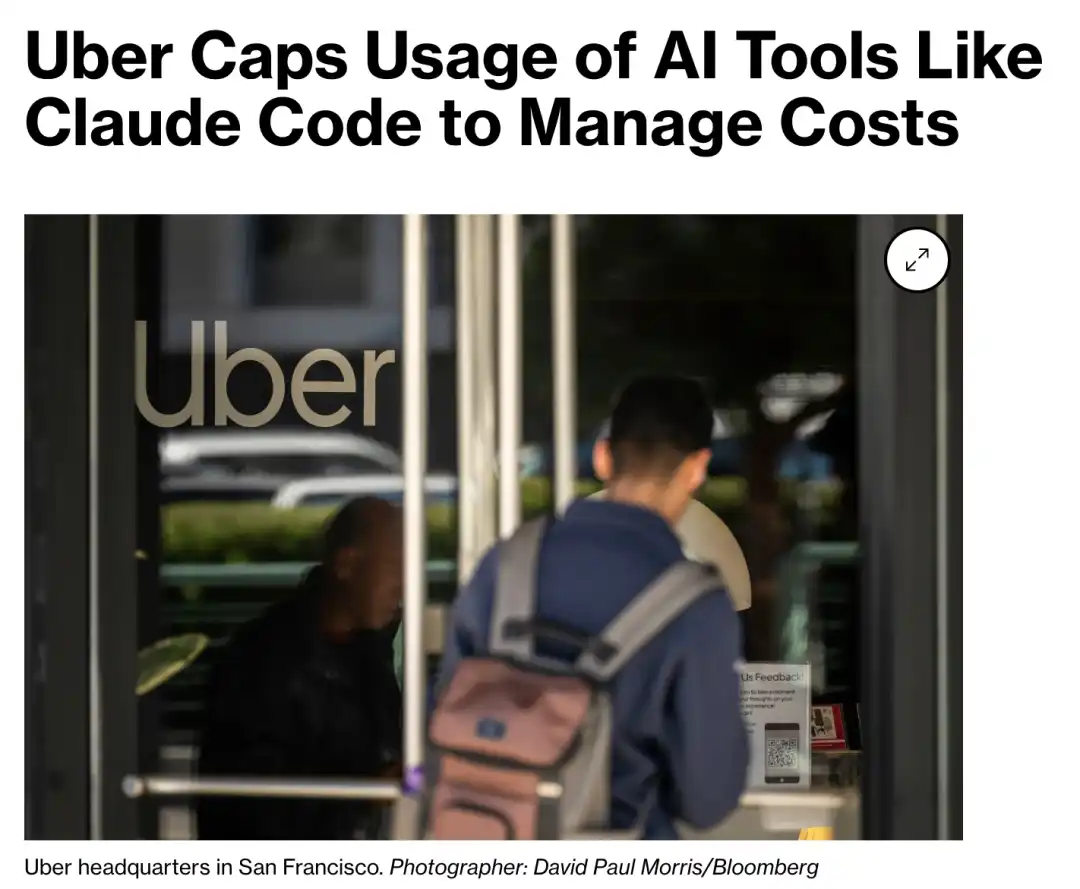
"Imagine a company as heavily reliant on AI as Uber hitting a wall this quickly," was discussed on a TechCrunch podcast. "The question is: Can AI labs bring costs down to meet customers' willingness to pay?"

A little-known fact: When ChatGPT Plus was initially priced at $20/month, there wasn't much strategic consideration; "they just threw out a number." The entire industry is still paying for that starting point.

"Your Job Won't Be Replaced by AI, But Your Budget Might"

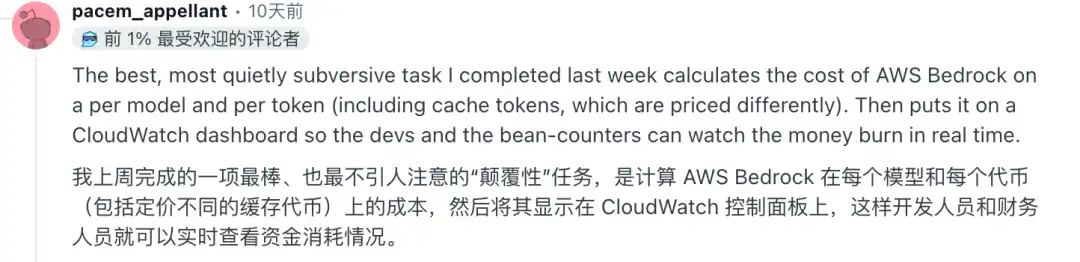
There are more thought-provoking details on Reddit. Someone built an AWS Bedrock cost monitoring dashboard at their company, displaying real-time spending per model and per token (including cached tokens) on CloudWatch, "so developers and finance can watch the money burn together." The comment section's reaction was: "Congratulations, you just gave them a new KPI."
Another large company has already faced similar tightening: after AI credits ran out, everyone was forcibly downgraded to GPT-4.2, losing even the VSCode integration.

An observer from outside the tech industry voiced a sentiment shared by many: "The mental energy and actual man-hours this whole thing consumes have already started impacting the delivery of work that actually makes the company money."

While the entire industry remains immersed in the narrative that "AI will replace everything," a more realistic question has surfaced: the bill for compute power must ultimately be paid. And "Tokenpocalypse" might just be the beginning of this reckoning.


Kripto yang Sedang Tren

Pertanyaan Terkait

QWhat is 'Tokenpocalypse' and what event triggered its discussion?

A'Tokenpocalypse' or 'Token Doomsday' refers to a scenario where the rising costs of using AI tokens begin to outweigh their productivity benefits. The discussion was triggered by Microsoft's pricing overhaul for GitHub Copilot, which, starting June 1, shifted entirely to a token-based billing model with significant cost disparities between models.

QWhat is the 'absurd dilemma' faced by enterprises regarding AI tool usage as described in the article?

AThe article describes an absurd dilemma where companies have previously mandated employees to use AI tools, reprimanding those who used too few tokens. However, with the new pricing model, employees are now also reprimanded for using too many tokens, putting them in a 'damned if you do, damned if you don't' situation.

QWhat key functionality does GitHub Copilot currently lack, according to the article, and what is its potential consequence under the new pricing?

AAccording to the article, GitHub Copilot's team has not yet implemented an 'employee-level token limit' feature. This means that under the new pay-per-use model, a single employee could potentially exhaust the company's entire monthly token budget in one day.

QHow does the Uber case illustrate a broader industry problem with AI costs?

AThe Uber case serves as an industry microcosm. The company discovered its AI budget was being depleted much faster than anticipated within just a month and a half, forcing it to hastily implement usage caps and employee restrictions. This highlights the challenge of unpredictable and escalating AI operational costs even for large, tech-savvy companies.

QAccording to the article's conclusion, what is the more immediate and realistic threat compared to the narrative of 'AI replacing everything'?

AThe article concludes that a more immediate and realistic threat than 'AI replacing everything' is the financial burden of the compute bill. The 'Tokenpocalypse' represents the beginning of a financial reckoning where someone ultimately has to pay for the computational power, potentially impacting budgets and work delivery more directly than job replacement.

Bacaan Terkait

Mundur Terhitung: GPT-5.6 – Tinggalkan Khayalan API Tunggal, Iterasi Daya Komputasi Secepat Apa Pun Takkan Lawan Satu Aturan Kepatuhan

Pada pertengahan Juni, tiga peristiwa industri — pembatasan akses Fable 5 karena kepatuhan regulasi, pengumuman open-source GLM-5.2, dan kebocoran tanggal rilis GPT-5.6 — menandai titik balik dalam industri AI global. Logika dasarnya telah berubah: Pertama, **"ketersediaan" kini lebih penting daripada "kemajuan teknis"**, dengan rantai pasok model besar memasuki fase "sistem ganda": model tertutup yang dikontrol dan model open-source lokal. Kedua, **penghalang kompetisi raksasa model tertutup bergeser**. Fokus teknis beralih dari "kecerdasan bahasa" ke "kecerdasan spasial (model dunia)" yang sangat bergantung pada komputasi. Ketiga, menghadapi risiko kepatuhan regulasi lintas batas yang常态, **desain arsitektur "model-agnostic" telah menjadi kebutuhan dasar bagi pengembang aplikasi untuk menjaga keberlanjutan bisnis**. Fable 5 (Anthropic) dibatasi aksesnya bagi non-warga AS hanya 72 jam setelah diluncurkan, menunjukkan bahwa kemajuan teknologi kini berbanding lurus dengan risiko regulasi. Di sisi lain, model open-source seperti GLM-5.2 menawarkan peningkatan kinerja yang stabil dan keunggulan biaya signifikan (hingga 90% lebih murah), sekaligus menjadi cadangan penting untuk manajemen risiko kepatuhan perusahaan global. Sementara itu, GPT-5.6 dikabarkan akan fokus pada "kecerdasan spasial" atau "model dunia", berusaha membangun keunggulan baru di bidang seperti simulasi industri dan robotika yang membutuhkan daya komputasi masif. Kesimpulannya, logika evaluasi infrastruktur AI telah berubah dari sekadar kinerja teknis menjadi pertimbangan gabungan antara kinerja, kepatuhan regulasi, dan stabilitas akses. Bagi pengembang, ketergantungan pada API tertutup tunggal mengandung risiko tinggi. Menerapkan arsitektur "model-agnostic" untuk memungkinkan peralihan cepat ke alternatif open-source lokal telah menjadi prinsip dasar untuk menjaga kelangsungan bisnis.

marsbit3j yang lalu

Mundur Terhitung: GPT-5.6 – Tinggalkan Khayalan API Tunggal, Iterasi Daya Komputasi Secepat Apa Pun Takkan Lawan Satu Aturan Kepatuhan

marsbit3j yang lalu

Perang Subsidi Token "Raksasa AI", Sudah Hampir Selesai?

Perang subsidi token antara raksasa AI seperti Google, OpenAI, dan Anthropic mungkin tidak akan segera berakhir, tetapi sifatnya berbeda dari perang subsidi era internet. Analisis dari SemiAnalysis menunjukkan bahwa harga token saat ini sebenarnya sudah sangat disubsidi, dengan paket berlangganan AI premium bahkan mungkin disubsidi hingga 70 kali lipat dari biaya berlangganannya. Namun, tidak seperti layanan seperti taksi online atau pengiriman makanan, token AI hampir tidak memiliki efek "penguncian" (*lock-in effect*). Pengguna dan pengembang dapat dengan mudah beralih antara model AI karena API yang semakin standar. Ini berarti begitu subsidi dihentikan dan harga dinaikkan, pengguna bisa langsung beralih. Bill Maris dari Google Ventures memprediksi dengan keyakinan 100% bahwa Google, dengan pendapatan iklannya yang besar, bisa memotong harga token hingga 80% sebagai senjata. Bagi OpenAI dan Anthropic yang bergantung pada pendanaan investor, hal ini akan menjadi tekanan bisnis yang berat, terutama setelah mereka masuk bursa dan harus menunjukkan profitabilitas. Dua skenario akhir yang mungkin adalah: 1) skenario monopolistik ala internet di mana satu pemenang muncul dan kemudian menaikkan harga, atau 2) skenario "listrik-air-bahan bakar" di mana token menjadi infrastruktur dasar yang terstandarisasi dengan margin keuntungan yang sangat tipis. Artikel berargumen bahwa skenario kedua lebih mungkin karena kurangnya efek penguncian pada token AI. Kompetisi ini mungkin bukan perang untuk dimenangkan, melainkan permainan tanpa akhir untuk tetap berada di meja permainan. Bagi pengguna, selama perang subsidi ini berlanjut, mereka akan terus menikmati akses ke kemampuan AI canggih dengan biaya yang sangat terjangkau dibandingkan dengan biaya komputasi sebenarnya.

marsbit4j yang lalu

Perang Subsidi Token "Raksasa AI", Sudah Hampir Selesai?

marsbit4j yang lalu

Trading

Spot
Futures

Artikel Populer

Cara Membeli BILL

Selamat datang di HTX.com! Kami telah membuat pembelian Billions Network (BILL) menjadi mudah dan nyaman. Ikuti panduan langkah demi langkah kami untuk memulai perjalanan kripto Anda.Langkah 1: Buat Akun HTX AndaGunakan alamat email atau nomor ponsel Anda untuk mendaftar akun gratis di HTX. Rasakan perjalanan pendaftaran yang mudah dan buka semua fitur.Dapatkan Akun SayaLangkah 2: Buka Beli Kripto, lalu Pilih Metode Pembayaran AndaKartu Kredit/Debit: Gunakan Visa atau Mastercard Anda untuk membeli Billions Network (BILL) secara instan.Saldo: Gunakan dana dari saldo akun HTX Anda untuk melakukan trading dengan lancar.Pihak Ketiga: Kami telah menambahkan metode pembayaran populer seperti Google Pay dan Apple Pay untuk meningkatkan kenyamanan.P2P: Lakukan trading langsung dengan pengguna lain di HTX.Over-the-Counter (OTC): Kami menawarkan layanan yang dibuat khusus dan kurs yang kompetitif bagi para trader.Langkah 3: Simpan Billions Network (BILL) AndaSetelah melakukan pembelian, simpan Billions Network (BILL) di akun HTX Anda. Selain itu, Anda dapat mengirimkannya ke tempat lain melalui transfer blockchain atau menggunakannya untuk memperdagangkan mata uang kripto lainnya.Langkah 4: Lakukan trading Billions Network (BILL)Lakukan trading Billions Network (BILL) dengan mudah di pasar spot HTX. Cukup akses akun Anda, pilih pasangan perdagangan, jalankan trading, lalu pantau secara real-time. Kami menawarkan pengalaman yang ramah pengguna baik untuk pemula maupun trader berpengalaman.

229 Total TayanganDipublikasikan pada 2026.05.07Diperbarui pada 2026.06.02

Cara Membeli BILL

Diskusi

Selamat datang di Komunitas HTX. Di sini, Anda bisa terus mendapatkan informasi terbaru tentang perkembangan platform terkini dan mendapatkan akses ke wawasan pasar profesional. Pendapat pengguna mengenai harga BILL (BILL) disajikan di bawah ini.

活动图片