Polymarket 2025: In-Depth Report on Six Profit Models, Starting from 95 Million On-Chain Transactions

marsbitDipublikasikan tanggal 2025-12-29Terakhir diperbarui pada 2025-12-29

Abstrak

This report analyzes six proven profit strategies on Polymarket, a decentralized prediction market with over 95 million transactions and $21.5 billion in nominal volume in 2025. Based on an analysis of 86 million on-chain transactions, the strategies are: 1. **Information Arbitrage**: Exemplified by a French trader who made $85M on the 2024 US election by conducting unique "neighbor effect" polls, exploiting systematic market pricing errors. 2. **Cross-Platform Arbitrage**: Earning risk-free profits by capitalizing on price discrepancies for the same event across different prediction markets (e.g., Polymarket vs. Kalshi), netting over $40M collectively. 3. **High-Probability "Bonding"**: Consistently buying high-probability outcomes (e.g., >95% certainty) for steady, short-term returns, with potential yields exceeding 1800% annualized. 4. **Liquidity Providing (LP)**: Acting as a market maker to earn spreads and rewards, though returns have diminished post-2024 election due to increased competition and lower rewards. 5. **Domain Specialization**: Achieving high win rates (e.g., 96%) by developing deep expertise in a niche area (e.g., sports, specific event mentions), making infrequent but high-conviction bets. 6. **Speed Trading**: Using automated systems and low-latency tech to profit from brief information advantages, a strategy increasingly dominated by institutional players. The analysis concludes that successful traders systematically identify market inefficienci...

Original Author: Lin Wanwan's Cat (X: @linwanwan823)

On the night of the 2024 U.S. election, a French trader netted $85 million on Polymarket.

This figure surpassed the annual performance of the vast majority of hedge funds.

Polymarket, a decentralized prediction market that has processed over $9 billion in trading volume and attracted 314,000 active traders, is redefining the boundaries of "voting with money."

But first, we must be honest: prediction markets are a zero-sum game.

Only 0.51% of Polymarket wallets have achieved profits exceeding $1,000.

So, what did the winners do right?

I recently wrote a series of strategies and attempted to systematically analyze over 86 million on-chain transactions,

(Data is based on academic research from IMDEA Networks Institute, covering complete on-chain records of over 86 million transactions and 17,218 market conditions from April 1, 2024, to April 1, 2025.

According to Dune Analytics data, Polymarket processed over 95 million transactions in 2025, with a nominal trading volume exceeding $21.5 billion, though there is some double-counting.)

dissecting the position logic and entry/exit timing of top traders,

and summarizing six proven profitable strategies: from the French whale's "neighbor poll" information arbitrage to a high-probability bond strategy with 1800% annualized returns; from cross-platform spread capture to a niche specialization approach with a 96% win rate.

Our retrospective analysis reveals that the common trait of top traders is not "predictive ability,"

but three things:

systematically capturing market mispricing,近乎偏执的严格风险管理, and the patience to build a碾压级 information advantage in a single领域.

If you've read this far, I suspect that sooner or later in 2026, you will try it yourself.

Of course, this is not a guide on "how to gamble,"

but rather aims to provide a systematic strategic framework and replicable methodological reference for prediction market participants, especially beginners.

Keywords: Prediction Markets; Polymarket; Trading Strategies; Arbitrage; Risk Management; Blockchain

I will cover this in five parts. If you only want to see the strategies, jump directly to Part Three.

I. Research Background

II. Evaluation Dimensions and Criteria

III. Six Core Strategies for 2025

IV. Position Management and Strategy

V. Conclusion

I. Research Background

In October 2025, ICE, the parent company of the NYSE, wrote a $2 billion check to Polymarket, valuing it at $9 billion.

A month later, Polymarket acquired a CFTC-licensed exchange, officially returning to the U.S. The "gray area project" expelled by regulators three years prior had become a darling of traditional finance.

The turning point was the 2024 election.

When all mainstream polls were saying "too close to call," Polymarket's odds steadily pointed to Trump. $3.7 billion in bets ultimately predicted the result earlier and more accurately than professional polling agencies. Academia began re-examining an old question: Does forcing people to "put their money where their mouth is" truly elicit more honest judgments?

The first thirty years of the internet created three types of infrastructure: search engines tell you "what happened," social media tells you "what others think," and algorithmic recommendations tell you "what you might want to see." But one piece was always missing: a place that could reliably answer "what will happen next."

Polymarket is filling this gap and has become crypto's first truly breakout application, targeting the rigid demand for "information pricing."

When media outlets start checking odds before writing news, when investors start consulting the market for decisions, when political teams start monitoring Polymarket instead of polls.

It is evolving from gambling toward a form of "pricing consensus."

A market that makes Wall Street pay, regulators relent, and polls sweat is worth serious study.

II. Research Methods and Evaluation Criteria

2.1 Data Sources

This study uses multiple data sources for cross-validation:

(1) Polymarket official leaderboard data;

(2) Polymarket Analytics third-party analysis platform (updated every 5 minutes);

(3) PolyTrack trader tracking tool;

(4) Dune Analytics on-chain data dashboard;

(5) Chainalysis blockchain analysis reports.

Data covers the complete on-chain records of over 86 million transactions and 17,218 market conditions from April 2024 to December 2025.

2.2 Evaluation Dimensions and Weights

Strategy evaluation uses a multi-dimensional comprehensive assessment system, including:

Absolute Profitability (Weight 30%):

Core metric is cumulative profit and loss (PnL),统计策略产生的总利润金额. Data shows that wallets with PnL exceeding $1,000 account for only 0.51% of the total, and whale accounts with trading volume over $50,000 account for only 1.74%.

Risk-Adjusted Returns (Weight 25%):

Calculating metrics like Return on Investment (ROI) and Sharpe Ratio. Excellent traders typically maintain a 60-70% win rate while controlling single-position risk exposure to 20-40% of total capital.

Strategy Replicability (Weight 20%):

Assessing the systematic and rule-based nature of the strategy. Profits purely reliant on insider information or luck are excluded.

Sustainability and Stability (Weight 15%):

Examining the strategy's consistency across different market cycles, excluding "one-hit wonder" gambling-style gains.

Scalability (Weight 10%):

Analyzing the strategy's applicability at larger capital scales, considering liquidity constraints and market impact costs.

2.3 Exclusion Criteria

The following situations are excluded from the best strategy评选:

(1) Suspected market manipulation, such as the UMA token governance attack in March 2025, where a whale holding 5 million UMA tokens (25% voting power) manipulated the settlement of a market worth $7 million;

(2) Gambling-style trades with single positions exceeding 40-50% of capital;

(3) Unverifiable or non-replicable "black box" strategies;

(4) Insider trading relying on non-public information.

III. Review of the Six Core Profit Strategies for 2025

1. Information Arbitrage Strategy: When a Frenchman Understood the Election Better Than All U.S. Polling Agencies

In the early hours of November 5, 2024, when CNN and Fox News anchors were still cautiously saying "the race is tight,"

an anonymous account, Fredi9999, was already showing an unrealized gain of over $50 million.

A few hours later, Trump declared victory. This account, along with its 10 associated wallets, ultimately harvested $85 million in profits.

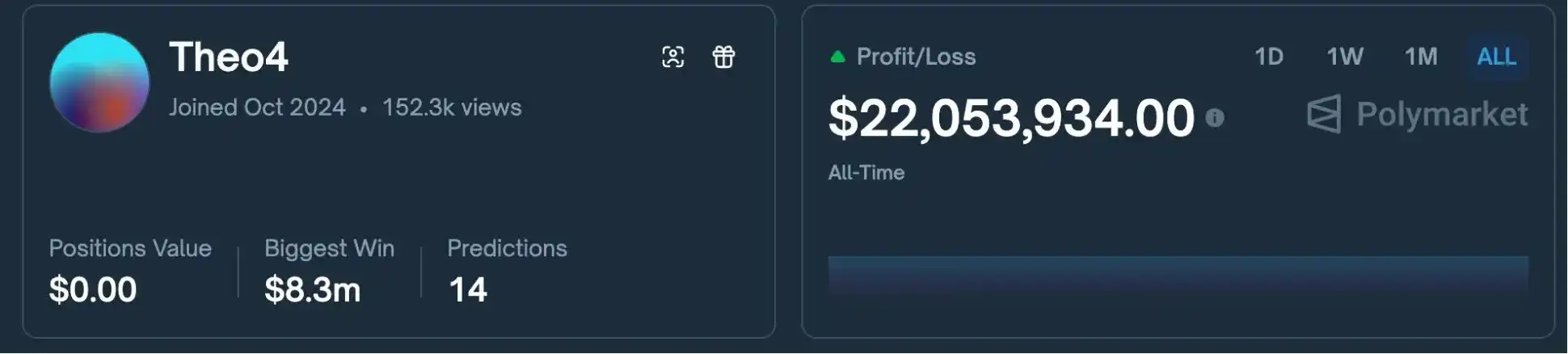
The person behind the account was Théo, a French trader who had previously worked on Wall Street.

When all mainstream polls showed Harris and Trump neck and neck,

he did something seemingly crazy: sold almost all his liquid assets, raised $80 million, and went all-in on Trump winning.

Théo didn't ask voters "who are you voting for," but commissioned YouGov to conduct a special poll in the swing states of Pennsylvania, Michigan, and Wisconsin, asking: "Who do you think your neighbor will vote for?"

The logic of this "neighbor effect" poll was simple: some people are ashamed to admit they support Trump, but they don't mind saying their neighbor does.

The results were "stunningly in favor of Trump." The moment he got the data, Théo went from a 30% position to All-in.

This case reveals the essence of information arbitrage: not knowing more than others, but asking the right questions. Théo spent less than $100,000 on the poll for an $85 million return.

This might be the highest ROI market research in human history. He currently ranks first in total profits on Polymarket.
Replicability Assessment: The barrier to information arbitrage is extremely high, requiring original research methodology, large capital, and the psychological fortitude to stick to your judgment when "everyone says you're wrong." But its core idea—finding systematic biases in market pricing—applies to any contentious prediction market.

2. Cross-Platform Arbitrage Strategy: The Art of "Picking Up Money" Between Two Markets

If information arbitrage is an "intellectual game," cross-platform arbitrage is "manual labor": tedious, mechanical, but almost risk-free.

Its principle is simple enough for a child to understand: the same event sells for $45 in Store A and $48 in Store B. You buy both sides to hedge, profiting from the差价 regardless of the outcome.

From April 2024 to April 2025, academic research recorded a number: arbitrageurs extracted over $40 million in "risk-free profits" from Polymarket. The top three wallets alone made $4.2 million.

A real案例: On a certain day in 2025, for the question "Will Bitcoin break $95,000 within one hour?", the YES price was $0.45 on Polymarket, while the NO price for the same event on competitor Kalshi was $0.48.

A smart trader bought both sides simultaneously for a total cost of $0.93. Whether Bitcoin rose or not, he would get back $1, a 7.5% risk-free return, realized in one hour.

But there is a "critical detail": the definition of the "same event" may differ between platforms.

During the 2024 U.S. government shutdown event, a group of arbitrageurs found that Polymarket resolved "shutdown occurred" (YES), while Kalshi resolved "shutdown did not occur" (NO).

Their supposedly guaranteed hedged positions lost money on both sides.

Reason? Polymarket's settlement standard was "OPM announces shutdown," while Kalshi required "actual shutdown lasting over 24 hours."

Arbitrage isn't just picking up money blindly. Behind every cent of price difference lies the detail of settlement rules.

Replicability Assessment: This is the lowest barrier to entry among the six strategies. All you need is accounts on multiple platforms, some starting capital, and the patience to compare spreads. There are even open-source arbitrage bot codes on GitHub. However, as institutional capital floods in, the arbitrage window is visibly narrowing.

3. High-Probability Bond Strategy: Turning "Almost Certain" into a Business with 1800% Annualized Returns

Most people come to Polymarket for the thrill: betting on dark horses, predicting upsets.

But the real "smart money" does the exact opposite: they专门 buy things that are "already in the bag."

Data shows that over 90% of large orders exceeding $10,000 on Polymarket occur at prices above $0.95. What are these "whales" doing? They are "Bonding," buying almost certain events like bonds.

An example: Three days before the December 2025 Fed meeting, the YES contract for "a 25 basis point rate cut" was at $0.95. Economic data was clear, Fed officials' speeches heavily hinted—no room for surprise. You spend $0.95 to buy, get back $1 upon settlement three days later, a 5.2% return in 72 hours.

5% doesn't sound like much? Do the math: if you can find two such opportunities per week, that's 52 weeks × 2 times × 5% = 520% simple return per year. Considering compounding, annualized returns easily exceed 1800%. And the risk you take is接近 zero.

Some traders, using this strategy, make only a few trades per week and earn over $150,000 annually.

Of course, "almost certain" is not "absolutely certain."

The biggest enemy of the bond strategy is the black swan, those 0.01% probability surprises. One mistake can wipe out the profits of dozens of successes. So the core skill of top bond players is not finding opportunities, but identifying "false certainty": things that look like sure bets but hide risks.

Replicability Assessment: This is the most suitable strategy for beginners. It requires no deep research, no speed advantage, just patience and discipline. But its profit ceiling is also the lowest. When your capital reaches a certain size, there simply aren't enough 95%+ opportunities in the market for you to "harvest."

4. Liquidity Provider (LP) Strategy: Just Earning "Toll Fees"? Not That Simple

Why does the casino always win? Because it doesn't bet against you; it just takes a cut.

On Polymarket, some people choose to "be the casino" rather than "be the gambler"—they are Liquidity Providers (LPs).

The LP's job: place both buy and sell orders on the order book, earning the spread in between. For example, you place a buy order at $0.49 and a sell order at $0.51. No matter who trades, you earn the $0.02 difference. You don't care about the event outcome, only if someone trades.

Polymarket sees new markets every day. New markets are characterized by: poor liquidity, wide spreads, many retail traders. For LPs, this is heaven. Data shows that providing liquidity in new markets can yield annualized equivalent returns of 80%-200%.

A trader named @defiance_cr was interviewed by Polymarket官方, detailing how he built an automated market-making system. At its peak, this system generated $700-800 in profit daily.

He started with $10,000 capital, initially earning about $200 per day. As the system optimized and capital grew, profits increased to $700-800 daily. The core was utilizing Polymarket's liquidity reward program, where placing orders on both sides of the market could yield nearly 3x the rewards.
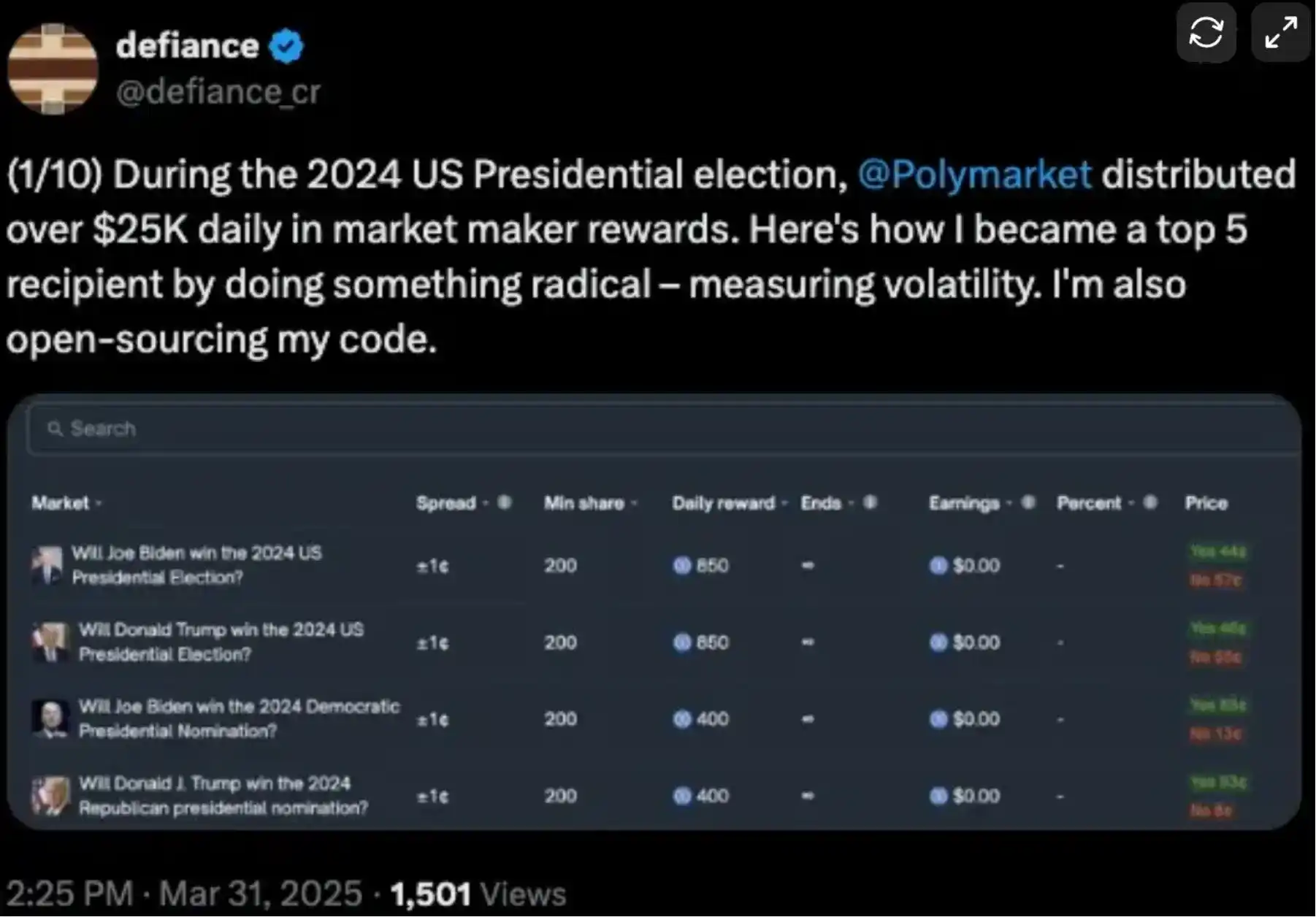
His system consisted of two core modules: a data collection module pulling historical prices from the Polymarket API, calculating volatility indicators, estimating expected returns per $100 invested, and sorting by risk-adjusted returns; a trade execution module automatically placing orders based on preset parameters—narrow spreads for liquid markets, wide spreads for volatile markets.

But after the election, Polymarket's liquidity rewards significantly decreased.

The LP strategy remained viable in late 2025, but with lower returns and increased competition. The cost of high-frequency trading infrastructure is higher than an average employee's salary. High-end VPS infrastructure needs to be hosted near Polymarket's servers. Quant algorithms are optimized for fast execution.

So don't envy "those traders making $200,000 a month确实存在. They are the top 0.5%."

This combination of "market making + prediction" is the standard for high-level players.

Replicability Assessment: The LP strategy requires a deep understanding of market microstructure, including order book dynamics, spread management, inventory risk control, etc. It's not as mechanical as arbitrage, nor does it require unique insight like information arbitrage, but sits between, requiring skill, but skill that can be learned.

5. Niche Specialization Strategy: The 10,000-Hour Rule in Prediction Markets

An interesting phenomenon on the Polymarket leaderboard: the most profitable people are almost all "specialists." They are not generalists who know a little about everything, but experts with a碾压级 advantage in a narrow field.

Look at some real cases:

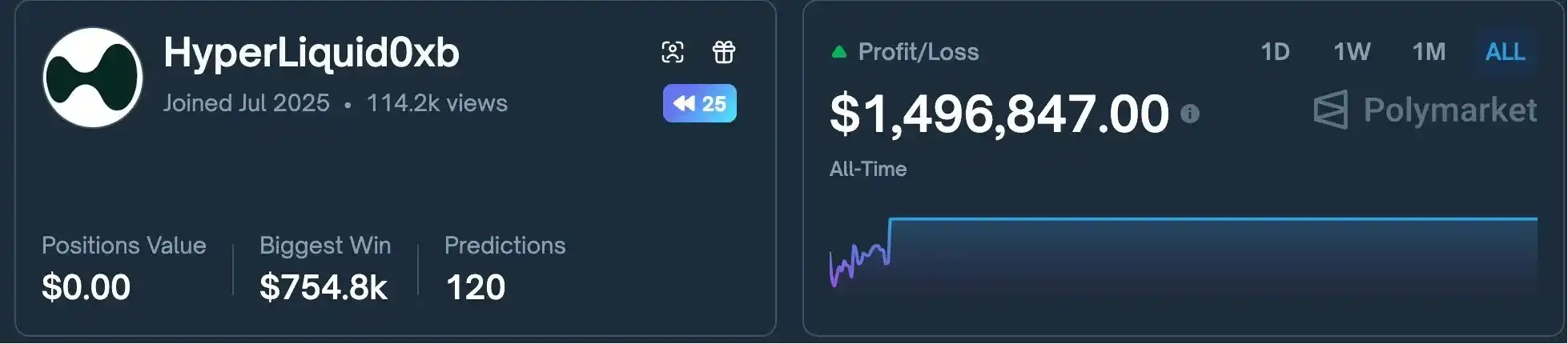
Sports Market Dominator HyperLiquid0xb: Total profits over $1.4 million, single largest gain of $755,000 from predicting a baseball game. His familiarity with MLB data rivals that of professional analysts, allowing him to quickly adjust judgments mid-game based on pitcher rotations, weather changes.
Mention Market Wizard Axios: Maintains a terrifying 96% win rate in markets like "Will Trump say 'crypto' in his speech?". His method is simple but extremely time-consuming: analyze all past public speeches of the target person,统计 the frequency and context of specific words, build a prediction model. While others are "gambling," he is "calculating."
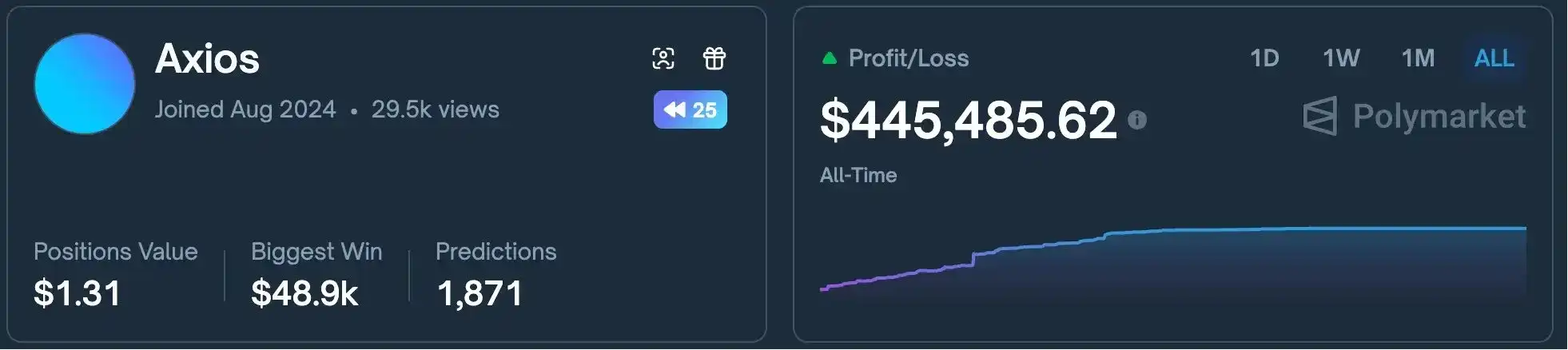
These cases share a common point: expert traders may only engage in 10-30 trades per year, but each has extremely high confidence and profit potential.

So specialization is more profitable than breadth.

Of course, I also saw a sports expert, SeriouslySirius, lose $440,000 on a single World Series bet, followed by losses in a series of events.
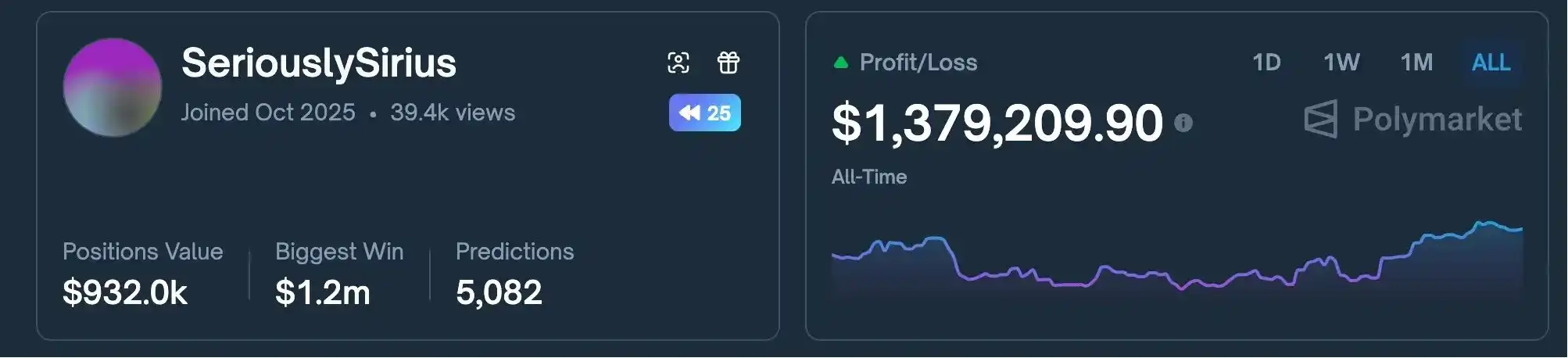
If you are only "somewhat knowledgeable," you are giving money to the experts. Of course,所谓的“懂”, is also another form of gambling.

Replicability Assessment: This is the strategy requiring the most time investment, but also the one with the highest barriers. Once you build an information advantage in a field, it's hard to replicate.建议 choosing an area where you already have knowledge or professional experience.

6. Speed Trading Strategy: Beating the World to the Punch

One Wednesday afternoon in 2024 at 2 PM, Fed Chair Powell began speaking. Within 8 seconds of him saying "we will adjust policy at the appropriate time," the price of the "Fed December rate cut" contract on Polymarket jumped from $0.65 to $0.78.

What happened in those 8 seconds? A small group of "speed traders," monitoring the live feed with preset triggers, placed their orders before the average person could even "understand" what Powell said.

Trading legend GCR once said the core of speed trading is "reaction." It exploits the time window between information generation and its digestion by the market, usually only a few seconds to minutes.

This strategy is particularly effective in "Mention markets." For example, "Will Biden mention China in his speech today?" If you can know the answer 30 seconds faster than others (by monitoring the White House live stream instead of waiting for news alerts), you can build a position before the price moves.

Some quant teams have industrialized this strategy. According to on-chain data analysis, between 2024-2025, top algorithmic traders executed over 10,200 speed trades, generating累计 $4.2 million in profits. Their tools include: low-latency API access, real-time news monitoring systems, preset decision rule scripts, and capital distributed across multiple platforms.

But speed trading is becoming increasingly difficult. As more institutional capital enters, the arbitrage window has compressed from "minutes" to "seconds," making it almost impossible for retail to participate. It's an arms race, and散户 tools are far inferior to institutions.

Replicability Assessment: Unless you have a technical background and time to invest in developing a trading system, it's not recommended. The alpha in speed trading is disappearing fast, leaving little room for retail. If you must try, start practicing in low-competition niche markets (like local elections, niche sports).

IV. Risk Management and Strategy Portfolio

4.1 Position Management Principles

Successful traders generally follow these position management principles:

Hold 5-12 uncorrelated positions simultaneously; Mix short-term (days) and long-term (weeks/months) holdings;

Keep 20-40% of capital as reserve for new opportunities;

Single trade risk exposure not exceeding 5-10% of total capital.

Over-diversification (30+ positions) dilutes returns, while over-concentration (1-2 positions) is too risky.

The optimal number of positions is usually between 6-10.

4.2 Strategy Portfolio Suggestions

Strategy allocation suggestions based on risk appetite are as follows.

  • Conservative Investors: 70% Bond Strategy + 20% Liquidity Providing + 10% Copy Trading.
  • Balanced Investors: 40% Niche Specialization + 30% Arbitrage + 20% Bonds + 10% Event-Driven.
  • Aggressive Investors: 50% Information Arbitrage + 30% Niche Specialization + 20% Speed Trading.

Regardless of the combination, avoid allocating over 40% of capital to a single event or a group of highly correlated events.

V. Conclusion

2025 was a pivotal year for Polymarket's transition from fringe experiment to mainstream finance.

The six盈利 strategies reviewed here—information arbitrage, cross-platform arbitrage, high-probability bonds, liquidity providing, niche specialization, and speed trading—represent proven sources of alpha in prediction markets.

In 2026, prediction markets will face fiercer competition and higher专业化门槛.

It is recommended that newcomers focus on: (1) Choosing a vertical field where they can build an information advantage; (2) Starting with small-scale bond strategies to accumulate experience; (3) Using tools like PolyTrack to跟踪和学习头部交易者的模式; (4) Maintaining close attention to regulatory changes and platform rule updates.

The essence of prediction markets is a "truth discovery mechanism powered by monetary votes."

In this market, the true edge comes not from luck, but from better information, more rigorous analysis, and more rational risk management. May this review provide you with a systematic map for navigating this new world.

References

[1] Chainalysis. "Polymarket Whale Analysis Report." November 2024.

[2] The Free Press. "How a French Whale Made $85 Million off Trump's Win." November 2024.

[3] Polymarket Analytics. "Trader Leaderboard and Performance Metrics." December 2025.

[4] PolyTrack. "Best Polymarket Traders to Follow 2025." November 2025.

[5] Dune Analytics. "Prediction Market Volume and Open Interest Data." September 2025.

[6] Wall Street Journal. "The French Trader Who Bet Big on Trump." November 2024.

[7] Bloomberg. "Trump Whale's Polymarket Haul Boosted to $85 Million." November 2024.

[8] CBS News 60 Minutes. "How a French 'whale' made over $80 million on Polymarket." December 2025.

Original Article Link

Pertanyaan Terkait

QWhat are the six core profit strategies identified in the Polymarket 2025 report?

AThe six core profit strategies are: 1. Information Arbitrage, 2. Cross-Platform Arbitrage, 3. High-Probability Bond Strategy, 4. Liquidity Providing, 5. Domain Specialization, and 6. Speed Trading.

QWhat was the key insight behind the French trader Théo's successful $85 million information arbitrage bet on the 2024 U.S. election?

AThéo's key insight came from a unique poll he commissioned that asked voters in swing states 'Who do you think your neighbor will vote for?' instead of who they would vote for themselves. This 'neighbor effect' poll revealed a significant, hidden bias towards Trump that mainstream polls missed.

QWhat is the main risk associated with the seemingly low-risk Cross-Platform Arbitrage strategy?

AThe main risk is that different platforms may have subtly different definitions or settlement criteria for what constitutes the 'same event'. A trader's hedged position can lose money on both sides if one platform resolves to YES and another to NO based on these differing rules.

QAccording to the report, what is the common characteristic of the most profitable traders, beyond prediction skill?

AThe most profitable traders systematically identify market pricing errors, practice extremely strict and近乎偏执 (paranoid) risk management, and patiently build a crushing information advantage in a single, specialized domain.

QWhat recommendation does the report give to new entrants for building experience in 2026?

AThe report recommends that new entrants should: 1. Focus on a vertical domain where they can build an information advantage, 2. Start by accumulating experience with small-scale Bond strategies, 3. Use tools like PolyTrack to learn from the patterns of top traders, and 4. Maintain close attention to regulatory changes and platform rule updates.

Bacaan Terkait

Debut Wash: Ketua FED yang Paling Paham Crypto Sepanjang Sejarah Akan Datangkan Kejutan atau Teror Bagi Pasar?

**Penampilan Perdana Kevin Warsh: Ketua Fed Paling Paham Crypto, Akan Bawa Kejutan atau Kekhawatiran?** Ketua Federal Reserve yang baru, Kevin Warsh, bersiap untuk konferensi pers kebijakan moneter pertamanya di tengah situasi sulit: inflasi yang bangkit kembali, tekanan pasar untuk menaikkan suku bunga, dan desakan Presiden Trump untuk menurunkan suku bunga. Yang unik, Warsh adalah ketua Fed pertama yang secara terbuka memiliki portofolio investasi tidak langsung yang signifikan di aset kripto dan perusahaan Web3, mencakup berbagai sektor seperti blockchain, DeFi, dan infrastruktur pembayaran. Pemahaman pribadinya tentang teknologi ini berbeda dengan pendahulunya. Analisis kebijakannya berfokus pada dua hal: **sikap hawkish melawan inflasi** yang mungkin berarti lingkungan suku bunga ketat, dan **sikap ramah terhadap aset digital** yang bisa membawa perubahan regulasi dari "pencegahan" menjadi "integrasi dan inovasi". Dampak pada pasar kripto dapat dilihat dari: **pergeseran ekspektasi regulasi** yang lebih mendukung, **penetapan ulang premi risiko** bergantung pada komunikasi kebijakan yang jelas dari Warsh, serta **aliran modal global** yang mungkin mengalir lebih deras ke aset kripto karena legitimasi yang meningkat. Dua skenario utama untuk penampilan perdananya: 1. **Kejutan:** Gabungan sikap kebijakan moneter yang relatif lunak (dovish) dan sinyal ramah kripto dapat memulihkan sentimen pasar. 2. **Kekhawatiran:** Sinyal hawkish yang lebih keras dari perkiraan, seperti isyarat kenaikan suku bunga, dapat memicu tekanan jual di aset berisiko, termasuk kripto. Meski secara etika Warsh telah menjual semua kepemilikannya terkait kripto, pemahaman mendalamnya tentang blockchain diharapkan dapat membentuk kerangka regulasi yang lebih koheren dan mendukung, menjadi infrastruktur penting bagi arus utama aset kripto dalam jangka panjang.

marsbit7j yang lalu

Debut Wash: Ketua FED yang Paling Paham Crypto Sepanjang Sejarah Akan Datangkan Kejutan atau Teror Bagi Pasar?

marsbit7j yang lalu

AGI Bukan Akhir, Makalah Baru DeepMind: Menuju ASI, Kemajuan AI yang Sesungguhnya Baru Dimulai

Jika Kecerdasan Buatan Umum (AGI) tercapai, apakah itu titik akhir? Tim Google DeepMind dalam laporan terbarunya berpendapat bahwa AGI **bukanlah akhir perjalanan**. AI diprediksi akan terus berkembang melampaui kemampuan tim ahli manusia terbaik, menuju Superintelligence (ASI). Laporan ini membedakan tiga konsep: AGI (kecerdasan setara manusia rata-rata), ASI (melampaui manusia di hampir semua bidang), dan UAI (batas teoretis maksimal). Transisi dari AGI ke ASI dapat melalui empat jalur potensial: 1. **Ekspansi Lanjutan**: Meningkatkan skala komputasi, model, dan data. 2. **Inovasi Algoritma**: Penyempurnaan paradigma yang ada atau pergeseran paradigma baru. 3. **Peningkatan Diri Secara Rekursif**: AI yang lebih kuat membantu mengembangkan generasi AI berikutnya yang lebih kuat. 4. **Koordinasi Multi-Agen**: Kecerdasan kolektif dari banyak sistem AGI yang berkolaborasi. Namun, terdapat enam kemacetan potensial: dinding data, tekanan sumber daya ekonomi & alam, batasan paradigma jaringan saraf saat ini, meningkatnya kesulitan penelitian, hambatan abstraksi, serta tantangan regulasi dan penerimaan sosial. Laporan ini juga menyoroti bahwa jika AI melampaui manusia, sistem evaluasi (benchmark) yang ada menjadi tidak relevan. Diperlukan kerangka pengukuran baru, seperti tugas kolaborasi/kompetisi multi-agen, pengujian yang dihasilkan otomatis, atau indikator tidak langsung seperti produktivitas ekonomi. ASI bukanlah sistem ajaib yang mahatahu; perkembangannya tetap dibatasi oleh hukum fisika, kompleksitas komputasi, data, sumber daya, dan umpan balik dunia nyata. Arah dan kecepatan kemajuan AI masih penuh ketidakpastian, sehingga memerlukan penelitian, prediksi, dan mekanisme evaluasi yang terus diperbarui.

marsbit9j yang lalu

AGI Bukan Akhir, Makalah Baru DeepMind: Menuju ASI, Kemajuan AI yang Sesungguhnya Baru Dimulai

marsbit9j yang lalu

Trading

Spot
Futures

Artikel Populer

Apa Itu $S$

Memahami SPERO: Tinjauan Komprehensif Pengenalan SPERO Seiring dengan perkembangan lanskap inovasi, munculnya teknologi web3 dan proyek cryptocurrency memainkan peran penting dalam membentuk masa depan digital. Salah satu proyek yang telah menarik perhatian di bidang dinamis ini adalah SPERO, yang dilambangkan sebagai SPERO,$$s$. Artikel ini bertujuan untuk mengumpulkan dan menyajikan informasi terperinci tentang SPERO, untuk membantu para penggemar dan investor memahami dasar-dasar, tujuan, dan inovasi dalam domain web3 dan crypto. Apa itu SPERO,$$s$? SPERO,$$s$ adalah proyek unik dalam ruang crypto yang berusaha memanfaatkan prinsip desentralisasi dan teknologi blockchain untuk menciptakan ekosistem yang mendorong keterlibatan, utilitas, dan inklusi finansial. Proyek ini dirancang untuk memfasilitasi interaksi peer-to-peer dengan cara baru, memberikan pengguna solusi dan layanan keuangan yang inovatif. Pada intinya, SPERO,$$s$ bertujuan untuk memberdayakan individu dengan menyediakan alat dan platform yang meningkatkan pengalaman pengguna dalam ruang cryptocurrency. Ini termasuk memungkinkan metode transaksi yang lebih fleksibel, mendorong inisiatif yang dipimpin komunitas, dan menciptakan jalur untuk peluang finansial melalui aplikasi terdesentralisasi (dApps). Visi mendasar dari SPERO,$$s$ berputar di sekitar inklusivitas, bertujuan untuk menjembatani kesenjangan dalam keuangan tradisional sambil memanfaatkan manfaat teknologi blockchain. Siapa Pencipta SPERO,$$s$? Identitas pencipta SPERO,$$s$ tetap agak samar, karena ada sumber daya publik yang terbatas yang memberikan informasi latar belakang terperinci tentang pendiriannya. Kurangnya transparansi ini dapat berasal dari komitmen proyek terhadap desentralisasi—sebuah etos yang banyak proyek web3 bagi, memprioritaskan kontribusi kolektif di atas pengakuan individu. Dengan memusatkan diskusi di sekitar komunitas dan tujuan kolektifnya, SPERO,$$s$ mewujudkan esensi pemberdayaan tanpa menonjolkan individu tertentu. Dengan demikian, memahami etos dan misi SPERO tetap lebih penting daripada mengidentifikasi pencipta tunggal. Siapa Investor SPERO,$$s$? SPERO,$$s$ didukung oleh beragam investor mulai dari modal ventura hingga investor malaikat yang berdedikasi untuk mendorong inovasi di sektor crypto. Fokus investor ini umumnya sejalan dengan misi SPERO—memprioritaskan proyek yang menjanjikan kemajuan teknologi sosial, inklusivitas finansial, dan tata kelola terdesentralisasi. Fondasi investor ini biasanya tertarik pada proyek yang tidak hanya menawarkan produk inovatif tetapi juga memberikan kontribusi positif kepada komunitas blockchain dan ekosistemnya. Dukungan dari investor ini memperkuat SPERO,$$s$ sebagai pesaing yang patut diperhitungkan di domain proyek crypto yang berkembang pesat. Bagaimana SPERO,$$s$ Bekerja? SPERO,$$s$ menerapkan kerangka kerja multi-faceted yang membedakannya dari proyek cryptocurrency konvensional. Berikut adalah beberapa fitur kunci yang menekankan keunikan dan inovasinya: Tata Kelola Terdesentralisasi: SPERO,$$s$ mengintegrasikan model tata kelola terdesentralisasi, memberdayakan pengguna untuk berpartisipasi aktif dalam proses pengambilan keputusan mengenai masa depan proyek. Pendekatan ini mendorong rasa kepemilikan dan akuntabilitas di antara anggota komunitas. Utilitas Token: SPERO,$$s$ memanfaatkan token cryptocurrency-nya sendiri, yang dirancang untuk melayani berbagai fungsi dalam ekosistem. Token ini memungkinkan transaksi, hadiah, dan fasilitasi layanan yang ditawarkan di platform, meningkatkan keterlibatan dan utilitas secara keseluruhan. Arsitektur Berlapis: Arsitektur teknis SPERO,$$s$ mendukung modularitas dan skalabilitas, memungkinkan integrasi fitur dan aplikasi tambahan secara mulus seiring dengan perkembangan proyek. Kemampuan beradaptasi ini sangat penting untuk mempertahankan relevansi di lanskap crypto yang selalu berubah. Keterlibatan Komunitas: Proyek ini menekankan inisiatif yang dipimpin komunitas, menggunakan mekanisme yang memberikan insentif untuk kolaborasi dan umpan balik. Dengan memelihara komunitas yang kuat, SPERO,$$s$ dapat lebih baik memenuhi kebutuhan pengguna dan beradaptasi dengan tren pasar. Fokus pada Inklusi: Dengan menawarkan biaya transaksi yang rendah dan antarmuka yang ramah pengguna, SPERO,$$s$ bertujuan untuk menarik basis pengguna yang beragam, termasuk individu yang mungkin sebelumnya tidak terlibat dalam ruang crypto. Komitmen ini terhadap inklusi sejalan dengan misi utamanya untuk memberdayakan melalui aksesibilitas. Garis Waktu SPERO,$$s$ Memahami sejarah proyek memberikan wawasan penting tentang trajektori dan tonggak perkembangannya. Berikut adalah garis waktu yang disarankan yang memetakan peristiwa signifikan dalam evolusi SPERO,$$s$: Fase Konseptualisasi dan Ideasi: Ide awal yang membentuk dasar SPERO,$$s$ dikembangkan, sangat selaras dengan prinsip desentralisasi dan fokus komunitas dalam industri blockchain. Peluncuran Whitepaper Proyek: Setelah fase konseptual, whitepaper komprehensif yang merinci visi, tujuan, dan infrastruktur teknologi SPERO,$$s$ dirilis untuk menarik minat dan umpan balik komunitas. Pembangunan Komunitas dan Keterlibatan Awal: Upaya jangkauan aktif dilakukan untuk membangun komunitas pengguna awal dan investor potensial, memfasilitasi diskusi seputar tujuan proyek dan mendapatkan dukungan. Acara Generasi Token: SPERO,$$s$ melakukan acara generasi token (TGE) untuk mendistribusikan token asli kepada pendukung awal dan membangun likuiditas awal dalam ekosistem. Peluncuran dApp Awal: Aplikasi terdesentralisasi (dApp) pertama yang terkait dengan SPERO,$$s$ diluncurkan, memungkinkan pengguna untuk terlibat dengan fungsionalitas inti platform. Pengembangan Berkelanjutan dan Kemitraan: Pembaruan dan peningkatan berkelanjutan terhadap penawaran proyek, termasuk kemitraan strategis dengan pemain lain di ruang blockchain, telah membentuk SPERO,$$s$ menjadi pemain yang kompetitif dan berkembang di pasar crypto. Kesimpulan SPERO,$$s$ berdiri sebagai bukti potensi web3 dan cryptocurrency untuk merevolusi sistem keuangan dan memberdayakan individu. Dengan komitmen terhadap tata kelola terdesentralisasi, keterlibatan komunitas, dan fungsionalitas yang dirancang secara inovatif, ia membuka jalan menuju lanskap keuangan yang lebih inklusif. Seperti halnya investasi di ruang crypto yang berkembang pesat, calon investor dan pengguna dianjurkan untuk melakukan riset secara menyeluruh dan terlibat dengan perkembangan yang sedang berlangsung dalam SPERO,$$s$. Proyek ini menunjukkan semangat inovatif industri crypto, mengundang eksplorasi lebih lanjut ke dalam berbagai kemungkinan yang ada. Meskipun perjalanan SPERO,$$s$ masih berlangsung, prinsip-prinsip dasarnya mungkin benar-benar mempengaruhi masa depan cara kita berinteraksi dengan teknologi, keuangan, dan satu sama lain dalam ekosistem digital yang saling terhubung.

75 Total TayanganDipublikasikan pada 2024.12.17Diperbarui pada 2024.12.17

Apa Itu $S$

Apa Itu AGENT S

Agent S: Masa Depan Interaksi Otonom di Web3 Pendahuluan Dalam lanskap Web3 dan cryptocurrency yang terus berkembang, inovasi secara konstan mendefinisikan ulang cara individu berinteraksi dengan platform digital. Salah satu proyek perintis, Agent S, menjanjikan untuk merevolusi interaksi manusia-komputer melalui kerangka agen terbuka. Dengan membuka jalan untuk interaksi otonom, Agent S bertujuan untuk menyederhanakan tugas-tugas kompleks, menawarkan aplikasi transformasional dalam kecerdasan buatan (AI). Eksplorasi mendetail ini akan menyelami seluk-beluk proyek, fitur uniknya, dan implikasinya untuk domain cryptocurrency. Apa itu Agent S? Agent S berdiri sebagai kerangka agen terbuka yang inovatif, dirancang khusus untuk mengatasi tiga tantangan mendasar dalam otomatisasi tugas komputer: Memperoleh Pengetahuan Spesifik Domain: Kerangka ini secara cerdas belajar dari berbagai sumber pengetahuan eksternal dan pengalaman internal. Pendekatan ganda ini memberdayakannya untuk membangun repositori pengetahuan spesifik domain yang kaya, meningkatkan kinerjanya dalam pelaksanaan tugas. Perencanaan Selama Rentang Tugas yang Panjang: Agent S menggunakan perencanaan hierarkis yang ditingkatkan pengalaman, pendekatan strategis yang memfasilitasi pemecahan dan pelaksanaan tugas-tugas rumit dengan efisien. Fitur ini secara signifikan meningkatkan kemampuannya untuk mengelola beberapa subtugas dengan efisien dan efektif. Menangani Antarmuka Dinamis dan Tidak Seragam: Proyek ini memperkenalkan Antarmuka Agen-Komputer (ACI), solusi inovatif yang meningkatkan interaksi antara agen dan pengguna. Dengan memanfaatkan Model Bahasa Besar Multimodal (MLLM), Agent S dapat menavigasi dan memanipulasi berbagai antarmuka pengguna grafis dengan mulus. Melalui fitur-fitur perintis ini, Agent S menyediakan kerangka kerja yang kuat yang mengatasi kompleksitas yang terlibat dalam mengotomatisasi interaksi manusia dengan mesin, membuka jalan untuk berbagai aplikasi dalam AI dan seterusnya. Siapa Pencipta Agent S? Meskipun konsep Agent S secara fundamental inovatif, informasi spesifik tentang penciptanya tetap samar. Pencipta saat ini tidak diketahui, yang menyoroti baik tahap awal proyek atau pilihan strategis untuk menjaga anggota pendiri tetap tersembunyi. Terlepas dari anonimitas, fokus tetap pada kemampuan dan potensi kerangka kerja. Siapa Investor Agent S? Karena Agent S relatif baru dalam ekosistem kriptografi, informasi terperinci mengenai investor dan pendukung keuangannya tidak secara eksplisit didokumentasikan. Kurangnya wawasan yang tersedia untuk umum mengenai fondasi investasi atau organisasi yang mendukung proyek ini menimbulkan pertanyaan tentang struktur pendanaannya dan peta jalan pengembangannya. Memahami dukungan sangat penting untuk mengukur keberlanjutan proyek dan potensi dampak pasar. Bagaimana Cara Kerja Agent S? Di inti Agent S terletak teknologi mutakhir yang memungkinkannya berfungsi secara efektif dalam berbagai pengaturan. Model operasionalnya dibangun di sekitar beberapa fitur kunci: Interaksi Komputer yang Mirip Manusia: Kerangka ini menawarkan perencanaan AI yang canggih, berusaha untuk membuat interaksi dengan komputer lebih intuitif. Dengan meniru perilaku manusia dalam pelaksanaan tugas, ia menjanjikan untuk meningkatkan pengalaman pengguna. Memori Naratif: Digunakan untuk memanfaatkan pengalaman tingkat tinggi, Agent S memanfaatkan memori naratif untuk melacak sejarah tugas, sehingga meningkatkan proses pengambilan keputusannya. Memori Episodik: Fitur ini memberikan panduan langkah demi langkah kepada pengguna, memungkinkan kerangka untuk menawarkan dukungan kontekstual saat tugas berlangsung. Dukungan untuk OpenACI: Dengan kemampuan untuk berjalan secara lokal, Agent S memungkinkan pengguna untuk mempertahankan kontrol atas interaksi dan alur kerja mereka, sejalan dengan etos terdesentralisasi Web3. Integrasi Mudah dengan API Eksternal: Versatilitas dan kompatibilitasnya dengan berbagai platform AI memastikan bahwa Agent S dapat dengan mulus masuk ke dalam ekosistem teknologi yang ada, menjadikannya pilihan menarik bagi pengembang dan organisasi. Fungsionalitas ini secara kolektif berkontribusi pada posisi unik Agent S dalam ruang kripto, saat ia mengotomatisasi tugas-tugas kompleks yang melibatkan banyak langkah dengan intervensi manusia yang minimal. Seiring proyek ini berkembang, aplikasi potensialnya di Web3 dapat mendefinisikan ulang bagaimana interaksi digital berlangsung. Garis Waktu Agent S Pengembangan dan tonggak Agent S dapat dirangkum dalam garis waktu yang menyoroti peristiwa pentingnya: 27 September 2024: Konsep Agent S diluncurkan dalam sebuah makalah penelitian komprehensif berjudul “Sebuah Kerangka Agen Terbuka yang Menggunakan Komputer Seperti Manusia,” yang menunjukkan dasar untuk proyek ini. 10 Oktober 2024: Makalah penelitian tersebut dipublikasikan secara terbuka di arXiv, menawarkan eksplorasi mendalam tentang kerangka kerja dan evaluasi kinerjanya berdasarkan tolok ukur OSWorld. 12 Oktober 2024: Sebuah presentasi video dirilis, memberikan wawasan visual tentang kemampuan dan fitur Agent S, lebih lanjut melibatkan pengguna dan investor potensial. Tanda-tanda dalam garis waktu ini tidak hanya menggambarkan kemajuan Agent S tetapi juga menunjukkan komitmennya terhadap transparansi dan keterlibatan komunitas. Poin Kunci Tentang Agent S Seiring kerangka Agent S terus berkembang, beberapa atribut kunci menonjol, menekankan sifat inovatif dan potensinya: Kerangka Inovatif: Dirancang untuk memberikan penggunaan komputer yang intuitif seperti interaksi manusia, Agent S membawa pendekatan baru untuk otomatisasi tugas. Interaksi Otonom: Kemampuan untuk berinteraksi secara otonom dengan komputer melalui GUI menandakan lompatan menuju solusi komputasi yang lebih cerdas dan efisien. Otomatisasi Tugas Kompleks: Dengan metodologinya yang kuat, ia dapat mengotomatisasi tugas-tugas kompleks yang melibatkan banyak langkah, membuat proses lebih cepat dan kurang rentan terhadap kesalahan. Perbaikan Berkelanjutan: Mekanisme pembelajaran memungkinkan Agent S untuk belajar dari pengalaman masa lalu, terus meningkatkan kinerja dan efektivitasnya. Versatilitas: Adaptabilitasnya di berbagai lingkungan operasi seperti OSWorld dan WindowsAgentArena memastikan bahwa ia dapat melayani berbagai aplikasi. Saat Agent S memposisikan dirinya di lanskap Web3 dan kripto, potensinya untuk meningkatkan kemampuan interaksi dan mengotomatisasi proses menandakan kemajuan signifikan dalam teknologi AI. Melalui kerangka inovatifnya, Agent S mencerminkan masa depan interaksi digital, menjanjikan pengalaman yang lebih mulus dan efisien bagi pengguna di berbagai industri. Kesimpulan Agent S mewakili lompatan berani ke depan dalam pernikahan AI dan Web3, dengan kapasitas untuk mendefinisikan ulang cara kita berinteraksi dengan teknologi. Meskipun masih dalam tahap awal, kemungkinan aplikasinya sangat luas dan menarik. Melalui kerangka komprehensifnya yang mengatasi tantangan kritis, Agent S bertujuan untuk membawa interaksi otonom ke garis depan pengalaman digital. Saat kita melangkah lebih dalam ke dalam ranah cryptocurrency dan desentralisasi, proyek-proyek seperti Agent S pasti akan memainkan peran penting dalam membentuk masa depan teknologi dan kolaborasi manusia-komputer.

926 Total TayanganDipublikasikan pada 2025.01.14Diperbarui pada 2025.01.14

Apa Itu AGENT S

Cara Membeli S

Selamat datang di HTX.com! Kami telah membuat pembelian Sonic (S) menjadi mudah dan nyaman. Ikuti panduan langkah demi langkah kami untuk memulai perjalanan kripto Anda.Langkah 1: Buat Akun HTX AndaGunakan alamat email atau nomor ponsel Anda untuk mendaftar akun gratis di HTX. Rasakan perjalanan pendaftaran yang mudah dan buka semua fitur.Dapatkan Akun SayaLangkah 2: Buka Beli Kripto, lalu Pilih Metode Pembayaran AndaKartu Kredit/Debit: Gunakan Visa atau Mastercard Anda untuk membeli Sonic (S) secara instan.Saldo: Gunakan dana dari saldo akun HTX Anda untuk melakukan trading dengan lancar.Pihak Ketiga: Kami telah menambahkan metode pembayaran populer seperti Google Pay dan Apple Pay untuk meningkatkan kenyamanan.P2P: Lakukan trading langsung dengan pengguna lain di HTX.Over-the-Counter (OTC): Kami menawarkan layanan yang dibuat khusus dan kurs yang kompetitif bagi para trader.Langkah 3: Simpan Sonic (S) AndaSetelah melakukan pembelian, simpan Sonic (S) di akun HTX Anda. Selain itu, Anda dapat mengirimkannya ke tempat lain melalui transfer blockchain atau menggunakannya untuk memperdagangkan mata uang kripto lainnya.Langkah 4: Lakukan trading Sonic (S)Lakukan trading Sonic (S) dengan mudah di pasar spot HTX. Cukup akses akun Anda, pilih pasangan perdagangan, jalankan trading, lalu pantau secara real-time. Kami menawarkan pengalaman yang ramah pengguna baik untuk pemula maupun trader berpengalaman.

1.4k Total TayanganDipublikasikan pada 2025.01.15Diperbarui pada 2026.06.02

Cara Membeli S

Diskusi

Selamat datang di Komunitas HTX. Di sini, Anda bisa terus mendapatkan informasi terbaru tentang perkembangan platform terkini dan mendapatkan akses ke wawasan pasar profesional. Pendapat pengguna mengenai harga S (S) disajikan di bawah ini.

活动图片