TON Enters the Telegram Era: The On-Chain Experiment of Super Apps is Unfolding

marsbitPublié le 2026-05-08Dernière mise à jour le 2026-05-08

Résumé

The TON token recently surged nearly 120% in 4 days, approaching $3. This rally is primarily driven by Telegram founder Pavel Durov's announcement that Telegram will become the core driver of the TON network, replacing the TON Foundation and serving as its largest validator. This move signals a fundamental shift: Telegram is no longer just supporting TON from a distance but is formally taking over its governance and operations. This changes TON's valuation narrative from being a crypto project with Telegram's user base to becoming the foundational blockchain infrastructure for Telegram's future commercial ecosystem—transitioning from a crypto narrative to an internet-platform-level story. TON's recent technical upgrades focus on 10x faster speeds, 6x lower fees, and near-instant confirmations. These optimizations target Telegram's internal high-frequency, micro-transaction scenarios like tipping, bot services, and Mini App purchases. The goal is to enable seamless, near-zero-cost transactions for its nearly 1 billion users, making blockchain usage almost invisible—akin to platforms like WeChat Pay. TON's path is unique: it already has a massive user base and is building the blockchain system to serve it, aiming to onboard users into Web3 without them realizing it. The vision is to integrate wallet, payment, bot, and Mini App functionalities into a closed loop within Telegram, positioning TON as the value-exchange infrastructure for a super-app. In essence, this surge refl...

Author: Climber, CryptoPulse Labs

Recently, the TON token has experienced consecutive increases, rising approximately 120% over 4 days and approaching the $3 mark. The primary reason behind this surge is the public endorsement by Pavel Durov, the founder of Telegram.

He stated that Telegram will replace the TON Foundation, becoming the core driving force behind TON, and will serve as the largest validator for the TON network. Meanwhile, the TON network has also been continuously advancing technical upgrades, such as announcing a 10x increase in network speed performance and a 6x reduction in transaction fees.

On the surface, this appears to be a round of technical upgrades and narrative revival for TON. However, what the market is truly reassessing is not TON itself, but the fact that Telegram has begun, for the first time, to fully embark on a comprehensive on-chain transformation in a real sense.

I. Telegram Takes the Helm: TON's Valuation Logic Begins to Shift

Over the past few years, TON has occupied a very unique position. It is deeply intertwined with Telegram, yet the two have always maintained a certain distance.

The reason is quite simple. Early on, Telegram launched the Gram fundraising plan, which ultimately faced regulatory intervention from the U.S. SEC, forcing the project to be terminated. The community subsequently took over the project, gradually evolving into the current TON ecosystem.

Therefore, for a long time, although Telegram continued to support TON—including gradually integrating its wallet, bots, mini-apps, and advertising system with TON—it never truly assumed the role of the official driver of TON publicly.
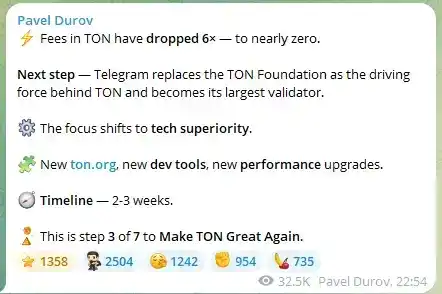
Pavel Durov's recent statements fundamentally alter market expectations. Particularly, the key points of Telegram replacing the TON Foundation and becoming the largest validator directly clarify that Telegram is now beginning to participate directly in the underlying governance and network operation of TON.

This is no longer just ecosystem support; it signifies Telegram formally reclaiming dominant control over TON's roadmap.

This shift is crucial because, in the past, the biggest question the market had about TON was not its technical capability but whether Telegram would truly go all-in on TON. Now, this question has a clear answer.

Simultaneously, this also means TON's valuation logic is changing. Previously, the market priced TON essentially as a public chain with Telegram's traffic support. But now, the market is beginning to reassess TON, as it is likely becoming the on-chain infrastructure within Telegram's future commercial ecosystem.

The difference between the two is significant. The former still belongs to the Crypto narrative, while the latter is beginning to enter the narrative of an internet-platform scale. This is also why TON's recent rise is not merely driven by sentiment but resembles a round of long-term expectation restructuring.

II. TON Reconstructs the Internet Payment Structure

Examining TON's recent rounds of upgrades closely reveals that its optimization direction is actually very clear: faster speed, lower fees, shorter confirmation times, and transaction fees approaching zero.

On the surface, these upgrades are optimizing chain performance, but what they are truly serving is not traditional DeFi but the large-scale payment application scenarios within Telegram.

Because Telegram itself has nearly 1 billion users, it inherently generates a vast amount of high-frequency, small-value transaction demand. Examples include content tipping, bot services, mini-app purchases, cross-border transfers, and digital goods consumption, among others.

These scenarios share a common need: users require extremely low costs and prioritize high speed.

If a payment takes tens of seconds to wait or incurs fees of several dollars, the entire user experience deteriorates significantly. Traditional blockchains have been particularly ill-suited for this type of scenario in the past.
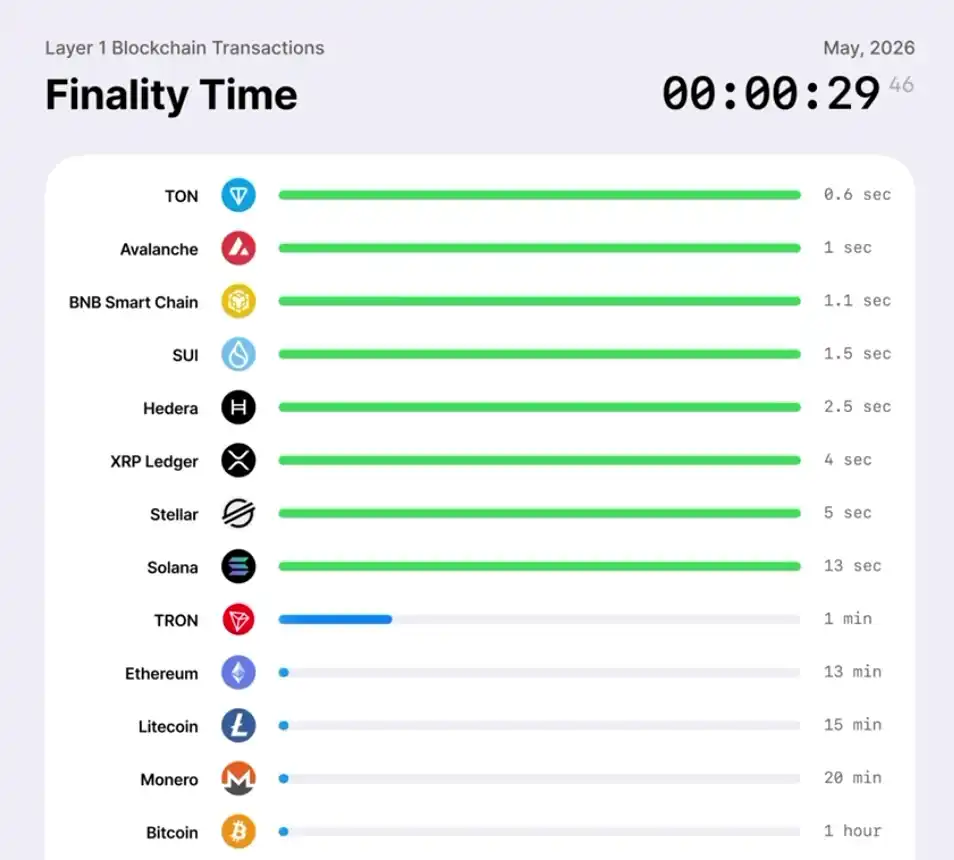
Therefore, TON's recent emphasis on fixed low fees and sub-second confirmations essentially revolves around redesigning blockchain for internet product experience. In other words, TON is attempting to solve a problem that Crypto has long failed to address: how to enable ordinary users to utilize on-chain systems almost imperceptibly.

This shift in logic is actually increasingly approaching the model of WeChat Pay.

Users don't need to understand blockchain, nor do they need to understand wallets, gas, or validation mechanisms. They only need to complete tipping, payments, purchases, transfers, and subscriptions, with all underlying settlements handled by TON.

This suggests that what TON truly aims to achieve may not be competition in the traditional L1 sense. What it is genuinely competing for is the global internet payment gateway.

Additionally, there is another crucial change. The logic of many public chains in the past has been: first build the infrastructure, then find users. But TON is the complete opposite. It first possesses a massive user base and then begins constructing the on-chain system.

Therefore, TON's challenge has never been how to get users into Web3, but rather how to enable users to complete on-chain actions without even realizing they are entering Web3. This represents a completely different development path.

III. TON's Future Blueprint: The On-Chain Transformation of Super Apps

Looking at all of TON's recent actions together, it becomes apparent that Telegram is gradually forming a complete closed loop. Functions that were originally separate—such as wallet, payments, bots, mini-apps, and on-chain settlements—are now gradually being integrated by TON.
This also signifies that TON is no longer just an independent public chain; it is becoming the infrastructure for value circulation within Telegram. The true significance of this lies in the fact that, for the first time, the crypto industry is approaching the on-chain transformation of super applications.

Because over the past decade, the crypto industry has always lacked a genuine mass-market entry point. Most public chains have been striving to attract users into the crypto world, but Telegram itself already possesses global-scale traffic.

Especially in markets like the Middle East, Russia, Eastern Europe, Southeast Asia, and Latin America, Telegram often functions not merely as a messaging tool but also as a community platform, commercial platform, payment tool, and more.

Therefore, TON's true strategic focus is not DeFi but rather global digital commercial scenarios.

Areas such as low-cost cross-border payments, the creator economy, on-chain micro-payments, and similar directions are likely the true sources of large-scale growth for TON in the future.

Of course, this path is not easy. TON's ecosystem remains in its early stages, with many applications still lingering in phases like mini-games, airdrops, and short-term traffic acquisition. Additionally, after Telegram's renewed deep involvement with TON, it may once again face regulatory pressure in the future.

Nevertheless, the market has now begun to realize one thing: TON's competitors may never have been traditional L1s, but rather the global internet payment systems.

Conclusion

This round of TON's rise is not essentially the market speculating on a simple upgrade. What truly drives the repricing of capital is the growing awareness that the world's first on-chain ecosystem with a genuine super-app entry point may have already begun to take shape.

And this time, Pavel Durov is no longer just an observer. Telegram is finally preparing to take the field itself.


Cryptos en tendance

Questions liées

QAccording to the article, what was the main reason for the recent significant price surge of the TON token?

AThe primary reason for TON's recent price surge was Telegram founder Pavel Durov's public announcement that Telegram will become the core driver behind the TON network, replacing the TON Foundation and becoming its largest validator.

QHow has Pavel Durov's statement fundamentally changed the market's perception of TON's valuation logic?

AHis statement shifted TON's valuation logic from being a crypto-native public chain with Telegram's traffic support to potentially becoming the on-chain infrastructure for Telegram's future commercial ecosystem, moving from a crypto narrative to an internet platform-level narrative.

QWhat specific user needs is TON's recent technical optimization targeting, and what payment system is this approach compared to?

ATON's recent optimizations (faster speeds, lower fees, sub-second confirmation, near-zero costs) target the need for low-cost, high-speed, small-value transactions within Telegram (e.g., tipping, Bot services). This approach is compared to systems like WeChat Pay, aiming for users to use the on-chain system almost without awareness.

QWhat key advantage does TON possess compared to many other public blockchains regarding its development path?

AUnlike other blockchains that build infrastructure first and then seek users, TON already possesses a massive user base (Telegram's near 1 billion users) first, and is now building the on-chain system around that existing traffic.

QWhat does the article suggest is the true long-term competitor for TON, and what is its ultimate envisioned role?

AThe article suggests TON's true competitor is not traditional Layer 1 blockchains, but the global internet payment system. Its ultimate envisioned role is to become the on-chain value circulation infrastructure for the Telegram super-app, enabling global digital commercial scenarios like low-cost cross-border payments and the creator economy.

Lectures associées

Vous vous souvenez des NFT ? Le prix des nouveaux projets dépasse celui des Bored Apes

Le marché des NFT sur la blockchain Robinhood connaît un regain d'attention, principalement catalysé par une interaction sur X entre le CEO de Robinhood, Vlad Tenev, et l'artiste Beeple. Cette conversation a notamment propulsé le prix de la collection NFT Cash Cat. Cependant, le véritable phénomène est la collection StonkBroker, dont le prix au sol a dépassé celui des Bored Ape Yacht Club (BAYC), atteignant brièvement 13 ETH. L'article identifie trois catégories principales de projets NFT à suivre sur Robinhood : 1. **NFT liés aux memecoins** : Comme Cash Cat, ces collections tirent parti de la popularité d'un memecoin (ex: $CASHCAT). Leur valeur est étroitement corrélée à la performance de la cryptomonnaie associée. 2. **L'écosystème StonkBroker** : Des projets comme Chain Mancers et Yardkeepers sont étroitement liés à la plateforme NFT Anvil de StonkBroker. Ils adoptent un modèle "token + NFT" où les détenteurs peuvent potentiellement bénéficier des revenus des protocoles. 3. **Les projets de créateurs expérimentés** : Des figures établies de l'espace NFT, comme un co-fondateur de Pudgy Penguins ou le projet The Saudis, lancent de nouvelles collections sur Robinhood, attirant leur communauté existante. L'auteur note que malgré cette activité, la liquidité des NFT reste inférieure à celle des memecoins, rendant les transactions plus difficiles. Il conclut que le marché des NFT sur Robinhood montre des signes encourageants, mais qu'une tendance durable nécessitera plus d'événements marquants ou l'émergence d'un projet NFT pur (non lié à un token) atteignant une valorisation significative.

marsbitIl y a 10 mins

Vous vous souvenez des NFT ? Le prix des nouveaux projets dépasse celui des Bored Apes

marsbitIl y a 10 mins

7 milliards par an ne suffisent pas à le retenir, Yujia Hui quitte Meta pour se lancer

Billets d'un milliard de dollars ne suffisent pas à retenir Yu Jiahui ! Le chercheur en IA a annoncé son départ de Meta après un peu plus d'un an, pour se lancer dans sa propre aventure entrepreneuriale. Arrivé en juin 2025 avec un package de rémunération phénoménal (évoquant jusqu'à 100 millions de dollars sur plusieurs années), il a dirigé l'équipe multimodale du TBD Lab au sein du Meta Superintelligence Labs. Sous sa direction, l'équipe a livré une série de modèles avancés Muse, dont Muse Spark, Voice Mode, Muse Image et Muse Video. Dans son annonce, Yu Jiahui a remercié Mark Zuckerberg et Alexandre Wang pour l'expérience, tout en expliquant qu'il était de plus en plus attiré par un problème "crucial pour l'avenir de l'humanité mais encore insuffisamment exploré", sur lequel il compte désormais se concentrer entièrement. Les détails sur sa nouvelle entreprise restent pour l'instant confidentiels. Son départ relance le débat sur la stratégie de recrutement agressif de Meta, souvent qualifiée de "mercenaires". Selon la plateforme alphaXiv, plus de 200 chercheurs notables auraient quitté Meta récemment, pour un total de près de 930 noms figurant sur une liste de départs. Si l'arrivée de Yu Jiahui a permis à Meta de lancer rapidement la famille Muse, son départ rapide questionne la capacité de la firme à retenir les talents de pointe à long terme, face à l'appel de l'entrepreneuriat.

marsbitIl y a 18 mins

7 milliards par an ne suffisent pas à le retenir, Yujia Hui quitte Meta pour se lancer

marsbitIl y a 18 mins

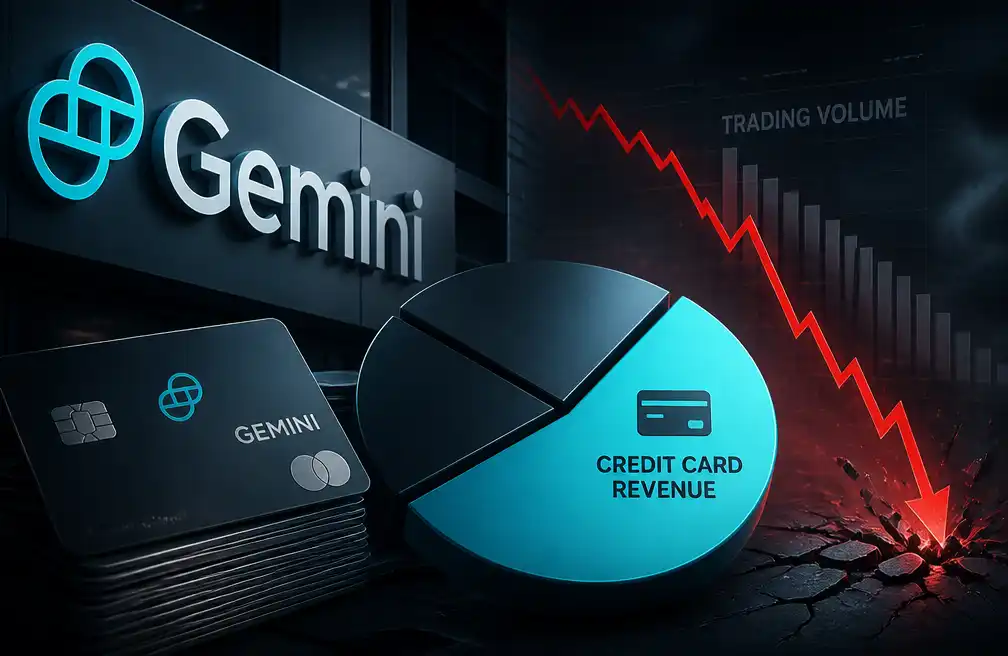
Démêlage des résultats financiers de Gemini : La carte de crédit devient la principale source de revenus, les volumes d'échange chutent

Le rapport financier du deuxième trimestre 2026 de la plateforme d'échange de cryptomonnaies cotée en bourse Gemini Space Station révèle une divergence notable entre les revenus et l'activité de trading traditionnelle. Alors que les revenus totaux ont augmenté de 37% sur un an pour atteindre 45,475 millions de dollars, les volumes de transactions sur place ont chuté de 66%. L'explication réside dans un changement structurel : les revenus des cartes de crédit (16,178 millions de dollars) ont dépassé ceux de la plateforme de trading (12,497 millions de dollars), devenant la première source de revenus. Ces revenus liés aux cartes, comprenant des frais et des intérêts, ont connu une croissance de 231% sur un an, compensant la baisse de 38% des revenus du trading. Cependant, cette nouvelle dépendance s'accompagne de nouveaux risques. Les provisions pour pertes sur créances de la division carte s'élèvent à 16,062 millions de dollars, dépassant son bénéfice avant provisions (PPNR) de 5,457 millions de dollars. Une provision d'environ 10 millions de dollars est liée à une fraude identifiée au trimestre précédent, et le taux des créances en retard de plus de 30 jours a augmenté. En résumé, Gemini diversifie ses sources de revenus au-delà du cycle des cryptomonnaies, mais sa nouvelle dépendance à la finance liée aux cartes de crédit introduit des défis significatifs en matière de contrôle du crédit et de gestion des risques, tempérant l'optimisme lié à la croissance des revenus.

marsbitIl y a 20 mins

Démêlage des résultats financiers de Gemini : La carte de crédit devient la principale source de revenus, les volumes d'échange chutent

marsbitIl y a 20 mins

À l’instant, Xiaohongshu a open source dots3-note, la version open source de la série de modèles ayant obtenu le score parfait de 42 points à l’IMO est arrivée

Xiaohongshu a ouvert en source libre dots3-note preview, un modèle appartenant à la même série que celui ayant obtenu un score parfait de 42 points aux Olympiades internationales de mathématiques (IMO). Ce modèle de 280 milliards de paramètres, avec 16B de paramètres activés, supporte un contexte de 512K tokens et possède des capacités multimodales (texte, vision, parole). Il est optimisé pour le raisonnement complexe, les agents intelligents et les tâches de longue durée. Le modèle excelle dans des missions longues et non structurées sans réponse unique, comme la planification de voyage ou le développement d'applications. Des tests démontrent sa capacité à gérer un jeu complexe (Slay the Spire II), à résoudre des puzzles de raisonnement (ARC-AGI 3), à résoudre des problèmes pratiques (agencement d'une cuisine) et même à développer une application visionOS de A à Z. Sa force réside dans son apprentissage continu et son auto-évaluation. Il utilise un mécanisme de "Self-Critiquing" pour corriger ses erreurs et une méthode d'apprentissage par renforcement appelée TEMPO, lui permettant de s'améliorer sur des trajectoires de tâches très longues. Xiaohongshu a également introduit deux bancs d'essai, VibeSearchBench et VibeLifeBench, pour évaluer la compréhension des besoins évolutifs des utilisateurs et la résilience face aux changements. Même les grands modèles leaders peinent sur ces tests, soulignant le défi des agents de longue durée dans des environnements réels. dots3-note preview comble le vide pour les agents dans l'écosystème open source de Xiaohongshu. La version finale de dots3-note sera bientôt publiée, suivie d'autres modèles de la série dots3.

marsbitIl y a 27 mins

À l’instant, Xiaohongshu a open source dots3-note, la version open source de la série de modèles ayant obtenu le score parfait de 42 points à l’IMO est arrivée

marsbitIl y a 27 mins

Trading

Spot

Articles tendance

Comment acheter ERA

Bienvenue sur HTX.com ! Nous vous permettons d'acheter Caldera (ERA) de manière simple et pratique. Suivez notre guide étape par étape pour commencer votre parcours crypto.Étape 1 : Création de votre compte HTXUtilisez votre adresse e-mail ou votre numéro de téléphone pour ouvrir un compte sur HTX gratuitement. L'inscription se fait en toute simplicité et débloque toutes les fonctionnalités.Créer mon compteÉtape 2 : Choix du mode de paiement (rubrique Acheter des cryptosCarte de crédit/débit : utilisez votre carte Visa ou Mastercard pour acheter instantanément Caldera (ERA).Solde :utilisez les fonds du solde de votre compte HTX pour trader en toute simplicité.Prestataire tiers :pour accroître la commodité d'utilisation, nous avons ajouté des modes de paiement populaires tels que Google Pay et Apple Pay.P2P :tradez directement avec d'autres utilisateurs sur HTX.OTC (de gré à gré) : nous offrons des services personnalisés et des taux de change compétitifs aux traders.Étape 3 : stockage de vos Caldera (ERA)Après avoir acheté vos Caldera (ERA), stockez-les sur votre compte HTX. Vous pouvez également les envoyer ailleurs via un transfert sur la blockchain ou les utiliser pour trader d'autres cryptos.Étape 4 : tradez des Caldera (ERA)Tradez facilement Caldera (ERA) sur le marché Spot de HTX. Il vous suffit d'accéder à votre compte, de sélectionner la paire de trading, d'exécuter vos trades et de les suivre en temps réel. Nous offrons une expérience conviviale aux débutants comme aux traders chevronnés.

802 vues totalesPublié le 2025.07.17Mis à jour le 2026.06.02

Comment acheter ERA

Discussions

Bienvenue dans la Communauté HTX. Ici, vous pouvez vous tenir informé(e) des derniers développements de la plateforme et accéder à des analyses de marché professionnelles. Les opinions des utilisateurs sur le prix de ERA (ERA) sont présentées ci-dessous.

活动图片