From Cold War Nuclear Wasteland to an 8-Gigawatt AI Superfactory: Huang Renxun Bets $1.5B, OpenAI Secures Exclusive 20-Year Deal

marsbitPublié le 2026-08-18Dernière mise à jour le 2026-08-18

Résumé

A Cold War-era uranium enrichment site in Ohio, once used for atomic bomb production, is being transformed into the world's largest AI supercomputing facility. NVIDIA, OpenAI, and SoftBank are leading this project, which plans an ultimate power capacity of 8 gigawatts—nearly two-thirds of the total power used by 82 of the world's top AI data centers today. NVIDIA's CEO Jensen Huang has committed $1.5 billion in funding and a 20-year credit guarantee for the infrastructure. OpenAI has signed a 20-year lease to fully utilize the facility's computing power. SoftBank is investing heavily in land acquisition, construction, and grid upgrades, promising to add 1 gigawatt of new power generation. Huang argues that the next major bottleneck for AI advancement is no longer chip supply, but the availability of land, power, and data center space—resources that new AI companies often lack the long-term credibility to secure. By leveraging NVIDIA's market position and credit to lock down these critical physical resources for decades, the company ensures a steady, long-term demand for its GPUs within the facility. The infrastructure, with a 20-year lifespan, will host new generations of NVIDIA hardware every few years, creating recurring revenue streams. Analysts estimate this project alone could represent a $600 billion revenue opportunity for NVIDIA from OpenAI by 2030. This move signifies a strategic shift in the AI race: competition is expanding from semiconductor technology to secur...

It's surreal.

In Ohio, USA, lies a piece of land abandoned for over half a century, once a uranium enrichment plant for atomic bombs during the Cold War. The machinery stopped long ago, the buildings rusted, and the land was unwanted.

Then, this morning, Silicon Valley exploded with major news—

NVIDIA, OpenAI, and SoftBank, three industry titans, are joining forces to transform this nuclear wasteland into the world's largest AI superfactory!
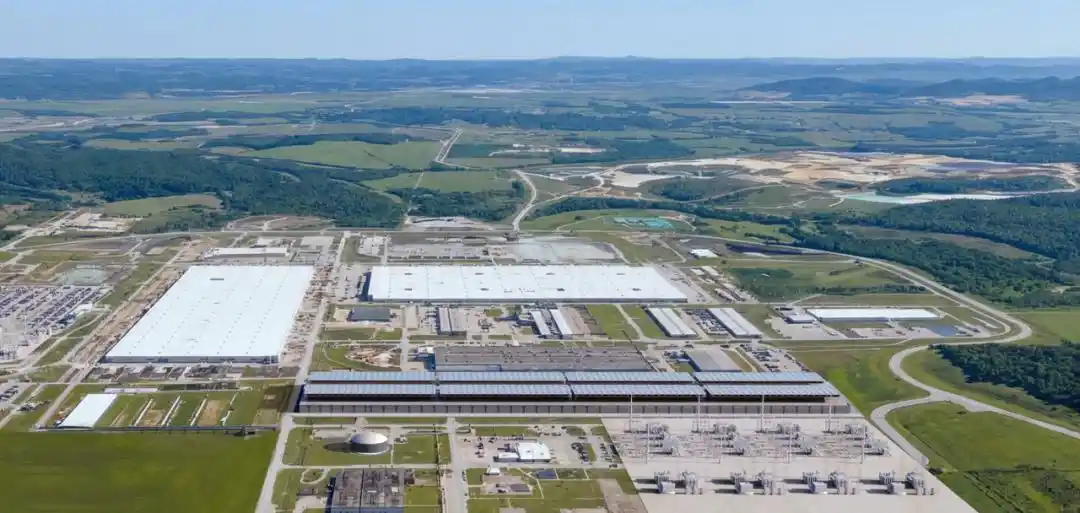
The site is roughly the size of 4.5 Central Parks in New York, large enough to hold nearly 590 supercarriers.

Seventy years ago, this land roared day and night refining uranium capable of destroying the world; today, the same land will simultaneously power 1.5 million GPUs.

Huang's View: The Next Bottleneck in the AI Era

The ultimate power plan for this superfactory is 8 gigawatts!

The required electricity would need the output of several large nuclear power plants, enough to power millions of households, approaching one-seventh of the global data center electricity consumption last year. Currently, the world's largest AI computing center is xA's Colossus 2, with a computing power of less than 1 gigawatt.

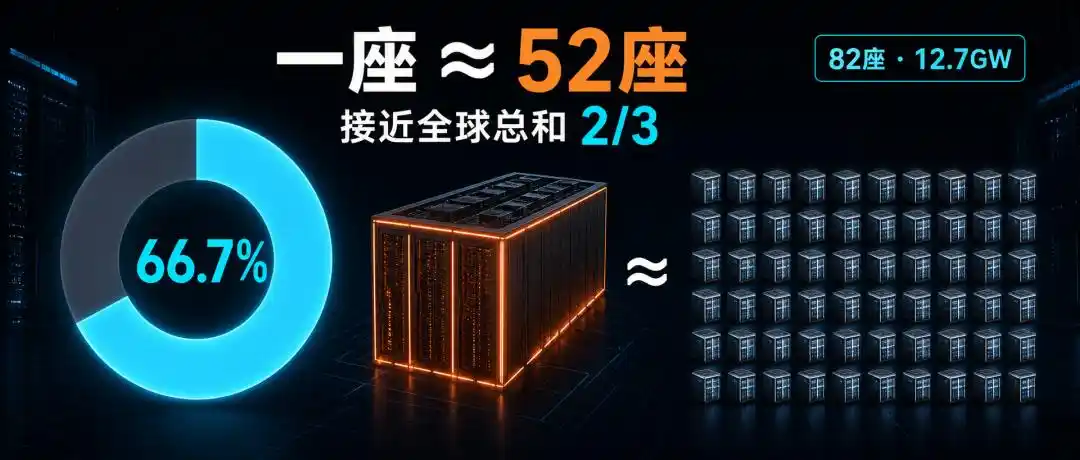
According to Epoch AI's tracking, the 82 largest AI-dedicated data centers globally have a total power infrastructure capacity of about 12.7 gigawatts.

This means that at full capacity, it will possess nearly two-thirds of the combined computing power of the current 82 top-tier AI data centers worldwide.

If measured against the average size of these 82 centers, the picture is even more staggering: you'd need to line up about 52 top-tier AI supercomputing centers to match this single one.
But 8 gigawatts is "just the beginning for AI."
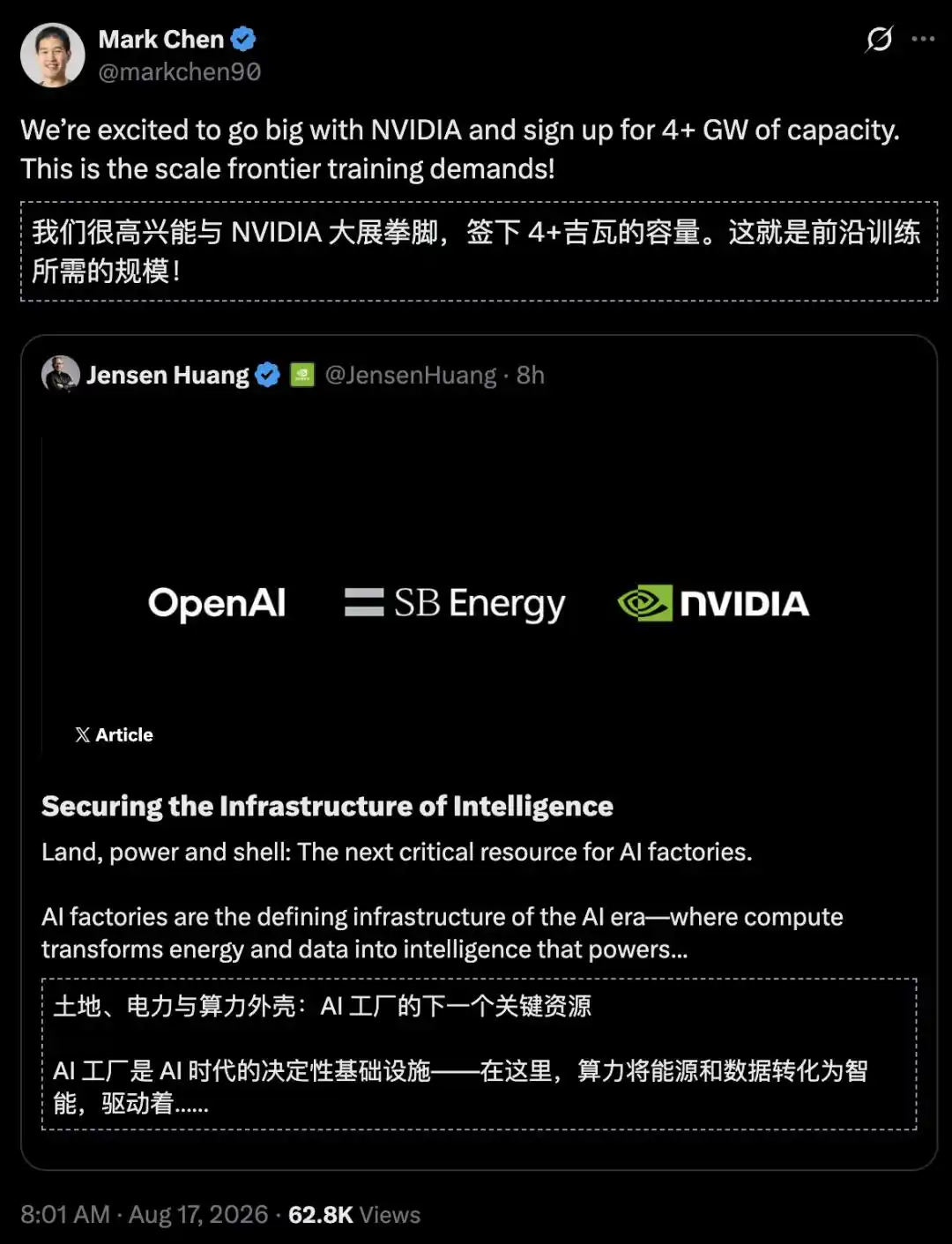
OpenAI's Chief Research Officer put it this way

To this end, Huang announced that NVIDIA will directly invest $1.5 billion into a SoftBank subsidiary and provide a 20-year credit guarantee.

OpenAI signed an unprecedentedly long 20-year lease, securing all the computing power here. Additionally, they will provide up to $84 million in Codex credits for 844,000 students in Ohio.

Masayoshi Son committed heavy investment, promising to bring in 1 gigawatt of new power generation capacity and spending $4.2 billion to upgrade the local aging power grid.

Why have Silicon Valley moguls suddenly transformed into "real estate developers" and "grid construction workers"?

Because Huang Renxun just published a post admitting a harsh truth: the next life-or-death bottleneck for AI isn't chips at all—it's whether there is land, electricity, and facilities.
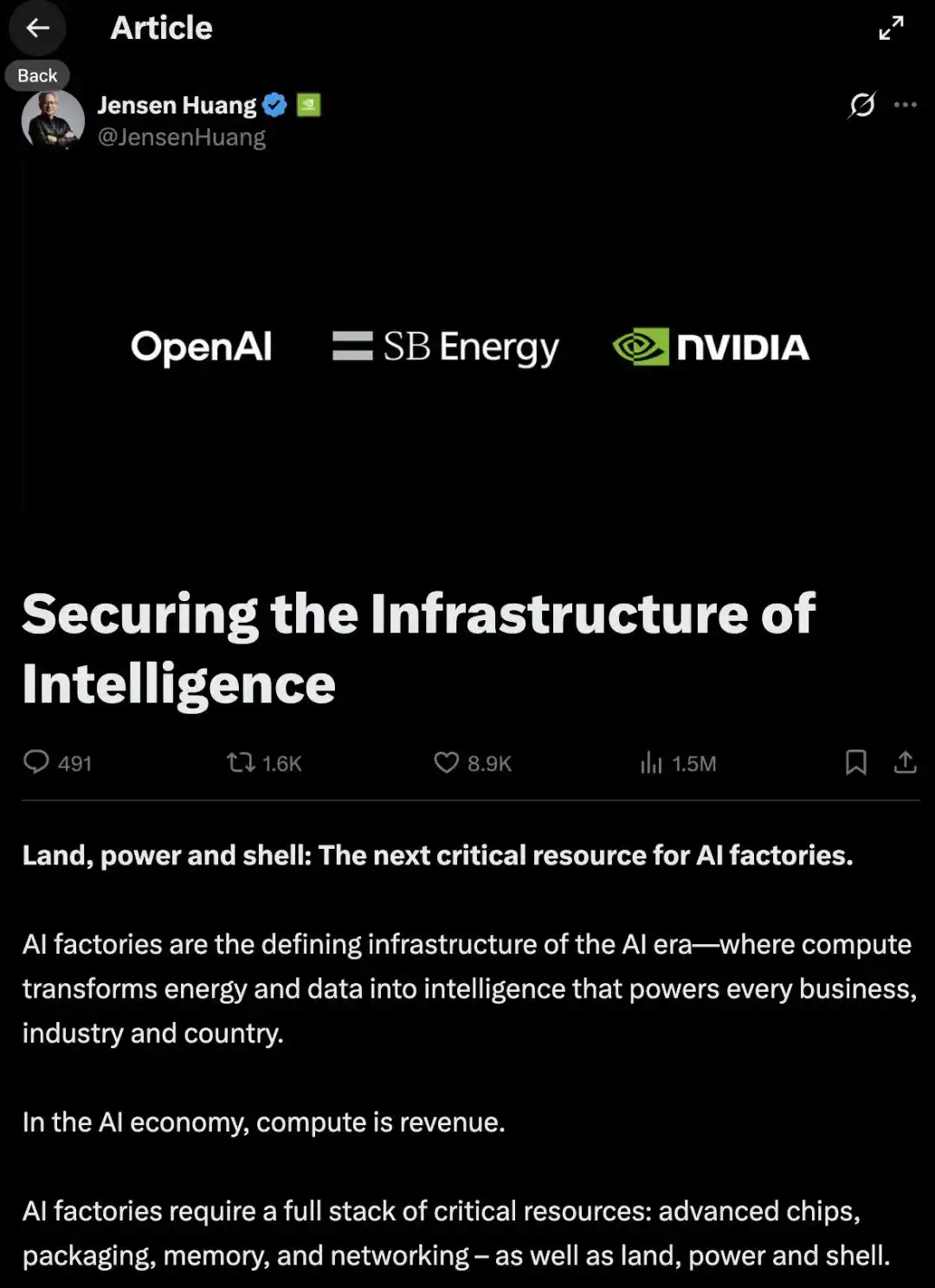
From Competing for Chips to Scrambling for Land and Power

Over the past few years, everyone was fixated on TSMC's capacity, on memory supply, thinking that as long as NVIDIA made GPUs fast enough, AI would race straight to AGI.

But Huang's words reveal the reality.

He said in his blog that a truly functional AI factory doesn't just need advanced chips; it requires three fundamental things—land, electricity, and buildings.

And this is precisely the Achilles' heel for AI newcomers like OpenAI.

Although OpenAI has the technology and ambition, when power grid companies and real estate developers look at them, they think: why should a company just a few years old be sold electricity and land for the next 20 years?

This is the most awkward situation in the AI world right now: the real bottleneck is on the construction site.

They have models with hundreds of billions of parameters, and billions in funding, but they can't support the decades-long infrastructure bills.

Who steps in to settle this?

Only the "big brother" with a $2 trillion market cap—NVIDIA.

Huang's "Master Plan": Investing $1.5B as Guarantor, What's the Goal?

The division of labor among the three parties in this deal is particularly interesting.

SoftBank (the doer): Buys land, constructs buildings, lays power lines, builds server rooms—pure manual labor.

OpenAI (the payer): Signs a 20-year lease, pays rent monthly, and fully utilizes the computing power.

NVIDIA (the guarantor): Invests $1.5 billion for equity and provides a 20-year credit guarantee for the infrastructure project.
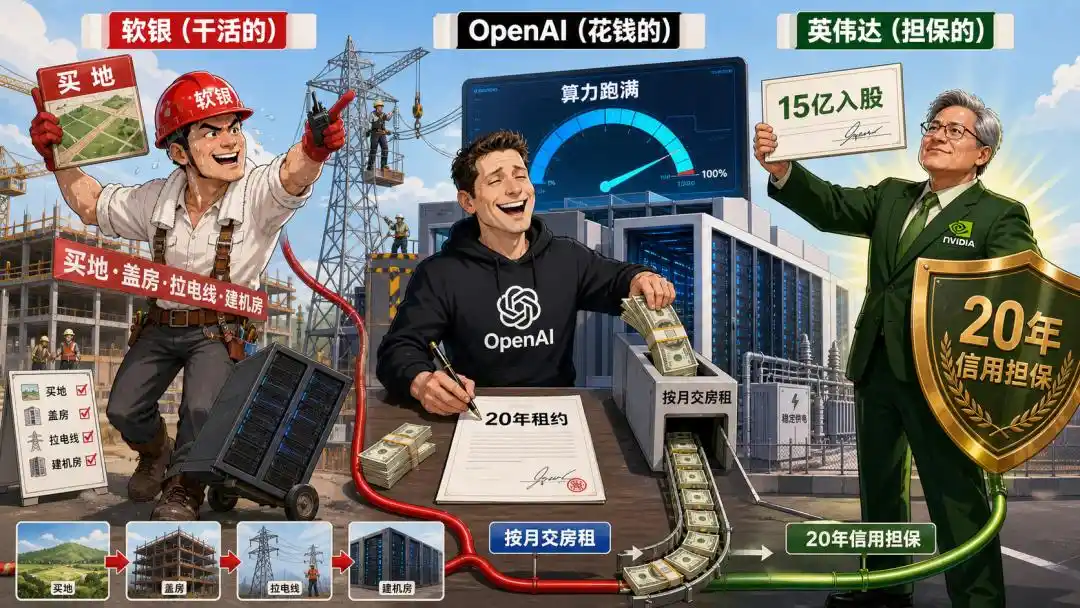
Many people's first reaction: Has Huang gone mad? Why should a GPU seller guarantee its client? Isn't this the "self-guaranteeing" Wall Street despises most?

But Huang responded with remarkable audacity in his blog: "OpenAI pays the rent itself; I'm not subsidizing a single cent."

So what's his angle?

Actually, this is a "lock-in strategy" he's deployed countless times—back when chips were scarce, he locked down TSMC's capacity and ASML's lithography machines with long-term orders and prepayments.

Now he's applying the same playbook to land and electricity.

He's betting that in the coming years, "large plots of land with electricity access" will be scarcer than "silicon wafers capable of making chips."

So he's making a preemptive move, using his $2 trillion market cap's credit to secure the world's best AI locations and power resources, with one stipulation—this facility can only use NVIDIA's chips.
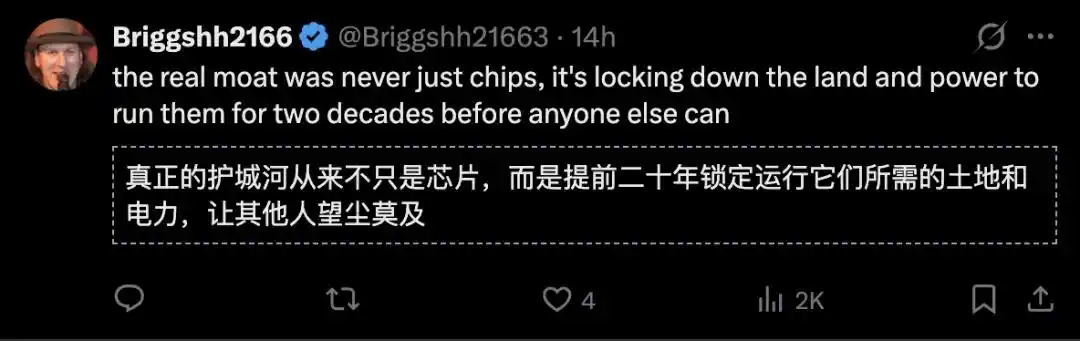
As netizens aptly put it: The real moat is never just the chips, but locking down the land and electricity needed to run them twenty years in advance, leaving others in the dust.

So, is this a bad deal?

Running the Numbers: Why This is a Sure Bet

Why is this deal guaranteed to be profitable?

Do a simple calculation, and it becomes clear.

Based on the announcement data:

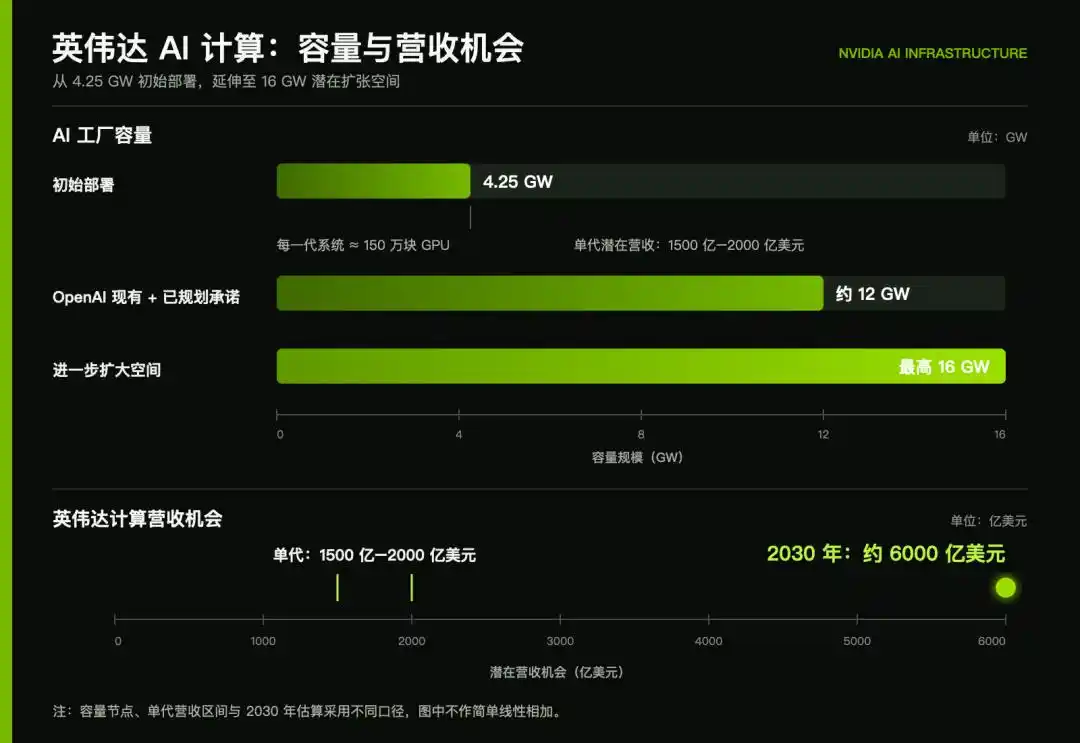
The first phase targets 4.25 gigawatts.

Each generation of the system can house about 1.5 million top-tier GPUs.

Hardware sales revenue per generation is roughly between $150 billion and $200 billion.

OpenAI's existing and planned orders already account for 12 gigawatts of NVIDIA's computing capacity, with potential expansion to 16 gigawatts.

The conclusion is, by 2030, OpenAI alone could present a $600 billion revenue opportunity for NVIDIA!
The key lies here: the buildings and power grid have a 20-year lifespan, but chips are replaced every two to three years.

Land is permanent, power lines are durable, server rooms can be upgraded repeatedly, but the NVIDIA GPUs installed inside—each generation represents tens to hundreds of billions in pure incremental revenue.

What if OpenAI can't pay the rent someday?

Huang already has an exit strategy. NVIDIA's CUDA platform is the industry standard, usable worldwide.

If OpenAI backs out, these server rooms, power lines, and even the installed GPUs can be sublet instantly to other cloud providers, large corporations, or startups. There's no worry about finding takers.

This is the true moat: You pay rent, I profit; you leave, I profit even more.

A Game with No Way Back

The entire logic is now crystal clear:

Better infrastructure → Larger models → Smarter AI → More revenue → Build even larger infrastructure

This accelerating flywheel is also a one-way street.

When the AI race expands from nanometer-scale chip fabrication to square-kilometer-scale land grabs, from wafer fabs to abandoned nuclear plants.

The path to AGI ultimately hinges on electricity and land.

And Huang Renxun has already used $1.5 billion to stake his claim on the game table for the next 20 years.

The most terrifying part isn't that he won this round, but that he has redefined the rules of the game—

To be a true AI titan, you must learn to build, wire, and secure land.

This article is from the WeChat public account "新智元", author: ASI启示录

Cryptos en tendance

Questions liées

QWhat is the total planned power capacity of the AI 'super factory' being built on the Cold War nuclear site in Ohio, and how does it compare to existing global AI data centers?

AThe planned ultimate power capacity of the AI 'super factory' is 8 gigawatts (GW). This is immense compared to existing AI data centers. It is stated to be close to 1/7th of the total global data center power consumption from the previous year. Specifically, when fully operational, it will possess nearly two-thirds (about 2/3) of the combined computing power of the world's 82 largest AI-specific data centers, which have a total infrastructure power of about 12.7 GW.

QWhy does Nvidia's CEO, Jensen Huang, believe the critical bottleneck for AI development has shifted?

AJensen Huang believes the critical bottleneck for AI development has shifted from semiconductor chips to the availability of three fundamental physical resources: land, electricity, and buildings (facilities). He argues that while companies like OpenAI have the technology and ambition, they lack the long-term credibility with utility companies and real estate developers to secure the decades-long commitments required for large-scale power and land, which are now the primary constraints.

QWhat are the specific roles and contributions of Nvidia, OpenAI, and SoftBank in this joint project?

ASoftBank's role is as the developer and builder: purchasing the land, constructing the buildings, installing power lines, and building the data center facilities. OpenAI's role is as the tenant and consumer: signing a 20-year lease and paying rent to use the full computing capacity of the facility. Nvidia's role is as the financial guarantor and technology provider: investing $1.5 billion into a SoftBank subsidiary, providing a 20-year credit guarantee for the infrastructure project, and ensuring the facility is equipped with its GPUs.

QWhat is Jensen Huang's strategic rationale for Nvidia's $1.5 billion investment and long-term guarantee in this infrastructure project?

AJensen Huang's strategic rationale is to 'lock in' critical and increasingly scarce resources—specifically, large plots of land with access to massive power—for the next 20 years. By using Nvidia's financial credibility to secure these resources, he ensures they are dedicated for use with Nvidia's chips. This creates a powerful moat, as future AI competitors will struggle to find equivalent power and land. Furthermore, the infrastructure has a long lifespan, while the GPUs inside will be upgraded every few years, generating recurring revenue for Nvidia.

QAccording to the article's calculations, what is the potential revenue opportunity for Nvidia from OpenAI's demand by 2030?

ABased on the article's calculations and stated data (OpenAI's current and planned orders occupying 12 GW of Nvidia's capacity, expandable to 16 GW), Nvidia's potential revenue opportunity from OpenAI alone could reach $600 billion by 2030. This projection is derived from the scale of hardware (GPUs) required to fill such massive data center capacity over multiple upgrade cycles.

Lectures associées

Le président de la CFTC montre ses cartes : Prochaines étapes, marché crypto, marché de la puissance de calcul et marchés prédictifs

Rédaction : KarenZ, Foresight News Le président de la CFTC, Michael S. Selig, a dévoilé une « feuille de route pour la nouvelle frontière de la finance » lors de la première réunion du comité consultatif sur l'innovation. Cette feuille de route se concentre sur trois domaines principaux : 1. **Crypto-actifs** : Selig privilégie une législation du Congrès, mais si celle-ci stagne, la CFTC est prête à utiliser ses pouvoirs existants pour créer un cadre réglementaire. Cela pourrait permettre aux plateformes d'échange d'être désignées comme des « marchés de crypto-actifs » sous la surveillance de la CFTC. Les protocoles DeFi sont également dans le champ d'étude. 2. **Marchés de la puissance de calcul (AI)** : La CFTC vise à développer des marchés (au comptant, à terme) pour la puissance de calcul (Compute), traitée comme une nouvelle classe d'actifs, afin de permettre la découverte des prix et la couverture des risques pour les entreprises d'IA. 3. **Marchés de prédiction** : Au-delà du débat sur leur légalité, la CFTC travaille à établir des règles concrètes pour les contrats d'événements, concernant leur approbation, la déclaration des données, la protection des investisseurs et la prévention des manipulations. La réunion a été marquée par un vif débat sur les marchés de prédiction, illustrant les défis réglementaires. L'approche globale de la CFTC est de mettre en place des cadres clairs pour que l'innovation puisse se développer dans un environnement régulé, plutôt que d'attendre que les controverses se dissipent.

marsbitIl y a 22 mins

Le président de la CFTC montre ses cartes : Prochaines étapes, marché crypto, marché de la puissance de calcul et marchés prédictifs

marsbitIl y a 22 mins

Le Trésor américain intervient directement pour contenir les taux longs

Le Trésor américain est intervenu directement pour contenir les rendements des obligations à long terme via des opérations de rachat, une mesure ressemblant à un contrôle indirect des taux. L’analyse souligne que cette approche, bien que non strictement assimilable à un contrôle classique des courbes de rendement (YCC), constitue une ingérence active dans le coût de financement de l’État. La situation place la Fed dans une position délicate : alors que certains préconisent un resserrement monétaire pour maîtriser l’inflation et les taux longs, d’autres estiment qu’une telle rigueur pourrait nuire à la croissance nécessaire pour réduire le déficit budgétaire élevé des États-Unis. L’auteur note que la résolution du déficit américain repose largement sur une reprise économique robuste, aujourd’hui attendue du secteur technologique plutôt que des industries traditionnelles. Cependant, si des tensions inflationnistes persistent et que les marchés doutent de la soutenabilité de la dette, le Trésor et la Fed pourraient être contraints de choisir entre la stabilité des prix, le soutien à la croissance et le maintien de la confiance dans le dollar. L’intervention actuelle du Trésor est comparée à des épisodes historiques, comme les rachats de 2000-2002 ou l’opération Twist, mais elle est jugée insuffisante pour adresser les déséquilibres fondamentaux de l’économie américaine, marquée par une divergence sectorielle (économie en K) et des défis structurels. L’attitude future de la Fed sera déterminante : si elle s’associe à ces interventions, cela signalerait un changement de paradigme potentiellement favorable à l’or. Enfin, l’auteur questionne l’efficacité des mesures techniques face aux problèmes de fond, évoquant la difficulté des réformes structurelles et la tentation des solutions apparentes « rapides » mais peu durables.

marsbitIl y a 28 mins

Le Trésor américain intervient directement pour contenir les taux longs

marsbitIl y a 28 mins

Analyse JPMorgan : L'essai INT de Moderna atteint son critère d'évaluation principal, mais le marché l'avait déjà intégré

L'essentiel du rapport de JPMorgan sur Moderna (19 août) : l'essai clinique de phase III du traitement individualisé par néoantigènes (INT) de Moderna, en combinaison avec le Keytruda de Merck pour le mélanome adjuvant, a atteint ses critères d'évaluation principaux (survie sans récidive) et secondaires clés (survie sans métastase à distance). Bien que ces résultats soient cliniquement significatifs, ils étaient largement anticipés par le marché, avec une probabilité de succès pré-établie à 85% par la banque. Par conséquent, JPMorgan estime que ce succès dans le mélanome adjuvant est déjà intégré dans le cours de l'action de Moderna (environ 63 USD à l'époque du rapport). La banque maintient sa recommandation « Underweight » (sous-pondérer) et son objectif de prix à 40 USD, soulignant un potentiel de baisse de 36%. Le raisonnement clé est que l'adaptation du mélanome adjuvant représente un marché relativement limité. La future valorisation de Moderna dépendra essentiellement de la capacité de la plateforme INT à reproduire son succès dans des indications oncologiques plus larges et plus importantes (comme le cancer du poumon). Les données cliniques dans ces autres cancers seront le principal moteur de la réévaluation du titre. La hausse initiale du cours reflète davantage des rachats de positions vendeuses qu'un changement fondamental durable.

marsbitIl y a 29 mins

Analyse JPMorgan : L'essai INT de Moderna atteint son critère d'évaluation principal, mais le marché l'avait déjà intégré

marsbitIl y a 29 mins

Trading

Spot

Articles tendance

Comment acheter WAR

Bienvenue sur HTX.com ! Nous vous permettons d'acheter WAR (WAR) de manière simple et pratique. Suivez notre guide étape par étape pour commencer votre parcours crypto.Étape 1 : Création de votre compte HTXUtilisez votre adresse e-mail ou votre numéro de téléphone pour ouvrir un compte sur HTX gratuitement. L'inscription se fait en toute simplicité et débloque toutes les fonctionnalités.Créer mon compteÉtape 2 : Choix du mode de paiement (rubrique Acheter des cryptosCarte de crédit/débit : utilisez votre carte Visa ou Mastercard pour acheter instantanément WAR (WAR).Solde :utilisez les fonds du solde de votre compte HTX pour trader en toute simplicité.Prestataire tiers :pour accroître la commodité d'utilisation, nous avons ajouté des modes de paiement populaires tels que Google Pay et Apple Pay.P2P :tradez directement avec d'autres utilisateurs sur HTX.OTC (de gré à gré) : nous offrons des services personnalisés et des taux de change compétitifs aux traders.Étape 3 : stockage de vos WAR (WAR)Après avoir acheté vos WAR (WAR), stockez-les sur votre compte HTX. Vous pouvez également les envoyer ailleurs via un transfert sur la blockchain ou les utiliser pour trader d'autres cryptos.Étape 4 : tradez des WAR (WAR)Tradez facilement WAR (WAR) sur le marché Spot de HTX. Il vous suffit d'accéder à votre compte, de sélectionner la paire de trading, d'exécuter vos trades et de les suivre en temps réel. Nous offrons une expérience conviviale aux débutants comme aux traders chevronnés.

747 vues totalesPublié le 2024.12.11Mis à jour le 2026.06.02

Comment acheter WAR

Discussions

Bienvenue dans la Communauté HTX. Ici, vous pouvez vous tenir informé(e) des derniers développements de la plateforme et accéder à des analyses de marché professionnelles. Les opinions des utilisateurs sur le prix de WAR (WAR) sont présentées ci-dessous.

活动图片