Market Trend (June 19): US-Iran Deal Drives Out Geopolitical Premium; Chip Stocks Soar to New Highs; Energy Sector Leads Declines

marsbitPublié le 2026-06-19Dernière mise à jour le 2026-06-19

Résumé

U.S. Market Trends (June 19): U.S.-Iran Deal Eases Tensions, Chip Stocks Soar, Energy Sector Leads Declines. U.S. stocks rallied on Thursday as the signing of a temporary U.S.-Iran deal in Geneva de-escalated Middle East tensions, with Saudi oil tankers transiting the Strait of Hormuz. This geopolitical relief helped markets recover from recent Fed-driven volatility. The S&P 500 rose over 1%, the Nasdaq gained nearly 2%, and the Dow Jones Industrial Average closed at another record high. The Philadelphia Semiconductor Index surged over 6% to a historic peak. Chip stocks were the standout performers. Reports of an Apple-Intel design and foundry deal for certain products, alongside mentions of potential Nvidia and SpaceX collaborations with Intel, propelled the sector. Intel surged ~10.5%, while memory chip makers like Micron also saw significant gains, highlighting sustained confidence in long-term AI capital expenditure. In contrast, the energy sector was the day's sole loser, with the S&P 500 energy sub-index declining as WTI crude fell ~2% to around $74.29/barrel. The reopening of key shipping routes erased prior geopolitical risk premiums. SpaceX extended losses for a second day on news of a potential large bond offering. Market volatility (VIX) dropped sharply, indicating a swift reversal of post-Fed jitters. Treasury yields dipped slightly but remained elevated. The focus now shifts to upcoming economic data, including next week's PCE inflation report and Micron's ea...

Written By: Trend Research
On Thursday, the Strait of Hormuz opened, and chip stocks hit a record high.

The provisional US-Iran agreement was officially signed in Geneva, with three Saudi supertankers transiting the Strait of Hormuz the same day. The geopolitical positive news outweighed the hawkish FOMC shock. The S&P 500 rose over 1%, the Nasdaq jumped nearly 2% to reverse a two-day losing streak, the Dow recorded its third record-high close this week, and the Philadelphia Semiconductor Index surged more than 6% to set another all-time high. Energy stocks bled collectively as oil prices fell, becoming the only losing sector for the day.

Market Performance

The S&P 500 closed up 1.08% at 7,500.58 points, the Nasdaq gained 1.91% to 26,517.93 points, the Dow edged up 0.14% to 51,564.70 points, and the Russell 2000 led the gains, rising 2.12% to 2,979.77 points. Gains decreased from small caps to large caps, with the Dow almost flatlining. This indicates that the primary drivers of the rebound were the high-beta names that fell the most in the previous two days, while defensive and blue-chip stocks failed to keep up. The US-Iran news had already been fully priced in pre-market, with indices maintaining a steady upward trajectory throughout the day, largely recouping yesterday's FOMC-induced losses by the close.

In the early hours, Trump confirmed on Truth Social that Apple and Intel have reached a design and foundry partnership, with Intel initially handling mature-node chips for iPads and older iPhones, while flagship products will continue to be supplied by TSMC. Negotiations have been ongoing for over a year. With this deal, Intel's foundry business secures its most significant external client, and Apple diversifies its reliance on TSMC. Neither company has officially responded, but the market priced in the directional significance.

In the same post, Trump also mentioned that Nvidia has agreed to have Intel produce its initial batch of chips and that Musk committed to jointly building the world's largest wafer fab, TerraFab. The Apple partnership is the third piece in Intel's foundry puzzle. Intel closed up roughly 10.5% at $133.82. Apple plans price hikes due to rising memory and storage chip costs, with SanDisk surging over 11% and Micron gaining nearly 9%, benefiting the entire storage supply chain. Nvidia rose nearly 3%, and the Philadelphia Semiconductor Index jumped over 6% to a record high. From equipment to storage to computing power, the entire AI value chain moved higher, confirming that the long-term logic of AI capital expenditure remains intact even after the hawkish dot plot landed.

SpaceX closed down 3.56% at $185.00, falling for a second consecutive day with a cumulative two-day decline of about 8.3%. Bloomberg reported that day that the company is preparing to issue at least $20 billion in investment-grade dollar-denominated bonds to repay a bridge loan maturing in 2027. Concerns over potential equity dilution, combined with the hawkish FOMC shock, constituted a double pressure behind the two-day decline. It is still up nearly 15% for the week and 37% above its IPO price from the first day of trading, but short-term pressure has not yet dissipated.

The energy sector led the declines among the S&P 500's 11 major sectors. WTI crude oil fell about 2% to $74.29 per barrel. ExxonMobil and Chevron both retreated, and the Dow Jones Transportation Average slid over 4%. The reopening of the Strait of Hormuz released all geopolitical premiums, and the year-to-date gains of 20-40% began to loosen. The energy sector went from being the biggest winner of the week to the biggest loser.

The technology, consumer discretionary, and industrial sectors led the gains in unison. Capital flowed from defensive and energy stocks into the computing power chain. Money that flowed out of tech stocks yesterday due to the FOMC shock partially flowed back today, taking advantage of the geopolitical positive news. The speed of this rotation indicates that these funds did not truly exit the market but were simply waiting for a reason to re-enter.

Macro Outlook

The VIX plunged 11.06% to close at 16.40. The panic sentiment triggered by yesterday's FOMC largely dissipated within a day, suggesting the market's pricing of the hawkish dot plot was more of a technical hedge than genuine risk aversion. The 10-year Treasury yield edged down to around 4.445%, while the 2-year yield remained above 4.18%. The market did not roll back its pricing for a September rate hike; volatility was merely suppressed temporarily by improved risk appetite. Gold fell to $4,210 per ounce, silver also declined, and the dollar index retreated slightly but remained elevated. Bitcoin (CoinGecko) traded around $64,026, and Ethereum hovered around $1,734. The crypto market showed no clear reaction to the geopolitical positive news, with the pressure from hawkish expectations not yet relieved. WTI crude oil closed at $74.29 per barrel, hitting a nearly three-month low.

Next week will see the release of PCE data, Flash PMI, and Micron's earnings report. Micron's guidance is the most direct barometer for AI computing demand; last quarter, a single below-expectation guidance triggered a sector-wide single-day plunge. The Russell Reconstitution will take effect at the close next Friday, with mechanical rebalancing flows expected to cause a significant spike in trading volume, elevating volatility for small-cap stocks.

Trend Perspective

Thursday's rebound stood on two legs: the US-Iran deal signing released the geopolitical premium, and chip stocks confirmed the AI narrative remains intact with actual gains. Both logics hold, but their durations differ. The geopolitical premium is a one-time event; once the deal is signed, it's largely priced out. If Iran backtracks later, the market reaction will be faster and fiercer than the first time. The chip stock logic is more durable. The simultaneous rise in Intel, SanDisk, and Micron indicates the day's rally had breadth across the supply chain, and the pricing of AI capital expenditure has fundamental support. Behind SpaceX's two-day decline lies a new variable: once the $20 billion bond issuance materializes, financing pressure and dilution expectations could become a sustained drag on the stock price, not just a valuation adjustment. Next week's PCE data is the nearest litmus test. If the data again comes in hotter than expected, solidifying a September rate hike from probability to consensus, Thursday's rebound will be merely a pause for breath. If the data softens, the market will repricing rate cut expectations faster than anyone expects.


Cryptos en tendance

Questions liées

QWhat was the main driver behind the major indices (S&P 500, Nasdaq, Dow) rising on the day discussed in the article?

AThe primary driver was the formal signing of the temporary U.S.-Iran agreement, which reduced geopolitical tensions. This positive development outweighed the impact of the previous day's hawkish FOMC minutes, leading to a broad market rebound.

QWhy did the Philadelphia Semiconductor Index surge to a record high, and which specific stocks were highlighted as key contributors?

AThe Philadelphia Semiconductor Index surged over 6% due to renewed confidence in the long-term AI capital expenditure cycle following the FOMC shock. Key contributors included Intel (up ~10.5% on news of a potential Apple deal), Micron (up nearly 9%), Western Digital/SanDisk (up over 11%), and Nvidia (up nearly 3%), reflecting strength across the entire chip ecosystem from equipment to memory to computing power.

QWhich sector was the sole loser on the trading day, and what was the primary reason for its decline?

AThe Energy sector was the sole loser, leading the declines among the S&P 500's 11 major sectors. The primary reason was a ~2% drop in WTI crude oil prices to around $74.29 per barrel, as the reopening of the Strait of Hormuz following the U.S.-Iran deal eliminated the geopolitical risk premium that had previously supported oil prices.

QAccording to the article, what new factor is creating sustained pressure on SpaceX's stock price beyond short-term valuation adjustments?

AThe article states that SpaceX is preparing to issue at least $20 billion in investment-grade USD bonds to refinance bridge loans due in 2027. This potential debt issuance raises concerns about financing pressure and equity dilution, which could create ongoing downward pressure on the stock price.

QWhat does the article identify as the key near-term test ('litmus test') for determining the sustainability of the market's rebound?

AThe article identifies the upcoming PCE (Personal Consumption Expenditures) inflation data as the key near-term litmus test. If the data comes in hotter than expected, it could solidify market consensus for a September Fed rate hike and undermine the rebound. Conversely, softer data could lead markets to quickly reprice rate cut expectations, supporting further gains.

Lectures associées

La réalité des paiements en Amérique latine est très différente de ce que vous pensez

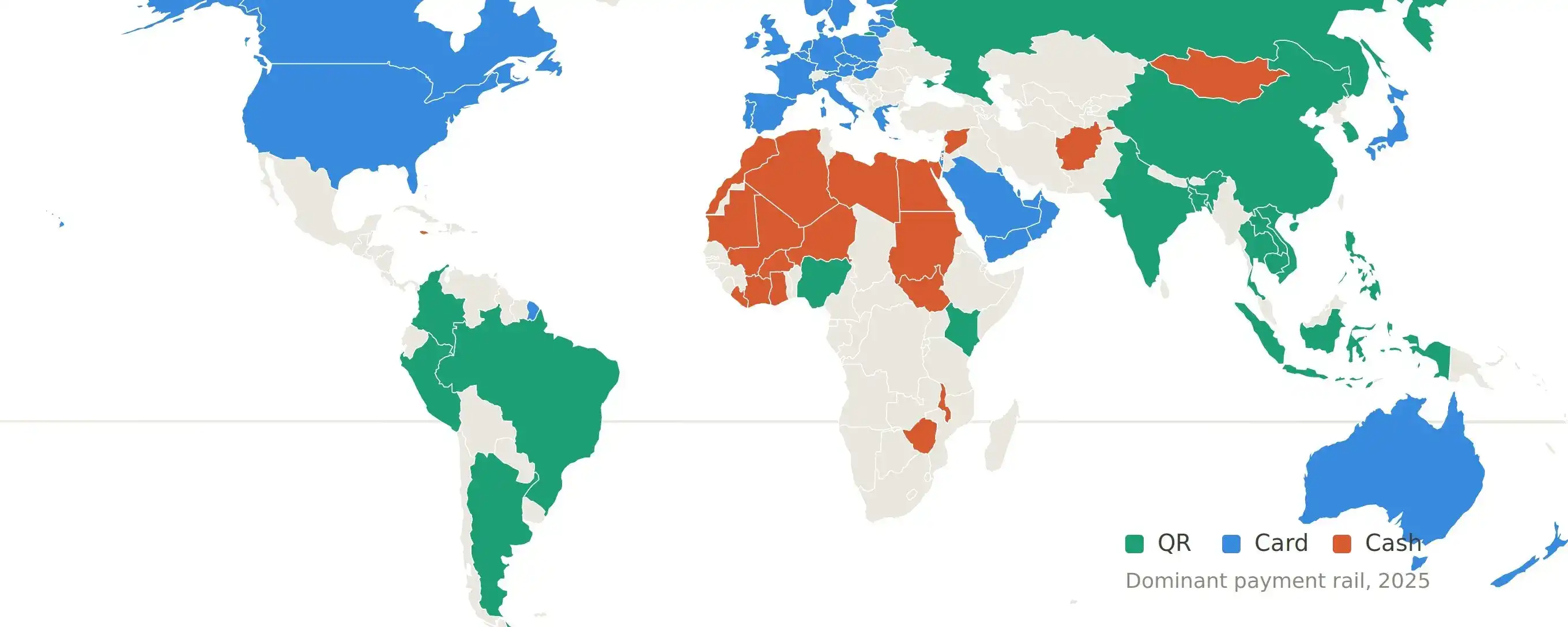
**Le paysage des paiements en Amérique latine se transforme profondément.** Une enquête de terrain de 500 heures révèle des réalités souvent méconnues. Les cartes crypto tirent l'essentiel de leur volume des professionnels recevant des salaires en stablecoins (souvent en dollars US) qu'ils convertissent en monnaie locale via des systèmes comme Pix, plutôt que des petites dépenses courantes. **Le QR code domine désormais**, avec Pix au Brésil traitant plus de transactions que les cartes. Cette tendance, visible aussi en Inde ou en Chine, montre que les marchés émergents contournent le modèle traditionnel de la carte. La plus grande opportunité réside dans **l'interopérabilité internationale** entre ces systèmes de paiement instantané nationaux, aujourd'hui quasi inexistante. La concurrence se déplace vers la possession d'infrastructures de règlement (licences bancaires) pour réduire les coûts. Le modèle "un produit pour toute l'Amérique latine" est un leurre : il faut segmenter par flux de capitaux (touristes, expatriés, nomades digitaux, etc.). Les marchés comme le Brésil et le Mexique sont saturés, alors que des corridors moins disputés (ex: "les cinq pays oubliés" d'Amérique centrale) offrent un potentiel sous-estimé. Enfin, contrairement aux idées reçues, **la réglementation en Amérique latine est souvent plus avancée et pragmatique** que celle des États-Unis sur les stablecoins et les fintechs, avec des cadres clairs qui se mettent en place. La course au moins-disant sur les frais de conversion de stablecoins est déjà engagée, poussant les gagnants à construire de la valeur au-delà du simple échange.

marsbitIl y a 2 h

La réalité des paiements en Amérique latine est très différente de ce que vous pensez

marsbitIl y a 2 h

Trading

Spot
Futures

Articles tendance

Comment acheter CHIP

Bienvenue sur HTX.com ! Nous vous permettons d'acheter USD.AI (CHIP) de manière simple et pratique. Suivez notre guide étape par étape pour commencer votre parcours crypto.Étape 1 : Création de votre compte HTXUtilisez votre adresse e-mail ou votre numéro de téléphone pour ouvrir un compte sur HTX gratuitement. L'inscription se fait en toute simplicité et débloque toutes les fonctionnalités.Créer mon compteÉtape 2 : Choix du mode de paiement (rubrique Acheter des cryptosCarte de crédit/débit : utilisez votre carte Visa ou Mastercard pour acheter instantanément USD.AI (CHIP).Solde :utilisez les fonds du solde de votre compte HTX pour trader en toute simplicité.Prestataire tiers :pour accroître la commodité d'utilisation, nous avons ajouté des modes de paiement populaires tels que Google Pay et Apple Pay.P2P :tradez directement avec d'autres utilisateurs sur HTX.OTC (de gré à gré) : nous offrons des services personnalisés et des taux de change compétitifs aux traders.Étape 3 : stockage de vos USD.AI (CHIP)Après avoir acheté vos USD.AI (CHIP), stockez-les sur votre compte HTX. Vous pouvez également les envoyer ailleurs via un transfert sur la blockchain ou les utiliser pour trader d'autres cryptos.Étape 4 : tradez des USD.AI (CHIP)Tradez facilement USD.AI (CHIP) sur le marché Spot de HTX. Il vous suffit d'accéder à votre compte, de sélectionner la paire de trading, d'exécuter vos trades et de les suivre en temps réel. Nous offrons une expérience conviviale aux débutants comme aux traders chevronnés.

355 vues totalesPublié le 2026.04.21Mis à jour le 2026.06.02

Comment acheter CHIP

Discussions

Bienvenue dans la Communauté HTX. Ici, vous pouvez vous tenir informé(e) des derniers développements de la plateforme et accéder à des analyses de marché professionnelles. Les opinions des utilisateurs sur le prix de CHIP (CHIP) sont présentées ci-dessous.

活动图片