South Korean Investors Shift To Crypto-Related Stocks Amid Stablecoin Push – Report

bitcoinistPublié le 2025-08-12Dernière mise à jour le 2025-08-12

Résumé

South Korean retail investors have recently shifted their focus when investing in overseas stocks, moving from US big tech stocks...

Trusted Editorial content, reviewed by leading industry experts and seasoned editors. Ad Disclosure

South Korean retail investors have recently shifted their focus when investing in overseas stocks, moving from US big tech stocks to crypto-related equities amid growing global interest in the sector.

South Korean Investors Turn To Crypto Stocks

Over the past few months, South Korean individuals investing in overseas stocks have shifted from US big tech equities to crypto-linked stocks, recent data showed, with a focus on stablecoin-related companies.

Citing data from the Korean Center for International Finance (KCIF), Yonhap News Agency reported that the percentage of crypto-linked equities in the top 50 net-bought stocks by local retail investors increased from 8.5% in January to 36.5% in June before dropping to 31.4% last month.

Meanwhile, net purchases of the top seven US big tech stocks declined nearly 74% from a monthly average of $1.68 billion between January and April to $440 million in May, further dropping to $260 million in July.

According to the report, South Korean investors became net sellers of overseas stocks in May and June but returned to net buying in July with $499 million in purchases. Nonetheless, the new momentum was considerably weaker compared to the $3.8 billion monthly average buying between January and April.

“Since June, the domestic stock market has outperformed overseas markets, while the local currency has strengthened, prompting individual investors to withdraw their investments from foreign markets,” Yonhap News Agency noted, citing the KCIF report.

On Monday, Bloomberg also highlighted that South Korean retail investors have flocked to BitMine Immersion Technologies over the past month, as investors “continue to be drawn to the kind of high-risk, high-reward opportunities on offer in crypto.”

The news media outlet reported that local retail investors have poured $259 million into Bitmine stocks since the start of July. According to Korea Securities Depository data, this made the company the most purchased foreign security stock during that period.

Notably, BitMine is a Bitcoin and Ethereum Network Company “with a focus on the accumulation of Crypto for long-term investment.” It recently became the largest ETH treasury in the world and the third-largest crypto treasury globally, with its holdings surpassing 1.15 million ETH, valued at $4.96 billion at current prices.

Retail Shift Fueled By Stablecoin Momentum

According to the KCIF report, the surge in crypto-related equities, and particularly stocks related to stablecoins, follows the passage of landmark crypto legislation in the US. President Donald Trump signed the Guiding and Establishing National Innovation for US Stablecoins (GENIUS) Act into law last month, setting a framework for much-needed stablecoin regulation and innovation in the country.

Amid the US push, stablecoins have also seen growing momentum in several jurisdictions, including South Korea. In June, a member of the Democratic Party of Korea (DPK) proposed a comprehensive legislation to establish a more structured regulatory framework for crypto assets in the country, which included a licensing system for stablecoin issuers.

In July, South Korea’s ruling and opposition parties also proposed rival bills to establish a regulatory framework for digital assets pegged to the Korean Won (KRW) to advance the ongoing efforts to institutionalize the sector.

As reported by Bitcoinist, the banking sector is preparing for the upcoming legislation, studying two legalization scenarios, as it remains unclear whether non-bank entities will be allowed to be stablecoin issuers.

The financial institutions are also considering a business model in which banks establish a joint venture to collectively issue stablecoins, and have reportedly contacted various non-bank companies to prepare for the legalization and issuance of KRW-pegged digital assets.
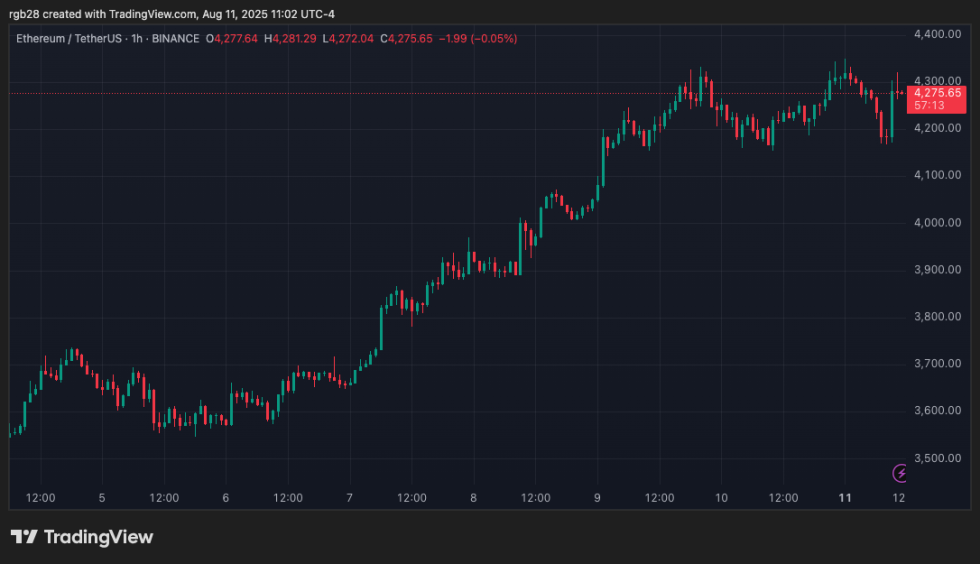
crypto, ETH, ETHUSDT, Ethereum

Ethereum (ETH) trades at $4,275 in the one-week chart. Source: ETHUSDT on TradingView
Featured Image from Unsplash.com, Chart from TradingView.com
Editorial Process for bitcoinist is centered on delivering thoroughly researched, accurate, and unbiased content. We uphold strict sourcing standards, and each page undergoes diligent review by our team of top technology experts and seasoned editors. This process ensures the integrity, relevance, and value of our content for our readers.

Rubmar is a crypto enthusiast who likes learning and improving constantly. She enjoys reporting on the latest news and developments in the crypto industry. Rubmar also enjoys scrapbooking, crafting, simulation games, and watching football.

Lectures associées

Nouvelle étude de Grayscale : Quel est le prochain moteur de croissance de Solana ?

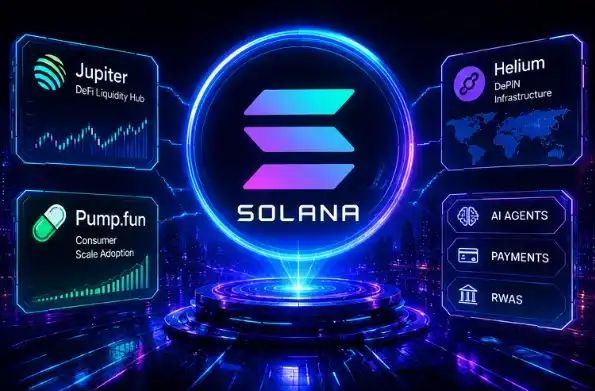
L'agence de gestion d'actifs numériques Grayscale a récemment publié un rapport intitulé "Solana : Crypto's Financial Bazaar", marquant un changement significatif dans l'évaluation de la blockchain. L'accent n'est plus mis uniquement sur ses performances techniques (TPS élevé, faible coût), mais sur son évolution vers une plateforme soutenant une activité économique à grande échelle. Le rapport souligne que la compétition entre les blockchains de Layer 1 est entrée dans une nouvelle phase : la valeur à long terme est désormais déterminée par l'activité économique réelle sur la chaîne, et non par les seules capacités techniques. Solana montre ses atouts avec plus de 1000 dApps, des transactions quotidiennes dépassant 100 millions et environ 4,3 millions d'utilisateurs actifs quotidiens. Grayscale illustre cette nouvelle dynamique de croissance à travers trois applications représentatives : * **Jupiter** : Un agrégateur DEX devenu l'infrastructure centrale de liquidité pour l'écosystème DeFi de Solana. * **Pump.fun** : Une plateforme de lancement de memes qui a démontré la capacité de Solana à attirer des utilisateurs grand public et à générer des revenus stables (environ 1,2 million de dollars de revenus quotidiens). * **Helium (et le secteur DePIN)** : Représente l'expansion de Solana vers l'infrastructure physique du monde réel, reliant la blockchain à des secteurs économiques concrets. En parallèle, la Solana Foundation oriente sa communication vers de nouveaux récits de croissance stratégiques : l'intégration des **paiements**, des **stablecoins**, des **actifs du monde réel (RWA)**, de la **tokenisation** et du potentiel des **agents d'IA** pour les transactions machine-à-machine. En conclusion, la réévaluation de Solana par les institutions comme Grayscale signale un tournant. L'enjeu n'est plus de prouver sa vitesse, mais sa capacité à devenir un "bazar financier" numérique prospère, attirant durablement développeurs, utilisateurs et activités économiques variées pour une croissance pérenne.

marsbitIl y a 20 mins

Nouvelle étude de Grayscale : Quel est le prochain moteur de croissance de Solana ?

marsbitIl y a 20 mins

Pour gagner cet argent, ils ont attendu 7 ans

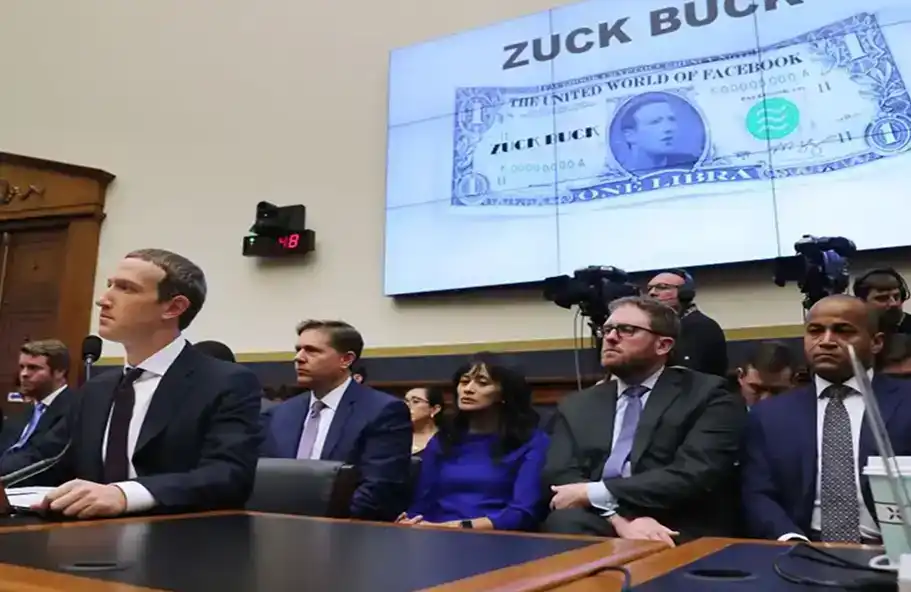
Circle, l'émetteur de la stablecoin USDC, a vu son action chuter de près de 20% suite à l'annonce d'un nouveau consortium, comprenant Visa, Stripe, Mastercard, Coinbase et BlackRock, lançant l'Open USD, une nouvelle stablecoin dollar. Le projet prévoit de redistribuer les revenus des réserves aux entreprises qui l'adopteront, s'attaquant ainsi au modèle économique principal de Circle, qui tire profit des intérêts sur les réserves de l'USDC. Cette initiative rappelle le projet Libra de Facebook en 2019, qui avait réuni des acteurs similaires mais avait échoué face aux craintes réglementaires et à la méfiance envers le géant des réseaux sociaux. En sept ans, le contexte a changé : un cadre réglementaire émerge, les infrastructures blockchain sont matures et les acteurs traditionnels ont exploré les crypto-actifs. L'Open USD adopte un récit plus modeste, se présentant comme un outil de paiement interentreprises conforme, contrairement à la vision ambitieuse de « monnaie mondiale » de Libra. Cependant, les défis persistent. Un consortium doit concilier les intérêts de nombreux membres, et construire la confiance, la liquidité et l'adoption nécessaire pour une stablecoin prend du temps. Bien que l'USDC conserve des avantages significatifs, l'annonce remet en question le statut privilégié de Circle. Le marché réévalue son modèle, passant d'un « ticket d'entrée exclusif » à un simple émetteur confronté à une concurrence accrue et aux cycles des taux d'intérêt. L'objectif sous-jacent demeure : capter la valeur du mouvement de l'argent sur internet, mais avec une approche désormais plus discrète, à la manière d'une infrastructure plutôt que d'une révolution affichée.

marsbitIl y a 20 mins

Pour gagner cet argent, ils ont attendu 7 ans

marsbitIl y a 20 mins

Google en pleine tempête, sa valeur boursière s'évapore de centaines de milliards de dollars, Gemini Spark peut-il sauver la mise ?

Google traverse une période de turbulences, avec une chute de sa valeur boursière de plusieurs centaines de milliards de dollars suite au départ de talents clés. Ces départs touchent les domaines fondamentaux des grands modèles de langage (LLM) : architecture, science, programmation et pré-entraînement. Dans ce contexte, Google présente Gemini Spark, son nouveau produit phare. Contrairement à un chatbot classique, Spark fonctionne en permanence sur le cloud et peut automatiser des tâches complexes en interagissant avec les outils Google Workspace (Gmail, Agenda, Docs, etc.) et des services externes. Son cadre, Antigravity, permet de créer des tâches, des compétences et des planifications. Cependant, Spark est actuellement réservé aux abonnés Google AI Ultra (100 dollars/mois), un prix critiqué. Son lancement intervient alors que des concurrents comme OpenAI et Anthropic, ainsi que des startups, développent déjà activement leurs propres agents IA. L'article souligne le paradoxe de Google : l'entreprise possède l'écosystème idéal (Workspace) pour dominer le marché des agents de productivité, mais sa prudence (risques d'erreurs, confidentialité) l'a fait rater le premier mouvement. Spark marque un tournant en permettant enfin à l'IA d'agir de manière autonome. La question reste de savoir si cette "machine à travailler" peut compenser la perte de ses cerveaux et assurer l'avenir de Google.

marsbitIl y a 44 mins

Google en pleine tempête, sa valeur boursière s'évapore de centaines de milliards de dollars, Gemini Spark peut-il sauver la mise ?

marsbitIl y a 44 mins

Trading

Spot
活动图片