THIS is the stablecoin power angle that nobody is talking about

ambcryptoPublicado a 2026-02-02Actualizado a 2026-02-02

Resumen

Dollar-backed stablecoins are increasingly serving as a tool for the U.S. to extend its monetary influence abroad without physically moving dollars overseas, according to a Rabobank report. When foreign entities demand dollar stablecoins, U.S. issuers convert this demand into Treasury bill purchases, helping fund U.S. deficits at lower rates while digital tokens circulate internationally. This mechanism allows dollars to remain within the U.S. financial system while still facilitating global trade. Non-USD stablecoins are also gaining traction, with their supply surging 260% over the past year to a combined market cap of $1.55 billion, though they remain small compared to dollar-pegged alternatives. A key application driving adoption is crypto-backed payment cards, which have grown into an $18 billion market. Monthly transaction volumes have increased from $100 million in early 2023 to over $1.5 billion, growing at an annual rate exceeding 100%. These cards operate on top of traditional networks like Visa and Mastercard, using stablecoins to settle transactions in the background while maintaining a familiar user experience. In summary, dollar-backed stablecoins are expanding U.S. monetary power digitally without exporting physical dollars, while crypto payment infrastructure accelerates their real-world use.

Dollar-backed stablecoins are now more than just a crypto payment tool. Recent reports say that they may also be helping the U.S. extend dollar influence abroad, in a way that keeps real capital at home.

Here’s what you need to know.

Stablecoins – A secret weapon?

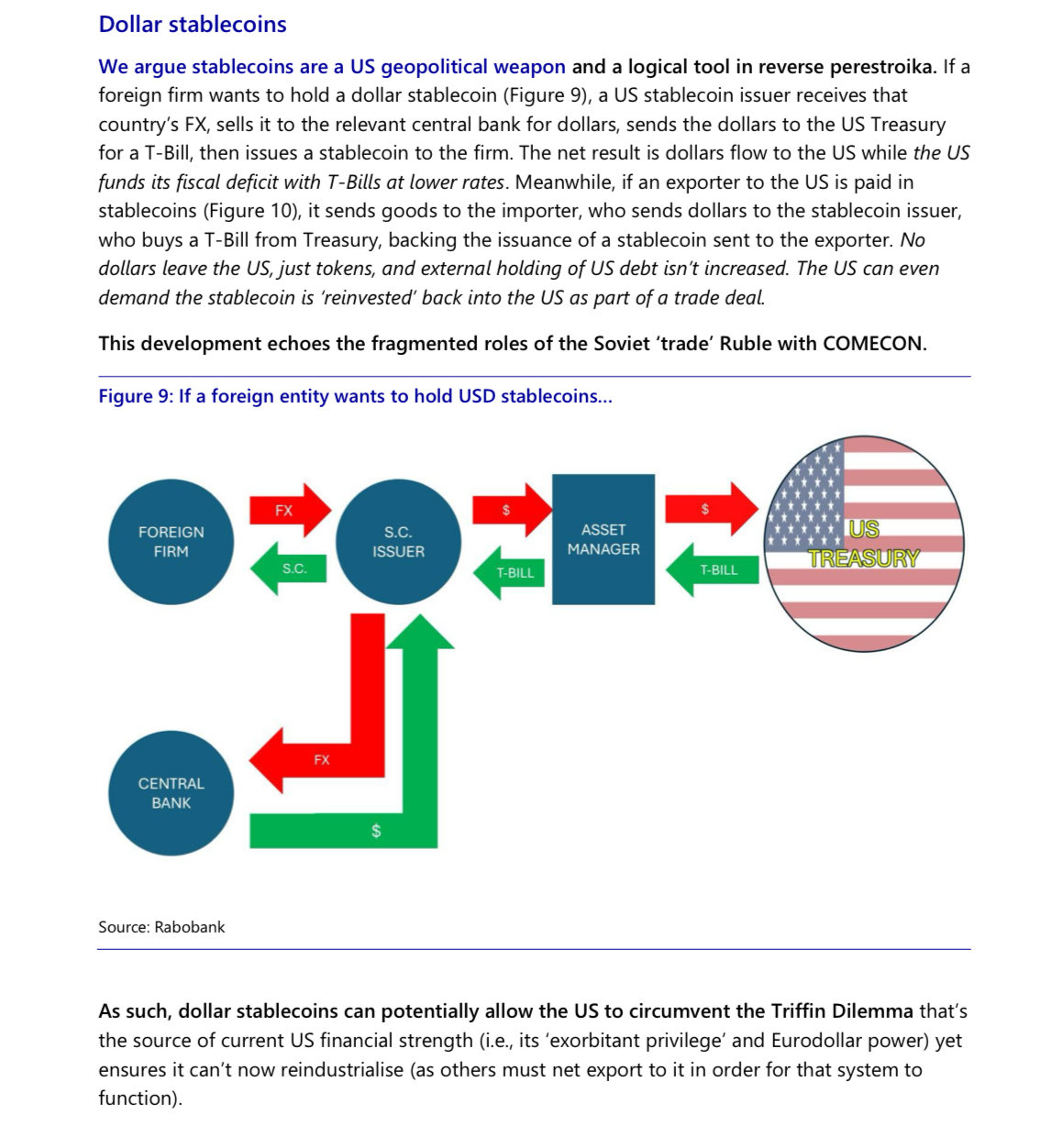
A report by Rabobank has stated that dollar-backed stablecoins are spreading dollar influence, without letting real dollars leave the country.

Source: X

The idea is that when a foreign firm wants a dollar stablecoin, a U.S. issuer converts that demand into Treasury bill purchases. Dollars flow back to the U.S. government, helping fund deficits at lower rates, while the firm gets digital dollars instead of cash.

In trade, it goes a step further. U.S. importers can pay exporters in stablecoins, while the underlying dollars stay parked in Treasuries. Only tokens move across borders.

With comparisons to the Soviet-era trade ruble, dollars are exported digitally… all while keeping the power at home.

Non-dollar stablecoins step up

That growing influence hasn’t gone unnoticed, with non-USD-pegged alternatives gaining ground.

For long, more than 99% of stablecoins were pegged to the U.S. dollar. That number is now decreasing at the margins.

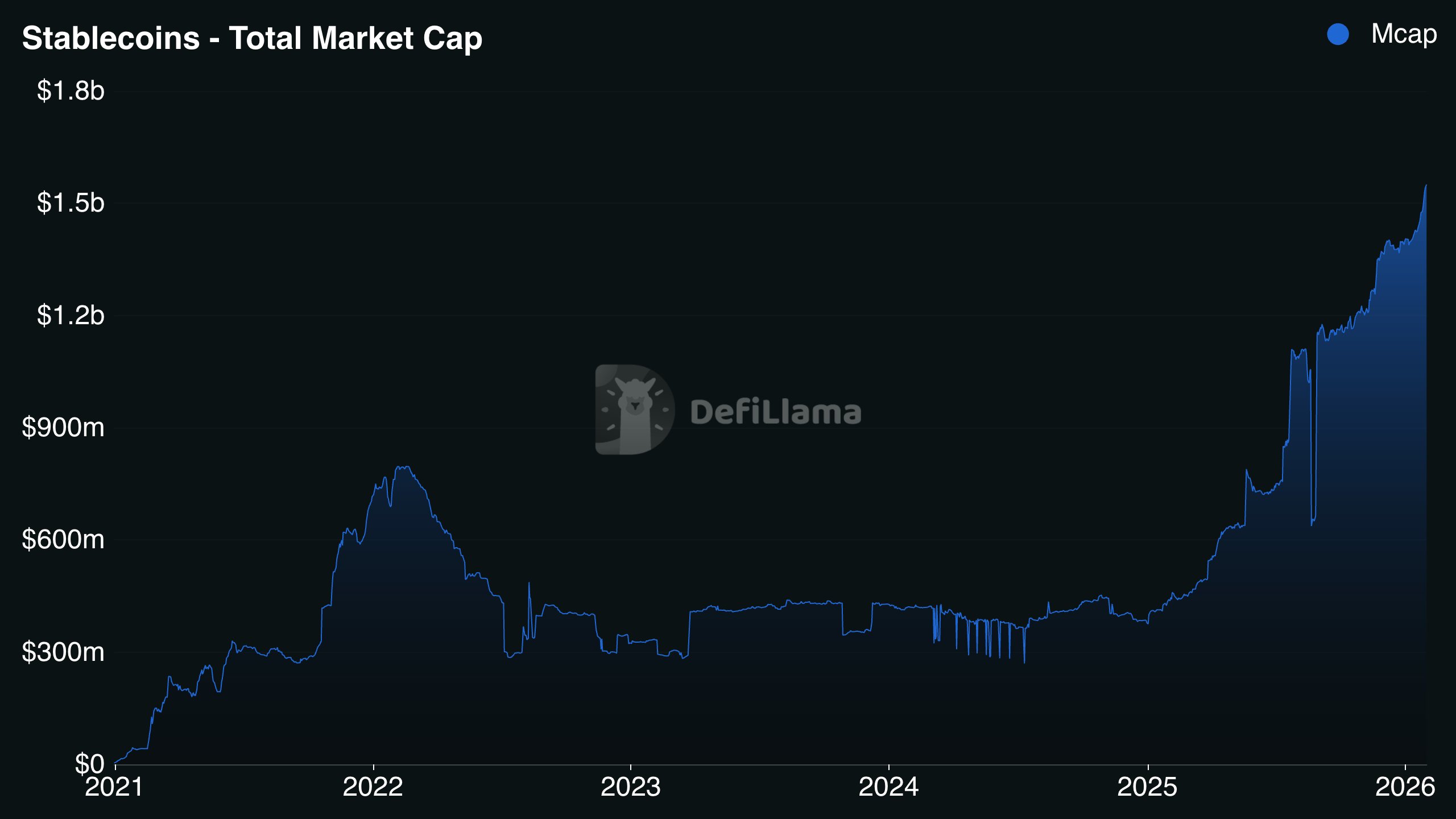
Over the past year, non-USD stablecoins have surged 260% in supply, pushing their combined market cap to about $1.55 billion.

Source: X

It’s still small next to dollar-backed giants, but it certainly matters.

All of this theory matters because…

…it’s already showing up in day-to-day payments. One of the fastest-growing payment modes for stablecoins right now is crypto cards.

Source: X

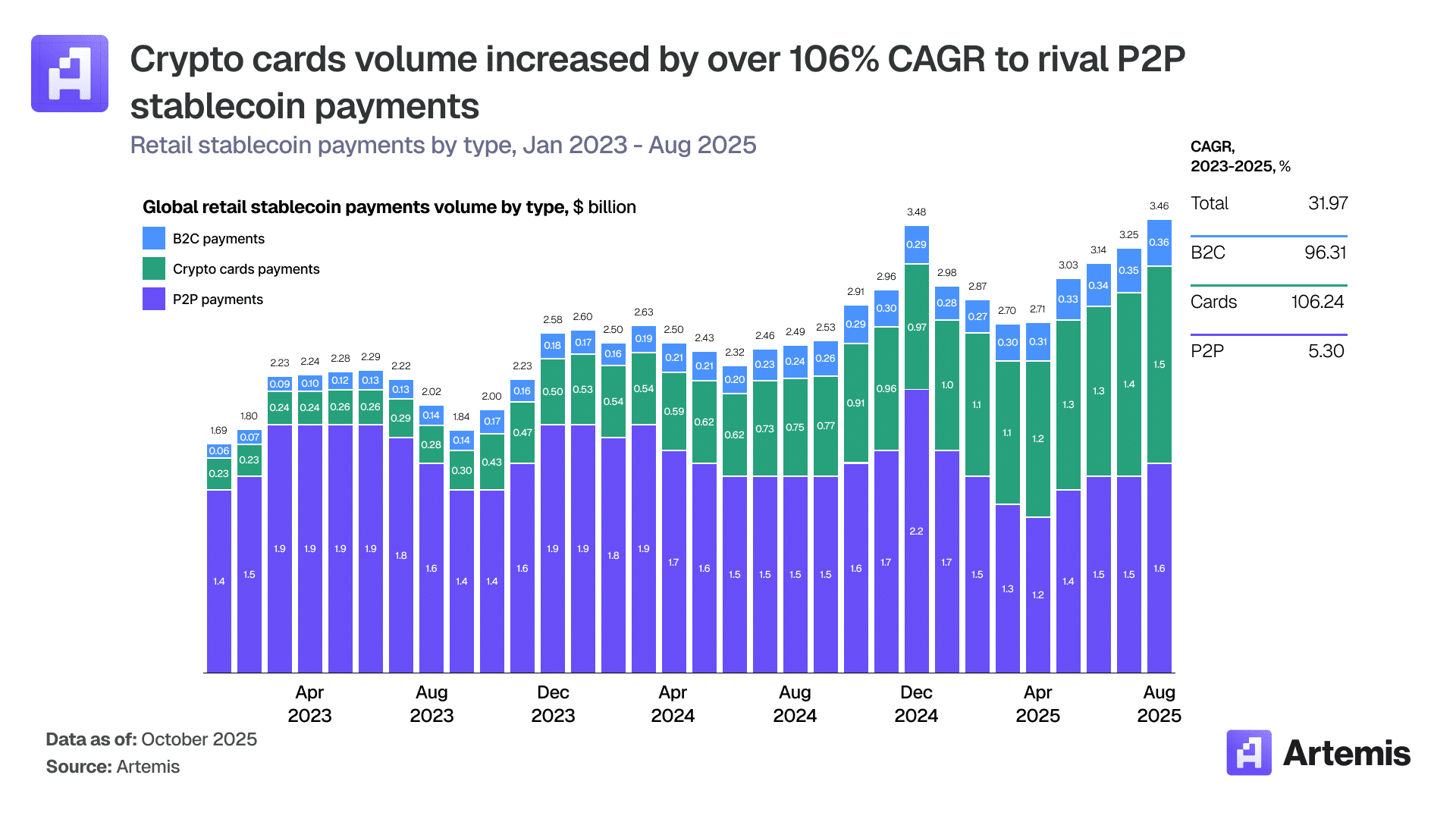
Once a niche product, crypto cards are now an $18 billion market.

Monthly volumes went from about $100 million in early 2023 to over $1.5 billion today, growing at a 100%+ annual rate.

Source: X

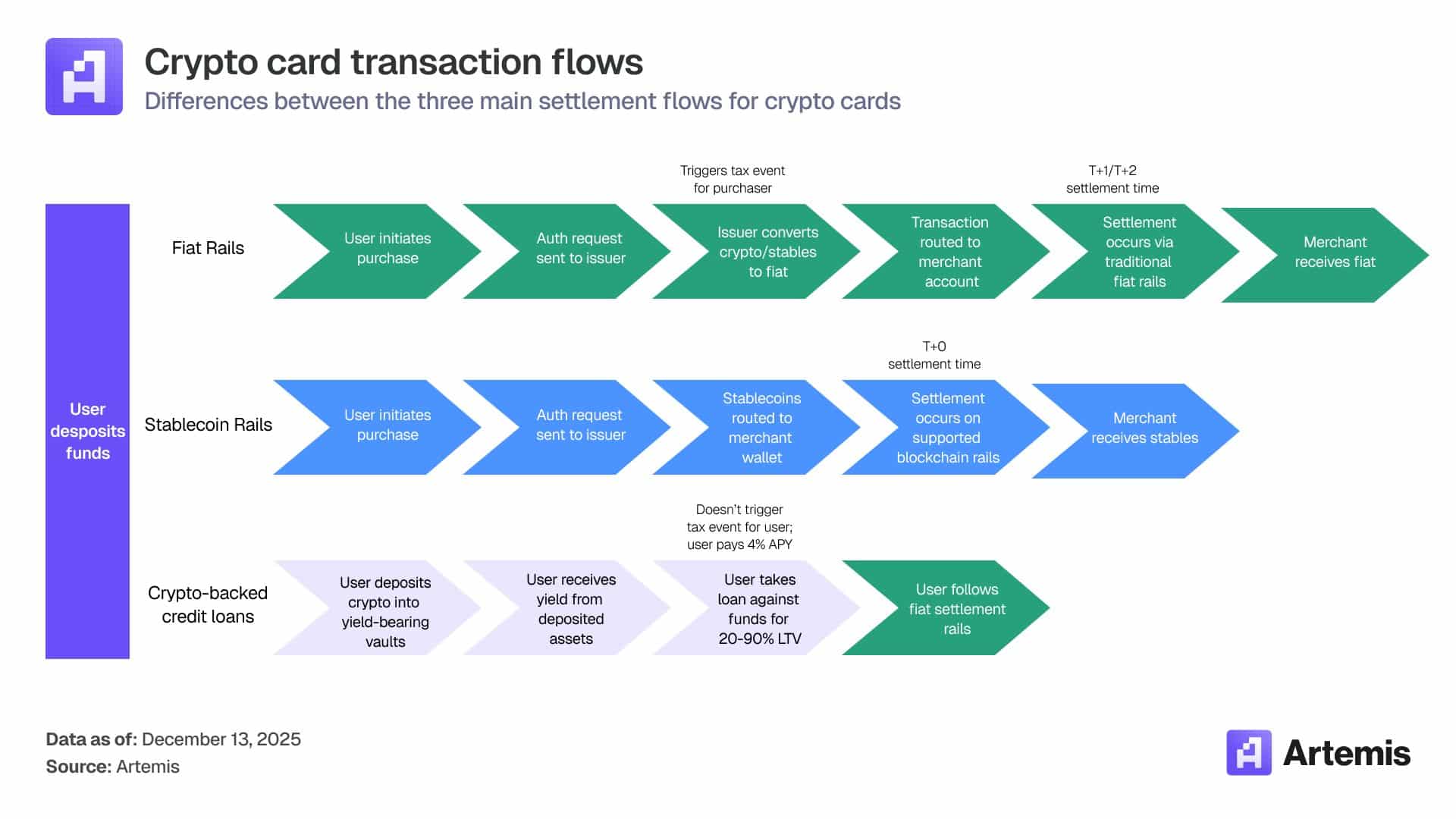
Importantly, these cards don’t replace Visa or Mastercard.

Rather, they sit on top of them. Stablecoins fund the transaction in the background, while card networks handle acceptance. For users and merchants, what looks like normal payments are actually digital dollars doing the work.


Final Thoughts

  • Dollar-backed stablecoins are exporting U.S. monetary power, without exporting actual dollars.
  • As crypto cards grow, digital dollars are moving fast.
Next: BONK drops 18% as memecoins slide – Is another leg down coming?
Share
  • Share
  • Tweet

Preguntas relacionadas

QHow are dollar-backed stablecoins helping the U.S. extend dollar influence abroad without exporting real dollars?

ADollar-backed stablecoins allow foreign firms to obtain digital dollars while U.S. issuers convert that demand into Treasury bill purchases. This keeps actual dollars within the U.S., helping fund deficits at lower rates, while only tokens move across borders.

QWhat is the current market trend for non-USD-pegged stablecoins?

ANon-USD stablecoins have surged 260% in supply over the past year, reaching a combined market cap of approximately $1.55 billion, though they remain small compared to dollar-backed stablecoins.

QHow are crypto cards contributing to the growth of stablecoin payments?

ACrypto cards, now an $18 billion market, use stablecoins to fund transactions in the background while leveraging traditional card networks like Visa or Mastercard for acceptance. Monthly volumes grew from $100 million in early 2023 to over $1.5 billion, with a 100%+ annual growth rate.

QWhat role do U.S. Treasury bills play in the stablecoin ecosystem?

AWhen foreign demand for dollar stablecoins arises, U.S. issuers purchase Treasury bills with the incoming dollars, effectively recycling foreign demand into U.S. government debt and keeping capital domestically parked.

QWhy are non-USD stablecoins gaining traction despite the dominance of dollar-backed options?

ANon-USD stablecoins are growing as alternatives to reduce reliance on U.S. dollar influence, with a 260% supply increase reflecting heightened interest in diversified digital currency pegs.

Lecturas Relacionadas

Discusión: ¿Los trabajadores de Corea temen el desempleo mientras Musk imagina una sociedad "sin trabajo"?

Hace más de 200 años, los trabajadores textiles británicos destrozaban máquinas. Hoy, sentimientos similares resurgen en una fábrica de automóviles en Corea del Sur. Este verano, el sindicato de Hyundai Motor en Corea del Sur llevó a cabo huelgas parciales, incluyendo en sus demandas garantías laborales frente a la IA y la robótica avanzada, vinculadas a los planes del grupo de introducir robots humanoides Atlas de Boston Dynamics. Aunque las huelgas se desencadenaron principalmente por negociaciones salariales rotas, el hecho de que la robótica haya entrado oficialmente en la agenda sindical es significativo. Refleja una ansiedad anticipada: los robots aún no han reemplazado masivamente a los trabajadores cualificados, pero el conflicto social en torno a ese posible futuro ya ha comenzado. Este temor contrasta con la visión casi opuesta de Elon Musk, quien imagina un futuro donde la IA y los robots realicen casi todo el trabajo necesario, llevando a una sociedad de "alta renta universal" donde el trabajo sea opcional y no una necesidad para sobrevivir. La discrepancia central no es solo si los robots reemplazarán puestos, sino cómo la sociedad entiende "perder el trabajo" y, crucialmente, cómo se distribuirá la riqueza generada por las máquinas. Los trabajadores de Hyundai temen por sus puestos específicos ante la automatización, mientras que Musk anticipa un horizonte de abundancia extrema. Ambas perspectivas plantean la misma pregunta: cuando la máquina crea más riqueza, ¿quién se beneficia? La ansiedad actual, aunque quizás prematura desde el punto de vista técnico (los robots humanoides aún están lejos de igualar la experiencia y adaptabilidad de un trabajador industrial), es comprensible. Recuerda al movimiento ludita, que no era simplemente un rechazo a la tecnología, sino una protesta contra la redistribución desigual de los costes y beneficios de la mecanización. La productividad aumenta, pero los costes de la transición pueden caer primero sobre grupos concretos. El verdadero desafío no es el escenario final imaginado por Musk, sino el largo y complejo período de transición. La capacidad técnica avanza de forma continua, pero las instituciones sociales no se adaptan automáticamente. Para que la robótica se integre de manera beneficiosa, se necesitarán nuevos consensos sociales, reglamentación laboral, sistemas de redistribución y reentrenamiento profesional. La discusión sobre cómo la sociedad debe gestionar la llegada de los robots a las fábricas no llega demasiado pronto; es necesaria y urgente.

marsbitHace 49 min(s)
Discusión: ¿Los trabajadores de Corea temen el desempleo mientras Musk imagina una sociedad "sin trabajo"?

marsbitHace 49 min(s)

Trading

Spot
活动图片