This American Earns $250 Million a Year from Podcasting, and Luo Yonghao Is Learning from Him

深潮Publicado a 2025-12-23Actualizado a 2025-12-23

Resumen

American podcaster Joe Rogan earns $250 million annually from his hugely successful show, "The Joe Rogan Experience." The article details his unconventional path from comedian, reality TV host, and UFC commentator to becoming the world's most influential podcaster. His long-form, casual interview style, often lasting over three hours, has attracted top guests like Elon Musk (in a famous 2018 episode where Musk smoked cannabis), Donald Trump (a key 2024 election interview), and Nvidia CEO Jensen Huang. Rogan's success is attributed to his "outsider" approach, creating a space where guests can speak freely, unlike traditional media. This has built immense trust with his primarily young, male audience who are skeptical of mainstream news. His 2020 exclusive deal with Spotify was worth $200 million, and he renewed it in 2024 for $250 million without exclusivity. The article explores his significant cultural impact, notably his role in the 2024 U.S. election where Trump's appearance on his show was widely credited with reaching crucial voters. It also notes attempts to replicate his model in China, such as Luo Yonghao (罗永浩), but highlights challenges like a preference for short-form content and different media environment. Finally, it addresses the controversies surrounding Rogan, including spreading COVID-19 and AIDS misinformation, which critics say make him a hub for conspiracy theories, while supporters value his anti-establishment stance.

Written by: David, Deep Tide TechFlow

You might not listen to podcasts, but you must have seen this scene.

In 2018, Musk holding a rolled cigarette, surrounded by smoke, became one of his most viral iconic moments.

However, few people know where this scene took place, and even fewer care about who was sitting opposite him.

Actually, this was the recording of an American podcast.

The host handed Musk a cigarette mixed with marijuana and tobacco. Musk asked, "This is legal, right?" and then took a puff.
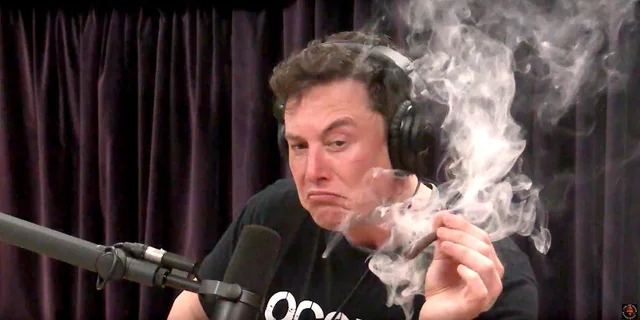
The next day, Tesla's stock price dropped by 9%.

To date, this episode has over 69 million views on YouTube, making it the most-watched episode in the podcast's history.

What kind of show, what kind of host, could make the world's richest man do such a thing on camera?

During the 2024 U.S. presidential election, Trump also spent three hours on this show for an interview. In his victory speech, he specifically thanked the host by name; two weeks ago, NVIDIA CEO Jensen Huang also sat in this studio, talking about AI and the chip war for two and a half hours, garnering over 2.8 million views within two weeks.

His name is Joe Rogan. His show, "The Joe Rogan Experience," is currently the world's largest podcast.

From Comedian to Podcast King: A Show Worth $250 Million

Joe Rogan's podcast influence is built on an unconventional personal resume.

Comedian, reality show host, UFC commentator. Put these three identities together, and it hardly seems like the profile of someone who would create the world's largest podcast.

He is not a traditional interview host, not the kind of straight-laced, professionally trained media personality. His background is actually in entertainment and the fighting world, not journalism.

But it is precisely this "unconventional" path that allowed him to create something completely different from traditional media; his ability to connect and his viewership far surpass many professional media programs.
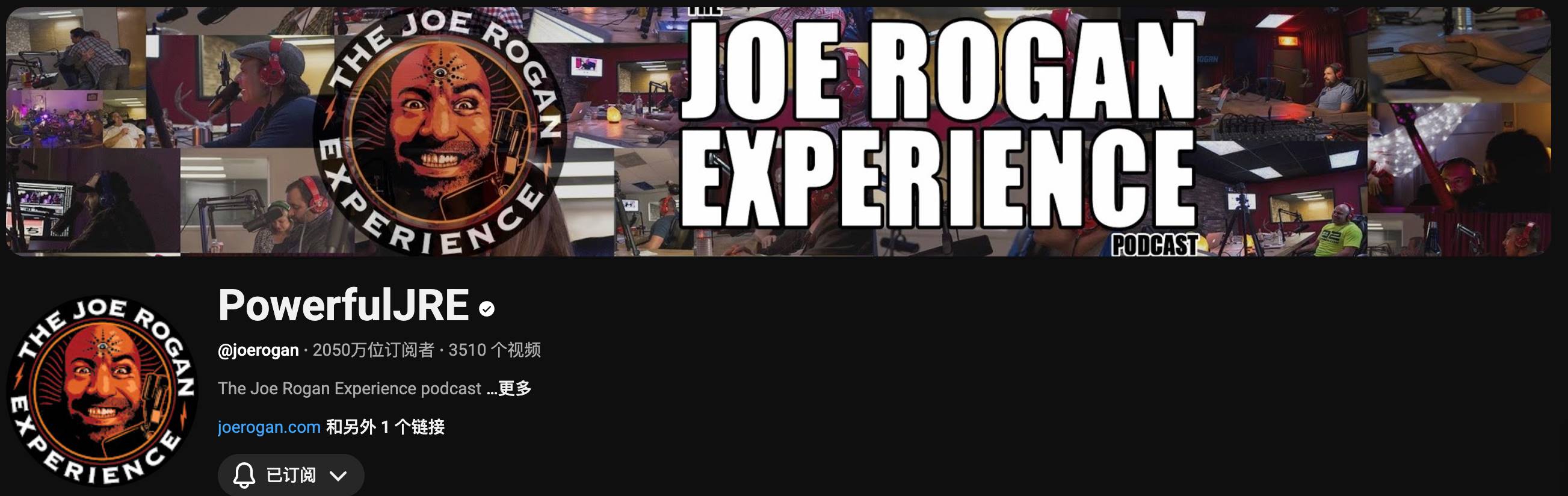
Initially, Joe Rogan was a comedian, doing stand-up in Boston clubs in the 90s. Later, he moved to Los Angeles, acted in sitcoms for a few years, and hosted a reality show called "Fear Factor."

The show followed a sensationalist route, making contestants eat insects, jump from tall buildings, relying on gross-out and刺激 for ratings. In today's short video environment, it would definitely be categorized as vulgar but high-traffic content.

But what really made him break through was another job.

Starting in 1997, he worked as a commentator for the UFC, sitting cageside to commentate mixed martial arts fights, a job he held for over twenty years. This work solidified his standing in the fighting community and accumulated a large loyal male audience.
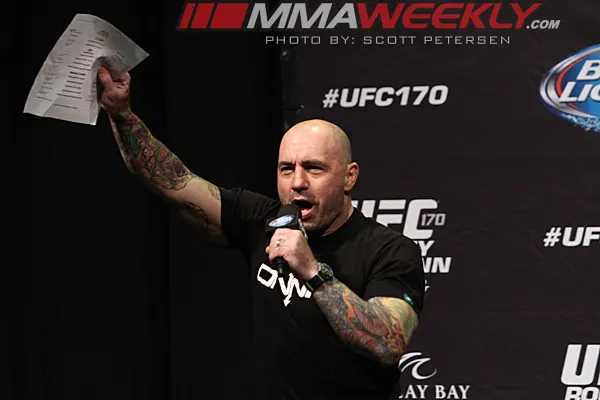
In 2009, he started recording podcasts at home.

Like the starting point of many podcasts, the equipment was simple, there were no sponsors, and no business plan. But each episode often lasted two to three hours, chatting with friends or guests about anything.

Looking back, all those messy previous experiences actually came in handy.

Having been a comedian, he knew how to make conversations interesting and rhythmic. Having hosted a reality show, he was also accustomed to staying relaxed in front of the camera. Being a UFC commentator for twenty years meant this audience was already used to listening to him talk.

Moreover, he isn't an expert in any particular field, which gives him an unconventional advantage:

He can unabashedly ask "dumb questions."

Facing a physicist, he'll ask about the most basic concepts; facing a politician, he doesn't press for policy details, instead asking "what do you really think." This style is something you simply don't see in traditional media.

Television interviews have strict time limits, hosts must quickly get to the point. News interviews emphasize confrontation, journalists must dig out what the interviewee doesn't want to say.

Rogan's show does the opposite, giving you three hours, unedited, uninterrupted, talking about whatever you want.

The result is that many celebrities say things on his show they wouldn't say elsewhere. Musk smoking marijuana is just one example. Zuckerberg came on to talk about MMA training, looking more like a normal person than in any Congressional hearing.

Slowly, Joe Rogan's podcast became the go-to place for celebrities to "show their real side." Traditional media interviews are performances; here, they can be themselves.

As various celebrities appeared, the show became increasingly valuable.

In 2020, Spotify acquired the exclusive distribution rights to "The Joe Rogan Experience" for $200 million, the largest deal in podcast industry history at the time.

In 2022, Rogan faced a media storm for negative comments about certain COVID-19 vaccines on his podcast, leading to protests from musicians pulling their music from Spotify.

Right at this critical moment, another video platform, Rumble, publicly offered $100 million to poach his podcast, but Rogan didn't bite.

In 2024, he renewed his deal with Spotify for distribution rights, but the price increased to $250 million.
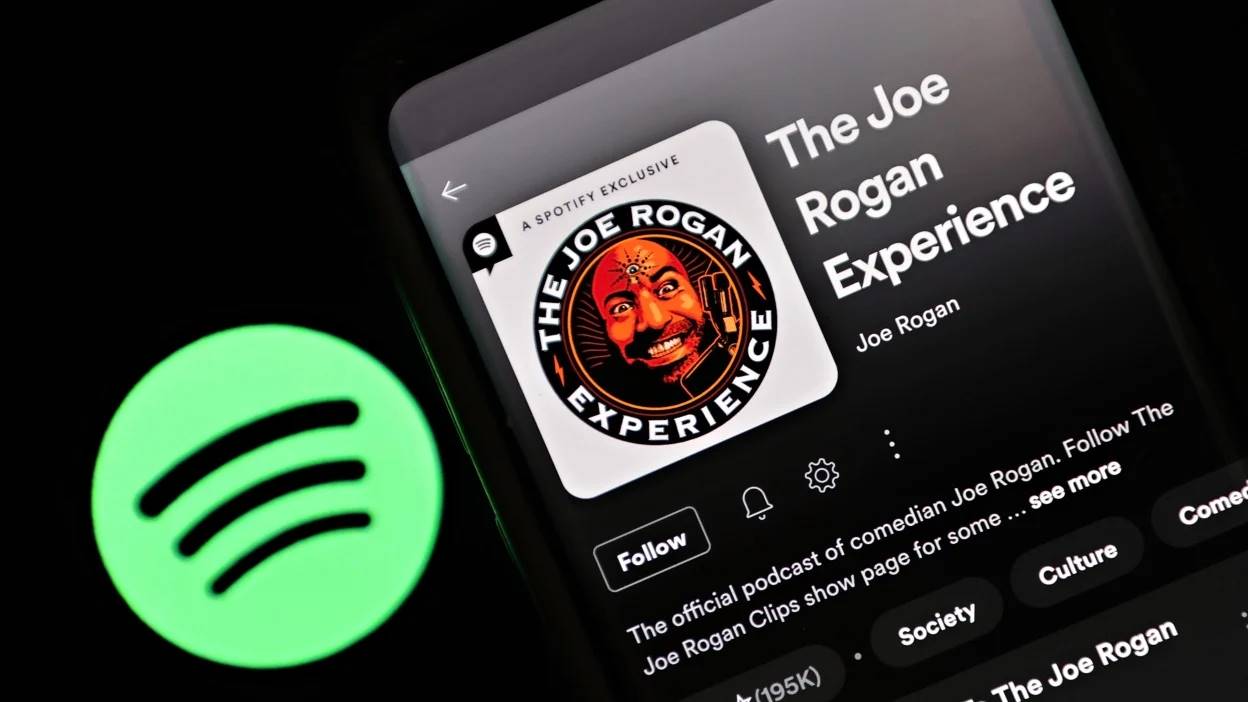
Furthermore, this time he no longer accepted exclusivity; the show returned to being available simultaneously on Spotify, YouTube, and Apple Podcasts. Spotify paid more money but got fewer rights.

In 2025, "The Joe Rogan Experience" simultaneously topped the annual podcast charts on Spotify, Apple Podcasts, and YouTube for the first time.

A chat show that started recording at home sixteen years ago is now valued higher than many traditional media companies.

Podcast Chats, Precise Vote Pulling

On October 25, 2024, during the final stretch of the election campaign, Trump sat down in Rogan's Austin studio.

The episode lasted a full three hours. After recording, Trump rushed to a campaign rally in Michigan, making thousands of supporters wait an extra three hours.

What did they talk about for three hours?

UFOs. Trump said he interviewed fighter pilots who told him they saw spherical objects moving four times faster than an F-22 fighter jet.

The White House bed. He genuinely described his feelings upon first entering the Lincoln Bedroom in the White House, thinking the bed was huge because Lincoln was six foot six.

Tariffs. Trump also proposed replacing income tax entirely with tariffs. Rogan asked: "Are you serious?"

Trump said: "Of course, why not? In the 1880s, when our country was at its wealthiest, it was based on tariffs."

These topics seem unrelated, but they share one commonality:

They are things traditional political interviews would absolutely never discuss.

TV networks ask about policy details, press on controversial statements, and stick to time limits. No serious political journalist would let a presidential candidate spend ten minutes talking about UFOs and Lincoln's bed.
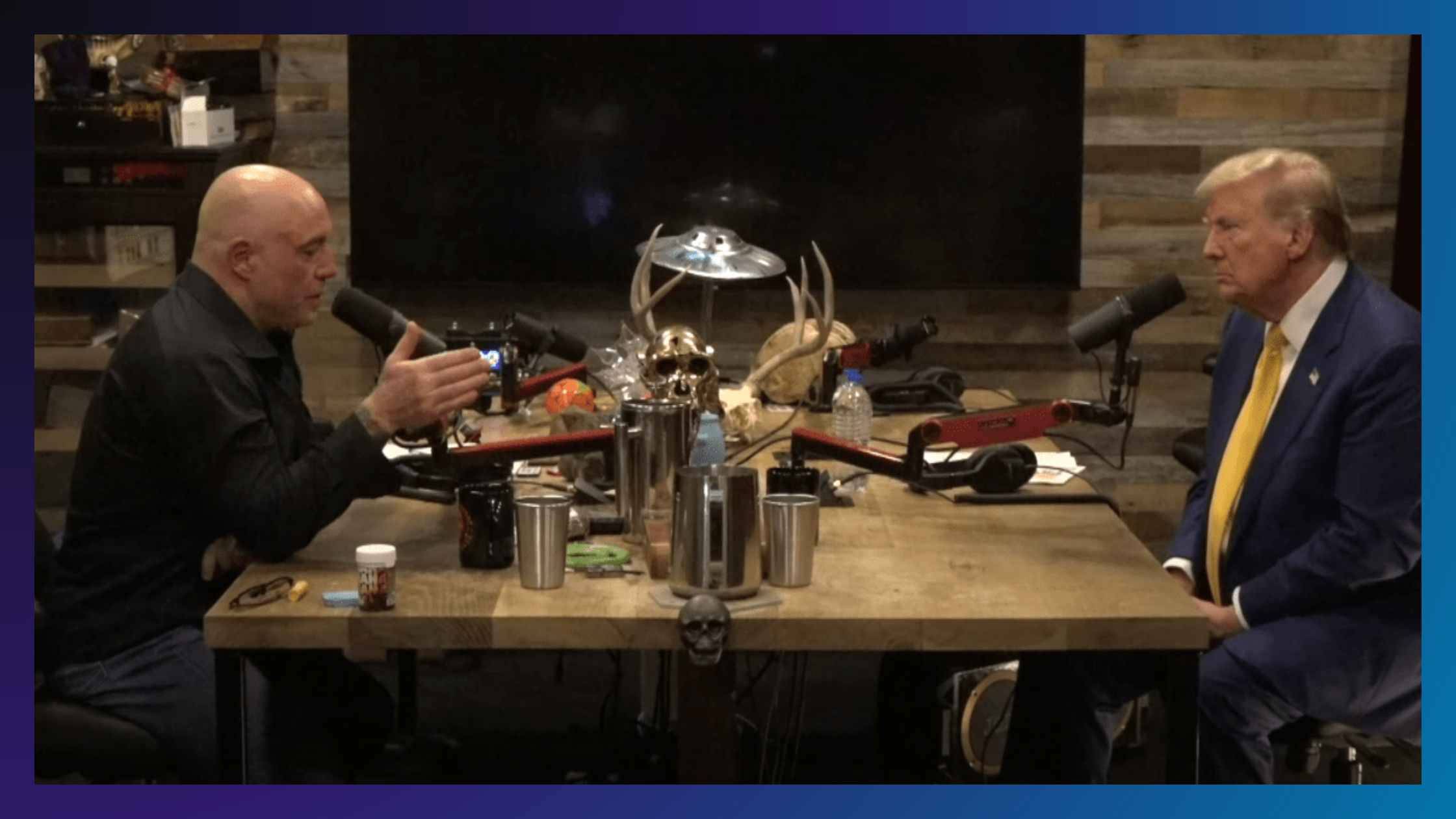
But this is precisely the characteristic of Rogan's show. Three hours, no interruptions, no set agenda, talk about whatever you want.

The audience sees not a candidate constrained by media frameworks, but a complete Trump: curious, with outrageous ideas, capable of casual conversation.

Rogan's own evaluation actually pinpoints the show's effect quite well:

"You say a lot of crazy things, but when traditional media takes those things and makes news out of them, it actually makes you more popular. Because people are tired of that scripted politician-speak. Even if they disagree with you, at least they know this person is real."

This sense of authenticity is especially effective for Rogan's audience.

Data from foreign research institutions shows that 80% of the show's listeners are male, with over half aged 18 to 34. Politically, 35% identify as independent, 32% lean Republican, and 27% lean Democratic. This group shares a common characteristic:

They don't watch traditional TV news much, generally distrust mainstream media, but they spend hours each week listening to Rogan chat.

In other words, this is a group that is hard for traditional political communication to reach. And Trump spending three hours sitting across from a host they trust, speaking in a relaxed, informal manner, was far more effective than any campaign ad.

After the episode went live, YouTube views quickly surpassed 50 million.

The entire video was cut into countless clips, spreading on X, TikTok, and Instagram. Every soundbite, every outrageous statement, became standalone content, reaching people who would never click on a three-hour video.

Meanwhile, Trump's presidential election opponent, Harris, did not appear on the show.

Reportedly, there were talks, and Rogan publicly invited her. But Harris's team wanted to limit the duration to under an hour, which Rogan refused. He said on his show:

"It's not that I didn't want to invite her, it's that she didn't want to come."

For comparison, Trump's episode garnered over 50 million views, while Harris's appearance on another podcast, "Call Her Daddy," got 600,000 views.

The election ended with Trump's victory. In his victory speech, UFC President Dana White specifically thanked Joe Rogan, listing him as one of the key contributors to the victory.

A podcast being named in the thank-you list of a presidential victory speech is a first in American political history.

Chinese Mirror: Attempts by Luo Yonghao and Others

Can Joe Rogan's model be replicated in China?

Some are trying.

In June 2025, Luo Yonghao revealed at an AI conference that DeepSeek founder Liang Wenfeng suggested he leverage his "talent for speaking." A few months later, he launched a video podcast on Bilibili called "Luo Yonghao's Crossroads," positioning it as a counterpart to Joe Rogan and Lex Fridman.
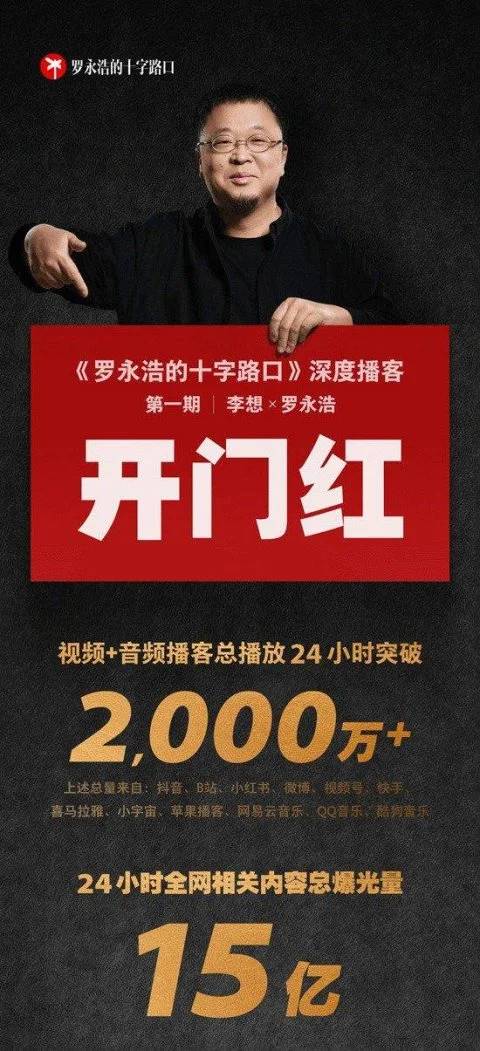
The format is very similar to The Joe Rogan Experience: long conversations, minimal editing, each episode three to five hours.

The first guest was Li Xiang, founder of Li Auto. The two talked for four hours, from childhood trauma to his relationship with Wang Xing, daring to ask and answer anything. The reaction in the comments was:

In the short video era, this kind of "long and satisfying super-sized cup" is too rare.

Luo Yonghao isn't the only one. Chen Luyu, Yu Qian, Li Dan, Yang Di—these famous hosts have all set up shop on Bilibili doing video podcasts. Bilibili has also made heavy investments, pouring billions of level traffic support during the summer, providing free recording studios in Beijing, Shanghai, Guangzhou, and Hangzhou, and planning to launch AI creation tools专属 for podcasts.

It seems that China's video "podcast元年" (first year of podcasts) has finally arrived, but it's not that simple.

When Luo Yonghao was in conversation with Tim from '影视飓风' (Cinephile Storm), he mentioned his video views were around 20-30 million, while Tim believed "you need to reach 100 million to be considered hot." This actually reveals a structural problem:

In China's internet traffic ecosystem, long-form content is inherently at a disadvantage.

Over the past few years, users have been trained by short videos into the habit of "watching a movie in three minutes." The algorithms of Douyin (TikTok) and Kuaishou reward completion rates; a three-hour video has almost no place in the recommendation pool.

More ironically, the highlight moments of many long video podcasts are often spread through几十秒 (dozens of seconds) clips on Douyin and Xiaohongshu.

At the same time, monetization is also a challenge.

The U.S. podcast industry's advertising revenue exceeded $2 billion in 2024, with top hosts securing exclusive contracts worth hundreds of millions of dollars. In China, a podcast brand with nearly 500,000 subscribers might charge less than 40,000 RMB for a single voiced ad, with annual net income possibly only around 100,000 RMB.

YouTube has a mature AdSense revenue-sharing system; the longer the video, the more ad slots, the higher the income—this incentivizes long-form content through its profit mechanism. Bilibili's monetization capability is far from reaching this level.

There's an even more fundamental issue:

A large part of Rogan's influence comes from his ability to host people like Trump, Musk, and Jensen Huang, and these people are willing to say things on his show they wouldn't say elsewhere.

This status as a "primary source of information" requires long-accumulated trust and a unique media environment.

Luo Yonghao can invite Li Xiang, He Xiaopeng, Zhou Hongyi—this is already the top tier of China's tech circle. But there are natural boundaries regarding the openness of topics.

So, can Joe Rogan's model be replicated in China?

The form can be learned, but the soil is different.

Controversy and Boundaries

Writing this far, there's an unavoidable question: Joe Rogan is a controversial figure.

In 2022, he sparked a storm by questioning the effectiveness of COVID-19 vaccines on his show. Spotify did not drop Rogan but added "content advisory" labels to all episodes discussing COVID-19 and removed over 70 old episodes.

This wasn't his first brush with trouble.

In 2024, he and a guest discussed the origins of AIDS on his show, spreading some claims that have been refuted by the medical community, drawing public criticism from the American Foundation for AIDS Research.

A Yale University study found that among the top ten most popular podcasts in the U.S., eight had spread erroneous or misleading information about climate change, with Rogan's show among them.

His show is also a hub for various American conspiracy theories.

From the Kennedy assassination to UFOs, from big pharma to government surveillance, he maintains an "open attitude" towards these topics. Critics argue this provides a platform for misinformation, while his supporters believe it challenges mainstream narratives.

In July 2025, he posted on X:

"Salute to those who still don't believe in conspiracy theories, your ability to hold your ground is admirable." This post received over 15 million views.

This is also the complexity of Joe Rogan.

He is not a person of consistent立场 (stance). For example, supporting same-sex marriage, marijuana legalization, and universal healthcare are typical liberal positions. But he also questions mainstream media and provides a platform for controversial figures, which also makes him a darling of conservatives.

His show's influence stems precisely from the fact that he doesn't belong to any single camp. Those who have lost trust in mainstream media find an "anti-establishment" alternative in him.

But the same特质 (trait) also makes him a node for spreading misinformation. When someone with an audience of hundreds of millions says "I'm just asking questions," the questions themselves shape public perception.

This is also the inherent tension of the podcast medium:

Its charm lies in being real, relaxed, and unlimited, but when its influence reaches a certain scale, "unlimited" itself becomes a problem.

Joe Rogan is a product of this era, and also a mirror of it.

Criptos en tendencia

Preguntas relacionadas

QWho is Joe Rogan and what is the name of his podcast?

AJoe Rogan is a comedian, UFC commentator, and the host of 'The Joe Rogan Experience', which is currently the world's largest podcast.

QWhat was the financial value of Joe Rogan's podcast deal with Spotify in 2024?

AIn 2024, Joe Rogan renewed his deal with Spotify for his podcast, which was valued at $250 million.

QHow did Joe Rogan's interview with Donald Trump impact the 2024 US election according to the article?

AThe three-hour interview on Rogan's podcast was highly effective in reaching an audience distrustful of mainstream media. It was widely disseminated in clips and was credited as a significant factor in Trump's victory, with Rogan being thanked in Trump's victory speech.

QWhat are some of the challenges mentioned for replicating Joe Rogan's podcast success in China?

AChallenges include a user base trained for short-form video content, a less mature monetization system for long-form podcasts compared to the US, and natural boundaries on the openness of topics that can be discussed.

QWhat major controversy is Joe Rogan associated with, as discussed in the article?

AJoe Rogan has been involved in several controversies, most notably for spreading misinformation, such as questioning the efficacy of COVID-19 vaccines and discussing debunked theories about AIDS origins, leading to criticism from health organizations and researchers.

Lecturas Relacionadas

$GCOIN de Playnance se lista en KoinBX en medio del rápido crecimiento en India

Playnance, el ecosistema web3 de iGaming basado en blockchain, anunció el 18 de junio que su token nativo, $GCOIN, se ha listado en el intercambio KoinBX. Esta medida busca facilitar el acceso a una de las comunidades de más rápido crecimiento de la plataforma, particularmente en India, donde más de 130 socios del programa "Be the Boss" se han unido, creando comunidades con miles de jugadores activos. A través del modelo "Be the Boss", los participantes pueden crear y gestionar sus propias comunidades de juego, recibiendo incentivos por su actividad. Pini Peter, CEO de Playnance, destacó que India se ha convertido en uno de los mercados más comprometidos. Un ejemplo es el socio Dr. Nicolas, quien ha ganado más de 57.000 dólares en los últimos meses y valora la oportunidad de construir una comunidad propia. El token $GCOIN es el centro de este ecosistema, actuando como token de utilidad para recompensar la participación y alinear incentivos entre jugadores y "Bosses". Su listado en KoinBX forma parte de la estrategia de expansión global de Playnance, que busca aumentar la utilidad y accesibilidad de $GCOIN combinando propiedad comunitaria, participación gamificada e incentivos en blockchain. Fundada en 2020, Playnance procesa alrededor de un millón de transacciones diarias y desarrolla productos en cadena no custodiados con el objetivo de atraer a usuarios convencionales (Web2) hacia entornos blockchain, simplificando la experiencia del usuario sin perder transparencia.

TheNewsCryptoHace 34 min(s)

$GCOIN de Playnance se lista en KoinBX en medio del rápido crecimiento en India

TheNewsCryptoHace 34 min(s)

STRC cae a un mínimo histórico, la máquina de movimiento perpetuo de Saylor se atasca

El año pasado, Michael Saylor presentó STRC a Wall Street como un "motor de crédito digital", un ciclo perpetuo donde los inversores obtenían dividendos, MicroStrategy compraba Bitcoin, y todos ganaban. Hoy, ese motor se ha detenido. El 19 de junio, STRC cayó a un mínimo histórico de 85,32 dólares, muy por debajo de su valor nominal de 100 dólares, con un volumen de negociación inusualmente alto. Esta caída pone en duda la lógica central del producto: mantener un precio estable cerca del valor nominal para financiar continuamente la compra de Bitcoin. La máquina de Saylor funciona así: si STRC cotiza por encima de 100$, MicroStrategy emite nuevas acciones (ATM) para recaudar dinero y comprar más Bitcoin. Si Bitcoin sube, la máquina continúa. Pero ahora, tres factores convergen para una "tormenta perfecta": 1) El precio de Bitcoin se ha reducido a más de la mitad desde sus máximos. 2) Los recursos para pagar el dividendo del 11,5% de STRC se han reducido drásticamente tras pagar deuda, obligando a MicroStrategy a vender, por primera vez desde 2022, 32 BTC para cubrir dividendos, rompiendo el tabú de "nunca vender". 3) Un producto rival, SATA de Strive, ofrece mayor rentabilidad y seguridad, atrayendo a los inversores y ampliando la brecha de precio con STRC. Así, se activa un "volante de inercia inverso": Bitcoin cae, STRC se desploma, se detiene la financiación vía ATM, se vende Bitcoin para pagar dividendos, la confianza se erosiona y STRC cae aún más. Aunque Saylor argumenta que el modelo es matemáticamente sostenible con una apreciación anual del Bitcoin del 2,3%, el mercado no solo opera con lógica matemática. La narrativa ha cambiado de "nunca vender" a "vender para pagar", probando la resistencia del modelo de "empresa del Tesoro de Bitcoin" en un mercado bajista. La supervivencia de MicroStrategy no está en juego, pero la prueba de estrés para su fe en el mecanismo de financiación ha comenzado. En el clima actual de temor del mercado y señales alcistas de la Fed, ese 2,3% necesario parece más pesado que nunca.

marsbitHace 53 min(s)

STRC cae a un mínimo histórico, la máquina de movimiento perpetuo de Saylor se atasca

marsbitHace 53 min(s)

Guía para aprovechar los mínimos del mercado: Cómo evaluar las criptomonedas utilizando el flujo de caja

**Guía de Inversión en Cripto: Evaluación por Flujo de Caja con Aave como Caso de Estudio** Los inversores enfrentan el desafío de valorar activos digitales tras las caídas del mercado. Mientras que activos como Bitcoin son similares a productos básicos, muchos tokens, especialmente en DeFi, se asemejan a derechos financieros y pueden valorarse mediante flujos de caja. Este análisis toma como ejemplo a Aave, un protocolo líder de préstamos descentralizados. El informe clasifica los criptoactivos en un espectro entre "activos tipo mercancía" (ej. Bitcoin) y "activos con flujo de caja" (ej. tokens DeFi). Estos últimos derivan su valor de los ingresos generados por el protocolo subyacente y de los mecanismos que capturan este valor para los tenedores del token. Aave opera como un mercado de préstamos en cadena, generando ingresos a partir de diferenciales de tasas de interés, su stablecoin nativa GHO y su tesorería. Presenta datos financieros transparentes con un fuerte crecimiento de ingresos y márgenes de beneficio neto cercanos al 50%. Aunque ha enfrentado desafíos recientes, su dominio en el sector de préstamos DeFi, su tesorería diversificada y su hoja de ruta de desarrollo (GHO, Horizon, V4) respaldan su fundamento. Utilizando un análisis de flujo de caja descontado (DCF) y comparaciones de múltiplos P/E, Grayscale Research estima un valor razonable para el token AAVE entre 80 y 100 dólares, cercano a su precio actual (~75$). En un escenario base optimista con adopción acelerada de stablecoins y tokenización de activos reales (RWA), el valor podría subir a aproximadamente 175 dólares en un año. El informe destaca la **importancia crítica del mecanismo de captura de valor**: que un protocolo genere ingresos no garantiza que el token se aprecie. Es esencial evaluar cómo las ganancias se transfieren a los tenedores, ya sea mediante recompra y quema, dividendos u otras estructuras. Aave ha evolucionado su gobernanza para alinear más directamente los incentivos económicos del protocolo con los poseedores de AAVE. A pesar de las incertidumbres regulatorias en torno a las DAOs, marcos como la propuesta "Ley CLARITY" podrían ofrecer mayor claridad. La maduración del mercado está premiando a los proyectos con fundamentales sólidos y modelos de negocio sostenibles, marcando un alejamiento de la pura especulación hacia un análisis basado en flujos de caja y métricas tradicionales.

marsbitHace 1 hora(s)

Guía para aprovechar los mínimos del mercado: Cómo evaluar las criptomonedas utilizando el flujo de caja

marsbitHace 1 hora(s)

Tras el liderazgo del sector de semiconductores, ¿está el capital comprando pedidos de IA o una recuperación macroeconómica?

Resumen ejecutivo: Tras la noticia de un posible acuerdo entre EE.UU. e Irán que alivió la tensión en el estrecho de Ormuz, los mercados subieron el 18 de junio, destacando los semiconductores y la cadena de hardware de IA. El artículo argumenta que esta subida no se debe principalmente a una mejora fundamental repentina en la IA, sino a una ventana de reparación de valoraciones abierta por la reducción del riesgo geopolítico (que baja las expectativas de inflación y la presión sobre los tipos). La clave es ver qué áreas atrajeron el capital durante esta ventana. El análisis sugiere que el dinero no fluyó de manera generalizada a toda la tecnología, sino que se centró de forma selectiva en áreas como chips, interconexión óptica, memoria y fabricación local, partes de la infraestructura de IA con narrativas de ingresos más verificables a corto plazo (pedidos, gasto de capital). El fuerte repunte de Intel, impulsado por declaraciones políticas sobre una posible colaboración con Apple, se presenta más como un catalizador de sentimiento dentro de esta ventana, que como un cambio fundamental confirmado. En conclusión, la subida parece una reparación selectiva de la aversión al riesgo. Para que se convierta en una tendencia más sostenida del ciclo de infraestructura de IA, será necesario que los próximos resultados trimestrales confirmen la solidez del gasto en capital de las nubes públicas, los pedidos de servidores de IA y las guías de ingresos de empresas de hardware específicas.

marsbitHace 2 hora(s)

Tras el liderazgo del sector de semiconductores, ¿está el capital comprando pedidos de IA o una recuperación macroeconómica?

marsbitHace 2 hora(s)

Trading

Spot
Futuros

Artículos destacados

Cómo comprar COPPER

¡Bienvenido a HTX.com! Hemos hecho que comprar Copper (COPPER) sea simple y conveniente. Sigue nuestra guía paso a paso para iniciar tu viaje de criptos.Paso 1: crea tu cuenta HTXUtiliza tu correo electrónico o número de teléfono para registrarte y obtener una cuenta gratuita en HTX. Experimenta un proceso de registro sin complicaciones y desbloquea todas las funciones.Obtener mi cuentaPaso 2: ve a Comprar cripto y elige tu método de pagoTarjeta de crédito/débito: usa tu Visa o Mastercard para comprar Copper (COPPER) al instante.Saldo: utiliza fondos del saldo de tu cuenta HTX para tradear sin problemas.Terceros: hemos agregado métodos de pago populares como Google Pay y Apple Pay para mejorar la comodidad.P2P: tradear directamente con otros usuarios en HTX.Over-the-Counter (OTC): ofrecemos servicios personalizados y tipos de cambio competitivos para los traders.Paso 3: guarda tu Copper (COPPER)Después de comprar tu Copper (COPPER), guárdalo en tu cuenta HTX. Alternativamente, puedes enviarlo a otro lugar mediante transferencia blockchain o utilizarlo para tradear otras criptomonedas.Paso 4: tradear Copper (COPPER)Tradear fácilmente con Copper (COPPER) en HTX's mercado spot. Simplemente accede a tu cuenta, selecciona tu par de trading, ejecuta tus trades y monitorea en tiempo real. Ofrecemos una experiencia fácil de usar tanto para principiantes como para traders experimentados.

4 Vistas totalesPublicado en 2026.06.18Actualizado en 2026.06.18

Cómo comprar COPPER

Qué es XAG

El contrato perpetuo XAGUSDT es el símbolo de negociación para la plata cotizada en dólares estadounidenses, representando 1 onza troy de plata.

9 Vistas totalesPublicado en 2026.06.18Actualizado en 2026.06.18

Qué es XAG

Cómo comprar XAG

¡Bienvenido a HTX.com! Hemos hecho que comprar Silver (XAG) sea simple y conveniente. Sigue nuestra guía paso a paso para iniciar tu viaje de criptos.Paso 1: crea tu cuenta HTXUtiliza tu correo electrónico o número de teléfono para registrarte y obtener una cuenta gratuita en HTX. Experimenta un proceso de registro sin complicaciones y desbloquea todas las funciones.Obtener mi cuentaPaso 2: ve a Comprar cripto y elige tu método de pagoTarjeta de crédito/débito: usa tu Visa o Mastercard para comprar Silver (XAG) al instante.Saldo: utiliza fondos del saldo de tu cuenta HTX para tradear sin problemas.Terceros: hemos agregado métodos de pago populares como Google Pay y Apple Pay para mejorar la comodidad.P2P: tradear directamente con otros usuarios en HTX.Over-the-Counter (OTC): ofrecemos servicios personalizados y tipos de cambio competitivos para los traders.Paso 3: guarda tu Silver (XAG)Después de comprar tu Silver (XAG), guárdalo en tu cuenta HTX. Alternativamente, puedes enviarlo a otro lugar mediante transferencia blockchain o utilizarlo para tradear otras criptomonedas.Paso 4: tradear Silver (XAG)Tradear fácilmente con Silver (XAG) en HTX's mercado spot. Simplemente accede a tu cuenta, selecciona tu par de trading, ejecuta tus trades y monitorea en tiempo real. Ofrecemos una experiencia fácil de usar tanto para principiantes como para traders experimentados.

4 Vistas totalesPublicado en 2026.06.18Actualizado en 2026.06.18

Cómo comprar XAG

Discusiones

Bienvenido a la comunidad de HTX. Aquí puedes mantenerte informado sobre los últimos desarrollos de la plataforma y acceder a análisis profesionales del mercado. A continuación se presentan las opiniones de los usuarios sobre el precio de A (A).

活动图片