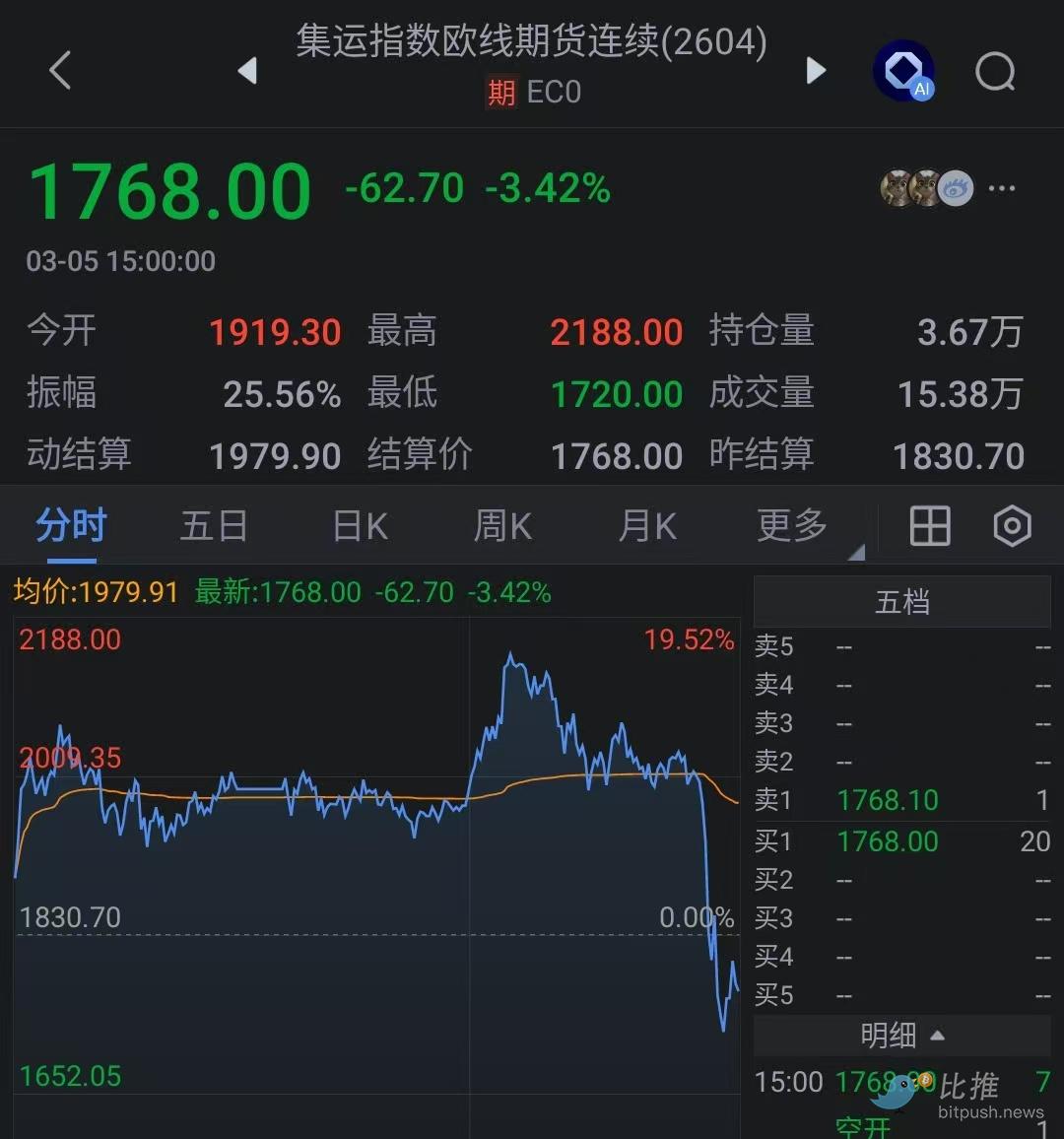
There is no new boss YET

比推Publicado a 2026-03-05Actualizado a 2026-03-05

Resumen

An Iranian deputy military commander from a southern district stated that the Strait of Hormuz has not been blockaded, but only vessels from the U.S. and Israel are prohibited from passing through. This caused a sharp, temporary drop in market prices for oil, gas, and container shipping routes (except European shipping, which remained down). The statement contrasts with Spain's recent refusal to allow the U.S. to use its bases for operations against Iran, where a spokesperson grimly warned of rising energy prices. Around the same time, a U.S. oil tanker sank in the Strait of Hormuz after reportedly “hitting a reef”—a claim viewed by some as corroboration of Iran’s military reports suggesting it was struck by a missile. The information landscape is filled with conflicting narratives, and all claims may be considered both true and false depending on perspective, as psychological and media operations are integral to modern warfare. There is no single authoritative voice in this conflict; even figures like Trump have contributed to the confusion with performative statements. Amid the chaos, all sides are maneuvering for strategic advantage, while humanitarian concerns are overshadowed by geopolitical games. The situation reflects a self-destructive struggle on a global scale.

Just now, uh, a deputy commander of a military district in southern Iran said something: 'We have not blocked the Strait of Hormuz,' only prohibiting ships from the US and Israel from passing. This instantly scared the market into a slide, things like European shipping, oil, gas. Scared the hell out of them, a complete mess, but at this moment, most have deeply V-recovered [except for European shipping].

This is in stark contrast to the Spanish spokesperson who, with a grave expression [at a press conference announcing Spain's refusal to negotiate with the US and allow the use of Spanish bases to attack Iran], repeatedly stated that oil and gas prices are bound to rise.

At the moment of speaking, a US oil tanker 'ran aground' and sank in the Strait of Hormuz. Think about it, 'running aground' in the world's busiest energy transport artery. This actually verifies the Iranian military's combat report. It was sunk by a missile.

Some might say, with so many messages and news, which one is true? Who is fooling whom? Actually, all can be considered true (truth mixed with falsehood, falsehood mixed with truth, remember all is fair in war.), because there is no leading figure or authority now [even if there is, like Trump giving himself a 15 out of 10 (evaluating US-Iran actions at a press conference, scoring himself, full marks 10.), it would be full of drama, and the war of public opinion has always been synchronized with the overall war and runs through it from beginning to end.]. The information released by all parties at any given moment can be considered true, but viewed from the overall situation or different standpoints, it can also be considered false. 'Everyone' is searching for the kind of 'ladder' Littlefinger talked about in the chaos, collecting as many chips as possible.

As for humanity, as for compassion. Amidst the complex and numerous coercions, there is temporarily no place for them to stand. This is the self-inflicted disaster of a group of microorganisms on this planet.

Whatever, bro.

#KingOfWar#King of War
Original article link:https://www.bitpush.news/articles/7617058

Preguntas relacionadas

QWhat was the immediate market reaction to the Iranian commander's statement about not blocking the Strait of Hormuz?

AThe market was instantly frightened, causing a sharp decline in prices for routes like European container shipping, oil, and gas. However, these prices mostly experienced a deep V-shaped recovery shortly after, except for European container shipping.

QHow did the Spanish spokesperson's statement contrast with the Iranian commander's?

AThe Spanish spokesperson, with a grave expression, repeatedly stated that oil and gas prices would inevitably rise during a press conference where Spain refused to negotiate with the U.S. on using its bases to attack Iran. This formed a sharp contrast to the Iranian commander's statement that they were not blocking the strait but only banning U.S. and Israeli ships.

QWhat incident is reported to have occurred in the Strait of Hormuz that seemingly confirmed Iran's military report?

AA U.S. oil tanker was reported to have 'run aground' and sunk in the Strait of Hormuz. The article suggests this was a cover story and that the tanker was actually sunk by a missile, validating Iran's military claims.

QAccording to the article, why is it difficult to determine the truth from the various news and messages circulating?

AThe article states that all information released by various parties can be considered true at the moment it is given, but when viewed from an overall perspective or different standpoints, it can also be considered false. There is no single authoritative source, and information warfare is full of deception and drama, making it hard to discern the absolute truth.

QWhat is the overall tone of the article towards the geopolitical situation described?

AThe tone is cynical and pessimistic, describing the situation as a chaotic melee where parties are fighting for leverage, with humanity and compassion having no place. It concludes with a resigned 'so be it' attitude, referring to the conflict as the自作孽 (self-inflicted disaster) of the planet's microbes.

Lecturas Relacionadas

Índice STAR Market 50 sube un 10,73%, ¿por qué la bolsa A ha protagonizado un "rebote en V"?

Tras varios días de corrección, el mercado chino registró una fuerte subida el 21 de julio. El índice STAR 50 se disparó un 10,73%, marcando su mayor ganancia diaria en casi un año, mientras que los otros principales índices también cerraron en positivo. El volumen de negociación alcanzó los 2,97 billones de yuanes. Más de 3100 acciones subieron, lideradas por una explosión en toda la cadena industrial de semiconductores, mientras que sectores como petróleo, gas y bancos cayeron. Esta recuperación en forma de "V" se atribuye a tres factores clave: 1) Señales positivas de entrada de capital, con importantes flujos hacia ETFs de referencia impulsados por el "equipo nacional", compañías de seguros y recompra de acciones por parte de empresas. 2) Gestos de apoyo por parte de los reguladores, como la reunión del presidente de la CSRC para enfatizar la estabilidad del mercado. 3) Un entorno externo más estable, con mercados globales como Corea del Sur también repuntando. Los gestores de fondos analizan que, tras los ajustes, la presión de valoración en el sector tecnológico se ha aliviado y la fase más intensa de pánico probablemente haya pasado. A corto plazo, la reducción del apalancamiento se ha moderado, pero la volatilidad podría persistir. A medio plazo, se necesita nueva catalización industrial, como los resultados del segundo trimestre de los proveedores de la nube. Las tendencias a largo plazo, como la demanda de potencia de cálculo de IA y la sustitución de importaciones de semiconductores, permanecen intactas, lo que otorga valor de configuración a este sector a largo plazo.

marsbitHace 32 min(s)

Índice STAR Market 50 sube un 10,73%, ¿por qué la bolsa A ha protagonizado un "rebote en V"?

marsbitHace 32 min(s)

Las acciones de 'impulso tecnológico' de EE.UU. registran su mayor ganancia diaria en la historia, pero ¿ha terminado ya el desplome?

Los denominados "momentum stocks" tecnológicos de Wall Street protagonizaron un fuerte rebote el martes 21 de julio, tras una venta masiva del 33% que los llevó a niveles de sobreventa extremos. El indicador de momentum TMT de Morgan Stanley registró su mayor subida intradía histórica (+12%), superando incluso el período de la burbuja puntocom. La recuperación fue liderada por el sector de semiconductores (+4.6%), con acciones como Micron superando el 10%. La causa principal fue una "squeeze" a los vendedores en corto, especialmente en Asia, que se vieron forzados a cubrir posiciones. Sin embargo, analistas como BTIG advierten que la amplitud del mercado fue débil (más acciones cayeron que subieron) y que el volumen fue bajo, lo que cuestiona la solidez del rebote. BTIG recomienda aprovechar para reducir posiciones, ya que el índice de momentum de Goldman Sachs (GSCBHMOM) alcanzó una zona de resistencia clave. Por el contrario, Goldman Sachs y UBS consideran que la venta por momentum está llegando a su fin y sugieren oportunidades de compra gradual en acciones de IA, aunque con cautela debido a la alta volatilidad. La temporada de resultados trimestrales, especialmente el informe de Alphabet sobre sus planes de gasto de capital, será clave para determinar la sostenibilidad del rebote. Paralelamente, el alza de los rendimientos de los bonos y el petróleo por encima de 90 dólares, debido a tensiones en el Medio Oriente, suponen un riesgo macroeconómico que podría afectar negativamente al mercado de valores.

marsbitHace 38 min(s)

Las acciones de 'impulso tecnológico' de EE.UU. registran su mayor ganancia diaria en la historia, pero ¿ha terminado ya el desplome?

marsbitHace 38 min(s)

Las "acciones de impulso tecnológico" de EE.UU. registran su mayor ganancia intradiaria de la historia, ¿pero ha terminado la caída?

Los "momentum stocks" tecnológicos de EE.UU. protagonizaron una fuerte recuperación el martes (21 de julio), registrando las mayores ganancias intradía de su historia tras una caída acumulada del 33%. El factor de momentum TMT de Morgan Stanley subió más de un 12%, un récord histórico. Los semiconductores lideraron el avance, con el índice SOX subiendo un 4,6%. Este rebote se atribuye en gran parte a un *short squeeze*, donde vendedores en corto cubrieron posiciones, especialmente tras eventos de margin call en Asia. Sin embargo, los analistas cuestionan la solidez de la recuperación. BTIG señala una amplitud de mercado débil (más acciones en declive que en alza a pesar del avance del índice) y un volumen bajo, sugiriendo que es un rebote concentrado y técnico. Advierten que el índice de momentum ha alcanzado una fuerte zona de resistencia y recomiendan reducir posiciones. Por el contrario, Goldman Sachs y UBS creen que la venta masiva está llegando a su fin y ven una oportunidad para acumular, especialmente en acciones de IA, aunque de forma gradual. La temporada de resultados, con Alphabet como punto clave, y el alza de los rendimientos de los bonos debido al aumento del precio del petróleo y tensiones geopolíticas, son los próximos factores críticos que determinarán la sostenibilidad del repunte.

链捕手Hace 40 min(s)

Las "acciones de impulso tecnológico" de EE.UU. registran su mayor ganancia intradiaria de la historia, ¿pero ha terminado la caída?

链捕手Hace 40 min(s)

Trading

Spot
活动图片