The 'Mastermind' Behind the Venezuela Incident? An Article to Unravel the AI Intelligence Empire—Palantir

marsbitPublicado a 2026-01-06Actualizado a 2026-01-06

Resumen

Venezuela Event and the "AI Intelligence Empire": A Look at Palantir Global attention has recently focused on a swift, high-precision operation in Venezuela, with speculation that Palantir Technologies—a data integration and AI decision-making company whose stock surged nearly 20-fold in two and a half years—provided the digital intelligence backbone. Although no official confirmation exists, the company's reputation and past involvement in missions like the capture of Osama bin Laden have fueled market narratives linking it to the operation. Founded in 2003 by Peter Thiel, Palantir operates as a data and AI-driven operating system for governments, militaries, and large enterprises. Its core capability lies in its Ontology" model, which integrates disparate data sources into a unified semantic framework, enabling real-time situational awareness and decision-making in high-stakes environments like military and intelligence operations. Beyond defense, Palantir has expanded into the crypto sector with “Foundry for Crypto,” offering compliance, anti-money laundering, and risk management solutions for exchanges and institutions. It serves as infrastructure—not a direct participant—in crypto. While founders like Thiel are personally bullish on Bitcoin, the company remains focused on its role as an enterprise AI and data platform. Palantir embodies multiple narratives: a tool for national security, a driver of enterprise digital transformation, and a behind-the-scenes actor in g...

Author: Conflux Blockchain

In the past two days, global public opinion has been heatedly discussing a blockbuster news story "comparable to a Hollywood movie": the United States launched a lightning operation against Venezuela, "precisely locating" President Maduro overnight and completing the takeover of political power and key oil and gas assets in an extremely short time.

Although the details of this operation remain uncertain, in the financial and tech circles, one name has been frequently mentioned: Palantir—a company whose stock price has surged nearly 20 times in two and a half years, crowned as the "AI Intelligence Empire" for its data integration and AI decision-making capabilities, is seen by many as the digital mastermind behind such "seamless operations."

What's even more interesting is that, beyond traditional military and government intelligence, Palantir has quietly become one of the "data and compliance infrastructure providers" for the crypto industry in the past two years—providing data and risk control brains to exchanges, custodial institutions, and compliance teams, while insisting on not issuing assets or engaging in DeFi.

What exactly is this company? Is it really that "magical"? And what is its relationship with Web3/crypto? Below, we break it down in detail.

Who is Palantir? Why is it called the "AI Intelligence Empire"?

Palantir Technologies was founded in 2003 by Peter Thiel, one of the "PayPal Mafia" members. The company's name comes from the all-seeing crystal ball Palantír in "The Lord of the Rings," symbolizing "seeing through the world."

It is not a pure AI company in the世俗 sense but more accurately positioned as a "data + AI-driven intelligence and decision-making operating system," deeply serving governments, militaries, and large enterprises. Here are some fundamental differences between Palantir and ordinary AI companies—

Core clients: Palantir grew out of the "counter-terrorism era," with its earliest core clients being U.S. intelligence and defense agencies. Its software is not used for recommending ads or scrolling through short videos but is installed on intelligence analysts' computers, command center screens, and battlefield decision-making chains. For the U.S. intelligence system, Palantir is more like an "intelligence and combat operating system," helping them piece together vast amounts of分散 data, understand causality, and make actionable decisions.

Data-driven decision-making: Ordinary BI tools focus more on reports and visualization; Palantir is committed to moving directly from data to action. It provides an end-to-end platform: connecting data sources → building semantic models → enabling analysts and commanders to collaborate on the same interface → pushing decisions directly to frontline execution units.

Repeated reinforcement of "war narratives": Regardless of the actual level of involvement, stories like "helping capture Bin Laden," "playing a key role in the Afghanistan war," and "using AI to help drones identify targets" have been firmly written into Palantir's market image.

For Wall Street and retail investors, this company represents a "hardcore technology" highly tied to the state apparatus, security power, and the future form of warfare.

The Key Weapon to Turn "Big Data" into a "God's-Eye View"

To understand Palantir's true killer feature, one must first understand a key concept: Ontology. This is not a philosophical concept but a company-specific operational layer digital model.

Simply put: Ontology maps all分散, heterogeneous data within an organization (structured/unstructured, database/sensor/satellite/human intelligence, etc.) into semantic objects, attributes, and relationships, such as real-world connections between "people," "locations," "assets," and "events."

It enables AI, analysts, and decision-makers to understand and operate complex businesses using natural language, forming a "digital twin of the organization."

In military/intelligence scenarios, Ontology can integrate multi-source intelligence in real-time (CIA informants + drones + satellites + social media), build a complete behavioral model of Maduro (movements, eating habits, safe house layouts, etc.), and thus support Delta Force's precise strikes.

Palantir has repeatedly emphasized: "Ontology is the true source of our AI advantage." It turns data into actionable knowledge, especially in crisis/high-adversity environments.

For this reason, the "seamless" and "zero-loss" nature of this operation has led many to believe that Ontology has once again worked its magic behind the scenes.

The Venezuela Incident: From Fact to Narrative Market Imagination

Therefore, as global舆论 continues to heat up, various versions of the operation's details have emerged: some claim "zero U.S. military casualties," others emphasize "extremely precise knowledge of Maduro's whereabouts," and still others portray it as "almost like playing a war game with a full map."

In this context, Palantir naturally becomes a frequently mentioned name—even though no official documents or military statements have publicly confirmed its role in this operation.

How did the market and social media "bind" the two together?

1. Price-first "sense of fact"

For many traders, the after-hours and overnight market movements themselves are seen as a "vote of fact." Once a major geopolitical event like this occurs, and Palantir's stock price shows a significant short-term surge, the market spontaneously links the two: "The operation was so smooth, Palantir's intelligence and AI system must be behind it."

Thus, "Palantir's involvement in the operation" itself becomes a tradable narrative.

2. "Automatic association" from historical experience

Over the past decade, Palantir has been publicly reported multiple times to be involved in U.S. counter-terrorism, target tracking missions in Iraq, Afghanistan, etc., and is widely believed to have provided crucial intelligence integration and analysis capabilities in key events like the Bin Laden operation. Its participation in AI military projects like Project Maven further reinforces the public impression that "whenever there's a high-precision operation, Palantir is likely behind it."

When media use terms like "precisely锁定 targets" and "real-time battlefield awareness" to describe the Venezuela incident, many instinctively equate these keywords with Palantir.

3. Narrative amplification effect of social media and financial circles

Various posts, long articles, and videos began stating with great certainty: "The AI command brain for this operation must be Palantir's system," "Palantir will secure contracts related to Venezuelan oil afterward."

Even though these claims are not based on reliable disclosures but more on past impressions and technical imagination, in an era of极度 fragmented information, what many believe can easily become a "factual narrative" in the short term and be reflected in the stock price.

In other words, the Venezuela incident provided a window for the outside world to once again放大 the imagination of Palantir—"If there really is a digital mastermind running behind the scenes, it's most likely them."

Tool Provider in the Crypto World, Not a Player

Many people are unaware that Palantir launched the "Foundry for Crypto" solution for the crypto industry as early as 2021–2022 (it can still be seen in the solutions section on its official website).

The essence of this solution is to移植 Palantir's mature capabilities in finance, anti-money laundering, and risk management directly into the crypto ecosystem. Its main clients are exchanges, custodial institutions, compliance-friendly CeFi/DeFi platforms, large market-making institutions, etc., helping these institutions integrate and analyze on-chain transactions, wallet behaviors, and off-chain KYC information.

It primarily addresses the following issues—

Pattern recognition of large-scale on-chain transaction behaviors: Identifying money laundering paths, fund mixing, cross-chain bridge attack fund flows, etc.

Anti-money laundering (AML), sanctions screening, suspicious address monitoring: Helping institutions meet regulatory compliance requirements.

Integrating on-chain data with traditional financial data: Bringing both into the same risk control and operations platform, so crypto business is no longer a "side system."

In a nutshell: Palantir is more like a "crypto world intelligence and compliance infrastructure supplier," serving the entire crypto ecosystem as a tool and data platform.

Founders & Executives' True Attitude Towards Crypto

From personal views to company actions, Palantir's relationship with crypto presents an interesting "fork":

Peter Thiel: Aggressive Bitcoin Bull

As a co-founder of Palantir and PayPal, Thiel praised Bitcoin early on, viewing it as a digital hedge against traditional financial systems and fiat currencies.

He has heavily invested in the blockchain and crypto space through personal and fund investments and has repeatedly emphasized Bitcoin's geopolitical significance in public—such as its potential to hedge against the monetary and financial hegemony of certain countries.

Joe Lonsdale: Bullish on "AI Agent + Crypto"

Another co-founder, Joe Lonsdale, has publicly stated that future AI Agents (intelligent agents) acting autonomously on the internet will need a native payment and incentive layer, and cryptocurrencies are highly likely to play this role.

In his vision, major chains like Bitcoin, Ethereum, and Solana have the opportunity to become the bulk payment, settlement, and incentive infrastructure for the AI economy.

Company Level: Cautious, Pragmatic, and Not Following Trends

In actual operations, Palantir maintains a very traditional corporate financial and business style: It started accepting Bitcoin as a customer payment method in 2021, showing some recognition of crypto; it seriously discussed adding Bitcoin to its corporate balance sheet but has not explicitly disclosed the actual situation.

It can be seen that Palantir's top brass generally recognizes the long-term value of crypto and participates through personal investments and some business布局; but as a public company, Palantir始终 emphasizes that it is an "enterprise-level AI + data infrastructure company," and crypto is just one of many vertical industries.

Conclusion

Putting these dimensions together, an interesting轮廓 emerges:

In national security and war narratives: Palantir is seen as the digital mastermind, firmly tied to stories of various high-precision operations.

In enterprise digitization, energy, manufacturing, and finance: It is the operating system helping traditional giants awaken to data.

In the crypto and Web3 world: It is both a bridge for regulation and compliance and a high-dimensional observer of on-chain fund flows, yet deliberately avoids any direct博弈.

This company simultaneously embodies key words from several eras: the war on terror, the data empire, AI military-industrial, geopolitics, Web3 compliance... No wonder, in舆论 whirlpools like the "Venezuela operation," whenever the "behind-the-scenes brain" is discussed, the market's first reaction is often:

"This probably has Palantir's fingerprints all over it."

*This content is for reference only and does not constitute investment advice. The market carries risks, invest with caution.


Preguntas relacionadas

QWhat is Palantir Technologies and why is it referred to as the 'AI Intelligence Empire'?

APalantir Technologies is a data and AI-driven intelligence and decision-making operating system co-founded by Peter Thiel in 2003. It is called the 'AI Intelligence Empire' because it deeply serves government, military, and large enterprise clients by integrating disparate data sources into a unified semantic model (Ontology) to support actionable decision-making, particularly in high-stakes scenarios like counterterrorism and military operations.

QHow did the Venezuela event relate to Palantir in public and market perception?

AThe Venezuela event, involving a swift operation to target President Maduro, led to widespread speculation that Palantir was the 'digital brain' behind it due to its historical role in precision military and intelligence operations. Although there was no official confirmation, market reactions and social media narratives linked Palantir's AI and data integration capabilities to the operation's perceived seamlessness, driving increased attention and stock price movements.

QWhat is Palantir's role in the crypto industry according to the article?

APalantir serves as a data and compliance infrastructure provider in the crypto industry through its 'Foundry for Crypto' solution. It helps exchanges, custodians, and compliant platforms with anti-money laundering (AML), sanctions screening, on-chain transaction pattern recognition, and integrating blockchain data with traditional financial systems, without directly participating in crypto asset issuance or DeFi.

QHow do Palantir's founders view cryptocurrency, and what is the company's official stance?

ACo-founder Peter Thiel is a vocal Bitcoin supporter, viewing it as a hedge against traditional financial systems, while another co-founder, Joe Lonsdale, sees crypto as a potential payment and incentive layer for AI agents. However, at the corporate level, Palantir maintains a cautious and practical approach, accepting Bitcoin as payment from clients but not heavily investing in crypto assets, emphasizing its role as an enterprise AI and data infrastructure company.

QWhat is Ontology in the context of Palantir's technology, and why is it considered a key advantage?

AOntology in Palantir's context refers to a semantic model that unifies disparate, heterogeneous data sources (e.g., databases, sensors, satellites) into objects, attributes, and relationships mirroring the real world. It enables AI, analysts, and decision-makers to understand and act on complex data naturally, forming a 'digital twin' of an organization. This is a key advantage because it transforms raw data into actionable knowledge, especially in high-pressure environments like military or intelligence operations.

Lecturas Relacionadas

El 'Aguafiestas' más famoso de Wall Street vuelve a apuntar a Nvidia

Un informe reciente reveló que Michael Burry, el famoso gestor de fondos conocido por predecir la crisis de las hipotecas subprime y retratado en "The Big Short", ha tomado posiciones cortas en varias empresas tecnológicas, destacando su apuesta contra Nvidia. Según sus declaraciones en Substack, Burry cuestiona la sostenibilidad del auge de la IA, señalando dos problemas principales: una posible "financiación circular fuera de balance" y una "sobreestimación de la vida útil de depreciación" de los chips de IA por parte de los clientes de Nvidia, como Microsoft, Google y Meta. Esto, argumenta, podría inflar artificialmente la rentabilidad reportada en toda la cadena de suministro. La reacción del mercado fue mixta. Tras los anuncios de Burry, el precio de las acciones de Nvidia experimentó volatilidad, cayendo cerca de un 5% en un día después de un informe sobre posibles avales financieros a clientes, antes de estabilizarse alrededor de los 200 dólares. Las posiciones cortas de Burry, abiertas a 198,09 dólares y aumentadas a 210,28 dólares, mostraban ligeras pérdidas flotantes a finales de julio. El artículo analiza el historial de Burry después de su éxito en 2008, señalando aciertos en crisis estructurales (como la pandemia de 2020) pero también notables errores de tiempo, como sus apuestas fallidas contra Tesla y Palantir en el pasado. Su metodología, basada en el análisis minucioso del flujo de caja libre y los documentos financieros originales, es efectiva para identificar riesgos subyacentes pero no para predecir su momento de materialización. La posición de Burry no es unánime. Otros inversores destacados, como Steve Eisman (otro protagonista de "The Big Short"), se muestran cautelosos pero no apuestan directamente contra Nvidia, citando su fuerte crecimiento de ingresos. Jim Chanos coincide en la preocupación por las prácticas contables, pero enfoca sus ventas en corto hacia empresas de capital privado con alta exposición inmobiliaria, no contra los fabricantes de chips. El artículo concluye que, más allá de si Burry acertará esta vez, el verdadero valor para los inversores reside en el tipo de preguntas críticas que plantea: cómo se pueden maquillar las cifras contables, qué riesgos estructurales se pasan por alto y qué investigar cuando todo el mundo asume que "esta vez es diferente". Replicar sus apuestas específicas es menos relevante que adoptar un enfoque escéptico y fundamentado.

marsbitHace 5 min(s)

El 'Aguafiestas' más famoso de Wall Street vuelve a apuntar a Nvidia

marsbitHace 5 min(s)

Selección Semanal: Terremoto épico en la bolsa, la salida a bolsa de Changxin Technology redefine el panorama del almacenamiento, Saylor apunta a reanclar STRC alrededor del 8 de septiembre

**Resumen del artículo:** PANews presenta una selección semanal de contenido destacado. La IA impulsa nuevos campos de batalla en cripto, como las carteras para agentes de IA, con gigantes como Coinbase posicionándose. La volatilidad extrema sacude los mercados: la bolsa coreana sufre múltiples suspensiones, arrastrada por acciones como SK Hynix, mientras que el mercado de cripto muestra cierta calma en comparación. En macro, destaca la salida a bolsa de ChangXin Technology, alcanzando una capitalización de 3.35 billones tras una década de pérdidas y un trimestre extraordinario. Citi advierte sobre riesgos extremos en materias primas para 2026. La Fed mantiene tasas, pero revela una rara división interna con un sesgo "halcón". Figuras como Tom Lee ven la caída de acciones de IA como una liquidación de apalancamiento, no el fin de la burbuja. Raoul Pal insta a mantener la perspectiva a largo plazo en cripto. La escasez de canales de inversión para minoristas chinos impulsa la búsqueda de alternativas como activos tokenizados. Se exploran oportunidades en protocolos como Fake World Assets (FWA), que combina NFT y loterías, y en mecanismos como las "tarifas prioritarias" de Hyperliquid. El sector RWA crece, pero enfrenta problemas de utilización. En Web3, Ethereum proyecta mejoras masivas para 2030. Lido ejecuta una migración histórica de staking. La "guerra de las stablecoins" se intensifica con nuevos retadores como OUSD frente a USDC. **Información clave:** Alzas en índices bursátiles y acciones de mineros de Bitcoin que se转型 (transicionan) hacia IA. Michael Saylor apunta a realinear STRC alrededor del 8 de septiembre. Empresas cotizadas en EE.UU. poseen el 92.7% de las tenencias corporativas globales de BTC. Financiaciones significativas en startups de IA.

marsbitHace 11 min(s)

Selección Semanal: Terremoto épico en la bolsa, la salida a bolsa de Changxin Technology redefine el panorama del almacenamiento, Saylor apunta a reanclar STRC alrededor del 8 de septiembre

marsbitHace 11 min(s)

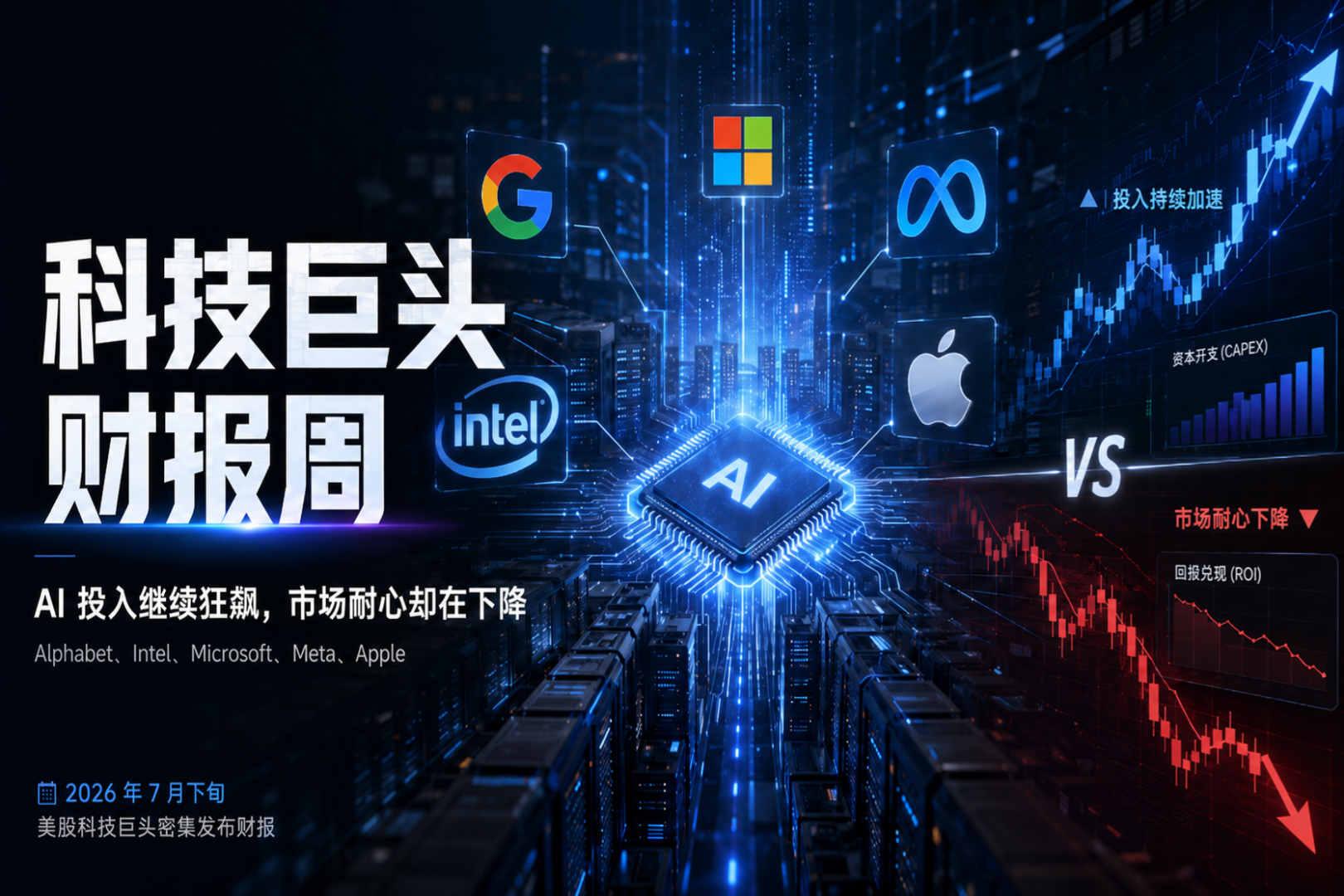
Cuando el mercado empieza a cuestionar el gasto de capital en IA: análisis completo de los resultados del Q2 de las cinco grandes tecnológicas

A finales de julio de 2026, los gigantes tecnológicos Alphabet (Google), Intel, Microsoft, Meta y Apple presentaron sus resultados del segundo trimestre. La narrativa común fue un fuerte crecimiento en los ingresos y ganancias, impulsado por la demanda de IA, pero una creciente inquietud del mercado sobre los masivos gastos de capital (CapEx) en infraestructura de IA y el momento en que se materializarán los retornos. **Google y Meta** experimentaron fuertes caídas en sus acciones (Google -7%, Meta casi -10%) después de informar aumentos significativos en su guía de gastos de capital para 2026 y un flujo de caja libre que se volvió negativo o casi desapareció. Los inversores castigaron la presión sobre la generación de efectivo a corto plazo. **Intel** mostró su crecimiento de ingresos más fuerte en 15 años, pero sus acciones tuvieron una volatilidad extrema ("montaña rusa") después de que también elevó su perspectiva de gastos de capital, lo que generó preocupaciones sobre la deuda y el flujo de caja libre. En contraste, **Microsoft** fue el claro favorito del mercado. Sus acciones registraron su mejor día en 18 años después de superar las expectativas, alcanzar los $100 mil millones en ingresos anualizados con Azure y, crucialmente, *reducir* su guía de gastos de capital para 2026 prometiendo un flujo de caja libre positivo, lo que calmó los temores de los inversores. **Apple**, a pesar de reportar récords de ingresos y ganancias, vio su valor evaporarse en $300 mil millones en un día debido a una guía de ingresos para el próximo trimestre inferior a lo esperado, citando limitaciones en la cadena de suministro y presión cambiaria. En resumen, los resultados confirmaron la sólida demanda de IA, pero marcaron un punto de inflexión: el mercado ya no premia solo el crecimiento, sino que exige claridad sobre el camino y el ritmo hacia la rentabilidad y el retorno del flujo de caja libre de estas enormes inversiones.

Odaily星球日报Hace 18 min(s)

Cuando el mercado empieza a cuestionar el gasto de capital en IA: análisis completo de los resultados del Q2 de las cinco grandes tecnológicas

Odaily星球日报Hace 18 min(s)

a16z: De la empresa al DAO, DUNA podría convertirse en la próxima forma organizativa

A lo largo de la historia, el principal desafío empresarial ha sido cómo hacer colaborar a extraños con intereses diversos. Las formas organizativas han evolucionado para resolverlo: desde las estructuras familiares y las *commenda* medievales hasta la revolucionaria invención de la corporación con la Compañía Neerlandesa de las Indias Orientales (VOC), que permitió la colaboración a gran escala con responsabilidad limitada. Sin embargo, la corporación tradicional, diseñada para la era industrial, introduce problemas de agencia y burocracia. En la era digital, las Organizaciones Autónomas Descentralizadas (DAO) surgieron como una promesa de coordinación sin autoridad central. No obstante, se enfrentan a un vacío legal: carecen de reconocimiento formal, exponiendo a sus miembros a responsabilidad ilimitada, y su modelo desafía los marcos regulatorios existentes, como la prueba *Howey* de la SEC. La DUNA (Asociación No Incorporada Sin Fines de Lucro Descentralizada) se presenta como una innovación legal crucial. Reconocida ya en algunos estados de EE.UU., proporciona personalidad jurídica y responsabilidad limitada a un grupo descentralizado, permitiéndole celebrar contratos y operar como una entidad única. No resuelve todos los desafíos de gobernanza, pero llena el vacío legal, ofreciendo a las redes nativas de Internet una forma legítima para organizarse sin depender de estructuras jerárquicas forzadas o fundaciones en el extranjero. Así, la DUNA representa el siguiente salto evolutivo, extendiendo las protecciones de la colaboración empresarial moderna al ámbito de la gobernanza descentralizada.

marsbitHace 1 hora(s)

a16z: De la empresa al DAO, DUNA podría convertirse en la próxima forma organizativa

marsbitHace 1 hora(s)

Informe de mitad de año 2026 sobre RWA en cadena: El valor de mercado de las acciones tokenizadas se duplica en un año, pero el 90% de los derechos son solo una cáscara vacía

Informe intermedio de 2026 sobre RWA en cadena: La capitalización del mercado de acciones tokenizadas se duplica en un año, pero el 90% de los derechos son vacíos. Aunque los datos de valor bloqueado de activos tokenizados en cadena parecen sólidos, existe una contradicción fundamental: los productos con libre circulación a menudo carecen de derechos de propiedad reales, mientras que aquellos con validez legal efectiva carecen de liquidez. Según RWA.xyz, el valor de las acciones tokenizadas distribuidas casi se duplicó de marzo a julio de 2026, alcanzando los 1,890 millones de dólares. Sin embargo, este crecimiento está impulsado principalmente por unos pocos productos y plataformas, mostrando una concentración significativa (Ondo, xStocks y Securitize representan el 85.1%). El mercado se divide entre infraestructuras reguladas en EE.UU., que priorizan la seguridad jurídica, y productos offshore más accesibles. La tokenización de bonos del Tesoro muestra un mejor ajuste al mercado. El informe advierte que las cifras agregadas pueden ser engañosas, ya que combinan eventos económicos distintos (nuevas emisiones, cambios de precios), y subraya la falta de productos que combinen a escala la propiedad canónica, distribución amplia, liquidez institucional y descubrimiento de precios en cadena.

marsbitHace 1 hora(s)

Informe de mitad de año 2026 sobre RWA en cadena: El valor de mercado de las acciones tokenizadas se duplica en un año, pero el 90% de los derechos son solo una cáscara vacía

marsbitHace 1 hora(s)

Trading

Spot
活动图片