Artículos Relacionados con ZK-Proofs

El Centro de Noticias de HTX ofrece los artículos más recientes y un análisis profundo sobre "ZK-Proofs", cubriendo tendencias del mercado, actualizaciones de proyectos, desarrollos tecnológicos y políticas regulatorias en la industria de cripto.

Ethereum's 2030 Blueprint: 200x Speed Increase, Quantum-Resistance, and Native Privacy

Ethereum's 2030 Roadmap: 200x Speed, Quantum-Resistant, Native Privacy Ethereum, now in its 11th year, is guided by the "Lean Ethereum" vision, a unified development blueprint aiming to streamline the network. This plan, outlined in the evolving "Strawmap" document, targets five core goals for 2030. **1. Fast L1:** Ethereum aims for near-instant finality and faster block times. By using Zero-Knowledge (ZK) proofs to aggregate validator votes, final confirmation could drop from ~15 minutes to seconds. Block times are slated to decrease from 12 seconds to 6 seconds (2027-28) and eventually 4 seconds (2029-30). The minimum staking requirement may also lower to 1 ETH, enhancing decentralization. **2. 1 Billion Gas L1:** To break the scalability-decentralization trade-off, L1 ZK-EVM will replace redundant transaction execution with ZK proofs. This allows nodes (even on phones) to verify blocks without re-running computations, paving the way to increase L1 throughput ~200x to 1 billion gas per second. **3. Trillion-Gas L2:** Ethereum will become a high-capacity settlement layer for Layer 2 networks (L2s). Planned upgrades, like PeerDAS and subsequent optimizations, target 1 GB per second of data bandwidth for L2s (Blobs), enabling a massive ecosystem of high-throughput rollups for specialized use cases. **4. Quantum-Resistant L1:** To counter future quantum computing threats, Ethereum plans to migrate its cryptographic signatures (ECDSA, BLS) to quantum-resistant, hash-based schemes. This multi-upgrade transition is targeted for completion by 2029, securing the network in the post-quantum era. **5. Privacy-Native L1:** For the first time, native transaction privacy is an official goal. Using ZK proofs, transactions could hide sender, receiver, and amount while proving compliance with rules. This infrastructure is tentatively planned, though details remain fluid and subject to regulatory landscapes. Driven by a broader ecosystem beyond the core Foundation, this ambitious roadmap seeks to make Ethereum faster, more scalable, quantum-secure, and private, while preserving its core tenets of neutrality and trustlessness. All plans remain subject to ongoing research, audits, and community consensus.

marsbitAyer 10:28

Ethereum's 2030 Blueprint: 200x Speed Increase, Quantum-Resistance, and Native Privacy

marsbitAyer 10:28

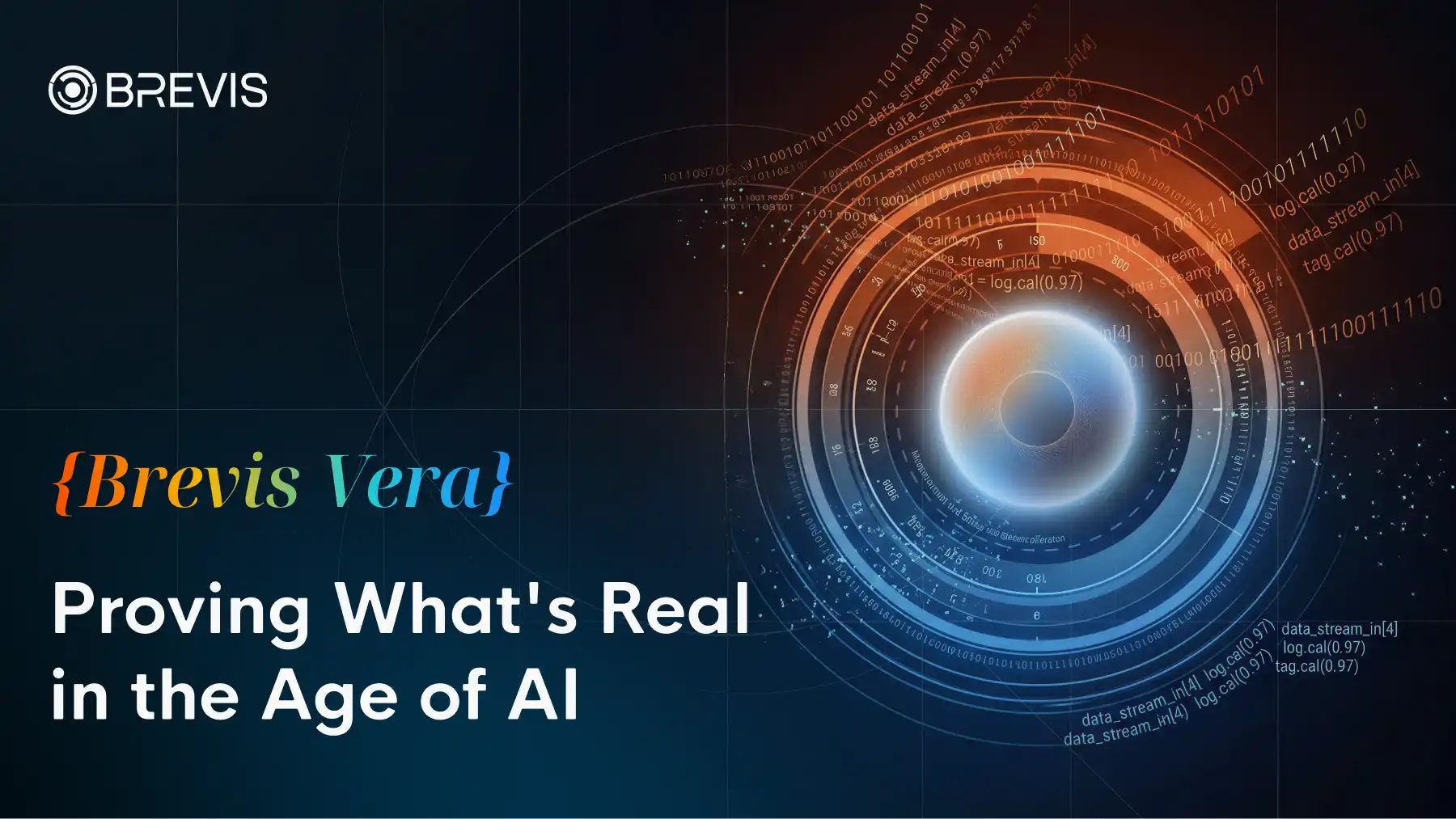
Brevis Vera is Now Live: Proving "Authenticity" in the Age of AI

Brevis Vera is an end-to-end media authenticity system that enables anyone to verify whether a published image or video originates from a real device and has been edited only in provable, compliant, and legitimate ways. It combines hardware-backed C2PA credentials—which cryptographically bind media to its source device at the time of capture—with zero-knowledge proofs (generated via Brevis Pico zkVM) that attest to the integrity of the entire editing process. Unlike AI-based deepfake detection methods, which are reactive and often lag behind generative advances, Vera takes a proactive approach by allowing media to cryptographically prove its origin and the transformations it has undergone. It addresses the "editing gap" where traditional signatures break after any modification, such as cropping or color adjustment. Vera integrates with open-source editing tools to generate proofs that verify three key claims: the output is derived from the signed original, only permitted edits were applied, and no hidden or malicious changes were introduced. The proofs are generated locally, verifiable by anyone, and preserve the privacy of both the source material and the editing workflow. The system is now live, with initial support for common image transformations. Brevis is working to integrate Vera into mainstream consumer editing applications and has open-sourced the reference implementation.

marsbit03/09 12:37

Brevis Vera is Now Live: Proving "Authenticity" in the Age of AI

marsbit03/09 12:37

Ethereum's Narrative Is Being Rewritten: When L1 zkEVM Becomes the Endgame, When Will the Next Revolution Arrive?

Ethereum's narrative is undergoing a significant rewrite, shifting from a programmable ledger (2015-2020) to an L2-centric settlement layer (2021-2023), and now toward becoming a verifiable computer with L1 zkEVM as its endgame (2024 onward). The newly proposed Strawmap roadmap outlines an ambitious technical direction, targeting faster L1 confirmation, "Gigagas"-level throughput (10,000 TPS), quantum resistance, and native privacy. This transformation is driven by eight core technical workstreams: formalizing EVM specifications, replacing Keccak with ZK-friendly hashes, transitioning to Verkle Trees, enabling stateless clients, standardizing ZK proof systems, decoupling execution and consensus layers, implementing recursive proof aggregation, and ensuring developer toolchain compatibility. L1 zkEVM aims to integrate zero-knowledge proofs directly into Ethereum’s consensus layer, fundamentally upgrading its trust model. While full implementation may take until 2028-2029, this shift repositions Ethereum as the verifiable trust root for the entire Web3 ecosystem—enhancing scalability without compromising decentralization. The move also redefines the role of L2s, evolving them from scaling solutions to specialized execution environments. Ethereum’s structured, multi-year effort reflects its unique capacity for coordinated innovation and may ultimately establish it as a global settlement layer—fast, secure, and private.

marsbit03/07 07:12

Ethereum's Narrative Is Being Rewritten: When L1 zkEVM Becomes the Endgame, When Will the Next Revolution Arrive?

marsbit03/07 07:12

活动图片