Artículos Relacionados con Future Tech

El Centro de Noticias de HTX ofrece los artículos más recientes y un análisis profundo sobre "Future Tech", cubriendo tendencias del mercado, actualizaciones de proyectos, desarrollos tecnológicos y políticas regulatorias en la industria de cripto.

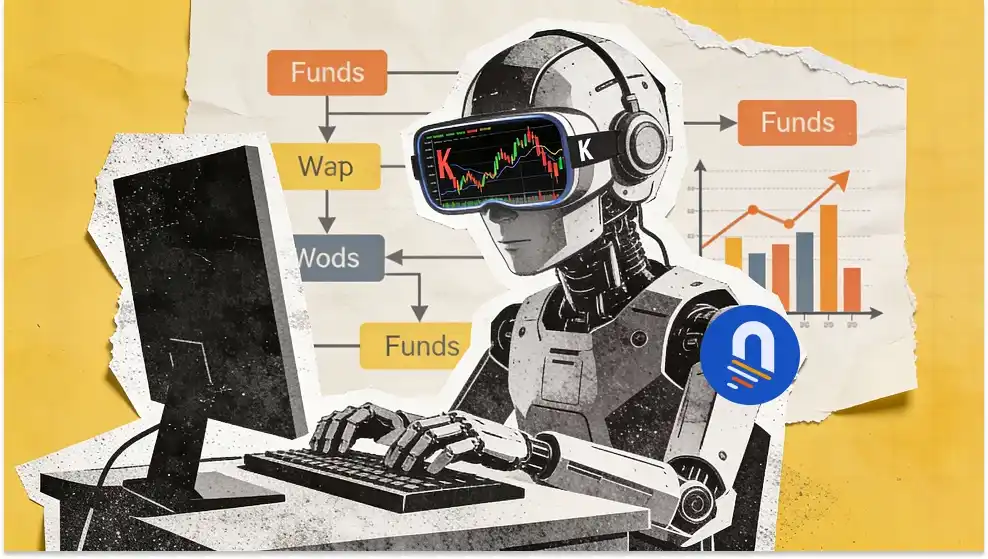
Recursive Self-Improvement AI Gains Traction, Google Pours Cold Water, While DeepSeek and Others Approach the Fringes

The term "recursive self-improvement" (RSI), where AI improves itself autonomously, is gaining momentum in the AI industry. Startups like Recursive Superintelligence and projects such as Andrej Karpathy's Auto-Research aim to create systems where AI designs, implements, and validates its own research, moving toward superintelligence. While Google CEO Sundar Pichai cautions that such exponential acceleration is not yet a reality, progress is evident. For instance, Anthropic reported its Claude Code writes nearly 100% of the team's code, though it still lacks true self-direction. Analysts frame RSI development in stages: "adequacy" (systems functioning without humans), "parity" (matching human research quality), and "supremacy" (exceeding human-AI collaboration). Reaching parity could trigger rapid, unpredictable advancement due to AI's continuous operation. In China, companies like DeepSeek and Baidu incorporate self-optimization techniques without explicitly branding them as RSI, focusing on algorithmic efficiency and reinforcement learning. However, challenges remain, including "model collapse" from training on AI-generated data and the immense computational and open-collaboration requirements. Ultimately, RSI represents a trend of increasing automation in AI development, potentially reducing human oversight in the creation process itself.

marsbitHace 15 hora(s)

Recursive Self-Improvement AI Gains Traction, Google Pours Cold Water, While DeepSeek and Others Approach the Fringes

marsbitHace 15 hora(s)

Blockchain Capital Partner: Most People Have a Narrow Understanding of the On-Chain Economy

Author Spencer Bogart, a partner at Blockchain Capital, argues that most people have a narrow view of the on-chain economy, seeing it primarily as a faster, cheaper version of existing financial systems. While this represents a significant opportunity, he believes it's only a small part of the story. Bogart compares the current state of crypto to the early internet, where email was the obvious "faster mail" application. The truly transformative categories—like search, social media, and cloud computing—were entirely new and unimaginable beforehand. Similarly, the most profound innovations in crypto will not be incremental improvements but entirely new categories enabled by the core properties of public blockchains: atomic execution, shared global state, programmable custody, and composability. He cites the "flash loan" as a prime example of a "new verb"—a financial action structurally impossible before programmable assets and atomic settlement. It allows for uncollateralized, trustless borrowing of any size, provided repayment occurs within the same transaction, enabling novel strategies like arbitrage and collateral swaps. Bogart admits the difficulty in precisely predicting these future innovations, as human imagination tends to extrapolate from the past. He posits that the most exciting applications in ten years will be things that don't exist today and have no precedent—products only possible in a global, composable, always-on environment with programmable assets. While the exploration of this vast design space will involve many failures, the potential for transformative, category-defining breakthroughs is what makes the next decade so promising.

链捕手05/18 02:26

Blockchain Capital Partner: Most People Have a Narrow Understanding of the On-Chain Economy

链捕手05/18 02:26

Karpathy Diagnosed with "AI Psychosis"! Not Eating or Sleeping, 16 Hours a Day Raising Lobsters

Andrej Karpathy recently revealed that he has developed what he calls "AI psychosis," an obsessive state where he spends up to 16 hours a day directing AI agents instead of writing code himself. In a podcast with Sarah Guo, he explained that his workflow has shifted from 80% hand-coding and 20% AI-assisted to the reverse, or even more extreme. He now manages multiple AI agents simultaneously, treating them as a team to execute tasks. Karpathy admitted that he’s become addicted to optimizing AI performance, constantly worrying about whether he’s using tokens efficiently or pushing the system to its limit. He highlighted the importance of an agent’s “personality,” noting that Claude Code feels more like a collaborative teammate compared to colder, more mechanical alternatives. He also shared practical applications, such as "Dobby," a Claude-based smart home agent that integrates and controls all his home devices through natural language, replacing six separate apps. In research, his "AutoResearch" project used AI to run 700 experiments, resulting in an 11% training speed improvement for an AI model—discovering optimizations he had missed as a human researcher. Despite the capabilities, Karpathy noted that AI agents still exhibit uneven performance—sometimes brilliant, other times childlike—due to limitations in reinforcement training. He predicts that 2026 will see a "slopacolypse," with AI generating vast amounts of mediocre content. His experience signals a broader shift: humans are becoming directors of AI systems rather than executors, navigating a new era of human-AI collaboration.

marsbit03/23 11:44

Karpathy Diagnosed with "AI Psychosis"! Not Eating or Sleeping, 16 Hours a Day Raising Lobsters

marsbit03/23 11:44

活动图片