Artículos Relacionados con Depegging

El Centro de Noticias de HTX ofrece los artículos más recientes y un análisis profundo sobre "Depegging", cubriendo tendencias del mercado, actualizaciones de proyectos, desarrollos tecnológicos y políticas regulatorias en la industria de cripto.

A Depegging and a Tweet: When the U.S. President Begins to "Legislate Escort" for His Family Business

A brief depegging incident involving the USD1 stablecoin, issued by Trump-affiliated World Liberty Financial (WLFI), and a subsequent push for crypto legislation by former President Trump have raised questions about the intersection of his political power and family business interests. On February 23, 2026, USD1 briefly depegged to $0.994 amid what WLFI called a "coordinated attack" involving social media hacks and market manipulation. Shortly after, WLFI transferred over $17 million worth of its native tokens to centralized exchanges, sparking market speculation about potential selling. Concurrently, on March 4, Trump publicly urged Congress to pass the GENIUS Act, a key stablecoin regulatory bill, while accusing banking lobbyists of undermining U.S. crypto competitiveness. The situation is complicated by the fact that the Trump family stands to benefit directly from the bill's passage. WLFI, which launched USD1 in March 2025, has seen rapid growth, partly fueled by political connections, including a major investment from an Abu Dhabi sovereign fund. However, the project faces scrutiny. A U.S. House investigation is probing a secretive $500 million sale of a 49% WLFI stake to an entity linked to an UAE royal, a deal signed just days before Trump's second inauguration. Critics, including Senator Elizabeth Warren, have raised concerns about potential national security risks and conflicts of interest. The episode highlights a grey area in modern governance: a sitting president simultaneously advocating for policies that could directly enrich his family's business, while that business faces both market pressures and congressional investigations. The existing legal and regulatory framework appears insufficient to address this novel overlap of political power and private commercial interest.

marsbit03/08 07:11

A Depegging and a Tweet: When the U.S. President Begins to "Legislate Escort" for His Family Business

marsbit03/08 07:11

WLFI's Deletion Sparks Crash Speculation: Trust Crisis in a Bear Market

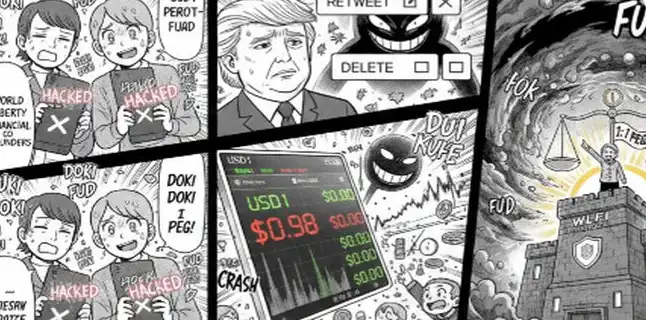
Amid a bearish market sentiment, the deletion of a tweet by Eric Trump, co-founder of World Liberty Financial (WLFI), triggered widespread speculation and panic. On February 23, Eric Trump retweeted and then deleted a post about Binance listing more USD1 trading pairs. This action led to a temporary depegging of USD1 to 0.9802 against USDT and a nearly 10% drop in WLFI’s price, though both later recovered. The incident fueled FUD (fear, uncertainty, and doubt) on social media, with rumors suggesting Eric had purged all crypto-related tweets or that internal issues plagued the Trump family. WLFI quickly responded, claiming it was a coordinated attack where hackers breached multiple co-founders’ accounts, spread panic, and attempted to profit by shorting WLFI. They later clarified that only X accounts were compromised, not WLFI or USD1 contracts. However, skepticism arose. Observers noted that only one retweet was removed—not a mass deletion—and no significant shorting activity was detected. Some linked the event to an upcoming major investigation announcement by on-chain detective ZachXBT, though market data did not strongly tie it to WLFI. Critics also questioned WLFI’s narrative, suggesting the “hack” claim might be a cover-up or misdirection. The event highlights the crypto community’s heightened sensitivity and distrust during bear markets, where minor actions can spark exaggerated reactions and conspiracy theories.

比推02/24 15:15

WLFI's Deletion Sparks Crash Speculation: Trust Crisis in a Bear Market

比推02/24 15:15

The Full Story of USDe's Depegging on October 11: A $19 Billion Lesson in Crypto Financial Engineering

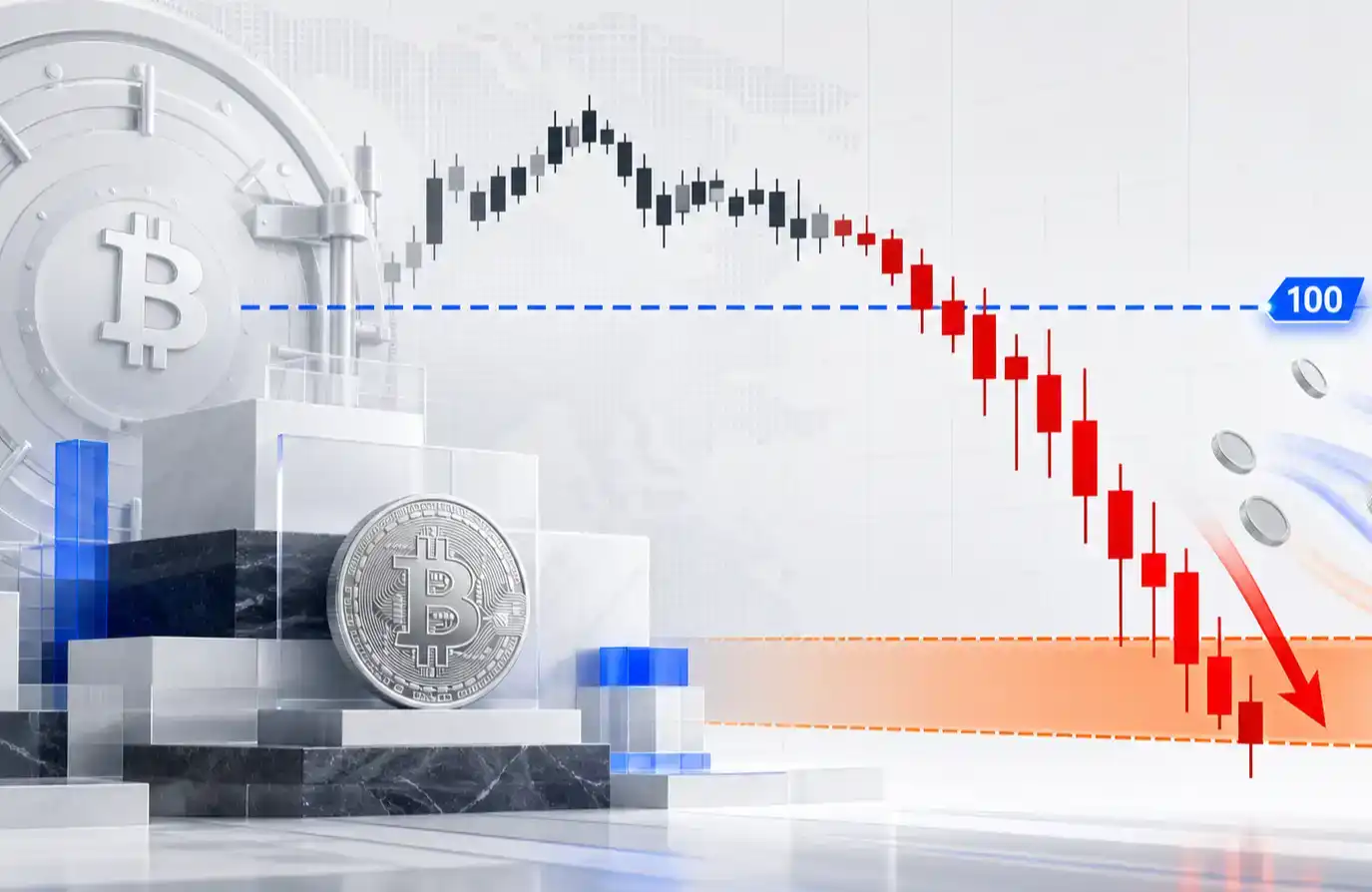
On October 11, 2025, USDe, a major yield-bearing stablecoin (YBS), depegged on Binance, triggering a cascade of liquidations and resulting in a record-breaking $19 billion liquidation event in crypto history. While mainstream media termed it a "crypto crash," the incident was fundamentally a massive exposure of tail risks in complex financial engineering. USDe, created by Ethena, is a synthetic dollar protocol that maintains delta-neutral positions by hedging spot assets with perpetual futures contracts, capturing returns from funding rates, staking yields, and basis trades. At its peak, USDe reached a $14 billion market cap, offering APYs as high as 27%, and was touted as an "Internet Bond." However, a significant portion of its growth was driven by leveraged lending on external platforms. Binance’s launch of a 12% APY incentive program encouraged users to employ recursive lending with up to 5x leverage, using Binance’s own USDe/USDT pair as the sole price oracle. This created $8.4 billion in highly leveraged exposure outside Ethena’s core delta-neutral system. The collapse began when Trump announced a 100% tariff on Chinese goods, causing a sharp market downturn. As crypto assets fell, perpetual funding rates turned negative. Large USDe holders sold on Binance, driving its price down. Once it fell below $0.82, it triggered mass liquidations of leveraged positions. In just 23 minutes, USDe plummeted to $0.65 on Binance due to cascading liquidations and liquidity failure. In contrast, on-chain DEXs like Uniswap saw only a brief 2% depeg, and DeFi lending protocols like Aave experienced minimal liquidations due to robust oracle mechanisms. Ethena’s core protocol remained solvent and operational throughout, indicating the failure was specific to Binance’s market structure. The event underscores critical lessons: the dangers of excessive leverage, reliance on single-point price oracles, and the misperception of complex yield products as risk-free savings. It highlights that stability in crypto depends on robust mechanisms, deep liquidity, and sustained confidence—not just financial engineering.

marsbit12/29 09:07

The Full Story of USDe's Depegging on October 11: A $19 Billion Lesson in Crypto Financial Engineering

marsbit12/29 09:07

活动图片