Polish Parliament Slams The Brakes On Crypto Market Act After Controversial Revival

bitcoinistPublicado a 2025-12-20Actualizado a 2025-12-20

Resumen

Polish lawmakers have halted discussions on the controversial Crypto-Asset Market Act until January. The lower house, the Sejm, recently passed a nearly identical version of a bill previously vetoed by President Karol Nawrocki, who expressed concerns about overregulation, threats to innovation, and potential startup exodus. Despite failing to override the veto, the ruling coalition reintroduced the bill with minimal changes, including a reduced fee for crypto intermediaries from 0.4% to 0.1%. The Senate has delayed its decision to carefully review the amendments, with further discussions scheduled for January.

Polish lawmakers have reportedly halted discussions on crypto legislations until January after the parliament’s lower house, the Sejm, voted to pass a nearly identical version of a bill that was vetoed by Poland’s president earlier this month without changes.

Poland’s Sejm Passes Controversial Crypto Bill

On Friday, local news media outlets informed that the Polish Senate hit the brakes on the controversial Crypto-Asset Market Act, following the Sejm’s recent vote to pass “version 2.0” of the legislation.

According to the reports, more than half of the members of the lower chamber voted to pass the revived version of the bill on Thursday, leaving its fate in the hands of the Senate and then the President, who has strongly opposed to the legislation.

As reported by Bitcoinist, Poland’s President Karol Nawrocki vetoed the Crypto-Asset Market Act at the start of the month due to concerns of a potential exodus of startups and overregulating the sector with the “legal mess” proposed by the Polish government.

On December 1, President Nawrocki refused to sign the bill, first introduced in June, which aimed to establish strict rules on the crypto assets market. He argued that the legislation it could pose a real threat to the freedoms of Poles, the stability of the state, and market innovation.

The local crypto community had raised concerns about the bill in September, affirming that it exceeded the European Union (EU)’s minimum regulatory requirements and could drive small businesses and startups abroad.

The parliament attempted to override the President’s veto, but ultimately failed after being unable to secure the required three-fifths majority vote to overturn the presidential decision.

Nonetheless, the part of the ruling coalition in the Sejm reintroduced the bill a week later without allegedly amending any of the controversial policies, raising more concerns among crypto industry players and community members.

Senate Delays Decision Until January

According to the reports, the Senate had initially planned to pass the bill “at an express pace” before the end of the year. However, the Deputy Finance Minister Jurand Drop raised concerns about the intention to pass the legislation with no further revisions.

Deputy Minister Drop pointed out that the Sejm had introduced only one change to the proposal, a lower fee for entities intermediating in crypto trading, despite the government’s disapproval of the current text.

“This amendment, which was introduced during the Sejm vote and which the government disagrees with, concerns the level of fees paid to the Polish Financial Supervision Authority (KNF) by entities in the crypto-asset market. The fee has been reduced from 0.4% to 0.1%,” Drop explained.

“Other market segments have fees of a maximum of 0.5%; for this market, the government has proposed 0.4%. Although the KNF’s projections indicate that these fees will not exceed 0.1%, and in the first year, they will not be collected at all, the question remains what will happen if this market grows and, as a result, the fees are forced to exceed 0.1%,” he added.

On Friday morning, the Senate Budget and Public Finance Committee discussed the recently passed bill and the Ministry of Finance’s concerns. The committee chairman, Senator Kazimierz Kleina, suggested that the committee review this modification calmly.

Therefore, he withdrew the motion to pass the bill without new changes and suspended the discussions on the bill, affirming that the Sejm’s amendments “will have to be carefully considered.” Ultimately, Chairman Kleina scheduled to resume work on the legislation during the January Senate session.
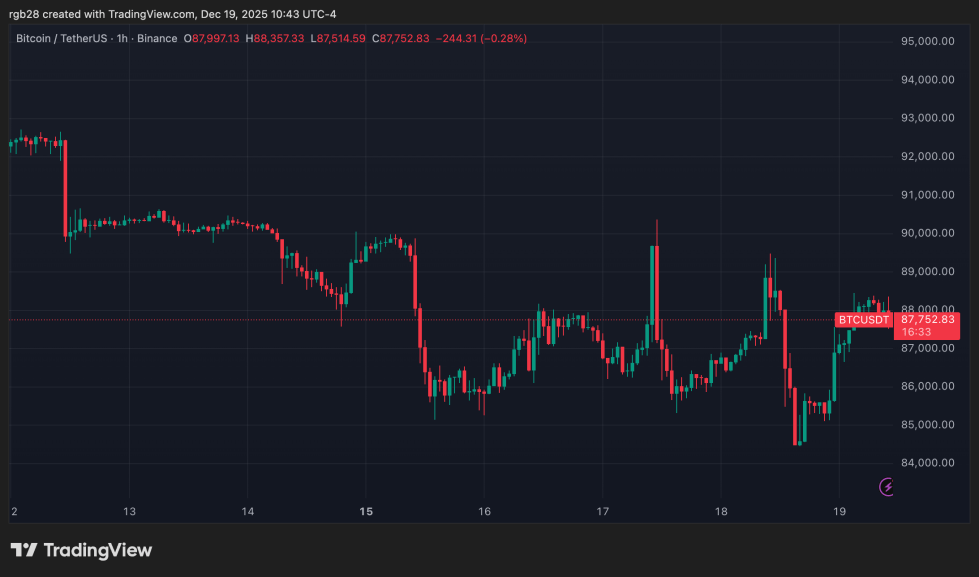
Bitcoin (BTC) trades at $87,752 in the one-week, chart. Source: BTCUSDT on TradingView


Preguntas relacionadas

QWhy did the Polish Sejm halt discussions on crypto legislation until January?

AThe Sejm halted discussions after passing a nearly identical version of a previously vetoed crypto bill, and the Senate decided to delay further review until January to carefully consider the amendments.

QWhat was the main reason President Karol Nawrocki vetoed the Crypto-Asset Market Act initially?

APresident Nawrocki vetoed the bill due to concerns about potential startup exodus, overregulation, and the threat it posed to Poles' freedoms, state stability, and market innovation.

QHow did the Sejm's revived version of the crypto bill change the fee structure?

AThe Sejm reduced the fee paid to the Polish Financial Supervision Authority (KNF) by crypto entities from 0.4% to 0.1%.

QWhat concerns did Deputy Finance Minister Jurand Drop raise about the revised bill?

ADrop expressed concerns about the reduced fee (0.1%) and questioned what would happen if the market grew, potentially requiring fees to exceed that level, as other market segments have fees up to 0.5%.

QWhy did the local crypto community oppose the Crypto-Asset Market Act?

AThe community argued that the bill exceeded the EU's minimum regulatory requirements and could drive small businesses and startups abroad due to overregulation.

Lecturas Relacionadas

Entrevista con Michael Saylor: Dije que vendería BTC, pero nunca sería un vendedor neto

En una entrevista reciente, Michael Saylor, presidente ejecutivo de MicroStrategy, aclaró las declaraciones de la empresa sobre la posible venta de Bitcoin para pagar dividendos de su producto de deuda digital STRC. Saylor enfatizó que, aunque la empresa podría vender algunas de sus tenencias de Bitcoin para este fin, la estrategia general es seguir siendo un **comprador neto** de la criptomoneda. Explicó que el modelo de negocio se basa en utilizar Bitcoin como "capital digital", emitiendo instrumentos de crédito como STRC para financiar la compra de más Bitcoin. Dado que Bitcoin se aprecia (alrededor del 30-40% anual proyectado), la empresa puede destinar parte de esa plusvalía a pagar los dividendos, manteniendo siempre un crecimiento neto de sus reservas. Por ejemplo, en abril, MicroStrategy recaudó $3.2 mil millones en STRC y compró una cantidad equivalente en Bitcoin, mientras que el dividendo requerido fue de solo $80-90 millones. Saylor también abordó las críticas, argumentando que Bitcoin es un activo legítimo y que los productos de crédito digital respaldados por él, como STRC, ofrecen un alto rendimiento con menor volatilidad, atrayendo a inversionistas institucionales. Destacó la liquidez del mercado de Bitcoin, afirmando que incluso grandes compras por parte de MicroStrategy no mueven significativamente su precio. Finalmente, Saylor reiteró que la lógica fundamental sobre Bitcoin no ha cambiado: es la mejor clase de activo de capital, y su "aplicación asesina" es servir como colateral para el crédito digital, impulsando innovación en los sectores financiero tradicional y cripto.

Odaily星球日报Hace 3 min(s)

Entrevista con Michael Saylor: Dije que vendería BTC, pero nunca sería un vendedor neto

Odaily星球日报Hace 3 min(s)

Atrayendo capital global, una nueva ronda de 'súper ciclo' se está desarrollando en Asia

Los inversores están volviendo su mirada hacia Asia en busca de la próxima fase de crecimiento en los mercados bursátiles globales. Impulsados por la ola de inteligencia artificial (IA), mercados como el de Corea del Sur han liderado las ganancias mundiales. Morgan Stanley destaca que el motor del ciclo industrial asiático está cambiando desde la manufactura tradicional hacia inversiones en infraestructura de IA, seguridad energética, transición energética, defensa y resiliencia de la cadena de suministro. Se prevé que la inversión en capital fijo en Asia aumente de unos 11 billones de dólares en 2025 a 16 billones en 2030. El gasto en centros de datos de IA a nivel global podría alcanzar unos 2,8 billones de dólares entre 2026-2028, beneficiando a las cadenas de suministro de hardware en Asia. China, en particular, se centra en desarrollar un ecosistema de IA autónomo, con un mercado de chips doméstico que podría alcanzar los 67.000 millones de dólares para 2030. Más allá de la IA, la robótica, especialmente los robots humanoides e industriales, emerge como la próxima gran historia de exportación de la manufactura china, similar a la trayectoria inicial de los vehículos eléctricos. La seguridad energética y el aumento del gasto en defensa en varios países asiáticos ofrecen pilares de crecimiento adicionales. China, Corea del Sur y Japón se posicionan como los mayores beneficiarios debido a su integración en la cadena de suministro y sus ventajas en fabricación y tecnología. Sin embargo, existen riesgos como la sobrecapacidad, la presión sobre los márgenes de beneficio, las restricciones tecnológicas y la fricción geopolítica. Además, la adopción de la IA podría afectar significativamente a la estructura del empleo en la región.

marsbitHace 1 hora(s)

Atrayendo capital global, una nueva ronda de 'súper ciclo' se está desarrollando en Asia

marsbitHace 1 hora(s)

38,000 aplicaciones expuestas y más de 2,000 con filtraciones, la programación con IA convierte las 'redes internas' en Internet público

Los investigadores de la startup israelí de ciberseguridad RedAccess descubrieron que aproximadamente 380,000 aplicaciones web creadas con herramientas de programación asistida por IA, como Lovable, Replit, Base44 y Netlify, son accesibles públicamente. De estas, unas 5,000 carecen de mecanismos de seguridad o autenticación, y un análisis más profundo revela que casi 2,000 exponen datos sensibles. La información expuesta incluye registros médicos, datos financieros, documentos estratégicos internos de empresas e incluso conversaciones detalladas de chatbots con información personal de clientes. En algunos casos, se podría obtener acceso de administrador. El problema surge porque estas herramientas de "vibe coding" permiten a usuarios sin formación técnica crear y desplegar aplicaciones fácilmente, a menudo con configuraciones predeterminadas que las hacen públicas y visibles en los motores de búsqueda. Muchos usuarios, denominados "desarrolladores ciudadanos", no son conscientes de los riesgos de seguridad y eluden los controles y revisiones tradicionales de las empresas. Aunque algunas de las empresas de desarrollo con IA cuestionan la metodología del informe y enfatizan que la responsabilidad final de la configuración recae en el usuario, los investigadores demostraron casos reales de fugas de datos. Incidentes anteriores, como uno en Cursor que eliminó una base de datos de producción, y estudios de otras firmas como Escape.tech, que también encontraron miles de aplicaciones vulnerables, respaldan la gravedad de la tendencia. Expertos como Gartner predicen que este fenómeno aumentará significativamente los defectos del software en los próximos años.

marsbitHace 1 hora(s)

38,000 aplicaciones expuestas y más de 2,000 con filtraciones, la programación con IA convierte las 'redes internas' en Internet público

marsbitHace 1 hora(s)

Trading

Spot
Futuros
活动图片