Polish Parliament Slams The Brakes On Crypto Market Act After Controversial Revival

bitcoinistPublicado a 2025-12-20Actualizado a 2025-12-20

Resumen

Polish lawmakers have halted discussions on the controversial Crypto-Asset Market Act until January. The lower house, the Sejm, recently passed a nearly identical version of a bill previously vetoed by President Karol Nawrocki, who expressed concerns about overregulation, threats to innovation, and potential startup exodus. Despite failing to override the veto, the ruling coalition reintroduced the bill with minimal changes, including a reduced fee for crypto intermediaries from 0.4% to 0.1%. The Senate has delayed its decision to carefully review the amendments, with further discussions scheduled for January.

Polish lawmakers have reportedly halted discussions on crypto legislations until January after the parliament’s lower house, the Sejm, voted to pass a nearly identical version of a bill that was vetoed by Poland’s president earlier this month without changes.

Poland’s Sejm Passes Controversial Crypto Bill

On Friday, local news media outlets informed that the Polish Senate hit the brakes on the controversial Crypto-Asset Market Act, following the Sejm’s recent vote to pass “version 2.0” of the legislation.

According to the reports, more than half of the members of the lower chamber voted to pass the revived version of the bill on Thursday, leaving its fate in the hands of the Senate and then the President, who has strongly opposed to the legislation.

As reported by Bitcoinist, Poland’s President Karol Nawrocki vetoed the Crypto-Asset Market Act at the start of the month due to concerns of a potential exodus of startups and overregulating the sector with the “legal mess” proposed by the Polish government.

On December 1, President Nawrocki refused to sign the bill, first introduced in June, which aimed to establish strict rules on the crypto assets market. He argued that the legislation it could pose a real threat to the freedoms of Poles, the stability of the state, and market innovation.

The local crypto community had raised concerns about the bill in September, affirming that it exceeded the European Union (EU)’s minimum regulatory requirements and could drive small businesses and startups abroad.

The parliament attempted to override the President’s veto, but ultimately failed after being unable to secure the required three-fifths majority vote to overturn the presidential decision.

Nonetheless, the part of the ruling coalition in the Sejm reintroduced the bill a week later without allegedly amending any of the controversial policies, raising more concerns among crypto industry players and community members.

Senate Delays Decision Until January

According to the reports, the Senate had initially planned to pass the bill “at an express pace” before the end of the year. However, the Deputy Finance Minister Jurand Drop raised concerns about the intention to pass the legislation with no further revisions.

Deputy Minister Drop pointed out that the Sejm had introduced only one change to the proposal, a lower fee for entities intermediating in crypto trading, despite the government’s disapproval of the current text.

“This amendment, which was introduced during the Sejm vote and which the government disagrees with, concerns the level of fees paid to the Polish Financial Supervision Authority (KNF) by entities in the crypto-asset market. The fee has been reduced from 0.4% to 0.1%,” Drop explained.

“Other market segments have fees of a maximum of 0.5%; for this market, the government has proposed 0.4%. Although the KNF’s projections indicate that these fees will not exceed 0.1%, and in the first year, they will not be collected at all, the question remains what will happen if this market grows and, as a result, the fees are forced to exceed 0.1%,” he added.

On Friday morning, the Senate Budget and Public Finance Committee discussed the recently passed bill and the Ministry of Finance’s concerns. The committee chairman, Senator Kazimierz Kleina, suggested that the committee review this modification calmly.

Therefore, he withdrew the motion to pass the bill without new changes and suspended the discussions on the bill, affirming that the Sejm’s amendments “will have to be carefully considered.” Ultimately, Chairman Kleina scheduled to resume work on the legislation during the January Senate session.
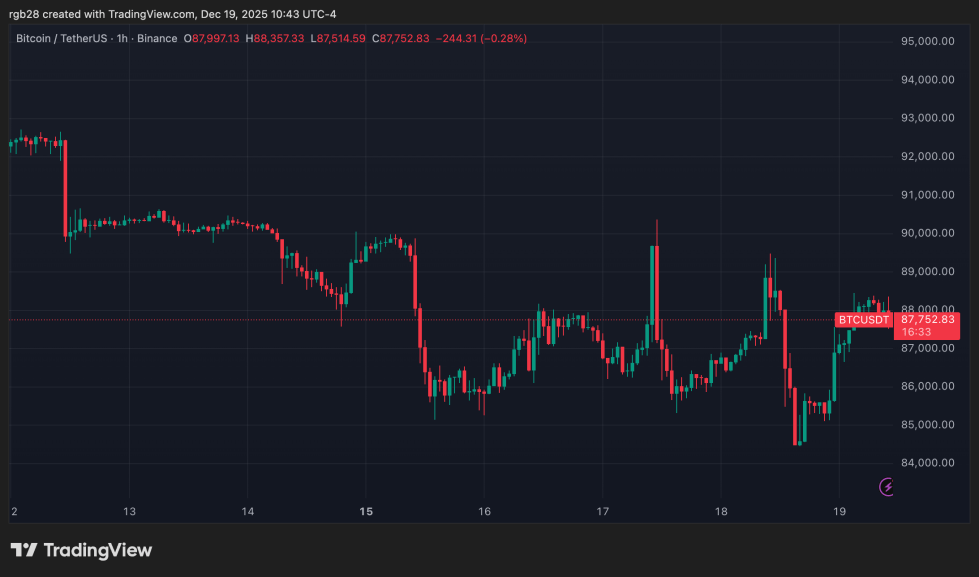
Bitcoin (BTC) trades at $87,752 in the one-week, chart. Source: BTCUSDT on TradingView


Preguntas relacionadas

QWhy did the Polish Sejm halt discussions on crypto legislation until January?

AThe Sejm halted discussions after passing a nearly identical version of a previously vetoed crypto bill, and the Senate decided to delay further review until January to carefully consider the amendments.

QWhat was the main reason President Karol Nawrocki vetoed the Crypto-Asset Market Act initially?

APresident Nawrocki vetoed the bill due to concerns about potential startup exodus, overregulation, and the threat it posed to Poles' freedoms, state stability, and market innovation.

QHow did the Sejm's revived version of the crypto bill change the fee structure?

AThe Sejm reduced the fee paid to the Polish Financial Supervision Authority (KNF) by crypto entities from 0.4% to 0.1%.

QWhat concerns did Deputy Finance Minister Jurand Drop raise about the revised bill?

ADrop expressed concerns about the reduced fee (0.1%) and questioned what would happen if the market grew, potentially requiring fees to exceed that level, as other market segments have fees up to 0.5%.

QWhy did the local crypto community oppose the Crypto-Asset Market Act?

AThe community argued that the bill exceeded the EU's minimum regulatory requirements and could drive small businesses and startups abroad due to overregulation.

Lecturas Relacionadas

Por qué el Bitcoin se mantiene en $64,000 tras la dura pausa de la Fed

Bitcóin cierra julio cerca de los 64.000 dólares tras una volátil reacción a la decisión de la Fed de mantener las tasas sin cambios, aunque sin indicar un pronto aflojamiento monetario. Esto ha provocado una rotación de capital hacia los ETF de Bitcoin, que registraron una entrada neta de 32,1 millones de dólares, mientras que los fondos de Ethereum experimentaron salidas. El mercado de criptomonedas, con una capitalización de unos 2,29 billones de dólares, se mantiene en un rango lateral, con Bitcoin encontrando soporte en 63.000-63.500 dólares y resistencia en 66.000 dólares. La Fed mantuvo su tasa clave, pero tres miembros votaron a favor de un aumento, señalando una postura más dura de lo esperada. En este entorno macroeconómico incierto, los inversores institucionales parecen favorecer a Bitcoin como activo principal, aunque persiste el interés selectivo en activos como Solana. Mientras, la aprobación de la ley CLARITY en EE.UU. se retrasa hasta después del receso de agosto. Para el último día de julio, el enfoque estará en los datos macro de EE.UU. El escenario base para Bitcoin es la consolidación entre 63.000 y 66.000 dólares, con su ruptura superior dependiendo de nuevos flujos institucionales. La estabilidad por encima de 63.000 dólares para BTC, el mantenimiento de Ethereum sobre 1.860 dólares y las entradas continuas en ETF son claves para una posible base de recuperación en la segunda mitad del año.

cryptonews.ruHace 3 hora(s)

Por qué el Bitcoin se mantiene en $64,000 tras la dura pausa de la Fed

cryptonews.ruHace 3 hora(s)

Parker Lewis responde por qué bitcoin sigue siendo el mejor dinero

El influyente analista de Bitcoin, Parker Lewis, critica las estrategias de marketing de corporaciones que actúan como tesorerías cripto. Advierte que la venta de "crédito digital" mediante acciones preferentes perpetuas distorsiona la esencia de la criptomoneda. Lewis enfatiza que Bitcoin no genera rendimiento fiduciario por diseño y que las promesas de dividendos son riesgosas, dependiendo de nuevos inversores. Destaca el riesgo de estos derivados, señalando que el mercado de acciones preferentes perpetuas es minúsculo comparado con el crédito global, lo que demuestra que los grandes actores evitan estos riesgos, trasladándolos a minoristas. Rechaza la idea de que Bitcoin es "demasiado volátil", argumentando que la volatilidad es una consecuencia natural de la adopción masiva de un activo con oferta fija e inelástica. En lugar de comprar derivados corporativos como acciones de MicroStrategy, recomienda adquirir Bitcoin directamente, considerándolo más seguro. Lewis alerta que este enfoque distrae de la verdadera amenaza: la rápida devaluación del dinero fiduciario. Ilustra la inflación real con su "Índice Ribeye", mostrando un aumento del 90% en el precio de un filete desde 2020, muy superior a las cifras oficiales. Concluye que la estrategia más prudente es la posesión directa de Bitcoin y el control total de las claves privadas, protegiendo así los ahorros de la inflación y los riesgos sistémicos de los derivados corporativos.

cryptonews.ruHace 3 hora(s)

Parker Lewis responde por qué bitcoin sigue siendo el mejor dinero

cryptonews.ruHace 3 hora(s)

Trading

Spot
活动图片




