Polish Parliament Slams The Brakes On Crypto Market Act After Controversial Revival

bitcoinistPublicado a 2025-12-20Actualizado a 2025-12-20

Resumen

Polish lawmakers have halted discussions on the controversial Crypto-Asset Market Act until January. The lower house, the Sejm, recently passed a nearly identical version of a bill previously vetoed by President Karol Nawrocki, who expressed concerns about overregulation, threats to innovation, and potential startup exodus. Despite failing to override the veto, the ruling coalition reintroduced the bill with minimal changes, including a reduced fee for crypto intermediaries from 0.4% to 0.1%. The Senate has delayed its decision to carefully review the amendments, with further discussions scheduled for January.

Polish lawmakers have reportedly halted discussions on crypto legislations until January after the parliament’s lower house, the Sejm, voted to pass a nearly identical version of a bill that was vetoed by Poland’s president earlier this month without changes.

Poland’s Sejm Passes Controversial Crypto Bill

On Friday, local news media outlets informed that the Polish Senate hit the brakes on the controversial Crypto-Asset Market Act, following the Sejm’s recent vote to pass “version 2.0” of the legislation.

According to the reports, more than half of the members of the lower chamber voted to pass the revived version of the bill on Thursday, leaving its fate in the hands of the Senate and then the President, who has strongly opposed to the legislation.

As reported by Bitcoinist, Poland’s President Karol Nawrocki vetoed the Crypto-Asset Market Act at the start of the month due to concerns of a potential exodus of startups and overregulating the sector with the “legal mess” proposed by the Polish government.

On December 1, President Nawrocki refused to sign the bill, first introduced in June, which aimed to establish strict rules on the crypto assets market. He argued that the legislation it could pose a real threat to the freedoms of Poles, the stability of the state, and market innovation.

The local crypto community had raised concerns about the bill in September, affirming that it exceeded the European Union (EU)’s minimum regulatory requirements and could drive small businesses and startups abroad.

The parliament attempted to override the President’s veto, but ultimately failed after being unable to secure the required three-fifths majority vote to overturn the presidential decision.

Nonetheless, the part of the ruling coalition in the Sejm reintroduced the bill a week later without allegedly amending any of the controversial policies, raising more concerns among crypto industry players and community members.

Senate Delays Decision Until January

According to the reports, the Senate had initially planned to pass the bill “at an express pace” before the end of the year. However, the Deputy Finance Minister Jurand Drop raised concerns about the intention to pass the legislation with no further revisions.

Deputy Minister Drop pointed out that the Sejm had introduced only one change to the proposal, a lower fee for entities intermediating in crypto trading, despite the government’s disapproval of the current text.

“This amendment, which was introduced during the Sejm vote and which the government disagrees with, concerns the level of fees paid to the Polish Financial Supervision Authority (KNF) by entities in the crypto-asset market. The fee has been reduced from 0.4% to 0.1%,” Drop explained.

“Other market segments have fees of a maximum of 0.5%; for this market, the government has proposed 0.4%. Although the KNF’s projections indicate that these fees will not exceed 0.1%, and in the first year, they will not be collected at all, the question remains what will happen if this market grows and, as a result, the fees are forced to exceed 0.1%,” he added.

On Friday morning, the Senate Budget and Public Finance Committee discussed the recently passed bill and the Ministry of Finance’s concerns. The committee chairman, Senator Kazimierz Kleina, suggested that the committee review this modification calmly.

Therefore, he withdrew the motion to pass the bill without new changes and suspended the discussions on the bill, affirming that the Sejm’s amendments “will have to be carefully considered.” Ultimately, Chairman Kleina scheduled to resume work on the legislation during the January Senate session.
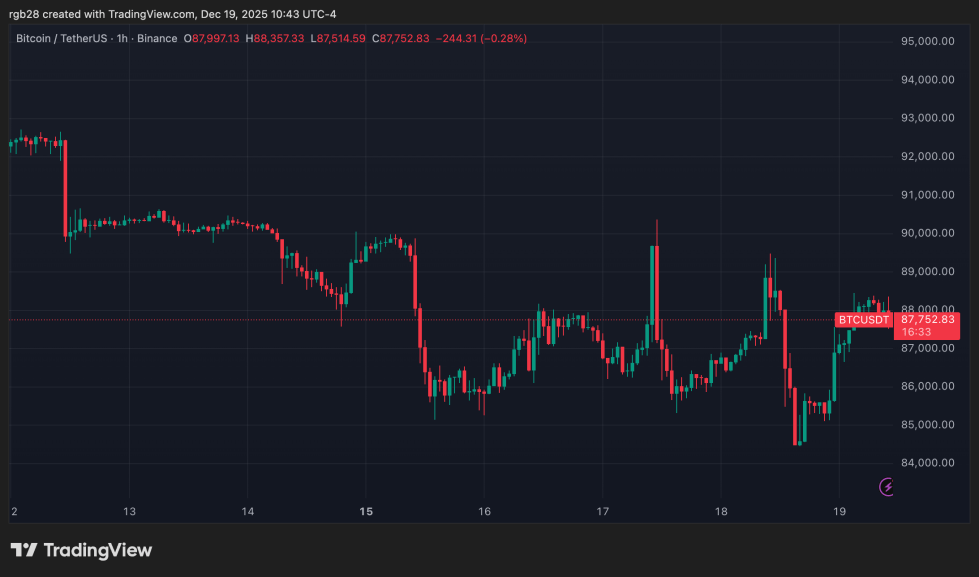
Bitcoin (BTC) trades at $87,752 in the one-week, chart. Source: BTCUSDT on TradingView


Preguntas relacionadas

QWhy did the Polish Sejm halt discussions on crypto legislation until January?

AThe Sejm halted discussions after passing a nearly identical version of a previously vetoed crypto bill, and the Senate decided to delay further review until January to carefully consider the amendments.

QWhat was the main reason President Karol Nawrocki vetoed the Crypto-Asset Market Act initially?

APresident Nawrocki vetoed the bill due to concerns about potential startup exodus, overregulation, and the threat it posed to Poles' freedoms, state stability, and market innovation.

QHow did the Sejm's revived version of the crypto bill change the fee structure?

AThe Sejm reduced the fee paid to the Polish Financial Supervision Authority (KNF) by crypto entities from 0.4% to 0.1%.

QWhat concerns did Deputy Finance Minister Jurand Drop raise about the revised bill?

ADrop expressed concerns about the reduced fee (0.1%) and questioned what would happen if the market grew, potentially requiring fees to exceed that level, as other market segments have fees up to 0.5%.

QWhy did the local crypto community oppose the Crypto-Asset Market Act?

AThe community argued that the bill exceeded the EU's minimum regulatory requirements and could drive small businesses and startups abroad due to overregulation.

Lecturas Relacionadas

Atención obligatoria para la próxima semana|Se espera una votación en el Senado sobre el proyecto de ley CLARITY; SpaceX y Circle publicarán resultados financieros (3-9 de agosto)

**Resumen: Próximos eventos clave en cripto y tecnología (3-9 de agosto de 2026)** La semana del 3 al 9 de agosto trae eventos importantes. En política estadounidense, el **CLARITY Act**, un proyecto de ley bipartidista que busca establecer un marco regulatorio federal para las criptomonedas, podría someterse a votación en el Senado. Los negociadores tienen hasta el **7 de agosto** para conseguir los 60 votos necesarios. En resultados corporativos, **SpaceX** publicará sus resultados del Q2 el **4 de agosto**, seguido de un importante desbloqueo del 8% de sus acciones para accionistas internos el **6 de agosto**. **Circle**, la empresa detrás de USDC, informará el **5 de agosto**. Otras empresas como la minera de Bitcoin **Hut 8** y **American Bitcoin**, vinculada a la familia Trump, también presentarán resultados. En otros anuncios, **Zapper** y **Ctrl Wallet** cerrarán sus servicios el **3 de agosto**. **LayerZero** descontinuará sus relés para la versión v1 ese mismo día. **Upbit** dejará de cotizar los tokens AQT y AERGO. Además, **Elon Musk** anunció que **Grok 4.6** se lanzará alrededor del **7 de agosto**. Finalmente, los mercados estarán atentos al **informe de nóminas no agrícolas de EE.UU. de julio**, que se publicará el **7 de agosto**, y al inicio de la señalización obligatoria para **BIP-110** en la red Bitcoin alrededor del **8 de agosto**.

marsbitHace 2 hora(s)

Atención obligatoria para la próxima semana|Se espera una votación en el Senado sobre el proyecto de ley CLARITY; SpaceX y Circle publicarán resultados financieros (3-9 de agosto)

marsbitHace 2 hora(s)

Las acciones caen más que las criptomonedas, ¿a dónde se fue el dinero?

Los días 28 y 29 de julio, el índice Kospi de Corea del Sur activó el mecanismo de suspensión de contratación ("circuit breaker") de forma consecutiva, algo sin precedentes. Acciones clave como SK Hynix cayeron bruscamente, y ETF apalancados vinculados a ellas sufrieron pérdidas devastadoras, con caídas superiores al 80% en un mes. La narrativa global de desapalancamiento forzado golpeó con mayor dureza a las operaciones más concurridas, como las acciones tecnológicas y semiconductores. Paradójicamente, Bitcoin, conocido por su alta volatilidad, mostró una relativa estabilidad durante este período, recuperándose cerca de un 15% desde mínimos de julio. El artículo argumenta que esto no se debió a una entrada de capital desde el mercado bursátil, sino a que Bitcoin ya había sufrido su propia corrección significativa entre mayo y junio, con salidas récord de los ETF estadounidenses. El dinero que salió del mercado de valores buscó principalmente refugio en efectivo, bonos del Tesoro estadounidense y, sobre todo, en oro. Los datos muestran una correlación negativa récord entre Bitcoin y el oro, desafiando la narrativa del "oro digital". En esta crisis, el oro cumplió el rol de activo refugio, mientras que Bitcoin permaneció en el extremo más riesgoso de la curva. Para que llegue una entrada de capital sostenida a Bitcoin, el artículo identifica tres condiciones clave: alivio en la presión de liquidez global, recortes de tasas por la Fed sin recesión, y la aprobación de una legislación clara (como el CLARITY Act en EE.UU.) que elimine las incertidumbres regulatorias. Aunque Bitcoin actualmente no es un refugio, su baja correlación con los mercados tradicionales lo posiciona favorablemente para cuando el capital global vuelva a buscar diversificación una vez que pase la tormenta.

marsbitHace 2 hora(s)

Las acciones caen más que las criptomonedas, ¿a dónde se fue el dinero?

marsbitHace 2 hora(s)

Diálogo con Ray Dalio: Nos encontramos en una burbuja de IA actualmente, el 1% de mi cartera de inversiones está en Bitcoin

**Fuente: The Diary Of A CEO** **Resumen: Felix, PANews** Ray Dalio, fundador de Bridgewater Associates, advierte sobre una burbuja en la inteligencia artificial actual, comparable a burbujas históricas como la de Internet en 2000. Según Dalio, los signos clásicos están presentes: precios inflados, endeudamiento basado en ganancias especulativas y una posible corrección brusca si suben las tasas de interés o cambian las condiciones económicas. Dalio explica que esta burbuja se enmarca en un "gran ciclo" más amplio —de unos 80 años— caracterizado por tres dinámicas: creciente desigualdad interna, déficits fiscales gubernamentales y cambios en el orden geopolítico mundial. Estados Unidos y otros países occidentales se encuentran en una fase de declive relativo dentro de este ciclo. Para proteger la riqueza personal, Dalio recomienda diversificar las inversiones más allá del efectivo, incluyendo activos como oro, acciones y bonos. Aunque revela que alrededor del 1% de su cartera está en Bitcoin —considerándolo un activo escaso—, prefiere el oro físico por su seguridad histórica y su rol como reserva de los bancos centrales. Sobre el impacto laboral de la IA, Dalio prevé que aumentará la desigualdad, beneficiando sobre todo a los dueños de capital. Sin embargo, destaca que las habilidades humanas —como la intuición y la emoción— seguirán siendo valiosas y complementarias a la IA. En el ámbito geopolítico, Dalio anticipa un mundo más regionalizado, con EE.UU. y China como potencias líderes en sus respectivas esferas, y advierte que conflictos como el de Irán han expuesto debilidades estratégicas de Estados Unidos, acelerando un cambio en el equilibrio global de poder.

marsbitHace 5 hora(s)

Diálogo con Ray Dalio: Nos encontramos en una burbuja de IA actualmente, el 1% de mi cartera de inversiones está en Bitcoin

marsbitHace 5 hora(s)

Trading

Spot
活动图片




