Nasdaq Plummets 4% Overnight, $1.3 Trillion Evaporated, U.S. Stocks Suffer Triple Blow

marsbitPublicado a 2026-06-06Actualizado a 2026-06-06

Resumen

A severe market correction hit US stocks on June 5th, with the Nasdaq plunging 4.18%, erasing $1.3 trillion in chip stock value. The sell-off was triggered by three simultaneous factors. First, Broadcom's earnings report, while showing strong AI chip revenue growth of 143%, provided a Q3 AI revenue forecast that fell short of the most optimistic analyst expectations, casting doubt on the 'infinite AI growth' narrative and sparking a sector-wide rout. Second, a much stronger-than-expected May jobs report (172k vs. 80k expected) significantly increased market bets on a potential Federal Reserve rate hike instead of a cut, putting pressure on high-valuation tech stocks. Third, persistent high oil prices due to the ongoing Iran war and Strait of Hormuz disruption continue to fuel inflation concerns, limiting the Fed's policy options. The combined effect attacked the core market pillars of boundless AI growth and expected monetary easing. While the暴跌 represents a significant valuation repricing, the underlying AI demand remains strong. The market's direction now hinges on the upcoming Fed meeting, further AI company guidance, and developments in the Iran conflict.

Author: Xiao Bing, Trend Research

On June 5th, the U.S. stock market experienced its most brutal day since the tariff crisis in April 2025.

The Nasdaq Composite Index plummeted 4.18%, closing at 25,709 points, shedding over 1,121 points in a single day. The S&P 500 fell 2.64% to 7,383 points, marking its largest one-day drop since October. The Dow Jones Industrial Average declined by 695 points (-1.35%), just one day after hitting a new all-time high. The VIX Fear Index surged 34% in a single day, breaking through the 20 threshold, and the CNN Fear & Greed Index plummeted from "Greed" to "Fear".

Just 72 hours earlier, on June 2nd, the S&P 500 had closed above 7,600 points for the first time. All three major indices were at historical highs. The market had risen for nine consecutive weeks, and everything seemed perfect. The reversal happened within 48 hours.

To understand this crash, one must see how three triggers were ignited simultaneously.

The First Trigger: Broadcom's Earnings Report Tore the First Crack in the AI Narrative

The story begins after the market close on June 3rd.

Broadcom Inc. released its Q2 2026 fiscal year earnings report. On the surface, it was an excellent report: revenue of $22.2 billion, exceeding Wall Street expectations; adjusted earnings per share of $2.44, also beating estimates; AI chip revenue skyrocketed 143% year-over-year to $10.8 billion, far surpassing the company's own forecast.

The problem lay in the outlook for the next quarter.

Broadcom projected AI chip revenue for Q3 to be $16 billion. The analyst consensus estimate was $17.2 billion. This $1.2 billion gap, in a normal year, might have only triggered a mild correction. But 2026 is not a normal year.

Over the past year, the valuation of the entire semiconductor sector has been built on one core assumption: Capital expenditures for AI infrastructure are limitless, and hyperscale cloud computing companies (Google, Microsoft, Amazon, Meta) will buy computing power at any cost.

Broadcom's report did not deny the high growth of AI; a 143% year-over-year growth rate was strong enough proof of demand. It merely hinted at a possibility: the slope of the growth rate might not be as steep as the most optimistic projections.

Even more critical details emerged during the earnings call. CEO Hock Tan acknowledged that Google might introduce more chip suppliers, meaning Broadcom was no longer the sole favorite. He also pointed out that the rapid growth of the AI chip business was diluting the company's overall gross margin.

Against the backdrop of a stock that had risen 88% in the past year with valuations already "priced for perfection," these signals were enough to trigger a stampede.

Broadcom plunged 12.6% on Thursday. By Friday, panic had spread throughout the entire semiconductor supply chain: Micron Technology plummeted 13.2%, Marvell nosedived 16.7%, Intel fell 11.3%, AMD dropped about 11%, ARM slid 12.8%, and Qualcomm declined 11%. The Philadelphia Semiconductor Index (SOX) plunged 10.26% in a single day, with all 30 component stocks suffering losses.

U.S.-listed chip companies collectively lost about $1.3 trillion in market capitalization on that day.

One key detail: none of these plummeting companies had released their own bad news. Intel, AMD, Micron—they fell simply because investors were "extrapolating" Broadcom's signals. If Broadcom's AI growth is slowing, does the entire AI supply chain need to be revalued?

This is the flip side of "Narrative Alpha." When a story is powerful enough, all related assets get pulled in the same direction, regardless of their individual fundamentals.

The Second Trigger: Too-Strong Employment Data Became Market Poison

At 8:30 AM on Friday, the U.S. Labor Department released the May Nonfarm Payrolls report: 172,000 jobs added, with the unemployment rate holding steady at 4.3%.

This number, at first glance, even seemed moderate. But placed against expectations, it was a bomb: the Dow Jones consensus estimate was only 80,000, and the Reuters survey median was 88,000. 172,000 was double the Wall Street forecast.

What made it even more unsettling was significant upward revisions to the previous two months' data: March was revised from 185,000 to 214,000, April from 115,000 to 179,000, adding a combined 93,000 jobs. The average monthly gain over the past three months was about 188,000, far exceeding the Fed's internal estimate of the 150,000 "break-even line." As long as job growth stays above this line, there is no reason for interest rate cuts.

Under normal economic logic, strong employment data is good news, indicating economic resilience, expanding businesses, and consumers with money to spend.

But the United States in June 2026 was not operating under "normal economic logic."

Since the Iran war erupted at the end of February, the effective blockade of the Strait of Hormuz has pushed up global oil prices. WTI crude remained above $92/barrel on June 5th, and Brent crude exceeded $94. High oil prices have pushed up everything: from transportation costs to food prices. Inflationary pressure has seeped from the supply side into the capillaries of the economy.

Against this backdrop, an unexpectedly strong jobs report conveyed a different message: The economy is too hot—so hot that the Fed might not only refrain from cutting rates but could even be forced to raise them.

The bond market reacted faster and more honestly than the stock market. The yield on the 10-year U.S. Treasury note jumped from 4.47% to 4.54%, hitting its highest level since late May. Data from the CME FedWatch Tool was even more startling: just a day earlier, the market priced the probability of a rate hike by year-end at around 50%, a toss-up. After the report, this number jumped to 73%, and after the close, it broke through 80%. Expectations for rate cuts were virtually zero.

The damage to tech stocks was twofold.

First, valuation compression. Tech stocks, especially high-growth AI-related ones, have valuations heavily dependent on the discounting of future cash flows. When risk-free interest rates rise, the present value of every dollar of future profit shrinks. Each percentage point increase in interest rates could theoretically shrink the valuation of a growth stock with a forward P/E of 40 by over 10%.

Second, capital rotation. When bond yields rise above 4.5%, you can get a decent return without taking any risk. For investors who have already made substantial gains on AI stocks, selling overvalued tech stocks and shifting into Treasuries to lock in returns becomes a simple math problem.

An interesting counterpoint was the Russell 2000 small-cap index, which rose 1.45% on the day. Funds flowed out of overvalued large-cap tech stocks, with some moving into more reasonably valued, less interest-rate-sensitive small and mid-cap stocks. This divergence itself indicates: the market isn't panicking and selling everything indiscriminately; it's merely repricing the parts of the AI story that had been pushed to extremes.

Beneath the surface of the large 172,000 figure, the quality of employment also signaled unease. This number was propped up by hotel waiters (Leisure & Hospitality +70,000), government employees (Local Government +55,000), and nurses (Healthcare +35,000). Sectors that truly reflect economic strength were contracting: the finance industry lost 22,000 jobs, and employment in the information sector has declined 11% since its peak in November 2022.

The wage data didn't stand up to scrutiny either. Average hourly earnings rose 3.4% year-over-year in May, sounding decent, but April's CPI was already 3.8%. A simple subtraction: real wage growth was negative. Wages are rising in name, but purchasing power is shrinking. This isn't economic prosperity; this is "working harder to get poorer."

The Third Trigger: The Lingering Inflation Shadow of the Iran War

The third thread is more like an undercurrent. It wouldn't trigger a crash alone, but it magnified the destructive power of the first two triggers.

On February 28, 2026, the U.S. and Israel launched military operations against Iran. Iran subsequently blocked the Strait of Hormuz, cutting off about 20% of the global oil supply route. The International Energy Agency labeled it "the largest disruption to global oil supply in history."

Three months have passed, and the war is not over. Although the U.S. and Iran agreed on a framework for a temporary ceasefire last week, new developments in Lebanon have stalled a final agreement. Oil prices have retreated from their March highs of $110 but remain above $90 for WTI, significantly higher than pre-war levels.

This sustained high oil price creates a dilemma for the Federal Reserve. On one hand, the supply-side inflation caused by the war is not something monetary policy can solve; raising interest rates won't reopen the Strait of Hormuz. On the other hand, if inflation expectations become unanchored due to high oil prices, the Fed might be forced to react.

The June FOMC meeting is approaching. The Fed's latest Summary of Economic Projections (SEP) still suggests the next move is a rate cut, maintaining an easing bias. But the market is no longer buying it. Federal funds futures are pricing in a hike, not a cut. If the Fed is forced to adopt a hawkish stance at the June meeting, it would mark the official end of the "soft landing" narrative of the past two years.

On June 5th, Citigroup analysts warned: The bubble level in global stock markets has reached its highest point since 2008.

When the Narrative's Foundation Begins to Crumble

Looking at these three triggers separately, you'll find they attack different dimensions of market confidence:

Broadcom's earnings attacked the narrative of "unlimited AI growth." It didn't say AI is bad; it merely suggested that growth might not remain exponential forever. But when an entire sector's valuation is built on the assumption of "exponential growth," even a hint of deceleration is enough to trigger a collective revaluation.

The nonfarm data attacked the expectation that "the Fed will soon cut rates." Over the past year, another pillar supporting the stock market rally has been liquidity expectations. If the Fed not only refrains from cutting but may even raise rates, then both pillars supporting high valuations (the growth narrative and liquidity expectations) begin to wobble simultaneously.

The Iran war attacked the consensus that "inflation has been tamed." As long as oil prices stay above $90 and the Strait of Hormuz isn't fully reopened, the specter of inflation will continue to haunt the market, making every Fed decision more difficult.

The combination of the three creates a dangerous feedback loop: AI growth slows, tech valuations come under pressure, rate hike expectations rise, the cost of capital increases, high-valuation stocks face further pressure, and the sell-off spreads.

The U.S. stock plunge quickly spread globally.

South Korea's KOSPI index plummeted 5.54% on Friday, with Samsung Electronics down 6.4% and SK Hynix plunging 9.9%. Tokyo stock markets also fell sharply. In Europe, Netherlands-based ASML dropped 3.8%, and Germany's Infineon tumbled over 6%.

The cryptocurrency market was not spared either. Bitcoin fell about 4% to around $60,000, Coinbase stock dropped 7.1%, and Strategy (formerly MicroStrategy) fell 6.9%. When risk assets retreat across the board, the "digital gold" narrative of crypto markets is once again tested by reality.

Gold futures edged down 0.35% to $4,489 per ounce, failing to play its traditional safe-haven role. In an environment where rate hike expectations are heating up, the appeal of non-yielding assets also diminishes.

Is This the Start of the AI Bubble Bursting?

This is everyone's most pressing question, but the answer is not as simple as it seems.

The bearish arguments are clear: a 10% single-day plunge in the Philadelphia Semiconductor Index typically signifies a fundamental questioning of the market's growth assumptions for the entire sector. Marvell falling over 16% in two days, Micron down 17% in two days—this is a sign of shaken faith.

But the bullish arguments also carry weight. Broadcom's AI chip revenue grew 143% year-over-year, and its full-year AI semiconductor revenue guidance still exceeds $56 billion. These are not numbers an industry in a bursting bubble should deliver. The problem lies in the slope of growth: AI demand remains real and massive, but can the growth rate match Wall Street's wildest imaginations?

A more accurate characterization might be: This is a "valuation repricing," not a "narrative collapse." The market is waking from the frenzy of "AI can make everything go to the moon" and beginning to examine with cooler eyes: which companies can truly make money from AI, and which are just riding the wave.

The S&P 500, even after the plunge, remains near historical highs. It has retreated about 5% from this week's peak, which falls within the range of a normal technical correction in historical terms. The real test is: Will this pullback stop at 5%, or will it slide towards 10% or even deeper?

Three key events in the next two weeks will determine the market's direction.

First, the June FOMC meeting. Will the Fed maintain its stance that the next move is a rate cut, or will it formally pivot to a hawkish stance? If the Fed acknowledges the possibility of a hike, the market could face another round of valuation compression.

Second, more earnings reports and guidance from AI companies. Broadcom opened Pandora's box; the market needs other AI winners (especially Nvidia) to prove that the AI growth story isn't over. The next earnings season will be a crucial validation window.

Third, the evolution of the Iran situation. If a ceasefire agreement is finally reached, oil prices fall back below $80, and inflationary pressures ease, the Fed's policy space will open up significantly, and the market could rebound quickly. If the war drags on, everything becomes more complicated.

The June 5th crash is a warning, not yet a verdict. The underlying logic of the AI revolution hasn't changed; chip demand remains real. What's changed is the market's expectations for the growth rate and the price investors are willing to pay for that expectation.

When the tide begins to recede, you see who's been swimming naked.

On June 5th, the tide itself was still there; it just slowed its rise by a beat. But that single beat was enough to soak through the clothes of those who were all-in, such as poor little me.


Criptos en tendencia

Preguntas relacionadas

QWhat were the three main triggers for the Nasdaq's sharp 4% drop and the evaporation of $1.3 trillion in value?

AThe three main triggers were: 1) Disappointing forward guidance from Broadcom regarding AI chip revenue, casting doubt on the 'AI growth is limitless' narrative and triggering a sector-wide sell-off. 2) An unexpectedly strong U.S. non-farm payrolls report, which heightened fears of the Fed potentially raising interest rates instead of cutting them. 3) The persistent inflationary shadow of the Iran war, which has kept oil prices high and complicated the Fed's policy decisions.

QHow did Broadcom's earnings report impact the broader semiconductor and AI-related stock market?

ABroadcom's report, despite strong current AI revenue growth, provided a lower-than-expected Q3 AI revenue forecast. This hint of a potential slowdown in growth rate triggered a massive sell-off, not just for Broadcom (down 12.6%), but across the entire semiconductor supply chain (e.g., Micron, Marvell, AMD, Intel, ARM all fell over 11%). The Philadelphia Semiconductor Index plunged 10.26%, erasing roughly $1.3 trillion in market cap from U.S.-listed chip companies as investors revalued the sector.

QWhy was a strong U.S. jobs report considered 'bad news' for the stock market in this context?

AIn the context of high inflation driven by elevated oil prices from the Iran war, the strong jobs report (172K vs. ~80K expected) signaled an overheated economy. This drastically increased market expectations that the Federal Reserve would not cut interest rates and might even be forced to hike them. Higher interest rates compress the valuations of growth stocks (like AI tech) by increasing the discount rate on future earnings and make risk-free Treasury yields more attractive, prompting a rotation out of tech stocks.

QWhat role does the ongoing Iran war play in the current market turmoil?

AThe Iran war and the resulting blockade of the Strait of Hormuz have kept oil prices persistently high (WTI above $90/barrel). This creates sustained supply-side inflationary pressure. It puts the Fed in a dilemma: while rate hikes can't directly solve supply shocks, they may be forced to act if inflation expectations become unanchored. This persistent inflation threat undermines the 'inflation is tamed' consensus and limits the Fed's ability to provide supportive monetary policy, thereby amplifying the negative impact of the other triggers (AI slowdown fears and rate hike fears).

QAccording to the article, is this event the beginning of an AI bubble burst, or something else?

AThe article suggests it is more accurately a 'valuation repricing' rather than a full 'narrative collapse' or bubble burst. The underlying logic of the AI revolution and real chip demand remains intact (as evidenced by Broadcom's 143% AI revenue growth). However, the market is reassessing and tempering its most extreme expectations about the *rate* of that growth. Investors are becoming more selective, differentiating between companies that will genuinely profit from AI and those that simply rode the hype, leading to a sharp correction in overvalued segments.

Lecturas Relacionadas

La próxima protagonista de miHoYo es ella, que toca el piano

Mihoyo, más conocido por éxitos como "Genshin Impact", aspira a crear un mundo virtual en el que vivan 1.000 millones de personas para 2030. Para lograrlo, ha invertido en tecnologías punteras como interfaz cerebro-máquina, fusión nuclear y, sobre todo, IA. En 2023, el cofundador Cai Haoyu abandonó la gestión diaria para dirigir Anuttacon, un proyecto centrado en el desarrollo de IA en el extranjero, mientras que el otro cofundador, Liu Wei ("Daweige"), anunció una inversión de hasta 100.000 millones de yuanes en los próximos tres años para desarrollar un "modelo de lenguaje grande con emociones". El primer producto tangible de este esfuerzo es "BSide: Olivia Lin", una aplicación gratuita en Steam presentada en junio de 2026. No es un juego, sino una experiencia interactiva donde los usuarios pueden escuchar a la protagonista, Lin Li, una estudiante de piano y psicología, tocar música, subir sus propias melodías para que ella las interprete, escribirle cartas y tenerla como fondo de pantalla dinámico. Este enfoque de "baja frecuencia de interacción" busca crear una sensación de presencia realista, compensando las limitaciones actuales de la IA para sostener conversaciones 24/7 sin fallos. El objetivo final de Mihoyo es construir un sistema completo que dé "alma" a los personajes virtuales, combinando un modelo de lenguaje (el cerebro), un modelo de actuación (el cuerpo) y un marco de agente (la memoria y la personalidad). El nombre de la compañía, "miHoYo", lleva en su raíz ("mi" de Hatsune Miku) la inspiración en un icono virtual. Ahora, buscan ir más allá: que esos personajes no solo sean amados, sino que también puedan, en algún sentido, ser conscientes de ello.

marsbitHace 13 min(s)

La próxima protagonista de miHoYo es ella, que toca el piano

marsbitHace 13 min(s)

Interpretación del informe: Los ingresos de AI de TSMC se duplicarán en 2027, la capacidad de CoWoS sigue siendo un cuello de botella

**Resumen: Los ingresos de TSMC por IA se duplicarán en 2027, siendo la capacidad de CoWoS el principal cuello de botella** Un informe de Morgan Stanley predice un crecimiento explosivo de los ingresos de TSMC relacionados con la IA, alcanzando los 86.300 millones de dólares en 2027, más del doble que los 27.100 millones previstos para 2026. Este salto es impulsado principalmente por las GPU de Nvidia, pero también por nuevos motores como las CPU de AMD (con un consumo de CoWoS previsto en +308% para 2027) y los TPU de Google, donde MediaTek actúa como socio clave. La demanda global de encapsulado avanzado CoWoS (necesario para estas chips de IA) se disparará un 93% en 2027, hasta 2,69 millones de unidades. Aunque TSMC y otros proveedores planean expandir la capacidad total a unas 336.000 unidades mensuales para entonces, es probable que persista la escasez, especialmente en las variantes más avanzadas como CoWoS-L, dominadas por TSMC. Esto otorga a la compañía un fuerte poder de fijación de precios. La mejora en el suministro de sustratos ABF, la validación de la nueva demanda de CPU para IA y el lanzamiento de la próxima generación de productos de Nvidia (Rubin) son catalizadores clave. Además de TSMC, se identifican como ganadores en la cadena de suministro a MediaTek (por los TPU de Google), así como a ASE Group y KYEC. En resumen, el crecimiento de TSMC depende de que su capacidad de fabricación, particularmente en CoWoS, pueda seguir el ritmo de una demanda que supera las previsiones.

marsbitHace 30 min(s)

Interpretación del informe: Los ingresos de AI de TSMC se duplicarán en 2027, la capacidad de CoWoS sigue siendo un cuello de botella

marsbitHace 30 min(s)

Informe Semestral de 21shares: Ciclo de 4 años de BTC se mantiene, stablecoins y tokenización son nuevos motores de crecimiento

Resumen en español europeo: El informe semestral de 21Shares revisa sus predicciones para 2026. Aunque la dirección general se mantiene, el ritmo de desarrollo varía. * **Ciclo de BTC**: El patrón de cuatro años persiste, pero la estructura del mercado es más madura. La caída actual (~50%) es menor que en ciclos anteriores. * **ETP Cripto**: Los activos bajo gestión (~$1400B) han disminuido, alejándose del objetivo de $4000B, pero el interés institucional subyacente sigue fuerte. * **Stablecoins**: La adopción regulatoria avanza (GENIUS, MiCA), pero la oferta total (~$3200B) está lejos del billón previsto. La demanda muestra resiliencia. * **DeFi**: El TVL (~$1400B) no alcanza los $3000B previstos, afectado por importantes eventos de seguridad en 2026 que erosionaron la confianza. * **Tesorerías Corporativas**: La consolidación pronosticada ocurre, con empresas más débiles vendiendo activos. El valor total ronda los $1000B. * **Mercados de Predicción**: Superan expectativas. El volumen anual ($575B hasta mayo) está camino de alcanzar e incluso superar el objetivo de $1000B. * **Economía Agente IA**: La infraestructura (ERC-8004, x402) está lista, pero la adopción a gran escala y el volumen de transacciones aún son bajos. * **L2 de Ethereum**: La consolidación hacia unos pocos actores dominantes (Base, Arbitrum) se confirma, tal como se predijo. * **Ofertas de Token Reguladas**: Existen plataformas y casos emblemáticos, pero el volumen de financiación ha disminuido y aún no es "mainstream". * **Activos Tokenizados**: El valor en cadena pública es de ~$310B, lejos de los $5000B. Sin embargo, la adopción institucional (ej. DTCC) prepara el terreno para un crecimiento futuro. En resumen, la industria cripto avanza hacia un enfoque más fundamentado, con los mercados de predicción, las stablecoins y la tokenización como motores claros, aunque algunos plazos se han retrasado.

marsbitHace 36 min(s)

Informe Semestral de 21shares: Ciclo de 4 años de BTC se mantiene, stablecoins y tokenización son nuevos motores de crecimiento

marsbitHace 36 min(s)

Citrini Research: Un repaso a 5 temas de inversión ocultos por la operativa de IA en la actualidad

**Informe de Citrini Research: 5 Temas de Inversión Opacados por la Moda de la IA** Mientras el mercado se concentra en los cuellos de botella de la IA (HBM, energía, semiconductores), los analistas pasan por alto otros temas con fundamentos sólidos. La "atención" es el recurso más escaso, y la excesiva concentración en la IA crea oportunidades en sectores olvidados. Citrini identifica cinco temas prometedores que no dependen del cronograma de la AGI: 1. **Aerolíneas**: Acciones como Delta y United han sido castigadas 18 meses por factores macro (inflación, petróleo), no por sus fundamentos. Su enfoque en la premiumización y la demanda por la Copa del Mundo 2026 son catalizadores. 2. **Bienes Raíces para Adultos Mayores**: Una tendencia demográfica imparable: la población mayor de 80 años en EE.UU. crecerá más del 56% en una década, pero la oferta de instalaciones es muy limitada. Empresas como Welltower se beneficiarán. 3. **Entretenimiento en Vivo**: La experiencia presencial es el nuevo lujo. Deportes, conciertos y cines (como Cinemark e IMAX) se benefician de este deseo, convirtiéndose en una de las mejores clases de activos de la última década. 4. **Competencia en los Mercados de Futuros**: El monopolio de casi 20 años de CME (98% del mercado) enfrenta su primer retador serio, FMX. Respaldado por grandes bancos, ofrece tarifas más bajas y busca aprovechar las fallas operativas de CME. 5. **Recuperación de las Fintech**: El sector más castigado en 2026 (SoFi, Robinhood) muestra signos de rebote. Mejoras fundamentales, como el lanzamiento de una stablecoin por SoFi y la expansión de productos de Robinhood, impulsan una reevaluación desde niveles devaluados extremos. **Conclusión:** En un mercado volátil, la diversificación más allá de la IA congestionada puede ofrecer alfa. Estos "temas pequeños" representan brechas entre expectativas olvidadas y realidades en mejora.

marsbitHace 50 min(s)

Citrini Research: Un repaso a 5 temas de inversión ocultos por la operativa de IA en la actualidad

marsbitHace 50 min(s)

¡Las acciones alcanzan máximos históricos! Corning apunta al mercado de interconexión óptica CPO

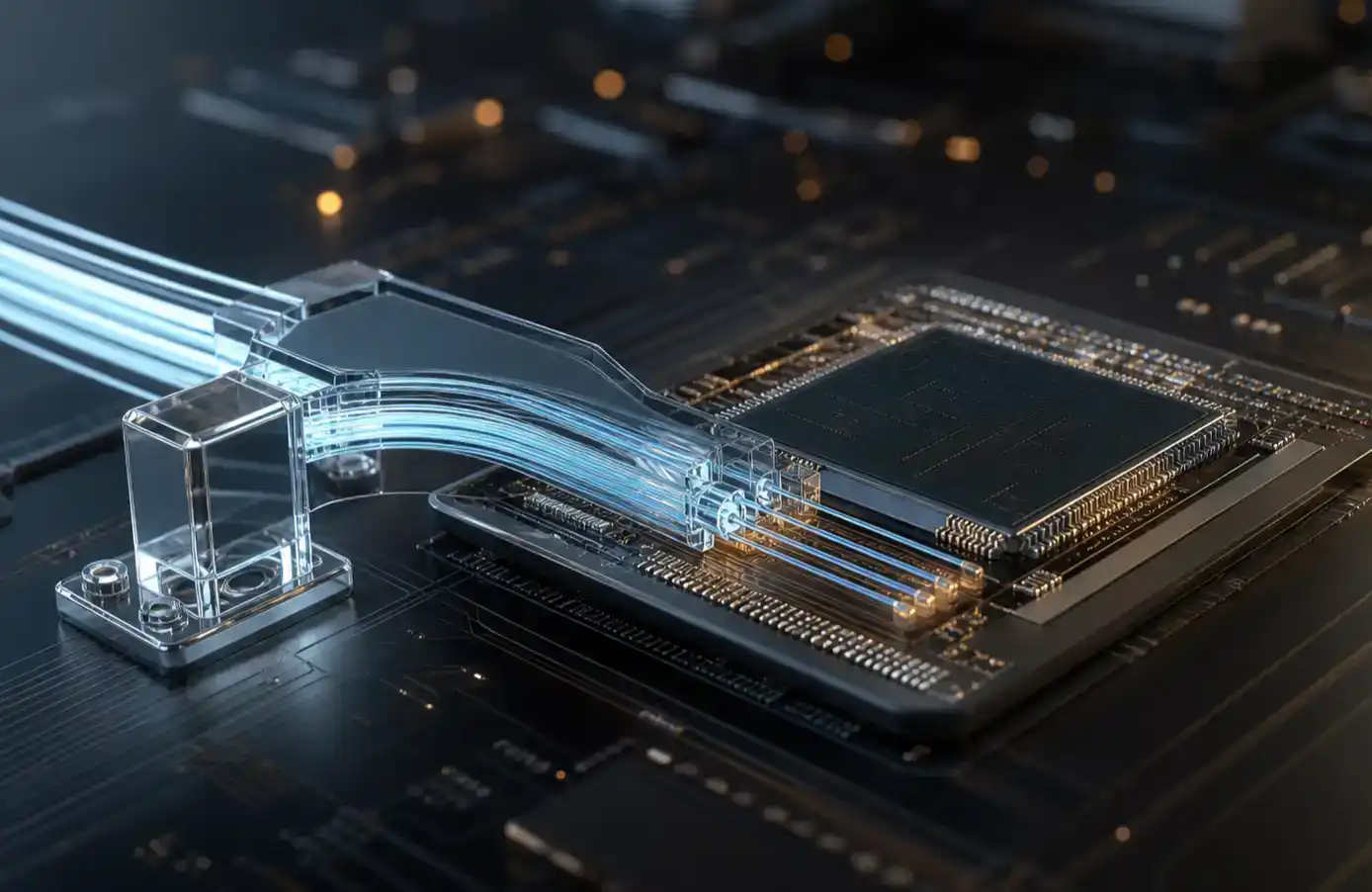
El precio de las acciones de Corning ha alcanzado máximos históricos, impulsado por la demanda de interconexiones ópticas para centros de datos de IA. En una reciente conferencia, la empresa presentó GlassBridge, un conector de puente óptico de vidrio que actúa como plataforma de conexión de fibra a circuitos fotónicos integrados (PIC), dirigido a escenarios como NPO, CPO y módulos fotónicos de alta densidad. El dispositivo busca resolver el desafío clave del acoplamiento entre fibras ópticas y chips fotónicos, donde las diferencias de escala causan pérdidas de señal. GlassBridge utiliza guías de ondas en sustrato de vidrio para dirigir la señal, mostrando un rendimiento de acoplamiento de 1.5 dB. Su objetivo es simplificar el ensamblaje en sistemas CPO, que acercan la óptica al chip para reducir el consumo energético y la latencia en clústeres de GPU de IA. Corning posiciona esta tecnología como parte de una oferta más amplia de soluciones de interconexión para IA, expandiendo su rol más allá del suministro de fibra. Aunque existen colaboraciones con empresas como GlobalFoundries, Meta y NVIDIA, aún se desconocen detalles sobre la producción a gran escala, el costo o la adopción por parte de clientes específicos. La viabilidad final de la ruta del vidrio en el empaquetado CPO dependerá de la validación en plataformas de clientes, en un mercado donde compiten otras arquitecturas como la fotónica de silicio.

marsbitHace 1 hora(s)

¡Las acciones alcanzan máximos históricos! Corning apunta al mercado de interconexión óptica CPO

marsbitHace 1 hora(s)

Trading

Spot
Futuros

Artículos destacados

Cómo comprar 4

¡Bienvenido a HTX.com! Hemos hecho que comprar 4 (4) sea simple y conveniente. Sigue nuestra guía paso a paso para iniciar tu viaje de criptos.Paso 1: crea tu cuenta HTXUtiliza tu correo electrónico o número de teléfono para registrarte y obtener una cuenta gratuita en HTX. Experimenta un proceso de registro sin complicaciones y desbloquea todas las funciones.Obtener mi cuentaPaso 2: ve a Comprar cripto y elige tu método de pagoTarjeta de crédito/débito: usa tu Visa o Mastercard para comprar 4 (4) al instante.Saldo: utiliza fondos del saldo de tu cuenta HTX para tradear sin problemas.Terceros: hemos agregado métodos de pago populares como Google Pay y Apple Pay para mejorar la comodidad.P2P: tradear directamente con otros usuarios en HTX.Over-the-Counter (OTC): ofrecemos servicios personalizados y tipos de cambio competitivos para los traders.Paso 3: guarda tu 4 (4)Después de comprar tu 4 (4), guárdalo en tu cuenta HTX. Alternativamente, puedes enviarlo a otro lugar mediante transferencia blockchain o utilizarlo para tradear otras criptomonedas.Paso 4: tradear 4 (4)Tradear fácilmente con 4 (4) en HTX's mercado spot. Simplemente accede a tu cuenta, selecciona tu par de trading, ejecuta tus trades y monitorea en tiempo real. Ofrecemos una experiencia fácil de usar tanto para principiantes como para traders experimentados.

563 Vistas totalesPublicado en 2025.10.20Actualizado en 2026.06.02

Cómo comprar 4

Discusiones

Bienvenido a la comunidad de HTX. Aquí puedes mantenerte informado sobre los últimos desarrollos de la plataforma y acceder a análisis profesionales del mercado. A continuación se presentan las opiniones de los usuarios sobre el precio de 4 (4).

活动图片