MetaMask Co-founder Departs, Leaving Behind a Little Fox Packaged in an IPO Prospectus

marsbitPublicado a 2026-04-23Actualizado a 2026-04-23

Resumen

MetaMask co-founder Dan Finlay has left Consensys after a decade, citing burnout and a desire to spend more time with family. MetaMask, launched in 2016, is one of the most recognizable crypto wallets with over 100 million installs and 30 million monthly active users. Despite its dominant position, the wallet faces growing competition from newer entrants like Phantom, which has expanded beyond Solana and reportedly generates more than double MetaMask’s annual revenue. The timing of Finlay’s departure coincides with Consensys’s plans for an IPO, advised by J.P. Morgan and Goldman Sachs. The company, last valued at $7 billion in 2022, has undergone multiple rounds of layoffs amid slowing growth and internal challenges. Employee reviews on Glassdoor point to low morale and management issues. MetaMask’s delayed expansion into chains like Solana and the long-promised but unreleased $MASK token have also drawn criticism. While the wallet remains the default option for many Ethereum dApps, its product-market fit is weakening as new users increasingly choose alternatives. Consensys appears to be prioritizing monetizing MetaMask’s strong brand recognition through a public listing while its market position is still valuable. Finlay’s quiet exit reflects both personal fatigue and broader shifts in the competitive landscape of crypto wallets.

Author: Curry, Deep Tide TechFlow

The person who built this little fox doesn't want to build anymore.

On April 23, MetaMask co-founder Dan Finlay officially announced his departure from Consensys, ending a decade-long development career. The reason given was professional burnout and a desire to spend more time with family.

MetaMask is perhaps the most recognizable product application in the crypto world. That little orange fox logo is known to almost everyone who has ever installed a crypto wallet. In 2016, Finlay and another co-founder, Aaron Davis, created this browser plugin within Consensys, allowing ordinary people to interact with Ethereum without running a full node.
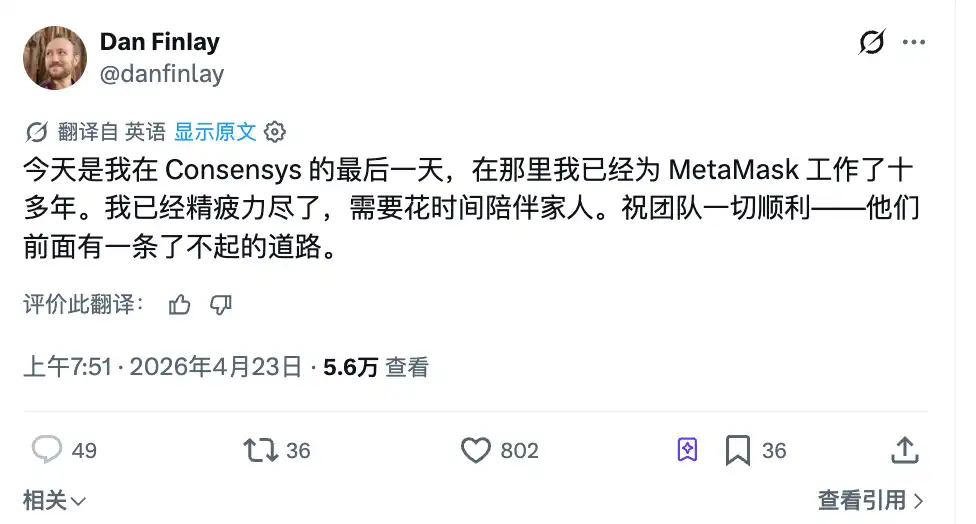
Over the past ten years, according to statistics from multiple third-party platforms, it has achieved over 100 million global installs, with approximately 30 million monthly active users. Its swap function has cumulatively generated over $325 million in fee revenue.

A look at public information reveals that Finlay has hardly given any interviews in the past decade. Previously a coder at Apple, he is fundamentally an engineer at heart, not someone who builds a public persona.

When such a person says they are tired, they usually mean it. It's just that the timing of his departure is hard not to overthink.

Just a few months ago, Consensys hired J.P. Morgan and Goldman Sachs as IPO advisors, with a target to go public as soon as this year, according to an Axios report.

The company's last funding round was in 2022, when it was valued at $7 billion. It has since undergone at least two rounds of layoffs. And the $MASK token, promised since 2021, still hasn't materialized after five years.

Issuing a token doesn't seem that necessary for a wallet. More frighteningly, it seems like the little fox isn't that necessary for everyone either.

The Default, But Not the Preferred Choice

In the past, the first step in many dApp development documents was "Please install MetaMask first." It was the default wallet for the industry, like the blue IE browser on your Windows desktop ten years ago.

The problem is, the default and the preferred choice have long ceased to be the same thing.

Phantom started out only as a Solana wallet, later expanding to Ethereum and Bitcoin. In January 2025, it raised a $150 million Series C, valuing the company at $3 billion.

According to estimates by whales.market based on on-chain data, Phantom's annualized revenue is approximately $108 million;相比之下 MetaMask's is about $46 million. More than double the difference, and Phantom is five years younger than MetaMask.

Phantom started on Solana in 2021, catching the entire process of the Solana ecosystem's recovery and explosion. According to Helius statistics, Solana's DEX trading volume surpassed Ethereum's in 2024, and on-chain application revenue reached $2.39 billion in 2025, a 46% year-on-year increase. 725 million new wallets conducted their first Solana transaction in 2025. Phantom was waiting at the door when these users came in.
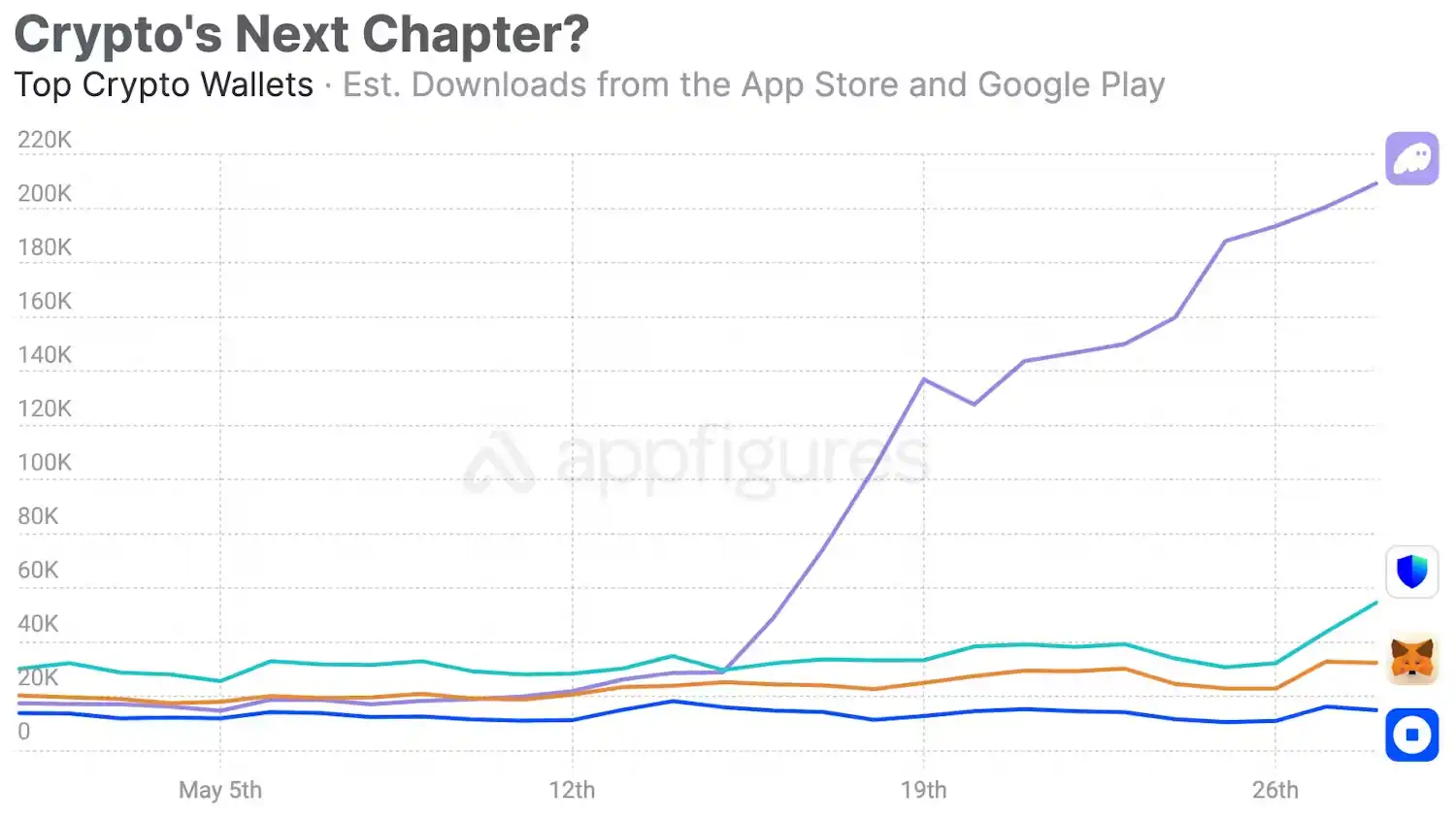
And MetaMask? It only launched native Solana support in May 2025. Before that, users who wanted to access Solana through MetaMask had to install a third-party plugin called Snaps, an experience akin to installing a Chrome kernel on the IE browser...

In these five years, Solana went from a chain that nearly died due to the FTX crash to, at one point, the chain with the largest trading volume. Phantom's valuation rose accordingly, securing a $150 million Series C funding round in early 2025 with a $3 billion valuation.

The author believes MetaMask's slowness wasn't due to technical inability, but also an issue of identity. MetaMask is Ethereum's favored child; its parent company Consensys was founded by Ethereum co-founder Joe Lubin.

Supporting Solana was an expansion for Phantom, but a betrayal for MetaMask. By the time the Ethereum ecosystem's growth indeed slowed down and cross-chain became necessary, the window of opportunity had long passed.

Of course, MetaMask's compatibility within the Ethereum ecosystem is still the strongest. Almost all dApps on EVM chains test it as the default option. The 30 million monthly active users are real.

But this stickiness doesn't come from product strength; it comes from switching costs. And switching costs can only prevent old users from leaving, not stop new users from going elsewhere.

A person who started playing on-chain in 2025 is probably not being recommended MetaMask by their friends when they go to install a wallet.

The Little Fox Up for Sale

The product is falling behind, people are leaving, but Consensys is pursuing an IPO.

According to an Axios report in October 2025, Consensys hired J.P. Morgan and Goldman Sachs as IPO advisors, targeting a public listing as soon as this year. If successful, this would be the first company deeply tied to Ethereum core infrastructure to list on the US stock market.

But in the same year it hired the investment banks, Consensys underwent at least two rounds of layoffs.

In October 2024, it cut 20% of its staff, about 160 people, with CEO Joe Lubin citing macroeconomic pressures and regulatory uncertainty. Another round occurred mid-2025, this time justified as "driving profitability."

On the well-known job review community Glassdoor, employee reviews are uglier than the layoffs themselves.

Someone wrote that the company lays off people at least twice a year, always cutting frontline contributors, never management. Another said that after sharing their promotion aspirations with their superior, their name appeared on the next layoff list.

It's unclear how much of these reviews are emotion and how much is fact. But a company conducting significant layoffs while employee morale hits rock bottom, all while sprinting towards an IPO, is itself a signal.

Then there's the story of the MASK token.

In 2021, Lubin tweeted "Wen $MASK?", causing a stir in the community. In 2022, he further explained plans for a token and DAO to promote "progressive decentralization." In May 2025, Finlay was interviewed by The Block and asked when the token would come; his answer became maybe.

For users, the MASK token is a carrot, dangled to keep using, interacting, and contributing on-chain data to MetaMask. For Consensys, the token is a card not yet played before the IPO.

Issuing it too early dilutes the valuation narrative; issuing it too late loses community support. Now the co-founder has left, the token hasn't been issued, but the IPO is coming.

MetaMask's product competitiveness is declining, a trend difficult to reverse in the short term. But MetaMask's brand recognition remains; that little orange fox is still the world's most recognizable crypto logo.

Brand value and product value decay at different rates; brand decays slower.

For crypto companies, an IPO often sells not the product, but the brand plus the narrative. "Ethereum infrastructure," "Web3 gateway," "World's largest self-custody wallet"... These labels still work well on pitch decks, even years later. Lubin himself is an Ethereum co-founder, an identity that carries its own halo effect in front of traditional investors.

So Consensys's choice is to package MetaMask into a public company shell while the brand is still valuable, while the regulatory window is still open, while Wall Street still has enthusiasm for crypto infrastructure, and let the public market set the price.

Silence is Not Golden

The reaction to co-founder Finlay's departure was muted in Crypto Twitter (CT). No long farewell posts went viral, no laments about "the end of an era," most people didn't even care about the news.

The comings and goings of Metamask's co-founder generated less buzz than some KOL complaining about shrunken conference swag in Hong Kong.

This in itself says something.

MetaMask is a rare case in the crypto industry. It possesses one of the industry's largest brands, but its founders have almost no personal brand.

In an industry where the founder is often the biggest marketing resource, MetaMask's two founders chose to remain invisible. The product spoke for them, until the product could no longer speak effectively.

The author believes MetaMask's story is essentially one about being the "default."

In the technology industry, becoming the default option is the most powerful competitive advantage, and the most dangerous sedative. When you are the default, user growth happens without you to do anything.

But this growth masks the fact that the product itself is aging. By the time you notice users leaving, the exodus has often been ongoing for a long time.

IE was the default browser, lost to Chrome. Nokia was the default phone, lost to iPhone.

Windows Media Player was the default media player, lost to everyone. These products lost while their market share was still high, brand recognition still strong, but new users were no longer choosing them.

MetaMask is now in this position. The existing user base remains, the brand is still loud, but the growth has gone elsewhere. Consensys's IPO plan is, ultimately, about monetizing the existing user base.

When brand value exceeds product value, selling is indeed the rational choice.
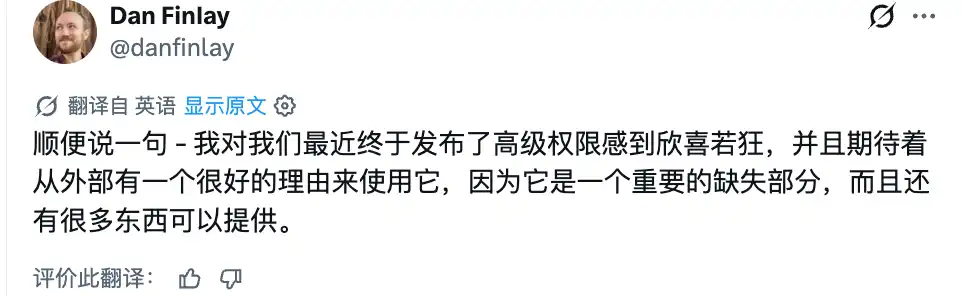
On the day Finlay left, MetaMask just launched a new feature called ERC-7715 for advanced permissions. He said he looked forward to experiencing it as a regular user in the future.

A product's creator becoming its ordinary user is probably the most朴实 (simple/unadorned) and quietest farewell in the crypto industry.

But for MetaMask, how many ordinary users will still click on that little fox every day next year? Are you still using it?


Preguntas relacionadas

QWhy did Dan Finlay, the co-founder of MetaMask, leave Consensys?

ADan Finlay left Consensys due to professional burnout and a desire to spend more time with his family.

QHow does MetaMask's revenue compare to its competitor Phantom's revenue?

AAccording to data from whales.market, Phantom's annualized revenue is approximately $108 million, while MetaMask's is about $46 million, making Phantom's revenue more than double that of MetaMask.

QWhat is the significance of the timing of Finlay's departure in relation to Consensys's corporate plans?

AFinlay's departure coincides with Consensys's plans for an IPO, as the company has reportedly hired J.P. Morgan and Goldman Sachs as advisors with the goal of going public as soon as this year.

QWhy was MetaMask slow to support the Solana blockchain, and what was the consequence?

AMetaMask was slow to support Solana due to its identity as an Ethereum-native product and its close ties to the Ethereum ecosystem. This delay allowed competitors like Phantom, which launched on Solana first, to capture a significant share of the new user growth on that chain.

QWhat does the article suggest is the primary motivation behind Consensys's push for an IPO?

AThe article suggests that Consensys is pursuing an IPO to monetize MetaMask's strong brand recognition and narrative value while it is still high, even though the product's competitive edge and user growth are declining.

Lecturas Relacionadas

Decisiones diferentes tras la caída: las instituciones compran en el mínimo, los traders se cambian a acciones estadounidenses

Tras caer por debajo de los 60,000 USD, Bitcoin se recuperó hasta los 63,000 USD, pero el sentimiento del mercado sigue siendo de "extremo miedo". Distintos actores ofrecen perspectivas encontradas sobre si es momento de comprar. Por un lado, varias voces institucionales señalan posibles zonas de fondo. El cofundador de Glassnode identifica un rango clave entre 46,000 y 54,000 USD, mientras que el CEO de Strive Asset Management ve el contacto con la media móvil de 200 semanas como una oportunidad histórica de compra, al igual que en ocasiones anteriores. El jefe de investigación de cripto de Standard Chartered sugiere que el fondo "ya casi se ha formado". Por otro lado, algunos traders muestran escepticismo. Un trader llamado Eugene ha trasladado su capital al mercado bursátil estadounidense, argumentando que las oportunidades son más atractivas allí y que los riesgos asociados a las ventas de bitcoin por parte de gobiernos (Strategy) persisten. Sin embargo, otro trader, Killa, considera la caída una "oportunidad generacional" y ha desplegado el 90% de su capital. Un dato llamativo proviene de Polymarket, donde el 72% de las apuestas predicen que BTC caerá por debajo de los 55,000 USD. La discusión central gira en torno a si la actual caída del 50% desde máximos es ya suficiente para marcar un fondo, o si, siguiendo patrones históricos más severos, el mercado necesita una corrección más profunda.

marsbitHace 23 min(s)

Decisiones diferentes tras la caída: las instituciones compran en el mínimo, los traders se cambian a acciones estadounidenses

marsbitHace 23 min(s)

Desapalancamiento de las acciones tecnológicas en curso: En lugar de apresurarse a comprar en la caída, es mejor esperar a que el entorno macroeconómico se estabilice primero

**Las acciones tecnológicas en proceso de desapalancamiento: Es mejor esperar a que se estabilice el entorno general que apresurarse a comprar en mínimos** El mercado tecnológico está experimentando un ajuste significativo. La lógica central es que los fuertes aumentos a corto plazo de la IA y los semiconductores, combinados con un sentimiento de FOMO excesivo y posiciones comerciales extremadamente concentradas, hicieron insostenible el crecimiento parabólico. Esto, sumado a factores como la próxima OPI de SpaceX (que podría absorber liquidez), la cautela previa a datos de inflación y la reunión de la Fed, y los sólidos datos de empleo que refuerzan las preocupaciones sobre "tipos de interés altos durante más tiempo", desencadenó un desapalancamiento concentrado en las acciones tecnológicas más populares. A diferencia de la corrección de diciembre, donde el mercado se preocupaba más por la rentabilidad de la inversión en IA (el numerador), el foco actual está en el denominador: tipos de interés, inflación, la Fed, geopolítica y liquidez. El sector de la memoria, uno de los más fuertes en la tendencia de la IA, ha sido el más afectado, con caídas de más del 20% desde los máximos. Si bien la ola principal de ventas a corto plazo puede haber completado una parte importante (ya que los fundamentos de la IA no se han desacreditado), es poco probable un rebote inmediato en "V". Es más probable un período de consolidación lateral o caídas lentas con alta volatilidad, hasta que los factores macroeconómicos den una señal de estabilización. **La clave para una posible reversión:** La prioridad no es buscar nuevas narrativas sectoriales, sino esperar a que las presiones macroeconómicas dejen de intensificarse. El mercado necesita ver que la inflación (CPI) no empeora, que los rendimientos de los bonos del Tesoro de EE.UU. no continúan subiendo, y que la Fed no adopta un tono más agresivo. Solo después de que el entorno macro ("el denominador") deje de deteriorarse, el mercado podrá volver a centrarse en la lógica industrial de la IA ("el numerador"), como la escasez de capacidad de cálculo, el aumento de precios de la memoria y la aceleración de la comercialización de la IA. Por lo tanto, se recomienda paciencia y esperar a que el entorno macro muestre señales de estabilización.

marsbitHace 30 min(s)

Desapalancamiento de las acciones tecnológicas en curso: En lugar de apresurarse a comprar en la caída, es mejor esperar a que el entorno macroeconómico se estabilice primero

marsbitHace 30 min(s)

La caída en picado del mercado surcoreano y la salida masiva de capitales globales: ¿Realmente ha cambiado la situación fundamental de los semiconductores?

Los mercados de Corea del Sur experimentaron una fuerte caída, con el KOSPI cayendo casi un 9% y activando el mecanismo de suspensión de operaciones. Este movimiento fue impulsado por una venta masiva en el sector estadounidense de semiconductores, lo que llevó a los inversores a reevaluar las acciones tecnológicas con altas valoraciones. Dado que la subida reciente del mercado coreano ha sido impulsada por la IA y que empresas como Samsung y SK Hynix tienen un peso significativo, Corea se ha convertido en un mercado muy sensible a los cambios en el sentimiento sobre la IA. En contraste con el pánico del mercado, el CEO de NVIDIA, Jensen Huang, visitó Seúl para reforzar la cooperación con la cadena de suministro coreana de IA, anunciando un nuevo acuerdo plurianual con SK Hynix para desarrollar productos de memoria de próxima generación para centros de datos de IA. Esta acción sugiere que la demanda de infraestructura de IA sigue siendo sólida desde la perspectiva de la industria. El artículo señala que el mercado de la IA está entrando en una nueva fase: los inversores ya no se centran solo en el crecimiento general, sino en analizar qué empresas de la cadena de valor se beneficiarán realmente de los flujos de ganancias. La divergencia actual radica en que los precios del mercado reflejan preocupaciones sobre las valoraciones, mientras que las señales de la industria siguen apuntando a una expansión continua. La dirección futura del mercado coreano dependerá de factores como los pedidos de NVIDIA, la oferta y demanda de HBM (Memoria de Alto Ancho de Banda) y el gasto de capital de los proveedores de la nube.

marsbitHace 1 hora(s)

La caída en picado del mercado surcoreano y la salida masiva de capitales globales: ¿Realmente ha cambiado la situación fundamental de los semiconductores?

marsbitHace 1 hora(s)

Trump discute con empresas de IA sobre cómo repartir el dinero: se inicia una presión narrativa cercana al nivel de la Revolución Industrial

En los últimos años, el mercado de la IA se ha centrado en quién puede ganar más dinero. Sin embargo, ahora emerge una pregunta crucial: si la IA genera una riqueza sin precedentes, ¿deberían esos beneficios ir solo a empresas, empleados y accionistas? Recientemente, se han iniciado discusiones públicas, impulsadas por informes y por un libro blanco de OpenAI, sobre la creación de un "fondo de riqueza pública". La idea es que las principales empresas de IA podrían ceder voluntariamente una parte de sus futuras ganancias o capital para que la sociedad en general participe de los beneficios del crecimiento de la IA, similar a fondos soberanos. Propuestas más radicales, como las del senador Sanders, sugieren cesiones obligatorias de hasta el 50% de las acciones, pero se consideran menos probables. El movimiento de OpenAI se interpreta como un intento de obtener una "licencia social" para su expansión futura, manejando la presión narrativa sobre el impacto económico y laboral de la IA. La clave para el mercado es la naturaleza de esta cesión: si es una pequeña porción de derechos económicos sin voto, se asemejaría a un costo político calculado y manejable. Sin embargo, si evoluciona hacia una participación forzosa con influencia en la gobernanza, el riesgo para la valoración de las empresas sería mayor. Por ahora, estas discusiones se encuentran en una fase temprana de exploración política. Los puntos a observar son si otras empresas se suman, si el gobierno de EE. UU. formaliza propuestas y si los documentos financieros de las empresas empiezan a reflejar este riesgo. El mercado de la IA, que antes solo valoraba el crecimiento, comienza ahora a considerar el factor de la distribución de la riqueza futura.

marsbitHace 1 hora(s)

Trump discute con empresas de IA sobre cómo repartir el dinero: se inicia una presión narrativa cercana al nivel de la Revolución Industrial

marsbitHace 1 hora(s)

¿Por qué las acciones de inteligencia artificial se ajustaron repentinamente, pasando de máximos históricos a mínimos en dos semanas?

Los conceptos relacionados con la IA han retrocedido desde sus máximos hasta mínimos de dos semanas, arrastrando a los principales índices, en particular al Nasdaq 100. Los inversores están saliendo de acciones tecnológicas con fuertes ganancias previas para rotar hacia otros sectores, realizando beneficios y cerrando posiciones largas. Un factor clave del pesimismo fue la perspectiva de ventas de chips de Broadcom, que no cumplió con las altas expectativas del mercado, planteando dudas sobre si la subida impulsada por la IA había ido demasiado lejos. El sólido informe de empleo de EE.UU. de mayo, con datos superiores a los esperados y una revisión al alza de abril, impulsó los rendimientos de los bonos (el del Tesoro a 10 años subió a 4.553%) y reforzó las especulaciones de que la Fed podría subir las tasas, presionando aún más al mercado. Los futuros de índices estadounidenses cayeron significativamente. A nivel global, las acciones europeas y asiáticas también retrocedieron. En los movimientos específicos de acciones estadounidenses, los fabricantes de chips y las acciones de infraestructura de IA cayeron notablemente por segundo día, con empresas como Super Micro Computer y ARM liderando las pérdidas. También cayeron acciones relacionadas con criptomonedas y minería. Algunas ganancias notables incluyeron a G-III Apparel y Cooper Cos tras superar las expectativas de resultados.

marsbitHace 1 hora(s)

¿Por qué las acciones de inteligencia artificial se ajustaron repentinamente, pasando de máximos históricos a mínimos en dos semanas?

marsbitHace 1 hora(s)

Trading

Spot
Futuros
活动图片