Glassnode spinout Cense raises €6.5 million seed round to transform crypto compliance for banks

insights.glassnodePublicado a 2026-06-03Actualizado a 2026-06-03

G+D Ventures and Rabo Investments have co-led a €6.5 million seed round in Cense, the crypto compliance and evidence platform for financial institutions and a 2023 spinout of Glassnode. The round was joined by a group of angel investors and will support the continued European expansion of the Cense platform.

This is a notable moment for Glassnode. Cense is the first venture to be spun out of the company. The decision reflected a clear conviction: one of the largest unmet needs in digital asset markets is the operational gap between crypto-native activity and the traditional banking system. That problem required a dedicated company, led by the same founders and powered by the same on-chain analytics foundations that Glassnode has spent years developing.

“When we founded Glassnode, our mission was to make on-chain data understandable and useful for anyone serious about digital asset markets. Cense extends that mission into the regulated banking layer, applying the same analytical rigor to one of the most consequential workflows in finance. Spinning Cense out as an independent company was the right way to give that mission the focus and pace it deserves, and this funding round confirms that the market sees the opportunity as clearly as we do,” says Jan Happel, co-founder and CEO of Glassnode.

The funding comes at a structural inflection point for digital assets. Capital is increasingly moving between crypto and traditional finance, whether through long-held positions being realized, stablecoin liquidity moving across venues, or institutional allocators repositioning at scale. Banks are now being asked to engage with clients and transactions that their existing infrastructure was not designed to assess. The operational layer that connects on-chain activity to bank-grade compliance documentation has become one of the clearest unmet needs in the market.

The Cense platform addresses this gap. By collecting and analyzing wallet, exchange and transaction data, it automates crypto compliance due diligence and produces standardized, auditable documentation that banks can act on. Conventional AML systems were not built for digital assets, while pure crypto analytics platforms often fail to reflect the regulatory and decision-making realities of financial institutions. Cense bridges that gap by translating complex on-chain activity into structured, bank-usable evidence.

“What stands out most is the team behind Cense: the founders have already built two successful companies, including Glassnode, and are early pioneers in the space. They combine strong product expertise with proven entrepreneurial experience. The market opportunity is equally compelling, driven by accelerating institutional adoption of digital assets and an increasingly complex regulatory environment that demands precisely such solutions,” says Andreas Barthelmes, Principal at G+D Ventures.

“Banks need trusted infrastructure to manage digital asset exposure with the same confidence they apply to financial crime and compliance,” says Dennis Wohlfarth, CEO of Cense. “This investment validates Cense’s position as that infrastructure layer. G+D Ventures and Rabo Investments bring deep expertise, strong banking networks and operational experience, giving us a strong foundation for the continued expansion of Cense.”

“What I find compelling about Cense is that the team understands both the complexity of digital assets and the operational realities of financial institutions. That combination is rare, and it is exactly what is needed when building infrastructure for banks,” says Sander ten Hagen, Investor at Cense.

Pascal Deck, Investor at Rabo Investments, adds: “Cense addresses a critical blind spot in crypto compliance by combining on-chain and off-chain insights, enabling institutions to onboard clients with greater speed, confidence and regulatory clarity, positioning it as a key enabler for scaling into digital assets. As more investors incorporate crypto into their portfolios, solutions like Cense are essential to turn a traditionally complex onboarding process into a seamless and scalable experience.”

With the new funding, Cense will accelerate the technological development of its platform and expand its market presence across Europe.


About Cense

Cense is a Swiss crypto intelligence specialist, founded in 2023 as a spinout of Glassnode. The Cense platform helps banks and financial institutions gain visibility into customers’ digital asset activity and provides the infrastructure to assess, document, and manage that activity at scale while meeting increasing regulatory requirements.


Lecturas Relacionadas

El Banco Popular de China promete un crecimiento estable del yuan digital en su plan para 2026-2030

El Banco Popular de China (BPC) se ha comprometido a desarrollar de manera "estable" el yuan digital (e-CNY) durante los próximos cinco años, según su Plan de Reformas para la 15ª etapa quinquenal (2026-2030). La moneda digital figura como una tarea prioritaria dentro de la infraestructura financiera y los servicios del banco central. El plan enfatiza la mejora de los sistemas de pago y el fortalecimiento de la lucha contra el lavado de dinero. En el ámbito internacional, el BPC pretende promover el uso del yuan en el comercio y la inversión, desarrollar una red de pagos transfronterizos y consolidar la posición de Shanghái y Hong Kong como centros financieros. El proyecto del yuan digital, iniciado en 2014 y lanzado oficialmente en 2022, sigue expandiéndose. Se han implementado mecanismos como el pago de intereses sobre saldos en e-CNY y pilotos de pagos transfronterizos, como la reciente transacción con Singapur por valor de 10 millones de yuanes. Además, la plataforma multilateral mBridge, que incluye a China, Hong Kong, Tailandia, Emiratos Árabes Unidos y Arabia Saudí, ha ampliado sus servicios a Macao y registró un gran aumento en su uso corporativo, incluyendo una transferencia récord de más de 10.000 millones de dólares de Hong Kong desde Fujian. En resumen, el BPC impulsa firmemente el yuan digital, centrándose tanto en su adopción nacional como en su proyección internacional a través de innovaciones en infraestructura y colaboraciones transfronterizas.

cryptonews.ruHace 43 min(s)

El Banco Popular de China promete un crecimiento estable del yuan digital en su plan para 2026-2030

cryptonews.ruHace 43 min(s)

Privacidad y seguridad cuántica: Buterin presenta el nuevo plan de desarrollo de Ethereum

Vitalik Buterin ha presentado "Strawmap", la hoja de ruta actualizada para el desarrollo de Ethereum hasta 2029. Comparándola con el plan de 2023, destaca la aparición de nuevas prioridades que antes no existían: la privacidad y la seguridad cuántica se han convertido en objetivos centrales. La privacidad ahora es un requisito fundamental, no una opción. Se implementarán mecanismos como "grupos de privacidad" y "agujeros de gusano" para ocultar la actividad y los balances de los usuarios, junto con FOCIL para prevenir la censura por parte de validadores. Otros pilares nuevos son la resistencia cuántica (adopción de algoritmos seguros frente a futuros ordenadores cuánticos) y "Lean Ethereum", una reestructuración masiva para simplificar el protocolo, que podría incluir reemplazar la Máquina Virtual de Ethereum (EVM). Buterin también destacó el mayor rol de la criptografía zero-knowledge (como SNARKs) para el escalado, y el potencial de la IA para la verificación formal de código. El documento elimina algunas ideas anteriores, consideradas ahora innecesarias. Los objetivos clave son: seguridad cuántica, privacidad, alta seguridad, resistencia a la censura, escalabilidad y una arquitectura simplificada. "Strawmap" es un documento flexible y sujeto a revisiones. Un análisis de IA advierte que el plazo para la migración a la criptografía post-cuántica podría ser corto, ya que algunas estimaciones sitúan la llegada de ordenadores cuánticos suficientemente potentes alrededor de 2032.

cryptonews.ruHace 45 min(s)

Privacidad y seguridad cuántica: Buterin presenta el nuevo plan de desarrollo de Ethereum

cryptonews.ruHace 45 min(s)

Los ataques a carteras frías generan preocupación sobre la autocustodia y los fondos se trasladan a productos institucionales, con entradas semanales a ETFs de Bitcoin en un máximo de 4 meses

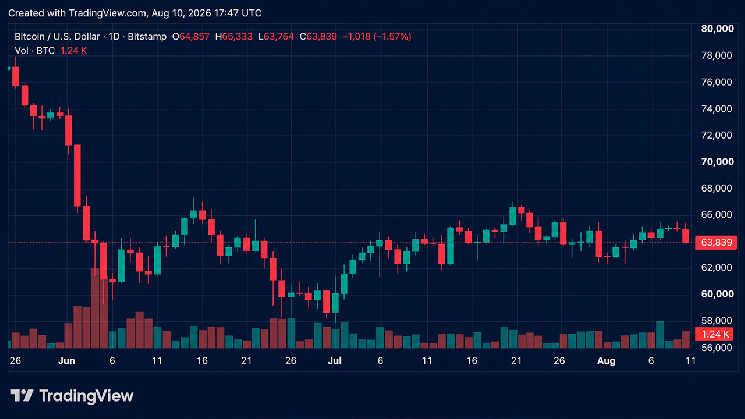
Un ataque a una vulnerabilidad en billeteras frías de Bitcoin de Coldcard, propiedad de la empresa canadiense Coinkite, ha desencadenado preocupaciones sobre la autodeposición de criptoactivos. El incidente, que resultó en el robo de aproximadamente 130 millones de dólares, ha impulsado una transferencia de fondos hacia productos institucionales regulados. Los fondos cotizados (ETF) de Bitcoin en Estados Unidos registraron una entrada neta de más de 850 millones de dólares la semana pasada, su mayor cifra en cuatro meses. Este flujo se produjo a pesar de que el precio de Bitcoin se mantiene en un rango lateral entre 60.000 y 67.000 dólares, lo que sugiere un cambio estructural más que un movimiento especulativo. Los analistas señalan que este evento de seguridad puede hacer que los ETF resulten más atractivos para algunos inversores, incluidos los 'holders' a largo plazo. Estos productos ofrecen exposición al precio de Bitcoin sin la necesidad de custodiar directamente los tokens. Aunque los ETF tampoco están exentos de riesgos de custodia, su marco regulatorio institucional y las medidas de seguridad de las grandes entidades ofrecen un nivel diferenciado de protección y supervisión en caso de incidentes. La tendencia refleja una migración de la oferta de Bitcoin desde la autodeposición hacia vehículos institucionales.

华尔街日报Hace 48 min(s)

Los ataques a carteras frías generan preocupación sobre la autocustodia y los fondos se trasladan a productos institucionales, con entradas semanales a ETFs de Bitcoin en un máximo de 4 meses

华尔街日报Hace 48 min(s)

Trading

Spot
活动图片