From OpenClaw to AI Agent: A New Investment Paradigm in the Crypto Market

比推Publicado a 2026-03-09Actualizado a 2026-03-09

Resumen

This article explores the impact of AI Agent technology, particularly the open-source framework OpenClaw, on the cryptocurrency market and its potential to create a new investment paradigm. It describes how AI has evolved from simple chatbots to autonomous agents capable of executing tasks, accessing tools, and making decisions. OpenClaw serves as a foundational infrastructure for building such agents, enabling developers to integrate AI with various tools and APIs. The piece highlights how AI Agents can transform crypto markets by automating trading, analyzing on-chain data, optimizing DeFi strategies, and even participating in governance. This convergence of AI and blockchain could lead to more automated and efficient digital economies. Key sectors likely to benefit include decentralized compute networks (e.g., Render Network), AI data marketplaces (e.g., Ocean Protocol), automated trading platforms, and decentralized AI networks (e.g., Fetch.ai). The author concludes that OpenClaw and similar frameworks are catalysts for broader adoption of AI Agents in crypto, potentially making them as fundamental to the ecosystem as smart contracts.

Author: Climber, CryptoPulse

Original Title: The Era of AI Agent is Coming: The Crypto Investment Logic Behind OpenClaw


Over the past two years, the evolution of AI technology has undergone distinct phases. From initial large language model chat tools to AI assistants capable of invoking tools, and now the rapidly emerging AI Agents.

AI is no longer just answering questions; it is beginning to perform tasks, call programs, and even autonomously complete complex work. Under this trend, an open-source project named OpenClaw has gradually entered the view of the tech community and the crypto industry.

OpenClaw is seen by many as the infrastructure for the AI agent era. Its emergence not only changes the way developers build AI applications but may also bring a new narrative direction to the crypto industry. From on-chain transactions to automated investing, and then to decentralized AI networks, the technological paradigm represented by OpenClaw is redefining the possibilities of combining AI and blockchain.

I. OpenClaw: The Open-Source Operating System for the AI Agent Era

OpenClaw is essentially an AI Agent framework. To put it simply, its role is to enable AI to not just chat but to perform tasks like a human. Developers can use OpenClaw to connect AI to various tools, such as browsers, databases, API interfaces, or script programs, enabling AI to complete complex tasks.
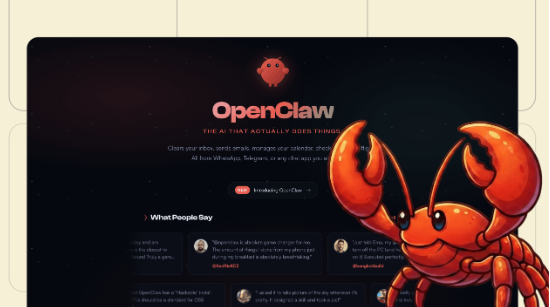
In traditional large language model applications, AI is more "passively responsive." Users ask questions, and the model provides answers, with the entire interaction process always controlled by humans. But in the Agent mode, AI can autonomously plan task steps based on goals.

For example, when a user gives an instruction to analyze a certain market and generate a report, AI can automatically complete data search, information organization, chart generation, and final content output. This capability means that AI is beginning to transform from a tool to an executor.

The core architecture of OpenClaw typically includes several key parts:

First is the large language model itself, such as GPT, Claude, or other models, which are responsible for reasoning and decision-making. Second is the Agent scheduling system, used to manage task flows and call tools. The third part is the skill module, which can also be understood as a plugin system, enabling AI to perform specific actions, such as scraping web pages, processing data, or calling blockchain interfaces. Finally, there is the runtime environment, responsible for actually executing AI's operations.

The significance of this architecture is that it modularizes AI capabilities. Developers do not need to build complex AI systems from scratch; they only need to connect models and tools on the OpenClaw framework to quickly build an AI agent that can perform tasks. This significantly lowers the threshold for AI application development and also leads to a trend similar to a modular market in the AI ecosystem.

Another important reason OpenClaw has attracted attention is its open-source nature. Open source means developers can freely modify the code, extend functions, and build new applications on its basis.

Because of this, OpenClaw's community has grown very rapidly, with more and more developers building automation tools, workflow systems, and AI agent applications within its ecosystem.

From a technology trend perspective, AI development is moving from model competition to Agent ecosystem competition. Future AI applications will likely not be single models but systems where multiple AI agents work together. The framework provided by OpenClaw fits this trend well, so it is regarded by many as one of the infrastructures of the AI Agent era.

II. AI Agents On-Chain: OpenClaw Reshapes the Crypto Narrative

The emergence of OpenClaw is not just a technological innovation for the crypto industry; more importantly, it may change the way on-chain applications operate. Blockchain networks themselves are automated systems, and AI agents can become "digital participants" running on the chain.

In traditional crypto markets, most transactions and operations still require manual completion. For example, analyzing market data, executing trading strategies, participating in DeFi liquidity management. These actions often require experienced investors or professional institutions to complete. But when AI Agents get involved, these tasks can be automated.

A typical scenario is the AI trading agent. Using an Agent framework like OpenClaw, developers can build AI systems that can automatically analyze market data, formulate strategies, and execute trades.
Such systems can run 24/7, automatically adjusting strategies based on on-chain data, price fluctuations, and market sentiment. For the crypto market, this means more machine participants will enter the trading ecosystem.

Another potential impact is the automation of on-chain data analysis. Blockchain data is public and transparent, but the volume is huge, making it difficult for ordinary users to utilize effectively.

AI agents can analyze on-chain fund flows, whale address behaviors, and market trends in real-time, and convert this information into investment decision suggestions. This capability may change the way traditional crypto research is conducted.

OpenClaw may also promote the deep integration of AI and DeFi. In the DeFi ecosystem, liquidity management, yield optimization, and cross-protocol arbitrage themselves highly rely on automated strategies.

If AI agents can analyze the market in real-time and automatically execute operations, then DeFi products will become more intelligent. For example, AI can automatically adjust liquidity provision strategies based on market conditions or allocate funds across multiple protocols.

In addition, AI agents may also become "users" of on-chain applications. In the future, some blockchain networks may no longer only have human addresses but also a large number of AI addresses. These AI addresses can participate in transactions, governance, and even protocol operations. In other words, a new type of participant may emerge in the blockchain ecosystem, namely members of the AI economy.

From a macro perspective, the greatest significance of combining AI Agents with blockchain is that it further enhances the degree of on-chain automation. Blockchain solves the trust problem, while AI agents solve the decision-making problem. When the two are combined, a true "automated digital economy" may be formed.

III. OpenClaw and the Track Opportunities Under the AI Agent Transformation

With the development of AI Agent frameworks like OpenClaw, some crypto tracks may usher in new narrative opportunities. The most directly benefiting area is AI + Crypto infrastructure. These projects typically focus on providing computing power, data, or network support for AI.
For example, the decentralized computing power network Render Network aims to provide distributed GPU resources for AI and graphics computing. As the number of AI agents increases, the demand for computing power will continue to grow, and the value of such networks may further increase.

Another important track is the AI data market. The training and operation of AI models and agents require a large amount of data, and blockchain can provide a decentralized data trading mechanism.

For example, Ocean Protocol attempts to build a data sharing market, allowing data owners to sell data access rights while ensuring privacy. In the era of AI Agents, the value of data may be further highlighted.

The rise of AI agents may also benefit automated trading and strategy platforms. As more AI systems enter the market, the importance of on-chain trading infrastructure will also continue to rise.

For instance, high-performance DeFi protocols or automated trading platforms may become important places for AI agents to execute strategies. This means trading infrastructure and liquidity protocols will also gain new demand.

In addition, decentralized AI networks may also become an important track. For example, Fetch.ai proposed the concept of an "autonomous agent network" early on, trying to let AI agents run autonomously on the blockchain and exchange value. With the popularity of tools like OpenClaw, such concepts may regain market attention.

Finally, AI agents may also change the mode of on-chain governance. In future DAO organizations, AI agents may represent users in voting, proposing governance suggestions, and even managing funds. Such changes mean that DAO governance tools and AI collaboration platforms may also usher in new development space.

From an investment logic perspective, the core of the AI Agent narrative is not a single project but an entire ecosystem chain. From computing power and data to the application layer, new opportunities may appear in every link. OpenClaw, as an AI Agent framework, plays more of a role as a technical catalyst, promoting the development of the entire AI automation ecosystem.

Conclusion

The emergence of OpenClaw marks AI technology entering a new stage. AI is no longer just an auxiliary tool but is beginning to become a digital agent that can perform tasks. When this capability is combined with blockchain, it may give birth to a more automated digital economic system.

For the crypto industry, this is both a technological innovation and a narrative upgrade. From AI trading agents to decentralized AI networks, to on-chain automated governance, AI Agents are bringing new imagination space to blockchain. In the coming years, AI agents may become an important part of the blockchain ecosystem, just like smart contracts.


Twitter:https://twitter.com/BitpushNewsCN

Bitpush TG Communication Group:https://t.me/BitPushCommunity

Bitpush TG Subscription: https://t.me/bitpush

Original link:https://www.bitpush.news/articles/7617962

Criptos en tendencia

Preguntas relacionadas

QWhat is OpenClaw and how does it represent a shift in AI technology?

AOpenClaw is an open-source AI Agent framework that enables AI to perform tasks autonomously by integrating tools like browsers, databases, and APIs. It represents a shift from passive AI models that only respond to queries to active agents capable of planning and executing complex tasks, such as market analysis and report generation.

QHow does OpenClaw's architecture facilitate AI application development?

AOpenClaw's architecture includes a large language model for reasoning and decision-making, an Agent scheduling system for task management, a skill module (plugin system) for executing actions like data processing, and a runtime environment. This modular design lowers the barrier for developers to build AI applications by allowing them to integrate models and tools quickly.

QWhat impact could AI Agents like those built on OpenClaw have on the cryptocurrency market?

AAI Agents could automate tasks such as market analysis, trading strategy execution, and DeFi liquidity management, introducing more machine participants into the crypto ecosystem. They may also analyze on-chain data in real-time, enhance DeFi strategies, and even act as autonomous participants in blockchain networks, potentially leading to a more automated digital economy.

QWhich crypto sectors might benefit from the rise of AI Agents, as highlighted in the article?

ASectors that could benefit include AI + Crypto infrastructure (e.g., decentralized compute networks like Render Network), AI data markets (e.g., Ocean Protocol), automated trading and strategy platforms, decentralized AI networks (e.g., Fetch.ai), and DAO governance tools, as AI Agents drive demand for compute power, data, and intelligent automation.

QWhy is OpenClaw considered a potential foundational infrastructure for the AI Agent era?

AOpenClaw is open-source, allowing developers to modify and extend its capabilities, which accelerates community growth and ecosystem development. Its framework supports the trend toward multi-agent systems where AI Agents collaborate, making it a key enabler for the next phase of AI evolution, similar to how operating systems support software applications.

Lecturas Relacionadas

Atención obligatoria para la próxima semana|Se espera una votación en el Senado sobre el proyecto de ley CLARITY; SpaceX y Circle publicarán resultados financieros (3-9 de agosto)

**Resumen: Próximos eventos clave en cripto y tecnología (3-9 de agosto de 2026)** La semana del 3 al 9 de agosto trae eventos importantes. En política estadounidense, el **CLARITY Act**, un proyecto de ley bipartidista que busca establecer un marco regulatorio federal para las criptomonedas, podría someterse a votación en el Senado. Los negociadores tienen hasta el **7 de agosto** para conseguir los 60 votos necesarios. En resultados corporativos, **SpaceX** publicará sus resultados del Q2 el **4 de agosto**, seguido de un importante desbloqueo del 8% de sus acciones para accionistas internos el **6 de agosto**. **Circle**, la empresa detrás de USDC, informará el **5 de agosto**. Otras empresas como la minera de Bitcoin **Hut 8** y **American Bitcoin**, vinculada a la familia Trump, también presentarán resultados. En otros anuncios, **Zapper** y **Ctrl Wallet** cerrarán sus servicios el **3 de agosto**. **LayerZero** descontinuará sus relés para la versión v1 ese mismo día. **Upbit** dejará de cotizar los tokens AQT y AERGO. Además, **Elon Musk** anunció que **Grok 4.6** se lanzará alrededor del **7 de agosto**. Finalmente, los mercados estarán atentos al **informe de nóminas no agrícolas de EE.UU. de julio**, que se publicará el **7 de agosto**, y al inicio de la señalización obligatoria para **BIP-110** en la red Bitcoin alrededor del **8 de agosto**.

marsbitHace 1 hora(s)

Atención obligatoria para la próxima semana|Se espera una votación en el Senado sobre el proyecto de ley CLARITY; SpaceX y Circle publicarán resultados financieros (3-9 de agosto)

marsbitHace 1 hora(s)

Las acciones caen más que las criptomonedas, ¿a dónde se fue el dinero?

Los días 28 y 29 de julio, el índice Kospi de Corea del Sur activó el mecanismo de suspensión de contratación ("circuit breaker") de forma consecutiva, algo sin precedentes. Acciones clave como SK Hynix cayeron bruscamente, y ETF apalancados vinculados a ellas sufrieron pérdidas devastadoras, con caídas superiores al 80% en un mes. La narrativa global de desapalancamiento forzado golpeó con mayor dureza a las operaciones más concurridas, como las acciones tecnológicas y semiconductores. Paradójicamente, Bitcoin, conocido por su alta volatilidad, mostró una relativa estabilidad durante este período, recuperándose cerca de un 15% desde mínimos de julio. El artículo argumenta que esto no se debió a una entrada de capital desde el mercado bursátil, sino a que Bitcoin ya había sufrido su propia corrección significativa entre mayo y junio, con salidas récord de los ETF estadounidenses. El dinero que salió del mercado de valores buscó principalmente refugio en efectivo, bonos del Tesoro estadounidense y, sobre todo, en oro. Los datos muestran una correlación negativa récord entre Bitcoin y el oro, desafiando la narrativa del "oro digital". En esta crisis, el oro cumplió el rol de activo refugio, mientras que Bitcoin permaneció en el extremo más riesgoso de la curva. Para que llegue una entrada de capital sostenida a Bitcoin, el artículo identifica tres condiciones clave: alivio en la presión de liquidez global, recortes de tasas por la Fed sin recesión, y la aprobación de una legislación clara (como el CLARITY Act en EE.UU.) que elimine las incertidumbres regulatorias. Aunque Bitcoin actualmente no es un refugio, su baja correlación con los mercados tradicionales lo posiciona favorablemente para cuando el capital global vuelva a buscar diversificación una vez que pase la tormenta.

marsbitHace 1 hora(s)

Las acciones caen más que las criptomonedas, ¿a dónde se fue el dinero?

marsbitHace 1 hora(s)

Diálogo con Ray Dalio: Nos encontramos en una burbuja de IA actualmente, el 1% de mi cartera de inversiones está en Bitcoin

**Fuente: The Diary Of A CEO** **Resumen: Felix, PANews** Ray Dalio, fundador de Bridgewater Associates, advierte sobre una burbuja en la inteligencia artificial actual, comparable a burbujas históricas como la de Internet en 2000. Según Dalio, los signos clásicos están presentes: precios inflados, endeudamiento basado en ganancias especulativas y una posible corrección brusca si suben las tasas de interés o cambian las condiciones económicas. Dalio explica que esta burbuja se enmarca en un "gran ciclo" más amplio —de unos 80 años— caracterizado por tres dinámicas: creciente desigualdad interna, déficits fiscales gubernamentales y cambios en el orden geopolítico mundial. Estados Unidos y otros países occidentales se encuentran en una fase de declive relativo dentro de este ciclo. Para proteger la riqueza personal, Dalio recomienda diversificar las inversiones más allá del efectivo, incluyendo activos como oro, acciones y bonos. Aunque revela que alrededor del 1% de su cartera está en Bitcoin —considerándolo un activo escaso—, prefiere el oro físico por su seguridad histórica y su rol como reserva de los bancos centrales. Sobre el impacto laboral de la IA, Dalio prevé que aumentará la desigualdad, beneficiando sobre todo a los dueños de capital. Sin embargo, destaca que las habilidades humanas —como la intuición y la emoción— seguirán siendo valiosas y complementarias a la IA. En el ámbito geopolítico, Dalio anticipa un mundo más regionalizado, con EE.UU. y China como potencias líderes en sus respectivas esferas, y advierte que conflictos como el de Irán han expuesto debilidades estratégicas de Estados Unidos, acelerando un cambio en el equilibrio global de poder.

marsbitHace 5 hora(s)

Diálogo con Ray Dalio: Nos encontramos en una burbuja de IA actualmente, el 1% de mi cartera de inversiones está en Bitcoin

marsbitHace 5 hora(s)

Trading

Spot

Artículos destacados

Cómo comprar ERA

¡Bienvenido a HTX.com! Hemos hecho que comprar Caldera (ERA) sea simple y conveniente. Sigue nuestra guía paso a paso para iniciar tu viaje de criptos.Paso 1: crea tu cuenta HTXUtiliza tu correo electrónico o número de teléfono para registrarte y obtener una cuenta gratuita en HTX. Experimenta un proceso de registro sin complicaciones y desbloquea todas las funciones.Obtener mi cuentaPaso 2: ve a Comprar cripto y elige tu método de pagoTarjeta de crédito/débito: usa tu Visa o Mastercard para comprar Caldera (ERA) al instante.Saldo: utiliza fondos del saldo de tu cuenta HTX para tradear sin problemas.Terceros: hemos agregado métodos de pago populares como Google Pay y Apple Pay para mejorar la comodidad.P2P: tradear directamente con otros usuarios en HTX.Over-the-Counter (OTC): ofrecemos servicios personalizados y tipos de cambio competitivos para los traders.Paso 3: guarda tu Caldera (ERA)Después de comprar tu Caldera (ERA), guárdalo en tu cuenta HTX. Alternativamente, puedes enviarlo a otro lugar mediante transferencia blockchain o utilizarlo para tradear otras criptomonedas.Paso 4: tradear Caldera (ERA)Tradear fácilmente con Caldera (ERA) en HTX's mercado spot. Simplemente accede a tu cuenta, selecciona tu par de trading, ejecuta tus trades y monitorea en tiempo real. Ofrecemos una experiencia fácil de usar tanto para principiantes como para traders experimentados.

971 Vistas totalesPublicado en 2025.07.17Actualizado en 2026.06.02

Cómo comprar ERA

Discusiones

Bienvenido a la comunidad de HTX. Aquí puedes mantenerte informado sobre los últimos desarrollos de la plataforma y acceder a análisis profesionales del mercado. A continuación se presentan las opiniones de los usuarios sobre el precio de ERA (ERA).

活动图片













