After the Tide Recedes, How Many Truly Resilient Crypto Projects Remain?

比推Publicado a 2026-02-05Actualizado a 2026-02-05

Resumen

Title: After the Tide Recedes: How Many Truly Resilient Crypto Projects Remain? In a prolonged crypto market downturn, projects demonstrating pragmatic and realistic visions are proving most resilient. This analysis highlights three key examples: 1. **Hyperliquid** addresses immediate trading friction by offering a decentralized exchange (DEX) for perpetual contracts, combining CEX-like features (high leverage, fast execution) with on-chain transparency. Its sustained activity post-airdrop reflects genuine user adoption. 2. **Canton Network** targets institutional finance needs by providing a blockchain infrastructure with "selective privacy" for regulatory compliance and business confidentiality. Backed by partnerships like DTCC (handling ~$3.7 quadrillion annually), it enables seamless integration with traditional finance. 3. **Kite AI** builds infrastructure for a future AI-driven economy, developing tools like "Agent Passport" for identity verification and the x402 protocol for autonomous payments. While not yet widely deployed, its vision aligns with the anticipated rise of AI agents as economic entities. Key evaluation criteria for project viability include: - Solving a real, existing problem (not manufactured demand); - Structurally sound solutions (technically, legally, economically); - Team execution capability (resources, expertise, track record). Projects failing these tests may see short-term gains but likely collapse in downturns. The current market stress...

Source: Tiger Research

Author: Ekko & Ryan Yoon

Original Title: Realism Is the Only Answer in a Crypto Downturn

Compiled and Edited: BitpushNews


The cryptocurrency market continues to be in a prolonged downtrend. In such an environment, the projects that can survive are those that present pragmatic and realistic visions.

Core Points

<ul class="list-paddingleft-2" style="animation: 0s ease 0s 1 normal none running none; appearance: none; background-image: none; background-position: 0% 0%; background-size: auto; background-repeat: repeat; background-attachment: scroll; background-origin: padding-box; background-clip: border-box; border: 0px none rgb(31, 31, 31); inset: auto; clear: none; clip: auto; columns: auto; contain: none; container: none; content: normal; cursor: auto; cx: 0px; cy: 0px; d: none; direction: ltr; fill: rgb(0, 0, 0); filter: none; flex: 0 1 auto; float: none; gap: normal; hyphens: manual; interactivity: auto; isolation: auto; margin-bottom: 16px; marker: none; mask: none; offset: normal; opacity: 1; order: 极速执行以及通过 HLP 机制提供的稳定流动性——带入了链上环境。</p> <p>Early usage was partly driven by the demand for the $HYPE token airdrop. However, users remained highly active even after the airdrop ended, reflecting genuine recognition of the platform's performance. Ultimately, Hyperliquid's resilience stems from solving a persistent and real problem: user dissatisfaction with centralized exchanges.</p> <h3>Canton Network: Positioning for the Institutional Finance Era</h3> <p>Canton provides a solution targeting the near future. As interest in real-world assets (RWA) continues to grow, financial institutions have begun to view blockchain as a financial infrastructure, not just a public network. In this context, institutions need not complete data transparency, but a "selective privacy model" that supports regulatory compliance while protecting business confidentiality.
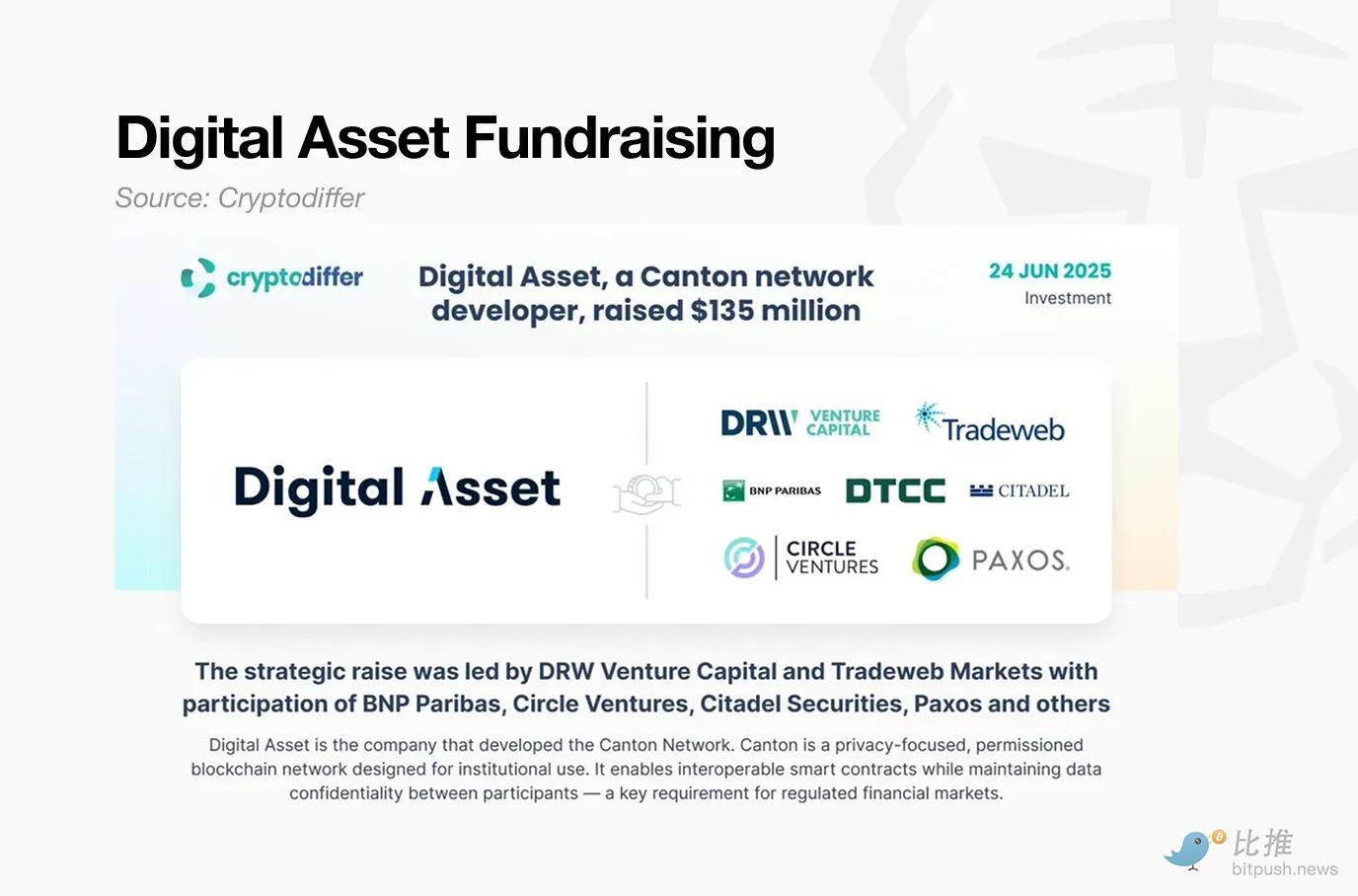
The Canton Network was born in response to these needs. Using the smart contract language DAML, Canton can provide customizable data disclosure schemes based on the needs of the participating parties.

This allows financial institutions to maintain transaction confidentiality while sharing information only to the necessary extent. Instead of强行推行 a technology-provider-led design, Canton has built infrastructure that highly aligns with institutional needs.

Another key factor is that Canton has aimed for "real-world deployment" from the start to expand its ecosystem, receiving early collaborative support from financial institutions. Most notably, its partnership with DTCC (The Depository Trust & Clearing Corporation) has established a channel for assets managed in the traditional financial system to enter the Canton environment. DTCC handles approximately $3.7 quadrillion in transactions annually, further validating the practical feasibility of the Canton Network's solution.

In the end, Canton provides a structured solution that simultaneously meets three major institutional requirements: privacy protection, regulatory compliance, and integration with the existing financial system.

Kite AI: Building the AI Economy That Has Yet to Arrive

Unlike the previous two examples, Kite AI currently has relatively limited application in the real world. However, viewed from the future perspective of "AI Agents operating as economic entities," its structural logic remains highly compelling.
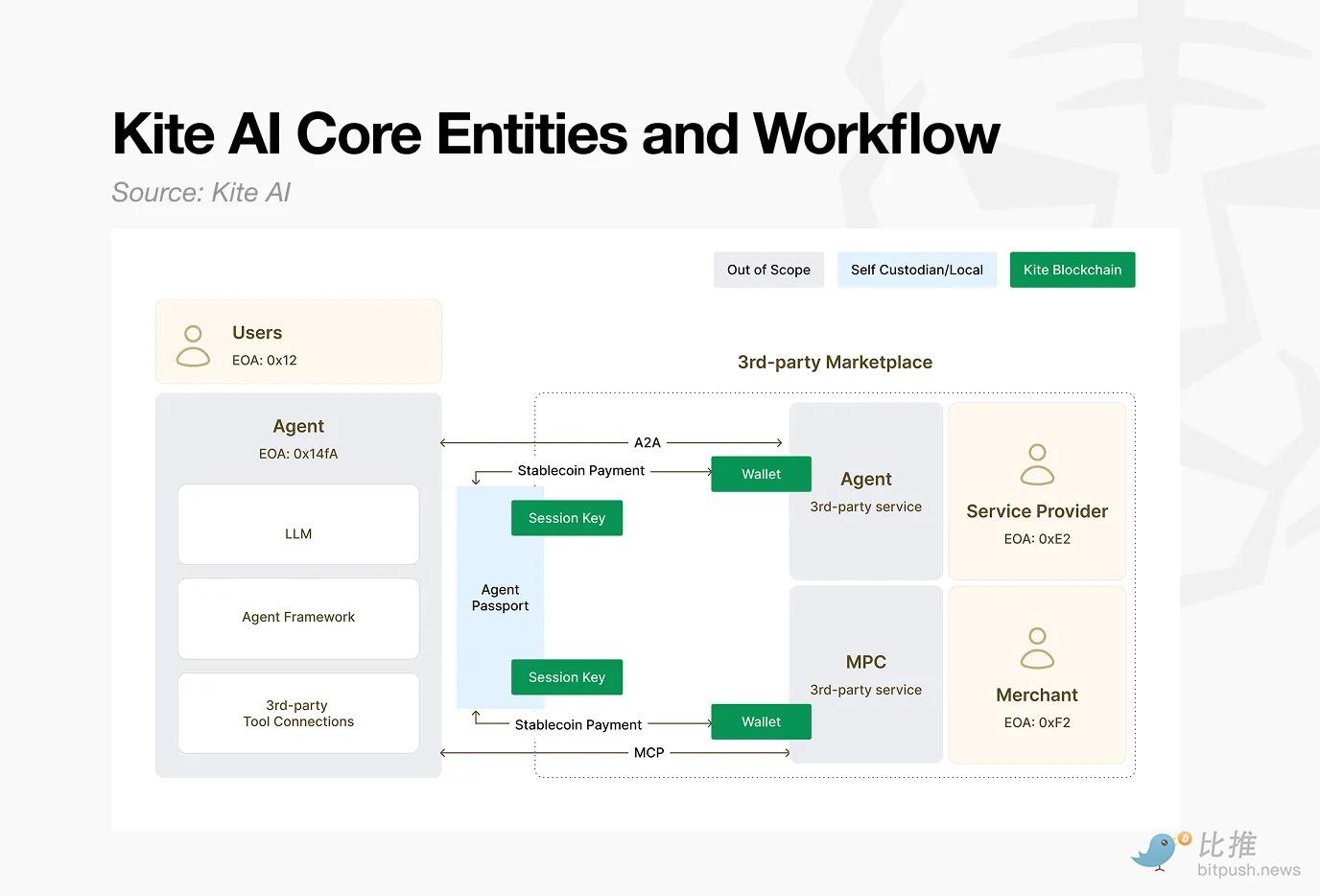
There is broad consensus, both in Web2 and Web3, on an "agent-driven future." Few would dispute that future AI Agents will handle tasks like booking hotels or ordering groceries on behalf of users.

However, realizing this future requires an infrastructure that allows AI Agents to independently initiate and execute payments. Existing transaction systems are designed around transfers between people and efficiency for human participants.

Therefore, for AI Agents to become autonomous economic entities, new mechanisms are needed, including identity verification and automated payment frameworks. Kite AI is building payment infrastructure specifically designed for this environment, with core components including the "Agent Passport" for identity verification and the x402 protocol for automated payments.

The vision presented by Kite AI is not yet ready for large-scale deployment, simply because the future it targets has not fully arrived. Nonetheless, the project's practical significance stems from a broader assumption: when this widely anticipated future arrives, the foundational technology it is developing will become a necessity. This alignment with macro trends gives the project structural credibility even with its current limited usage.

Three Key Questions for Assessing Practical Feasibility

Although these three projects operate on different timeframes, they share a common characteristic: real-world feasibility.

Evaluations of the same project often diverge: some believe it solves real problems, while others dismiss it as hype. To bridge this interpretative gap, we must ask at least three core questions:

  1. What specific problem is the project aiming to solve? (Is it a genuine pain point for users, or a need fabricated just to use the technology?)

  2. Is the proposed solution structurally feasible? (Does it hold up technically, in terms of compliance, and in its economic model?)

  3. Does the team have the capability to execute in reality? (Do they have relevant industry resources, technical expertise, and implementation experience?)

Since most projects promote optimistic future narratives, answering these questions correctly requires time and effort; filtering out misleading or incomplete information is not easy. Projects that cannot confidently answer these three questions might experience short-term price increases, but when the next downturn comes, they will likely perish with it.

The current state of the crypto market is clearly not optimistic. But this does not mean the industry is over. New experiments will continue, and our task is to assess what these efforts truly represent. Right now, keeping our feet on the ground is the only choice.


Twitter:https://twitter.com/BitpushNewsCN

Bitpush TG Discussion Group:https://t.me/BitPushCommunity

Bitpush TG Subscription: https://t.me/bitpush

Original link:https://www.bitpush.news/articles/7609260

Preguntas relacionadas

QWhat is the core argument of the article regarding which crypto projects survive a market downturn?

AThe article argues that crypto projects which survive a downturn are those with a pragmatic and realistic vision, focusing on solving concrete, real-world problems rather than relying on abstract narratives or hype.

QAccording to the article, what are the three key questions to evaluate a project's practical viability?

AThe three key questions are: 1. What specific problem is the project trying to solve? (Is it a genuine user pain point or a manufactured need?) 2. Is the proposed solution structurally sound? (Is it technically, regulatorily, and economically viable?) 3. Does the team have the capability to execute in reality? (Do they have relevant industry resources, technical expertise, and implementation experience?)

QHow does Hyperliquid demonstrate resilience in the current market according to the analysis?

AHyperliquid demonstrates resilience by solving a persistent, real-world problem: user dissatisfaction with centralized exchanges. It brought key CEX features like high leverage, fast execution, and stable liquidity (via its HLP mechanism) on-chain with its perp DEX, and maintained high activity even after its token airdrop ended, showing genuine user认可 (recognition).

QWhat specific need of financial institutions does the Canton Network address?

ACanton Network addresses the institutional need for a 'selective privacy model' that supports regulatory compliance while protecting business confidentiality. It provides customizable data disclosure through its DAML smart contract language, allowing institutions to share information only as necessary, and is built with real-world deployment in mind, evidenced by its collaboration with major entities like the DTCC.

QWhat future scenario is Kite AI's infrastructure designed for, and why is it considered pragmatically credible despite limited current use?

AKite AI is designed for a future where AI Agents act as autonomous economic entities, requiring new infrastructure for identity verification (Agent Passport) and automated payments (x402 protocol). It is considered pragmatically credible because its vision aligns with the widely anticipated macro-trend of AI-driven economies, making its underlying technology a potential necessity when that future arrives.

Lecturas Relacionadas

Diálogo con Ray Dalio: Nos encontramos en una burbuja de IA actualmente, el 1% de mi cartera de inversiones está en Bitcoin

**Fuente: The Diary Of A CEO** **Resumen: Felix, PANews** Ray Dalio, fundador de Bridgewater Associates, advierte sobre una burbuja en la inteligencia artificial actual, comparable a burbujas históricas como la de Internet en 2000. Según Dalio, los signos clásicos están presentes: precios inflados, endeudamiento basado en ganancias especulativas y una posible corrección brusca si suben las tasas de interés o cambian las condiciones económicas. Dalio explica que esta burbuja se enmarca en un "gran ciclo" más amplio —de unos 80 años— caracterizado por tres dinámicas: creciente desigualdad interna, déficits fiscales gubernamentales y cambios en el orden geopolítico mundial. Estados Unidos y otros países occidentales se encuentran en una fase de declive relativo dentro de este ciclo. Para proteger la riqueza personal, Dalio recomienda diversificar las inversiones más allá del efectivo, incluyendo activos como oro, acciones y bonos. Aunque revela que alrededor del 1% de su cartera está en Bitcoin —considerándolo un activo escaso—, prefiere el oro físico por su seguridad histórica y su rol como reserva de los bancos centrales. Sobre el impacto laboral de la IA, Dalio prevé que aumentará la desigualdad, beneficiando sobre todo a los dueños de capital. Sin embargo, destaca que las habilidades humanas —como la intuición y la emoción— seguirán siendo valiosas y complementarias a la IA. En el ámbito geopolítico, Dalio anticipa un mundo más regionalizado, con EE.UU. y China como potencias líderes en sus respectivas esferas, y advierte que conflictos como el de Irán han expuesto debilidades estratégicas de Estados Unidos, acelerando un cambio en el equilibrio global de poder.

marsbitHace 3 hora(s)

Diálogo con Ray Dalio: Nos encontramos en una burbuja de IA actualmente, el 1% de mi cartera de inversiones está en Bitcoin

marsbitHace 3 hora(s)

¡Récord de compras netas extranjeras de 7,2 billones de wones en un solo día! Wall Street: Los vientos en contra de los flujos de capital en el mercado coreano se han disipado

La situación de los flujos de capital en el mercado de valores surcoreano está mostrando un cambio sustancial. El 31 de julio, la inversión extranjera realizó una compra neta récord de aproximadamente 7.2 billones de wones en acciones del KOSPI, marcando una reversión fundamental tras meses de importantes salidas de capital. Según análisis de Citi Research, las ventas netas mensuales de inversores extranjeros se redujeron drásticamente a 9.8 billones de wones en julio, comparado con 48.4 y 44.5 billones en junio y mayo, respectivamente. Paralelamente, los fondos de pensiones y fondos de inversión nacionales se convirtieron en compradores netos en julio (1.0 billón de wones), luego de ser vendedores netos en los dos meses anteriores. Además, la Comisión de Servicios Financieros de Corea implementó nuevas regulaciones que restringen el acceso de inversores minoristas a los ETF apalancados, lo que ha reducido significativamente su volumen de negociación y se espera que mitigue la volatilidad del mercado. Citi Research mantiene su objetivo para el KOSPI en 10,000 puntos, destacando fundamentos sólidos en el sector de chips de memoria, valoraciones históricamente bajas, una fuerte economía local y un entorno político favorable como factores de apoyo. La firma considera que los vientos en contra relacionados con los flujos de capital se están disipando, mientras que los impulsores fundamentales y políticos están ganando fuerza, creando condiciones para una mejora en el mercado.

marsbitHace 3 hora(s)

¡Récord de compras netas extranjeras de 7,2 billones de wones en un solo día! Wall Street: Los vientos en contra de los flujos de capital en el mercado coreano se han disipado

marsbitHace 3 hora(s)

Cómo Convertirse en Algo que la Inteligencia Artificial Jamás Podrá Reemplazar

**Resumen: Cómo ser irremplazable por la IA** Ante el temor de que la IA elimine trabajos, la solución no es resistirse, sino volverse "inempleable": un individuo autónomo que construya su propio proyecto vital y económico. El artículo critica la "esclavitud salarial"—depender de un empleo sin sentido—y propone escapar de ella desarrollando estas cinco capacidades clave: 1. **Agencia**: Capacidad de actuar sin pedir permiso. 2. **Gusto**: Criterio para discernir qué vale la pena crear. 3. **Persuasión**: Habilidad para conectar y lograr que otros valoren tu trabajo. 4. **Persistencia**: Resiliencia para ver los errores como aprendizaje. 5. **Iteración**: Proceso constante de ajuste basado en la retroalimentación. Estas habilidades se cultivan únicamente **haciendo**: creando algo propio. Se recomienda enfocarse en **crear contenido (medios)** más que solo en código, ya que el valor del contenido es subjetivo y requiere un criterio humano que la IA no puede replicar fácilmente, abriendo espacio para talentos auténticos. **Cómo empezar:** El cambio real requiere una transformación de identidad. Para ello: 1. Cambia radicalmente tu entorno (físico y digital). 2. Elige un "vehículo" (como crear contenido) que te dé retroalimentación real del mundo. 3. Dedica 15 minutos a responder preguntas introspectivas para encontrar tu "material en bruto" único y tu perspectiva contraria a la convencional. 4. **Publica tu primera idea mañana mismo.** La acción, el feedback y la iteración constante son el único camino. La conclusión es clara: en lugar de temer a la IA, conviértete en un creador que utilice todas las herramientas (incluida la IA) para construir una vida y un trabajo con significado, autonomía e impacto personal.

marsbitHace 5 hora(s)

Cómo Convertirse en Algo que la Inteligencia Artificial Jamás Podrá Reemplazar

marsbitHace 5 hora(s)

Los lanzamientos de dados mantienen las claves de Bitcoin en un modo aislado, pero no todo el mundo se molestará

El título sugiere que las claves de Bitcoin pueden almacenarse fuera de línea mediante lanzamientos de dados, aunque no todos los usuarios adoptarán este método. El artículo comienza explicando la entropía en la teoría de la información, utilizando ejemplos como monedas y dados. Tras un escándalo reciente con Coldcard, se popularizó la generación de semillas de billetera mediante dados. El texto explica que, aunque físicamente determinista, el lanzamiento es impredecible en la práctica, lo que lo hace útil para la seguridad. Se detalla cómo convertir los resultados en datos binarios, con métodos que van desde el simple "par/impar" hasta el uso de funciones hash para preservar más entropía. Para una frase de recuperación de 12 palabras (128 bits de entropía), se necesitan unos 50 lanzamientos; Coldcard recomienda 99 para mayor seguridad. La vulnerabilidad en Coldcard, relacionada con su generador de números aleatorios, puso en riesgo fondos. Las semillas generadas manualmente con dados no se vieron afectadas, pero el investigador Kevin Loaec señaló que otras funciones del dispositivo (como creación de billeteras de papel o claves de coproreseguridad) sí podían estar comprometidas, incluso si la semilla principal era segura. El artículo argumenta que, aunque técnicamente robusto, el proceso de lanzar dados es lento, propenso a errores y poco práctico para la mayoría, especialmente para nuevos usuarios. Concluye que, aunque debe ser una opción para expertos, el objetivo a largo plazo es que el hardware y software generen aleatoriedad fuerte de forma fiable y accesible. Se aconseja a los usuarios de Coldcard verificar su firmware y las funciones utilizadas, y se destaca la utilidad de las billeteras multisig con dispositivos de diferentes fabricantes para mitigar riesgos.

cryptonews.ruHace 8 hora(s)

Los lanzamientos de dados mantienen las claves de Bitcoin en un modo aislado, pero no todo el mundo se molestará

cryptonews.ruHace 8 hora(s)

Trading

Spot
活动图片





