Goldman Sachs Research Report Analysis: Potential U.S. Ban on Chinese Optical Modules, Leading Manufacturers' Moat Deeper Than Market Anticipates

marsbitPublicado a 2026-08-12Actualizado a 2026-08-12

Resumen

In response to reports that the U.S. is drafting a plan to ban imports of Chinese data center components, including optical modules, Goldman Sachs addresses key investor concerns in an August 10th research report. The firm highlights the resilient competitive advantages of leading Chinese manufacturers like InnoLight (Xinsheng) and RoboTec (Luoboteke). It argues that rapid technological iteration in AI-driven optical modules (from 400G to 1.6T+), high SKU variety, and stringent manufacturing requirements for miniaturization and thermal management increase client reliance on established players. New suppliers face significant hurdles in proving product stability and achieving cost efficiency. While macro uncertainties exist, leading firms are mitigating risks through overseas production capacity expansion in regions like Southeast Asia, which already manufactures advanced products. Goldman Sachs concludes that the core moats of these leaders—deep R&D, automated production, and strong customer collaboration—are more robust than the market perceives, and their market share expansion trend is unlikely to be reversed by proposed bans. The report maintains a Buy rating on the mentioned firms.

Written by: Rita

According to a Reuters report on August 4th, the Trump administration and the FCC are drafting a plan to ban U.S. imports of Chinese data center components, with optical modules specifically mentioned. In a research report dated August 10th, Goldman Sachs responded to the three most pressing questions from investors: why leading Chinese optical module manufacturers continue to gain customer favor, whether production capacity and cost efficiency constitute a competitive moat, and whether overseas capacity布局 can hedge risks. Goldman Sachs judges that rapid technological iteration, strong AI demand, tight raw material supply, and the high R&D requirements for multiple SKU varieties make customers more reliant on existing leading manufacturers in the current environment and less likely to switch to new suppliers easily. Goldman Sachs gives a Buy rating to Chinese optical module leaders New Easynet and Robotech, while also assigning Buy ratings to FOCI, LandMark, and VPEC (all listed in Taiwan), believing these companies possess difficult-to-replicate competitive advantages in technology, capacity, and customer collaboration.

Rapid Technological Iteration, Leading Manufacturers' R&D Advantage Continues to Expand

AI server architecture is still evolving rapidly. Optical module speeds progress from 400G to 800G to 1.6T, packaging forms evolve from pluggable to LPO to NPO to CPO, materials shift from EML to silicon photonics to lithium niobate, and fiber types range from single-mode to multi-mode. SKU varieties are numerous and continuously expanding, with each new specification requiring manufacturers to possess rapid response and R&D capabilities.

Goldman Sachs believes this rapidly evolving technological environment will only increase customer reliance on existing leading manufacturers. New suppliers would need more time to demonstrate product stability while also needing to re-coordinate with chip suppliers, system integrators, and other component manufacturers to meet quality and design specifications. Historically, leading Chinese manufacturers successfully launched the world's first 400G (2018), 800G (2020), and 1.6T (2023) optical modules. This leading position is widening as AI continues its upgrade cycle.

Capacity and Costs Form Barriers, Small-to-Medium Manufacturers Hard-Pressed to Catch Up Short-Term

Seven of the world's top ten optical module suppliers are headquartered in China, with their market share in 2025 projected to further increase compared to 2024. Beyond R&D capabilities, leading manufacturers' advantages in capacity commitment, automated production, and manufacturing efficiency are equally prominent. Proprietary production lines and specialized equipment allow them to achieve rapid product deployment at competitive prices.

Goldman Sachs points out that product specification upgrades to 1.6T and beyond not only increase design difficulty but also manufacturing complexity. The volume of optical modules does not increase, yet more fibers and lasers must be packed into the same space to achieve higher speeds, multiplying coupling and thermal dissipation challenges. Small-to-medium manufacturers in this fast-evolving technological landscape would require significantly more time to reach the same level of manufacturing efficiency.

Overseas Capacity Layout Underway, Southeast Asian Factories Already in Mass Production

Macro uncertainties are not new. From geopolitical tensions in 2019, the pandemic from 2020 to 2022, to tariff increases in 2025, technology supply chains have been mitigating risks through geographically dispersed production over the past few years. Leading manufacturers are not only expanding capacity in Southeast Asia (capable of producing high-end products like 1.6T) but are also making布局 in other countries to further diversify manufacturing bases.

New Easynet's Thailand Phase 1 is already at full capacity, with Phase 2 expansion planned for 2026. Goldman Sachs believes the提前布局 of overseas capacity provides leading manufacturers with a buffer space. This view does not contradict the judgment in Citigroup's report that "overseas capacity is insufficient to fill the gap"—it is insufficient to cover all demand in the short term, but the long-term trend towards diversification is already established.

Goldman Sachs concludes that while market concerns over a potential U.S. ban are understandable, the competitive moat of leading Chinese optical module manufacturers is far deeper than the impact of short-term tariff shocks. Accumulated technological R&D, automated production line efficiency, deep collaboration with customers, and提前布局 overseas capacity together constitute competitive barriers that are difficult to replicate in the short term. AI-driven demand for optical modules continues to accelerate its upgrade cycle, and the market share expansion trend of leading manufacturers is unlikely to reverse due to a draft ban proposal that has not yet been implemented.

Disclaimer

This article is Trend Research's整理与解读 of a third-party securities research report (Goldman Sachs, August 10, 2026), combined with整理 of publicly available market information. The ratings, target prices, profit forecasts, and related judgments cited in the article are the views of the analyst(s) of that securities firm, representing only the stance of their institution, and do not represent the views of Trend Research, nor do they constitute any investment advice.

The market carries risks; decisions must be made independently. This article should not serve as the basis for trading any securities.


Criptos en tendencia

Preguntas relacionadas

QAccording to the Goldman Sachs report, what are the main reasons why customers continue to prefer leading Chinese optical module manufacturers despite potential US import bans?

AThe report states that rapid technology iteration, strong AI demand, tight raw material supply, and high R&D requirements for diverse SKUs make customers heavily reliant on existing leading manufacturers. Customers are unlikely to easily switch to new suppliers as these leaders have proven capabilities in product stability, design coordination, and time-to-market.

QWhat specific technical advantages and milestones do Goldman Sachs highlight for leading Chinese optical module companies?

AGoldman Sachs notes that Chinese leading manufacturers have successfully launched the world's first 400G (2018), 800G (2020), and 1.6T (2023) optical modules. Their R&D advantage is expanding amidst fast-evolving AI server architectures involving changes in data rates, packaging, materials, and fiber types.

QHow does the Goldman Sachs report characterize the competitive barriers formed by production capacity and cost for leading optical module manufacturers?

AThe report identifies that barriers come from leaders' advantages in capacity commitment, automated production, and manufacturing efficiency. Self-developed production lines and specialized equipment enable competitive pricing and rapid deployment. The increasing complexity of manufacturing higher-speed modules like 1.6T further widens the gap with smaller players who need more time to achieve similar efficiency.

QWhat is the status of overseas capacity expansion by leading Chinese optical module manufacturers, as mentioned in the article?

ALeading manufacturers have been expanding overseas capacity to mitigate geopolitical and tariff risks. Factories in Southeast Asia are already mass-producing, including high-end products like 1.6T modules. For example, New Easun's Thailand Phase I is at full capacity, with Phase II expansion planned for 2026. This provides a buffer, though it may not cover all demand in the short term.

QWhich companies received a 'Buy' rating from Goldman Sachs in the report discussed in the article?

AGoldman Sachs gave a 'Buy' rating to Chinese optical module leaders New Easun and Robotec. It also gave a 'Buy' rating to the Taiwan-listed companies FOCI, LandMark, and VPEC, citing their difficult-to-replicate competitive advantages in technology, capacity, and customer synergy.

Lecturas Relacionadas

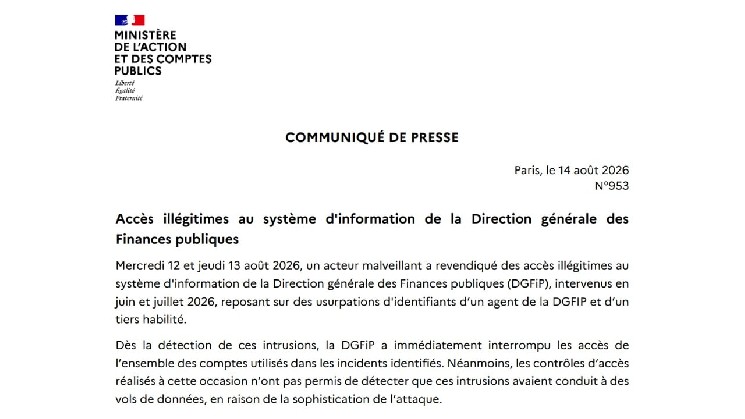
La agencia fiscal francesa reconoce una filtración de datos: un hacker robó 678,000 registros

La Agencia Tributaria francesa (DGFiP) ha reconocido una filtración de datos en la que un hacker, bajo el alias 'Zerobytes', robó información de 678,438 contribuyentes. El ataque, que ocurrió el 12 de junio, se llevó a cabo accediendo a servidores internos a través de una VPN. Aunque el acceso del intruso fue bloqueado e impidió la extracción completa de datos, los archivos robados están siendo vendidos por varios miles de euros. La DGFiP confirmó el incidente, indicando que cortó de inmediato todos los accesos comprometidos, pero que la sofisticación del ataque impidió detectar la sustracción en tiempo real. Aseguró que los datos de acceso al portal no se vieron comprometidos y que está implementando nuevas medidas de seguridad. La agencia se pondrá en contacto la próxima semana con cada persona afectada para informarle detalladamente. Este suceso ha generado gran preocupación entre los propietarios de criptomonedas en Francia, quienes temen un aumento de los secuestros físicos ("ataques con llaves") para robar sus activos digitales. El país ha visto un repunte de este tipo de delitos. En respuesta, Alexander Stachtchenko de Bitstack ha pedido una moratoria en la recopilación de datos personales por parte del Estado hasta que pueda garantizar su protección, defendiendo el derecho fundamental a la privacidad. Hasta abril, Francia había imputado a 88 personas en 41 casos de secuestros relacionados con criptomonedas.

cryptonews.ruHace 41 min(s)

La agencia fiscal francesa reconoce una filtración de datos: un hacker robó 678,000 registros

cryptonews.ruHace 41 min(s)

Trading

Spot

Artículos destacados

Cómo comprar BAN

¡Bienvenido a HTX.com! Hemos hecho que comprar Comedian (BAN) sea simple y conveniente. Sigue nuestra guía paso a paso para iniciar tu viaje de criptos.Paso 1: crea tu cuenta HTXUtiliza tu correo electrónico o número de teléfono para registrarte y obtener una cuenta gratuita en HTX. Experimenta un proceso de registro sin complicaciones y desbloquea todas las funciones.Obtener mi cuentaPaso 2: ve a Comprar cripto y elige tu método de pagoTarjeta de crédito/débito: usa tu Visa o Mastercard para comprar Comedian (BAN) al instante.Saldo: utiliza fondos del saldo de tu cuenta HTX para tradear sin problemas.Terceros: hemos agregado métodos de pago populares como Google Pay y Apple Pay para mejorar la comodidad.P2P: tradear directamente con otros usuarios en HTX.Over-the-Counter (OTC): ofrecemos servicios personalizados y tipos de cambio competitivos para los traders.Paso 3: guarda tu Comedian (BAN)Después de comprar tu Comedian (BAN), guárdalo en tu cuenta HTX. Alternativamente, puedes enviarlo a otro lugar mediante transferencia blockchain o utilizarlo para tradear otras criptomonedas.Paso 4: tradear Comedian (BAN)Tradear fácilmente con Comedian (BAN) en HTX's mercado spot. Simplemente accede a tu cuenta, selecciona tu par de trading, ejecuta tus trades y monitorea en tiempo real. Ofrecemos una experiencia fácil de usar tanto para principiantes como para traders experimentados.

1.1k Vistas totalesPublicado en 2024.12.11Actualizado en 2026.06.02

Cómo comprar BAN

Discusiones

Bienvenido a la comunidad de HTX. Aquí puedes mantenerte informado sobre los últimos desarrollos de la plataforma y acceder a análisis profesionales del mercado. A continuación se presentan las opiniones de los usuarios sobre el precio de BAN (BAN).

活动图片