Making Music in a Bear Market: The Survival Experiment of a Bitcoin Band

marsbitPublicado a 2026-06-21Actualizado a 2026-06-21

Resumen

"Orange Pill Jam: A Bitcoin Band's Survival in the Bear Market" Orange Pill Jam is a musical group exploring themes of financial sovereignty and privacy, born from the Bitcoin community. Formed after singer Mermaid performed her song "Dollar Apocalypse" at a 2022 conference, the band creates music intended for both Bitcoin enthusiasts and general audiences. Their creative process involves Mermaid writing lyrics and melodies, which producer/multi-instrumentalist Michi then shapes with a precise, rhythm-focused approach, often demanding numerous retakes to achieve his unique standard of timing. Their songs, like "Cypherpunks' Manifesto" and "Fire of Freedom," tackle concepts of digital privacy, the pitfalls of "free" services, and personal sovereignty, influenced by experiences in places like El Salvador. Despite operating in a crypto bear market with a Copyleft model (offering music for free sharing/remixing and accepting optional Bitcoin donations), they face practical challenges. Their growth is slow on platforms like YouTube and Spotify, which aren't optimized for their niche content. The band also navigates the rise of AI-generated music. While acknowledging AI's efficiency for certain tasks, they believe human creativity occupies a unique space that algorithms cannot replicate—the ability to create new genres and capture intangible rhythmic feeling. For Orange Pill Jam, the core argument for both Bitcoin in a downturn and human artistry in the AI age lies in this irrep...

Caption: Orange Pill Jam performing live in Lugano, Switzerland.

Michi has a habit that drives his collaborators crazy.

When he determines there's a problem with a recording—not half a beat off, not a quarter beat off, but off by some time unit that only exists in his nervous system—he insists on re-recording. Again and again. His bandmate, lead vocalist Mermaid, says she couldn't hear the difference for the first six months. Then, gradually, she could.

>It should be noted: it's a crypto bear market. Yet the band Orange Pill Jam is still recording.

On the surface, Orange Pill Jam seems an unlikely combination. Their music explores financial sovereignty, privacy rights, and the slow decay of certain modern institutions. Their style is eclectic, spanning from gypsy reggae to Afro-Latin to hip-hop, occasionally venturing into reggaeton. They accept Bitcoin payments.

By traditional music industry standards, this band is not successful. Their YouTube channel has been active for two or three years, and subscribers have just surpassed five hundred. Spotify isn't particularly enthusiastic about them either.

Yet, in the specific circles that truly value what they do, they are indeed beloved. And they are doing something quite difficult: creating music that non-bitcoiners can appreciate without needing to understand Bitcoin, and that bitcoiners can enjoy without feeling pandered to.

I. How Bitcoin Culture Grows Its Own Music

The story begins, as many Bitcoin stories do, at a conference.

It was at the Plan B Forum in Lugano in 2022. Mermaid had written a song called 'Dollar Apocalypse' as a thank-you gift for everyone creating serious Bitcoin content; especially Max Keiser — the broadcaster and advocate whose podcast, 'The Orange Pill Podcast', has long been essential listening in certain corners of the internet.

She wasn't sure she would actually meet him. Then, she did.

A few hours later, someone in the crowd at the Satoshi Gallery said: 'She wrote a song for you, let her sing it.' Keiser turned and announced to the room that there would be an impromptu concert. Behind Mermaid, Valentina Piccozzi's resin orange pill art hung on the wall. No microphone, no sound check, no advance notice.
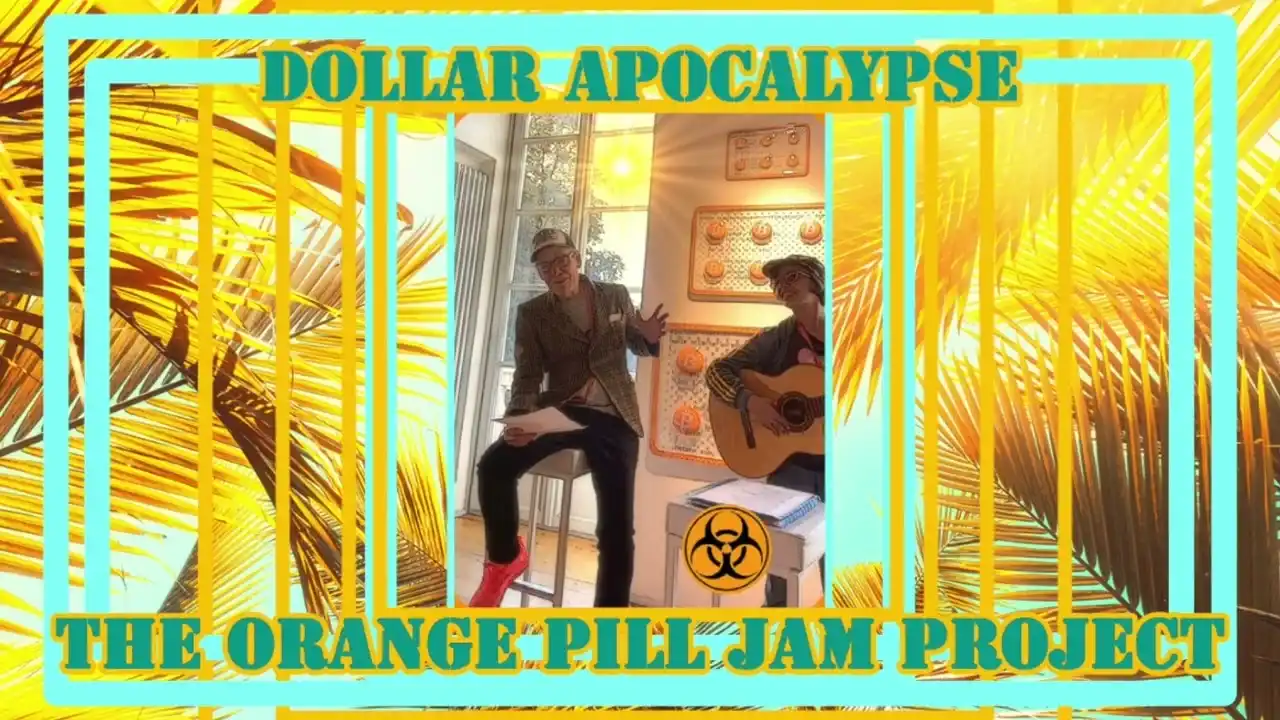
She sang the song. Afterwards, Keiser spoke about the importance of Bitcoin art, which she still remembers. What she gained from it wasn't direction, but a question: Where is the music? Visual art already has its followers—painters, illustrators, a whole world of Bitcoin aesthetics. Music hadn't shown up yet.

Mermaid says that event 'landed' her. But I suspect what truly 'landed' her was the experience of standing in that gallery, unscheduled and unrehearsed, singing simply because the song wanted to come out. It turned out to be a reliable indicator of character. The subject came up again later.

She called Michi and proposed a simple idea: turn those guitar and vocal sketches into real tracks—professional production, proper beats, something you can move to. He agreed. Three songs became seven, seven became thirteen, thirteen became twenty-one, and in their words, many more are simmering.

Here's how a song is made.

Mermaid is the band's lead singer and main lyricist. She writes the lyrics first, then sketches a melody around them—not a full composition, more of an outline that knows what it wants to say but not yet how to say it. She hands this outline to the band's producer and multi-instrumentalist Michi, who shapes everything that follows.

Everything else—show arrangements, logistics, and the paperwork of turning ideas into reality—is handled by co-founder Martino. He's quieter than the other members, slightly camera-shy, and he doesn't play an instrument. He doesn't need to. Someone has to keep the project running, and he seems genuinely glad it's him.

What Michi brings isn't arrangement in the traditional sense, but rhythm as argument. He's trained as a drummer, and carries a drummer's sensibility, so he approaches every instrument with the same attitude—not what the music says, but how it moves your body. Mermaid gives the music meaning; Michi decides when you'll feel it.

This division sounds clean, but it isn't. He often has her re-record the same line, pursuing a precision she can't even hear. Over time, she learned to trust him. Eventually, the band's lyrics and beats didn't just dress each other up; they collided—and that tension is where the music comes alive.

II. Privacy, Sovereignty, and the Trap of 'Free'—All Written Into Songs
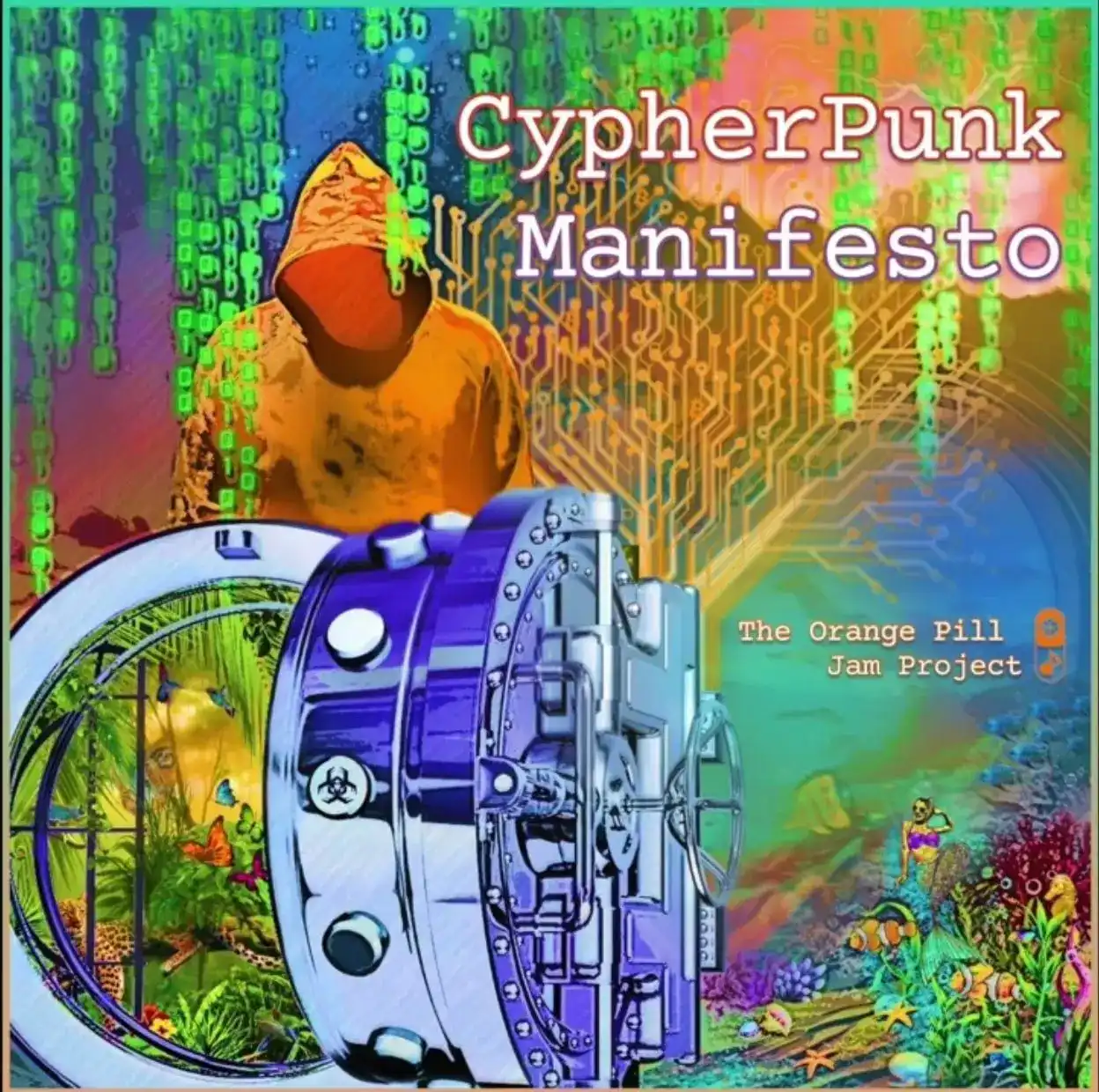
If you want to understand what this band is actually doing, their song 'Cypherpunks' Manifesto' is a great entry point—despite the esoteric-sounding title, it's not a difficult listen. It's uptempo, danceable, heavily influenced by Rosalía, and opens with singing in Spanish.

The first line means: If you want to send me a secret message.

Mermaid explains this isn't just a song about cryptographic protocols. It's a song about a feeling—the feeling of wanting a door you can close. She gives a specific example: your child is just born in the hospital, you want to send a photo to a few friends, but you don't want that photo ending up somewhere you can't control or locate. That should be your choice. Currently, depending on the app you use, maybe it's not.

The song moves from there, through a set of images, almost violently precise within a danceable pop track. There's a line about airplane mode—switching your phone to airplane mode doesn't actually make you invisible, if someone is really looking for you, they'll find a way to establish contact. There's a line about free products: when something is free, you're the product. She says this stems from watching how Google operates—massive free infrastructure, massive data collection, and the feedback loop of your actions funding ads. 'They steal your time, data, and money,' she says, 'and then get the money back with ads, and you don't even realize you're paying.'

Then the song lands on its sharpest line, borrowed from Frédéric Bastiat via Stacy Herbert's podcast: When plunder becomes a way of life for a group of men, they create for themselves a legal system that authorizes plunder and a moral code that glorifies it.

Mermaid doesn't present this like an economist. She says it with the attitude of someone who's thought about it long enough to still get angry. 'The mafia becomes politicians,' she says. 'No one sees because it always happens slowly, always behind the scenes.' This is not detachment. She has no interest in the view from nowhere.

The song ends approaching personal sovereignty—virtual and physical, living with integrity—which is less an ending than a direction. It's an attempt to maintain some coherence on both sides of the screen. She wrote it before going to El Salvador. She didn't change a word after returning.
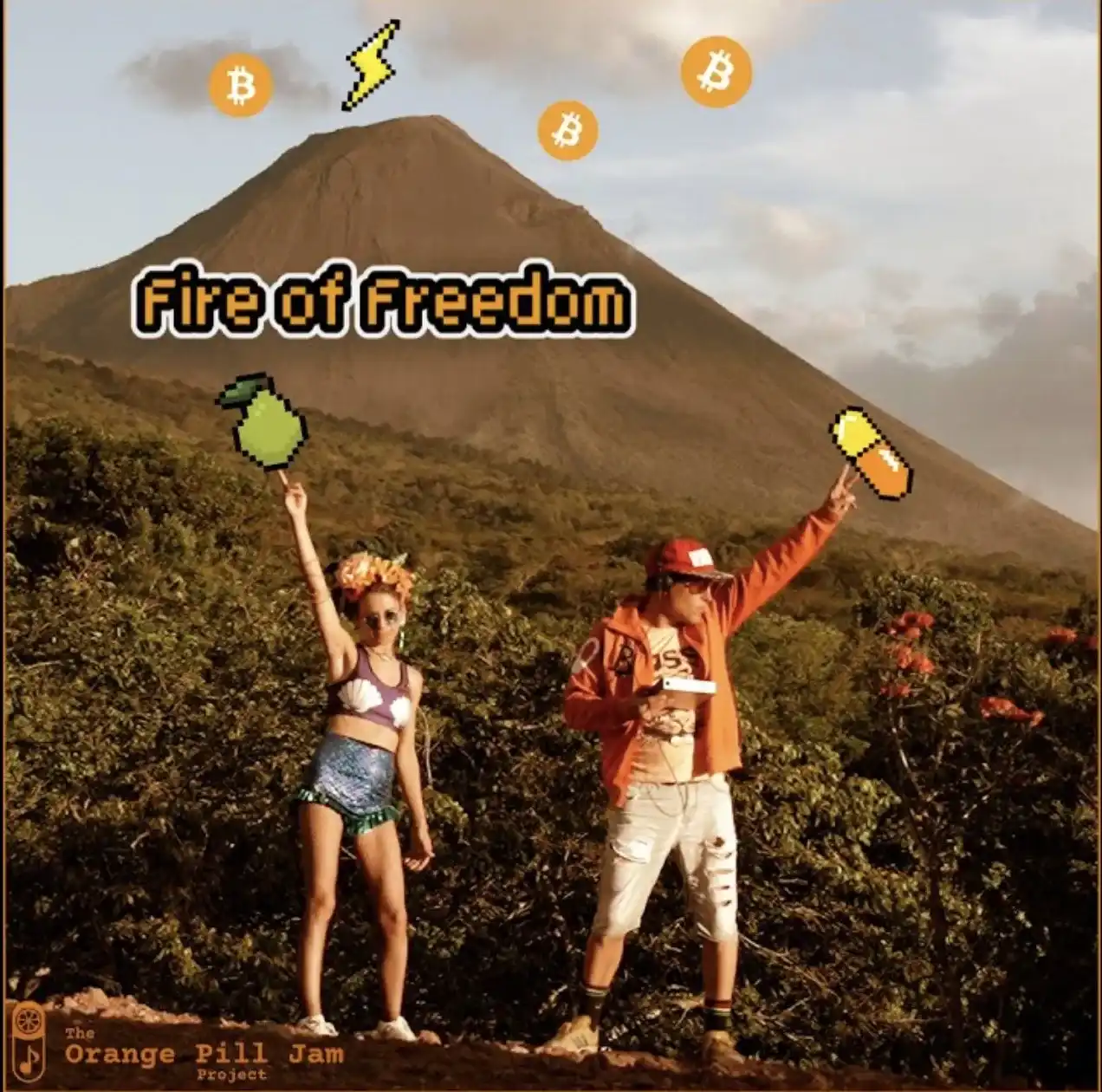
That song is about closing a door. 'Fuego Libre' (Free Fire) is about what happens after you walk through the fire.

The song was written for a conference held in El Salvador—the country that had just made Bitcoin legal tender. Mermaid read the accompanying manifesto repeatedly before writing. The line she's most proud of is: We are adopting Bitcoin, and Bitcoin is adopting us. She describes it as a feeling of being embraced—in a world accelerating toward something no one can name, this thing she found won't let go of her either.

She wrote it before going to El Salvador. She didn't change a word after returning. In the music industry, this is not common.

When the performance came, it felt more like confirmation than a debut. The song had already said everything. The country had just proven it true.

III. When AI Starts Generating Music, What Do They See?

Michi isn't particularly surprised that AI is reshaping, even squeezing, employment spaces. He notices the shift the way a skilled painter might notice new tools arriving: small music jobs are quietly disappearing. Video scores, small tasks—now, with a prompt and ten seconds, they're done.

He has a story about this story, involving 19th-century painters and the invention of photography, which you've almost certainly heard in some form. In short: photography didn't kill painting. It forced painting to become what photography couldn't, which is why we have Impressionism, Surrealism, and much art that simply wouldn't exist if painters had kept trying to copy reality as accurately as possible.

Michi believes the musical version of this story is still being written. AI can generate any existing genre of music in the time it takes to make a cup of coffee, at a quality level sufficient for most needs. It cannot create a genre that doesn't yet exist, nor find the rhythm that lives in the space between intention and instinct.

They'll use AI for other things—business planning, feedback, administrative infrastructure. But not for the music itself.

'Machines should wash dishes,' Mermaid says. 'Fold laundry. Clean the house. I want to sing and dance while the machines clean. Not the other way around.'

The machines have not yet commented.

IV. Making Music in a Bear Market: A Survival Experiment Against Algorithms

The practical challenges of this music project are not philosophical. They're utterly ordinary.

Income is one challenge. They are a Copyleft project—music can be shared, remixed, repurposed by anyone, without permission, while also accepting Bitcoin, dollars, any form of currency as sponsorship. Their Geyser Fund page offers stems for free download, usable by anyone who wants to remix or rework them.

'Any amount, from the heart,' their description reads. In a bear market environment, such openness requires considerable composure and resolve.

Being heard is harder than it sounds. Fourteen thousand songs are uploaded to Spotify daily, most of which are now generated or assisted by tools that didn't exist three years ago. A band singing about monetary sovereignty isn't an algorithm's obvious darling.

Venues don't help. Bitcoin conferences happen in meeting rooms: white walls, overhead fluorescents, attendees wearing lanyards, watching slides all day. 'You want to send energy out,' Mermaid says, 'but the whole room is absorbing it.' Music needs a room that already knows how to move. They don't always find that.

Before this interview, the host, Carine, was setting up equipment and playing one of their songs. She forgot to turn it off. When Mermaid and Michi joined the online call, she looked up and said: Your music changed the whole atmosphere of the room. Warm. Free. Alive.

This is a metric that won't appear on any streaming dashboard.

Ultimately, this is the only argument that matters—and the one that connects all the others. In a bear market, the case for Bitcoin depends on those who believed in it before the price. In the age of AI, the case for human creativity rests on those making things that can't be generated by description. Orange Pill Jam sits at the intersection of these two arguments, an uncomfortable and necessary position.

What they're building doesn't scale. It can't be templated, optimized, or copied by others with similar inputs. It's a product of the unique way Mermaid chases ideas and the unique way Michi grounds ideas in the body—a collaboration that took seven years to find form and is still finding it, one imperfect attempt at a time. In a world where the marginal cost of content nears zero, this irreducible specificity is the only thing that can't be devalued to zero.

The algorithms are getting faster. The Orange Pill Jam Project is on its seventeenth take.

Criptos en tendencia

Preguntas relacionadas

QWhat is the Orange Pill Jam band's unique approach to creating music within the Bitcoin ecosystem?

AThe Orange Pill Jam band creates music that explores themes like financial sovereignty and privacy, but aims to produce works that non-Bitcoin users can enjoy without needing to understand Bitcoin, and that Bitcoin enthusiasts can appreciate without feeling pandered to. They blend genres like gypsy reggae, Afro-Latin, and hip-hop, and accept Bitcoin payments.

QAccording to the article, how did the Orange Pill Jam band form, and what was a key moment in its inception?

AThe band formed after Mermaid performed her song 'Dollar Apocalypse' impromptu at the 2022 Plan B Forum in Lugano, as a tribute to Bitcoin content creators like Max Keiser. Keiser's subsequent discussion about the importance of Bitcoin art, particularly the absence of Bitcoin music, inspired her to collaborate with producer Michi to develop her ideas into fully produced songs.

QWhat is the core creative dynamic between Mermaid and Michi in the songwriting process?

AMermaid is the lead vocalist and primary lyricist who creates the lyrical and melodic outline of a song. Michi, the producer and multi-instrumentalist, then shapes the music, focusing on rhythm and how it physically affects the listener. He often pushes for extreme precision in recordings, creating a creative tension where Mermaid's meaning meets Michi's feel.

QHow does the Orange Pill Jam band view the role of AI in music creation, and how do they intend to use it?

AMichi sees AI as a tool that can handle small, formulaic music tasks but cannot create new genres or capture the nuanced, instinctual space between intention and rhythm that defines human creativity. The band plans to use AI for administrative tasks like business planning, but not for the music creation itself, believing human artistry is irreplaceable.

QWhat are the main practical challenges the Orange Pill Jam band faces in the current music and crypto landscape?

AThe band faces challenges in generating income due to their copyleft model and the crypto bear market, gaining visibility in an algorithm-driven platform like Spotify saturated with AI-assisted music, and finding suitable performance venues that match their energetic style, as many Bitcoin events are held in sterile conference rooms not conducive to live music.

Lecturas Relacionadas

Los Oso Mantienen el Control Mientras que el ETH Rechaza la Resistencia de la Línea de Tendencia

El último rebote de Ethereum no ha convencido a todos los analistas de que la tendencia bajista haya terminado. En una idea publicada en TradingView el 20 de junio, TheSignalyst argumenta que ETH se mantiene en territorio bajista. Esto se debe a que continúa cotizando por debajo de una línea de tendencia roja descendente y ha formado una secuencia de máximos y mínimos más bajos. El gráfico del analista muestra que el precio de ETH fue rechazado en una zona de confluencia que incluye dicha línea de tendencia y una zona de resistencia horizontal. Este tipo de resistencia combinada suele atraer a vendedores de forma más agresiva. El fracaso en superar ambos niveles se interpreta como una confirmación de que los vendedores mantienen el control. El área de soporte clave se sitúa entre 1.350 y 1.500 dólares. Una ruptura decisiva por debajo de este rango debilitaría significativamente la estructura general de ETH. Por ahora, el precio está comprimido entre este soporte y la línea de tendencia bajista. El desempeño de Ethereum es crucial para el mercado altcoin en general. Cuando ETH lucha frente al dólar, el apetito por el riesgo en DeFi y activos de menor capitalización suele debilitarse también. Por lo tanto, este análisis sirve como advertencia: los alcistas necesitan una ruptura clara por encima de la resistencia antes de poder hablar de un cambio de tendencia sostenido.

bitcoinistHace 9 hora(s)

Los Oso Mantienen el Control Mientras que el ETH Rechaza la Resistencia de la Línea de Tendencia

bitcoinistHace 9 hora(s)

TechFlow Oficina de Inteligencia: Las probabilidades de que Anthropic realice una OPI superan el 80%, Irán vuelve a cerrar el estrecho de Ormuz y desestabiliza los precios del petróleo

Resumen del informe TechFlow: Los mercados anticipan que Anthropic anunciará su OPV antes de noviembre de 2026, planteando dudas sobre si una valoración billonaria puede coexistir con su promesa central de seguridad en IA. Otras tendencias clave: * **Marketing digital:** Marcas adoptan influencers virtuales generados por IA para promocionar productos. * **Energía y Geopolítica:** Irán anuncia el cierre del estrecho de Ormuz, causando volatilidad en el precio del petróleo, aunque datos de seguimiento muestran cierto tráfico marítimo persistente. Paralelamente, Irán reanuda la carga de crudo en la isla de Kharg. * **Finanzas/Tecnología:** Goldman Sachs advierte que los gastos de capital en IA (5,3 billones de dólares) podrían acercarse al límite de crédito. En Europa, se produce la primera incumplimiento en acciones de CLO desde la crisis financiera. * **Empresas tecnológicas:** Cloudflare introduce cuentas temporales para agentes de IA; el tráfico IPv6 de Google supera el 50%; Hyundai adquiere el control total de Boston Dynamics. * **Mercados:** Inversores minoristas invierten fuertemente en la OPV de SpaceX. Elon Musk especula sobre futuras inversiones astronómicas en antimateria para viajes interestelares. **Conclusión subyacente:** Tres señales (tensión en Ormuz, incumplimiento en CLO y advertencias sobre gasto en IA) apuntan a una creciente restricción de la liquidez global y al aumento de los costes marginales. Mientras tanto, el capital sigue buscando narrativas de crecimiento a gran escala (como la OPV de Anthropic, SpaceX y los proyectos de Musk), indicando una bifurcación entre un "viejo mundo" con creciente presión financiera y un "nuevo mundo" que construye narrativas aún más ambiciosas.

marsbitHace 10 hora(s)

TechFlow Oficina de Inteligencia: Las probabilidades de que Anthropic realice una OPI superan el 80%, Irán vuelve a cerrar el estrecho de Ormuz y desestabiliza los precios del petróleo

marsbitHace 10 hora(s)

El cazador cazado: el bot MEV más rentable fue hackeado

**El cazador cazado: El bot de MEV más rentable es hackeado** El conocido bot de MEV en Ethereum, Jaredfromsubway.eth, sufrió un ataque dirigido el sábado, perdiendo más de 7,5 millones de dólares. Según investigaciones, no fue un phishing tradicional ni una explotación de contrato inteligente, sino un sofisticado "ataque de honeypot contra-MEV" diseñado específicamente para explotar la lógica de comportamiento de estos bots. El atacante desplegó durante semanas 66 contratos de tokens falsos y pools de liquidez, disfrazados como activos principales como WETH, USDC o USDT, para crear rutas de arbitraje falsas. El bot, al detectar la aparente oportunidad, ejecutó una transacción que concedió permisos a un contrato controlado por el atacante. Estos permisos no fueron revocados, permitiendo finalmente que el atacante drenara los fondos del bot en una sola transacción. Jaredfromsubway.eth es uno de los bots de MEV más activos e infames de Ethereum, especializado en ataques de "sándwich" para capturar ganancias de los deslizamientos de precio en las transacciones de usuarios. Se estima que ha acumulado decenas de millones en ganancias y estaba relacionado con alrededor del 70% de estos ataques en un período reciente. Este incidente subraya la creciente sofisticación de las amenazas en cripto, demostrando que incluso los actores más agresivos y automatizados ("depredadores") ahora son vulnerables a ataques multidimensionales que explotan sus propias reglas y automatizaciones. Tras el hackeo, una cuenta no oficial en X se hizo pasar por el bot ofreciendo una recompensa falsa, lo que ha generado advertencias de seguridad adicionales.

marsbitHace 11 hora(s)

El cazador cazado: el bot MEV más rentable fue hackeado

marsbitHace 11 hora(s)

Trading

Spot
Futuros

Artículos destacados

Cómo comprar BAND

¡Bienvenido a HTX.com! Hemos hecho que comprar Band Protocol (BAND) sea simple y conveniente. Sigue nuestra guía paso a paso para iniciar tu viaje de criptos.Paso 1: crea tu cuenta HTXUtiliza tu correo electrónico o número de teléfono para registrarte y obtener una cuenta gratuita en HTX. Experimenta un proceso de registro sin complicaciones y desbloquea todas las funciones.Obtener mi cuentaPaso 2: ve a Comprar cripto y elige tu método de pagoTarjeta de crédito/débito: usa tu Visa o Mastercard para comprar Band Protocol (BAND) al instante.Saldo: utiliza fondos del saldo de tu cuenta HTX para tradear sin problemas.Terceros: hemos agregado métodos de pago populares como Google Pay y Apple Pay para mejorar la comodidad.P2P: tradear directamente con otros usuarios en HTX.Over-the-Counter (OTC): ofrecemos servicios personalizados y tipos de cambio competitivos para los traders.Paso 3: guarda tu Band Protocol (BAND)Después de comprar tu Band Protocol (BAND), guárdalo en tu cuenta HTX. Alternativamente, puedes enviarlo a otro lugar mediante transferencia blockchain o utilizarlo para tradear otras criptomonedas.Paso 4: tradear Band Protocol (BAND)Tradear fácilmente con Band Protocol (BAND) en HTX's mercado spot. Simplemente accede a tu cuenta, selecciona tu par de trading, ejecuta tus trades y monitorea en tiempo real. Ofrecemos una experiencia fácil de usar tanto para principiantes como para traders experimentados.

132 Vistas totalesPublicado en 2024.12.12Actualizado en 2026.06.02

Cómo comprar BAND

Discusiones

Bienvenido a la comunidad de HTX. Aquí puedes mantenerte informado sobre los últimos desarrollos de la plataforma y acceder a análisis profesionales del mercado. A continuación se presentan las opiniones de los usuarios sobre el precio de BAND (BAND).

活动图片