A Clod of Chinese Soil Chokes Two Japanese Giants

marsbitPublicado a 2026-06-16Actualizado a 2026-06-16

Resumen

"Chinese Soil Chokes Japanese Giants" The production of a key electronic specialty gas, tungsten hexafluoride (WF6), vital for manufacturing AI chips, was halted by two leading Japanese producers—Kanto Denka and Central Glass. Their shutdown was not due to a technological failure but a sudden, critical shortage of a raw material they had long taken for granted: ultra-high-purity (6N-grade) tungsten powder, which is almost entirely sourced from China. Following a quiet Chinese export announcement in January 2026, tungsten powder shipments to Japan dropped to zero for months. Despite frantic efforts, Japanese companies found no viable alternative; imported powder was three times more expensive and lacked the required purity. Their existing stockpiles were exhausted by mid-2026. WF6 is essential for depositing tungsten into the microscopic contact holes of High Bandwidth Memory (HBM) chips, which are crucial for advanced processors like those from Nvidia. While Japanese firms had mastered producing ultra-pure WF6 gas, their entire supply chain relied on China's 6N tungsten powder—a dependency now revealed as a fatal vulnerability. China's dominance in this "soil" results from decades of painstaking R&D by companies like Xiamen Tungsten and China Tungsten & Hightech. They overcame immense technical hurdles, such as separating chemically similar molybdenum from tungsten, to achieve mass production of the world's purest tungsten powder. With their primary suppliers gone, Kanto...

Two Japanese companies made a specialty electronic gas a world leader, with even TSMC and Samsung having to heed them.

Then overnight, they announced a permanent production halt. It wasn't a technology failure; it was a raw material cutoff. And that material, they had been buying entirely from China.

Cut Off

On January 6, 2026, the Ministry of Commerce issued Announcement No. 1 of the year. There was no press conference, no explanatory article, just quietly posted on the official website.

The Japanese didn't notice, Kanto Denka Kogyo didn't notice, Central Glass didn't notice.

They still had inventory. High-purity tungsten powder was piled in warehouses, enough for several months. The procurement department placed orders as usual, emails went out, ton-level shipments arrived—cheap, stable.

No one saw this as a risk.

February, customs data came out: Exports of tungsten carbide powder and tungsten powder to Japan—zero.

March, zero. April, still zero.

According to Kyodo News citing General Administration of Customs data, China's tungsten powder exports to Japan remained at zero for three consecutive months from February to April 2026.

Kanto Denka's inventory fell below the red line. Central Glass scrambled to find alternative suppliers. Mitsubishi Materials poured 10 billion yen into boosting tungsten scrap recycling.

Buying from other countries, the price was 3 times higher. As for purity, it fell far short of the 6N grade.

The two Japanese firms together accounted for nearly one-fourth of the global high-end tungsten hexafluoride production capacity. Kanto Denka Kogyo's president, Junichi Hasegawa, and Central Glass's president, Kazuhiko Maeda, now faced a brutal reality:

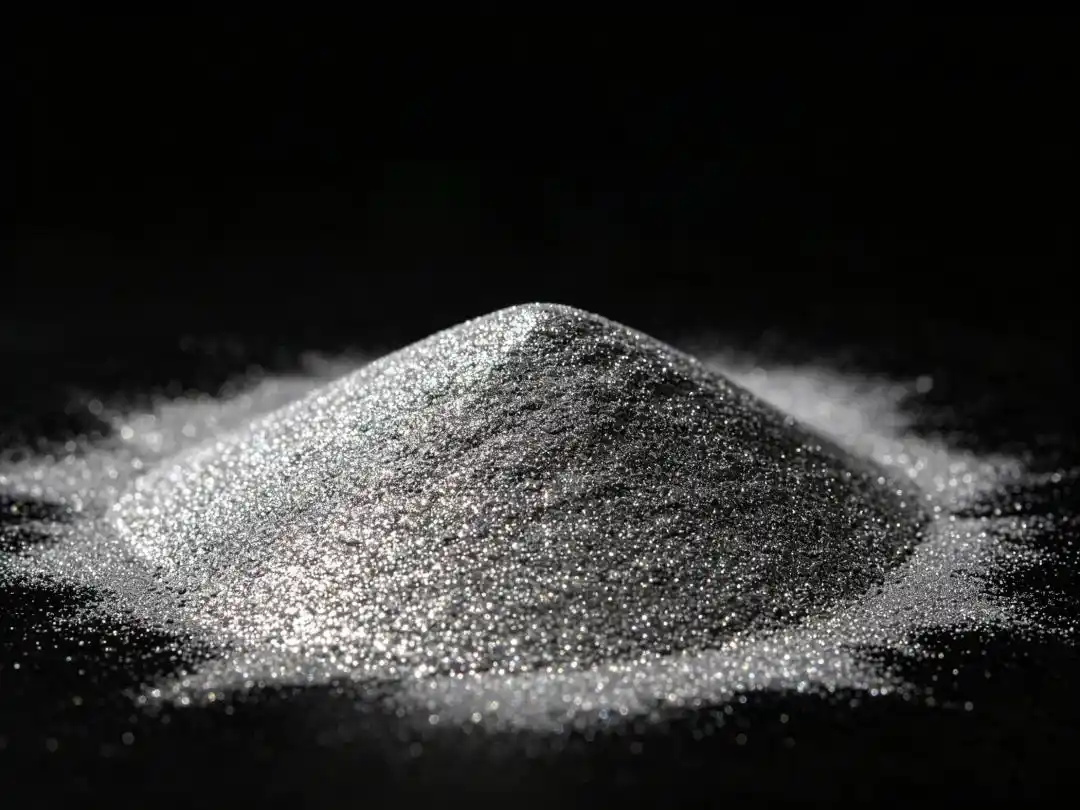
The raw material for making high-end tungsten hexafluoride—6N grade high-purity tungsten powder—was no longer available. And this powder, it's almost entirely in China.
Critical Point

First, what is tungsten hexafluoride?

The soul of AI chips is HBM (High Bandwidth Memory), where over a dozen layers of memory chips are stacked. These chips are densely packed with nanoscale contact holes, thousands of times thinner than a human hair.

Although other metals can be used for these contact holes, tungsten remains the absolute primary material for now. And the key specialty gas that deposits tungsten into these micro-holes is tungsten hexafluoride.

Without tungsten hexafluoride, there is no HBM. Without HBM, Nvidia's GPUs are just scrap metal.

In making this specialty gas, the Japanese were once the best in the world. Kanto Denka could achieve a purity of six nines (6N)—meaning only one impurity molecule per one million molecules.

But a six-nine gas needs six-nine powder.

For over a decade, Chinese tungsten powder was bought by the ton—cheap, stable. To the Japanese, the distillation column was the moat. What was powder? In a sense, just dirt.

But at the critical moment, what choked the Japanese was precisely this dirt.

The Japanese did struggle.

They tried using low-purity coarse powder, relying on distillation columns for forced purification. But the most deadly impurity in coarse powder is molybdenum—molybdenum and tungsten are in the same group on the periodic table, their chemical properties like twins.

Once in the reactor, reacting with fluorine gas, they both turn gaseous. Their boiling points are too close to separate.

You have money, policy, a sense of crisis, but you are powerless against the limits of chemical engineering.

Hard Grind

Leveling this wall was no overnight success for the Chinese either.

Purifying tungsten powder requires removing impurities, and one of the hardest to remove is molybdenum.

Molybdenum and tungsten have similar chemical properties; dissolved in water, they behave the same way. Separating molybdenum from tungsten is no less difficult than separating salt from MSG in a pot of soup.

The solution is to add a sulfidizing agent to the solution. Molybdenum, being more sulfur-loving than tungsten, rushes in first—grabbing the sulfur while tungsten remains unmoved. In that instant, the molybdenum is pulled away.

Sounds simple.

How narrow is that instant? If the pH is off by a bit, molybdenum lets go, mixing back with tungsten. The parameter window is as narrow as walking a tightrope.

To break through, there were no shortcuts, only the most arduous method:

Adjust pH, change adsorbents, modify extraction solutions, grinding through experiments group by group, even redesigning the adsorbents themselves.

Generations, grinding for decades, finally reducing molybdenum in the solution to an acceptable level.

Huang Changgeng, chairman of Xiamen Tungsten, joined the company in 1987 and never left until his recent retirement.

During that time, from the workshop to management, 39 years focused on just this one thing, leading the team from coarse powder to 6N, pushing Chinese tungsten powder to the global ceiling.
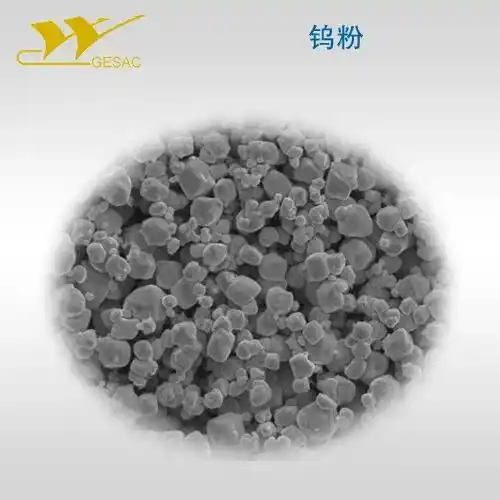
Image source: Xiamen Tungsten

Besides Xiamen Tungsten, there's also China Tungsten and Hightech.

These two are also, so far, among the very few companies globally capable of mass-producing 6N grade high-purity tungsten powder.

China had the high-purity tungsten powder. The Japanese bought the powder, produced tungsten hexafluoride, sold it to Samsung and TSMC, doubling the price.

This business seemed like easy money.

Then, the Japanese themselves smashed the door shut.

Turning the Tables

According to multiple media reports, Kanto Denka Kogyo and Central Glass have officially notified major customers like Samsung and SK Hynix:

June 30th, the last shipment. From July 1st, permanent production halt.

Since January 2026, imports of high-purity tungsten powder from China have essentially been zero. The two Japanese companies' inventories held out for five months, finally running dry.

Not only was the raw material cut off, but more crucially, the uncertainty. Even if they scraped together tungsten powder to restart the line, what about the next cutoff?

During shutdowns, residual tungsten hexafluoride in the pipelines hydrolyzes upon contact with water, producing hydrofluoric acid that corrodes valves and welds. Restarting and repairing is costly.

Repeated shutdowns and restarts are suicide.

When the news reached Seoul, Samsung and SK Hynix panicked. These two South Korean semiconductor giants had previously sourced most of their tungsten hexafluoride from Japan. Samsung's inventory wouldn't last past June.

No tungsten hexafluoride means no HBM, and Nvidia's orders go down the drain.

The certification cycle, the headache for Chinese companies, suddenly wasn't a problem anymore. Chinese tungsten hexafluoride suppliers became the darlings of leading wafer fabs.

The door is open, the players have changed.

Thirty years ago, China mined, others counted the money. Low-purity coarse powder was sold by the ton. Others purified it, made it into gas, into targets, and flipped it for dozens of times the value.

Thirty years later, the Chinese ground their way from 3N to 6N purity. The lowliest dirt overturned the highest throne.

On July 1st, the tungsten hexafluoride production line at Kanto Denka's Shibukawa factory will shut down.

Meanwhile, in Chinese high-purity tungsten powder production lines and tungsten hexafluoride factories, domestic materials are flowing out nonstop, loaded onto trucks heading for ports.

Only this time, Japanese manufacturers are absent from the destination list.

This article is from the WeChat public account "Huashang Strategic" (ID: hstl8888), author: Huashang Strategic


Preguntas relacionadas

QWhat are the names of the two major Japanese companies mentioned in the article that were forced to permanently halt production?

AThe two major Japanese companies are Kanto Denka Kogyo Co., Ltd. (関東電化工業株式会社) and Central Glass Co., Ltd. (セントラル硝子株式会社).

QWhat is the critical raw material that Japan lost access to from China, leading to the production halt?

AThe critical raw material is high-purity 6N grade tungsten powder. This specific grade of powder is essential for manufacturing high-purity tungsten hexafluoride.

QWhy is tungsten hexafluoride (WF6) so crucial in the semiconductor industry according to the article?

ATungsten hexafluoride is crucial as it is the key electronic specialty gas used for depositing tungsten into the nano-sized contact holes within HBM (High Bandwidth Memory) chips. Without it, HBM production for advanced AI chips, such as those used by Nvidia, would not be possible.

QWhat was the primary technical challenge China faced and overcame in producing high-purity tungsten powder?

AThe primary technical challenge was separating molybdenum (Mo) from tungsten (W) due to their very similar chemical properties. China's breakthrough involved a complex purification process using sulfiding agents and precise control of parameters to exploit the slight difference in their affinity for sulfur, which required decades of persistent research and development.

QWhat were the consequences for South Korean semiconductor giants Samsung and SK Hynix due to the Japanese production halt?

ASamsung and SK Hynix faced a critical supply shortage of tungsten hexafluoride, with Samsung's inventory reportedly running out by June. This shortage directly threatened their HBM production capacity and, consequently, their ability to fulfill orders for companies like Nvidia.

Lecturas Relacionadas

El debut de Warsh: ¿El presidente de la FED más conocedor del Crypto de la historia traerá sorpresas o sustos al mercado?

**Debut de Warsh: ¿Sorpresa o Susto? Un Presidente de la Fed Experto en Crypto se Estrena** Kevin Warsh, el nuevo presidente de la Reserva Federal, se enfrenta a su primera conferencia de prensa en medio de un contexto macroeconómico complejo: inflación creciente, ventas de bonos del Tesoro y presión de la Casa Blanca para bajar tasas. Su estreno es especialmente relevante para el mercado de criptoactivos, ya que Warsh es el primer presidente de la Fed en declarar inversiones indirectas sustanciales en el sector, abarcando desde L1 hasta DeFi. Su política monetaria se define por dos líneas: un tono **halcón frente a la inflación** que podría inclinarse hacia una política de tasas más restrictiva, y una **comprensión única de los activos digitales**, a los que considera un "buen policía" para la política económica, a diferencia del enfoque más defensivo de su predecesor. Para los criptomercados, su llegada implica una posible **reformulación regulatoria** (de la prevención a la integración), una **revalorización del riesgo** ligada a la trayectoria de las tasas de interés, y una **señal de legitimación** que podría atraer mayor inversión institucional a largo plazo. El resultado de su primera comparecencia puede seguir dos escenarios: una **"sorpresa"** si combina señales amistosas para crypto con un tono moderado sobre tasas, impulsando los activos de riesgo; o una **"alarma"** si enfatiza excesivamente la lucha contra la inflación y el endurecimiento monetario, lo que generaría una venta generalizada de activos riesgosos, incluyendo cripto. Aunque por ética ha vendido sus participaciones directas, la perspectiva de un regulador que comprende profundamente la tecnología subyacente podría sentar, a largo plazo, las bases para una integración más estructurada de los criptoactivos en el sistema financiero.

marsbitHace 4 hora(s)

El debut de Warsh: ¿El presidente de la FED más conocedor del Crypto de la historia traerá sorpresas o sustos al mercado?

marsbitHace 4 hora(s)

La cadena XRP Ledger lanza la nueva denominación XRPLd con la actualización de la versión 3.2.0

La versión 3.2.0 de XRP Ledger ya está disponible, introduciendo una importante mejora de infraestructura y un cambio de marca del software central, que pasa de llamarse "rippled" a "xrpld". Esta actualización se centra en optimizaciones de back-end y eficiencia, incluyendo medidas de optimización de memoria que pueden reducir hasta un 40% el uso de memoria del servidor, preparando la arquitectura para una futura escalabilidad. Las principales novedades incluyen la modificación `fixCleanup3_2_0`, que refuerza la seguridad de módulos como bóvedas de activos únicos, protocolos de préstamo y exchanges descentralizados. Se han añadido nuevas comprobaciones de invariantes para garantizar la consistencia del libro mayor. Además, las aplicaciones ahora pueden recuperar información sobre el protocolo y definiciones del servidor sin necesidad de conexión directa, facilitando el desarrollo de carteras y exploradores. En cuanto a escalabilidad y estabilidad, la actualización introduce tamaños de bloque configurables, soporte opcional de TLS/mTLS para servidores gRPC y un cambio en el puerto predeterminado para conexiones entre pares. También incluye varias correcciones para creadores de mercado automáticos, pagos y tokens de múltiples propósitos. Las invariantes de transacción se desactivaron temporalmente por rendimiento, sin comprometer la seguridad.

TheNewsCryptoHace 4 hora(s)

La cadena XRP Ledger lanza la nueva denominación XRPLd con la actualización de la versión 3.2.0

TheNewsCryptoHace 4 hora(s)

AGI no es el destino final: nuevo estudio de DeepMind afirma que el verdadero progreso de la IA apenas comienza al avanzar hacia una ASI

El documento de DeepMind plantea que la Inteligencia Artificial General (AGI) no será el punto final del desarrollo de la IA, sino un paso hacia una Inteligencia Artificial Superintendente (ASI) que supere colectivamente a los mejores equipos de expertos humanos. El informe explora cuatro posibles caminos hacia la ASI: 1) escalar recursos (cómputo, modelos, datos), 2) avances algorítmicos o nuevos paradigmas, 3) mejora recursiva automática de los sistemas, y 4) la coordinación de múltiples agentes de AGI para crear una inteligencia colectiva. También identifica cuellos de botella clave, como el límite de los datos de alta calidad generados por humanos, las presiones sobre recursos económicos y naturales, las posibles limitaciones de los paradigmas actuales de redes neuronales, la creciente dificultad de la investigación, las "barreras de abstracción" para descubrir nuevos conceptos fundamentales, y los factores de gobernanza y aceptación social. El documento destaca la necesidad urgente de desarrollar nuevos marcos de evaluación, ya que las métricas basadas en el rendimiento humano quedarán obsoletas una vez alcanzada la AGI. Finalmente, concluye que el progreso hacia la ASI es incierto y estará sujeto a restricciones físicas y prácticas, requiriendo un esfuerzo de investigación multidisciplinar global para monitorear y guiar su desarrollo.

marsbitHace 5 hora(s)

AGI no es el destino final: nuevo estudio de DeepMind afirma que el verdadero progreso de la IA apenas comienza al avanzar hacia una ASI

marsbitHace 5 hora(s)

Trading

Spot
Futuros

Artículos destacados

Cómo comprar GAS

¡Bienvenido a HTX.com! Hemos hecho que comprar GAS (GAS) sea simple y conveniente. Sigue nuestra guía paso a paso para iniciar tu viaje de criptos.Paso 1: crea tu cuenta HTXUtiliza tu correo electrónico o número de teléfono para registrarte y obtener una cuenta gratuita en HTX. Experimenta un proceso de registro sin complicaciones y desbloquea todas las funciones.Obtener mi cuentaPaso 2: ve a Comprar cripto y elige tu método de pagoTarjeta de crédito/débito: usa tu Visa o Mastercard para comprar GAS (GAS) al instante.Saldo: utiliza fondos del saldo de tu cuenta HTX para tradear sin problemas.Terceros: hemos agregado métodos de pago populares como Google Pay y Apple Pay para mejorar la comodidad.P2P: tradear directamente con otros usuarios en HTX.Over-the-Counter (OTC): ofrecemos servicios personalizados y tipos de cambio competitivos para los traders.Paso 3: guarda tu GAS (GAS)Después de comprar tu GAS (GAS), guárdalo en tu cuenta HTX. Alternativamente, puedes enviarlo a otro lugar mediante transferencia blockchain o utilizarlo para tradear otras criptomonedas.Paso 4: tradear GAS (GAS)Tradear fácilmente con GAS (GAS) en HTX's mercado spot. Simplemente accede a tu cuenta, selecciona tu par de trading, ejecuta tus trades y monitorea en tiempo real. Ofrecemos una experiencia fácil de usar tanto para principiantes como para traders experimentados.

302 Vistas totalesPublicado en 2024.12.12Actualizado en 2026.06.02

Cómo comprar GAS

Discusiones

Bienvenido a la comunidad de HTX. Aquí puedes mantenerte informado sobre los últimos desarrollos de la plataforma y acceder a análisis profesionales del mercado. A continuación se presentan las opiniones de los usuarios sobre el precio de GAS (GAS).

活动图片