In a Bull Market, Trade New Coins. Will the 'Hook' Concept Become the Sector That Opens the Bull Market?

marsbitPublicado a 2026-05-09Actualizado a 2026-05-09

Resumen

In a recent surge of interest, the "Hook" concept on Uniswap v4 has captured significant attention from the retail crypto community, driven by projects like $upeg, $sato, and Slonks. Despite being introduced over a year ago, Hooks—customizable plugins for the Uniswap protocol—gained mainstream traction only recently. The article argues that earlier Uniswap efforts to promote Hooks focused too heavily on technical improvements and liquidity provider (LP) solutions, which failed to capture the imagination of everyday users. The breakthrough came with projects that introduced novel, engaging gameplay. $upeg combines trading with generative art, where each integer purchase creates a unique image, adding a layer of artistic creation and complexity to tokenomics. $sato leverages a bonding curve on Ethereum, appealing to the network's "diamond hands" culture with a decentralized, zero-intervention model that turns into a "belief game." Slonks uses an AI model to redraw CryptoPunks, creating a gamified ecosystem where users can burn or merge NFTs to earn $SLOP tokens based on how much the AI "deviated" from the original. These examples highlight Hooks' potential to transform Uniswap from a simple swap and LP platform into a vibrant ecosystem of innovative applications. While technically possible to build such projects independently, the synergy with Uniswap’s established user base and infrastructure provides mutual benefits. For "Hook" to become a true catalyst for a bull market, t...

Author: Cookie

Since late April, the Uniswap v4 hook concept has undoubtedly been the most market-watched 'new' concept.

The reason 'new' is put in quotes is not because Uniswap v4 hook is a brand new thing. In fact, Uniswap v4 launched as early as January 30th last year.

The new hook feature is not being ignored or unused. In terms of official support, there are both the Uniswap Hook Incubator and Uniswap Hook Designer Lab, providing funding, training, and incubation. In terms of adoption, there are projects like Flaunch and Bunni, and the overall TVL and trading volume data for the v4 ecosystem is not bad.

But it wasn't until the recent emergence of projects like $upeg, $sato, and Slonks that hooks sparked widespread discussion among the retail investor community. Based on this phenomenon, I will start with a 'bold statement'—

For a long time, Uniswap's promotion of hooks, at least regarding attracting retail investor attention, has been off-target.

And if this deviation is corrected, 'Hook' has the potential to become the sector that opens the bull market.

What Exactly Is 'Hook'?

Let's explain this in an easy-to-understand way, which will also answer another question—why did 'Hook' only attract retail attention now?

In the past, our general understanding of Uniswap was that we could provide LP (liquidity) and trade (Swap) on it. And indeed, before version v4 (before hooks were introduced), these were Uniswap's main profit points.

Many games support player communities in creating 'mods' or 'plugins' to change the game's mode, attracting a broader player base beyond the original modes offered by the developers. For example, in CS, without installing mods, players can only play the game mode of planting/defusing the C4. But with mods installed, players can compete in races, jumping contests, play football, basketball, or even camouflage themselves as part of the map waiting for others to discover them.

Hooks are like game mods. They allow Uniswap to move beyond just the game between LPs and traders. But for a long time, these plugins haven't been attractive to retail players. They either ported existing玩法from other chains or addressed pain points for LPs and traders.

It's like installing only quality-of-life plugins in CS, such as kill statistics. That does make it better, but it lacks the imagination to attract retail players.

What retail players want are new, original, and imaginative玩法that Uniswap doesn't offer officially but can be realized through hooks. The hook concept itself has been too abstract for retail players in the past.

So how is this 'imagination' embodied in the three trending projects, $upeg, $sato, and Slonks?

The Core of 'Imagination'

The core imagination of $upeg is 'Trading as Artistic Creation and Creating Supply Confusion'. First, its image creation concept is complete. It uses on-chain data as creative input rather than simply copying the artistic inspiration of existing NFT series, turning every integer purchase into a new creation. Second, more small, fragmented transactions make it harder to generate images. This makes it not just a simple transformation between image and token forms, nor solely 'to give images better liquidity by existing as tokens'. Instead, it shifts everyone's focus to a 'prediction of supply form'.

If $upeg exists on DEXs, CEXs, and NFT marketplaces, being both a token and an image, what impact will different liquidity sources and trading methods (spot, futures, LP, or buying pictures) have on its supply form?

This is a shift in attention perspective that previous image-token projects over the years never achieved.

Now look at $sato. Its core imagination is not 'using Uniswap v4 hook to make a bonding curve'. Instead, it precisely grasps why making a bonding curve on the Ethereum mainnet can attract people.

The points it gets right are:

Decentralization. This isn't another 'platform'; it's just a contract bound by code.

Massive internal market. Graduation requires a market cap of $100 million. Doing this on any chain other than Ethereum mainnet would seem like a fantasy. But not on Ethereum mainnet because the perception of this chain is 'old money' and 'diamond hands'. This perception deepens as the curve progresses.

Zero intervention. Upon curve completion and token graduation, the contract self-destructs. Subsequent actions like forming pools are left to the community.

Bonding curves aren't new, but $sato presents the one most fitting for Ethereum mainnet's characteristics, shifting players' attention from the bonding curve to a 'game of belief'.

As for Slonks, although much positive sentiment comes from aspects like 'combining AI concept' or 'developer being co-founder of ETHS', I believe its core appeal to retail players is 'providing a meme-worthy博弈mechanism'.

Slonks' images are generated by redrawing CryptoPunks using an on-chain neural network model. Since AI is drawing them, there will be deviations. The dev believes the chaos reflected in these deviations is art. The more it deviates from the original, the higher the 'slop (low quality) value'.

This value ranges from 0 to 576 because CryptoPunks are 24x24 pixels, with each pixel deviation representing one slop value. Since there are 10,000 Slonks NFTs, the theoretical maximum total slop value is 576 * 10,000 = 5,760,000, which is also the maximum supply of $SLOP.

Holders can either burn an NFT to receive corresponding $SLOP based on the NFT's slop value, merge two Slonks NFTs to get one even less similar Slonks NFT to redeem more $SLOP, or burn $SLOP to get back an AI-redrawn NFT with an unknown slop value.

Essentially, it's a '博弈game of comparing whose strategy and luck are better'.

Why is Hook Needed?

So the question arises. Couldn't $upeg, $sato, or Slonks be implemented without Uniswap v4 hook? Why use the hook layer?

Indeed, even without hooks, they could be implemented as standalone projects. But Uniswap needs these projects to attract the retail investor community, and these projects can develop better by leveraging Uniswap's ecosystem scale and concept.

It's not necessary, but it's a very fitting symbiotic relationship. If $upeg hadn't used hooks from the start, it might not have caught Uniswap team's attention, and this wave of hook narrative hype might not have happened.

As retail investors, although 'Uniswap v4 hook' is a concept easily understood by all, we shouldn't blindly jump on anything with 'hook'. We need to consider more whether a project with the 'hook' concept has fresh and unique玩法and a sufficiently complete narrative. This determines the probability of a 'hook' project receiving Uniswap's attention and support.

Only when players' selection criteria are high enough, Uniswap's determination to use hooks to become the app marketplace on Ethereum is strong enough, and developers' creativity is abundant enough, can we truly say that 'Hook' will become the sector that opens the bull market.


Criptos en tendencia

Preguntas relacionadas

QWhat is the core reason why the 'Hook' concept only recently gained widespread attention from retail traders, according to the article?

AThe article states that the recent attention is driven by projects like $upeg, $sato, and Slonks, which introduced novel, creative, and imaginative gameplay that directly appeals to retail traders, shifting away from the previous focus on incremental improvements or technical solutions for LPs and traders.

QWhat does the article suggest was the main issue with Uniswap's earlier promotion of the hook concept to retail traders?

AThe article suggests there was a 'deviation' or misalignment. The earlier promotion focused too much on technical, utility-driven plugins that solved pain points (like better statistics), lacking the 'originality and imagination' in gameplay that truly excites and engages the broader retail trader community.

QAccording to the author, what is the 'imaginative core' of the $sato project that made it successful?

AThe author identifies the core as it being a 'belief game' perfectly tailored for Ethereum Mainnet. Its success factors include full decentralization, a massive internal market cap goal ($100M) that fits the 'old money' and 'diamond hands' perception of ETH, and zero intervention from developers upon completion, creating a pure community-driven experiment.

QHow does the article describe the relationship between creative hook projects (like $upeg) and the Uniswap ecosystem?

AThe article describes it as a highly compatible, mutually beneficial relationship. While these projects could exist independently, they benefit from Uniswap's ecosystem scale and the 'hook' narrative. In turn, Uniswap needs such innovative projects to attract retail users and fulfill its vision of becoming a central application marketplace on Ethereum.

QWhat criteria does the article advise retail traders to use when evaluating a new 'hook' concept project?

AThe article advises traders to look beyond the 'hook' label itself. They should critically evaluate whether the project's gameplay is fresh and unique, and if its overall narrative is complete and compelling. These factors determine how much attention and support it might receive from Uniswap and the community, indicating its potential for success.

Lecturas Relacionadas

PA Gráfico Explicado | Entiende los Eventos Clave de Web3 en Agosto de 2026 con una Imagen

PA图说: Un resumen de los grandes acontecimientos de Web3 en agosto de 2026 Agosto de 2026 estará repleto de acontecimientos macroeconómicos, avances regulatorios, desbloqueos de tokens y ajustes en proyectos, que definirán las principales tendencias del mercado. 📌 **Macroeconomía y Política:** Se publicarán datos clave como el IPC y el empleo no agrícola de EE.UU. Tendrán lugar la reunión de la FED y el simposio anual de Jackson Hole. En el ámbito regulatorio, el Senado de EE.UU. presentará un nuevo borrador de la *Ley CLARITY*, mientras que la UE ampliará oficialmente la prohibición de criptoactivos a Bielorrusia. 🪙 **Desbloqueo de Tokens:** Habrá desbloqueos concentrados de tokens como ENA, AVAX, CONX, ZRO y KAITO, lo que podría generar volatilidad en el mercado. ⚠️ **Ajustes en Proyectos:** Varios proyectos o servicios, como Exchange Art, Ctrl Wallet, Zapper, NFTfi y Summer.fi, cesarán sus operaciones o realizarán ajustes. Se recomienda a los usuarios gestionar sus activos a tiempo. 💼 **Finanzas Corporativas:** Empresas como SpaceX, Circle y Nvidia publicarán sus resultados del segundo trimestre. La compañía de robótica Yushu Technology iniciará la suscripción para su OPV en la bolsa STAR, y Moonshot AI planea una ronda de financiación Pre-IPO. 🌐 **Eventos:** Se celebrarán conferencias destacadas como Bitcoin Asia 2026 y la Feria Internacional de Big Data 2026. En resumen, las principales líneas del mercado en agosto girarán en torno a las expectativas macroeconómicas, la implementación regulatoria, los desbloqueos de tokens y la reestructuración de la industria.

marsbitHace 34 min(s)

PA Gráfico Explicado | Entiende los Eventos Clave de Web3 en Agosto de 2026 con una Imagen

marsbitHace 34 min(s)

El 'Aguafiestas' más famoso de Wall Street vuelve a apuntar a Nvidia

Un informe reciente reveló que Michael Burry, el famoso gestor de fondos conocido por predecir la crisis de las hipotecas subprime y retratado en "The Big Short", ha tomado posiciones cortas en varias empresas tecnológicas, destacando su apuesta contra Nvidia. Según sus declaraciones en Substack, Burry cuestiona la sostenibilidad del auge de la IA, señalando dos problemas principales: una posible "financiación circular fuera de balance" y una "sobreestimación de la vida útil de depreciación" de los chips de IA por parte de los clientes de Nvidia, como Microsoft, Google y Meta. Esto, argumenta, podría inflar artificialmente la rentabilidad reportada en toda la cadena de suministro. La reacción del mercado fue mixta. Tras los anuncios de Burry, el precio de las acciones de Nvidia experimentó volatilidad, cayendo cerca de un 5% en un día después de un informe sobre posibles avales financieros a clientes, antes de estabilizarse alrededor de los 200 dólares. Las posiciones cortas de Burry, abiertas a 198,09 dólares y aumentadas a 210,28 dólares, mostraban ligeras pérdidas flotantes a finales de julio. El artículo analiza el historial de Burry después de su éxito en 2008, señalando aciertos en crisis estructurales (como la pandemia de 2020) pero también notables errores de tiempo, como sus apuestas fallidas contra Tesla y Palantir en el pasado. Su metodología, basada en el análisis minucioso del flujo de caja libre y los documentos financieros originales, es efectiva para identificar riesgos subyacentes pero no para predecir su momento de materialización. La posición de Burry no es unánime. Otros inversores destacados, como Steve Eisman (otro protagonista de "The Big Short"), se muestran cautelosos pero no apuestan directamente contra Nvidia, citando su fuerte crecimiento de ingresos. Jim Chanos coincide en la preocupación por las prácticas contables, pero enfoca sus ventas en corto hacia empresas de capital privado con alta exposición inmobiliaria, no contra los fabricantes de chips. El artículo concluye que, más allá de si Burry acertará esta vez, el verdadero valor para los inversores reside en el tipo de preguntas críticas que plantea: cómo se pueden maquillar las cifras contables, qué riesgos estructurales se pasan por alto y qué investigar cuando todo el mundo asume que "esta vez es diferente". Replicar sus apuestas específicas es menos relevante que adoptar un enfoque escéptico y fundamentado.

marsbitHace 57 min(s)

El 'Aguafiestas' más famoso de Wall Street vuelve a apuntar a Nvidia

marsbitHace 57 min(s)

Selección Semanal: Terremoto épico en la bolsa, la salida a bolsa de Changxin Technology redefine el panorama del almacenamiento, Saylor apunta a reanclar STRC alrededor del 8 de septiembre

**Resumen del artículo:** PANews presenta una selección semanal de contenido destacado. La IA impulsa nuevos campos de batalla en cripto, como las carteras para agentes de IA, con gigantes como Coinbase posicionándose. La volatilidad extrema sacude los mercados: la bolsa coreana sufre múltiples suspensiones, arrastrada por acciones como SK Hynix, mientras que el mercado de cripto muestra cierta calma en comparación. En macro, destaca la salida a bolsa de ChangXin Technology, alcanzando una capitalización de 3.35 billones tras una década de pérdidas y un trimestre extraordinario. Citi advierte sobre riesgos extremos en materias primas para 2026. La Fed mantiene tasas, pero revela una rara división interna con un sesgo "halcón". Figuras como Tom Lee ven la caída de acciones de IA como una liquidación de apalancamiento, no el fin de la burbuja. Raoul Pal insta a mantener la perspectiva a largo plazo en cripto. La escasez de canales de inversión para minoristas chinos impulsa la búsqueda de alternativas como activos tokenizados. Se exploran oportunidades en protocolos como Fake World Assets (FWA), que combina NFT y loterías, y en mecanismos como las "tarifas prioritarias" de Hyperliquid. El sector RWA crece, pero enfrenta problemas de utilización. En Web3, Ethereum proyecta mejoras masivas para 2030. Lido ejecuta una migración histórica de staking. La "guerra de las stablecoins" se intensifica con nuevos retadores como OUSD frente a USDC. **Información clave:** Alzas en índices bursátiles y acciones de mineros de Bitcoin que se转型 (transicionan) hacia IA. Michael Saylor apunta a realinear STRC alrededor del 8 de septiembre. Empresas cotizadas en EE.UU. poseen el 92.7% de las tenencias corporativas globales de BTC. Financiaciones significativas en startups de IA.

marsbitHace 1 hora(s)

Selección Semanal: Terremoto épico en la bolsa, la salida a bolsa de Changxin Technology redefine el panorama del almacenamiento, Saylor apunta a reanclar STRC alrededor del 8 de septiembre

marsbitHace 1 hora(s)

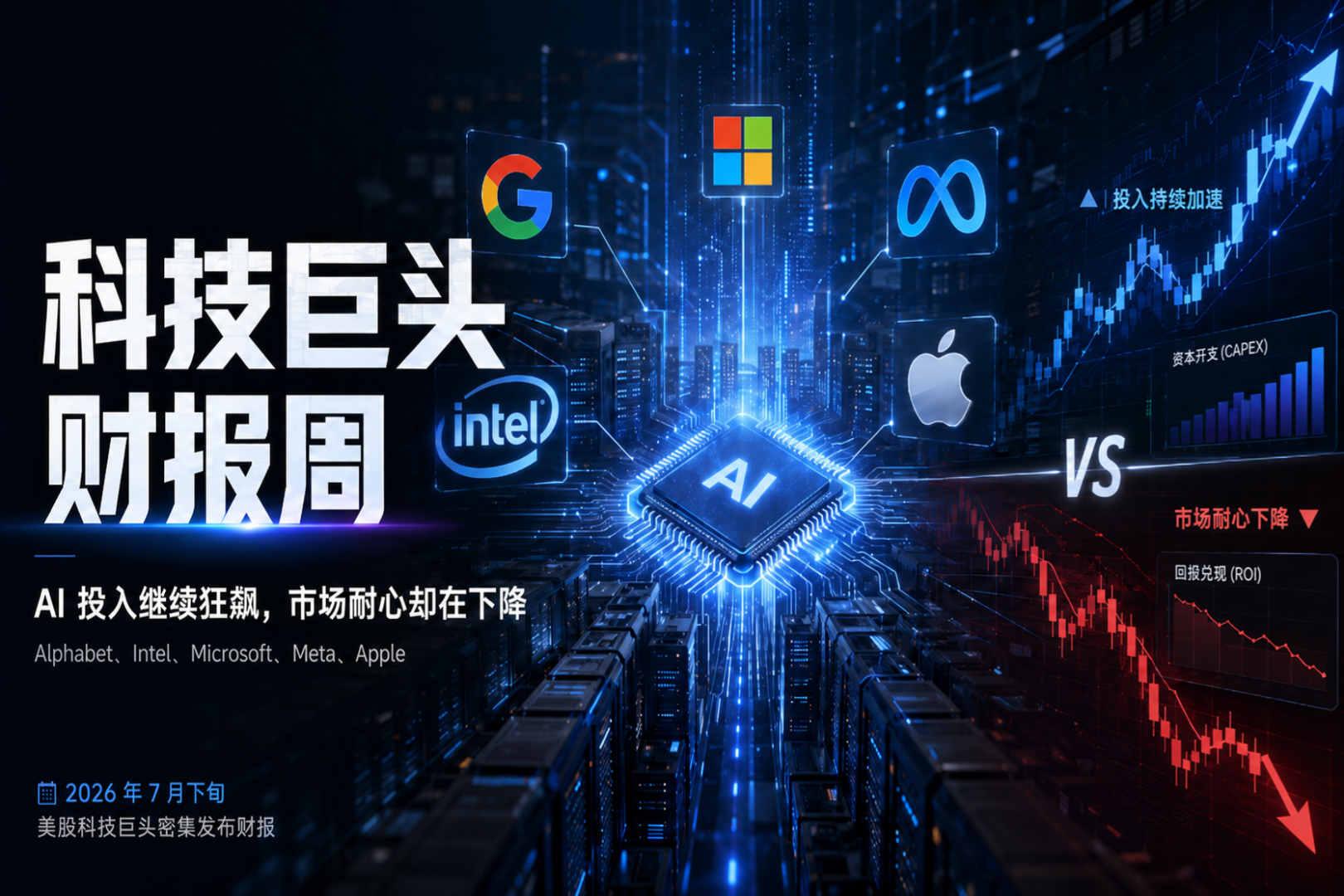
Cuando el mercado empieza a cuestionar el gasto de capital en IA: análisis completo de los resultados del Q2 de las cinco grandes tecnológicas

A finales de julio de 2026, los gigantes tecnológicos Alphabet (Google), Intel, Microsoft, Meta y Apple presentaron sus resultados del segundo trimestre. La narrativa común fue un fuerte crecimiento en los ingresos y ganancias, impulsado por la demanda de IA, pero una creciente inquietud del mercado sobre los masivos gastos de capital (CapEx) en infraestructura de IA y el momento en que se materializarán los retornos. **Google y Meta** experimentaron fuertes caídas en sus acciones (Google -7%, Meta casi -10%) después de informar aumentos significativos en su guía de gastos de capital para 2026 y un flujo de caja libre que se volvió negativo o casi desapareció. Los inversores castigaron la presión sobre la generación de efectivo a corto plazo. **Intel** mostró su crecimiento de ingresos más fuerte en 15 años, pero sus acciones tuvieron una volatilidad extrema ("montaña rusa") después de que también elevó su perspectiva de gastos de capital, lo que generó preocupaciones sobre la deuda y el flujo de caja libre. En contraste, **Microsoft** fue el claro favorito del mercado. Sus acciones registraron su mejor día en 18 años después de superar las expectativas, alcanzar los $100 mil millones en ingresos anualizados con Azure y, crucialmente, *reducir* su guía de gastos de capital para 2026 prometiendo un flujo de caja libre positivo, lo que calmó los temores de los inversores. **Apple**, a pesar de reportar récords de ingresos y ganancias, vio su valor evaporarse en $300 mil millones en un día debido a una guía de ingresos para el próximo trimestre inferior a lo esperado, citando limitaciones en la cadena de suministro y presión cambiaria. En resumen, los resultados confirmaron la sólida demanda de IA, pero marcaron un punto de inflexión: el mercado ya no premia solo el crecimiento, sino que exige claridad sobre el camino y el ritmo hacia la rentabilidad y el retorno del flujo de caja libre de estas enormes inversiones.

Odaily星球日报Hace 1 hora(s)

Cuando el mercado empieza a cuestionar el gasto de capital en IA: análisis completo de los resultados del Q2 de las cinco grandes tecnológicas

Odaily星球日报Hace 1 hora(s)

Trading

Spot

Artículos destacados

Cómo comprar COOKIE

¡Bienvenido a HTX.com! Hemos hecho que comprar Cookie DAO (COOKIE) sea simple y conveniente. Sigue nuestra guía paso a paso para iniciar tu viaje de criptos.Paso 1: crea tu cuenta HTXUtiliza tu correo electrónico o número de teléfono para registrarte y obtener una cuenta gratuita en HTX. Experimenta un proceso de registro sin complicaciones y desbloquea todas las funciones.Obtener mi cuentaPaso 2: ve a Comprar cripto y elige tu método de pagoTarjeta de crédito/débito: usa tu Visa o Mastercard para comprar Cookie DAO (COOKIE) al instante.Saldo: utiliza fondos del saldo de tu cuenta HTX para tradear sin problemas.Terceros: hemos agregado métodos de pago populares como Google Pay y Apple Pay para mejorar la comodidad.P2P: tradear directamente con otros usuarios en HTX.Over-the-Counter (OTC): ofrecemos servicios personalizados y tipos de cambio competitivos para los traders.Paso 3: guarda tu Cookie DAO (COOKIE)Después de comprar tu Cookie DAO (COOKIE), guárdalo en tu cuenta HTX. Alternativamente, puedes enviarlo a otro lugar mediante transferencia blockchain o utilizarlo para tradear otras criptomonedas.Paso 4: tradear Cookie DAO (COOKIE)Tradear fácilmente con Cookie DAO (COOKIE) en HTX's mercado spot. Simplemente accede a tu cuenta, selecciona tu par de trading, ejecuta tus trades y monitorea en tiempo real. Ofrecemos una experiencia fácil de usar tanto para principiantes como para traders experimentados.

336 Vistas totalesPublicado en 2025.07.23Actualizado en 2026.06.02

Cómo comprar COOKIE

Discusiones

Bienvenido a la comunidad de HTX. Aquí puedes mantenerte informado sobre los últimos desarrollos de la plataforma y acceder a análisis profesionales del mercado. A continuación se presentan las opiniones de los usuarios sobre el precio de COOKIE (COOKIE).

活动图片