2 Days, 20x: A Quick Look at the Automated Market Making Mechanism of the New Gem Snowball

深潮Publicado a 2025-12-22Actualizado a 2025-12-22

Resumen

Snowball, a new meme token launched on pump.fun on December 18, gained significant traction in the English-speaking crypto community by introducing an automated market-making mechanism designed to create a self-sustaining "snowball effect." Unlike typical meme coins where creators take a fee (usually 0.5%-1%) from each transaction, Snowball redirects 100% of this fee to an on-chain bot. This bot uses accumulated funds to buy back tokens, add liquidity to the pool, and burn a small portion of tokens periodically. The goal is to create continuous buy pressure and improve trading depth, theoretically allowing the token to grow organically through increased trading activity. Within four days, Snowball reached a $10 million market cap with over 7,000 holders and relatively decentralized ownership. However, the mechanism relies heavily on sustained trading volume to fuel the buyback bot. In a cold market with low on-chain activity, this "flywheel" could reverse if new buyers diminish. While the structure reduces developer exit risk, it doesn’t eliminate other meme coin dangers like large holder dumps or narrative fatigue. Similar projects like FIREBALL are emerging, indicating interest in "mechanism-driven memes," but past examples like OlympusDAO and Safemoon show that mechanisms alone don’t guarantee long-term value. Snowball remains primarily a meme experiment—interesting, but high-risk.

The crypto market in December is as cold as the weather.

On-chain transactions have been dormant for a long time, and new narratives are hard to come by. Just look at the drama and gossip in the Chinese CT (Crypto Twitter) space these past few days, and you'll know hardly anyone is playing in this market anymore.

But the English-speaking community has been discussing something new.

A meme coin called Snowball launched on pump.fun on December 18th. In four days, its market cap surged to $10 million and is still hitting new highs; yet it's barely mentioned in Chinese circles.
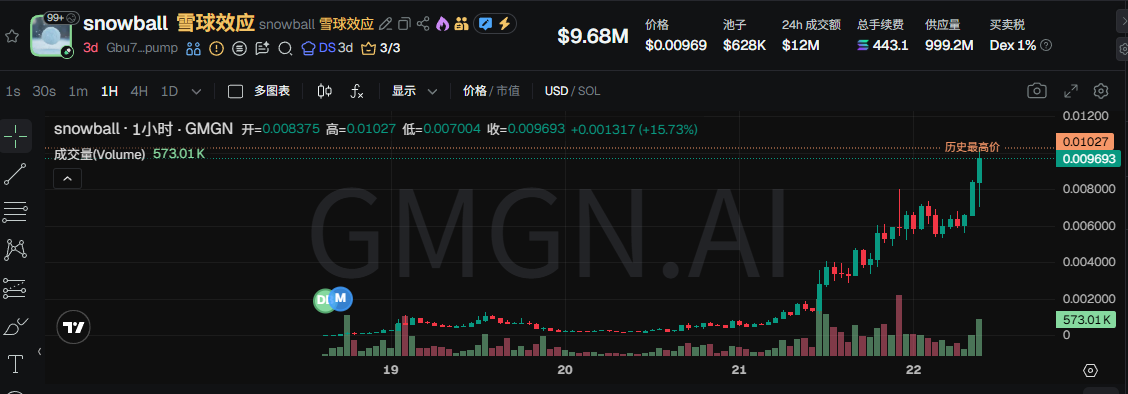
In the current environment, devoid of new narratives and where even memes are considered unplayable, this is one of the few things that catches the eye and shows some localized wealth effect.

And the name Snowball itself tells the story it wants to convey:

A mechanism that allows the token to "roll and grow larger by itself."

Turning Transaction Fees into Buy Pressure, Rolling the Snowball for Market Making

To understand what Snowball is doing, you first need to know how tokens on pump.fun typically make money.

On pump.fun, anyone can create a token in minutes. The token creator can set a "creator fee," essentially taking a cut of every transaction into their own wallet, usually between 0.5% and 1%.

This money could theoretically be used for community building or marketing, but in practice, most Devs choose to: accumulate enough and then run.

This is part of the typical life cycle of a shitcoin. Launch, pump, harvest fees, rug. Investors aren't betting on the token itself, but on the developer's conscience.

Snowball's approach is to not take this creator fee money.

To be precise, 100% of the creator fees do not go into anyone's wallet but are automatically transferred to an on-chain market-making bot.

This bot performs three actions at regular intervals:

First, it uses the accumulated funds to buy tokens on the market, creating buy-side support;

Second, it adds the bought tokens and the corresponding SOL to the liquidity pool, improving trading depth;

Third, it burns 0.1% of the tokens with each operation, creating deflation.
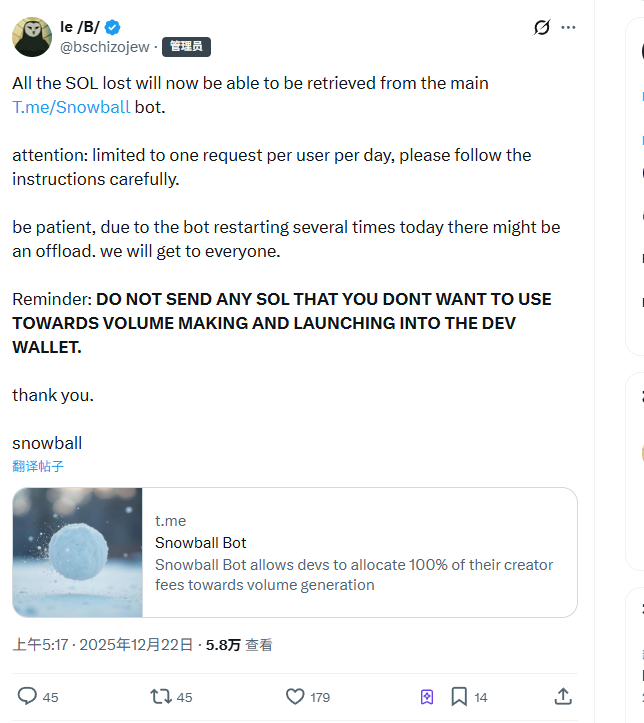
Additionally, the percentage taken as the creator fee is not fixed; it fluctuates between 0.05% and 0.95% based on market cap.

It takes a higher percentage when the market cap is low, allowing the bot to accumulate ammunition faster; it reduces the fee when the market cap is high, decreasing transaction friction.

In one sentence, the logic of this mechanism is: every time you trade, a portion of the money automatically becomes buy pressure and liquidity, instead of going into the developer's pocket.

Therefore, it's easy to understand this snowball effect:

Transactions generate fees → Fees become buy pressure → Buy pressure pushes the price up → Higher price attracts more transactions → More fees... theoretically, it can roll on its own.

On-Chain Data Situation

Now that we've covered the mechanism, let's look at the on-chain data.

Snowball launched on December 18th, so it's been four days now. Its market cap grew from zero to $10 million, with a 24-hour trading volume exceeding $11 million.

For a shitcoin on pump.fun, these results mean it's already one of the longer-lasting ones in the current environment.

In terms of token distribution, there are currently 7,270 holder addresses. The top ten holders combined hold about 20% of the total supply, with the largest single holder holding 4.65%.
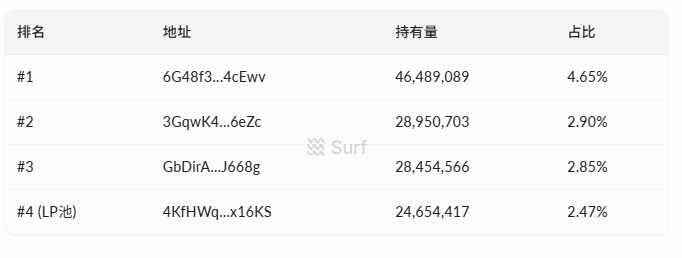
(Data source: surf.ai)

There's no address holding 20-30% of the supply; the distribution is relatively decentralized.

Regarding trading data, there have been over 58,000 cumulative transactions since launch, with 33,000 buys and 24,000 sells. The total buy volume is $4.4 million, and sell volume is $4.3 million, resulting in a net inflow of about $100,000. Buying and selling are basically balanced, with no one-sided selling pressure.

The liquidity pool holds about $380,000, half in tokens and half in SOL. For a market cap of this size, the depth isn't very thick, and large orders would still experience significant slippage.

Another notable point is that Bybit Alpha announced listing the token less than 96 hours after launch, which to some extent confirms the short-term hype.

Perpetual Motion Meets a Cold Market

Looking around, you can see the English community's discussion about Snowball mainly focuses on the mechanism itself. Supporters' logic is straightforward:

This is the first meme coin that locks 100% of the creator fees into the protocol; developers can't take the money and run, making it structurally safer than other shitcoins, at least.

The Dev is also playing into this narrative. The developer wallet, market-making bot wallet, and transaction logs are all public, emphasizing "verifiable on-chain."

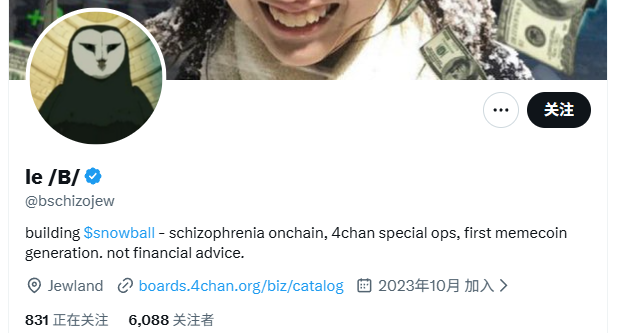
@bschizojew labels himself as "on-chain schizophrenia, 4chan special forces, first-generation meme coin veteran," radiating a self-deprecating degen vibe that really appeals to the crypto-native community.
But a safe mechanism and making money are two different things.

The snowball effect relies on the premise that there is sufficient trading volume to continuously generate fees to feed the bot for buybacks. More trades mean more ammunition for the bot, stronger buy pressure, higher prices, attracting more people to trade...

This is the ideal state for any meme coin's so-called buyback flywheel to spin up in a bull market.

The problem is, the flywheel needs external momentum to start.

What is the current crypto market environment? On-chain activity is sluggish, overall meme coin hype is down, and there's simply less capital willing to chase shitcoins. In this context, if new buy pressure doesn't keep up and trading volume shrinks, the fees the bot receives will become less and less, buyback strength weakens, price support falters, and trading willingness declines further.

The flywheel can spin forward, but it can also spin in reverse.

A more realistic problem is that the mechanism solves only one risk point—"developers taking money and running"—but meme coins face far more risks than that.

Whales dumping, insufficient liquidity, narratives going out of style—if any of these happen, 100% fee buybacks can only do so much.

Everyone is tired of being rugged. As one Chinese crypto brother aptly summarized:

Play if you want, but don't get in over your head.

More Than One Snowball Rolling

Snowball isn't the only project telling this automated market-making story.

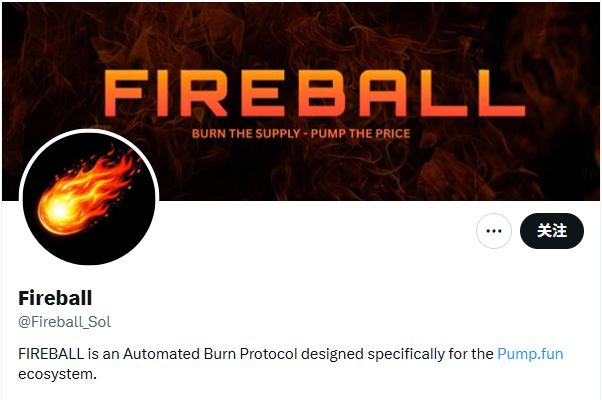
Within the pump.fun ecosystem, a token called FIREBALL is doing something similar: automatic buybacks and burns, packaged as a protocol other tokens can plug into. But its market cap is much smaller than Snowball's.
This shows the market is currently responsive to the direction of "mechanism-based meme coins."

The traditional玩法 (playbook) of shilling, pumping, and community hype is finding it harder to attract capital. Using mechanism design to tell a "structurally safe" story might be one of meme coins' latest tricks.

That said, artificially creating a specific mechanism isn't a new玩法 (play) either.

OlympusDAO's (3,3) in 2021 was the most classic case, packaging a staking mechanism with game theory, telling the story "if everyone holds, we all profit together." It reached a peak market cap of several billion dollars. The ending, as everyone knows, was a death spiral, dropping over 90%.

Even earlier, there was Safemoon's玩法 of "taxing every transaction and distributing it to holders," also a narrative of mechanism innovation, which ended with the SEC suing and the founders charged with fraud.

A mechanism can be a great narrative hook, capable of gathering capital and attention in the short term, but the mechanism itself does not create value.

When external capital stops flowing in, even the most精巧 (ingenious) flywheel will stop.

Finally, let's recap what this little gem is actually doing:

Turning the meme coin's creator fees into an "automated market-making bot." The mechanism itself isn't complicated, and the problem it solves is very clear: preventing developers from directly taking the money and running.

Developers not being able to rug doesn't mean you'll make money.

If after reading this you find the mechanism interesting and want to participate, remember one thing: it is first and foremost a meme coin, and only secondly an experiment with a new mechanism.


Criptos en tendencia

Preguntas relacionadas

QWhat is the core mechanism that makes Snowball different from typical meme coins on pump.fun?

ASnowball's core mechanism is that 100% of the creator fees from each transaction are automatically sent to an on-chain market-making bot instead of going to the developer's wallet. This bot uses the accumulated funds to buy back tokens, add liquidity to the pool, and burn a small portion of tokens, creating a self-sustaining 'snowball effect' of buying pressure and liquidity growth.

QHow does the 'snowball effect' theoretically work in this token's economic model?

AThe 'snowball effect' works through a feedback loop: transactions generate fees → fees are used by the bot to buy tokens and add liquidity → buying pressure pushes the price higher → higher prices attract more traders and transactions → which generates more fees for the bot to continue the cycle.

QWhat are some of the risks or limitations of Snowball's automatic market-making mechanism?

AThe mechanism relies on sustained trading volume to generate fees for the bot. If new buyers dry up and trading volume decreases, the bot's buying power weakens, potentially leading to a downward spiral. It also doesn't protect against other risks like large holders dumping, liquidity issues, or narrative fatigue.

QHow does the creator fee percentage in Snowball adjust, and why?

AThe creator fee percentage in Snowball fluctuates between 0.05% and 0.95% based on market capitalization. It charges a higher percentage when the market cap is low to allow the bot to accumulate funds faster, and a lower percentage when the market cap is high to reduce transaction friction for traders.

QWhat precedent exists in crypto for 'mechanism-driven' tokens like Snowball, and what were their outcomes?

APrecedents include OlympusDAO's (3,3) staking mechanism, which collapsed after reaching a multi-billion dollar valuation, and Safemoon's transaction tax redistribution model, which ended with fraud charges from the SEC. These show that while mechanisms can drive short-term hype, they don't create inherent value and often fail when external capital stops flowing in.

Lecturas Relacionadas

La firma de tesorería cripto ZeroStack advierte riesgo de supervivencia tras pérdida de 82,5 millones de dólares

La empresa de tesorería cripto ZeroStack, cotizada en Nasdaq, advierte que existe una "duda sustancial" sobre su capacidad para continuar operando durante el próximo año, revirtiendo una evaluación positiva realizada apenas tres meses antes. En un informe presentado ante la SEC, la compañía reportó sólo 2,6 millones de dólares en efectivo, un capital de trabajo negativo de 600.000 dólares y un déficit acumulado de 339,1 millones al 30 de junio. Registró una pérdida de valor razonable de 82,5 millones en activos digitales y una pérdida neta de 61,3 millones en el primer semestre de 2026. La estrategia de ZeroStack se centra en sus 75,1 millones de tokens 0G (Zero Gravity), adquiridos por 163,3 millones y valorados ahora en sólo 15,2 millones, una depreciación del 91%. La empresa financia sus operaciones principalmente con recompensas por staking y ventas de estos tokens, lo que la hace extremadamente dependiente del precio y la liquidez del 0G. Aunque espera cubrir sus costos con efectivo y ventas de recompensas, la dirección no puede garantizar que estos planes disipen las dudas sobre su viabilidad futura. Anteriormente conocida como Flora Growth, una empresa de productos de cannabis, ZeroStack se transformó en septiembre tras anunciar una estrategia de tesorería en 0G respaldada por 401 millones en financiación.

cointelegraphHace 42 min(s)

La firma de tesorería cripto ZeroStack advierte riesgo de supervivencia tras pérdida de 82,5 millones de dólares

cointelegraphHace 42 min(s)

Ajuste a corto plazo de Bitcoin continúa, HYPE se acerca a un soporte clave|Análisis especializado

Ajuste a corto plazo de Bitcoin continúa, HYPE se acerca a un soporte clave|Análisis Invitado Esta semana, el ajuste en la onda b diaria de Bitcoin continúa, con el precio explorando el área de $62,268. La clave es ver si encontrará soporte en la zona crítica de $60,900~$61,500. Mientras tanto, HYPE ha llegado a la zona de soporte clave de $50~$52 al final de su onda C diaria, con señales de sobreventa activándose continuamente, lo que sugiere que una ventana de recuperación a corto plazo está cerca, aunque la dirección aún no está confirmada. **Bitcoin (BTC):** * **Estructura:** El ajuste desde el máximo de mayo muestra una estructura de 5 ondas. La onda a de rebote terminó el 21 de julio (~$66,955). Actualmente en la onda b de ajuste (~$62,268), cuya corrección ha alcanzado aproximadamente el 61.8% de la onda a. Una onda c de rebote potencial podría comenzar si el soporte se mantiene, apuntando a la resistencia de ~$67,300. * **Niveles Clave:** Soporte: $60,950-$61,500 (primario), ~$57,820 (secundario). Resistencia: ~$63,600, $65,700-$67,300, $69,500-$71,000. * **Estrategia:** La posición corta media está en ~40%. Se reducirá por debajo del 20% si el precio se consolida por encima de $63,600. Para operaciones a corto plazo (30% de capital), se proponen dos escenarios: A) Ir largo si se mantiene por encima de $63,600; B) Ir largo con ligereza si hay señales de estabilización cerca de $57,820. **HYPE:** * **Estructura:** Ajuste claro ABC en gráfico diario. La onda C actual está en la zona de soporte clave de $50-$52, con indicadores en sobreventa y modelos internos activando alertas de fondo, lo que sugiere una posible corrección técnica (onda D). * **Niveles Clave:** Soporte: $50-$52 (primario), ~$45 (secundario). Resistencia: $58.5-$60, $63.5-$66, ~$72.97. * **Estrategia:** Observar la prueba de soporte en $50-$52. Considerar entrar en posiciones largas ligeras (<20% de capital) si aparecen señales de estabilización en esa zona, con estrictos controles de stop-loss. **Verificación de la Semana Anterior:** * La previsión de BTC sobre la prueba de soporte en ~$61,500 se cumplió (rebote desde ~$62,268). * Una operación corta en BTC (apalancamiento 1x) rindió aproximadamente un 2.58%. * El movimiento de HYPE coincidió con el escenario técnico previsto de continuación del descenso. **Gestión de Riesgos (Recordatorio):** Establecer stop-loss inicial al operar. Moverlo al punto de equilibrio al alcanzar +1% de ganancia, y luego seguir bloqueando ganancias progresivamente. *Nota: Los mercados cambian rápidamente. Este análisis es para fines educativos/log personal y no constituye asesoramiento de inversión. Opere con precaución.*

Odaily星球日报Hace 53 min(s)

Ajuste a corto plazo de Bitcoin continúa, HYPE se acerca a un soporte clave|Análisis especializado

Odaily星球日报Hace 53 min(s)

La industria tecnológica china está cruzando masivamente la "línea de visibilidad"

Un fenómeno notable emerge en el sector tecnológico chino: múltiples industrias están superando de manera concentrada la "línea de visibilidad", pasando de acumular capacidades internas a ser reconocidas globalmente. Sectores como la inteligencia artificial, la robótica y los medicamentos innovadores ("los tres nuevos nuevos") se unen a los anteriores "tres nuevos" (vehículos eléctricos, baterías, fotovoltaica) en el radar mundial. ¿Qué define esta línea de visibilidad? Cuando una industria alcanza una escala significativa (cientos de miles de millones), demuestra ventajas claras en participación de mercado o rendimiento, acelera su crecimiento e impulsa cadenas de suministro completas. El cruce de esta línea marca la transición del desarrollo interno a influir en las elecciones del mercado global. Los ciclos se están acortando. Mientras que desde los textiles hasta los "tres nuevos" pasaron décadas, los "tres nuevos nuevos" han emergido en pocos años. Este ritmo refleja una capacidad de innovación china que evoluciona al unísono con la vanguardia global y una mayor capacidad para definir nuevos productos y mercados, no solo para ingresar en ellos existentes. ¿El motor interno? Un sistema industrial que ha pasado de ser "completo" a ser "denso": las capacidades acumuladas en una industria (p. ej., baterías y fabricación de precisión para coches eléctricos) se transfieren rápidamente a otras adyacentes (p. ej., robótica). La cercanía entre I+D y producción, la capacidad de organizar sistemas complejos (como los clústeres de computación) y las reformas regulatorias acortan el camino al mercado. La escala industrial se convierte en una infraestructura que genera continuamente nuevas industrias. El significado es profundo: la ventaja competitiva china se extiende de "fabricar productos" a establecer sistemas de conocimiento y organización que generan valor sostenible. Más allá del producto tangible, la clave reside en patentes, estándares y ecosistemas. China busca construir esta "zanja industrial" no mediante el cierre, sino a través de modelos abiertos (código abierto, interfaces API) que amplíen el ecosistema y fomenten la iteración tecnológica continua. Superar la "línea de visibilidad" es el comienzo de la validación del mercado. La aparición constante de nuevas industrias que la cruzan indica que China está desarrollando la capacidad sostenible de generarlas. Lo visible arriba son nuevos brotes industriales; debajo, persiste la continua acumulación y crecimiento de capacidades fundamentales a largo plazo.

marsbitHace 1 hora(s)

La industria tecnológica china está cruzando masivamente la "línea de visibilidad"

marsbitHace 1 hora(s)

Trading

Spot

Artículos destacados

Cómo comprar QUICK

¡Bienvenido a HTX.com! Hemos hecho que comprar Quickswap (QUICK) sea simple y conveniente. Sigue nuestra guía paso a paso para iniciar tu viaje de criptos.Paso 1: crea tu cuenta HTXUtiliza tu correo electrónico o número de teléfono para registrarte y obtener una cuenta gratuita en HTX. Experimenta un proceso de registro sin complicaciones y desbloquea todas las funciones.Obtener mi cuentaPaso 2: ve a Comprar cripto y elige tu método de pagoTarjeta de crédito/débito: usa tu Visa o Mastercard para comprar Quickswap (QUICK) al instante.Saldo: utiliza fondos del saldo de tu cuenta HTX para tradear sin problemas.Terceros: hemos agregado métodos de pago populares como Google Pay y Apple Pay para mejorar la comodidad.P2P: tradear directamente con otros usuarios en HTX.Over-the-Counter (OTC): ofrecemos servicios personalizados y tipos de cambio competitivos para los traders.Paso 3: guarda tu Quickswap (QUICK)Después de comprar tu Quickswap (QUICK), guárdalo en tu cuenta HTX. Alternativamente, puedes enviarlo a otro lugar mediante transferencia blockchain o utilizarlo para tradear otras criptomonedas.Paso 4: tradear Quickswap (QUICK)Tradear fácilmente con Quickswap (QUICK) en HTX's mercado spot. Simplemente accede a tu cuenta, selecciona tu par de trading, ejecuta tus trades y monitorea en tiempo real. Ofrecemos una experiencia fácil de usar tanto para principiantes como para traders experimentados.

237 Vistas totalesPublicado en 2024.12.11Actualizado en 2026.06.02

Cómo comprar QUICK

Discusiones

Bienvenido a la comunidad de HTX. Aquí puedes mantenerte informado sobre los últimos desarrollos de la plataforma y acceder a análisis profesionales del mercado. A continuación se presentan las opiniones de los usuarios sobre el precio de QUICK (QUICK).

活动图片