[Key interpretation] BTC makes rapid changes of 5% within 30 minutes, and the breakthrough signal is confirmed

Huobi ResearchPublicado a 2022-07-15Actualizado a 2022-07-18

Resumen

The short-term fluctuation of BTC price increases, which will confirm the breakthrough direction.

1、 BTC short-term selling signal appears

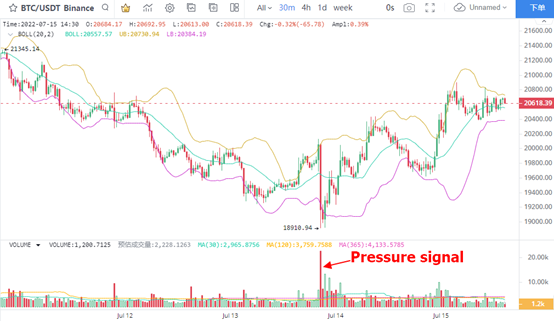
BTC's 30 minute K-line chart is hourly. Recently, the main short-term pressure on BTC's price retreat shows a very strong willingness to sell. From 20:30 on July 13, BTC prices suddenly fell from a high level. Within 30 minutes, the price amplitude was 5.75%, and the closing decline also reached 4.44%. At the same time, the trading volume was 230% larger than the previous 30 minute trading range. After the trading volume was tripled, the BTC price fell by $1000 from above $20000.

Although BTC has recently shown signs of rebound, its growth is relatively limited. Judging from this, the current BTC price trend is not strong, with strong range shocks and adjustment expectations.
2. BTC chain trading volume remains high

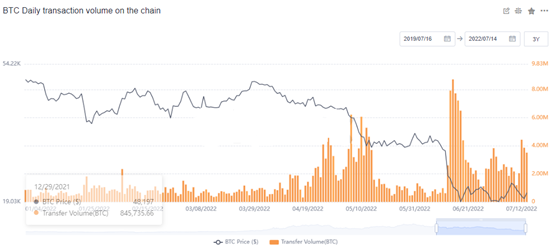
The trading volume on the chain has always maintained a high level, which means that the turnover of BTC is relatively sufficient, and there are more investors trading or transferring BTC in the low price area. This shows that in the shock around us $20000, if the adjustment time is long enough, BTC will confirm the bottom feature at US $20000. The recent selling pressure is very important to the trend of BTC price. If the selling pressure increases, the BTC price may fall again. At present, the price platform of $20000 has been maintained for one month. The trading time is not long, and the active buying is less, which has a great impact on the market performance.
3. Main loss escape signal continues

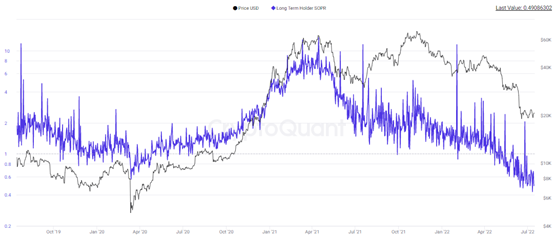
Although BTC's activity has increased slightly recently, the trading volume of both the chain and the exchange has rebounded, the loss trading of BTC's long-term investors has not ended. SOPR indicators of long-term investors show that the overall loss trading range of the main force is more than 40%. In other words, the main force trades BTC at a loss of 40%, making the short-term bottom confirmation process relatively bumpy. In particular, compared with the SOPR index performance of long-term investors in 2020, the recent selling intention of long-term investors shows no sign of ending, so important reversal signals still need to wait patiently.
4. Eth trading volume remains high

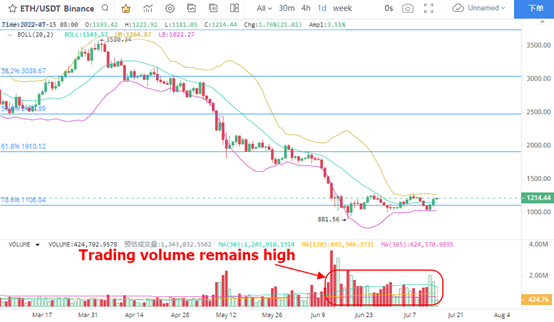
Eth finished sideways around us $1100, and the range rebound again occurred under the brin line, indicating that the bottom of the price is being confirmed. At present, the trading volume at the bottom of eth remains high, so a lot of chips have accumulated around $1100. Not surprisingly, the price rebound space corresponding to high trading volume will also gradually increase. With the accumulation of trading volume, the increase in the range is expected to remain below $1910. Fibonacci's 61.8% corresponding to $1910 to $1106 is an important fluctuation range, and the lower limit of this range is still an important buying point.
5. Eth estimated leverage rebound

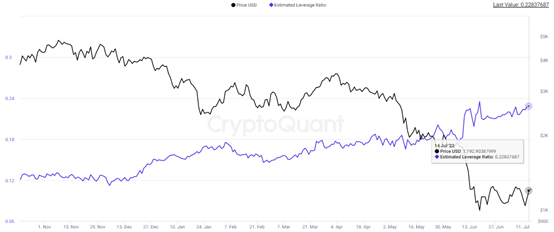
Eth estimated that the leverage ratio continued to strengthen in the short term, reaching 0.228 on July 14, almost the highest value in a month. It can be seen that investors' trading enthusiasm continues to rise, and the impact on prices is also increasing. Recently, the spot trading volume of eth has also remained relatively high, and the price fluctuation space has increased. Judging from the pressure level, the breakthrough of eth below $1240 is bound to be confirmed in the short term. Once it picks up, the fluctuation space will quickly open. Investors who do not hold a large amount of money can continue to hold money and wait for a clear trading signal.

Lecturas Relacionadas

Desglose de Estrategias de Trading de Bitcoin: Predicciones de Celebridades y Modelos Clásicos Fallan, Solo Quedan Estos Cuatro Indicadores

Resumen de la estrategia de trading de Bitcoin: Tras analizar todos los métodos de predicción desde 2017 hasta 2025, se descartaron pronósticos de celebridades, modelos clásicos como Stock-to-Flow e indicadores de sentimiento aislados (ej. Fear & Greed), por ser inexactos o estar desactualizados. El sistema final se basa en solo cuatro indicadores confiables: 1. **MVRV Z-Score**: Identifica fondos (zona verde) con precisión histórica, aunque perdió eficacia para techos tras los ETF. 2. **SOPR (28-day MA)**: Señala capitulación de holders (valor <1.0), crucial para fondos. 3. **Flujos netos de ETF**: Refleja la demanda institucional post-2024, invisible en datos on-chain. 4. **Liquidez macro (Fed y M2)**: Define la dirección general del mercado. La estrategia actúa solo con **resonancia de 3+ señales**: - **Fondo**: MVRV en verde + SOPR <1.0 + miedo extremo (Fear & Greed <20). - **Techo**: Sobrecalentamiento on-chain + flujos de ETF negativos. - La liquidez establece el contexto macro. Actualmente (15/04/2026), hay triple señal de fondo: Fear & Greed en 12 (pánico extremo), MVRV en zona verde y SOPR <1.0. Históricamente, esto precedió ganancias >100% en 12 meses (2018, 2020, 2022). La única señal en contra son los flujos de ETF, aún débiles. Conclusión: El marco evita predicciones subjetivas, focusing en datos objetivos y resonancia de señales para decisiones de alta probabilidad.

marsbitHace 2 hora(s)

Desglose de Estrategias de Trading de Bitcoin: Predicciones de Celebridades y Modelos Clásicos Fallan, Solo Quedan Estos Cuatro Indicadores

marsbitHace 2 hora(s)

El fundador de Netflix fue al lugar que más teme

El cofundador de Netflix, Reed Hastings, anuncia su salida total de la empresa tras casi 30 años, justo cuando la compañía reporta su mejor desempeño financiero: ingresos de $12.25 mil millones en Q1 2026 (+16%) y ganancias netas de $5.28 mil millones (+83%). Aunque Netflix afirma que su decisión no implica desacuerdos, Hastings ya se había unido en 2025 a la junta directiva de Anthropic, empresa de IA, y ha expresado abiertamente que la inteligencia artificial es la mayor amenaza para Netflix. Hastings, quien estudió IA en Stanford hace 40 años, inicialmente veía la IA como una herramienta creativa, pero su postura cambió radicalmente. En 2025 donó $50 millones para investigar el impacto de la IA en la sociedad y advirtió: "Lucharemos por la supervivencia y prosperidad humana". Su preocupación central es que la IA generative, como el modelo Seedance 2.0 de ByteDance, pueda reducir drásticamente el costo y la barrera de entrada para la creación de contenido, haciendo que contenido gratuito en plataformas como YouTube sea tan atractivo que desafíe el modelo de suscripción de Netflix. Aunque Netflix está adoptando IA para optimizar producciones (como la reciente compra de InterPositive por $600 millones), Hastings parece estar "protegiéndose": mantiene sus acciones de Netflix mientras se integra en el epicentro de la tecnología que podría disruptirla. Su salida coincide con el momento cumbre de Netflix, pero también con la aceleración imparable de la IA generative. El veredicto final sobre si su temor era profético o excesivo, dependerá de cuándo la IA logre producir contenido que realmente captive al público masivo.

marsbitHace 2 hora(s)

El fundador de Netflix fue al lugar que más teme

marsbitHace 2 hora(s)

Trading

Spot
Futuros
活动图片