Bitcoin Downward Trend Extends: Here Are The Key Drivers Behind The Decline

bitcoinistPublicado a 2025-08-06Actualizado a 2025-08-06

Resumen

Bitcoin’s current downward trend has extended into another day, amplifying investor anxiety and bolstering broader market uncertainty. Since the pullback...

Trusted Editorial content, reviewed by leading industry experts and seasoned editors. Ad Disclosure

Bitcoin’s current downward trend has extended into another day, amplifying investor anxiety and bolstering broader market uncertainty. Since the pullback in late reply, BTC’s price has been falling steadily, with its price now retesting the $113,000 threshold. While bearish pressure intensifies, several crucial reasons have been observed to be driving the ongoing price decline.

Why Bitcoin’s Price Is Declining

After failing to maintain important support levels, Bitcoin is still trading under pressure due to a combination of market whirlwinds. Market experts Arab Chain have delved into the ongoing decline, which began at the end of July, offering insights about the trend in a recent quick take post on the CryptoQuant platform.

Related Reading: This Week In Bitcoin: 4 Things To Keep An Eye On That Could Impact Price

Sharing insights on the pullback, the market experts have classified the development under three main factors that have also displayed waning performance. These key factors also contributed to the previous upward trend, raising questions about BTC’s next price trajectory.

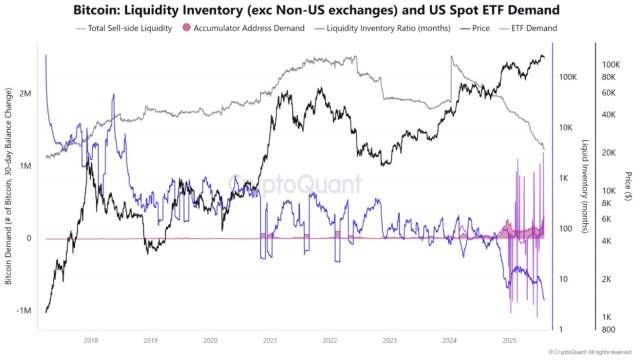
The first driver behind the ongoing bearish trend highlighted by Arab Chain is the Liquidity Inventory Ratio Collapse. Since mid-July, the liquidity ratio, which is measured by the number of months of liquidity available for sale on platforms, has started to decline rapidly and reached previously unprecedented levels of just over three months.

Given the sharp decline in the quantity of Bitcoin currently available for purchase, this signal points to a supply crisis. Typically, when this occurs in healthy markets, it triggers a price increase due to scarcity. However, the exact opposite has occurred.
Bitcoin
Source: CryptoQuant on X

Without fresh and efficient buying demand, whether from big investors or ETFs, the market has grown brittle and unable to withstand even the smallest sell orders without experiencing a price decline. In this case, market fragility is comparable to that of thin markets, where limited liquidity amplifies the effect of any selling movement, regardless of its size.

Arab Chain’s second key driver mentioned is the volatility and instability in ETF demand. After sharp and rapid peaks in BTC ETF demand, strong negative spikes followed. Such development suggests that during times when capital was withdrawn from ETFs, inflows into the funds were intermittent and unstable.

As inflows faltered, there was no substitute demand to make up for this shortfall. Furthermore, with the inadequate liquidity, this resulted in a reduction in price support from the biggest institutional buyers (ETFs), paving the way for a price drop.

Slow And Steady Accumulation From Smart Addresses

Limited and weak smart portfolio accumulation was the last factor pointed out by the market experts to have contributed to the price decline. As indicated on the chart by a pink area, smart addresses have been accumulating Bitcoin. However, it moved slowly and mostly steadily, with no notable spikes in purchases.

Related Reading: Old Bitcoin Wallets Reactivate: Untouched BTC Movements Close In On 2024 Peak

Despite the fact that accumulation is usually positive, these addresses’ sluggish and restricted movement was unable to provide meaningful assistance during a market weakness. This is because there was latent demand, but it was not active or timed with the drop, fading market resilience.

Bitcoin
BTC trading at $113,970 on the 1D chart | Source: BTCUSDT on Tradingview.com
Featured image from Pixabay, chart from Tradingview.com
Editorial Process for bitcoinist is centered on delivering thoroughly researched, accurate, and unbiased content. We uphold strict sourcing standards, and each page undergoes diligent review by our team of top technology experts and seasoned editors. This process ensures the integrity, relevance, and value of our content for our readers.

Godspower Owie is my name, and I work for the news platforms NewsBTC and Bitcoinist. I sometimes like to think of myself as an explorer since I enjoy exploring new places, learning new things, especially valuable ones, and meeting new people who have an impact on my life, no matter how small. I value my family, friends, career, and time. Really, those are most likely the most significant aspects of every person's existence. Not illusions, but dreams are what I pursue.

Lecturas Relacionadas

Última charla de Dan Bin: No se pierdan una gran era

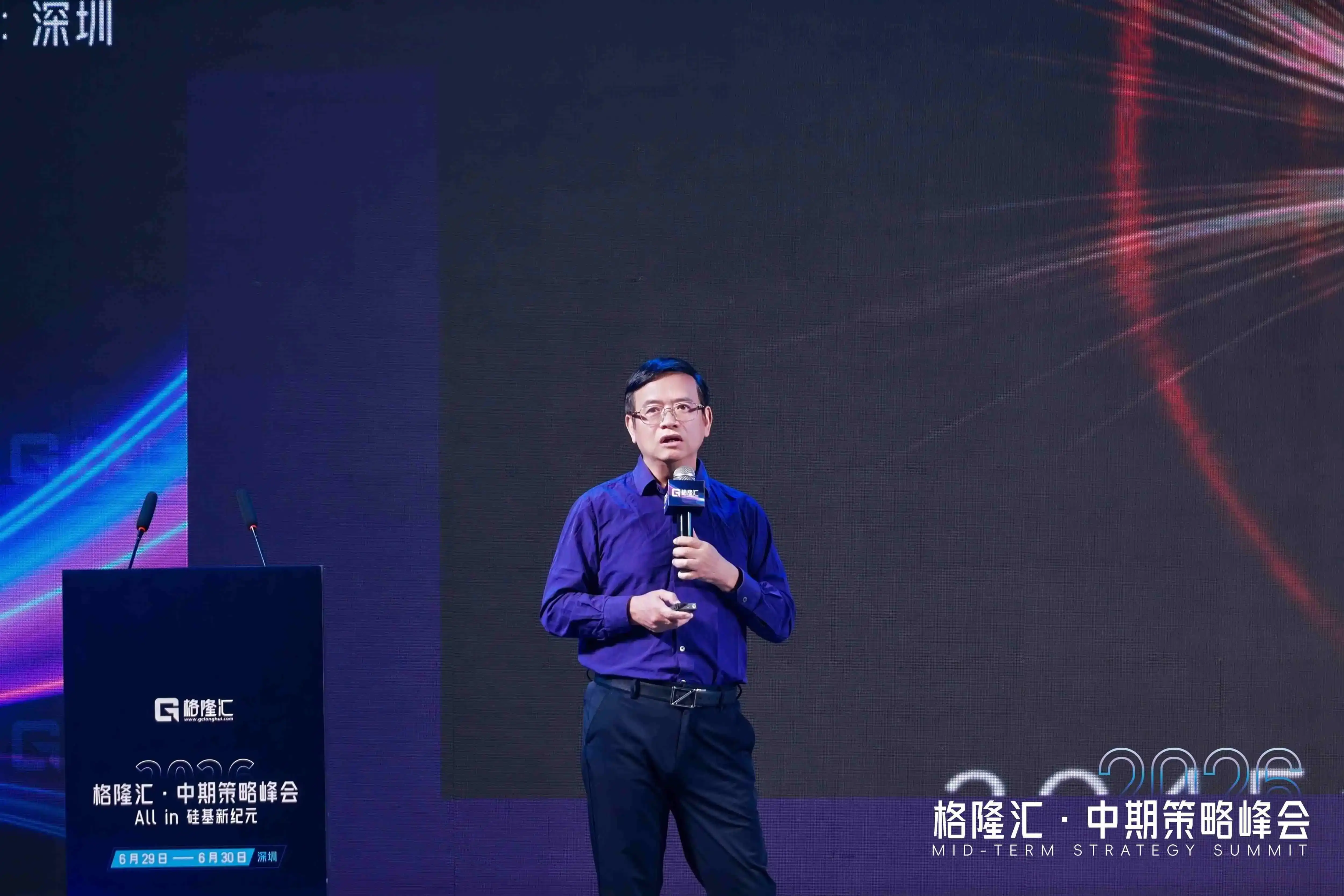
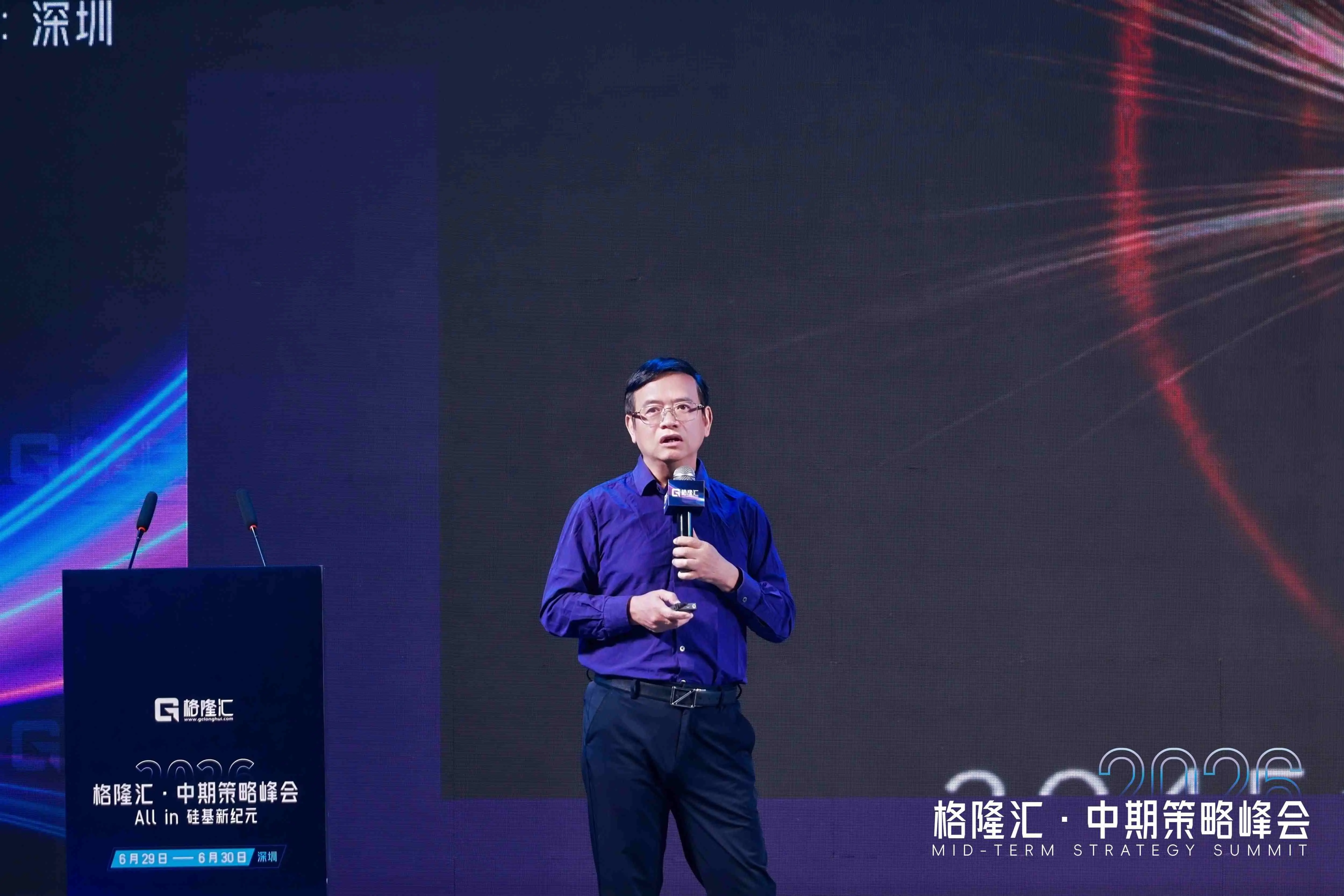
Discurso reciente de Dan Bin: No pierdas una gran era (Resumen en español europeo) El 29 de junio, Dan Bin, presidente de Oriental Harbor, pronunció un discurso titulado "No perder una gran era" en la Cumbre de Estrategias de Gelonghui. Abordando las preocupaciones sobre una posible burbuja de la IA, Dan Bin argumentó desde una perspectiva de ciclo industrial que el riesgo de perder una era tecnológica es mayor que el riesgo de las burbujas a corto plazo. Subrayó que la humanidad está en el comienzo de la era de la inteligencia artificial, que considera más disruptiva que las eras electrónica, de internet y móvil. Basándose en el historial del Nasdaq, afirmó que el progreso tecnológico, no factores macroeconómicos a corto plazo como los tipos de interés, es el principal motor del crecimiento del mercado a largo plazo. Dan Bin predice que la ola de IA probablemente tendrá un ciclo industrial largo, similar al de la era de internet (unos 10 años). Tomando el lanzamiento de ChatGPT a finales de 2022 como punto de partida, sugirió que la ventana de riesgo relevante podría estar alrededor de 2033, por lo que es poco probable que el impulso se agote en tres o cuatro años. Ampliando la perspectiva, compartió una visión a largo plazo sobre la posibilidad de que la vida basada en silicio (IA) complemente o incluso sustituya a la basada en carbono, viéndola como un posible paso para la continuidad de la civilización a escalas cósmicas. También destacó la intensa competencia en IA entre EE.UU. y China, impulsada en parte por su aplicación en defensa, afirmando que ninguno de los dos países puede permitirse perder esta carrera. Reflexionando sobre lecciones de inversión, mencionó el "arrepentimiento" de figuras como Charlie Mungger por no invertir más en grandes éxitos tecnológicos como Microsoft, enfatizando la necesidad de evolucionar el conocimiento. Concluyó instando a los inversores a mantener la perspectiva, evitar el cortoplacismo y participar activamente en esta "gran era" transformadora impulsada por la IA.

marsbitHace 4 hora(s)

Última charla de Dan Bin: No se pierdan una gran era

marsbitHace 4 hora(s)

Trading

Spot
活动图片