Ripple CTO Drops Bombshell On Pre-IPO Shares As Linqto Meltdown Explodes

bitcoinistPublicado a 2025-07-01Actualizado a 2025-07-01

Resumen

Linqto’s once-celebrated promise to “democratize” (Ripple) pre-IPO investing is collapsing under the weight of federal probes, a looming bankruptcy filing...

Trusted Editorial content, reviewed by leading industry experts and seasoned editors. Ad Disclosure

Linqto’s once-celebrated promise to “democratize” (Ripple) pre-IPO investing is collapsing under the weight of federal probes, a looming bankruptcy filing and a furious customer base that now numbers roughly 13,000.

According to an internal review first detailed by The Wall Street Journal, investigators for the Securities and Exchange Commission and the US Department of Justice are examining allegations that former chief executive William Sarris secretly marked up Ripple shares by more than 60 percent, sold customer stock without permission and promoted deals to thousands of investors who failed to meet accredited-investor standards. New management concedes that client accounts have been frozen since February and warns that a Chapter 11 filing could leave many investors as unsecured creditors.

A March 14 press release from the company’s new leadership confirmed “pervasive securities-law violations,” the pausing of all trading and the dismissal of nearly half the staff while Linqto “explores all options to preserve value,” including court-supervised restructuring. The same statement insists that the special-purpose vehicles (SPVs) holding customers’ assets remain on issuer cap tables, but concedes that an independent forensic review is under way to verify that claim.

Into that vacuum stepped attorney John E. Deaton, who told his X followers that the situation is a “total clusterfuck” and that roughly 11,500 Linqto users bought units in SPVs that, in turn, were supposed to own Ripple shares. Deaton says as many as 5,000 of those investors are non-accredited, creating “a regulatory compliance nightmare” now squarely on the SEC’s radar. He plans to host a live session at 3 p.m. EST today to detail what he calls a “heavily involved” enforcement action and to explain why simply refunding principal would strip investors of six- and seven-figure gains booked on private-share price appreciation.

“You Never Owned Ripple Shares”— CTO

Ripple’s chief technology officer David Schwartz—better known online as “JoelKatz”—added fuel to the blaze by reminding holders that they never owned Ripple equity outright. “You don’t own the shares directly,” Schwartz wrote, “but you own a portion of a legal entity that owns the shares.” He elaborated, saying: “So if you ‘bought’ Z shares, you own X fraction of a legal entity with Y shares where X×Y=100. This generally lets you buy ‘shares’ more easily and in smaller quantities, but the equivalent per-share price is usually higher.”

This clarification dismantled a key misconception among many Linqto clients who believed they were holding Ripple stock directly. The implications are now being examined not only by the SEC but also by customers who fear their indirect ownership could be rendered illiquid or encumbered in bankruptcy court.

When pressed about whether those SPVs could be affected by Linqto’s financial collapse, Schwartz responded: “The legal entity that owns the shares that you own part of should not have exposure to Linqto going bankrupt. So a direct encumbrance on the shares to cover Linqto’s debts shouldn’t happen. But the entity may face operational challenges depending on exactly how it’s structured.”

That operational risk is precisely what has many investors on edge. If trustees, custodians, or record-keepers tied to those SPVs are forced to restructure, change providers, or liquidate assets, investors may find themselves in prolonged legal limbo with no access to their holdings—even if the shares remain technically intact on the cap table.

The Alleged George Soros Link

Complicating perceptions further, Schwartz addressed a separate thread linking billionaire George Soros to Ripple. He clarified that Soros Fund Management backed PolySign—another private company in which many Linqto users invested—during its 2022 acquisition of fund administrator MG Stover, but said he was “not aware of any Soros connection to Ripple.”

Initially, Schwartz wrote: “It wouldn’t surprise me very much since his funds own bits of almost everything (Salesforce, Amazon, Google, JP Morgan, Goldman, Uber, FedEx, and many more), but I couldn’t find any actual connection.”

However, after further reflection, he corrected himself: “Oh, wait, I remember now. Yes, Soros’ fund did invest in PolySign to help finance the acquisition of MG Stover! No connection to Ripple AFAICT though.”

The deeper regulatory concern is structural. Linqto created more than 500 SPVs, each designed to pool hundreds of retail investors while keeping the underlying issuer’s shareholder count below the 2,000-owner threshold that triggers public-reporting obligations. Internal emails obtained by investigators show former executives exhorting staff to “take no prisoners” in sales campaigns—at times buying back Ripple shares from customers at $55 each, only to flip them to Ripple for $61, banking an $8 million spread. If those shares never made it into the SPVs—as suggested in confidential memos cited by investigators—questions of beneficial ownership, tax liability and voting rights could embroil Ripple itself in discovery.

What happens next will hinge on three converging clocks: Linqto’s restructuring timetable, the SEC’s enforcement calendar and the pace at which SPV trustees can—or cannot—demonstrate clean title to almost half a billion dollars’ worth of private-company shares. Until then, thousands of would-be Ripple shareholders remain locked out of their accounts, watching from the sidelines as a legal and regulatory cyclone decides whether their “pre-IPO dream” survives or is wiped out in a courtroom ledger.

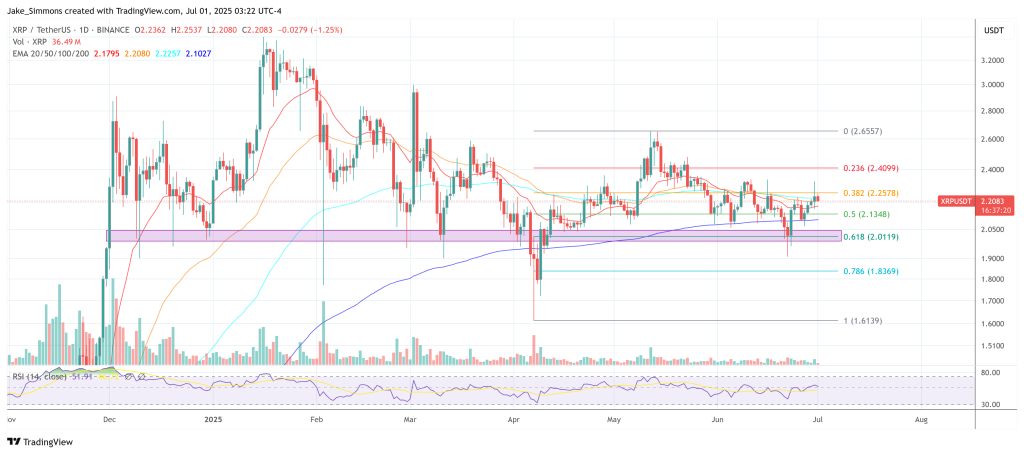
At press time, XRP traded at $2.20.
XRP price
XRP price, 1-day chart | Source: XRPUSDT on TradingView.com
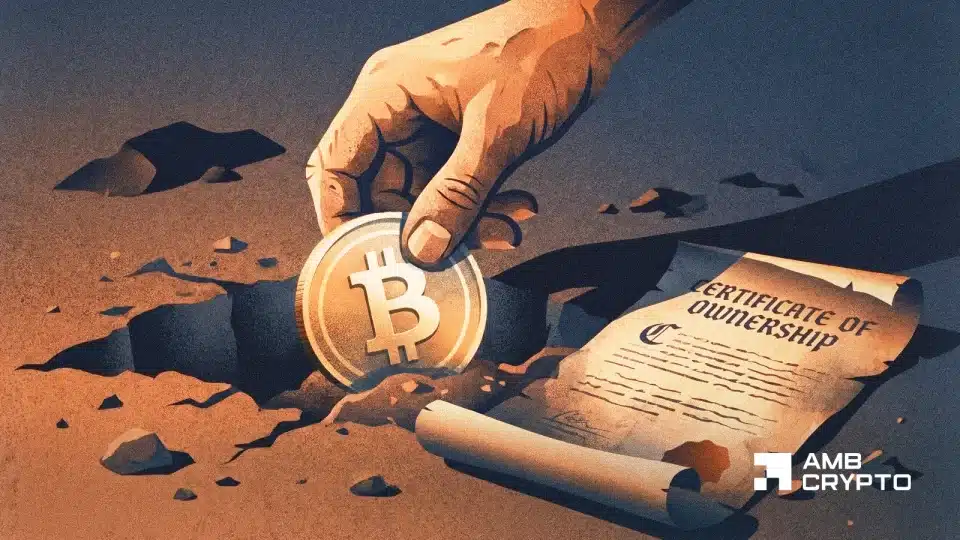
Featured image created with DALL.E, chart from TradingView.com
Editorial Process for bitcoinist is centered on delivering thoroughly researched, accurate, and unbiased content. We uphold strict sourcing standards, and each page undergoes diligent review by our team of top technology experts and seasoned editors. This process ensures the integrity, relevance, and value of our content for our readers.

Jake Simmons has been a Bitcoin enthusiast since 2016. Ever since he heard about Bitcoin, he has been studying the topic every day and trying to share his knowledge with others. His goal is to contribute to Bitcoin's financial revolution, which will replace the fiat money system. Besides BTC and crypto, Jake studied Business Informatics at a university. After graduation in 2017, he has been working in the blockchain and crypto sector. You can follow Jake on Twitter at @realJakeSimmons.

Lecturas Relacionadas

El líder en tokenización de activos del mundo real (RWA), Ondo, se lanza a crear un Perp DEX

El líder en tokenización de activos del mundo real (RWA), Ondo Finance, está entrando en el campo de los intercambios descentralizados de contratos perpetuos (Perp DEX) con el lanzamiento de "Ondo Perps". Esto marca un punto de inflexión, ya que la plataforma se centrará en activos tokenizados como acciones, índices y materias primas, aprovechando su posición dominante en el mercado de RWA donde su plataforma Ondo Global Markets posee cerca del 70% de participación. A diferencia de los Perp DEX tradicionales que listan activos nativos de criptomonedas, Ondo Perps parte de la infraestructura financiera institucional. Actualmente ofrece contratos perpetuos sobre 16 acciones estadounidenses (como NVDA, AAPL), 3 materias primas (oro, plata, petróleo), 2 índices y 1 ETF, con un apalancamiento de hasta 20x. Una característica clave es su diseño para admitir múltiples activos como garantía (colateral), incluyendo en el futuro tokens de acciones y bonos del Tesoro de Ondo, permitiendo estrategias sofisticadas de cobertura y eficiencia de capital. La plataforma busca cerrar el ciclo financiero de los RWA, transformando los activos tokenizados de meros instrumentos de tenencia en bases de crédito productivas dentro de DeFi. Al combinar su capacidad de emisión de activos regulados, conexiones con mercados tradicionales y una plataforma de trading descentralizada, Ondo no solo lanza un nuevo DEX, sino que construye una infraestructura integral que fusiona las finanzas tradicionales con el ecosistema cripto, ofreciendo acceso global y operaciones 24/7 sobre activos del mundo real.

Foresight NewsHace 31 min(s)

El líder en tokenización de activos del mundo real (RWA), Ondo, se lanza a crear un Perp DEX

Foresight NewsHace 31 min(s)

Fundador de Baixing: Que los modelos de gran lenguaje se lo traguen todo, me lo creo a medias

El fundador de百姓网, Wang Jianshuo, opina sobre la afirmación de que "los grandes modelos lingüísticos lo devorarán todo". Sostiene que creer esto solo a medias. No cree que una sola tecnología pueda "devolorarlo todo", al igual que internet, que tras años de promesas, no lo ha hecho. Argumenta que los grandes modelos lingüísticos son más bien una **infraestructura fundamental**, como la electricidad o internet. Sin ella, el mundo no puede avanzar, pero la verdadera innovación y valor surge **sobre esta base**. Compara el modelo con la electricidad: la electricidad por sí sola no lava la ropa; necesita una lavadora. Del mismo modo, la inteligencia básica de un gran modelo debe integrarse en aplicaciones específicas (un "aparato" o "herramienta") para resolver problemas concretos, como Claude Code para programar o Claude Design para diseño. Reconoce que estos modelos **sí "degluten" una capa significativa del software existente**, especialmente aquel basado en reglas fijas, formularios y flujos de trabajo predefinidos (como muchos CRM o sistemas SaaS), ya que son excelentes para automatizar instrucciones claras. Sin embargo, señala que no devorarán elementos como la información del cliente, la capacidad de ejecución en el mundo real (como reservar un vuelo), la confianza o los aspectos físicos. Al reemplazar esa capa de software rígido, en realidad **abren un espacio mayor para un nuevo tipo de software**: más fluido, con menos reglas predefinidas y donde la IA maneja la lógica, liberando la creatividad para posibilidades que aún no imaginamos. Concluye que el verdadero enfoque no debe estar en el eslogan "deglutirlo todo", sino en reconocer la importancia de esta base y, sobre todo, en **encontrar las oportunidades en las capas de aplicaciones específicas que se construirán sobre ella**, que serán la corriente principal de la próxima ola de innovación. Usa el ejemplo de 2004, cuando se pensaba que las grandes portales web dominarían internet para siempre, una visión que pronto quedó obsoleta ante nuevas olas de cambio.

marsbitHace 45 min(s)

Fundador de Baixing: Que los modelos de gran lenguaje se lo traguen todo, me lo creo a medias

marsbitHace 45 min(s)

El fundador de Baixing.com: 'Los grandes modelos de lenguaje se tragan todo', en eso creo la mitad

El fundador de Baixing, Wang Jianshuo, discute el eslogan de que "los modelos de lenguaje grandes (LLM) lo devorarán todo". Explica que no cree completamente en esta afirmación, ya que es una visión demasiado simplista y ambiciosa. Compara los LLM con la electricidad: ambos son infraestructuras fundamentales que permiten la innovación, pero no son la totalidad de la solución. Un LLM proporciona inteligencia básica, similar a cómo la electricidad proporciona energía. Sin embargo, para que sea útil, esta "inteligencia" debe integrarse en aplicaciones y herramientas específicas (como una lavadora usa electricidad y agua) para resolver problemas del mundo real, como escribir código (Claude Code) o diseñar (Claude Design). Wang reconoce que los LLM probablemente "devorarán" una gran parte del software existente basado en reglas fijas, formularios y flujos de trabajo predefinidos (como CRMs o sistemas hospitalarios), ya que son excelentes para automatizar ese tipo de lógica. Sin embargo, destaca que no reemplazarán elementos como la información del cliente, la capacidad de ejecución física (como reservar un vuelo real), la confianza o los elementos del mundo físico. Al liberarse de la complejidad del software tradicional, se abrirá un espacio mayor para una nueva generación de aplicaciones más fluidas e inteligentes. Concluye que los LLM son un pilar crucial, pero el verdadero valor y la próxima ola de innovación surgirán de las diversas "máquinas" y herramientas que se construyan sobre esta base para abordar necesidades específicas, no del modelo en sí mismo. El verdadero reto es identificar las oportunidades dentro de las áreas que los LLM transformarán.

链捕手Hace 51 min(s)

El fundador de Baixing.com: 'Los grandes modelos de lenguaje se tragan todo', en eso creo la mitad

链捕手Hace 51 min(s)

Trading

Spot
活动图片