Real World Assets (RWAs), in the context of the blockchain sector, refer to physical assets like real estate, art, music, and commodities brought to the blockchain through tokenization. Tokenization is the process of creating a digital version of a physical real-world asset through a trustless smart contract. Developers generally create smart contracts which issue a token representing an RWA alongside an off-chain guarantee that the issued token is always redeemable for the underlying asset.
RWAs have often been considered a holy grail amongst crypto investors and product builders. The size of global real estate, carbon, gold, art and music markets, to name a few potentially tokenizable RWAs is enormous, dwarfing the crypto market itself. These physical asset markets are often noted for having high barriers to entry and inefficient trading systems. Permissionless, decentralized blockchain systems have the clear potential to disrupt and improve those systems. Tokenization has the capability to make these assets more liquid and accessible to participants. Investment Bank Citi says that the Blockchain-based tokenization of real-world assets is the next “killer use case” in crypto. The bank forecasts that the market will reach between $4 trillion to $5 trillion by 2030.
Another layer to this equation is Decentralized Finance (DeFi) which can create new financing potential for physical assets within the RWA sphere. DeFi protocols can offer investment yield for participants willing to finance real physical assets. This type of yield may be very appealing for DeFi participants because it would be free from the volatility of their other crypto asset class holdings.
While stablecoins, tokens that represent real-world fiat currencies are the most popular form of crypto RWAs, a new type of RWA is emerging into a position of relevance. Lending protocols are connecting borrowers with real-world businesses. In exchange for lending, DeFi users are offered a yield. This yield shouldn’t be as volatile as lending pool yields that come from offering liquidity within automated market makers but they do come with their own risks.
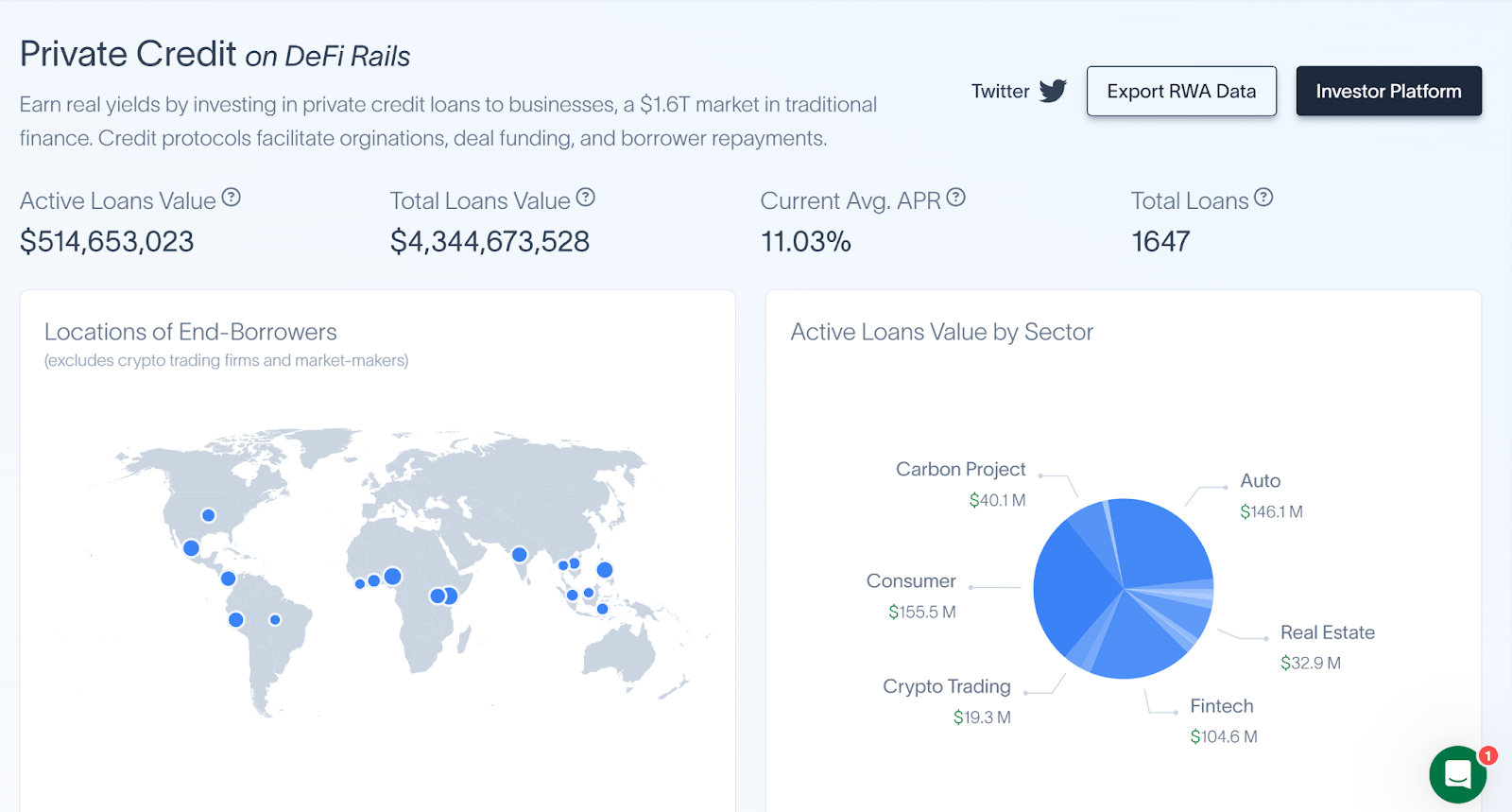
Website RWA.xyz has created a dashboard to view Loan-based RWA’s or ‘Private Credit’. There are currently over US$500 million worth of Private Credit RWA value active in crypto. The average return of 11.03% is impressive.
An example of one of these Private Credit options is the Stratos US Fintech yield offered by DeFi protocol Goldfinch.
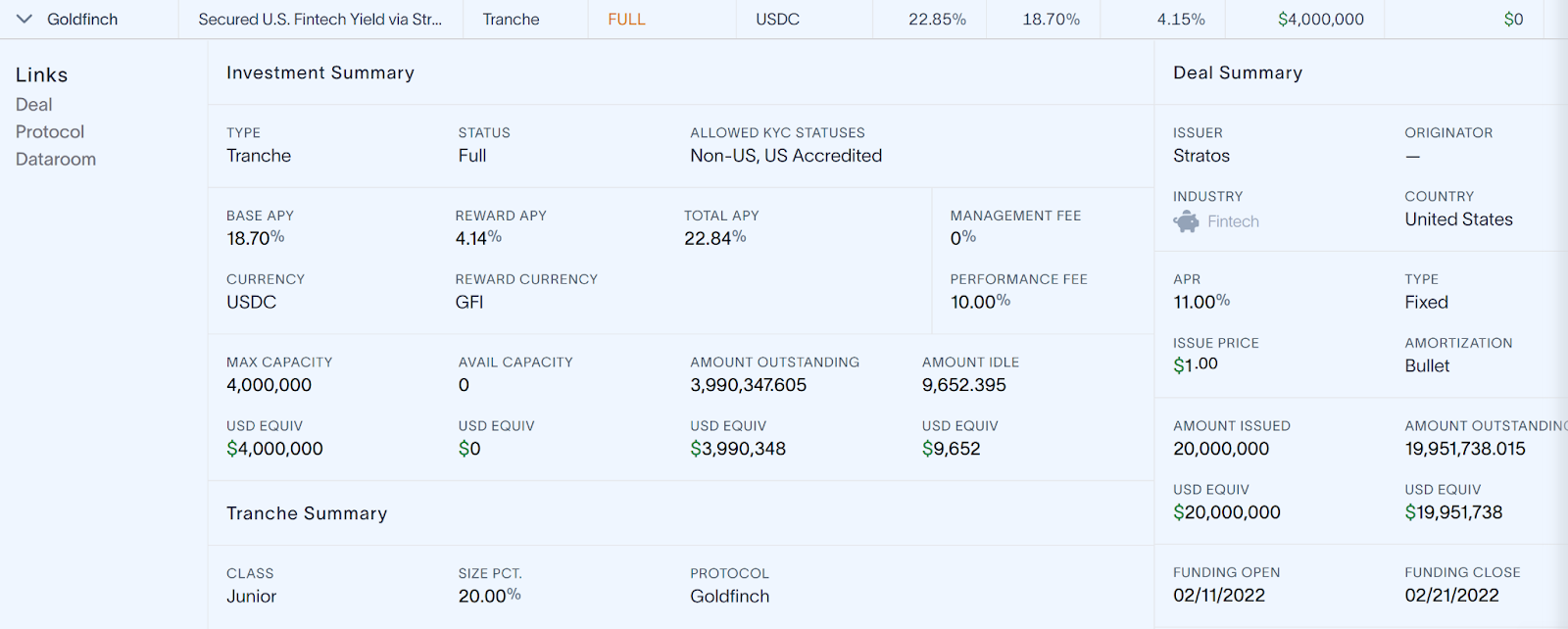
With this investment, Stratos is the borrower. Stratos is a firm that invests in secure loans to venture-backed companies. The borrower profile for Stratos explains that it is “has the expertise and a five year track record of advising and financing technology and technology-enabled businesses.”
At the time that the borrowing pool opened Stratos had exposure to Rezi — an institutional scale residential lease broker, Braavo — provides accounts receivable financing for software developers selling software for mobile apps, and Threecolts — An e-commerce and SAAS company focused on capturing value within retail marketplaces like Shopify and Amazon.
Stratos explains that they have an edge in identifying successful start-ups because their “sourcing strategy is primarily driven by introductions from founders that we’ve worked with in prior transactions, as well our strong network of venture capital equity investors who recognize the benefits a Stratos credit facility can provide to their portfolio companies.”
Community Lenders, DeFi users, are essentially lending to buy into the edge Stratos has, identifying successful startups and capturing the returns they offer. The dealroom for Stratos has a variety of documents evidencing research capabilities including Due Diligence capabilities.
Another example of an RWA private credit option is the Centrifuge Protcol’s ConsoleFreight 4. ConsoleFrieght 4 offers investors exposure to cash flows associated with international goods trading as well as Freight forwarding invoices.
Investor funds go towards short-term trade finance which refers to financing solutions that help facilitate international trade transactions, like imports and exports. This type of finance is designed to be short-term and bridges the gap between when a good is shipped and when the payment is received. Freight forwarding is the process of organizing and managing transportation, invoices are the document that lists the goods or services provided and the associated cost. By backing ConsolFrieght 4 as a borrower, investors are financing short-term trade and are paid when the gap in logistics is bridged.
Real Estate is also seen as a promising form of RWA. Through tokenizing real estate assets, investors can invest in a fraction of a single piece of real estate, and enter the asset class with a much smaller investment than they normally would. Fractionalizing and democratizing Real Estate is something that has been attempted through models like Timeshares but tokenization offers a potentially sleeker solution than what has been built so far. The RWA model, offers a chance to create accessibility and liquidity for the real estate sector.
Brave New Coin spoke to Trevor Bacon, co-founder and CEO of Parcl, A blockchain-based real estate investment platform that allows users to invest in a digital square foot of real estate in the most desirable neighborhoods. Cities covered by Parcl include Miami, Los Angeles, and New York. Bacon says “For younger generations, new challenges have made it harder than ever to invest in real estate. Home ownership rates are at nearly 20-year lows, in part due to the tedious and outdated processes necessitated.”
Parcl uses its own indices that are based on hyperlocal data feeds from Parcl Labs, an internal technology partner. Parcl Labs’ context-driven data updates daily in real-time, tracking the median price per square foot of each given city. Investors can use these insights to invest fluidly in the real estate they believe is right for them. Bacon explained to BNC that as opposed to taking a physical house and putting it on the blockchain, users gain exposure to high-demand cities around the globe. This offers diversification and a more data-informed investment option for DeFi users. “To adapt to the needs and feasibility of younger generations,” he says, “real estate must adapt to the 21st century using modern technology to decrease prices and expedite processes. RWA is the fuel needed to propel both the crypto and real estate industries into the mainstream.
Long thought of as an ideal candidate for disruption by blockchain, the global music business has not been an easy nut to crack from an RWA perspective, given its deeply ingrained legacy participants and convoluted rights ownership and revenue collection models.
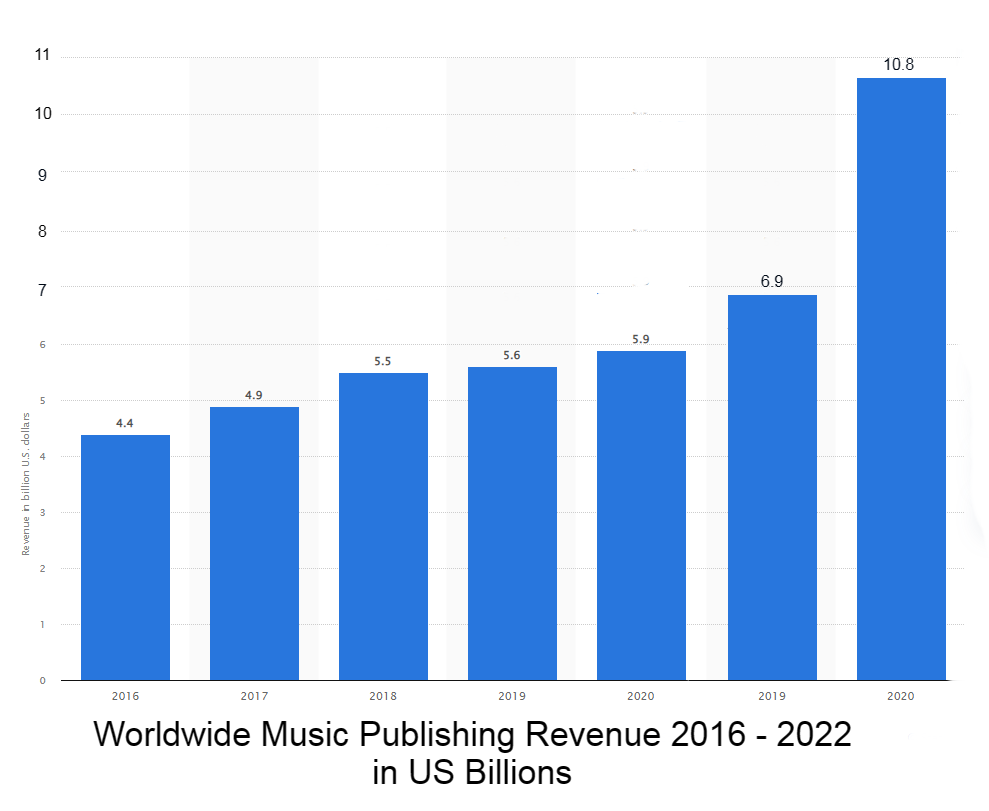
Music publishing revenue is on a long term growth trajectory. Source: Midia Research, Statista
Nonetheless, several companies such as Royal.io, TunedCoin, and BandRoyalty have all made revealed new initiatives in the last year that offer a path to fractional ownership of musical copyrights and create more symbiotic relationships between artists and fans.
Conclusion
RWA models have the potential to revolutionize traditional markets such as real estate, art, music and commodities by leveraging tokenization and decentralized finance. The market for RWAs is expected to grow exponentially in the coming years, and development has been exciting. The types of assets being tokenized are unique and layered. They are offering investors diversification, yield separated from crypto price volatility, and exposure to a variety of global industries.
DeFi protocols are playing a key role in the development of the RWA space by enabling greater liquidity and accessibility for physical assets, benefiting both investors and asset holders. Examples of emerging RWA-based lending platforms and real estate tokenization projects demonstrate the growing interest in this sector.