PeaqOS and World ID Integrate ZK Proofs into Autonomous Robots

cryptonews.ruPublished on 2026-08-24Last updated on 2026-08-24

Abstract

The integration of PeaqOS and World ID now allows autonomous machines to verify they are interacting with real, unique individuals without collecting names, photos, or other personal data. This update, available via robotic.sh, enables connected devices to directly request and verify World ID proofs. The system leverages zero-knowledge technology, letting a person prove they are human while maintaining the privacy of their identity. This addresses a key challenge for operators of delivery robots, shared machines, and autonomous systems: how to authenticate a user as genuine without relying on insecure PINs, pickup codes, or traditional identity checks that require personal data collection. Instead of obtaining identifying information, a device receives a cryptographic proof that the user is a real person. PeaqOS acts as a coordination layer, allowing devices to utilize World ID via decentralized identifiers and a device marketplace. A robot can request verification, receive a zero-knowledge proof, and register an auditable record of the interaction—all without exposing underlying personal data. The system also supports uniqueness verification, enabling machines to enforce rules like "one item per person" without maintaining user identity databases. A demonstrated use case involves autonomous medicine delivery: a patient verifies via the World App when placing an order, a pharmacist verifies before loading the medication, and the patient verifies again upon delivery so the ...

Thanks to the integration of PeaqOS and World ID, autonomous machines can now verify that they are interacting with real, unique individuals without collecting names, photos, or other personal data. This update, available via robotic.sh, enables connected machines to directly request and verify World ID proofs.

According to a press statement, the system uses "zero-knowledge" technology, allowing a person to prove they are human while maintaining the privacy of their identity.

As delivery robots, shared-use machines, and autonomous systems directly interact with people, operators face the challenge of how to confirm a user is genuine without relying on PIN codes, pickup codes, or identity documents. Codes can be stolen or shared, and traditional identity checks often require collecting personal information.

World ID offers an alternative. Instead of obtaining a person's identification data, the device receives cryptographic proof that the user is a real human. PeaqOS serves as a coordination layer, enabling devices to utilize World ID through decentralized identifiers and a device marketplace. A robot can request a verification, receive a zero-knowledge proof, and register an auditable record of the interaction—all without revealing underlying personally identifying data.

The system also supports uniqueness verification, allowing machines to enforce rules like "one item per person" without maintaining databases of user identification data.

One demonstration example focuses on autonomous medicine delivery. A patient verifies themselves via the World App before an order is accepted. At the pharmacy, a pharmacist conducts verification before loading the medicine. When the robot arrives at the destination, the patient verifies themselves again, allowing the robot to confirm the recipient is the same person linked to the order before unlocking the compartment.

Promotional handout robots could similarly ensure each person receives only one item. Shared vending machines could grant access to verified individuals without requiring account creation or personal data collection.

World ID support is now available for robots and devices operating on PeaqOS via robotic.sh. This integration allows autonomous systems to confirm they are interacting with real humans while minimizing the amount of identity information received or stored.


Trending Cryptos

Related Questions

QWhat is the main privacy benefit of integrating PeaqOS with World ID for autonomous robots?

AThe main privacy benefit is that it allows robots to verify they are interacting with real, unique humans without collecting any personal data such as names, photos, or other identifying information. This is achieved through zero-knowledge proofs.

QWhat problem does the World ID integration solve for operators of autonomous machines?

AIt solves the problem of how to verify that a user is genuine without relying on methods like PIN codes, pickup codes, or identity documents, which can be stolen, shared, or require the collection of personal data.

QHow does the PeaqOS platform facilitate the use of World ID for robots?

APeaqOS acts as a coordination layer, enabling robots and devices to utilize World ID through decentralized identifiers and a device marketplace. It allows a robot to request verification, receive a zero-knowledge proof, and log an auditable record of the interaction.

QDescribe the verification process in the autonomous medicine delivery example provided in the article.

AFirst, the patient verifies themselves via the World App before the order is accepted. At the pharmacy, the pharmacist performs another verification before loading the medicine. Upon delivery, the patient verifies themselves again with the robot, which confirms they are the person linked to the order before unlocking the compartment.

QThrough which platform is support for World ID currently available for robots and devices running on PeaqOS?

ASupport for World ID is available through the platform robotic.sh.

Related Reads

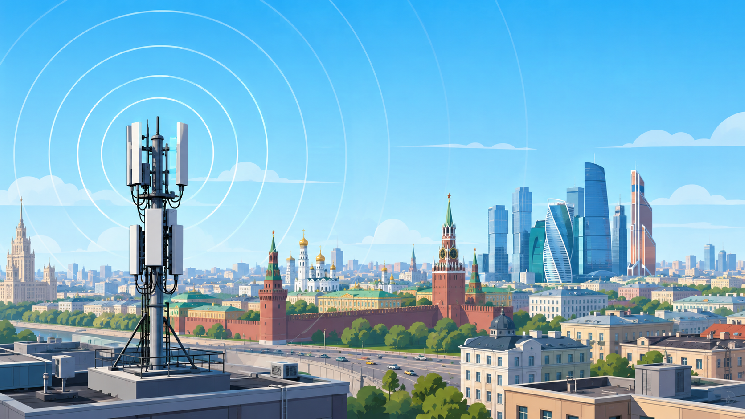
How 5G Will Be Launched in Russia: The Digital Ministry's Proposal and the Roadmap to 2035

Russia's Ministry of Digital Development has proposed a plan for launching 5G networks. It allows the "Big Four" mobile operators (Beeline, Megafon, MTS, T2) to deploy 5G on existing 4G/LTE base stations and frequencies, and will allocate them the new 4.63–4.99 GHz band. A key element is "technological neutrality," permitting the use of foreign equipment until September 2026. The new 4.63–4.99 GHz band is intended for more advanced services and industrial applications. However, a phased transition to Russian-made base stations will begin in 2027, with a target of at least 50% domestic equipment by 2030. The rollout timeline aims for 5G in cities with over 1 million people by the end of 2027, expanding to 84 cities by 2035. Initial "5G Ready" service, operating over existing infrastructure, will offer minimal speed improvements. Significant speed gains (4-10x over LTE) will require the new band and corresponding equipment. The plan addresses long-standing regulatory delays, including the military's hold on the global standard 3.4–3.8 GHz band. This forced Russia to adopt the 4.63–4.99 GHz range, overlapping with a Chinese band, making Chinese equipment a potential transitional solution. The success of the rollout will depend on equipment supply and the pace of production localization, while a challenge lies in smartphone compatibility with this non-standard frequency band.

cryptonews.ru1h ago

How 5G Will Be Launched in Russia: The Digital Ministry's Proposal and the Roadmap to 2035

cryptonews.ru1h ago

The Federal Reserve Bank of Dallas Announces a Colossal $700 Billion Allocation! How Will This Affect Bitcoin?

The Federal Reserve Bank of Dallas warns that the growing adoption of tokenized deposits in the banking sector could pose unforeseen risks to the financial system. Tokenized deposits, which transfer traditional bank deposits to blockchain infrastructure, offer features like instant settlement and programmable payments. While issued by regulated banks and maintaining deposit characteristics, they could enable customers to move funds between banks much faster in search of higher yields. This would significantly weaken banks' liquidity management and lending capacity. The Fed's analysis estimates that an increase in deposit interest rate sensitivity by 10% could reduce the interest rate risk banks can bear by approximately $700 billion over ten years. Similarly, a 10% shortening of the average deposit maturity could reduce the banking system's capacity to convert deposits into loans by about $580 billion. This acceleration of deposit movement could force banks to rely on more expensive wholesale funding, increasing borrowing costs for consumers and businesses and potentially making traditional banks resemble non-bank financial institutions. While the report does not directly address Bitcoin, the described shifts could have long-term implications. Firstly, the tokenization of deposits by banks could promote institutional adoption of blockchain-based financial infrastructure, indirectly legitimizing digital asset classes like Bitcoin. Secondly, faster-moving deposits and resulting higher funding costs could increase the price of liquidity in the financial system. This could create near-term headwinds for risk assets, including Bitcoin, due to tighter financial conditions and potential selling pressure. The report concludes that widespread adoption of this technology could impact many areas, from payment systems to monetary policy transmission mechanisms.

cryptonews.ru1h ago

The Federal Reserve Bank of Dallas Announces a Colossal $700 Billion Allocation! How Will This Affect Bitcoin?

cryptonews.ru1h ago

Trading

Spot

Hot Articles

How to Buy ID

Welcome to HTX.com! We've made purchasing SPACE ID (ID) simple and convenient. Follow our step-by-step guide to embark on your crypto journey.Step 1: Create Your HTX AccountUse your email or phone number to sign up for a free account on HTX. Experience a hassle-free registration journey and unlock all features.Get My AccountStep 2: Go to Buy Crypto and Choose Your Payment MethodCredit/Debit Card: Use your Visa or Mastercard to buy SPACE ID (ID) instantly.Balance: Use funds from your HTX account balance to trade seamlessly.Third Parties: We've added popular payment methods such as Google Pay and Apple Pay to enhance convenience.P2P: Trade directly with other users on HTX.Over-the-Counter (OTC): We offer tailor-made services and competitive exchange rates for traders.Step 3: Store Your SPACE ID (ID)After purchasing your SPACE ID (ID), store it in your HTX account. Alternatively, you can send it elsewhere via blockchain transfer or use it to trade other cryptocurrencies.Step 4: Trade SPACE ID (ID)Easily trade SPACE ID (ID) on HTX's spot market. Simply access your account, select your trading pair, execute your trades, and monitor in real-time. We offer a user-friendly experience for both beginners and seasoned traders.

4.0k Total ViewsPublished 2024.03.29Updated 2026.06.02

How to Buy ID

Discussions

Welcome to the HTX Community. Here, you can stay informed about the latest platform developments and gain access to professional market insights. Users' opinions on the price of ID (ID) are presented below.

活动图片