Author: Michael Zhao, Grayscale Research
Translation: Luffy, Foresight News
Original Title: Grayscale: Zcash, Financial Privacy in the Age of AI
Privacy is not a niche add-on feature of money; it is a crucial component for money to function properly. People do not want every single transaction, account balance, and financial relationship to be publicly exposed. Physical cash possesses this attribute. Historically, financial systems relying on intermediaries (banks) also maintained a certain degree of practical confidentiality, restricting third parties from arbitrarily accessing financial records, although the information still had the potential for leakage. Even law enforcement agencies typically require a court order to access an individual's financial data.
Technological and social changes put pressure on this system, often triggering public discussions about financial privacy and new methods for protecting it. In the 1970s, the digitization of financial records and the enactment of the Bank Secrecy Act brought more attention to financial privacy. Similarly, in the late 1990s to early 2000s, the proliferation of the internet, online banking, and the passage of the Patriot Act once again made financial privacy a focal point, driving the widespread adoption of tools like encryption and two-factor authentication.
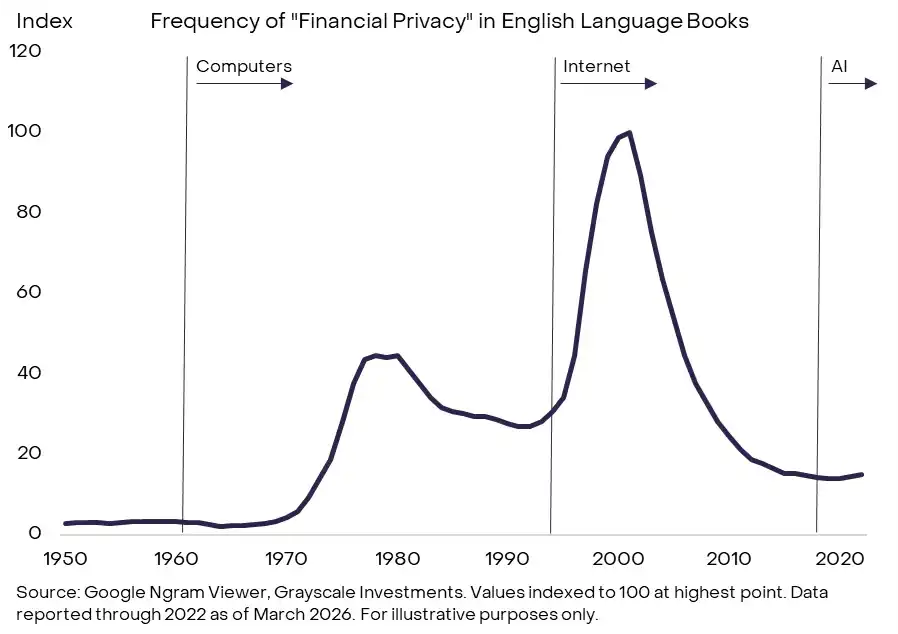
Chart 1: Technological change may increase public attention on financial privacy
Grayscale Research believes we are on the verge of a third wave of heightened public concern about financial privacy, fueled by the adoption of stablecoins and various blockchain applications, as well as new financial surveillance methods enabled by artificial intelligence. Multiple high-frequency indicators show that public attention to this issue has already begun to rise.
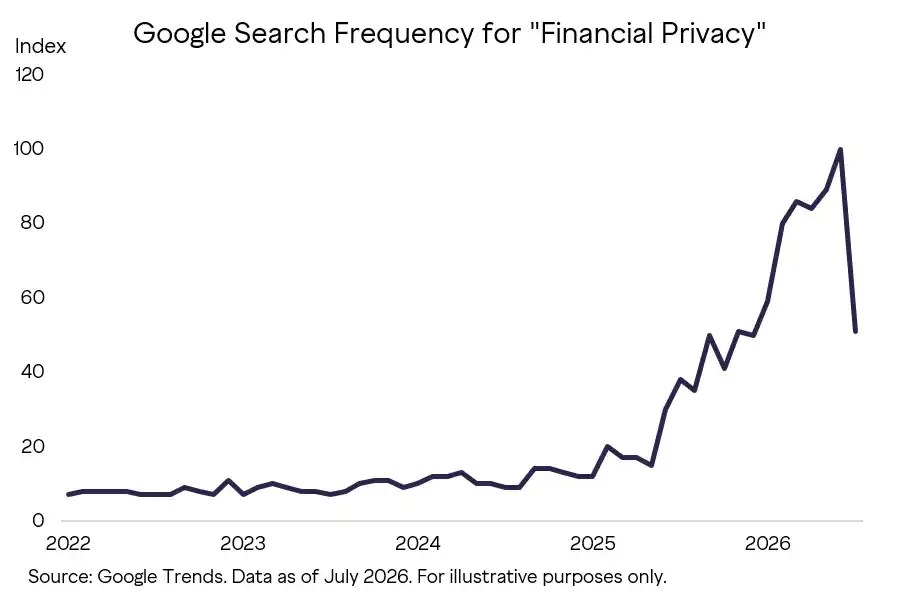
Chart 2: Recent attention to financial privacy has increased
It is in this context that Zcash emerges. Zcash is a decentralized digital currency, its underlying logic similar to Bitcoin, but equipped with mature privacy mechanisms. Bitcoin achieved digital scarcity but not digital privacy. Its public transparency ensures auditability but sacrifices monetary use cases that require confidentiality. If crypto users ultimately view private digital currency as a distinct need separate from transparent digital assets, Zcash has an opportunity to capture that market. ZEC's current market capitalization is only about 0.4% of the total cryptocurrency market cap. Compared to its technical strength and the potential market for privacy-focused digital currencies, this valuation seems low.
Privacy is Becoming an Independent Product Category
On public blockchains, account balances, counterparties, and transaction history are permanently visible to all. Even if users employ anonymous addresses, their activities can often be gradually correlated and de-anonymized through exchanges, counterparties, wallet behavior, and on-chain analysis tools. In reality, the information leaked by public chains often exceeds user expectations.
However, the vast majority of users require some degree of financial privacy. Individuals do not want their account balances and spending records to be public by default; businesses seek confidentiality for supplier information, salary payments, treasury fund flows, and customer interactions; institutions also do not want their wallet structures and transaction patterns to be mapped and tracked in real-time.
Therefore, the need for privacy does not only come from those seeking complete anonymity; it is a more universal demand for confidentiality in economic activities.
Yet within the crypto industry, the privacy sector has long faced a major challenge: difficulty in distribution and adoption. Strong privacy protection introduces additional friction for exchange support, wallet integration, and market access. So, privacy in crypto is not just a technical feature; it also involves business trade-offs.
Several Approaches to On-Chain Privacy
Different crypto privacy systems aim to conceal different types of information. Some solutions merely make tracking transaction flows on a transparent ledger more difficult, while others directly hide key transaction fields.
- Mixing-based Privacy Solutions: Operate on top of public chains like Bitcoin, e.g., CoinJoin, Bitcoin Cash's CashFusion, Dash's PrivateSend. They can only increase the difficulty of transaction tracing; the underlying ledger remains fully public.
- Confidential Transaction Systems: For example, Litecoin's MWEB, which can hide transaction amounts, achieving basic structural privacy, but still differs from fully shielded transaction systems.
- Default Privacy Public Chains: Represented by Monero, where privacy is enabled by default, without requiring users to manually opt-in.
- Shielded Transaction Systems: Represented by Zcash, which validates transaction legitimacy without exposing the sender, receiver, or transaction amount to the public.
Within the privacy sector, Zcash's positioning is quite special. It is an optional-privacy base-layer public chain; shielded transactions can conceal the sender, receiver, and amount at the transaction layer. This is fundamentally different from privacy add-on layers built atop transparent public chains.
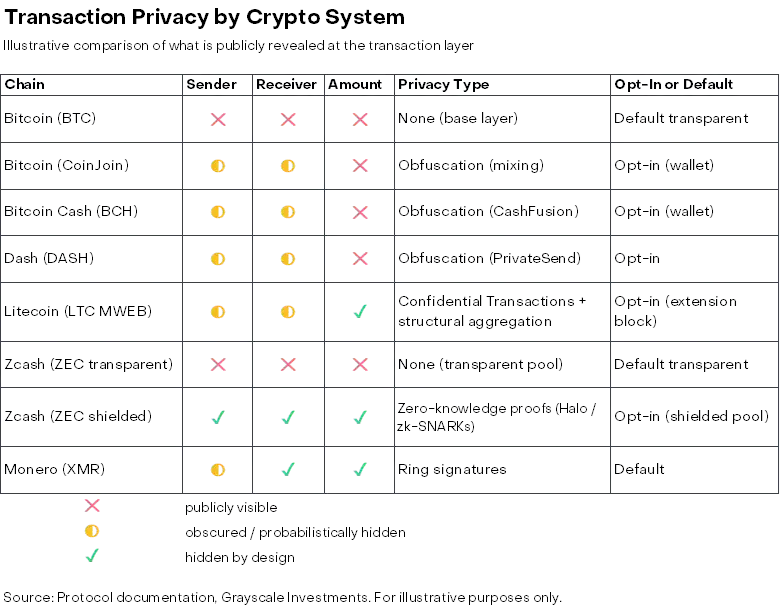
Chart 3: Different cryptocurrencies offer varying degrees of transaction privacy
What is Zcash and How Does It Work?
Zcash is a public chain for peer-to-peer value transfer, with a capped total supply of 21 million tokens. It uses a Proof-of-Work (PoW) security model and shares many characteristics with Bitcoin. The core difference is that users can choose to enable shielded transactions, rather than having all transaction details public by default.
The Zcash network supports two types of transactions:
- Transparent Transactions: Fully visible on-chain, similar in logic to Bitcoin transfers.
- Shielded Transactions: Can complete transaction validity verification without leaking the sender, receiver, or transaction amount to the public.
In simple terms, Zcash achieves transaction verification without complete public disclosure.
Zcash relies on zero-knowledge proof technology to build a shielded pool. As long as funds remain within the shielded pool, on-chain information leakage can be minimized. Zero-knowledge proofs are an advanced cryptography technology that can be used for both privacy protection and scalability in the blockchain space.
Zcash also supports selective disclosure. Through view keys, users can grant specified third parties permission to query details of shielded transactions when necessary. Shielded transactions are not a complete black box; they are confidential to the public while still allowing users to make controlled disclosures when needed.
Zcash Development Journey: Legacy Protocol, New Chapter
Zcash launched in 2016. By crypto industry time scales, it is an older project and can easily be mistaken for a relic of a previous cycle. However, from its inception, its goal was not merely to implement privacy. The project's original intention was to truly implement zero-knowledge cryptography in a digital cash system.
Its core concept was groundbreaking at the time: borrowing Bitcoin's monetary model while implementing private transactions at the base layer of a public chain. Zcash was among the first projects to build private digital cash as a base-layer public chain, rather than just as a wallet feature or an upper-layer privacy add-on.
But in its early days, the technological vision outpaced the supporting product infrastructure. Early shielded transactions had huge computational overhead, and the user experience was far inferior to transparent transactions. Several major upgrades gradually alleviated this predicament:
- Sapling (2018): Significantly reduced proof generation time and memory usage, making shielded transactions practically usable. Generating a shielded transaction took only seconds, with memory usage as low as 40MB, directly driving increased usage.
- Orchard / NU5 (2022): Upgraded the cryptographic foundation, introducing the Orchard shielded protocol and Halo2. The new shielded pool no longer requires a trusted setup.
- Ironwood (2026): Fixed an Orchard circuit vulnerability, built a new shielded pool, eliminating theoretical token counterfeiting risks and ensuring token supply integrity.
- Unified Addresses & Wallet Optimization: Simplified interaction flow, allowing users to use both transparent and shielded receiving addresses without handling multiple address formats.
Zcash aims to solve not just "whether private transfers are possible," but how to use private transfers at scale and conveniently. Years of effort to reduce usage friction are now finally showing results.
The wallet layer is a key component. Zodl (formerly Zashi) is positioned not just as an asset storage tool, but as an interaction gateway prioritizing the shielded mode. The product integrates NEAR Intents-based swaps, CrossPay cross-asset transfers, and supports cold storage for shielded balances.
The value of these features lies in reducing the steps where users are forced to exit the shielded pool. Whether depositing, paying, or swapping for other assets, operations can largely remain in a closed, encrypted environment.
Historically, Zcash's biggest bottleneck was never whether private transaction technology was feasible, but whether users could remain secure throughout the entire transaction process.
Zcash ecosystem infrastructure is also gradually maturing. Leading mining pool Foundry announced in April 2026 the launch of a U.S.-based Zcash mining pool for institutional and public company miners. This does not directly increase shielded wallet users but represents ecosystem maturity: more industrial-grade support and increased institutional awareness of the chain.
Additionally, minor policy adjustments related to fees and the mempool have alleviated network congestion caused by spam transactions, improving network stability under high load. This is not the core of Zcash's investment thesis but contributes to moving the protocol from theoretical privacy to practical usability.
Zcash's next phase of development depends on whether the protocol can evolve from "privacy is achievable" to "privacy can be adopted at scale." Key technical directions to monitor:
Tachyon: The most important scaling proposal, aiming to reduce the cost and synchronization burden of shielded transactions, addressing the historical pain point for mass adoption.
Crosslink: Focuses on transaction finality and network reliability, not completely replacing the existing PoW, but strengthening settlement guarantees. For the investment logic, Zcash's future depends not only on privacy features but also on the overall robustness and operational reliability of the network.
Shielded Assets: Enables assets other than native ZEC to utilize Zcash's privacy system. If this functionality is successfully implemented, it would extend shielded transaction capabilities to more assets and applications.
How Should ZEC's Value Be Assessed?
As of July 2026, the overall crypto market assigns an extremely low valuation to the privacy attribute.
Grayscale categorizes assets with "digital currency" use cases into the "Cryptocurrency Sector." This sector currently includes 15 assets with a total market cap of $1.4 trillion, with Bitcoin accounting for approximately 90%. ZEC's current market cap is around $8 billion, representing only about 0.6% of the digital currency sector. Capturing just 5% market share in this sector would imply a 9x increase in market cap.
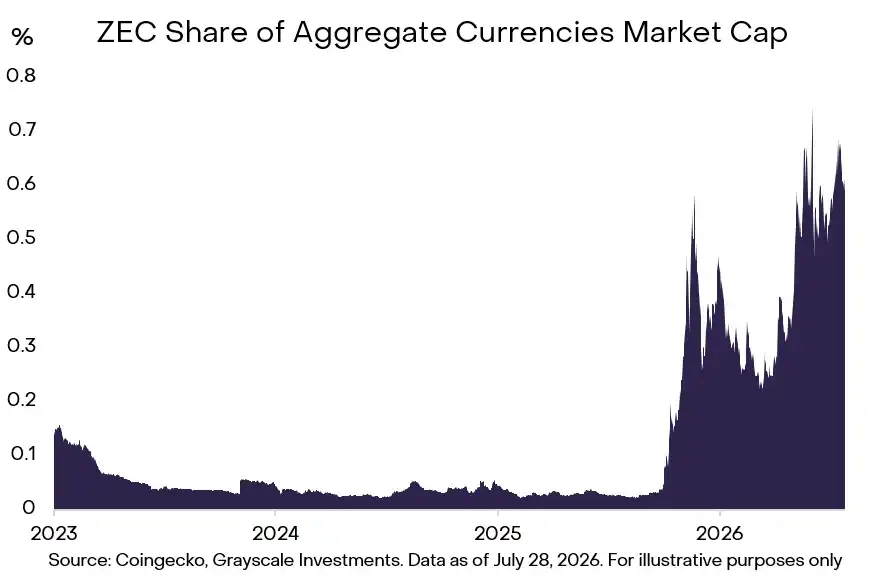
Chart 4: ZEC's share of the total currency market cap is small but growing
ZEC's current market pricing reflects the market's prevailing assumption: privacy is a marginal demand with a narrow audience, not deserving of a valuation premium. However, in an environment of increasing surveillance, tightening compliance constraints, and frequent financial censorship, if the value of privacy is reassessed, a 0.6% market share would no longer be a reasonable equilibrium but rather an option value not yet fully priced in by the market.
The bullish case for Zcash argues that current market pricing assumes privacy demand will remain niche, but on-chain data already proves privacy is a real, existing need. As of July 20th, shielded transactions account for approximately 90% of total Zcash transaction volume. About 4.2 million ZEC reside in the shielded pool, constituting 25% of the circulating supply, a historical high. This indicates privacy is not just a narrative but observable on-chain behavior.
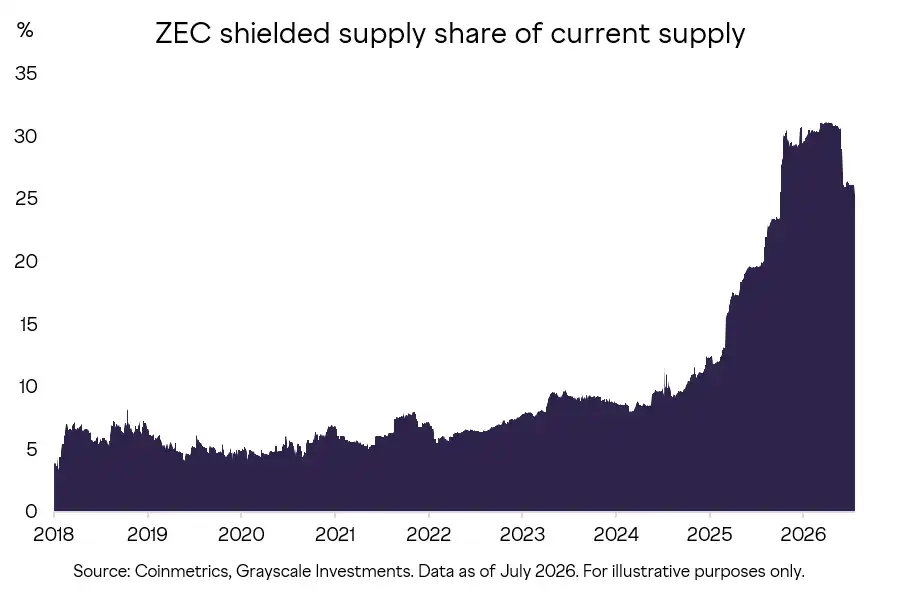
Chart 5: Shielded supply of ZEC has reached a new all-time high
In other words, Zcash does not require explosive growth today to support its potential upside; it only needs the market to reassess the future value of privacy. Once investors believe privacy deserves a moderate premium within the cryptocurrency system, ZEC's current valuation will appear conservative. The market still views privacy as an optional add-on, not a core attribute of money.
Risks and Other Considerations
Zcash's investment logic depends not only on privacy demand but also on historical cryptographic assumptions, future security risks, and the network's ability to maintain collaborative stability during major upgrades.
Regulatory Risk
Zcash's regulatory risk stems not only from providing privacy features but also from whether regulators and service providers recognize its selective disclosure mechanism as meeting compliance requirements. Compared to privacy systems with no disclosure capabilities, Zcash's view keys offer a clearer compliance path. A full view key can be authorized to a specified party to view inbound shielded transaction information, recipient addresses, amounts, and memos for ordinary shielded transfers. However, this disclosure is permissioned, not a default full-chain traceability.
Global Anti-Money Laundering rules, the EU's MiCA regulation, continue to impose hard requirements on Virtual Asset Service Providers for customer due diligence, record-keeping, suspicious transaction reporting, and the Travel Rule. View keys can reduce, but not eliminate, the risk that exchanges and custodians may be unwilling to support shielded transactions due to operational or policy reasons.
Legacy Trusted Setup Pool Issue
A major historical controversy for Zcash stems from the trusted initial setup required for the early Sprout and Sapling shielded protocols. The NU5 version introduced the Orchard protocol and Halo proof system; the new Orchard pool no longer requires a trusted setup. Additionally, in 2026, a soundness vulnerability was discovered in the original Orchard circuit, theoretically allowing undetectable token counterfeiting within the pool. Network upgrade NU6.2 fixed the circuit; Ironwood (NU6.3) introduced a new, independent shielded pool, prohibited new assets from entering the old Orchard pool, and mandated that funds exiting the old pool must pass through Zcash's verification accounting mechanism, restoring independent verifiability of the total supply and significantly improving the cryptographic outlook.
The remaining issue is that the old pools still exist, and historical funds remain within them. This risk will diminish over time but should still be noted when comparing old and new protocol versions.
Quantum Computing Risk
Quantum computing is a long-term risk for the vast majority of public chains, not unique to Zcash. Transparent funds and shielded funds face different quantum threat paths due to different exposed cryptographic components on-chain. The Electric Coin Company, long responsible for Zcash development, has explicitly included quantum resistance in its roadmap, indicating this is not purely theoretical. However, for investment judgment, quantum risk is more of a long-term proposition; near-to-medium-term priorities are product usability, ecosystem adoption, and market structure.
Execution and Adoption Risk
Zcash has relied on multiple major protocol upgrades to iterate on usability, security, and scalability, introducing two types of execution risk. First, the roadmap objectives are highly challenging; Tachyon, Crosslink, etc., are heavyweight technical engineering projects, not simple parameter changes. Second, network upgrades require coordination among engineers, wallet developers, infrastructure service providers, and the entire ecosystem. Zcash's improvement proposal process is well-documented, which is an advantage, but the investment logic still partially depends on sustained development delivery quality and collaborative efforts.
Conclusion
Privacy has always been an important trait for money to have practical value; it's just easier to forget in the digital age. The starting point for Zcash's creation was to address the inherent flaw of public chains: transactions are easy to verify but hard to keep confidential. After years of technical refinement, it has become one of the most representative projects attempting to fill this gap.
Whether private digital currency will grow into a mainstream sector or remain niche is still undetermined. However, judging by current valuations, the market has hardly priced in the possibility of "privacy's future value significantly increasing."
For investors, the opportunity lies not in betting that Zcash will replace Bitcoin, but in the fact that the value of private digital currency has not yet been fully recognized by the market.