Only $0.99 per million Tokens.
This is the real cost on the bill of SemiAnalysis—Silicon Valley's most hardcore semiconductor research firm.
But what's even more shocking is this number: Internal large model Token expenditure already accounts for 30% of total employee salaries.
It sounds like a lot—but flip the calculation: the output bought with this money previously required several times the human resource cost to cover. Per capita consumption nears 5 billion Tokens monthly, over five times Meta's per capita level, with core contributors' monthly consumption exceeding 100 billion.
Tasks that used to take junior analysts hours to complete, like converting Excel models or creating financial report charts, are now done in minutes, costing just a few dollars.
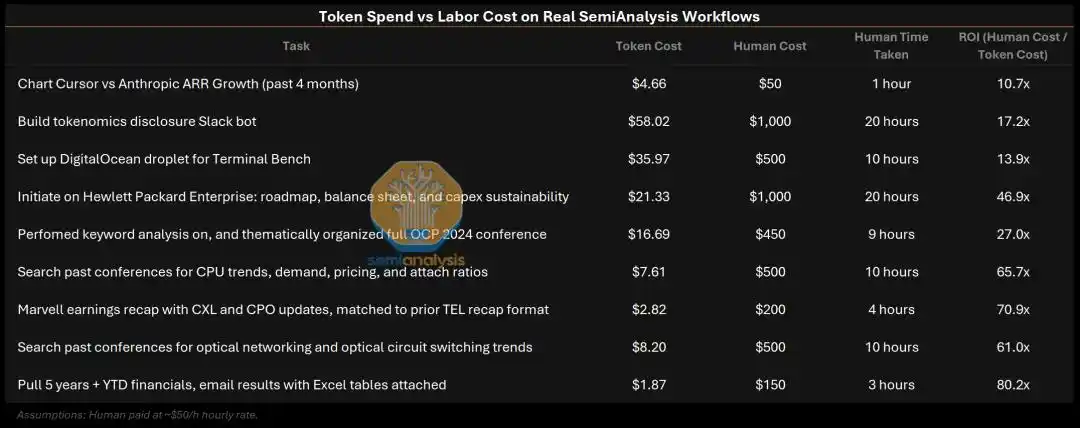
SemiAnalysis's own assessment hits the nail on the head: This isn't a 10% efficiency boost; it's the unit economics of professional services being rewritten.
Research firms, hedge funds, law firms—for all industries reliant on human intellect, Token expenditure reaching 20-30% of payroll is only a matter of time.
NVIDIA CEO Jensen Huang is more anxious than anyone.
At this year's GTC conference, he put it bluntly: An engineer with a $500k salary spends less than $250k on Tokens by year-end?
"I would be absolutely furious."
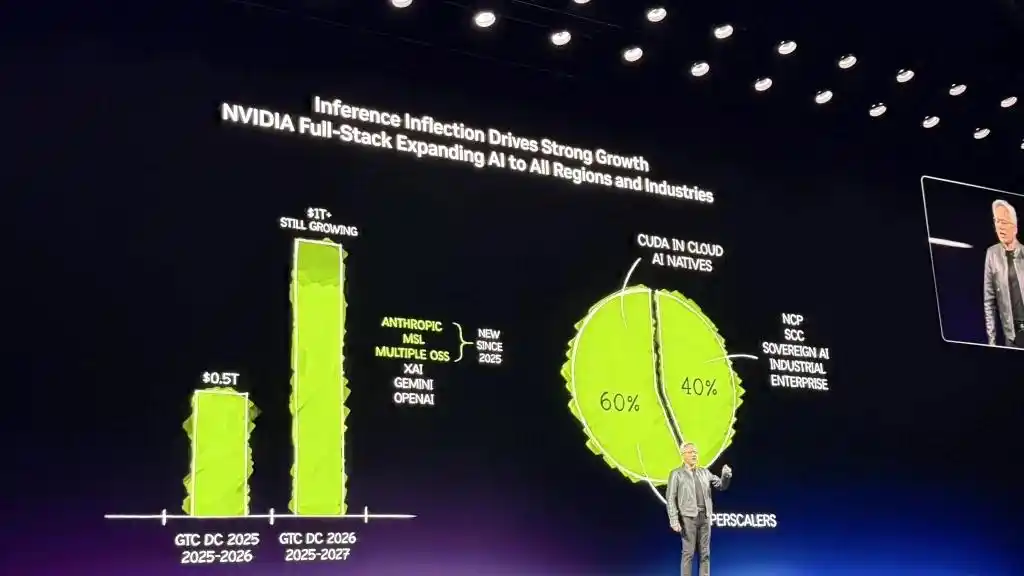
He plans to give every NVIDIA engineer a Token budget equivalent to six months' salary, and have 75,000 employees work alongside 7.5 million AI agents.
Not using AI? Huang says it's no different than a chip designer insisting on paper and pencil.
Token is no longer just a tool; it's becoming the "means of production" of the new era.
But the Other Half of Silicon Valley is Furious Over the AI Bill
Interestingly, while SemiAnalysis is saving real money with Tokens, giants in the Valley are tearing their hair out over AI bills.
Uber is the classic case.
Late last year, the company promoted Claude Code to 5,000 engineers, even creating leaderboards—more usage meant higher rank, fueling internal competition.
It worked too well: Engineer adoption was 32% in February, skyrocketed to 84% in March, and by April, 95% of engineers used AI monthly, with 70% of submitted code AI-generated. The annual budget? Already spent.
The CTO said they had to "redo the budget from scratch." Later it got stricter—Bloomberg reported Uber set a $1,500 monthly Token cap per employee, requiring special approval to exceed.
But COO Andrew Macdonald admitted on a podcast: AI usage is indeed rising, but its connection to consumer feature innovation... isn't visible yet.

Microsoft's situation is even more bizarre. Last month, The Verge reported Microsoft is canceling most Claude Code licenses, shifting to its own GitHub Copilot CLI.
The reason is simple: Money was being spent faster than value was being produced.
NVIDIA's VP of Applied Deep Learning, Bryan Catanzaro, was more direct in April: "For my team, compute costs far exceed employee costs."
An MIT 2024 study: In jobs primarily involving visual content, AI automation is economically viable in only 23% of scenarios.
In the remaining 77%, hiring people is cheaper than using AI.
There are even engineers complaining about AI agents "destroying his database and network" during use—he called it the cost of "overuse."
Sky-high budgets, runaway usage, constant mishaps—Silicon Valley is in the most fractured phase of AI economics.
On one side, unprecedented productivity gains; on the other, bills inflating at an equally unprecedented pace.
The Cost Collapse Has Only Just Begun
But SemiAnalysis's core argument is: Don't focus on today's price; the cost collapse has just started.
First, the software side.
Running DeepSeek R1 on a B300, with pure software optimizations via wideEP, disaggregation, and MTP, single GPU throughput can jump from a baseline of 1,000 tokens/second to 14,000 tokens/second—a 14x boost, purely through code.
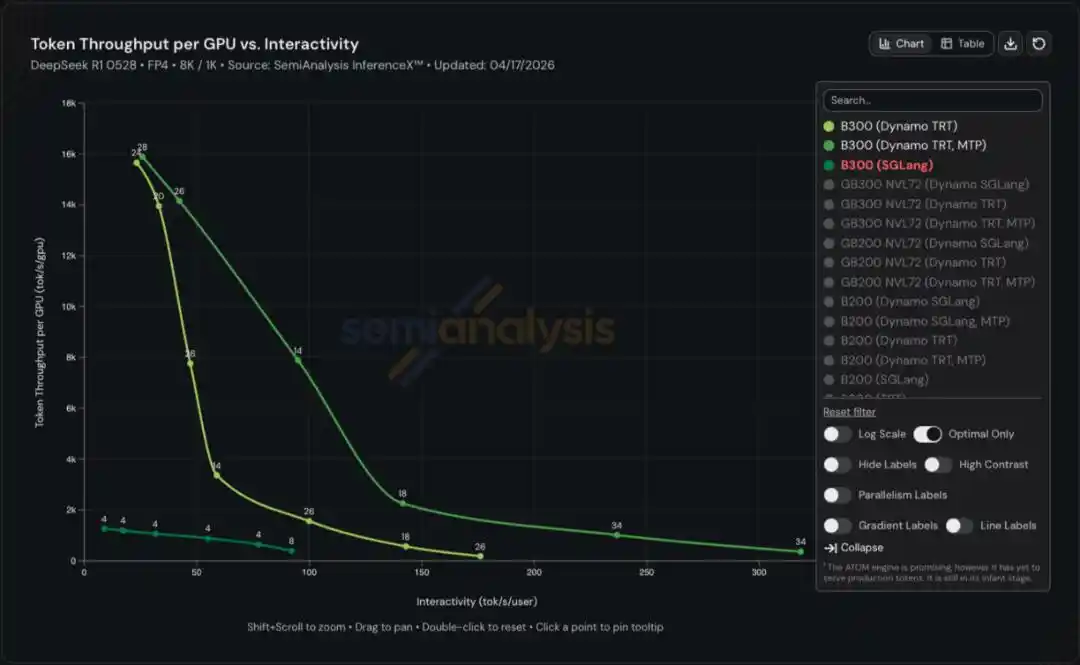
Now, the hardware side.
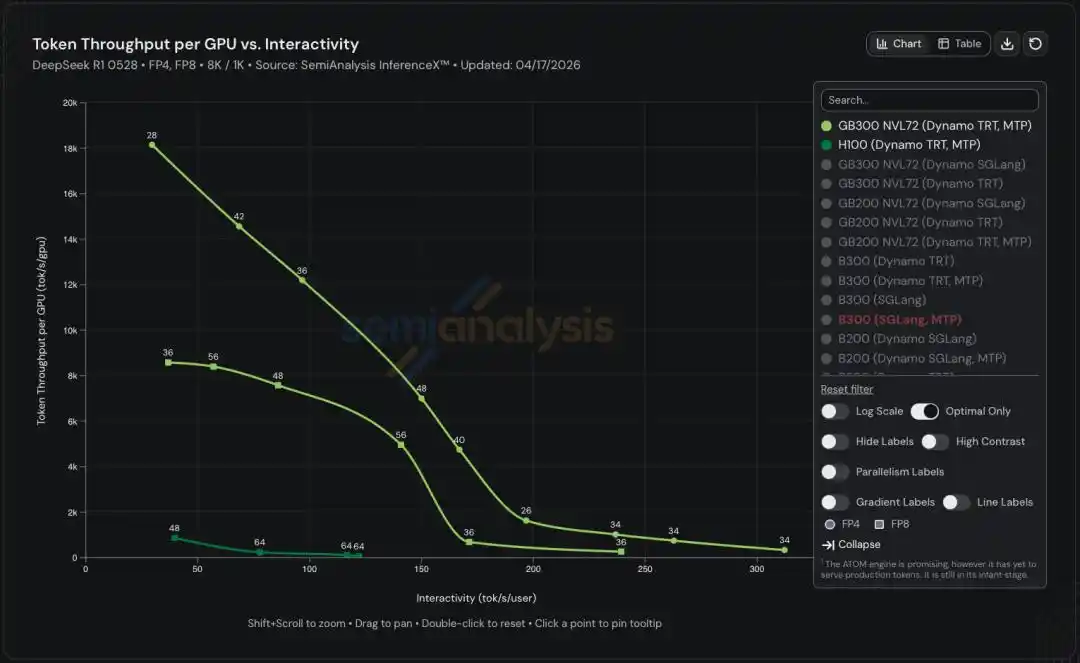
An optimally configured GB300 NVL72 has 17x the throughput of an H100, jumping to 32x when switching to FP4 precision.
Opus 4.7 is priced at $5 per million input, $25 per million output, which seems expensive.
But due to agent workloads having an input-to-output ratio as high as 300:1, plus over 90% cache hit rate, the actual blended cost is compressed to $0.99.
Less than one-fifth of the list price.
Combine software and hardware, and one conclusion is hard to avoid: The gross margin expansion of large models isn't a one-off pricing coincidence; it's a structural trend.
Anthropic's ARR surged from $9 billion to over $44 billion this year, with gross margins jumping from 38% to over 70%—Tokens are getting cheaper, but the sellers are getting richer.
A Gartner report from March corroborates this: By 2030, the inference cost for trillion-parameter models will be over 90% lower than in 2025.
SemiAnalysis's judgment is clear: If you want to predict Token prices in 2027, the answer is one word—down.
The Money is Spent. What's Next?
This is precisely the most fractured aspect of AI today: Global tech companies have announced $740 billion in AI capital expenditure this year, a 69% surge from last year; simultaneously, tech industry layoffs are already outpacing last year's total.
Money is burning, people are being laid off, but Goldman Sachs' chief economist told a blunt truth—The actual economic impact of AI has been essentially zero so far.
It's not that AI is ineffective, but the growing pains of every infrastructure revolution: First, spend to build the pipes, then wait for the water to flow.
It was true for the electrical grid, the internet, and AI is no exception.
The only difference is that the speed of pipe-laying and the speed of water arriving are on a scale previous generations never saw.
SemiAnalysis is already on the side where the water is flowing—30% of payroll is buying several-fold output leverage, and the cost curve is still plummeting.
As for other companies: Wade across the river now, or chase after the cities are already built on the other side.
References:
https://x.com/SemiAnalysis_/status/2070915305858007345
This article is from WeChat public account "New Zhiyuan", author: ASI Revelation, editor: Solomon